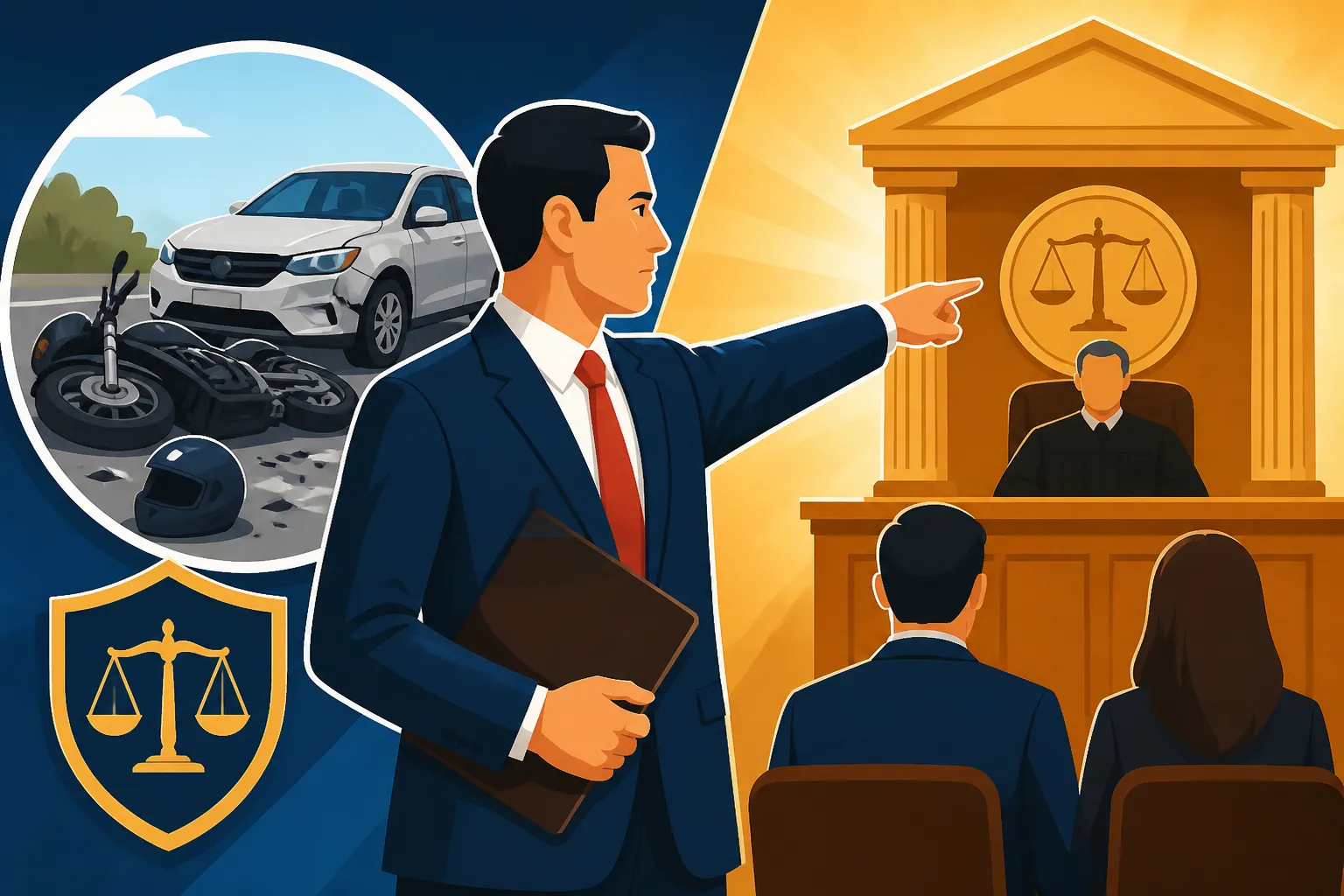
When a Lawyer Recommends Going to Trial
It's incredibly frustrating when you've been in a motorcycle accident, you're trying to heal, and you just want to move forward, but the insurance company simply won't play fair. You've gone through the initial steps, maybe even some negotiation, and now your lawyer is suggesting that the only way to truly get the compensation you deserve is to take your case to trial. This guide will walk you through what that recommendation means, why it happens, and what you can expect if your motorcycle accident claim proceeds to court.
Understanding the Settlement Process Before Trial
Before we dive into why a trial might be necessary, it helps to understand what the "normal" process looks like and where it can break down. Most motorcycle accident claims actually settle out of court. This is often preferable for everyone involved because it saves time, reduces legal costs, and avoids the inherent uncertainty of a jury verdict. However, "most" doesn't mean "all," and sometimes, an impasse is reached where a settlement just isn't possible.
Initial Negotiations and Why They Fail
After a motorcycle accident, you’ll typically gather evidence, get medical treatment, and then your legal representative will present a demand package to the at-fault driver's insurance company. This package outlines your injuries, medical bills, lost wages, and pain and suffering. The insurance company then evaluates your claim and usually responds with a counter-offer. This initial offer is almost always lower than what you’re seeking, sometimes drastically so.
The negotiation process is essentially a back-and-forth, with both sides trying to reach a mutually agreeable figure. Your lawyer will present arguments based on evidence, case law, and their experience with similar claims. The insurance adjuster, on the other hand, is looking to minimize their company's payout. They might dispute the severity of your injuries, question your role in the accident, or argue that some of your medical treatment wasn't necessary. When these negotiations stall, and the gap between what you need and what the insurer is willing to pay becomes too wide, it's a clear signal that the typical settlement process might not work for your case.
When Offers Don't Reflect Your Damages
One of the most common reasons negotiations fail is that the insurance company's offers simply don't come close to covering your actual damages. Motorcycle accident injuries can be severe, leading to astronomical medical bills, long-term rehabilitation needs, and significant lost income. Beyond the tangible financial losses, there's the profound impact on your quality of life – the pain, suffering, emotional distress, and loss of enjoyment of activities you once loved. These non-economic damages are a huge component of a motorcycle accident claim, and often, insurers attempt to minimize their value.
For instance, if you suffered a traumatic brain injury or a spinal cord injury, your future medical costs alone could be in the hundreds of thousands, or even millions, of dollars. An insurance company might offer a settlement that barely covers your current medical bills, completely ignoring the future care, adaptive equipment, or vocational retraining you'll need. When your attorney has presented compelling evidence of severe injuries, documented pain and suffering, and a significant impact on your life, but the insurer still refuses to offer a fair amount, they might conclude that a jury is the only impartial party left to properly value your case. This is where a resource like LegalMatch can become invaluable, helping you connect with attorneys who understand how to accurately assess and articulate the true value of catastrophic motorcycle injuries.
Key Indicators Your Case Might Head to Trial
It's not a decision taken lightly. When a lawyer recommends going to trial, it's usually because several factors point to it as the best, or only, path to justice. These indicators often highlight fundamental disagreements or stubborn resistance from the opposing side.
Disputed Fault and Liability
One of the biggest hurdles in a motorcycle accident claim is often determining who is at fault in a motorcycle accident. Unlike car accidents, where both vehicles might sustain similar damage patterns, motorcyclists often suffer disproportionately severe injuries, even in minor collisions. This disparity can sometimes lead other drivers and their insurance companies to unfairly blame the rider, even when they were clearly negligent.
Insurance companies are notorious for trying to shift blame to the motorcyclist, playing into common biases against riders. They might argue you were speeding, lane splitting illegally, or simply "unseen" (the infamous 'I didn't see the motorcycle' defense). If there's conflicting evidence – say, contradictory witness statements, disputed interpretations of traffic laws, or a biased police report – and the insurance company refuses to acknowledge their insured's clear responsibility, your attorney might determine that a jury needs to hear the full story to properly assign blame. This is especially true if you were involved in complex scenarios like a left-turn motorcycle accident, where fault can often be ambiguous without careful investigation. Understanding how fault is determined in motorcycle accidents is critical, and sometimes, a judge or jury is the only way to get an objective decision.
Severe Injuries and High Damages
As briefly touched upon, the severity of your injuries plays a massive role in whether a case goes to trial. When a motorcycle accident results in life-altering injuries such as a traumatic brain injury, spinal cord injury, or multiple complex fractures, the damages can easily exceed the typical settlement caps insurance companies prefer. These cases involve not just current medical expenses but projections for future care, loss of future earning capacity, and immense pain and suffering.
For example, a rider suffering an amputation might require multiple surgeries, specialized prosthetics, ongoing physical therapy, and home modifications. The total cost of care and lost income over a lifetime can easily run into millions. Insurance policy limits also play a significant role here. If the at-fault driver has a policy with low limits, say $50,000, but your damages are clearly $500,000, the insurer will likely offer their policy limit, hoping you'll accept it. If you have significant underinsured motorist (UIM) coverage, your own insurer might then become involved in negotiations. However, if your damages far exceed all available insurance, and the at-fault driver has significant personal assets, your lawyer might recommend a trial to pursue the full extent of your compensation, even if it means trying to recover from those personal assets. Accurately assessing pain and suffering in motorcycle settlements is also a key factor that often leads to trial when insurers undervalue it.
Insurer Bad Faith or Lowball Tactics
Sometimes, the issue isn't just a disagreement on value or fault, but rather the insurance company's refusal to negotiate in good faith. This is where your frustrations are absolutely valid. Insurance companies are businesses, and their goal is to pay out as little as possible. Some adjusters might employ tactics to delay, deny, or drastically undervalue your claim, hoping you'll become desperate and accept a lowball offer.
Examples of bad faith can include unreasonable delays in processing your claim, refusing to provide a valid reason for denying coverage, misrepresenting policy terms, or making offers that are clearly disproportionate to the damages sustained, even when liability is clear. If your lawyer has made multiple attempts to negotiate, provided substantial evidence, and the insurance company continues to stonewall or offer ridiculously low amounts without justification, they may view this as an act of bad faith. In such situations, taking the case to trial not only pushes for a fair resolution but can also potentially open the door to punitive damages against the insurer for their egregious conduct, although this is rare and specific to certain state laws. It's often when these tactics are encountered that you realize how important it is to have an experienced attorney on your side who knows how to fight an unfair fault assignment and push back against unreasonable insurer practices.
The Lawyer's Perspective on Recommending Trial
When your lawyer suggests going to trial, it's not a shot in the dark. It's a calculated recommendation based on their legal expertise, assessment of your case, and understanding of the court system. They’ve spent months, or even years, preparing your case for this very possibility.
Assessing the Strength of Evidence
The backbone of any successful trial is strong, compelling evidence. Your lawyer's recommendation to go to trial stems from their confidence that the evidence in your case is sufficient to convince a jury. This includes everything from police reports and witness statements to medical records, expert testimony, accident reconstruction analyses, and even dashcam footage or traffic camera recordings. They will meticulously review all available documentation and anticipate how it will be presented and perceived in court.
For example, if the other driver was clearly distracted by their phone, and there's cell phone record evidence or a witness who saw them, this strengthens your case considerably. If your medical records clearly show a direct link between the accident and your severe injuries, and you have expert medical opinions to back it up, this also boosts confidence. Conversely, if your case has significant weaknesses – perhaps you were also speeding, or there are gaps in your medical treatment – your lawyer might be more hesitant to recommend trial, as these weaknesses could be exploited by the defense. A good lawyer will be transparent with you about both the strengths and weaknesses, explaining how they plan to leverage the former and mitigate the latter.
Maximizing Your Potential Payout
Ultimately, your lawyer wants to secure the maximum possible compensation for you. If they believe that the insurance company's best settlement offer is still significantly less than what a jury would award, they will advocate for trial. This isn't just about covering your existing bills; it's about securing your future. A trial allows a jury to consider all aspects of your damages, including the intangible ones that are often undervalued in settlement negotiations.
Think about the long-term impacts: chronic pain, emotional trauma, inability to return to your previous job, or even just the loss of joy from riding your motorcycle. These are all real losses that a jury, when presented with compelling evidence and testimony, can quantify. Your lawyer understands that a settlement is a compromise, but a trial verdict can be a full realization of justice. They will weigh the potential for a higher verdict against the risks and costs of trial, guiding you toward the decision that best serves your long-term well-being. This analysis is central to how a lawyer values your case and determines the optimal strategy.
The "Helmet Defense" and Other Common Defenses
Motorcycle accident cases often involve specific defenses that are less common in other types of vehicle accidents. One of the most pervasive is the "helmet defense," where the defense argues that your injuries, particularly head injuries, would have been less severe if you had been wearing a helmet, or a DOT-compliant helmet, even if helmet use isn't legally mandated in your state for all riders. This is a tactic designed to shift some of the blame and reduce the damages awarded.
Your lawyer will have already considered how to counter these defenses. If you were wearing a compliant helmet, they’ll use that fact to your advantage. If you weren't, or if the helmet was a novelty type, they'll be prepared to argue that helmet use wouldn't have prevented the specific injuries you sustained, or they’ll point to states with The Helmet Defense Explained laws that might limit how this defense can be used. Other common defenses include alleging you were speeding, riding recklessly, or simply "unseen." A lawyer recommending trial is confident in their ability to dismantle these arguments, often with the help of accident reconstruction experts and medical professionals who can provide objective analysis of the crash dynamics and injury mechanisms. They understand that overcoming these biases requires a robust presentation of facts in court.
What to Expect When Preparing for Trial
Going to trial is a significant undertaking, involving several distinct phases of intense legal work. It’s a marathon, not a sprint, and understanding the journey can help manage expectations.
Discovery Phase and Depositions
Once a lawsuit is filed, both sides enter the "discovery phase." This is a formal legal process where information and evidence are exchanged between the parties. It can involve written questions (interrogatories), requests for documents (requests for production), and most significantly, depositions. A deposition is an out-of-court, sworn testimony given by witnesses, including yourself, the at-fault driver, and any expert witnesses.
During your deposition, the opposing attorney will ask you detailed questions about the accident, your injuries, your medical treatment, your pre-accident health, and how the accident has impacted your life. Your lawyer will prepare you thoroughly for this, ensuring you understand the types of questions to expect and how to respond honestly and clearly. This phase is crucial because it helps both sides understand the strengths and weaknesses of each other's cases, potentially paving the way for a last-minute settlement if the discovery process reveals new information or shifts the balance of power. While it can be stressful, depositions are vital for building your case for trial and for gathering information that might influence how a jury perceives your claim.
Pre-Trial Motions and Mediation
Before a case goes before a jury, there are usually several pre-trial motions filed by both sides. These motions address various legal issues, such as trying to exclude certain evidence, asking the judge to make a ruling on a point of law, or even seeking to have parts of the case dismissed. These motions can significantly shape what evidence and arguments are allowed during the actual trial.
Alongside these motions, many courts require or strongly encourage mediation or other forms of alternative dispute resolution. Mediation involves a neutral third-party mediator who facilitates discussion between you, your lawyer, the insurance company, and their lawyer, attempting to reach a settlement. Unlike a judge or jury, the mediator doesn't make a decision but helps both sides understand the strengths and weaknesses of their positions and explore potential compromises. Often, even if a case is headed to trial, a mediation session right before trial can still result in a settlement, as both sides face the impending costs and uncertainties of a courtroom battle. Many people find attorneys through services like LegalMatch, which can connect them with legal professionals experienced in both litigation and mediation, crucial for navigating these pre-trial complexities.
Gathering Expert Witness Testimony
In a complex motorcycle accident case, especially one involving severe injuries, expert witnesses are indispensable for trial. These are professionals whose specialized knowledge can help a jury understand intricate aspects of your case that are beyond the scope of common experience.
For instance, an accident reconstruction expert can analyze skid marks, vehicle damage, and other physical evidence to explain the dynamics of the crash and pinpoint exactly how the accident occurred and who was at fault. Medical experts, such as orthopedists, neurologists, or rehabilitation specialists, can testify about the nature and extent of your injuries, the necessity of your treatment, your prognosis, and the long-term impact on your life. Economic experts might be brought in to calculate your lost earning capacity and future medical expenses. These experts provide credible, objective testimony that can be incredibly persuasive to a jury. Your lawyer will work closely with these experts, ensuring their testimony is clear, concise, and effectively supports your claim for damages. This detailed preparation and reliance on expert testimony is a significant part of how lawyers prepare a case for trial.
Weighing the Pros and Cons of Going to Trial
Deciding to go to trial is a monumental decision, one that carries both significant potential rewards and considerable risks. It's essential to understand both sides of the coin.
Potential Benefits of a Jury Verdict
The primary benefit of going to trial, especially when a fair settlement isn't offered, is the potential for a substantially higher award from a jury. Juries, unlike insurance adjusters, are not driven by corporate bottom lines. They are members of the community who can empathize with your suffering and understand the real-world impact of your injuries. When presented with compelling evidence and powerful testimony, a jury can award damages that truly reflect the full extent of your losses – including the often-underestimated pain and suffering, emotional distress, and loss of enjoyment of life.
A trial also offers a sense of vindication and justice that a settlement might not. For many riders, it's not just about the money; it's about holding the at-fault driver accountable for their negligence and ensuring that their actions have consequences. A public trial and a favorable verdict can provide a profound sense of closure and validation that a private settlement, no matter how generous, sometimes cannot. Furthermore, a strong performance at trial can send a message to insurance companies that you are not to be underestimated, potentially influencing their approach to future similar cases.
Risks and Uncertainties of Litigation
However, the courtroom is inherently unpredictable. One of the biggest risks of going to trial is the uncertainty of the outcome. No matter how strong your case, there's always a chance that a jury might rule against you, or award significantly less than you hoped. Jurors are human, influenced by a myriad of factors, and their perception of evidence can be subjective. They might be swayed by a charismatic defense attorney, or, unfortunately, by underlying biases against motorcyclists.
Beyond the outcome, trial is a lengthy and costly process. It can take months, or even years, to get a trial date, and the process itself involves significant legal fees and expenses for expert witnesses, court reporters, and other litigation costs. While most personal injury lawyers work on a contingency fee basis (meaning they only get paid if you win), these advanced costs can be substantial and are typically deducted from your final award. The emotional toll of trial is also not to be underestimated. Testifying, reliving the accident, and facing the adversarial nature of court proceedings can be incredibly stressful, sometimes exacerbating trauma from the accident itself. These are all critical factors your lawyer will discuss with you when explaining how going to trial affects your payout.
Making the Final Decision: Settlement or Trial
The decision to accept a settlement or proceed to trial is ultimately yours. Your lawyer will provide expert guidance, but you are the one living with the consequences.
The Role of the Client in Decision-Making
Your lawyer is your advocate, your guide, and your strategist, but they cannot force you to accept a settlement you're not comfortable with, nor can they compel you to go to trial if you prefer to settle. The decision always rests with you, the client. Your lawyer's role is to ensure you have all the information necessary to make an informed choice. This means clearly explaining the pros and cons of both settlement and trial, outlining the potential outcomes, and giving you an honest assessment of your case's strengths and weaknesses.
They will advise you on the likelihood of success at trial, the potential range of damages, and the estimated timeline. However, your personal preferences, financial situation, and emotional capacity to endure a trial are all valid considerations. If the thought of public testimony and prolonged litigation fills you with dread, a reasonable settlement might be the better path for your mental and emotional well-being, even if it's slightly less than a possible maximum verdict. Conversely, if you feel strongly about holding the negligent party fully accountable and are prepared for the rigors of trial, your lawyer will support that decision and fight tirelessly on your behalf.
Understanding Your Financial Commitment and Timeline
Before making a final decision, it's crucial to have a clear understanding of the financial implications and the timeline involved in going to trial. As mentioned, while most motorcycle accident lawyers operate on a contingency fee, there are still costs associated with litigation. These "case expenses" can include filing fees, deposition costs, expert witness fees, court reporter charges, and travel. These expenses can easily run into tens of thousands of dollars for a complex case. Your lawyer will typically cover these upfront and then be reimbursed from your settlement or verdict. It's vital to review your retainer agreement to understand how these costs are handled.
The timeline for a trial can be extensive. Depending on the court's calendar and the complexity of your case, it could be a year or more from the time a lawsuit is filed until a verdict is reached. Even after a verdict, there can be appeals, which further extend the process. This means your financial recovery could be significantly delayed compared to a settlement. For someone with mounting medical bills and lost income, this delay can be a major stressor. Your lawyer will provide an estimated timeline for your specific jurisdiction, such as Florida or California, where legal processes can differ. Using a service like LegalMatch can help you find a lawyer who is transparent about these financial and time commitments, ensuring you're fully prepared for the journey ahead. It's a marathon, not a sprint, and understanding How Long Does a Motorcycle Settlement Take helps put the trial timeline into perspective.
| Feature | Settlement | Trial (Litigation) |
|---|---|---|
| Outcome Control | You have direct control over accepting or rejecting the offer. | Judge/jury decides the outcome; less control. |
| Timeline | Generally faster (months to a year). | Much longer (1-3+ years, potentially with appeals). |
| Cost | Lower legal fees and expenses; less time for lawyers to bill hours. | Higher legal fees (due to more hours) and significant case expenses (experts). |
| Privacy | Confidential; details typically not public. | Public record; court proceedings are open. |
| Predictability | More predictable outcome, as you agree to terms. | Highly unpredictable; no guaranteed outcome. |
| Emotional Toll | Less stressful, avoids court testimony. | Can be very stressful, involves public testimony and confrontation. |
| Compensation | Often a compromise; may not fully cover all damages. | Potential for a higher award, including full non-economic damages. |
| Finality | Once signed, the case is closed. | Verdicts can be appealed, extending the process. |
This table highlights the significant differences between the two paths, emphasizing why the decision to proceed to trial is so impactful. When you weigh these factors, it becomes clear why your attorney will take great care to explain every nuance before recommending a trial as the best route for your specific situation. This consideration is a central aspect of Motorcycle Accident Settlement vs Trial.
Disclaimer
Please remember that this article provides general information and insights into the process of motorcycle accident claims and when a lawyer might recommend going to trial. It is not legal advice. Every accident case is unique, and the specific laws and legal procedures vary significantly by jurisdiction. You should always consult with a qualified motorcycle accident attorney to discuss the details of your individual situation and receive advice tailored to your needs.