How Lawyers Prepare a Case for Trial
When you’ve been through a motorcycle accident, the thought of simply getting back on your feet is overwhelming enough. Add to that the complex dance of insurance claims, endless paperwork, and the frustrating reality of lowball settlement offers, and it can feel like the system is stacked against you. Many riders find themselves in a tough spot when negotiations with insurance companies hit a wall, and the possibility of a trial looms. This guide is here to demystify that daunting process, explaining exactly how your lawyer will prepare your motorcycle accident case for trial to fight for the compensation you deserve.
The Transition from Negotiation to Litigation
It’s a common scenario: you’ve been injured, your bike is trashed, and you’re trying to recover, all while dealing with adjusters who seem more interested in minimizing their payout than acknowledging your suffering. The decision to take a motorcycle accident case to trial isn't made lightly. It's often a last resort when all avenues of negotiation have been exhausted and the insurance company simply refuses to offer a fair settlement.
Why Cases Go to Trial
Many riders hope to avoid the courtroom, and rightfully so – trials are demanding, both emotionally and financially. But sometimes, there’s simply no other choice if you want justice. A significant reason cases proceed to trial is often the insurance company's refusal to acknowledge the true extent of a rider's injuries and damages. They might dispute the severity of a traumatic brain injury or road rash, or try to argue that your pre-existing conditions are the real cause of your current pain. This is where the battle lines are drawn.
Another major factor is often disputed fault. Insurance adjusters, driven by profit, frequently try to pin some, or even all, of the blame on the motorcyclist. This tactic, known as rider bias, is unfortunately pervasive. They might claim you were speeding, that you were in their blind spot, or even that you failed to wear appropriate gear, attempting to reduce their liability. If you feel they are unfairly assigning blame to riders, your legal team will be essential in pushing back. In states like California, where universal helmet laws are in effect, not wearing a helmet could be used against you, but in other states with partial or no helmet laws, this argument holds less weight, though insurers will still try. When they offer a settlement amount that doesn't even come close to covering your medical bills, lost wages, and pain and suffering, your attorney might recommend going to trial because they believe a jury will see the truth.
The Fundamental Shift in Strategy
Once a case moves beyond settlement talks and toward litigation, the entire strategy undergoes a profound transformation. What was once a series of demands and counter-offers becomes a structured legal battle governed by strict rules of evidence and procedure. During negotiations, the focus is on leverage – how much the insurance company is willing to pay to avoid the uncertainty and cost of a trial. It’s a game of risk assessment and compromise.
However, when preparing for trial, the focus shifts entirely to proving liability and damages to a jury or judge. Your legal team must meticulously build a case that adheres to legal standards, proving beyond a reasonable doubt (in a criminal case) or by a preponderance of the evidence (in a civil case, like yours) that the other driver was negligent and that their negligence directly caused your injuries and losses. This means gathering overwhelming evidence, preparing witnesses, and anticipating every possible defense argument the opposing side might present. The casual conversations and informal exchanges of documents during settlement talks are replaced by formal discovery processes, depositions, and motions, all designed to prepare for the definitive showdown in court.
Deepening the Discovery Process
The discovery phase is like peeling back layers of an onion – it’s where both sides formally exchange information and build their understanding of the facts, evidence, and legal arguments that will be presented at trial. This is a critical stage where your lawyer digs deep, leaving no stone unturned to strengthen your case and uncover any weaknesses in the opposing side’s claims.
Interrogatories and Requests for Production
One of the first steps in formal discovery involves interrogatories. These are written questions that each party sends to the other, requiring sworn, written answers. For instance, your lawyer might ask the at-fault driver detailed questions about their activities leading up to the crash, their phone usage, or whether they had consumed any alcohol. Conversely, the opposing side might ask you about your medical history, your motorcycle experience, or the details of your injuries. These questions aim to pin down facts, identify witnesses, and gauge the strength of each party's claims. Your responses must be truthful and thorough, as they become part of the official court record.
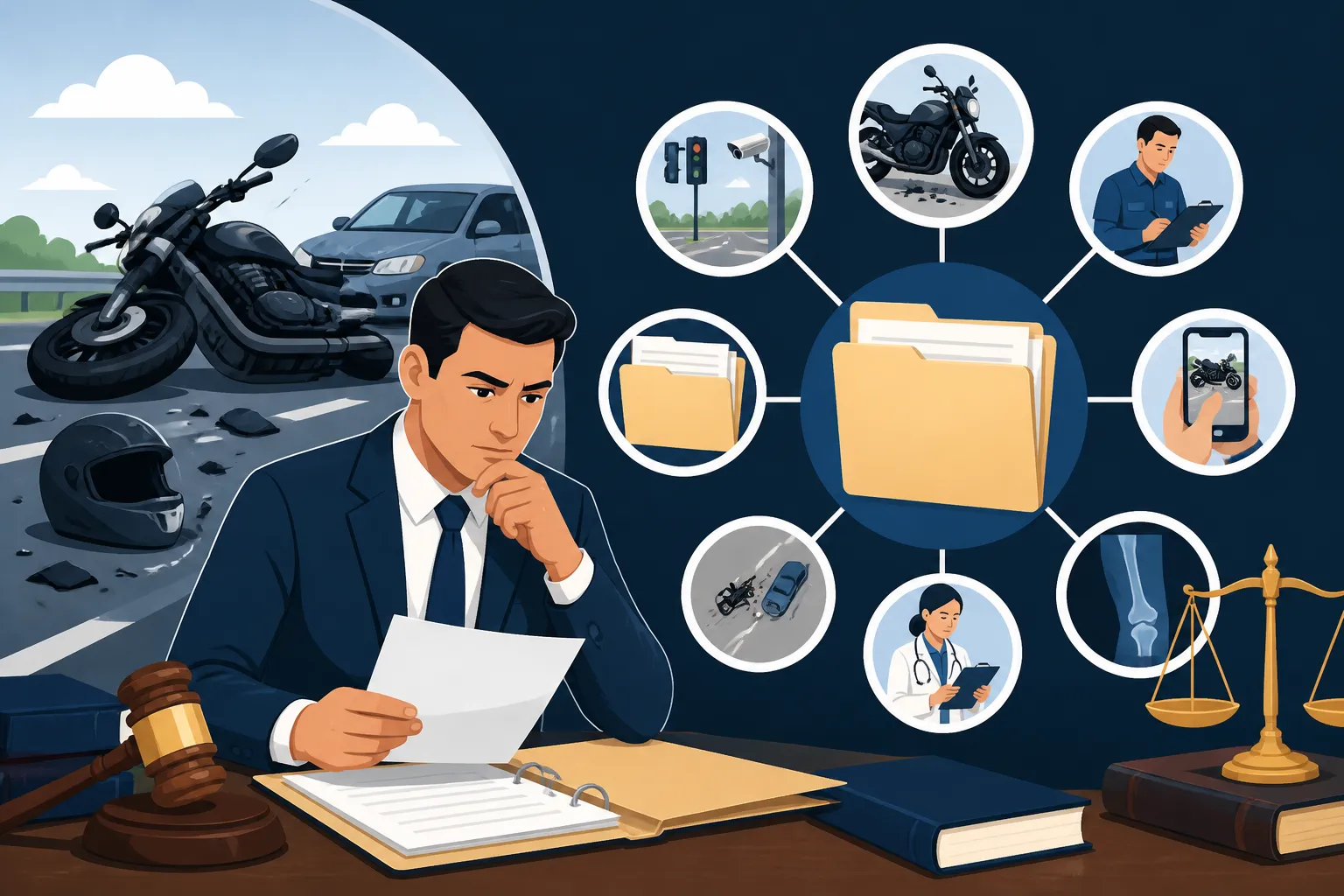
Alongside interrogatories, your lawyer will issue requests for production of documents. This is a formal demand for specific documents and tangible evidence relevant to the case. For a motorcycle accident, this could include:
- Medical Records: All bills, diagnostic test results (X-rays, MRIs, CT scans), treatment notes, and rehabilitation records related to your injuries. These are vital for documenting the extent of your injuries and damages.
- Police Reports: The official report filed by law enforcement at the scene, which often contains initial observations, witness statements, and preliminary fault assessments. However, it's worth noting that How a Police Report Can Hurt Your Claim if it unfairly attributes fault to the rider.
- Vehicle Repair Estimates/Photos: Documentation of the damage to your motorcycle and the other vehicle, helping to illustrate the impact's severity.
- Employment Records: Pay stubs, tax returns, and employer statements to substantiate your lost wages and loss of earning capacity.
- Dashcam or Surveillance Footage: Any video evidence from the accident scene or nearby businesses can be invaluable for proving fault. This is part of a larger strategy in gathering Motorcycle Accident Evidence for Proving Fault.
Your lawyer will also request similar documents from the at-fault driver, such as their insurance policy details, vehicle maintenance records, and any personal notes or communications related to the accident. This meticulous gathering of information ensures that when the case goes to trial, your legal team has a complete picture and can anticipate the arguments the other side will make.
Depositions: Witness Testimony Under Oath
Perhaps the most impactful part of the discovery phase is the deposition. This is where key individuals involved in the case, including you, the at-fault driver, eyewitnesses, and expert witnesses, are questioned under oath by attorneys from both sides. A court reporter is always present to transcribe every word, creating a formal record of the testimony.
For you, the injured rider, preparing for your deposition is crucial. Your attorney will spend considerable time helping you understand the process, reviewing potential questions, and practicing your answers. The opposing counsel will try to get you to contradict yourself, downplay your injuries, or admit to some degree of fault. The goal is to obtain testimony that can be used against you at trial or to pressure you into a lower settlement. Similarly, your lawyer will depose the other driver, aiming to uncover inconsistencies, pin them down on their account of events, and gather statements that support your claim of negligence.
Witnesses also play a critical role. If there were bystanders who saw the accident unfold, their depositions can provide unbiased accounts of what happened. For example, if a truck driver witnessed a car make an illegal left turn into your path, their testimony can be incredibly powerful. This highlights why How Witnesses Affect Motorcycle Fault can be so significant. Medical professionals, like your treating physician or a specialist, may also be deposed to detail your injuries, treatment, prognosis, and how your life has been affected. This testimony is crucial for demonstrating the extent of your damages, particularly for long-term or catastrophic injuries. The transcripts from these depositions can be read aloud in court if a witness is unavailable for trial, or used to impeach a witness who changes their story. It’s a powerful tool for gathering sworn testimony and evaluating the credibility of everyone involved.
Enlisting Expert Witnesses and Reconstructing the Accident
When a motorcycle accident case progresses to trial, it often moves beyond simple testimony about what happened. Serious accidents can involve complex physics, medical prognoses, and intricate financial calculations that laypeople (and even judges) might not fully grasp. This is where expert witnesses become indispensable, bringing specialized knowledge to illuminate critical aspects of your case for the jury.
Accident Reconstruction Specialists
Imagine trying to explain to a jury exactly how a collision occurred at a busy intersection, the speeds involved, the angles of impact, and what actions each driver took. It's incredibly difficult, especially when you're dealing with the chaos and trauma of the actual event. This is precisely where an accident reconstruction specialist steps in. These experts are like forensic detectives for crashes. They use scientific principles, engineering data, and meticulous analysis of physical evidence from the scene to recreate the accident sequence.
Their work can involve:
- Analyzing Skid Marks: Measuring tire marks and using friction coefficients to calculate vehicle speeds before impact.
- Vehicle Damage Assessment: Examining dents, scrapes, and deformation on both your motorcycle and the other vehicle to determine impact points and force.
- Reviewing Traffic Camera Footage: If available, they can synchronize multiple camera angles to create a timeline of events.
- Witness Statements and Police Reports: Integrating all available human testimony and official documentation into their scientific model.
By using computer simulations, detailed diagrams, and sometimes even scale models, they can present a clear, objective picture of how the accident unfolded, often dispelling myths or countering false narratives put forth by the opposing side. For example, if the other driver claims you were speeding, an accident reconstructionist can use physical evidence to prove otherwise, confirming your lawful speed. Their testimony is crucial for proving fault in a motorcycle accident and can be particularly effective in undermining defenses like "I Didn't See the Motorcycle" by showing that the other driver should have seen you based on visibility and timing. This is why knowing When to Hire an Accident Reconstruction Expert is so vital – their early involvement can shape the entire investigation.
Medical and Financial Experts
Beyond the mechanics of the crash, the impact on your life is paramount. This is where medical and financial experts become crucial. Your legal team will consult with various medical professionals to fully document and explain your injuries.
-
Medical Experts: This might include your treating physician, a surgeon, an orthopedic specialist, a neurologist, or a physical therapist. They can testify about the nature and extent of your injuries, the necessity of past and future medical treatments, the pain you’ve endured, and any permanent impairments or disabilities you’ve suffered. For instance, if you sustained a spinal cord injury from the motorcycle accident, a spinal specialist can explain to the jury the long-term effects, the need for ongoing care, and how it will impact your daily life. They can also connect your specific injuries directly to the accident, countering any claims that they are pre-existing. This is key to demonstrating How Injuries Affect Your Claim.
-
Financial Experts: Accident victims often face significant financial burdens that extend far beyond initial medical bills. This is where economists, vocational rehabilitation experts, or life care planners come in. They can:
- Calculate Lost Wages: Documenting not just the income you've already lost, but also the potential future income if your injuries prevent you from returning to your previous job or working at all. This is essential for proving Lost Wages in a Motorcycle Claim and understanding Loss of Earning Capacity Explained.
- Estimate Future Medical Costs: Projecting the lifetime costs of ongoing physical therapy, medications, potential future surgeries, adaptive equipment, and even in-home care. These figures can be staggering, especially for catastrophic injuries. This directly relates to How Future Medical Costs Are Estimated.
- Assess Loss of Enjoyment of Life: While harder to quantify, experts can sometimes provide context on how your injuries have diminished your ability to participate in hobbies, recreational activities, and daily life, contributing to your pain and suffering damages.
These experts provide objective, evidence-based opinions that give weight and credibility to your claims for both economic damages and non-economic damages, ensuring the jury understands the full financial and personal impact of your motorcycle accident.
Building the Trial Narrative and Case Presentation
While evidence and expert testimony are the backbone of a trial, simply presenting facts isn't enough. A compelling case needs a compelling story. Your lawyer's job is to weave all the disparate pieces of information – witness accounts, medical records, expert opinions, and your own testimony – into a clear, relatable narrative that resonates with the jury.
Developing the Theme and Story Arc
Think of your case not just as a collection of legal arguments, but as a story with a beginning, middle, and potential resolution. Your lawyer will develop a central theme that runs through every aspect of the trial. This theme is often a simple, powerful concept that highlights the injustice you've faced and the negligence of the other party. For example, the theme might be "A Moment of Distraction, A Lifetime of Pain," if the other driver was proven to be texting. Or, "Responsibility Ignored, Lives Shattered," if the at-fault driver showed a blatant disregard for road safety.
This story arc involves:
- The "Before": Portraying you as a vibrant, active individual before the accident, emphasizing your passions, work, and family life. This helps the jury connect with you on a human level and understand what you've lost.
- The "Incident": A clear, concise, and visually supported explanation of how the accident happened, firmly placing fault on the other driver. This is where the accident reconstructionist's findings become part of the narrative.
- The "After": Detailing the immediate aftermath, your painful recovery, the ongoing challenges, and the lasting impact on your physical health, emotional well-being, and financial stability. This section heavily relies on your medical records and your own testimony about your pain and suffering in motorcycle settlements.
The goal is to simplify complex legal and medical information into a human story that allows the jury to empathize with your plight and understand the real-world consequences of the other driver's actions. Every piece of evidence, every witness testimony, and every argument made by your lawyer will be framed to support this overarching narrative.
Visual Aids and Demonstrative Evidence
Humans are highly visual creatures, and a trial can be lengthy and filled with dense information. To keep the jury engaged and help them understand complex details, lawyers extensively use visual aids and demonstrative evidence. This isn't just about making things look pretty; it's about making them understandable and memorable.
Examples include:
- Accident Scene Diagrams: Detailed maps showing the layout of the road, the positions of vehicles, traffic signals, and points of impact. These can be particularly helpful for explaining complex maneuvers or accident sequences like Left-Turn Motorcycle Accidents Explained.
- Computer Animations and 3D Models: Sophisticated recreations of the accident, which can show the vehicles' paths, speeds, and forces of impact in a dynamic, easy-to-digest format. This takes the accident reconstructionist’s report and brings it to life.
- Medical Illustrations and Anatomical Models: Explaining complex injuries like a spinal cord injury or traumatic brain injury. A visual representation of a herniated disc or a fractured bone can make the severity of your pain far more tangible to a jury than just words.
- "Day in the Life" Videos: While carefully regulated, these can show a jury the daily struggles of someone with severe, permanent injuries, illustrating the profound impact on their quality of life.
- Photographs and Videos: Crucial documentation from the accident scene, including pictures of your damaged motorcycle, the other vehicle, and your injuries as they healed (or didn't). Remember, Photos to Take to Prove Motorcycle Fault immediately after the accident are invaluable, so always prioritize documenting the scene.
These visual tools serve to corroborate testimony, clarify complex expert opinions, and create a lasting impression on the jury, ensuring that your story is not only heard but also deeply understood. Your legal team at LegalMatch, or any dedicated firm, will invest heavily in preparing these materials to make your case as persuasive as possible.
Pre-Trial Motions and Final Preparations
Before the jury is even selected, a lot of legal groundwork is laid through pre-trial motions. These are formal requests made to the court to make rulings on certain issues before the trial officially begins. These motions can significantly shape how the trial proceeds, what evidence is presented, and what arguments can be made.
Motions in Limine and Other Legal Maneuvers
One of the most common types of pre-trial motions is a motion in limine. This Latin term translates to "at the threshold" or "at the outset," and it refers to a request to exclude certain evidence or testimony from being presented at trial, or conversely, to allow certain evidence to be admitted. For example:
- Excluding Prejudicial Evidence: Your lawyer might file a motion in limine to prevent the defense from bringing up irrelevant aspects of your past that could unfairly prejudice the jury against you (e.g., a minor traffic ticket from years ago that has nothing to do with the current accident).
- Admitting Key Evidence: Conversely, they might file a motion to ensure that crucial evidence, such as a toxicology report showing the other driver was impaired, is definitively allowed.
These motions are critical because they define the playing field for the trial. If the other side tries to introduce the "helmet defense," arguing that your injuries were worse because you weren't wearing a helmet (even if not legally required in your state for adults), your attorney would challenge this with a motion in limine, arguing its irrelevance or undue prejudice.
Other pre-trial legal maneuvers might include:
- Motions for Summary Judgment: Although rare in personal injury cases due to factual disputes, these motions ask the court to rule in favor of one party without a full trial, arguing that there are no genuine issues of material fact.
- Pre-Trial Conferences: These are meetings between the judge and attorneys from both sides to discuss logistical issues, clarify outstanding legal questions, and explore any last-minute settlement possibilities. This is often where the trial schedule is finalized and procedures are confirmed.
Each of these steps is a strategic move, designed to protect your case, streamline the trial, and ensure that only relevant and admissible evidence is presented to the jury.
Jury Selection and Opening Statement Strategy
Once the pre-trial legal sparring is complete, the focus shifts to the practical aspects of the trial, starting with the jury.
-
Jury Selection (Voir Dire): This is the process where potential jurors are questioned by the judge and attorneys to determine their suitability to serve on the jury. Your lawyer will be looking for impartial individuals who can fairly assess the evidence and apply the law. This involves asking questions to uncover biases, prejudices, or prior experiences (e.g., if they've been involved in a motorcycle accident themselves, or have strong opinions about motorcyclists). While no one can pick the "perfect" jury, the goal is to identify and strike potential jurors who might be predisposed against your case. This is a subtle yet incredibly important part of trial strategy, as the composition of the jury can significantly influence the outcome.
-
Opening Statement Strategy: This is your lawyer's first opportunity to directly address the jury and introduce your case. It's not an argument, but rather a roadmap of what the jury will hear and see during the trial. A well-crafted opening statement is powerful, memorable, and sets the tone for the entire proceeding. It typically includes:
- Introducing the Parties: Briefly identifying you, the other driver, and the key issues.
- The Theme of the Case: Reinforcing the central narrative that your lawyer has developed.
- A Summary of the Evidence: Outlining the key facts, witness testimonies, and expert opinions that will be presented.
- The Injuries and Damages: Providing a clear picture of the physical, emotional, and financial toll the accident has taken on you.
The opening statement is meticulously prepared, often rehearsed, and designed to grab the jury's attention, clearly present your side of the story, and leave them with a strong initial impression that favors your position. It’s their chance to frame the narrative before the evidence even begins.
Client Readiness and Understanding the Trial Process
For many people, the idea of testifying in court is incredibly intimidating. It’s natural to feel anxious, but your legal team is there to prepare you thoroughly, ensuring you understand your role and what to expect during the trial.
Preparing the Client for Testimony
Your testimony is often one of the most crucial pieces of evidence in your case. A credible, clear, and consistent testimony from you can significantly influence the jury. Your lawyer will spend a considerable amount of time preparing you for both direct examination (when your own lawyer questions you) and cross-examination (when the opposing lawyer questions you).
This preparation includes:
- Reviewing Your Story: Going over the sequence of events leading up to, during, and after the accident. You'll discuss your injuries, treatment, and how your life has been impacted. Honesty and consistency are key.
- Anticipating Cross-Examination: Your attorney will role-play potential questions the opposing counsel might ask, including tough or uncomfortable ones. They will prepare you for questions designed to trip you up, challenge your credibility, or downplay your injuries. You might be asked about pre-existing conditions or gaps in medical treatment, and your lawyer will help you formulate truthful, clear answers.
- Courtroom Demeanor: Your lawyer will advise you on how to present yourself – dressing appropriately, maintaining eye contact, speaking clearly and confidently, and remaining calm even under pressure. They'll emphasize the importance of listening carefully to each question and answering only what is asked, without volunteering extra information.
- Managing Emotions: It's completely normal to feel emotional when recounting a traumatic event and discussing your pain. Your lawyer will help you understand that while showing genuine emotion is acceptable, becoming overly angry or defensive can be counterproductive. The goal is to convey the truth of your experience effectively and authentically.
Understanding this preparation ensures that you feel as comfortable and confident as possible when you take the stand, allowing your voice to be heard clearly and powerfully.
What to Expect During Trial
The trial itself follows a specific, structured sequence, and knowing what to expect can help demystify the process. A typical trial unfolds like this:
- Jury Selection: As discussed, this is the initial phase where the jury is chosen.
- Opening Statements: Both your lawyer and the opposing counsel will present their opening statements, outlining their cases to the jury.
- Presentation of Evidence (Your Case): Your lawyer will then call witnesses, starting with you, to testify. This also includes presenting documents, photos, and expert testimony. This is the heart of How Lawyers Prove Fault and Damages.
- Presentation of Evidence (Defense Case): Once your side rests, the defense will present their case, calling their witnesses and introducing their evidence to counter your claims.
- Rebuttal: Your lawyer may then have the opportunity to present additional evidence to rebut points raised by the defense.
- Closing Arguments: After all evidence is presented, both lawyers deliver their closing arguments, summarizing the evidence and urging the jury to find in their favor.
- Jury Instructions: The judge will instruct the jury on the applicable laws they must follow when deliberating.
- Jury Deliberation: The jury then retires to discuss the case and reach a verdict. This can take hours, days, or even weeks depending on the complexity of the case.
- Verdict: Once the jury reaches a decision, it is announced in court.
Trials can vary significantly in length, from a few days for simpler cases to several weeks or even months for highly complex ones involving catastrophic injuries. It's a demanding process, both physically and emotionally. However, understanding the stages and being prepared by your legal team, such as those you might find through platforms like LegalMatch, will ensure you are ready for the journey. It's a stark contrast to the informal discussions of a settlement, as detailed in an article like Motorcycle Accident Settlement vs Trial, but it’s a necessary step when justice demands a public reckoning.
Trial Preparation Activities Comparison Table
| Activity | Pre-Trial/Settlement Focus | Trial Preparation Focus |
|---|---|---|
| Evidence Gathering | Informal collection; primarily for negotiation leverage | Formal discovery; exhaustive, legally admissible evidence |
| Witnesses | Informal interviews; potential statements | Depositions (sworn testimony); subpoenaed experts |
| Communication | Direct negotiation with adjusters; demand letters | Formal legal filings; motions; courtroom arguments |
| Goals | Reach a mutually agreeable settlement | Prove liability and damages to a judge/jury |
| Legal Documentation | Demand packages; settlement offers | Interrogatories; requests for production; motions in limine |
| Client Preparation | Reviewing facts for settlement talks | Intensive testimony coaching (direct & cross-examination) |
| Risk & Cost | Generally lower; quicker resolution | Higher (legal fees, expert costs); uncertain outcome |
| Outcome Control | Parties have more control over the resolution | Judge and jury determine the outcome |
Disclaimer
Please remember that this information is for educational purposes only and should not be considered legal advice. Motorcycle accident cases are complex, and the specific laws and procedures can vary significantly by state. If you or a loved one has been involved in a motorcycle accident, it is always recommended to consult with a qualified motorcycle accident attorney to discuss your individual situation and legal options.