How Attorney-Client Privilege Protects You
When you've been in a motorcycle accident, the aftermath can feel like a whirlwind of confusion, pain, and uncertainty. You're trying to heal, deal with bike repairs, and on top of it all, navigate the complex world of insurance claims and potential legal action. One of the biggest anxieties many riders face is knowing what information to share, who to trust, and how to protect themselves from saying something that could jeopardize their future. This guide dives deep into the attorney-client privilege, explaining exactly how this vital legal protection shields you as you pursue a motorcycle accident claim, allowing you to speak freely with your lawyer.
The Foundation of Trust: Understanding Attorney-Client Privilege
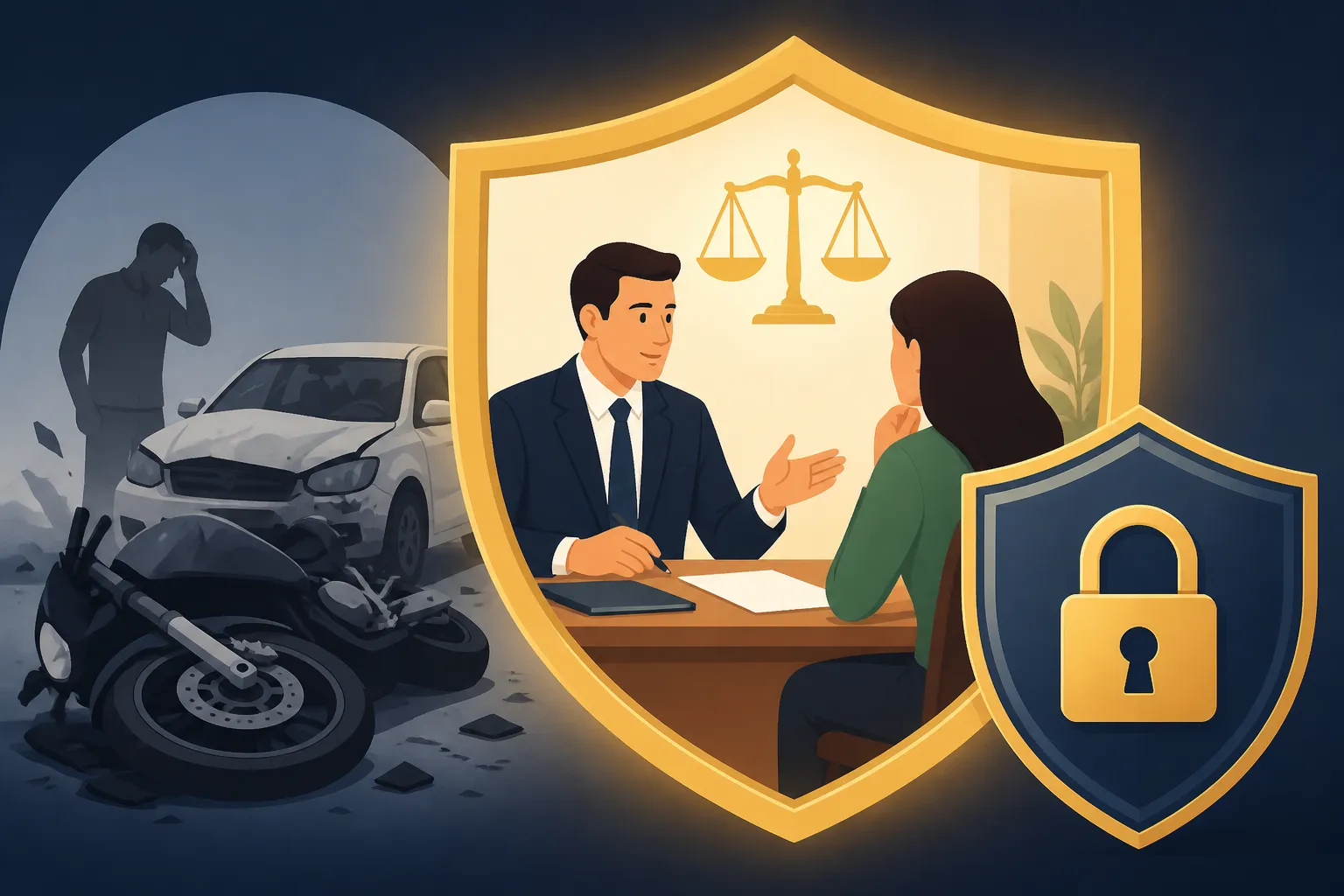
Imagine you're sitting across from a lawyer, sharing the most intimate details of your crash—the terror, the pain, the moments leading up to the impact. You might worry that anything you say could be used against you, either by the at-fault driver's insurance company or even in court. This is where attorney-client privilege steps in, acting as a bedrock of protection. It's a fundamental legal principle that ensures confidential communications between you (the client) and your attorney remain private and cannot be disclosed to others, including the opposing party, the court, or the public, without your consent. It's designed to encourage full and frank communication, because without it, how could you truly get the best legal advice?
The privilege isn't just a courtesy; it's a legal right that dates back centuries, rooted in the idea that for justice to be served, individuals must be able to confide completely in their legal counsel. In the context of a motorcycle accident claim, this means you can lay out every detail, every fear, every embarrassing mistake you think you might have made, knowing that your lawyer cannot be compelled to reveal that information. This candid exchange is absolutely critical for your attorney to properly assess your case, identify potential challenges, and build the strongest possible strategy on your behalf.
What Exactly Does the Privilege Cover?
The attorney-client privilege broadly covers communications made for the purpose of seeking or providing legal advice. This isn't limited to just spoken words; it extends to written documents, emails, text messages, and even non-verbal cues shared within the confines of the legal representation. For instance, if you email your attorney a detailed account of your injuries, including photos of your road rash and descriptions of your pain, that communication is privileged. Similarly, if your lawyer asks you questions about the moments leading up to the crash, such as whether you were lane splitting or if your bike had any modifications, your answers are protected.
It's important to understand that the communication must be confidential and made for the purpose of obtaining legal advice. If you discuss your case with your lawyer while other non-legal parties are present, or if you tell your story to a friend who then tells your lawyer, the privilege might not apply. The sanctity of the conversation lies in its confidential nature between you and your legal representative. This means that when you’re discussing the often sensitive and personal details of your accident, from the immediate impact to the long-term effects of a traumatic brain injury, you can do so knowing it’s kept under wraps.
Why This Protection is Crucial for Motorcycle Accident Victims
Motorcycle accidents often carry a certain stigma. Riders sometimes face unfair biases, with assumptions made about their riding style or responsibility, regardless of the actual circumstances of the crash. Insurance companies, in particular, are notorious for trying to assign blame to riders, even when the fault clearly lies with another driver. This unfortunate reality makes the attorney-client privilege even more critical for you.
When you're trying to piece together what happened and facing mounting medical bills, the last thing you need is to feel hesitant about telling your lawyer the whole truth. Perhaps you were just moments from splitting lanes, or you had a minor modification to your exhaust system that you're worried about. These details, while potentially irrelevant or easily explained by an experienced legal professional, might seem damaging to you. With attorney-client privilege, you can openly discuss these concerns without fear. Your lawyer needs all the facts, good, bad, or indifferent, to properly evaluate your case, anticipate defenses from the other side, and craft a compelling narrative that protects your rights. This uninhibited dialogue forms the very backbone of a strong legal defense or a successful personal injury claim. Without it, you’d be fighting with one hand tied behind your back, making it significantly harder to get the justice and compensation you deserve.
Maintaining the Confidentiality of Your Communications
Understanding what attorney-client privilege is only half the battle; knowing how to actively maintain it is equally, if not more, important. After a motorcycle accident, you're often in a vulnerable state, and it's easy to accidentally undermine this protection if you're not careful. The general rule is simple: keep your legal discussions private and limited to your attorney and their immediate legal staff.
Think of it this way: your conversations with your lawyer are like a tightly sealed vault. Every time you bring another person into that conversation or share privileged information outside of that direct channel, you risk opening the vault door. This is especially true in the age of digital communication, where a casual text or a quickly drafted email can inadvertently waive your rights if not handled properly.
Keeping Your Conversations Private
One of the easiest ways to protect the privilege is to ensure your discussions with your attorney are truly private. This means being mindful of your surroundings and who might overhear or see your communications.
- In-person meetings: Always choose a private setting for meetings with your attorney. Their office is designed for this, but if you meet elsewhere, ensure no one else is within earshot. For example, don't discuss the specifics of your accident or your legal strategy in a busy waiting room or a crowded coffee shop.
- Phone calls: When on the phone with your lawyer, be in a private space where conversations can't be overheard. Avoid speaking about your case in public transportation, open-plan offices, or even in your home if others are present who aren't part of the legal team (e.g., friends, distant relatives).
- Written communications (emails, texts): Use secure and private channels. Email your lawyer directly, not a group chat. Avoid sharing sensitive information over public Wi-Fi networks if possible, or ensure you're using secure connections. Be cautious about sending detailed accounts of your accident from work computers or devices that might be monitored by an employer.
- Third parties: The presence of a third party, even someone close to you like a spouse or parent, can sometimes waive the privilege if they are not considered a necessary part of the legal process. While some jurisdictions extend the privilege to cover a spouse if they are helping you seek legal advice, it's always safest to confirm with your attorney first or to have discussions with only your lawyer present. If a crucial witness needs to be present, your lawyer will guide that interaction carefully.
It's also essential to be wary of anything you post online. Social media posts about your accident, your injuries, or even your daily activities can inadvertently contradict your claim or provide the opposing side with information they can use against you. Your lawyer will likely advise you to limit or halt social media activity during your claim to protect your interests, as discussed in detail in posts like How to Document Injuries for a Claim.
Avoiding Accidental Waiver of Privilege
Accidental waiver is a common pitfall. It happens when you unknowingly disclose privileged information to someone outside the protected attorney-client relationship. Once the information is out, it's often impossible to put the genie back in the bottle.
Here are some common scenarios where privilege can be accidentally waived:
- Sharing with friends or family: While it's natural to confide in loved ones, explaining details of your discussions with your lawyer, or even showing them documents your lawyer prepared, can be problematic. If your best friend overhears you recounting specific instructions or advice from your attorney, that information could potentially lose its privileged status if that friend were later called as a witness.
- Talking to insurance adjusters: Never discuss the specifics of your case, your injuries, or your attorney's advice with any insurance adjuster, even your own, without your lawyer's explicit guidance. Insurance adjusters are trained to gather information, and anything you say can be used to minimize your claim. Let your lawyer handle all communications with insurance companies, as detailed in How Lawyers Deal with Insurance Companies.
- Disclosing to other professionals: Be cautious about sharing privileged information with doctors, therapists, or other professionals, unless your lawyer specifically advises it. While your medical records are critical to your case, your private conversations with your lawyer about legal strategy usually aren't.
- Social media and public forums: As mentioned, anything you post publicly can be scrutinized. A detailed post about the accident, even one meant to vent frustration, could be seen as a public disclosure, potentially waiving privilege over related communications.
- Failing to mark documents as confidential: While not always legally required, clearly marking documents shared with your attorney as "Attorney-Client Privileged" or "Confidential" can serve as a strong indicator of your intent to protect that communication. This is especially true for documents shared between multiple parties within a company or organization who may also be involved in the legal matter.
To truly protect yourself, remember that your lawyer is your shield. Direct all questions, concerns, and communications related to your accident and your legal claim solely through them. When preparing for your case, remember that detailed information, such as photos to take to prove motorcycle fault, should be shared directly with your legal counsel. They know the intricacies of the law, including specific state regulations like Motorcycle Accident Fault Laws in California, and how to best utilize evidence while maintaining privilege. Using platforms like LegalMatch can help you find attorneys well-versed in these protections. LegalMatch can connect you with legal professionals who understand the importance of safeguarding your sensitive information.
| Action | Impact on Privilege | Best Practice |
|---|---|---|
| Discussing details with your attorney in private | Protected: Encourages open and honest communication. | Always communicate with your attorney in a secure, private environment (office, private phone call, secure email). |
| Discussing details with your attorney while a third party is present (e.g., friend, family) | Potentially Waived: Third-party presence can break confidentiality. | Only include essential parties (e.g., interpreter, legal team member) as advised by your attorney. |
| Sharing documents or emails from your attorney with a third party | Likely Waived: Disclosure outside the protected relationship. | Never share any attorney-client communication with anyone without your attorney's explicit approval. |
| Posting about your case on social media | Waived: Public disclosure of information. | Refrain from discussing your accident or legal case on social media. Your attorney can advise on specific social media guidelines. |
| Speaking to insurance adjusters about the accident | Potentially Waived: Adjusters are agents of the opposing side. | Direct all communications from insurance adjusters to your attorney immediately. Do not provide statements without legal counsel. |
| Sharing information with medical professionals related to your injuries | Generally Not Waived for Medical Info: But be cautious about legal strategy. | Provide medical professionals with necessary health information, but avoid discussing legal strategy or specific conversations with your attorney unless specifically instructed. |
| Discussing the case with co-workers | Potentially Waived: Casual conversation can lead to disclosure. | Keep details of your case confidential and avoid discussing it with colleagues or acquaintances. |
When Attorney-Client Privilege Has Limits and Exceptions
While attorney-client privilege is a powerful tool, it's not absolute. There are specific circumstances where the privilege might not apply or can be challenged. Understanding these limitations is just as important as knowing its protections, as it helps you avoid situations that could inadvertently expose your sensitive information.
It's natural to assume that everything you tell your lawyer is automatically privileged, but that's not quite the case. The purpose of the communication matters, as does your intent and certain ethical considerations that guide legal professionals. Your attorney will explain these nuances, especially when gathering crucial evidence for proving fault in a motorcycle accident, but it's good to have a general understanding yourself.
Communications Not Covered by the Privilege
Not every conversation you have with someone who happens to be a lawyer automatically falls under attorney-client privilege. For the privilege to apply, several conditions must be met:
- No legal advice sought: If you're merely chatting with an attorney at a social gathering about general legal concepts, or if you're discussing a business deal where no legal advice is being sought, those communications are typically not privileged. The conversation must be for the purpose of obtaining legal advice or assistance.
- Non-confidential communications: As discussed, if you communicate with your lawyer in a public setting where others can easily overhear, or if you send an email to your lawyer and carbon-copy a non-legal third party, the confidentiality element is broken, and the privilege may not apply.
- Facts vs. communications: The privilege protects the communication itself, not the underlying facts. For example, if you tell your lawyer that you were speeding just before the accident, the statement you made to your lawyer is privileged. However, the fact that you were speeding is not privileged. If the other side discovers you were speeding through independent means (e.g., a police report, witness testimony, traffic camera footage), they can use that fact in court. Your lawyer cannot be compelled to reveal that you told them this fact, but they also cannot prevent the fact itself from being used if proven by other evidence. This distinction is crucial, especially concerning issues like How Speeding Affects Motorcycle Accident Fault.
- Physical evidence: The privilege generally does not protect physical evidence. If you give your lawyer a piece of physical evidence related to the crime (e.g., a damaged helmet, a repair bill from before the crash), the lawyer may have an ethical duty to turn that evidence over to the authorities or the opposing party, even if you provided it in confidence. Your lawyer can advise you on how best to handle physical evidence related to your crash or motorcycle, ensuring it helps your case without compromising privilege.
Exceptions to the Rule
Even when a communication initially qualifies for privilege, there are a few limited exceptions where a court might compel disclosure. These exceptions are rare and usually apply in very specific circumstances:
- Future crime or fraud exception: This is perhaps the most well-known exception. If a client communicates with their attorney for the purpose of committing a future crime or fraud, the privilege does not apply. For example, if you tell your lawyer you plan to destroy evidence or commit perjury, that communication is not privileged. This exception is designed to prevent the legal system from being used to facilitate illegal activities.
- Waiver by the client: You, the client, are the holder of the privilege, and you can waive it. This can happen intentionally (e.g., you decide to openly discuss your privileged communications with others) or, more commonly, accidentally (as discussed in the previous section, by disclosing information to a third party). Once waived, even accidentally, it can be difficult or impossible to reclaim the privilege.
- Disputes between attorney and client: If there's a dispute between you and your attorney (e.g., a fee dispute, a malpractice claim), the privilege may be set aside to the extent necessary for either party to defend themselves. For instance, if you sue your lawyer for malpractice, they might be able to disclose privileged communications to defend against your claim.
- Public safety exception: While less common in civil personal injury cases, there can be extremely rare circumstances where overriding public safety concerns might lead to an exception, although these are typically narrowly defined and subject to strict judicial review.
Understanding these boundaries is paramount to effectively using attorney-client privilege to your advantage. It allows you to speak openly with your legal counsel about sensitive details of your accident, from the initial impact to the long-term effects of a spinal cord injury, while respecting the legal framework. When you're dealing with the aftermath of an accident, knowing that you have a confidential space to discuss your fears and facts with an attorney is invaluable. This is why when you're considering your options, utilizing a service like LegalMatch to find an attorney can be a wise choice. LegalMatch can connect you with experienced lawyers who specialize in motorcycle accident claims and can meticulously guide you through what information is protected and what isn't. They can help you understand how Motorcycle Accident Evidence for Proving Fault is handled and ensure your rights are fully protected.
Your Role in Protecting the Privilege
Ultimately, the attorney-client privilege is yours to protect. While your lawyer has an ethical and legal obligation to maintain confidentiality, your actions directly impact the strength of that protection. Being an active participant in safeguarding this privilege is one of the most proactive steps you can take to secure your legal position after a motorcycle accident.
Remember, the opposing side, particularly aggressive insurance companies, will look for any crack in your case, and a waiver of privilege can be a significant vulnerability. They might try to argue that certain communications are not privileged, or they might push for details you unwittingly shared with someone outside the attorney-client relationship. By understanding and adhering to the guidelines, you create a robust shield around your confidential discussions.
Being Mindful of All Communications
It's not just the big, formal meetings that matter. Every text, every email, every casual mention of your case to someone outside your direct legal team counts. Cultivate a habit of treating all communications about your legal case as strictly confidential.
- Internal discussions at the law firm: Be aware that the privilege also extends to discussions between your attorney and their staff (paralegals, legal assistants) who are working on your case. These individuals are also bound by confidentiality, allowing for seamless internal communication regarding your case without breaking privilege.
- Documentation: When you're compiling documents for your lawyer, such as an injury journal or records related to lost wages, ensure these documents are shared only with your legal team. If you're creating a timeline of events, for instance, be explicit about its purpose—to provide information to your attorney for legal advice.
- Ask questions: If you're ever unsure whether a particular communication or action might compromise your privilege, ask your attorney. It's always better to clarify upfront than to inadvertently waive a crucial protection later on. Your lawyer is there to guide you through these complexities, including helping you understand what to do after a motorcycle accident to protect your legal claim.
The Importance of Early Legal Consultation
One of the most powerful ways to protect your attorney-client privilege, and your overall case, is to engage legal counsel as early as possible after a motorcycle accident. The moments and days immediately following a crash are critical. You're making decisions, talking to police, exchanging information, and potentially dealing with medical professionals and insurance adjusters. Each of these interactions holds the potential to impact your claim.
When you bring a lawyer on board early, all your subsequent communications about the accident, your injuries, and the claim process can be directed through the privileged channel. This means your lawyer can advise you on what to say to police after a motorcycle accident, how to handle inquiries from insurance companies, and even what not to say at the scene. They can take over communication with insurance adjusters, preventing you from accidentally making statements that could be detrimental to your case or inadvertently waiving your privilege.
For instance, your attorney can advise you specifically on how How to Fight an Unfair Fault Assignment that an insurance company might try to push onto you. They can also provide guidance on how to document crucial details, from the scene itself to the impact on your daily life, all while ensuring that these communications are safeguarded. Leveraging resources like LegalMatch to find a seasoned motorcycle accident attorney quickly can set the stage for a stronger, better-protected claim from the outset. LegalMatch connects you with professionals who understand the urgency and sensitivity required in these early stages, ensuring your attorney-client privilege is established and respected from day one.
In summary, attorney-client privilege is a critical shield for anyone navigating the aftermath of a motorcycle accident. It allows you to be completely open with your lawyer, empowering them to build the strongest possible case for you. By understanding its scope, maintaining confidentiality, and knowing its limits, you play an indispensable role in ensuring this vital legal protection works effectively for you.
Disclaimer
The information provided in this guide is for general informational purposes only and does not constitute legal advice. The laws surrounding attorney-client privilege, motorcycle accidents, and personal injury claims can vary significantly by jurisdiction and are complex. It is crucial to consult with a qualified attorney licensed in your state for advice tailored to your specific situation. Relying solely on general information without professional legal counsel may not be in your best interest.