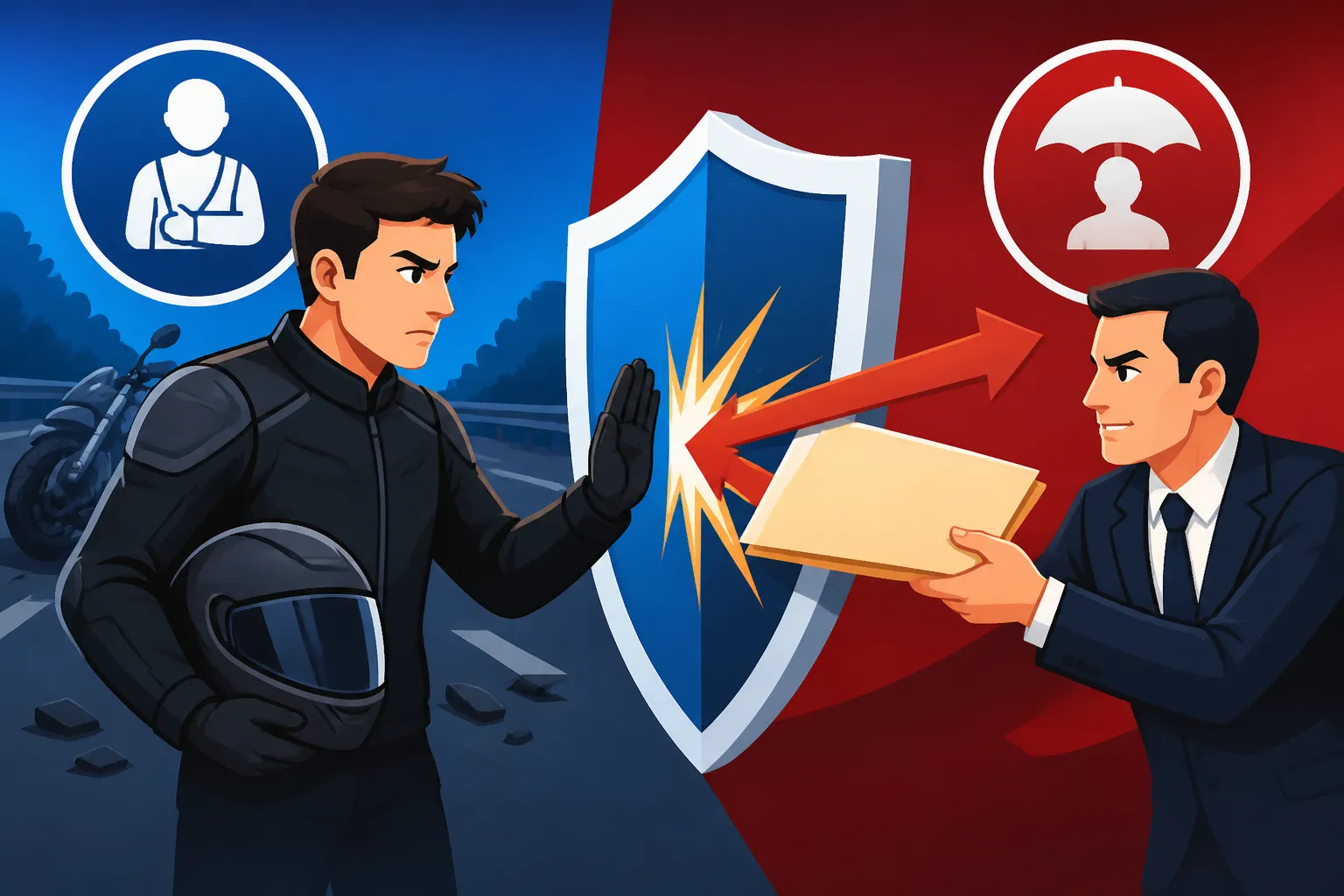
How to Counter an Insurance Offer
After a motorcycle accident, one of the most disheartening experiences can be receiving an initial settlement offer from the insurance company that feels insultingly low. You’re dealing with injuries, mounting medical bills, lost wages, and the emotional toll of the crash, only to be met with an offer that barely scratches the surface of your real losses. It’s a frustrating reality many riders face, but it’s crucial to understand that this first offer is rarely the final one. This comprehensive guide is designed to empower you with the knowledge and strategies needed to effectively counter an insurance offer and fight for the fair compensation you deserve.
Understanding the Initial Insurance Offer: Why It's Often Low
It’s almost a rite of passage for motorcycle accident victims: you’ve been through a traumatic event, you’re trying to heal, and then the insurance company calls with an offer that feels like a slap in the face. Many riders assume this first number is set in stone, or they worry that if they don't accept it, they'll end up with nothing. But the truth is, these initial offers are almost always intentionally low. They're a starting point for negotiations, designed to test your resolve and knowledge of the claims process.
The Insurer's Business Model and Profit Motive
At its core, an insurance company is a business, and like any business, its primary goal is to maximize profits. This means paying out as little as possible on claims. Every dollar they pay out is a dollar less in their profit margin. Understanding this fundamental truth helps explain why their initial offer might seem completely out of sync with your actual damages. They aren't inherently malicious, but they are certainly not on your side in the financial sense. They have adjusters whose job is to minimize payouts, and they are very good at it.
This profit motive drives their entire approach to claims. They'll assess your claim based on their internal metrics, algorithms, and sometimes, even preconceived notions about motorcycle riders, often without truly understanding the full extent of your pain and suffering or future needs. They hope you're unrepresented, stressed, and willing to accept a quick, easy, but ultimately insufficient payout just to close the chapter. It's a calculated gamble on their part, relying on your potential lack of legal knowledge or your urgent need for funds to cover immediate expenses.
Common Tactics Used to Undervalue Claims
Insurance companies employ a variety of tactics to drive down settlement values. One common strategy is to downplay the severity of your injuries, suggesting that your medical treatment was excessive or that your pain isn't as bad as you claim. They might scrutinize your medical records for any pre-existing conditions, trying to argue that your current injuries aren't solely a result of the accident. For example, if you had a previous back strain, they might try to attribute your current spinal injury to that old issue, even if the accident clearly exacerbated or directly caused new trauma.
Another tactic involves questioning the necessity of certain medical procedures or therapy sessions, implying you're seeking more care than is truly required. They might also pressure you to settle quickly, before the full extent of your injuries and their long-term impact are even known. They might present a "take it or leave it" attitude or imply that if you don't accept their offer, the process will become far more complicated and drawn out. You can learn more about how insurers lowball motorcycle riders to prepare for these common ploys. Be wary of these strong-arm tactics.
The "Rider Bias" Factor in Motorcycle Claims
Unfortunately, motorcycle riders often face a unique hurdle: inherent bias. In many jurisdictions, and even in the minds of some adjusters, there's a stereotype that motorcyclists are reckless or inherently more dangerous on the road. This unfair perception can subtly or overtly influence how insurance companies evaluate a claim. They might try to assign a percentage of fault to you, even when the evidence overwhelmingly points to the other driver. For instance, in a common scenario like a driver making a left-turn into a motorcyclist, the driver is often at fault, yet the insurance company might try to argue the rider was speeding or not visible.
This bias can lead to a lower initial offer, as the insurer attempts to leverage this societal perception to reduce their liability. They might imply that your choice to ride a motorcycle somehow contributes to your injuries, regardless of the circumstances of the crash. This is why thorough documentation and a strong legal advocate are so vital. It's about fighting against these unfair assumptions and presenting the facts clearly and unequivocally. Understanding that this bias exists is the first step in dismantling it within your claim.
Gathering Your Ammunition: Building a Strong Counter-Offer
You can’t effectively counter an offer with just your word against theirs. You need solid, irrefutable evidence. Think of it like building a fortress – each piece of evidence is a brick, making your claim stronger and more resilient to attack. This phase is about meticulously collecting everything that supports your story and quantifies your losses.
Comprehensive Documentation of Damages Economic
Economic damages are the easiest to quantify because they come with receipts, bills, and pay stubs. These are the measurable financial losses you’ve incurred or will incur due to the accident. This category is broad, covering everything from immediate ambulance rides to long-term physical therapy, and even potential future lost wages. The more detailed and complete your documentation, the harder it is for the insurance company to dispute these figures.
Start with all your medical expenses: ambulance fees, emergency room bills, doctor visits, specialist consultations, prescription medications, physical therapy, chiropractic care, and any medical devices like crutches or braces. Don't forget future medical costs, which can include anticipated surgeries, ongoing therapy, or long-term care, especially in cases of catastrophic injuries. Beyond medical care, keep track of lost wages. This includes not just the income you missed while recovering, but also any loss of earning capacity if your injuries prevent you from returning to your previous job or working at the same level. If you're self-employed, proving lost wages can be tricky, but bank statements, tax returns, and client invoices can help demonstrate your earning potential. Also, include property damage – repairs to your motorcycle or the cost of replacement, plus any damaged gear like helmets or riding jackets. Any out-of-pocket expenses, such as transportation to medical appointments or household services you had to hire because you couldn't perform them yourself, should also be included.
Detailing Non-Economic Losses Pain and Suffering
This is where things get more subjective, but no less real. Non-economic damages, often called "pain and suffering," compensate you for the intangible impacts of your injuries. These losses don't come with a bill, but they significantly diminish your quality of life. This includes physical pain, emotional distress, mental anguish, loss of enjoyment of life, and inconvenience. It's easy for insurers to dismiss these, making your detailed accounts crucial. To prove pain and suffering, it's vital to keep a detailed journal documenting your daily struggles, pain levels, and how your injuries affect your personal life, hobbies, and relationships.
For example, if you can no longer ride your motorcycle, play with your kids, or perform household chores without pain, these are tangible losses of enjoyment. Emotional distress can manifest as anxiety, depression, PTSD, or sleep disturbances. Documenting counseling sessions or medication for these issues can provide concrete evidence. Insurers often use formulas, like the multiplier method, to calculate pain and suffering based on your economic damages, but your personal narrative and medical professional statements about your psychological state are essential to convey the true depth of your suffering. Remember, your medical records should also reflect any complaints of pain or emotional distress you reported to your doctors.
Evidence of Fault and Liability
Proving the other driver was at fault is paramount. If you can't establish their liability, even the most severe injuries might not be compensable. Gather all evidence from the accident scene: police reports, witness statements, photographs of the vehicles and the accident scene, and any dashcam or surveillance footage. The police report often provides an initial assessment of who is at fault in a motorcycle accident, which can be a strong piece of evidence. However, remember that a police report isn't the final word, and sometimes it can even be inaccurate.
If there were traffic citations issued to the other driver, such as for speeding, distracted driving, or failure to yield, these strengthen your claim. For instance, if the driver made an illegal left turn and caused a left-turn motorcycle accident, the citation would be powerful proof. Even if no citation was issued, witness testimony can be incredibly helpful. Always get contact information from anyone who saw the crash. Evidence like skid marks, debris fields, and vehicle damage can also help an accident reconstruction expert determine how the accident occurred and who was responsible. The more clearly you can demonstrate the other party’s negligence, the stronger your position will be when countering their lowball offer.
| Lowball Tactic | Effective Counter-Strategy | Why It Works |
|---|---|---|
| "Your injuries aren't that bad." | Provide comprehensive medical records, doctor's notes, and an injury journal. | Medical professionals' opinions and your personal account create irrefutable proof. |
| "You had a pre-existing condition." | Get a doctor's statement confirming the accident exacerbated or caused new injuries. | The "eggshell skull" rule (you take victims as you find them) applies in many states. |
| "Your lost wages are exaggerated." | Submit pay stubs, tax returns, employer statements, and future earning capacity reports. | Concrete financial documents verify the monetary impact of lost work. |
| "Motorcyclists are risky; you're partly at fault." | Present objective accident reports, witness statements, and traffic laws. | Factual evidence (like adherence to traffic laws or the other driver's violation) debunks bias. |
| "Settle now, or it will get complicated." | Politely decline, gather more evidence, and consult a motorcycle accident lawyer. | Shows you're not desperate and are prepared for a protracted fight if necessary. |
| "We only pay X for pain and suffering." | Detail emotional distress, loss of enjoyment, and psychological impact with therapy records. | Subjective experiences become more concrete when supported by professional care and a personal narrative. |
| "We can only offer policy limits." | Investigate if multiple policies apply (UM/UIM), or if the at-fault driver has personal assets. | Explores all avenues for recovery beyond the initial stated limits. |
Crafting Your Counter-Offer: The Demand Letter
Once you've meticulously gathered all your evidence, it's time to package it into a compelling counter-offer. This isn't just about throwing out a higher number; it's about presenting a clear, concise, and persuasive argument for why your claim is worth significantly more than their initial offer. The demand letter is your formal opportunity to do just that.
Structuring a Powerful Demand Letter
A demand letter is a formal document that outlines the details of the accident, your injuries, your damages, and your legal basis for demanding a specific settlement amount. It should be professional, factual, and persuasive. Start with a clear and concise summary of the accident, identifying the parties involved and the date and location of the crash. Then, detail the injuries you sustained, referencing medical reports and diagnoses. Explain the course of your medical treatment, from initial emergency care to ongoing therapy, emphasizing the severity and long-term implications of your injuries. This is not the place for emotional outbursts, but rather a compelling presentation of facts and their consequences.
Following the injury summary, provide a detailed breakdown of all your economic damages, including medical bills, lost wages, and property damage. Use bullet points or a table to make this information easy to digest. Then, transition to your non-economic damages, explaining how the accident has impacted your life beyond financial costs, referencing your pain and suffering journal. Conclude with a clear statement of your demand for settlement, backing it up with the detailed explanation of damages. Remember, the goal is to present a complete and compelling picture of your losses, making it difficult for the insurer to ignore the true value of your claim.
Clearly Stating Your Desired Settlement Amount
When you're writing a motorcycle accident demand letter, your desired settlement amount needs to be clearly stated and justified. This isn't the time to lowball yourself; you should ask for a figure that reflects the full value of your injuries and damages, often a figure higher than what you realistically expect to receive. This leaves room for negotiation. However, this number shouldn't be pulled out of thin air. It should be a well-reasoned calculation based on all the economic and non-economic damages you’ve meticulously documented.
Many experts suggest asking for a figure that includes your total economic damages (medical bills, lost wages, property damage) plus a multiplier (typically 1.5x to 5x, or even more for severe injuries) of those economic damages to account for pain and suffering. For instance, if your medical bills and lost wages total $50,000, you might demand $150,000 to $250,000. It’s important to remember that this initial demand is a negotiation tactic, and you should be prepared for the insurer to counter with a lower offer. However, by starting high and backing it with solid evidence, you set the anchor for the negotiation and demonstrate your understanding of your claim's worth.
Attaching Supporting Documentation
A demand letter is only as strong as the evidence supporting it. Therefore, it's absolutely crucial to attach all relevant supporting documentation. This is what transforms your claims from assertions into undeniable facts. Think of your demand letter as the story, and the attachments as the photographic and written proof. Without these, your claims are simply words.
What to include in a demand package? This means copies of all your medical records, including bills, diagnoses, treatment plans, and doctor's notes. Include proof of lost wages such as pay stubs, employment verification letters, and tax returns. Provide detailed repair estimates for your motorcycle or a total loss valuation. If you kept a pain and suffering journal, consider providing excerpts or a summary that highlights key impacts. Photos of your injuries, the accident scene, and vehicle damage are also vital. Don't forget the police report, witness statements, and any other evidence of fault. Organize these documents clearly, perhaps with a table of contents, so the adjuster can easily find what they need. This demonstrates your professionalism and reinforces the validity of your claim.
Negotiation Strategies: Going Back and Forth
Once your demand letter is sent, the ball is back in the insurance company's court. This usually initiates a period of back-and-forth negotiation, which can feel like a protracted game of chess. Understanding the dynamics of this process is key to successfully navigating it.
Maintaining Professionalism and Persistence
The negotiation process can be frustrating, especially when you're dealing with injuries and financial stress. However, it's crucial to maintain professionalism at all times. Avoid emotional outbursts, angry calls, or ultimatums. Insurance adjusters are trained to handle these situations, and reacting emotionally can weaken your position. Instead, be calm, firm, and factual in your communications. Every conversation should be documented, noting the date, time, who you spoke with, and what was discussed. Follow up verbal agreements or important points with an email.
Persistence is equally important. Don't expect a quick resolution. Insurance companies often try to wear claimants down, hoping they'll accept a lower offer just to end the ordeal. Regularly follow up on your demand letter and any counter-offers. If an adjuster is unresponsive, don't be afraid to escalate the issue to their supervisor. Your consistent, professional pursuit of your claim demonstrates your seriousness and your commitment to a fair settlement. Remember, this isn't a sprint; it's a marathon, and staying steady wins the race.
Understanding Settlement Ranges and Compromise
Effective negotiation requires understanding that both sides will likely need to compromise to reach a settlement. Rarely does a claimant receive their initial demand, and rarely does an insurance company stick to their first lowball offer. The key is to know your bottom line – the minimum amount you are willing to accept to cover all your expenses and adequately compensate for your suffering. This usually involves understanding the average settlement for a TBI or average settlement for a broken leg motorcycle accident, for instance, based on similar cases.
During the back-and-forth, pay attention to the increments of the offers. If the insurer increases their offer by tiny amounts, it shows they’re still testing your limits. If they make a significant jump, it might indicate they're taking your claim more seriously. Be prepared to explain why their counter-offer is insufficient, reiterating points from your demand letter. You might need to justify specific medical treatments or the long-term impact of your injuries. Negotiations are about finding that sweet spot where both parties feel they've achieved a reasonable outcome, even if it's not exactly what they initially sought.
When to Stand Firm and When to Consider Legal Action
Knowing when to stand firm and when to consider escalating your claim is a critical part of the negotiation process. If the insurance company refuses to budge from an unreasonably low offer, or if they continue to deny legitimate aspects of your damages despite overwhelming evidence, it might be time to stop negotiating on your own. There will come a point where direct communication with the adjuster reaches an impasse. If you've been persistent, provided all documentation, and they're still refusing to offer a fair amount, you might need to contemplate other options.
This is often when seeking legal counsel becomes invaluable. A motorcycle accident lawyer understands how negotiation back-and-forth works and can assess whether the offers are genuinely fair or if the insurer is simply trying to take advantage. They can also advise on the potential value of your case in court versus a settlement offer. If negotiations completely break down, your lawyer can help you decide when to reject a settlement offer and move towards filing a lawsuit. This step often signals to the insurance company that you are serious and prepared to fight for your rights, frequently leading to a more reasonable settlement offer before a trial becomes necessary.
Common Pitfalls to Avoid During Negotiations
Navigating an insurance claim after a motorcycle accident is fraught with potential traps. Making a misstep can significantly reduce your eventual settlement or even jeopardize your entire claim. Being aware of these common pitfalls can help you avoid them and protect your interests.
Accepting an Offer Too Early
One of the biggest mistakes claimants make is accepting the first (or even second) offer that comes their way, especially if they haven't reached maximum medical improvement (MMI). MMI means your condition has stabilized, and further medical treatment is unlikely to improve it significantly. If you settle before reaching MMI, you might unknowingly sign away your right to compensation for future medical expenses that arise after you've closed your case. What if you need surgery a few months down the line that wasn't anticipated when you settled? You'd be on the hook for those costs.
Insurance adjusters often push for quick settlements because they know you're vulnerable and might be facing immediate financial strain. They understand that the full extent of injuries, especially soft tissue or latent issues like a traumatic brain injury, might not be apparent for weeks or months after the crash. Rushing to accept an offer can lead to significant financial hardship down the road when unexpected medical bills or long-term care needs surface. Always ensure you have a complete understanding of your prognosis and all future costs before agreeing to a settlement.
Admitting Fault or Minimizing Injuries
Never, under any circumstances, admit fault at the scene of an accident or to an insurance adjuster. Even a seemingly innocent statement like, "I didn't see him," or "I should have been more careful," can be twisted and used against you to claim you were partially or fully responsible for the crash. In states that follow comparative negligence laws, even being found 1% at fault could reduce your payout. Let the evidence speak for itself and stick to the facts when recounting the incident.
Similarly, avoid minimizing your injuries. Riders are often tough, and there's a natural inclination to brush off pain or discomfort. However, downplaying your symptoms to a doctor, friends, or even the insurance adjuster can severely hurt your claim. If you tell an adjuster you're "feeling mostly fine" when you're actually in significant pain, they'll use that against you to argue your injuries aren't severe. Be honest and thorough about your pain and limitations with your medical providers and, if asked by the adjuster, state that you are still recovering and experiencing symptoms. Every detail of your recovery matters.
Dealing with Multiple Parties or Complex Issues
Sometimes, a motorcycle accident isn't a simple two-vehicle collision with clear liability. You might be dealing with multiple at-fault drivers, a defective motorcycle part, or even a road hazard caused by a government entity. For example, if a faulty tire caused your crash, you might have a product liability claim against the manufacturer. If a poorly maintained road contributed to your accident, you might need to pursue a claim against the city or county. These situations introduce layers of complexity that are incredibly difficult to navigate on your own.
When third-party liability is involved, or if the fault is disputed in a motorcycle crash, the negotiation process becomes exponentially more challenging. Each party's insurance company will likely try to shift blame to the others, or even to you. This can result in endless finger-pointing and significant delays. In such complex scenarios, the assistance of an experienced motorcycle accident attorney becomes less of an option and more of a necessity. They have the expertise to investigate these intricate details, identify all liable parties, and pursue all available avenues for compensation.
The Role of Legal Representation in Countering Offers
While you can certainly attempt to negotiate with insurance companies on your own, the reality is that the scales are heavily tipped in their favor. They have teams of adjusters, lawyers, and resources dedicated to minimizing payouts. This is where a skilled motorcycle accident lawyer can truly level the playing field and dramatically improve your chances of securing a fair settlement.
How a Lawyer Levels the Playing Field
An experienced motorcycle accident lawyer brings a wealth of knowledge and resources to your case. They understand the intricacies of personal injury law, the specific nuances of motorcycle accident claims, and the tactics insurance companies employ. When you hire an attorney, you’re not just getting legal advice; you're gaining an advocate who knows how to fight for your rights. They can accurately assess the full value of your claim, considering not only your current economic and non-economic damages but also potential future costs and losses. This often leads to a higher initial demand and a stronger negotiation position.
Furthermore, insurance companies often take claims more seriously when a lawyer is involved. They know that a lawyer isn't easily intimidated, understands legal precedents, and is prepared to take the case to court if necessary. This shift in dynamic can often prompt insurers to make more reasonable settlement offers sooner, rather than risk costly litigation. A lawyer protects you from inadvertently saying or doing something that could harm your claim and ensures all communications are handled strategically. They effectively act as your shield and sword, allowing you to focus on your recovery.
Attorney Negotiation Tactics
Motorcycle accident lawyers are skilled negotiators. They understand how to counter an insurance offer effectively, often using specific tactics that untrained individuals wouldn't know. They'll start by crafting a detailed and persuasive demand letter, backed by a comprehensive collection of evidence, often including expert opinions from medical professionals or accident reconstructionists. They know how to present the facts in a way that highlights the severity of your injuries and the undeniable liability of the other party.
During the negotiation process, lawyers are adept at identifying weak points in the insurance company's arguments and aggressively challenging them. They can call out misleading tactics, push back against unfair blame assignment, and consistently advocate for the highest possible value for your pain and suffering. They also have a deep understanding of how comparative negligence laws might impact your settlement and how to argue against an unfair fault assignment. Their goal isn't just to get an offer, but to get the best offer, and they're prepared to go through several rounds of negotiation, strategically adjusting their position to maximize your settlement. Ultimately, how a lawyer increases your settlement comes down to their experience, knowledge, and willingness to fight.
Preparing for Litigation if Negotiations Fail
While most motorcycle accident claims settle out of court, it's a stark reality that sometimes, even with a lawyer, negotiations reach an impasse. When this happens, a skilled attorney will advise you on the merits of taking your case to trial. This isn't a decision to be taken lightly, as litigation can be a lengthy, stressful, and expensive process. However, the willingness to go to court can be a powerful negotiation tool itself, often prompting insurance companies to make a more favorable settlement offer at the eleventh hour rather than face a jury.
Your lawyer will meticulously prepare your case for trial, gathering all necessary evidence, interviewing witnesses, and potentially hiring expert witnesses to testify on accident reconstruction or medical prognoses. They will file the necessary legal documents, represent you in court, and present your case to a judge and jury. The possibility of a large jury verdict often puts pressure on insurance companies to settle. You'll discuss with your lawyer when to escalate from settlement to lawsuit, ensuring you understand the potential risks and rewards involved in pursuing litigation. Their guidance is crucial in making an informed decision about proceeding to trial or accepting a final pre-trial settlement offer.
Disclaimer
Please remember that this article provides general information and insights into countering insurance offers after a motorcycle accident. It is not a substitute for professional legal advice. Every accident claim is unique, and the information presented here may not apply to your specific situation. Laws regarding motorcycle accidents, fault, and settlements vary significantly by state. For personalized advice and representation, it is highly recommended to consult with a qualified motorcycle accident attorney in your jurisdiction.