How Much Can You Get for a Motorcycle Accident
Getting into a motorcycle accident is a terrifying experience, often leaving you not just physically hurt but also reeling from the shock and the financial uncertainty that follows. You're likely wondering, "How much can I actually get for this?" It's a valid question, and frankly, there's no simple "average" number because every crash, every injury, and every life impacted is unique. This guide is here to help you understand the many variables that come into play when calculating what your motorcycle accident claim might be worth.
Understanding the Factors That Influence Your Payout
When you've been in a motorcycle accident, one of the first questions on your mind, after making sure you're okay, is often about the financial impact. What kind of settlement can you expect to receive to cover your mounting bills and losses? It’s not as straightforward as pulling a number out of a hat. The reality is, what you can get for a motorcycle accident claim is deeply influenced by a multitude of factors, each playing a critical role in the final payout. It's like a complex recipe where every ingredient, from the severity of your injuries to the nuances of state laws, changes the flavor of the final dish.
The Severity and Nature of Your Injuries
This is arguably the most significant factor in determining your potential settlement. Let's be honest, motorcyclists often face far more severe injuries than occupants in passenger vehicles simply because there's so little protection. A minor fender-bender for a car could be a catastrophic event for a rider. If you've suffered major injuries like a traumatic brain injury, spinal cord damage, multiple broken bones, or extensive road rash requiring skin grafts, your settlement is likely to be substantially higher than someone with minor scrapes and bruises.
Think about it: a fractured femur (broken leg) might mean multiple surgeries, a lengthy recovery period, physical therapy for months, and potentially long-term mobility issues. Contrast that with a sprained wrist that heals in a few weeks. The medical bills, the impact on your ability to work, and the sheer pain and suffering are drastically different. Insurers and courts recognize this disparity. The more severe and long-lasting your injuries, the more medical treatment you'll require, and the greater the non-economic damages you’ll experience, all of which drive up the value of your claim.
Medical Expenses and Lost Income
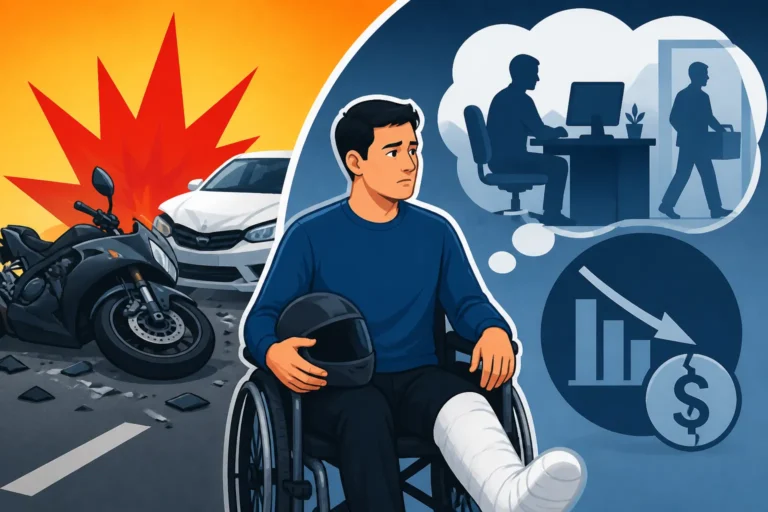
Beyond the physical pain, the financial pain of medical bills can be crushing. Every doctor's visit, every MRI, every prescription, surgery, rehabilitation session, and even specialized equipment like wheelchairs or crutches, all add up. A comprehensive claim will account for not just the medical expenses you've already incurred, but also any future medical costs that are reasonably anticipated, like follow-up surgeries, long-term physical therapy, or ongoing medication. This is why it's so crucial to seek immediate medical attention and meticulously document every single expense, even if you think it's minor. A gap in treatment can be used by insurance companies to argue that your injuries weren't that serious, or that you contributed to their worsening.
Then there's the harsh reality of lost wages. When you're laid up in a hospital bed or recovering at home, unable to work, those missed paychecks hurt. Your claim can include compensation for all the income you've lost from the time of the accident until you can return to work, whether that's a few weeks or many months. For riders with severe injuries, it can even encompass lost earning capacity, which is the income you might lose in the future if your injuries prevent you from performing your job duties at the same level as before, or force you into a lower-paying role. This is particularly important for self-employed riders or those in physically demanding professions, where proving lost earnings can be more complex. Our guide on how lost wages are calculated dives deeper into this topic.
Pain and Suffering
This category of damages, often referred to as "non-economic damages," compensates you for the intangible losses you've endured. It's not about a bill with a dollar amount; it's about the very real agony, discomfort, emotional distress, and loss of enjoyment of life that an accident causes. Imagine the frustration of not being able to ride your motorcycle again, or the anguish of chronic pain that keeps you up at night. This is where the human element of your suffering comes into play.
Factors like chronic pain, emotional trauma (such as PTSD, anxiety, or depression), disfigurement, scarring, and the inability to participate in hobbies or daily activities you once enjoyed are all considered. While there isn't a direct formula for pain and suffering, insurance companies and juries often use methods like the multiplier method, where your economic damages are multiplied by a certain number (usually between 1.5 and 5, or even higher for catastrophic injuries) to arrive at a pain and suffering value. Understanding how pain and suffering damages are explained can help you prepare to discuss these vital aspects of your claim.
Property Damage and Other Expenses
It's not just about your body; it's about your bike too. The cost to repair or replace your damaged motorcycle is a significant part of your claim. This also includes any personal property damaged in the crash, such as your helmet, leathers, phone, or other gear. Beyond that, think about other out-of-pocket expenses: rental car fees (if applicable, though often less relevant for motorcycles), transportation costs to medical appointments, home modifications if your injuries require them, and even expenses for household help if you're unable to perform daily tasks. Every single receipt, every invoice, and every canceled check is crucial evidence.
Types of Damages You Can Recover in a Motorcycle Accident Claim
When you're dealing with the aftermath of a motorcycle accident, it quickly becomes clear that the financial toll goes far beyond a simple repair bill for your bike. The legal system recognizes various categories of losses, or "damages," that accident victims can seek compensation for. Understanding these different types of damages is key to grasping the full potential value of your claim. It’s not just about getting money back; it’s about being made as whole as possible after a traumatic event.
Economic Damages
These are the most straightforward types of damages because they represent direct, measurable financial losses. They're usually easy to calculate with bills, receipts, and pay stubs.
Medical Bills
This category covers everything related to your medical care, from the immediate aftermath of the crash to long-term rehabilitation. This includes emergency room visits, ambulance rides, doctor consultations, specialist appointments (orthopedists, neurologists, physical therapists), diagnostic tests (X-rays, MRIs, CT scans), surgeries, prescription medications, medical devices (like crutches, braces, or prosthetics), and even psychological counseling if the accident led to mental health issues. It's critical to keep meticulous records of all these expenses. Our article on how medical bills affect your settlement provides more context.
Lost Wages and Loss of Earning Capacity
As discussed earlier, lost wages cover the income you’ve missed directly because of your injuries and recovery. This can include your regular salary, hourly wages, commissions, bonuses, and even tips. For self-employed individuals, proving lost income can be more complex, often requiring tax returns, business records, and expert testimony.
Loss of earning capacity, on the other hand, looks to the future. If your injuries result in a permanent disability or impairment that reduces your ability to earn at the same level as before the accident, you can claim compensation for this projected future loss. For example, if a construction worker can no longer perform heavy lifting due to a back injury from a motorcycle crash, their future earning potential might be significantly diminished, even if they can still work in a lighter capacity.
Property Damage
This is the cost to repair or replace your motorcycle. If your bike is totaled, you're generally entitled to its fair market value before the accident. This also extends to other damaged personal items, such as your helmet, riding gear (jacket, pants, gloves, boots), cellphone, or prescription glasses that were broken in the collision. Always get multiple repair estimates or a clear valuation from an expert for a totaled vehicle.
Non-Economic Damages
These damages are often more challenging to quantify because they don't come with a direct bill. They aim to compensate you for the subjective, non-financial impacts of your injuries and the accident on your quality of life. Yet, they can often make up a significant portion of a motorcycle accident settlement, especially for severe injuries. Our complete guide on economic vs non-economic damages explained provides a comprehensive overview.
Pain and Suffering
This is perhaps the most widely recognized non-economic damage. It covers the physical pain you experienced during and after the accident, the discomfort of recovery, and any chronic pain you might live with. It acknowledges the agony of the moment of impact and the continuous ache that might persist for months or even years.
Emotional Distress
A motorcycle accident can be deeply traumatic. Many riders experience anxiety, fear of riding again, depression, sleep disturbances, or even post-traumatic stress disorder (PTSD). These psychological impacts are very real and can be debilitating. Emotional distress damages seek to compensate you for this mental and emotional anguish.
Loss of Enjoyment of Life
This refers to the inability to engage in activities and hobbies that brought you joy before the accident. If a spinal injury prevents you from hiking, playing sports, or simply enjoying long rides on the open road, that diminished quality of life is a compensable loss. It’s about recognizing how the accident has robbed you of your personal pleasures and daily routines.
Disfigurement and Scarring
Motorcycle accidents frequently result in severe road rash, burns, and other injuries that leave permanent scars or disfigurement. These physical changes can lead to significant emotional distress, self-consciousness, and psychological impact. Compensation for disfigurement acknowledges both the physical alteration and the mental anguish it causes.
The Role of Fault and Legal Representation
Determining who is at fault in a motorcycle accident is paramount to your claim, and unfortunately, it's an area where motorcyclists often face an uphill battle. Insurers, and even the general public, sometimes carry a bias against riders, subtly implying that the motorcyclist must have been doing something reckless. This underlying sentiment can significantly impact how much you can get for a motorcycle accident.
Understanding Comparative Negligence
Most states operate under some form of comparative negligence. This means that if you, the motorcyclist, are found to be partially at fault for the accident, your total compensation can be reduced by your percentage of fault. For example, if a jury determines your damages are $100,000, but you were 20% at fault (perhaps for speeding slightly, even if the other driver made a dangerous left turn), your payout could be reduced to $80,000. Some states, like California, follow "pure comparative negligence," meaning you can recover even if you're 99% at fault, though your compensation would be severely reduced. Other states, like Texas, use "modified comparative negligence," where you can't recover anything if you are found to be 51% or more at fault. Understanding your state’s specific comparative negligence in motorcycle accidents laws is vital.
It’s a frustrating reality that drivers often utter the phrase, "I didn't see the motorcycle," a defense that unfortunately places the onus on the rider. However, simply not seeing a motorcycle does not absolve a driver of their responsibility. This is where evidence, like dashcam footage, witness statements, and accident reconstruction, becomes critical to proving the other driver’s negligence.
Why Legal Representation Matters So Much
Navigating the complexities of fault, comparative negligence, and dealing with insurance adjusters who are trained to minimize payouts can be overwhelming, especially when you're recovering from serious injuries. This is precisely why having an experienced motorcycle accident lawyer by your side can make a monumental difference. They understand the nuances of proving fault in a motorcycle accident and how to counter the common biases against riders.
A skilled attorney will investigate the accident thoroughly, collecting evidence such as police reports, witness statements, traffic camera footage, and medical records. They can work with accident reconstruction specialists to recreate the scene and demonstrate how the other driver's negligence caused your injuries. They also know how to calculate the true value of your damages, including all present and future economic and non-economic losses, ensuring you don't settle for less than you deserve. Insurance companies often offer lowball settlements early on, hoping you'll accept out of desperation. A lawyer acts as your advocate, negotiating on your behalf and, if necessary, taking your case to court. For many, the question isn't if you need a motorcycle accident lawyer, but rather, when to hire one to protect your rights and maximize your recovery.
Estimating Your Claim Value and What to Expect
It's natural to want a clear number when you're trying to figure out "how much can I get for a motorcycle accident." While no ethical legal professional can guarantee a specific amount, they can provide a realistic range based on their experience and the specifics of your case. Understanding how this estimation works and the general process can help manage your expectations.
How Claims Are Valued
When assessing how much your motorcycle accident claim is worth, legal professionals and insurance adjusters often look at all the economic damages (medical bills, lost wages, property damage) and then consider the non-economic damages (pain and suffering, emotional distress). As mentioned before, for non-economic damages, a "multiplier method" is frequently used. This involves taking the total economic damages and multiplying them by a number, typically between 1.5 and 5, depending on the severity and permanence of the injuries. For instance, if your medical bills and lost wages total $20,000 and your injuries are moderately severe, a multiplier of 3 might be applied, leading to $60,000 for pain and suffering. Add that to your economic damages, and your total claim might be around $80,000. Catastrophic injuries often warrant higher multipliers, sometimes even exceeding 5 or 6, reflecting the immense, life-altering impact. This is a simplified explanation, but it gives you a glimpse into how motorcycle accident settlements are calculated.
Initial Settlement Offers
Be prepared for insurance companies to make a lowball offer initially. Their goal is to settle your claim for the least amount possible. This first offer rarely, if ever, reflects the full value of your claim, especially if you have significant injuries. They might try to rush you, implying that the offer is time-sensitive or that you won't get more if you wait. This is a common tactic to exploit your vulnerability and financial strain. It’s crucial to never accept an initial offer without thoroughly understanding all your damages and, ideally, without legal counsel. Our guide on how to negotiate a motorcycle accident settlement offers strategies for dealing with these situations.
The Demand Letter and Negotiation Process
Once your medical treatment is substantially complete, and your lawyer has a clear picture of all your damages (past, present, and future), they will typically send a comprehensive demand letter to the at-fault driver's insurance company. This letter outlines the facts of the accident, the extent of your injuries, all documented damages (medical bills, lost wages, property damage), and a detailed explanation of your pain and suffering. It concludes with a demand for a specific settlement amount.
This is usually followed by a period of negotiation. The insurance company might respond with a counteroffer, or they might deny liability altogether. Your lawyer will engage in back-and-forth discussions, presenting additional evidence, clarifying aspects of your injuries, and arguing for a higher settlement. This process can take time, sometimes weeks or even months, depending on the complexity of the case and the willingness of the insurer to negotiate fairly.
Policy Limits and What Happens Next
A significant factor that can cap your potential payout is the insurance policy limits of the at-fault driver. Even if your damages are valued at $500,000, if the other driver only carries the state minimum liability coverage (e.g., $25,000), that might be the maximum the insurance company will pay out from their policy. This is where your own uninsured/underinsured motorist (UM/UIM) coverage becomes incredibly important. If you have UM/UIM coverage, it can kick in to cover damages beyond what the at-fault driver's insurance provides, up to your own policy limits. This is a critical discussion point in our comprehensive article on how insurance policy limits affect your payout.
If a fair settlement cannot be reached through negotiation, your lawyer may advise filing a lawsuit and proceeding to trial. While most cases settle before trial, the willingness to go to court often signals to the insurance company that you are serious, potentially leading to a better settlement offer. The legal process can be lengthy, with a typical motorcycle accident settlement taking anywhere from a few months to several years, especially for complex cases with severe injuries.
The table below summarizes some key factors that influence the potential settlement amount:
| Factor | Impact on Settlement Value | Example Scenario |
|---|---|---|
| Injury Severity | Directly correlates: More severe injuries (TBI, spinal, amputations) lead to significantly higher payouts. | Spinal cord injury vs. minor road rash. |
| Medical Expenses | Higher past and projected future costs (surgeries, therapy, medications) increase economic damages. | $150,000 in surgeries/rehab vs. $5,000 in ER visit/follow-up. |
| Lost Wages | Total income lost from time off work, plus potential loss of future earning capacity due to permanent disability. | A surgeon unable to operate vs. a student missing part-time shifts. |
| Pain & Suffering | Subjective but significant. Valued based on severity of pain, emotional distress, and impact on quality of life. | Chronic pain/PTSD vs. temporary discomfort. |
| Property Damage | Cost to repair or replace the motorcycle and other damaged personal items. | Totaled Harley-Davidson vs. minor scratches on a helmet. |
| Degree of Fault | If shared, your payout is reduced by your percentage of fault. Some states (like Texas) bar recovery if 51% or more at fault. | 20% at fault reduces $100k claim to $80k. |
| Insurance Policy Limits | Hard cap on recovery from the at-fault driver's policy. Your UM/UIM coverage can provide additional funds. | Driver with $25k limits for $200k damages vs. driver with $250k limits. |
| Legal Representation | Lawyers often secure higher settlements due to negotiation skills, investigative resources, and understanding of legal nuances. | Unrepresented individual accepting lowball offer vs. represented individual securing fair value. |
| Evidence Quality | Strong, compelling evidence (photos, witness statements, medical records) substantiates claims and reduces disputes. | Clear dashcam footage vs. "he said, she said." |
Disclaimer
The information provided in this article is for general informational purposes only and does not constitute legal advice. Every motorcycle accident claim is unique, and the value of your potential settlement can vary significantly based on the specific facts and circumstances of your case, as well as the laws of your state. It is highly recommended that you consult with a qualified motorcycle accident attorney to discuss your individual situation and receive personalized legal guidance.