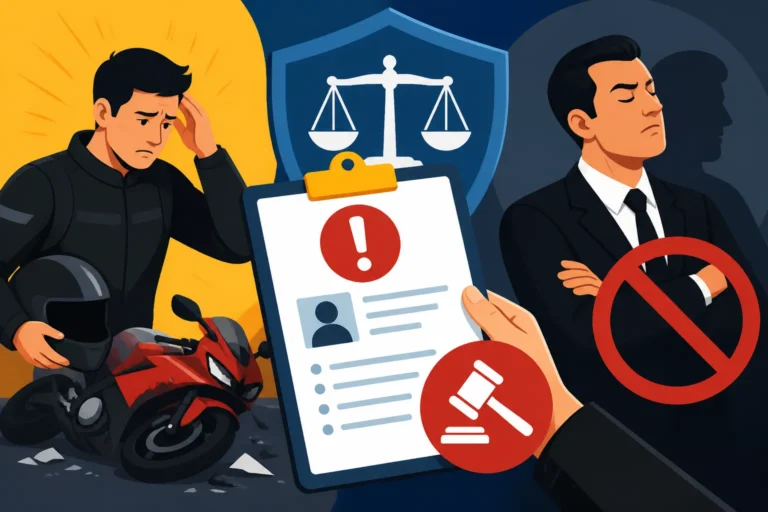
Statute of Limitations for Motorcycle Claims in Tennessee
Riding a motorcycle through the picturesque landscapes of Tennessee is an exhilarating experience, offering a unique sense of freedom that few other activities can match. However, when that freedom is tragically cut short by an accident, the aftermath can be incredibly overwhelming. Beyond the immediate pain and physical recovery, many riders find themselves facing a daunting legal maze, compounded by the pressing concern of time limits. This guide is designed to meticulously demystify the statute of limitations for motorcycle claims in Tennessee, ensuring you understand exactly how much time you have and why every moment counts in protecting your rights and fighting for the compensation you rightfully deserve.
What Exactly is the Statute of Limitations and Why Does it Matter?
When you’ve been involved in a motorcycle accident, one of the most critical legal concepts you’ll encounter is the "statute of limitations." This isn't just some obscure legal jargon; it's a hard deadline, a ticking clock set by state law, dictating how long you have to formally file a lawsuit after an incident. Miss this deadline, and regardless of how strong your case or how severe your injuries, you could lose your fundamental right to seek justice and compensation.
The Core Concept of Legal Deadlines
Think of the statute of limitations as an expiration date for your right to sue. Every state, including Tennessee, establishes these timeframes for different types of legal claims. For a motorcycle accident, this typically means a lawsuit seeking compensation for your personal injuries, property damage, or in the most tragic circumstances, wrongful death. The clock usually starts running from the date of the accident itself, or in some specific cases, from the date you discovered or reasonably should have discovered your injury.
The legal system imposes these deadlines for several important reasons. Primarily, it's about fairness and practicality. Memories fade, witnesses move, and evidence can degrade or disappear over time. Setting a limit encourages plaintiffs to bring their claims forward while evidence is still fresh and readily available, allowing for a more accurate and just resolution for all parties involved. It also provides a sense of finality, preventing the threat of lawsuits from hanging over potential defendants indefinitely. For you, the injured rider, understanding this core concept is paramount because it dictates the entire pace and urgency of your legal actions.
The Rationale Behind Statutory Time Limits
It might feel unfair to have a ticking clock when you're laid up in a hospital bed, dealing with excruciating pain and the emotional trauma of a crash. However, the legal system's rationale for statutes of limitations is built on principles of justice and efficiency. Imagine trying to prove a case from an accident that happened ten years ago. Key witnesses might have passed away or forgotten crucial details. Surveillance footage could be long overwritten. Physical evidence, like skid marks or vehicle damage, would have been altered or destroyed.
These time limits prevent stale claims from clogging the courts and ensure that legal disputes are resolved based on the most accurate and available information. They also offer defendants, like the driver who hit you, the assurance that they won't face litigation for an indefinite period. While the focus is often on the plaintiff's deadline, these statutes also protect defendants from having to defend against claims where the ability to gather evidence and present a robust defense has been severely compromised by the passage of time. For a motorcycle accident victim, this means recognizing that delaying action, even for understandable reasons like recovery, can inadvertently undermine the strength and viability of your case.
Specific Statute of Limitations for Motorcycle Claims in Tennessee
Tennessee has distinct timelines for various types of claims that might arise from a motorcycle accident. It’s absolutely vital to know which deadlines apply to your situation, as mixing them up can have dire consequences. Navigating these specific rules is one of the many reasons why it's so important to connect with an experienced attorney as soon as possible after a crash.
Personal Injury Claims: The One-Year Rule
When you suffer physical injuries in a motorcycle accident in Tennessee, the most pressing deadline you face is typically for your personal injury claim. Under Tennessee Code Annotated (T.C.A.) § 28-3-104, you generally have one (1) year from the date of the accident to file a lawsuit seeking compensation for your injuries. This includes everything from your medical bills, lost wages, pain and suffering, and other non-economic damages.
One year might seem like a decent amount of time, but believe me, it flies by. Between doctor appointments, physical therapy, dealing with insurance adjusters, and simply trying to recover, that twelve-month window can close before you know it. If you fail to file your lawsuit within this one-year period, the court will almost certainly dismiss your case, leaving you without any legal recourse to recover damages from the at-fault party. This strict deadline underscores the importance of understanding "What to Do Immediately After a Motorcycle Accident" to protect your future claim.
Property Damage Claims: A Different Timeline
In addition to your personal injuries, your motorcycle itself likely suffered significant damage, possibly even being totaled. While your personal injury claim has a tight one-year window, claims for property damage operate under a different statute in Tennessee. According to T.C.A. § 28-3-105, you generally have three (3) years from the date of the accident to file a lawsuit specifically for the damage to your motorcycle and any other personal property.
It’s crucial to understand that these are separate legal claims, even though they stem from the same incident. Many people incorrectly assume both injury and property damage claims share the same deadline. While you might settle your property damage claim much sooner with the insurance company, the statute of limitations refers to the window for filing a lawsuit. Even if your property is fully compensated, your injury claim still expires after one year. An experienced attorney can help you navigate these differing timelines, ensuring neither aspect of your claim is jeopardized.
Wrongful Death Claims: When a Life is Lost
Tragically, some motorcycle accidents result in fatalities. In such heartbreaking cases, a different but equally critical statute of limitations applies: the wrongful death statute. In Tennessee, similar to personal injury, a wrongful death claim generally must be filed within one (1) year from the date of the person's death. This is also found under T.C.A. § 28-3-104.
While the statute for personal injury begins on the date of the injury, the wrongful death statute begins on the date of death. This distinction is vital, especially if a victim passes away some time after the initial accident due to their injuries. The one-year clock for a wrongful death claim would begin on the date of death, not the date of the initial accident. These claims are filed by the deceased's estate or surviving family members and seek compensation for funeral expenses, medical bills incurred before death, loss of financial support, loss of companionship, and other damages. Given the immense emotional toll and complex legal requirements, acting promptly in a wrongful death scenario is perhaps even more critical.
Exceptions and Tolling Provisions for Certain Circumstances
While the one-year and three-year deadlines are generally firm, there are specific, limited circumstances in Tennessee law that can "toll" or pause the statute of limitations. These exceptions are rare and depend heavily on the specific facts of your case, but they can be a lifeline for some.
One common example involves minors. If the injured party was under the age of 18 at the time of the accident, the statute of limitations for their personal injury claim is typically tolled until they reach their 18th birthday. Once they turn 18, the standard one-year period begins to run. This is governed by T.C.A. § 28-1-106 and 28-1-107. For instance, if a 16-year-old is injured, they would have until their 19th birthday (18 + 1 year) to file a lawsuit.
Another significant exception is the "discovery rule." This typically applies when an injury is not immediately apparent at the time of the accident. For example, if you suffer an internal injury or a traumatic brain injury where symptoms don't manifest until weeks or months later, the one-year clock might begin from the date you discovered, or reasonably should have discovered, the injury, rather than the accident date itself. However, applying the discovery rule is complex and often heavily litigated, requiring strong evidence to prove when the injury truly became discoverable. It's not an automatic extension, and insurance companies will often fight tooth and nail to argue you should have known sooner.
Other potential, though less common, tolling provisions can apply in cases where the defendant leaves the state, or in situations involving mental incapacitation. However, these are highly specific and always require a legal professional to evaluate. Relying on an exception without consulting an attorney is incredibly risky.
The Grave Consequences of Missing Your Filing Deadline
Let’s be brutally honest: missing the statute of limitations deadline is one of the most devastating mistakes you can make in a motorcycle accident claim. It’s not a minor setback; it’s a terminal blow to your case. The consequences are absolute and unforgiving, shutting down any avenue for financial recovery, no matter how severe your injuries or how clear the other driver's fault.
Forfeiting Your Right to Seek Justice
The moment that statute of limitations clock runs out, your right to file a lawsuit in civil court against the at-fault party is extinguished. Period. This means that even if you have undeniable proof that another driver caused your crash, and you’ve incurred hundreds of thousands of dollars in medical expenses and lost wages, a court will simply dismiss your case because it was filed too late. Imagine enduring months of painful rehabilitation, only to find out you can no longer legally pursue the compensation needed to cover those costs. It’s a heartbreaking scenario that far too many people unfortunately experience.
This forfeiture of rights extends beyond just compensation for your physical injuries. It means you can't claim damages for your wrecked motorcycle, your lost income, your emotional distress, or any other "Types of Damages in a Motorcycle Accident Claim" you might have suffered. The court loses jurisdiction, and your case becomes legally null and void. The insurance company for the at-fault driver will be well aware of this deadline and will simply refuse to negotiate further, knowing they are no longer legally obligated to pay anything. This is why securing experienced legal counsel is not a recommendation but an absolute necessity to avoid such a catastrophic outcome.
How Insurers Exploit Missed Deadlines
Insurance companies are not in the business of paying out large settlements; they are businesses focused on their bottom line. They are acutely aware of every legal deadline, especially the statute of limitations. In fact, many insurance adjusters will use subtle tactics that, intentionally or not, can cause delays that push you closer to that critical deadline. They might seem cooperative, asking for more documents, delaying responses, or making lowball offers that require multiple rounds of negotiation. While these negotiations are happening, the clock is still ticking.
If you are handling a claim directly with an insurance company without legal representation, they know you might not fully grasp the urgency or the nuances of the legal process. They might hope you miss the deadline entirely, or at least come close enough that you feel pressured to accept a much lower settlement offer just to get something before time runs out. The moment that deadline passes, their leverage becomes absolute. They can simply inform you that they will no longer consider your claim, leaving you with no recourse. This is why having an attorney, who understands these tactics and keeps the statute of limitations firmly in mind, is crucial. They won't let the insurer drag their feet and will take the necessary steps to protect your claim, including filing a lawsuit if negotiations aren't progressing in a timely manner. This knowledge is key to countering "How Insurers Lowball Motorcycle Riders".
Proactive Steps to Safeguard Your Motorcycle Accident Claim
After a motorcycle accident, your priority is your health and recovery. However, taking specific, proactive steps right from the start can make all the difference in protecting your legal rights and ensuring you have the best possible chance to secure fair compensation within Tennessee's strict deadlines.
Immediate Actions After a Crash
The moments immediately following a motorcycle accident are chaotic, but what you do (or don't do) can profoundly impact your future claim. Your very first step, after ensuring your immediate safety, should always be to seek medical attention, even if you feel okay. Some serious injuries, like concussions or internal bleeding, might not show symptoms right away. A documented medical visit establishes a direct link between the accident and your injuries, which is critical for your claim. Keep thorough records of all medical treatment, appointments, and prescriptions. Learn more about "How to Document Injuries for a Claim".
Next, if you are able, document the accident scene. Take photos and videos of everything: your motorcycle, the other vehicles involved, road conditions, traffic signs, skid marks, and any visible injuries. Exchange information with the other driver but avoid admitting fault or speculating about the cause of the accident. Remember, "Why You Should Never Admit Fault at the Scene". Collect contact information from any witnesses, as their testimony can be invaluable later on. File a police report and obtain a copy. While a police report doesn't definitively assign fault, it provides an official record of the incident. However, be aware that "How a Police Report Can Hurt Your Claim" if it contains inaccuracies or unfavorable initial assessments. The more evidence you gather, the stronger your position will be when it comes to proving liability and damages.
Summary of Tennessee Statutes of Limitations for Motorcycle Accident Claims
| Type of Claim | Tennessee Statute | Deadline (from date of accident/death) | Notes |
|---|---|---|---|
| Personal Injury | T.C.A. § 28-3-104 | One (1) Year | Applies to physical injuries, medical bills, lost wages, pain & suffering. |
| Property Damage | T.C.A. § 28-3-105 | Three (3) Years | Applies to damage to your motorcycle and other personal property. |
| Wrongful Death | T.C.A. § 28-3-104 | One (1) Year | From the date of death. Applies to claims made by the estate/family for a fatal accident. |
| Minors | T.C.A. § 28-1-106 | Tolled until age 18 | Standard deadline (e.g., 1 year for personal injury) begins on 18th birthday. |
| Discovery Rule | T.C.A. § 28-3-104 | One (1) Year from Discovery | For latent injuries; clock starts when injury is discovered or reasonably should have been discovered. Highly fact-specific and often contested. |
| Out-of-State Defendant | T.C.A. § 28-1-111 | Tolled while absent from state | If the at-fault party leaves Tennessee before the statute expires, the time they are absent from the state may not count toward the limitation period. Another complex scenario requiring legal review. |
The Indispensable Role of a Motorcycle Accident Attorney
Perhaps the most crucial proactive step you can take is to consult with a qualified Tennessee motorcycle accident attorney as quickly as possible after your crash. Waiting to "feel better" or trying to handle everything yourself can be a critical error. An attorney is your best defense against missing crucial deadlines and ensuring your claim is handled correctly from the outset.
An attorney will immediately assess your case, identify all applicable statutes of limitations (including any potential exceptions), and ensure that all necessary paperwork is filed within the appropriate timeframes. They will handle all communications with insurance companies, protecting you from common tactics used to devalue or delay your claim. Furthermore, they understand how to investigate complex issues like "Who Is at Fault in a Motorcycle Accident" and gather the evidence needed to build a strong case, whether it's for a simple rear-end collision or something more intricate like "How to Prove Fault in a Left-Turn Collisions Crash".
Finding the right attorney doesn't have to be another burden. Services like LegalMatch can help connect you with experienced legal professionals in your area who specialize in motorcycle accident claims, ensuring you don't waste precious time searching. When considering "How to Choose a Motorcycle Accident Attorney", look for someone who has a deep understanding of Tennessee law, a track record of success with motorcycle cases, and a genuine empathy for what riders go through. They can also explain "How Motorcycle Accident Lawyers Get Paid" through contingency fees, meaning you typically don't pay upfront. Their expertise is invaluable in managing medical liens, negotiating settlements, and, if necessary, taking your case to trial to secure the maximum possible "Average Motorcycle Accident Settlement Amounts". Don't let the clock run out on your right to justice; seek legal counsel without delay. LegalMatch is a great resource to begin your search, and a seasoned attorney can guide you through every step, helping you understand "Motorcycle Accident Liability: A Complete Guide" and ultimately showing you "How to Maximize Your Motorcycle Accident Settlement".
Disclaimer
Please note that this article provides general information and is not intended as legal advice. The laws surrounding motorcycle accident claims are complex and vary by state. The information provided here may not apply to your specific situation, and legal statutes are subject to change. It is crucial to consult with a qualified motorcycle accident attorney in Tennessee as soon as possible after an accident to receive personalized advice and ensure your rights are protected.