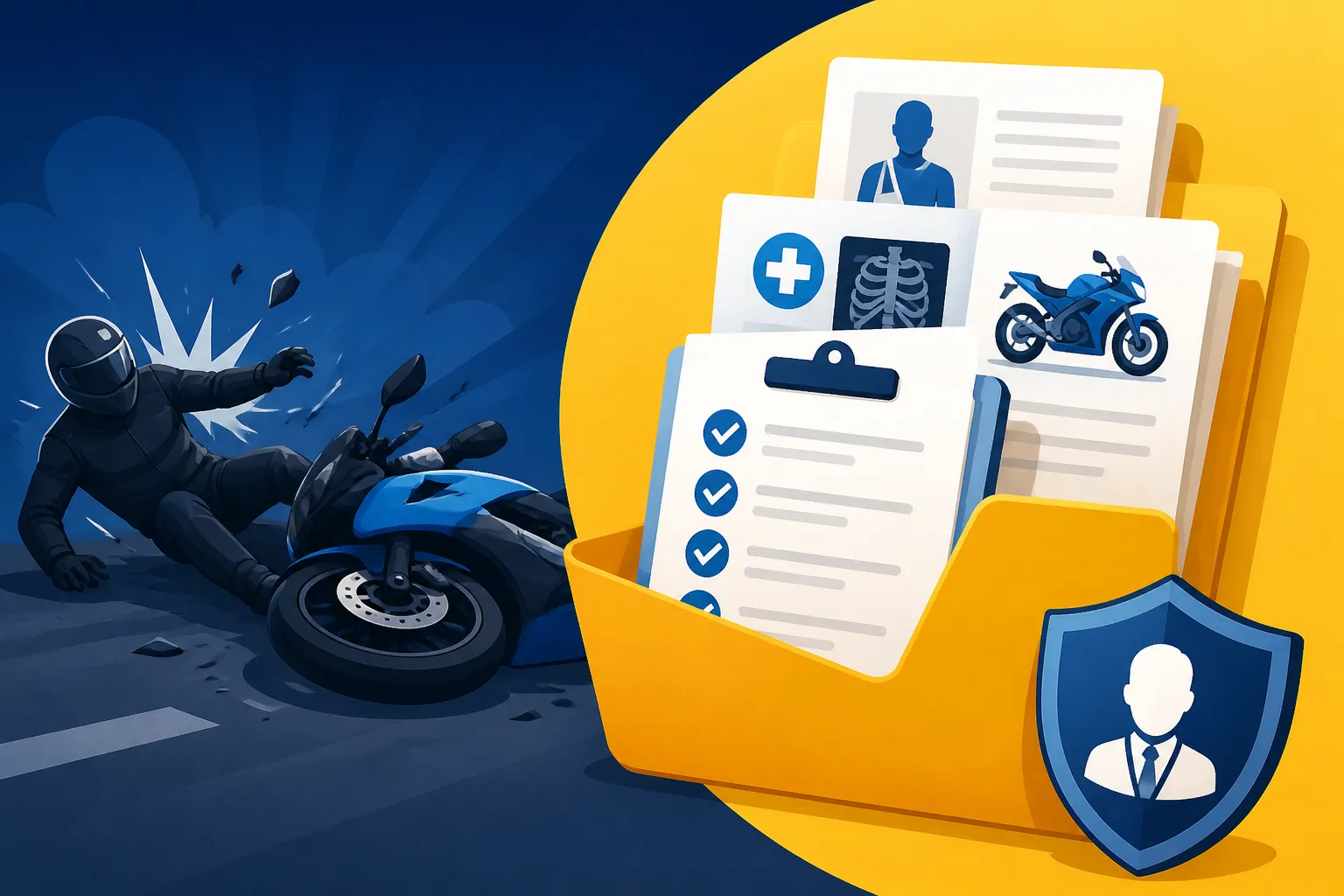
What to Include in a Demand Package
After a motorcycle accident, the last thing you want to do is wade through a mountain of paperwork while you’re trying to heal. Yet, submitting a well-crafted demand package is absolutely crucial for getting the compensation you deserve. This comprehensive guide will walk you through exactly what needs to be included in your motorcycle accident demand package to present a strong, undeniable case to the insurance company.
Understanding the Purpose of a Motorcycle Accident Demand Package
Let's face it, dealing with insurance companies after a motorcycle crash can feel like you're speaking a different language. They're often looking for reasons to minimize payouts, and you're just trying to get your life back on track. That's where a meticulously prepared demand package comes in. It's your formal statement, backed by solid evidence, outlining exactly what happened, the extent of your injuries and damages, and why the other party is responsible. Think of it as your opening argument, laid out clearly and concisely, demanding the compensation you’re entitled to.
Why Your Demand Package is More Than Just a Letter
Many people think a demand package is just a simple letter asking for money. Oh, if only it were that easy! In reality, your demand package is the most critical document you'll submit before formal negotiations begin, especially if you're trying to reach an out-of-court settlement. It’s a comprehensive collection of everything that supports your claim – not just a narrative of events, but the cold, hard proof. Without it, the insurance adjuster can easily dismiss your claims as unsubstantiated. This package is your chance to control the narrative and demonstrate the true impact the accident has had on your life, financially, physically, and emotionally. It serves as a detailed roadmap for the adjuster, showing them precisely how you arrived at your requested settlement figure.
Setting the Stage for Negotiations
The quality and thoroughness of your demand package can significantly influence the entire negotiation process. A well-organized, fact-filled package signals to the insurance company that you are serious, informed, and prepared to fight for your rights. Conversely, a sloppy or incomplete package might invite lowball offers or prolonged disputes, as it suggests you might not have a strong understanding of your claim's value or the evidence to back it up. A strong demand package sets a high benchmark, establishing a credible starting point for discussions and demonstrating the full scope of your losses. It clearly articulates the legal basis for liability and the quantifiable extent of your damages, making it harder for the insurance company to deny or diminish your claim without justification. Understanding How to Negotiate a Motorcycle Accident Settlement effectively starts with a robust demand package.
Essential Components of a Powerful Demand Package
Building a solid demand package is like assembling a jigsaw puzzle; every piece is crucial for completing the full picture. Missing even one small detail can leave gaps that the insurance company can exploit. Here's a breakdown of the key elements you'll need to gather and present.
The Demand Letter: Your Case Summary
At the heart of every demand package is the demand letter itself. This isn't just a brief note; it's a persuasive narrative that summarizes your entire case. It should be clear, professional, and compelling. You’ll typically start by identifying yourself, the other parties involved, the date and location of the accident, and a concise account of how the accident occurred, emphasizing the other driver's negligence.
Next, you'll detail your injuries, outlining the medical treatment you’ve received and the prognosis for your recovery. You'll then list all your economic damages (medical bills, lost wages, property damage) and non-economic damages (pain and suffering, emotional distress). Finally, you’ll state your total settlement demand, supported by all the evidence enclosed. Make sure your demand letter directly references the accompanying documents, creating a seamless and easy-to-follow argument for the adjuster. Crafting a strong letter is essential for How to Write a Motorcycle Accident Demand Letter.
Medical Records and Bills: Proving Your Injuries and Costs
This is arguably the most critical section of your demand package. Motorcycle accidents often result in severe injuries, and you need to thoroughly document every aspect of your medical journey. This includes:
- Initial Medical Records: Emergency room reports, ambulance records, and any immediate post-accident evaluations. These establish the direct link between the crash and your injuries.
- Ongoing Treatment Records: Notes from your primary care physician, specialists (orthopedists, neurologists, physical therapists), diagnostic test results (X-rays, MRIs, CT scans), and therapy reports. These show the progression of your recovery, the extent of your pain, and any complications.
- Medical Bills: Itemized statements from all healthcare providers, including hospitals, doctors, therapists, and pharmacies. These are your hard costs and need to be clearly presented. Don’t forget ambulance fees, co-pays, and deductibles you've paid out of pocket.
- Future Medical Projections: If your injuries require ongoing treatment, future surgeries, or long-term care, you'll need a report from a medical professional detailing these anticipated costs. This could be a life care plan or a physician's letter outlining necessary future interventions.
Make sure these documents are organized chronologically and are easy for the adjuster to review. Providing a clear, complete picture of your medical expenses and prognosis is key to calculating How Motorcycle Accident Settlements Are Calculated accurately. For more detail, see How to Prove Your Injuries.
Documentation of Lost Wages and Other Economic Damages
When you're recovering from a motorcycle accident, missing work is a harsh reality for many. Lost wages and earning capacity represent a significant economic loss that must be included in your demand package.
- Lost Wages:
- Pay Stubs: Provide recent pay stubs from before the accident to establish your average income.
- Employer Verification: Obtain a letter from your employer confirming your missed workdays, your hourly wage or salary, and the total amount of wages you lost due to your injuries.
- Tax Returns: For self-employed individuals, recent tax returns (typically the past 2-3 years) can demonstrate your income history. Bank statements and business records may also be necessary.
- Loss of Earning Capacity: If your injuries are so severe that they prevent you from returning to your previous job or reduce your ability to earn a living in the future, this needs to be documented. This often requires expert testimony from a vocational rehabilitation specialist or an economist.
- Other Out-of-Pocket Expenses: Keep meticulous records of all other costs you've incurred directly because of the accident, such as:
- Prescription medication receipts
- Travel expenses for medical appointments
- Rental car costs if your motorcycle was your primary transportation
- Costs for household services you can no longer perform, like cleaning, yard work, or childcare
Every dollar you've spent or lost due to the accident should be itemized and supported with receipts or statements. This information helps build a clear picture of your total economic damages. For more information, consider reading How to Document Lost Wages.
Evidence Supporting Non-Economic Damages
Economic damages are straightforward to calculate with receipts and bills. Non-economic damages, like pain and suffering, emotional distress, and loss of enjoyment of life, are harder to quantify but equally vital. These are often where the significant portion of a settlement comes from, especially for severe injuries like those often seen in Common Motorcycle Accident Injuries.
- Personal Journal/Diary: A detailed journal where you document your daily pain levels, emotional struggles, limitations, and how your injuries have impacted your daily life can be incredibly powerful. Describe the sleepless nights, the inability to play with your kids, the frustration of not being able to ride your bike, or the fear you now feel on the road.
- Witness Statements: Testimonials from family, friends, or co-workers who can attest to the changes in your personality, activities, or general well-being since the accident.
- Psychological Evaluations: If you've sought therapy for anxiety, PTSD, or depression resulting from the accident, records from a psychologist or psychiatrist will corroborate your emotional distress claims.
- Photos/Videos: Images showing visible injuries, scars, or your participation in activities before and after the accident can vividly illustrate the impact on your quality of life.
Remember, the goal is to paint a clear picture of how your injuries have diminished your life beyond just the financial costs. These are the "invisible" damages that often go overlooked but are essential for a fair settlement. Learn more about Economic vs Non-Economic Damages Explained.
Property Damage Documentation
Your motorcycle isn’t just transportation; it’s a passion, a lifestyle, and for many, a significant investment. Any damage to your bike needs to be thoroughly documented and included in your demand package.
- Repair Estimates: Obtain detailed repair estimates from reputable motorcycle shops. If your bike was totaled, you'll need documentation of its fair market value before the accident. Websites like Kelley Blue Book or NADA Guides can provide objective values.
- Photos of Damage: High-quality, clear photos showing the damage to your motorcycle from multiple angles. Include close-ups of specific damaged parts.
- Receipts for Rental Vehicle: If you needed alternative transportation while your motorcycle was being assessed or repaired, include receipts for a rental car or other transport services.
- Personal Property Damage: Don't forget any other personal items damaged in the crash, such as your helmet, riding gear (jacket, gloves, boots), cell phone, or watch. Provide photos and receipts or estimates for replacement value. My Bell SRT Modular helmet saved my skull, but it was absolutely trashed, and that cost needed to be recovered.
Supporting Evidence of Fault and Liability
Even with clear injuries and damages, you still need to prove that the other party was at fault. This section bolsters the argument made in your demand letter about who caused the accident.
- Police Accident Report: This official document often contains initial findings on fault, witness statements, and citations issued. It’s a powerful piece of evidence, though not always definitive.
- Witness Statements: Contact information and written statements from anyone who saw the accident. Their unbiased accounts can be invaluable.
- Photos and Videos of the Scene: Take pictures of the accident scene from various angles, including road conditions, traffic signs, vehicle positions, skid marks, and any debris. If dashboard camera footage exists (either yours or from another vehicle), it can be definitive proof.
- Traffic Laws and Regulations: Reference specific traffic laws that the at-fault driver violated. For example, if they made an illegal left turn, cite the relevant state statute.
- Expert Opinions: In complex cases, an accident reconstruction expert might be necessary to analyze the scene and provide an opinion on how the crash occurred and who was at fault. This is especially true when Proving Fault in a Motorcycle Accident becomes contentious.
This collection of evidence directly addresses liability, making it difficult for the insurance company to dispute who was responsible.
Crafting a Compelling Narrative and Presentation
It's not enough to simply collect all the documents; how you present them makes a world of difference. An adjuster will appreciate a package that is easy to navigate and understand, making their job easier and your case more compelling.
Organizing Your Package for Clarity and Impact
Imagine being an insurance adjuster with a stack of claims to review. A disorganized mess will only frustrate them and might lead to your package being set aside. Your goal is to make your demand package as clear, coherent, and professional as possible.
- Table of Contents: Start with a detailed table of contents, listing every document included and its corresponding page number. This allows the adjuster to quickly find specific information.
- Logical Sections: Divide your package into logical sections, corresponding to the components discussed above (e.g., "Demand Letter," "Medical Records," "Lost Wages," "Property Damage," "Liability Evidence"). Use tab dividers for physical packages or clear headings for digital versions.
- Chronological Order: Within each section, arrange documents chronologically. For example, medical records should start from the date of the accident and progress forward.
- Numbering Pages: Number every page of your demand package consecutively. This ensures that no document can be "lost" or claimed as missing.
- Clear Copies: Always submit clean, legible copies of all documents. Never send originals. If an adjuster can't read something, it might as well not be there.
- Summaries where appropriate: For extensive medical records, a brief medical chronology summarizing key diagnoses, treatments, and prognosis can be helpful, though the detailed records should still be included. This streamlines the adjuster's review without losing depth.
A well-organized package speaks volumes about your attention to detail and the seriousness with which you approach your claim. It also makes it harder for adjusters to claim they "missed" a crucial piece of evidence.
The Art of the Demand: Presenting Your Settlement Figure
Once you’ve laid out all your evidence, you need to state your final demand for settlement. This is not a random number; it's a carefully considered figure that reflects all your damages.
Here's how to approach it:
- Itemize Everything: In your demand letter, provide a clear breakdown of your damages.
- Economic Damages: List the exact totals for medical bills, lost wages, future medical costs, property damage, and other out-of-pocket expenses. This is your foundation.
- Non-Economic Damages: Assign a value to your pain and suffering. This is often calculated using a multiplier method (multiplying your total economic damages by a factor, usually 1.5 to 5, depending on the severity of your injuries).
- Add it Up: Sum all your economic and non-economic damages to arrive at your total demand.
- Be Realistic, But Don't Undersell: Your initial demand should be higher than the absolute minimum you’d accept. This leaves room for negotiation. However, it shouldn't be so astronomically high that it's dismissed outright as unreasonable. A good demand strikes a balance between being firm and being open to discussion.
- Include a Deadline: Give the insurance company a reasonable deadline (e.g., 30 days) to respond to your demand. This creates a sense of urgency and indicates your readiness to move forward if they don't engage.
| Component | Description | Why It's Crucial |
|---|---|---|
| Demand Letter | Narrative summarizing accident, injuries, damages, and total settlement request. | Sets the tone, guides the adjuster through your case, and states your desired outcome. |
| Medical Records & Bills | ER reports, doctor's notes, diagnostic tests, therapy records, itemized bills, future projections. | Proves the extent and cost of your injuries, linking them directly to the accident. |
| Lost Wages | Pay stubs, employer letter, tax returns, proof of lost earning capacity. | Quantifies income loss due to injury, a major economic damage. |
| Non-Economic Damages | Personal journal, witness statements, psychological evaluations. | Establishes suffering beyond financial costs, often a large part of settlement value. |
| Property Damage | Repair estimates, photos, receipts for damaged gear, fair market value for totaled bike. | Covers the cost of repairing or replacing your motorcycle and personal property. |
| Evidence of Fault | Police report, witness statements, accident scene photos, relevant traffic laws. | Proves the other party's negligence and legal responsibility for the accident. |
Remember, the adjuster's initial offer is almost always a lowball. Your demand package is your best tool to counter that and demonstrate the true value of your claim. Understanding How Insurers Lowball Motorcycle Riders is essential for approaching negotiations with confidence.
Common Pitfalls to Avoid When Building Your Demand Package
Even with the best intentions, it's easy to make mistakes that can undermine your demand package. Being aware of these common pitfalls can save you a lot of headache and potentially a significant amount of money.
Rushing the Process and Undervaluing Your Claim
One of the biggest mistakes you can make is trying to send out your demand package too quickly. After an accident, you’re often anxious for closure and financial relief, but patience is a virtue here. Rushing often means you haven't fully understood the extent of your injuries or the long-term impact on your life.
- Settling Before Maximum Medical Improvement (MMI): It’s critical to wait until you have reached Maximum Medical Improvement (MMI), which means your medical condition has stabilized, and further treatment isn't expected to significantly improve your condition. Settling before MMI means you won't know the full extent of your medical bills or the potential for future complications and ongoing care. Imagine settling your claim only to find out months later you need another surgery or years of physical therapy – you won't be able to go back and ask for more money. Understanding Why You Should Wait Until MMI to Settle is paramount.
- Not Factoring in All Damages: It’s easy to focus on just the big-ticket items like hospital bills. But what about the less obvious costs? Things like mileage to doctor's appointments, over-the-counter pain relievers, modifications to your home or vehicle if you have a permanent disability, or even the emotional toll of PTSD. Take your time to meticulously track every single expense and impact.
- Ignoring Non-Economic Damages: Some people shy away from putting a monetary value on their pain and suffering, thinking it's too subjective. However, non-economic damages are a legitimate and often substantial part of your compensation. Undervaluing this aspect means leaving a lot of money on the table.
Give yourself the time and space to heal, complete your treatment, and thoroughly assess all your damages before even thinking about sending out that demand package.
Overlooking Key Evidence or Details
Insurance adjusters are trained to spot weaknesses and inconsistencies. Leaving out crucial evidence, even if it feels minor to you, can create doubts about the validity or extent of your claim.
- Gaps in Medical Treatment: If you had significant breaks in your medical treatment (e.g., you stopped seeing a doctor for several weeks or months before resuming), the insurance company will likely argue that your injuries weren't severe or that something else caused your current pain. Every medical visit, diagnosis, and treatment plan should be present and accounted for. Learning How Gaps in Treatment Hurt Your Claim can help you avoid this.
- Incomplete Records: Sending an incomplete set of medical bills or lost wage documentation is a surefire way to delay your claim or receive a lower offer. Make sure every single piece of paper is there, and it's clear and legible.
- Lack of Witness Information: If there were witnesses to your accident, but you don't include their statements or contact information, you're missing a valuable, objective perspective on fault.
- Not Documenting the Scene: Failing to take pictures or videos of the accident scene, vehicle damage, or your injuries immediately after the crash removes crucial visual evidence. Memories fade, but photos are permanent records. Recall What to Do Immediately After a Motorcycle Accident to ensure you gather this evidence.
Being meticulously thorough in gathering and presenting all relevant evidence is your best defense against skeptical insurance adjusters. If you’re unsure whether something is relevant, it’s always better to include it.
Disclaimer
Please remember that this information is for educational purposes only and is not legal advice. Every motorcycle accident claim is unique, and the laws governing personal injury claims vary by state. It is highly recommended to consult with an experienced motorcycle accident attorney to discuss the specifics of your case and ensure your demand package is comprehensive and legally sound.