How to Handle a Motorcycle Accident with No Witnesses
It’s every rider’s nightmare: you’re out enjoying the open road, perhaps on a scenic route through the Arizona desert or a winding mountain pass, and suddenly, you’re down. Worse yet, there's no one around to witness what happened. That feeling of isolation and uncertainty about how to prove your side of the story can be overwhelming. But don't despair; even without eyewitnesses, there are crucial steps you can take to build a strong motorcycle accident claim. This guide will walk you through exactly how to handle such a challenging situation, from securing the scene to navigating the complex world of insurance and legalities, ensuring your rights are protected.
The Initial Aftermath: Securing the Scene and Yourself
When a motorcycle accident happens, especially when you're alone, the first moments are often a blur of adrenaline and confusion. It's easy to feel lost, but what you do in these immediate minutes and hours can significantly impact your ability to recover and prove what truly happened. Don't let the absence of witnesses make you feel like your claim is dead on arrival.
Prioritizing Safety and Immediate Actions
Your personal safety and health are paramount, even before you start thinking about insurance claims. Many riders, especially after a solo spill, try to tough it out or feel embarrassed, but this is a critical mistake. Get yourself to a safe spot, off the main flow of traffic, if you can move without exacerbating injuries. If your bike is blocking a lane, and you can safely move it to the shoulder, do so, but only if it's safe for you.
Next, and this is non-negotiable, you must call 911. Even if you think your injuries are minor, or if you don't believe another vehicle was involved (yet), a police report is invaluable. The police can secure the scene, direct traffic, and create an official record of the incident. This official report can be a cornerstone for establishing the circumstances of the crash, even if no one saw it happen, as it documents physical evidence. Remember that you should never admit fault at the scene, regardless of how you feel or what you think happened. Stick to the facts you know. You can find more comprehensive advice on what to do immediately after a motorcycle accident in our detailed guide.
Documenting the Accident Scene Meticulously
Since there are no human eyes to corroborate your story, your eyes and camera become your most important witnesses. Start documenting everything, and do it quickly before conditions change. This is the time to be thorough, almost obsessively so.
Begin by taking as many photos and videos as possible from various angles. Don't just focus on your damaged bike; capture the entire scene. Photograph any road debris, skid marks, broken glass, or disturbed dirt – anything that tells a story of impact and movement. Get wide shots showing the surrounding area, traffic signs, nearby businesses, and even the weather conditions. Zoom in on specific damage to your motorcycle and any injuries you may have sustained, no matter how small they seem. Take photos of your helmet and gear, especially if they show signs of impact, as this can be crucial for understanding the forces involved. These visuals are critical pieces of motorcycle accident evidence for proving fault.
After you've captured everything visually, take a moment to write down every detail you can recall. This isn't just about what happened to you; it's about the entire environment. What was the time of day? What was the weather like? Where exactly were you on the road? Were there any unusual road conditions like gravel, potholes, or construction? Even sketch the scene, noting the position of your bike, any other vehicles involved (if applicable), and where any debris landed. The more detailed your personal notes, the stronger your narrative will be when discussing the incident with insurance adjusters or, if necessary, an attorney.
Gathering Evidence When No One Saw It Happen
Without direct eyewitness accounts, building a compelling case relies heavily on circumstantial evidence and expert analysis. Think of yourself as a detective, piecing together clues to form a clear picture of the incident. This stage is about diligently collecting and preserving every scrap of information that can speak for you.
The Power of Physical Evidence
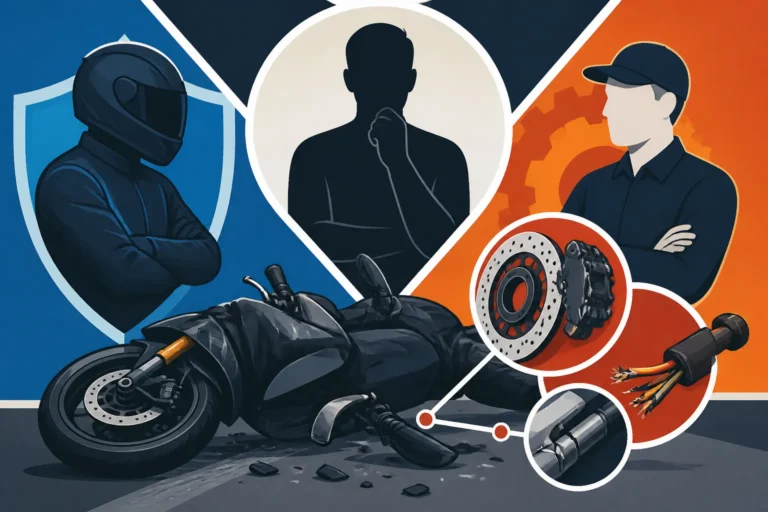
While a lack of witnesses feels like a huge disadvantage, physical evidence often tells an even more objective story. Your motorcycle's damage patterns can reveal the direction and force of impact. For example, scrapes on the left side might indicate a fall to that side, while crumpled handlebars could suggest a frontal collision. Document these details with close-up photos and descriptions.
Beyond your bike, the road itself holds clues. Skid marks on the pavement can indicate braking, swerving, or the path of your motorcycle after impact. Measure their length and direction if you can, and photograph them with a recognizable landmark for scale. Look for any debris – shattered plastic, paint chips, fluid spills – and photograph their precise locations. Road hazards, such as potholes, uneven pavement, or loose gravel, can also contribute to an accident and should be thoroughly documented. A detailed police report will often include observations about these physical elements, making it an essential document, even if the officer didn't witness the actual crash. Learn more about how police reports establish fault.
Harnessing Technology and Expert Opinions
In today's connected world, technology offers surprising ways to fill the gaps left by absent witnesses. If you have a dashcam on your motorcycle, or even a GoPro mounted on your helmet, that footage could be a game-changer. It provides an objective, time-stamped record of events leading up to and during the crash. Don't forget to check if nearby businesses, traffic lights, or residential properties have security cameras that might have captured the incident. A gas station, a convenience store, or even a Ring doorbell could be a crucial source.
Many modern vehicles, including some motorcycles and certainly most cars, are equipped with Event Data Recorders (EDRs), often called "black boxes." These devices record data points like speed, braking, and steering input in the moments before a crash. This data can scientifically establish facts that no human witness could. In complex cases, especially those with significant injuries or disputed liability, an accident reconstruction expert can be invaluable. These professionals use scientific principles, physical evidence from the scene, vehicle data, and even physics simulations to recreate the accident sequence. Their findings can provide a clear and undeniable narrative, effectively acting as a "scientific witness" to the event. Understanding how accident reconstruction determines fault can significantly bolster your claim.
| Type of Evidence | What to Look For | Where to Find It | Purpose in No-Witness Case |
|---|---|---|---|
| Photos/Video | Damage, road conditions, skid marks, debris, injuries, signage, weather | Your phone, nearby CCTV, dashcam | Visual proof of scene, impact, contributing factors |
| Police Report | Officer's observations, diagrams, vehicle info, road conditions | Law enforcement agency | Official documentation of incident facts (even without witnesses) |
| Vehicle Data (EDR) | Speed, braking, steering before impact | Vehicle's onboard computer (accessed by experts) | Objective data on vehicle actions |
| Medical Records | Diagnosis, treatment, prognosis | Hospitals, doctors' offices | Proof of injury, severity, and link to accident |
| Road Conditions | Potholes, gravel, construction, signs | Accident scene photos, municipal records | Establishes potential contributing factors |
| Accident Reconstruction | Expert analysis, simulations | Hired expert | Scientific recreation of crash sequence |
Navigating the Insurance Claim Process Without Eyewitnesses
Dealing with insurance companies can be daunting, and it becomes even more challenging when you don't have a clear-cut witness statement to present. Insurers are in the business of minimizing payouts, and a lack of witnesses often gives them an opening to question your account or even try to pin the blame on you.
Reporting the Accident and Dealing with Adjusters
First things first: report the accident to your insurance company promptly. Delays can be used against you. When you speak to your adjuster, stick strictly to the facts. Do not speculate, guess, or admit any fault. If you say something like, "I think I might have hit a patch of gravel, but I'm not sure," the insurance company might seize on the "I think" and "not sure" to argue that you were negligent or that the incident was entirely your fault. Instead, describe what you know: "I was traveling eastbound on Highway 101, approaching the intersection with Elm Street, when my motorcycle unexpectedly went down. I sustained injuries to my left leg and significant damage to the bike."
Be prepared for the adjuster to be skeptical. It’s their job. They might subtly try to imply that because there were no witnesses, your version of events is less credible. They may even leverage common biases against motorcycle riders. This is where your meticulous documentation from the scene, and any expert analysis you've obtained, becomes your voice. Show them the photos of the skid marks, the debris field, the road conditions, or the vehicle damage that clearly supports your narrative. Every piece of objective evidence you present makes it harder for them to dismiss your claim. Remember, even if the police report states "no witnesses," it will still contain crucial details like time, location, and observed damage.
Understanding How Fault Is Determined
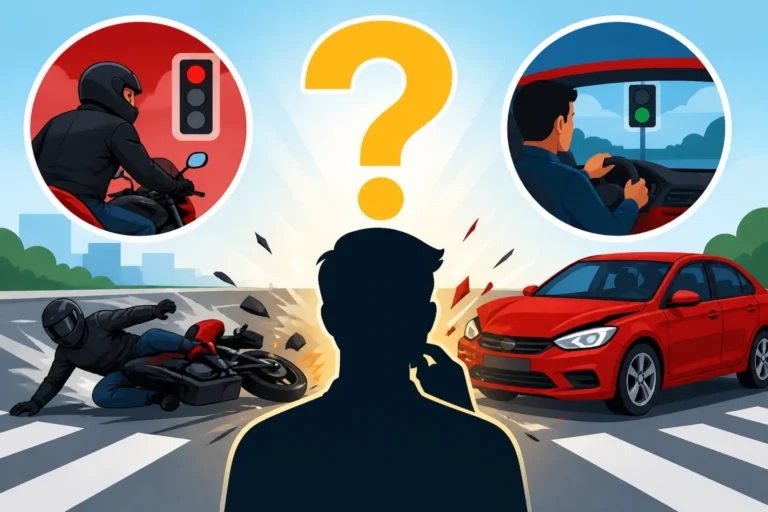
Without a witness, determining fault often boils down to a thorough analysis of the physical evidence and the logical sequence of events. For example, if your motorcycle has rear-end damage and there are no skid marks from your bike, but significant skid marks from the vehicle that struck you, this strongly suggests a rear-end collision, where the other driver is typically at fault. Similarly, if you crashed due to a massive pothole that local authorities had been repeatedly warned about, the government entity responsible for road maintenance might be liable. This requires gathering information about prior complaints or work orders for that section of the road.
Insurance companies will analyze property damage, medical records, and the police report to draw conclusions. They might even hire their own accident reconstructionists. Your goal is to provide a comprehensive package of evidence that leaves little room for doubt. If you can present strong evidence – like dashcam footage or an expert opinion – that points directly to the other party’s negligence (or to a road hazard), it becomes significantly harder for the insurance company to deny your claim or reduce your payout. If you feel like your claim is being unfairly dismissed, understanding how to fight an unfair fault assignment is crucial. This could involve showing how the other driver was clearly at fault, even without direct observation.
Legal Considerations and Seeking Professional Guidance
When you're dealing with a motorcycle accident that has no witnesses, the complexities multiply. The stakes are often high due to the severe nature of motorcycle injuries, and going it alone against experienced insurance companies can be a recipe for frustration and a lowball settlement.
When to Consider Legal Counsel
While you might be tempted to handle a no-witness accident claim on your own, especially if the damage seems minor, this is precisely when having an experienced motorcycle accident lawyer on your side becomes invaluable. An attorney understands the nuances of accident law, especially in states with comparative negligence laws like California or Texas, where even partial fault can reduce your settlement. They know how to investigate an accident thoroughly, even when eyewitnesses are absent. This includes knowing where to look for hidden evidence, like traffic camera footage from intersections, local business surveillance systems, or even private security cameras. They can subpoena records, depose experts, and build a case based on forensic evidence, not just verbal accounts.
A lawyer can also act as a buffer between you and the insurance companies, who, as we discussed, might try to use the lack of witnesses to their advantage. They understand how insurers often use rider stereotypes against you and how to counter these tactics. Furthermore, if the accident involves a defective part on your motorcycle or a dangerous road condition, an attorney can pursue third-party liability claims against manufacturers or government entities. If you're wondering, do you need a motorcycle accident lawyer for your specific situation, the answer is often a resounding yes, especially when proving fault is challenging.
The Importance of Medical Documentation
Regardless of whether there were witnesses, your medical documentation is one of the most critical pieces of evidence in any personal injury claim. After an accident, always seek immediate medical attention, even if you feel fine. Adrenaline can mask pain, and some serious injuries, like internal bleeding, concussions, or spinal trauma, might not manifest symptoms for hours or even days. Any delay in seeking treatment can be used by insurance companies to argue that your injuries weren't directly caused by the accident or that they aren't as severe as you claim.
Your medical records — including emergency room reports, doctor's notes, diagnostic test results (X-rays, MRIs, CT scans), physical therapy records, and medication prescriptions — provide an undeniable record of your injuries, the treatment you received, and the associated costs. This documentation is essential for calculating your economic damages (medical bills, lost wages) and also plays a significant role in valuing your non-economic damages, such as pain and suffering. Keep a detailed injury journal where you record your symptoms, pain levels, and how your injuries affect your daily life. This personal account, combined with objective medical evidence, helps to paint a comprehensive picture of your suffering and recovery process, even when no one saw the initial impact. Knowing how to document injuries for a claim will significantly strengthen your position.
Disclaimer
Please remember that the information provided in this article is for general informational purposes only and does not constitute legal advice. Every motorcycle accident claim is unique, and the laws governing such claims vary significantly by state. It is always recommended to consult with a qualified legal professional for advice tailored to your specific situation.