Who Is at Fault When a Car Door Opens
Hitting an open car door while riding your motorcycle is one of those nightmares every rider thinks about, often in the blink of an eye. It’s a sudden, jarring, and incredibly dangerous incident that can lead to severe injuries and extensive bike damage. When this happens, confusion and frustration quickly set in, especially when you start wondering who is truly responsible for the chaos. This guide aims to clear up that confusion, diving deep into how fault is determined in these specific and often contentious motorcycle accidents.
Understanding "Dooring" Accidents and Their Impact on Riders
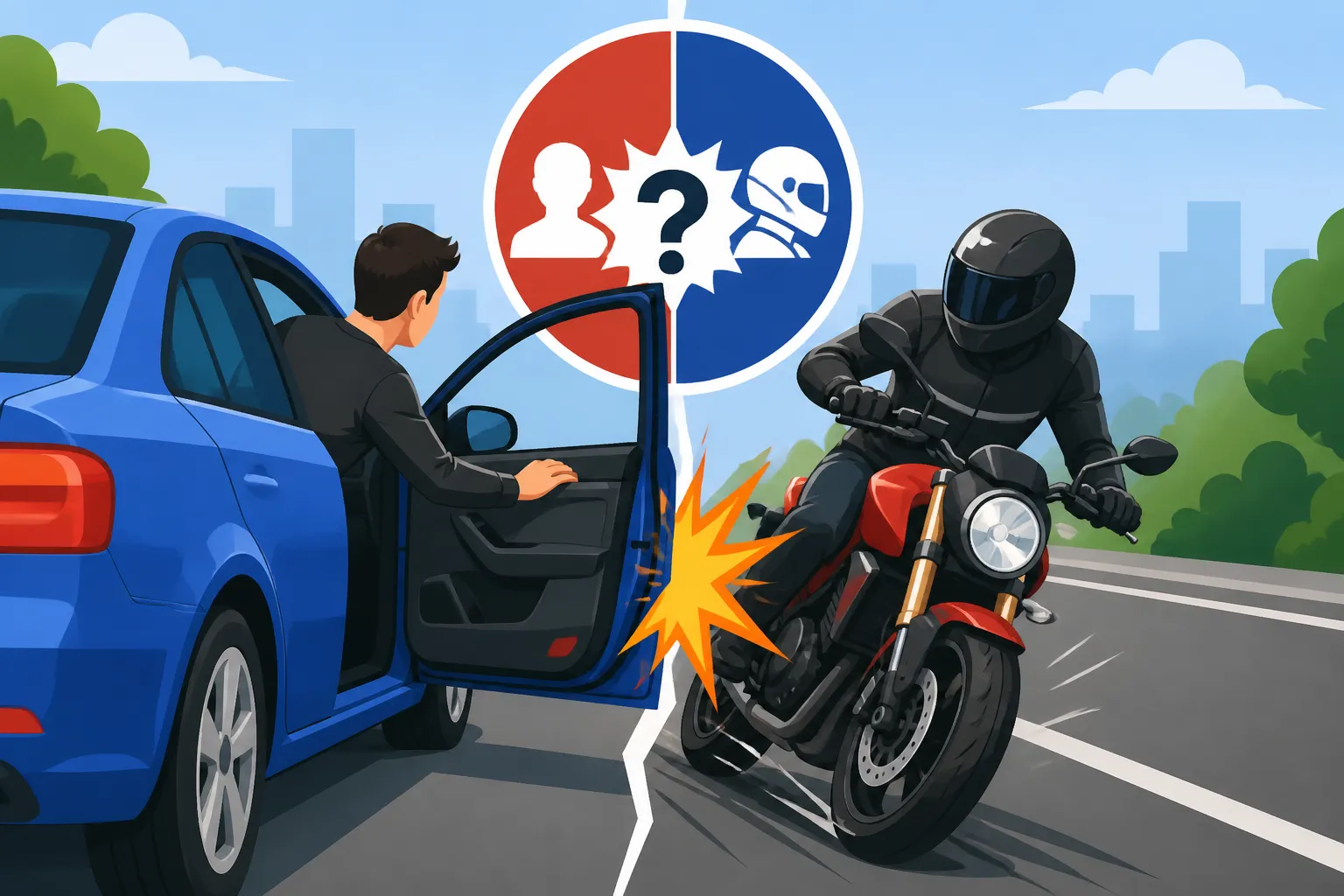
A "dooring" accident, as it’s commonly known, is a collision where a cyclist or motorcyclist strikes an open or opening car door. These incidents are a stark reminder of the unique vulnerabilities motorcyclists face on the road. Unlike a car, a motorcycle offers no protective shell, meaning direct contact with an unexpected obstruction like an open car door can have catastrophic consequences.
What is a Dooring Accident?
Imagine you're cruising down a busy street in a city like Chicago or New York, weaving carefully through traffic, when suddenly, a parked car's door swings open right into your path. This is a dooring accident in its most common form. It can happen with a driver exiting their vehicle, a passenger stepping out, or even someone opening a rear door to retrieve something from the backseat. The key element is the unexpected and often sudden appearance of the car door, leaving the motorcyclist with little to no time to react and avoid a collision.
These aren't just minor fender benders. For a rider traveling at even moderate speeds, the impact can be devastating. Riders can be thrown from their bikes, collide head-first with the door or other obstacles, or be run over by following traffic. The abruptness of these events means riders often cannot brace themselves, exacerbating the severity of their injuries.
The Immediate Aftermath for Motorcyclists
The physical toll of a dooring accident is usually extensive. Common motorcycle accident injuries range from severe road rash, broken bones, and fractures to more critical injuries like traumatic brain injuries and spinal cord damage. The force of impact can easily dislodge a helmet, even a DOT-compliant one, or lead to injuries despite wearing full protective gear. Your motorcycle, often a prized possession, will likely suffer significant damage, requiring costly repairs or even being declared a total loss.
Beyond the physical and financial damage, there's the emotional and psychological impact. The suddenness and helplessness of such an accident can lead to significant emotional distress, anxiety, and even post-traumatic stress disorder (PTSD), making it difficult to get back on two wheels. The experience can be incredibly traumatizing, affecting not just your riding habits but your overall quality of life.
Why Dooring Accidents are Often Preventable
The vast majority of dooring accidents are entirely preventable. They typically stem from a driver's or passenger's failure to exercise reasonable care before opening a vehicle door. Drivers have a clear duty to ensure the path is clear before exiting their vehicle, checking mirrors and blind spots for approaching traffic, including motorcycles and bicycles. Many jurisdictions, including parts of Oregon and Illinois, even encourage or require what's known as the "Dutch Reach," where a driver uses their far hand to open the door, forcing them to turn their body and naturally check for oncoming traffic.
While riders also have a responsibility to ride defensively and be aware of their surroundings, the primary burden of prevention in these specific scenarios often falls on the person opening the car door. Their momentary lapse in vigilance can have life-altering consequences for a motorcyclist, highlighting a critical point of contention when it comes to determining fault.
Determining Fault in a Car Door Accident
Determining fault after a dooring accident isn't always as straightforward as it might seem, but generally, the law places a significant burden on the person opening the car door. It boils down to whose actions, or inactions, directly led to the collision.
Driver's Duty of Care
Every driver and passenger has a legal "duty of care" to others on the road. When it comes to opening a car door, this duty requires them to do so safely and without interfering with traffic. This typically means checking mirrors (side and rear-view), turning to look over their shoulder, and only opening the door when it is safe to do so. In many states, statutes explicitly forbid opening a car door until it is reasonably safe and can be done without interfering with the movement of other traffic. For instance, California Vehicle Code Section 22517 states that "No person shall open the door of a vehicle on the side available to moving traffic unless it is reasonably safe to do so and can be done without interfering with the movement of other traffic." Similar laws exist in places like Texas and Florida.
The concept of the "Dutch Reach," though not always a legal requirement, reinforces this duty. It’s a simple, effective technique that helps prevent dooring incidents by prompting drivers to look before they open. If a driver or passenger fails to take these reasonable precautions and opens a door into an oncoming motorcycle, they are usually found to be at fault. This negligence is often a clear violation of their duty to operate their vehicle (or exit it) safely.
Rider's Role and Potential Contributory Negligence
While the burden of responsibility often falls on the person opening the car door, it's not always a 100% clear-cut case. Insurance companies and defense attorneys will undoubtedly scrutinize the motorcyclist's actions to find any potential contributory negligence. Did the rider maintain a safe distance from parked cars? Were they speeding, violating traffic laws, or riding recklessly?
For example, if a motorcyclist was lane splitting illegally in a state where it's not permitted (or unsafely in states where it is, such as California), and struck an opening door, their actions could be considered partially at fault. Similarly, if a rider was traveling at an excessive speed for the conditions, or weaving erratically, an argument could be made that they contributed to the accident. Even if a driver opened their door negligently, a jury might decide the motorcyclist could have avoided the collision if they had been more attentive or riding within legal limits. This is where the concept of comparative negligence comes into play, which can significantly reduce a rider's potential compensation. For more detailed information, you can explore topics like Comparative Negligence in Motorcycle Accidents.
How Traffic Laws Apply to Open Car Doors
Local and state traffic laws are critical in determining fault. Beyond the general duty of care, specific statutes often address vehicle doors. For example, some city ordinances might prohibit opening a car door into traffic or specify a minimum distance a vehicle must be parked from a curb or other objects. A violation of such a law, like opening a door without checking, can serve as strong evidence of negligence against the driver.
Furthermore, parking regulations can also influence fault. If a car was illegally parked (e.g., too close to an intersection, in a no-parking zone), and a door was opened from that vehicle, it could add another layer of fault to the driver. The argument would be that the vehicle shouldn't have been there in the first place, thus contributing to the hazard. It’s essential to understand that proving fault in a motorcycle accident often involves a deep dive into all applicable laws, from broad traffic codes to very specific local ordinances.
Evidence Needed to Prove Fault in a Dooring Accident
After the initial shock of a dooring accident, the moments and actions that follow are critical for establishing fault and protecting your claim. Gathering comprehensive evidence is paramount.
Crucial Information to Collect at the Scene
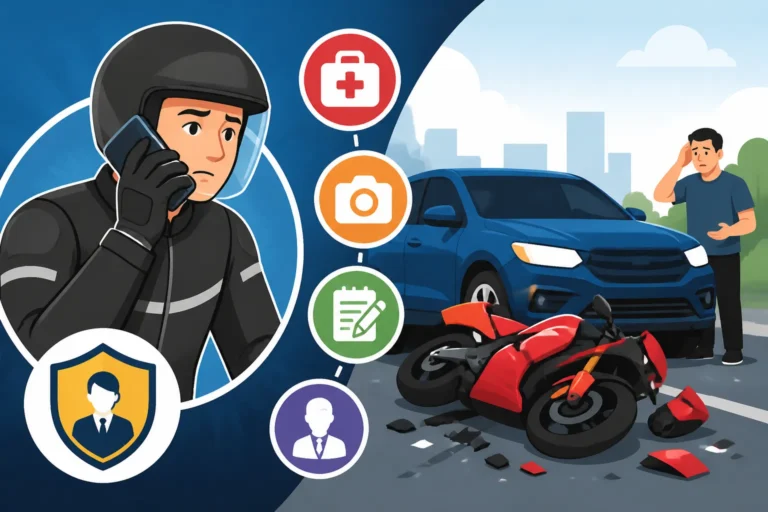
If you are physically able, documenting the scene immediately after the accident can make or break your claim. Start by taking extensive photographs and videos. These should include:
- The position of your motorcycle and the car.
- The damage to your bike and the car door.
- Any visible injuries you sustained.
- The overall accident scene, including road conditions, traffic signs, and surrounding area.
- Close-ups of any debris, skid marks, or other physical evidence.
Next, identify and speak with any witnesses. People who saw the accident unfold can provide invaluable, unbiased accounts. Get their full names, contact information, and a brief statement of what they observed. Witness testimony can often counteract the "rider bias" that insurance companies unfortunately exhibit against motorcyclists. For more on this, consider reading about How Witnesses Affect Motorcycle Fault.
Always call the police, even if you think the accident is minor. A police report, while not always definitive on fault, documents the facts of the accident, including driver and vehicle information, and can often contain an officer’s initial assessment of the scene. This report is a crucial piece of evidence for your insurance claim. Understanding How Police Reports Establish Fault is vital. Never admit fault or apologize at the scene, as anything you say can be used against you later by insurance adjusters trying to minimize your settlement.
Leveraging Expert Testimony and Accident Reconstruction
In complex dooring accident cases, especially those involving significant injuries or disputed fault, accident reconstruction experts can be invaluable. These professionals use scientific principles, physics, and detailed analysis of evidence (like vehicle damage, debris fields, and witness statements) to create a clear picture of how the accident occurred. They can determine vehicle speeds, angles of impact, and critical reaction times, effectively proving how and why the car door opened into your path or if the driver had a reasonable opportunity to see you.
Their expert testimony can be powerful in court or during negotiations, providing an objective, scientific basis for assigning fault. If the driver or their insurance company disputes your account, an accident reconstructionist can often provide the undeniable facts needed to establish the truth. This can be especially important in cases where the driver claims you were speeding or otherwise negligent.
The Role of Video Footage and Other Technologies
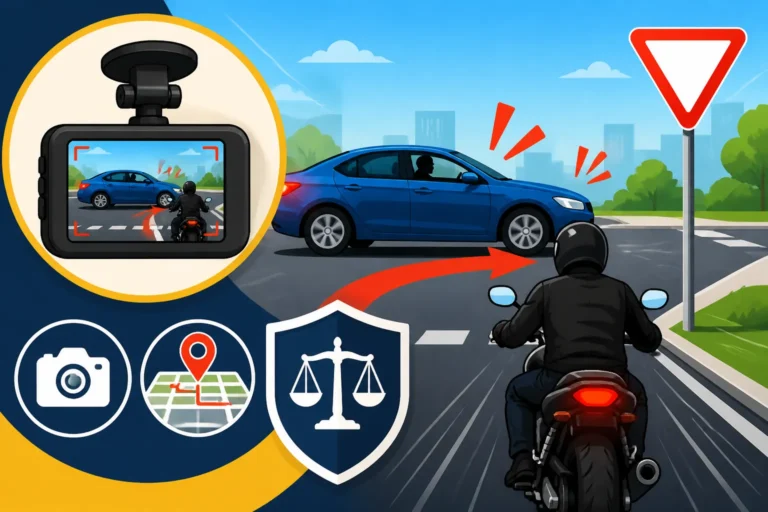
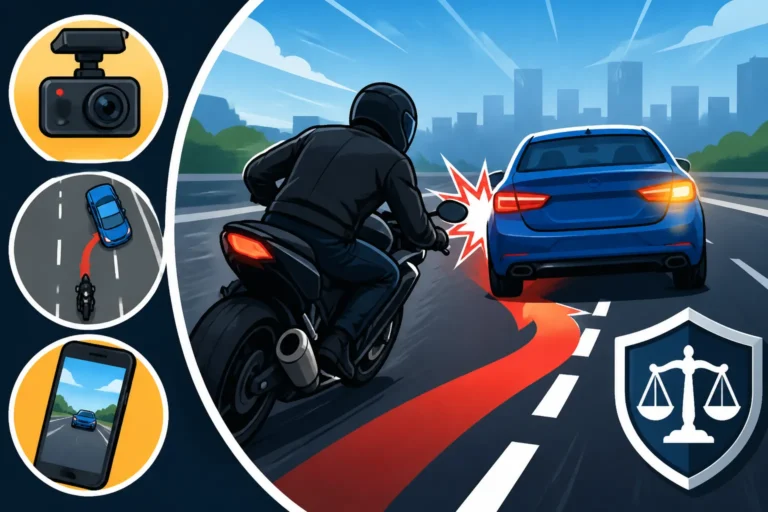
In today's world, technology plays an increasingly significant role in accident investigations. Dashcam footage from your motorcycle or the at-fault vehicle, nearby surveillance cameras (from businesses, traffic lights, or even private homes), or even Ring doorbell cameras can provide irrefutable evidence of the accident. This footage can capture the exact moment the car door opened, your reaction time, and the actions of both parties leading up to the collision.
Even data from vehicle event recorders (often called "black boxes" in cars) can provide information about speed, braking, and steering inputs in the seconds before impact. While less common for motorcycles to have this level of data, cars often do. This data can be crucial for an accident reconstructionist to analyze and support your claim, especially in proving the driver’s negligence.
Navigating the Claims Process After a Dooring Accident
Once the initial chaos subsides, you're faced with the daunting task of navigating the claims process. This can be a labyrinth of paperwork, phone calls, and negotiations, especially when dealing with insurance companies.
Dealing with Insurance Companies
Let's be real: insurance companies are businesses, and their primary goal is to pay out as little as possible. When it comes to motorcycle accidents, there's an unfortunate and pervasive "rider bias" where insurers often try to place some, if not all, of the blame on the motorcyclist. They might argue you were speeding, riding recklessly, or simply "should have seen" the opening door, even if the driver was clearly negligent. This is why it's so important to have solid evidence and, often, legal representation.
Be prepared for their tactics. They might offer a quick, lowball settlement hoping you'll accept it before you fully understand the extent of your injuries or the long-term costs. They might also try to get you to give a recorded statement, which they can then twist and use against you. It's often best to let an attorney handle all communications with the insurance company, protecting you from inadvertently harming your own claim. For more insight into these dynamics, read How Insurance Companies Assign Blame to Riders.
Seeking Medical Attention and Documenting Injuries
Your health is the absolute top priority. Even if you feel okay after a dooring accident, you MUST seek immediate medical attention. Adrenaline can mask pain, and some serious injuries, like concussions or internal bleeding, might not manifest symptoms for hours or even days. A delay in seeking medical care can not only jeopardize your health but also weaken your personal injury claim. Insurance companies love to argue that if you waited to see a doctor, your injuries couldn't have been that severe or weren't caused by the accident.
Thoroughly document all your injuries, medical treatments, prescriptions, and follow-up appointments. Keep a detailed journal of your pain levels, limitations, and how the injuries affect your daily life. This comprehensive documentation of your injuries and recovery journey is essential for claiming damages like medical expenses and pain and suffering.
Understanding Potential Damages and Settlement Factors
A successful motorcycle accident claim following a dooring incident should cover a wide range of damages. These typically fall into two categories: economic and non-economic. Economic damages are quantifiable financial losses, such as:
- Medical Expenses: All past, present, and future costs related to your injuries, including hospital stays, surgeries, physical therapy, medications, and rehabilitation.
- Lost Wages: Income you've lost due to being unable to work, both immediately after the accident and any future lost earning capacity if your injuries prevent you from returning to your previous job.
- Property Damage: The cost to repair or replace your motorcycle, helmet, and any other damaged gear.
Non-economic damages are more subjective and compensate for non-financial losses, including:
- Pain and Suffering: Physical pain and emotional distress caused by your injuries.
- Loss of Enjoyment of Life: Compensation for your inability to participate in hobbies, activities, or aspects of life you enjoyed before the accident.
- Disfigurement or Scarring: If the accident resulted in permanent scarring or disfigurement.
The total value of your claim, and thus your potential settlement, is heavily influenced by the severity of your injuries, the clarity of fault, the extent of your financial losses, and the laws of the state where the accident occurred. For more information on how these are calculated, see Economic vs Non-Economic Damages Explained.
State-Specific Considerations for Dooring Accidents
Motorcycle laws, especially concerning fault and recovery, vary significantly from state to state. What might be a clear-cut case in one state could become a complex legal battle in another, primarily due to differing negligence laws.
How Comparative Negligence Laws Affect Your Claim
Most states operate under some form of comparative negligence. This legal principle allows you to recover damages even if you were partially at fault for the accident. However, the amount you can recover will be reduced by your percentage of fault. There are two main types:
- Pure Comparative Negligence: In states like California, you can recover damages even if you are 99% at fault, though your compensation will be reduced by your fault percentage. So, if you suffered $100,000 in damages but were found 20% at fault for the dooring accident (perhaps for riding too close to parked cars), you could still recover $80,000.
- Modified Comparative Negligence: This is more common and comes in two forms: the 50% bar rule and the 51% bar rule.
- 50% Bar Rule: In states like Colorado and Wisconsin, you can only recover damages if you are found to be 50% or less at fault. If you are 51% or more at fault, you cannot recover anything.
- 51% Bar Rule: In states like Texas and Ohio, you can recover damages if you are found to be 50% or less at fault. If you are 51% or more at fault, you cannot recover anything.
Understanding which type of comparative negligence applies in your state is crucial, as it directly impacts your ability to receive compensation and how much. Insurance companies will always try to assign some percentage of fault to the motorcyclist to reduce their payout, making it essential to understand your rights.
Local Ordinances and Their Impact
Beyond state laws, many cities and municipalities have their own specific ordinances that can play a role in dooring accidents. These might include specific regulations on how far a parked vehicle's door can open into a traffic lane, requirements for cyclists (and sometimes motorcyclists) to maintain a certain distance from parked cars, or specific rules for parking in certain areas.
For example, a city like Portland, Oregon, known for its cycling culture, might have very specific local laws regarding dooring incidents that are more protective of two-wheeled vehicle operators than general state law. Being aware of these local nuances can be important for building your case, especially if the accident occurred in a densely populated urban area. Ignorance of these local laws won't excuse the at-fault driver, but knowing them can strengthen your position.
Here's a quick look at common dooring accident scenarios and typical fault determinations:
| Scenario | Driver's Actions | Rider's Actions | Likely Fault Determination (General) | Notes |
|---|---|---|---|---|
| Classic Dooring | Opens door without looking | Riding safely, within speed limit | Primarily Driver Fault | Driver failed duty to check for traffic. |
| Door Slightly Ajar, Then Opened | Partially opened, then fully opened suddenly | Riding safely | Primarily Driver Fault | Even a partially open door should be secure if not safe to fully open. |
| Rider Weaving/Speeding | Opens door, but rider was difficult to see | Speeding, riding recklessly, lane weaving | Shared Fault (Driver & Rider) | Rider's negligence contributed to inability to avoid collision. |
| Rider Too Close to Parked Cars | Opens door after brief check | Riding very close to parked vehicles | Shared Fault (Driver & Rider) | Rider didn't maintain safe buffer, though driver still negligent. |
| Driver Unloads Passenger in Traffic | Stops in traffic lane, passenger opens door | Riding normally | Primarily Driver Fault | Driver created hazardous situation by stopping in an unsafe location. |
In any motorcycle accident, especially one involving the unexpected opening of a car door, it’s critical to remember that you don’t have to go through the complex legal and insurance process alone. Having an experienced legal professional on your side can make a significant difference in how your claim is handled and the compensation you ultimately receive. They understand the nuances of Motorcycle Accident Liability: A Complete Guide and can fight against biases to ensure your rights are protected.
Disclaimer
Please remember that this article provides general information and should not be considered legal advice. Every motorcycle accident claim is unique, and the outcome depends on the specific facts and applicable laws in your jurisdiction. It is highly recommended to consult with a qualified motorcycle accident attorney to discuss your individual situation and get personalized legal guidance.