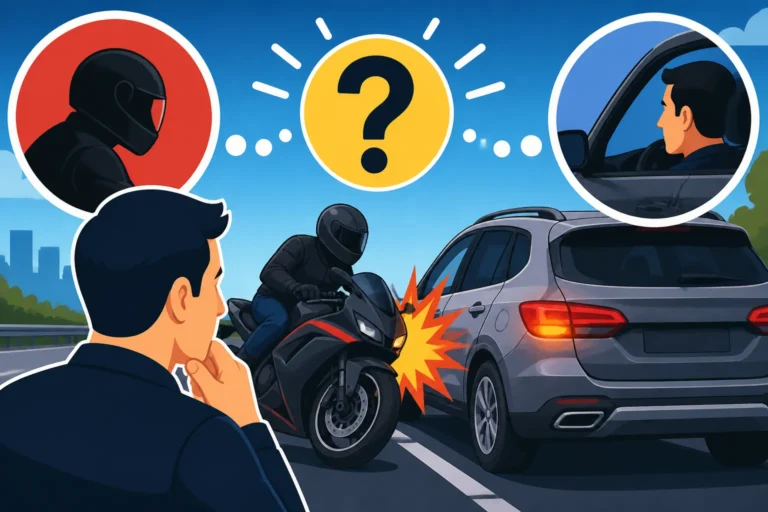
How Insurance Companies Assign Blame to Riders
It's incredibly frustrating for any motorcyclist to be involved in an accident, but what can be even more disheartening is when the insurance company seems to immediately point the finger at you, the rider. This isn't just an anecdotal feeling; it's a deeply ingrained pattern that many riders experience. This guide will peel back the layers of how insurance companies typically assign blame after a motorcycle accident, the common tactics they employ, and crucially, what you can do to protect yourself and ensure a fair outcome.
The Inherent Bias Against Riders in Accident Claims
For many motorcyclists, the road to recovery after an accident often feels like an uphill battle, not just physically but also legally and financially. A significant part of this struggle stems from a pervasive bias that exists within the insurance industry and, unfortunately, in society at large. This bias often colors the initial assessment of an accident, frequently placing motorcyclists at a disadvantage from the outset.
The "Risky Rider" Stereotype
Let's be honest, the image of a motorcyclist in popular culture and often in the public consciousness is not always positive. We’re often stereotyped as thrill-seekers, reckless daredevils, or individuals who inherently take unnecessary risks. This "risky rider" stereotype is deeply ingrained, and it affects how non-riders, including police officers, witnesses, and crucially, insurance adjusters, perceive an accident involving a motorcycle. When an insurance company receives a report about a car-motorcycle collision, there's often an unconscious (or sometimes conscious) predisposition to consider what the motorcyclist might have done wrong.
This isn't fair, of course. The vast majority of motorcyclists are responsible, safety-conscious individuals who adhere to traffic laws and take extensive precautions. We often ride with more defensive strategies than car drivers precisely because we understand our vulnerability. However, these facts often get overshadowed by the stereotype. Adjusters might, for instance, begin their investigation looking for signs of speeding, erratic lane changes, or other perceived "motorcycle behaviors" that could contribute to the accident, even if the initial evidence points squarely to the other driver's fault. This creates a challenging starting point for a rider trying to prove they were not to blame.
Why Insurance Companies Benefit from Shifting Blame
It’s important to remember that insurance companies are businesses. Their primary goal is to minimize payouts on claims to protect their profitability. When it comes to a motorcycle accident, if they can assign even a percentage of fault to the motorcyclist, it directly reduces the amount they have to pay out to cover damages. This isn't about malicious intent towards you personally; it's a calculated business strategy.
Imagine a scenario where a car driver is clearly at fault for hitting a motorcyclist, leading to significant medical bills, lost wages, and damage to the bike. If the car driver's insurance company can successfully argue that the motorcyclist was even 20% at fault, they can reduce their payout by that same 20%. This applies to both economic damages (like medical expenses and lost income) and non-economic damages (like pain and suffering). This financial incentive means that adjusters are often trained to meticulously scour police reports, witness statements, and accident reconstruction details for any possible angle to shift or share blame. This tactic is a key part of How Insurance Companies Assign Blame to Riders. It underscores why riders need to be vigilant and informed from the very beginning of their claim.
Initial Steps Insurance Companies Take to Determine Fault
When an accident happens, the moments immediately following it are chaotic and stressful. But behind the scenes, insurance companies are quickly moving to gather information. Understanding their initial process can help you prepare for what’s to come and protect your claim. They follow a fairly standard procedure to start piecing together their version of events.
Collecting the Police Report and Initial Statements
The police report is often the very first document an insurance company obtains, and it carries significant weight. This report details the officer's observations, diagrams of the accident scene, any citations issued, and often, the officer's preliminary opinion on who was at fault. While an officer's opinion isn't legally binding for an insurance claim, it heavily influences the adjuster's initial assessment. If the report indicates that you, as the motorcyclist, received a citation or were deemed partially at fault by the investigating officer, the insurance company will certainly use this as a strong starting point for their blame assignment.
It's equally important to consider your own statements, both to the police at the scene and to your own insurance company in the days following the crash. Anything you say can be used by the other driver's insurance company to undermine your claim. This is why it’s crucial to be factual and avoid speculating, apologizing, or admitting any fault, even if you feel shaken or unsure. A simple "I'm not sure what happened, but my head hurts" is much better than "I think I might have been going a little fast." Discrepancies between your statement and the police report, or any early admissions of fault, can be extremely detrimental. Knowing What to Do After a Motorcycle Accident and particularly What to Say to Police After a Motorcycle Accident can significantly impact how fault is initially perceived.
Reviewing Scene Photos, Witness Accounts, and Vehicle Damage
Beyond the police report, insurance adjusters dig into other available evidence to reconstruct the accident. High-quality photos taken at the scene are invaluable. They look at pictures of vehicle damage, the final resting positions of the vehicles, road conditions, skid marks, traffic signals, and any relevant debris. These visual cues help them understand the point of impact, the force involved, and the sequence of events. For instance, the type of damage—front-end, side-impact, rear-end—can offer clues about who initiated the collision and the angles involved.
Witness accounts also play a crucial role, especially from independent third parties who have no vested interest in the outcome. Adjusters will try to contact any witnesses listed in the police report or identified by either driver. Their statements can corroborate or contradict the drivers' accounts, providing additional perspectives. Unfortunately, in the context of Rider Bias in Fault Determination, witnesses sometimes unconsciously favor the car driver simply because they are more relatable. However, a clear and consistent witness statement can be powerful in Proving Fault in a Motorcycle Accident. Without strong evidence, the insurance company has more room to assign blame based on their own interpretations.
Key Factors Insurance Companies Consider for Fault Assignment
When an insurance company sets out to assign blame, they’re not just guessing. They have a checklist of factors they methodically go through, looking for any information that can support their goal of minimizing payout. Understanding these key factors can help you anticipate their arguments and prepare your defense.
Traffic Laws and Violations
One of the most straightforward ways an insurance company assigns fault is by identifying traffic law violations. If you, the motorcyclist, or the other driver, received a citation at the scene—for speeding, running a red light, failing to yield, or an unsafe lane change—that citation becomes a powerful piece of evidence for the insurer. A ticket for a violation like excessive speed or an illegal maneuver directly points to negligence. Even if the violation wasn't the sole cause of the accident, it allows the insurance company to argue that your actions contributed to the crash, thereby assigning you at least partial fault.
Furthermore, they will delve into specific laws pertinent to motorcycles. For example, laws surrounding Lane Splitting Legality and Fault by State are a common area of contention. In states where lane splitting is illegal, if you were involved in an accident while splitting lanes, the insurance company will almost certainly assign you fault, even if the car driver was also negligent. Even in states where it's legal, they might argue you were splitting at an unsafe speed or in an unsafe manner. Similarly, right-of-way laws at intersections are critically reviewed. If a driver fails to yield, they are typically at fault, but an insurer might look for ways to argue the motorcyclist was also negligent, perhaps by speeding, which leads us to the next point.
Driver Visibility and the "I Didn't See You" Defense
This is perhaps one of the most maddening and pervasive defenses deployed by drivers and subsequently leveraged by insurance companies: "I didn't see the motorcycle." It’s a common refrain after collisions, particularly in scenarios like Left-Turn Motorcycle Accidents Explained, where a car turns directly into the path of an oncoming motorcycle. While it's the driver's responsibility to look for all traffic, including motorcycles, insurance companies often try to use this defense to argue that the motorcyclist was "less visible" and therefore somehow contributed to the accident.
They might suggest that because a motorcycle has a smaller profile than a car, it blends into the background, or that the rider wasn't wearing bright enough clothing, or that their headlight wasn't adequately noticeable. This approach attempts to shift the burden onto the motorcyclist to be "more visible," rather than placing full responsibility on the driver for their inattention. Unfortunately, the unfair reality of ‘I Didn’t See the Motorcycle’ Defense Explained can resonate with adjusters who are already predisposed to find rider fault, making it a challenging argument to overcome without strong evidence.
Rider Actions and Riding Behavior
Insurance companies also heavily scrutinize the rider's specific actions and overall riding behavior leading up to the accident. They're looking for anything that can suggest the motorcyclist was operating their bike in a way that contributed to the collision. This could include allegations of speeding, following too closely, weaving through traffic, performing stunts, or even perceived "aggressive" riding. Even if these actions weren't the direct cause of the accident, the insurance company can use them to argue shared fault.
For example, if a car suddenly swerves and you, as a rider, make an evasive maneuver that results in a collision, the insurance company might try to claim you "lost control" due to unsafe riding, rather than acknowledging you were reacting to another driver's negligence. This is where the Rider Bias in Fault Determination truly comes into play. Adjusters and even witnesses might interpret a rider's natural reactions as reckless behavior. They might also pull your past driving record, looking for any history of traffic violations that could paint you as a habitually unsafe driver, even if those incidents are unrelated to the current crash. This detailed scrutiny of your actions means that every aspect of your riding leading up to the accident can be picked apart and used against you.
Common Scenarios Where Riders Face Undue Blame
As motorcyclists, we often face unique challenges on the road, not just from other drivers but also from the insurance companies after an accident. There are certain types of collisions where riders are particularly susceptible to having blame unfairly assigned to them, even when the fault clearly lies elsewhere. Knowing these scenarios can help you be prepared.
Left-Turn Collisions
This is arguably one of the most common and dangerous scenarios for motorcyclists, and one where blame often gets skewed. A left-turn collision typically involves a car making a left turn directly in front of an oncoming motorcycle, violating the motorcycle’s right-of-way. In the vast majority of these cases, the turning vehicle is legally at fault for Motorcycle Accidents Caused by Left-Turn Collisions because they failed to yield. However, insurance companies for the turning driver will almost always try to find ways to assign some level of fault to the motorcyclist.
They might argue that the motorcyclist was speeding, making it impossible for their client to judge the turn safely. They might claim the motorcycle was difficult to see due to its smaller profile, playing into the "I didn't see you" defense we discussed earlier. Or, they could suggest the rider had sufficient time to react and avoid the collision but failed to do so. These arguments, while often specious, are designed to reduce the turning driver's liability by claiming shared fault. It becomes a battle of narratives, where the motorcyclist often has to work extra hard to prove the other driver's unequivocal negligence.
Rear-End Collisions
In most traffic laws, the driver who rear-ends another vehicle is generally considered at fault. This is because drivers are expected to maintain a safe following distance and be able to stop in time if the vehicle ahead slows or stops suddenly. So, if a car rear-ends a motorcycle, it seems like an open-and-shut case, right? Not always. Insurance companies can still be incredibly creative in trying to shift blame, even in these seemingly clear-cut situations.
They might claim that the motorcyclist stopped abruptly or "brake-checked" the car behind them without warning. They might even try to argue that the motorcycle's brake lights were not functioning properly, or that the rider was engaging in some form of erratic or unexpected behavior. While these arguments are often difficult for them to prove, they are still made in an attempt to reduce the percentage of fault assigned to their insured driver and therefore minimize their payout. Proving Who Is at Fault in a Rear-End Collisions Motorcycle Accident can become more complex than it should be, requiring careful documentation of the scene and witness statements.
Lane Splitting Accidents
For riders in states like California where lane splitting is legal under certain conditions, this practice can become a flashpoint for fault assignment after an accident. Even though it's legal, insurance companies might still argue that a rider who was lane splitting contributed to the accident. They could claim the rider was traveling at an unsafe speed, was not being adequately visible, or was making sudden movements between lanes. If you were involved in an accident while lane splitting, expect the other driver's insurance company to thoroughly investigate if your actions met all legal requirements and safety standards for the practice.
In states where lane splitting is illegal (which is the majority), being involved in an accident while splitting lanes can be a significant hurdle. If you were violating the law by lane splitting, the insurance company will almost certainly assign a high percentage of fault to you, even if the other driver was also negligent in some way. This highlights the crucial importance of understanding and adhering to Lane Splitting Legality and Fault by State in your specific jurisdiction. Ignorance of the law or a momentary lapse could severely impact your ability to recover damages, as it gives the insurance company a clear path to assign blame.
How State Fault Laws Influence Insurance Decisions
The legal framework of the state where your accident occurs plays an absolutely critical role in how insurance companies assign blame and, more importantly, how much compensation you can ultimately recover. These laws dictate how shared responsibility for an accident is handled, making a huge difference in your claim's outcome.
Understanding Comparative and Contributory Negligence
At a high level, states follow one of two primary systems for handling shared fault: contributory negligence or comparative negligence.
Contributory Negligence: This is the harshest system and is only used in a handful of states (currently Alabama, Maryland, North Carolina, Virginia, and the District of Columbia). Under this rule, if the motorcyclist is found to be even 1% at fault for the accident, they are completely barred from recovering any damages from the other driver. Imagine being hit by a car that ran a red light, but an insurance adjuster successfully argues you were speeding by 5 mph. In a contributory negligence state, you would get absolutely nothing, even if the other driver's negligence was clearly the primary cause. This system is extremely unforgiving for motorcyclists.
Comparative Negligence: This system is far more common and allows for a more equitable distribution of fault. In comparative negligence states, your total damages are reduced by the percentage of fault assigned to you. For example, if your damages are $100,000, but you are found to be 20% at fault, you would only recover $80,000. This is the essence of Comparative Negligence in Motorcycle Accidents. However, there are two main variations:
- Pure Comparative Negligence: A few states (like California, Florida, and New York) follow this rule. You can recover damages even if you are mostly at fault. If you are 90% at fault, you can still recover 10% of your damages.
- Modified Comparative Negligence: Most comparative negligence states use this. There's a threshold for recovery, typically 50% or 51%.
- 50% Bar Rule: In states like Colorado and Georgia, if you are 50% or more at fault, you cannot recover any damages. If you're 49% at fault, you can still recover 51% of your damages, but 50% means zero.
- 51% Bar Rule: In states like Illinois and Texas, if you are 51% or more at fault, you cannot recover. If you're 50% at fault, you can recover 50% of your damages, but 51% means zero.
This difference is critical, as insurance companies will fight fiercely to push your fault percentage past these thresholds, especially in modified comparative negligence states, to avoid paying anything at all.
The Impact of Shared Fault on Settlement Offers
Once an insurance company has assigned a percentage of fault to you as the rider, this percentage directly impacts every single settlement offer they will make. It's not just a theoretical number; it's a direct reduction of your potential compensation. For instance, if your claim for medical bills, lost wages, and pain and suffering totals $75,000, and the insurance company determines you were 25% at fault, their offer will immediately reflect a 25% reduction, meaning they'll offer around $56,250.
This percentage also heavily influences the negotiation process. The insurance company's initial offer will always be based on their internal fault assessment, and they will use this as leverage to argue for a lower payout. This means that even if the other driver was primarily negligent, the adjuster's goal is to find any tiny detail to argue that you contributed to the accident, thereby reducing what they owe. This is how the complexities of shared fault directly affect How Fault Affects Your Settlement. Therefore, challenging an unfair fault assignment is not just about pride; it's about protecting your financial recovery.
| Fault System | Description | Impact on Rider Recovery (Example: $100,000 in Damages) | Common States (Examples) |
|---|---|---|---|
| Contributory Negligence | If the rider is even 1% at fault, they cannot recover any damages. | If 1% at fault, recovery = $0. | Alabama, Maryland, North Carolina, Virginia, D.C. |
| Pure Comparative Negligence | Rider can recover damages even if they are mostly at fault, reduced by their percentage of fault. | If 90% at fault, recovery = $10,000. If 10% at fault, recovery = $90,000. | California, Florida, New York |
| Modified Comparative (50% Bar) | Rider can recover damages if they are 49% or less at fault. If 50% or more at fault, they cannot recover. | If 49% at fault, recovery = $51,000. If 50% at fault, recovery = $0. | Colorado, Georgia, Utah |
| Modified Comparative (51% Bar) | Rider can recover damages if they are 50% or less at fault. If 51% or more at fault, they cannot recover. | If 50% at fault, recovery = $50,000. If 51% at fault, recovery = $0. | Illinois, Texas, Ohio |
Strategies Insurance Companies Employ to Shift Blame
Insurance companies are masters of negotiation and claim valuation, and a key part of their strategy often involves shifting blame away from their insured driver and onto the motorcyclist. They employ various tactics, some subtle and some overt, to achieve this. Being aware of these strategies is your first line of defense.
Requesting Extensive Rider History and Records
One common tactic insurance companies use is to launch a wide-ranging investigation into the rider's past. They'll often request your entire driving record, looking for any prior traffic violations, regardless of how minor or old they are. They might also seek access to your medical history, attempting to find any pre-existing conditions that could potentially be blamed for your current injuries, rather than the accident itself. In some cases, they'll even dig into prior accident claims you may have filed, trying to establish a pattern of "risky" behavior or previous injuries.
The goal here is not necessarily to prove direct fault for this accident, but to cast doubt on your credibility, suggest a history of recklessness, or minimize the severity of your current injuries. For example, if you had a prior back injury, they might argue that your current back pain is a flare-up of that old injury, not a new one caused by the motorcycle crash. While some of these requests might be legitimate within the scope of a claim, many are fishing expeditions designed to find any piece of information that can be weaponized against you, creating a narrative that makes you seem less deserving of full compensation.
Using Delayed Medical Treatment and Gaps in Care
Another powerful tool insurance companies wield is scrutinizing your medical treatment timeline. They look for any gaps or delays in seeking medical attention after the accident. If you didn't go to the emergency room immediately, or if there's a significant delay between the accident and your first doctor's visit, they will almost certainly use this against you. Their argument will be that if your injuries were truly serious, you would have sought immediate care. They might even suggest that your injuries were caused by something else that happened during the delay, not the motorcycle accident.
Similarly, if you start treatment but then have long gaps between appointments, or if you don't follow through with all recommended therapies (like physical therapy or specialist visits), the insurance company will highlight this. They'll argue that your lack of consistent care indicates your injuries aren't as severe as you claim, or that you're not doing your part to recover. This can significantly reduce the value of your injury claim. It’s why prompt and consistent medical care, fully documented, is absolutely vital. Any perceived lapse gives the insurance company ammunition to undervalue your pain and suffering and reduce your overall settlement.
Offering Quick, Lowball Settlements
After a motorcycle accident, especially one involving serious injuries, you're likely dealing with immense physical pain, emotional trauma, and mounting financial stress from medical bills and lost wages. Insurance companies are well aware of this vulnerability. One of their most common tactics is to contact you very early in the process, often before you even fully understand the extent of your injuries or the long-term impact on your life, and offer a quick, lowball settlement.
These initial offers are almost always far less than what your claim is truly worth. The adjuster might present it as a generous gesture to help you "get past this quickly" or "cover your immediate expenses." However, accepting such an offer typically means signing a release that forever waives your right to pursue any further compensation for your injuries or damages. They hope you're desperate enough, uninformed enough, or simply too overwhelmed to realize you're signing away potentially significant future compensation, especially for things like future medical costs or lost earning capacity. This tactic is particularly effective if they've already tried to assign you some degree of fault, as it further reduces what they feel they owe.
What Riders Can Do to Combat Unfair Blame
Facing off against an insurance company that's determined to assign you blame can feel overwhelming, especially when you're recovering from injuries. However, you are not powerless. There are concrete steps you can take to protect your rights, challenge unfair blame assignments, and build a strong case for yourself.
Document Everything at the Scene
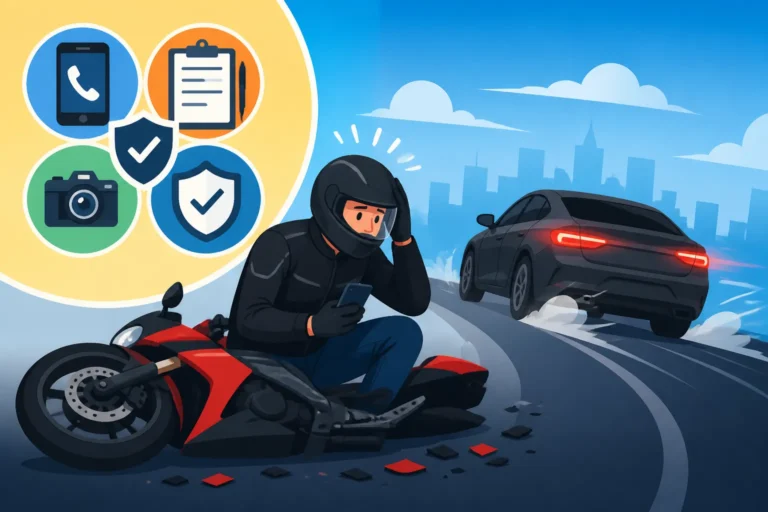
The moments immediately after an accident are crucial for gathering evidence. Assuming you are physically able and it is safe to do so, document everything you can at the scene. This means taking numerous photos and videos from multiple angles. Capture the positions of both vehicles before they are moved, the extent of the damage to both your motorcycle and the other vehicle, any skid marks on the road, debris, traffic signals, road signs, and the overall weather and road conditions. Don't just focus on your bike; get detailed shots of the other vehicle too.
Beyond photos, collect contact information from the other driver and any witnesses. If the police are present, get their names, badge numbers, and the accident report number. Even if the police report seems straightforward, remember it’s just one perspective. Your own comprehensive documentation can fill in gaps or correct inaccuracies that an officer might have overlooked or misinterpreted, especially when facing common Causes of Motorcycle Accidents. This detailed record can be the bedrock of Motorcycle Accident Evidence for Proving Fault.
Seek Immediate Medical Attention and Follow Through
Your health is the absolute top priority after a motorcycle accident. Even if you feel shaken but not seriously injured, seek medical attention immediately. Adrenaline can mask pain, and some serious injuries, like concussions or internal bleeding, might not present symptoms until hours or even days later. Getting prompt medical care creates an official record of your injuries directly linked to the accident, which is invaluable for your claim.
Once you start treatment, be diligent. Follow all of your doctor's recommendations, attend every appointment, and complete any prescribed therapies (like physical therapy). Keep a detailed journal of your symptoms, pain levels, and how your injuries are impacting your daily life. Gaps in treatment or non-compliance with medical advice are red flags for insurance companies, allowing them to argue that your injuries weren't severe or were not directly caused by the accident. Consistent medical records are your strongest ally in proving the extent and causation of your injuries.
Get Legal Representation Early
This is perhaps the most critical step you can take to combat unfair blame: hire an experienced motorcycle accident attorney as early as possible. Insurance companies have vast resources and trained adjusters whose job it is to minimize payouts. Trying to navigate this complex process alone, especially while recovering from injuries, puts you at a severe disadvantage. A lawyer acts as your shield, handling all communications with the insurance companies so you don't inadvertently say or do anything that could jeopardize your claim.
An attorney who specializes in motorcycle accidents understands the unique biases against riders and the specific tactics insurance companies use to shift blame. They can conduct an independent investigation, gather crucial evidence (like black box data from vehicles, traffic camera footage, or expert accident reconstruction analysis), and negotiate forcefully on your behalf. They know how to interpret state laws, challenge unfair fault assignments, and ensure that all your damages, both economic and non-economic, are properly valued. This proactive approach significantly increases your chances of achieving a fair settlement and effectively serves as your guide on How to Fight an Unfair Fault Assignment. Don't wait until the insurance company has dug its heels in; get a lawyer on your side from the beginning.
The Ramifications of Fault on Your Claim and Beyond
The assignment of fault in a motorcycle accident goes far beyond just a legal technicality. It has profound and lasting consequences, directly impacting your financial recovery, your future insurance costs, and even your personal well-being. Understanding these ramifications underscores why fighting unfair blame is so vital.
Financial Consequences of Assigned Fault
The most immediate and obvious impact of being assigned fault is on your financial recovery. As discussed with comparative and contributory negligence laws, every percentage of fault assigned to you directly reduces the compensation you can receive from the other driver's insurance company. If you're in a pure contributory negligence state, even minor fault can completely bar your claim, leaving you to shoulder all your medical bills, lost wages, and repair costs yourself. In modified comparative negligence states, hitting that 50% or 51% fault threshold can similarly wipe out your ability to recover.
Even if you recover some damages, a high percentage of assigned fault means a significantly reduced payout for everything: your medical expenses (past and future), lost income, property damage to your motorcycle, and crucial non-economic damages like pain and suffering. This can leave you with substantial out-of-pocket costs, even for injuries caused by someone else's negligence. Furthermore, an accident where you are deemed at fault, or even partially at fault, can lead to increased premiums on your motorcycle insurance policy for years to come, adding another long-term financial burden to an already difficult situation. This is a direct consequence of When a Rider Is Partially at Fault.
The Psychological Toll of Fighting for Justice
Beyond the financial repercussions, dealing with an insurance company trying to blame you for an accident that wasn't your fault can take a significant psychological toll. Motorcycle accident victims already face immense physical pain and often emotional trauma, including PTSD, anxiety, and depression. Having to then battle an impersonal corporation that seems determined to undermine your experience and integrity only compounds this stress.
This fight for justice can feel like an attack on your character, making you feel unheard, disrespected, and further victimized. The constant back-and-forth, the requests for intrusive personal information, and the lowball settlement offers can be emotionally draining and interfere with your physical recovery. The mental anguish of proving you weren't to blame, especially when the facts are clear to you, adds another layer of suffering to an already difficult time. This prolonged stress can delay your emotional healing and make it harder to move forward after such a traumatic event. It highlights that an accident claim is not just about numbers; it's about validating a painful personal experience.
Disclaimer
Please remember that the information provided in this article is intended for general informational purposes only and does not constitute legal advice. Motorcycle accident laws vary significantly by state, and the specifics of your situation are unique. It is crucial to consult with a qualified personal injury attorney in your jurisdiction to discuss your individual case and understand your legal rights and options. An attorney can provide tailored advice based on the specific facts of your accident and the laws applicable in your state.