Lane Splitting Legality and Fault by State
It's incredibly frustrating when you're riding your motorcycle, doing everything right, and then find yourself in an accident where the legality of something like lane splitting becomes a major point of contention. The rules around lane splitting can be confusing and vary wildly from state to state, leaving many riders unsure of their rights or how an accident might impact their claim. This comprehensive guide aims to shed light on lane splitting laws across the United States and explain how its legality, or lack thereof, can affect who is at fault in a motorcycle accident.
Understanding Lane Splitting on a Motorcycle
Before we dive into the nitty-gritty of laws and fault, let's make sure we're all on the same page about what lane splitting actually entails. There's often a lot of misinformation and misunderstanding, not just among car drivers but sometimes even among riders themselves.
Defining Lane Splitting versus Lane Filtering
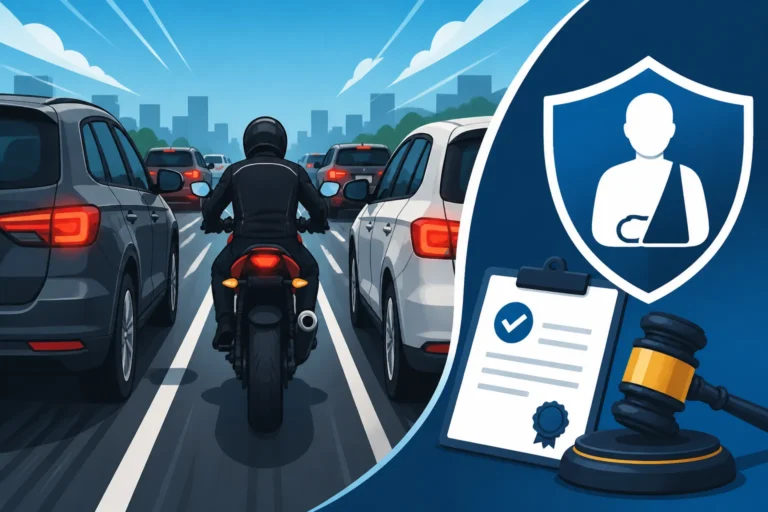
Lane splitting is when a motorcyclist rides between two lanes of stopped or slowly moving traffic in the same direction. Think of it as moving through the gaps created by cars stuck in a jam. It's distinct from lane filtering, which is generally defined as moving to the front of a queue of stopped traffic at an intersection, usually to get a head start when the light turns green. While both involve riding between cars, the crucial difference is often the speed and context. Lane splitting typically occurs on highways or busy roads where traffic is crawling, while filtering is usually at a complete stop at a light. There's also lane sharing, which refers to two motorcycles riding side-by-side in a single lane, a practice that is generally accepted and legal in most places, provided both riders stay within the lane's boundaries. Understanding these distinctions is crucial because the legality and public perception of each can be vastly different.
The Debate Around Lane Splitting Safety
The debate around lane splitting is fierce, with strong arguments on both sides. Opponents often cite safety concerns, arguing that it puts riders at greater risk due to reduced visibility, close proximity to cars, and the potential for sudden movements from other vehicles. Many drivers instinctively feel it's dangerous or unfair, often exclaiming, "I didn't even see them!" which, while often an excuse, highlights a genuine visibility issue at times. However, proponents, including many safety advocates and state transportation departments where it's legal, point to studies suggesting that lane splitting can actually reduce a rider's risk of being rear-ended in heavy traffic. It also helps alleviate traffic congestion, reduces motorcycle engine overheating in stop-and-go conditions, and can improve fuel efficiency. For example, research commissioned by the California Highway Patrol and conducted by the University of California, Berkeley, found that lane splitting is relatively safe when done responsibly, specifically when motorcyclists travel no more than 10 mph faster than surrounding traffic and traffic is moving at 30 mph or less. These findings often form the basis for why some states have embraced it.
State-by-State Legality of Lane Splitting
Navigating the various laws concerning lane splitting across the U.S. can feel like a minefield. What's perfectly legal in one state might land you a hefty ticket or worse in another. It’s absolutely vital for riders to know the specific rules of the road wherever they're riding, not just where their bike is registered.
States Where Lane Splitting is Explicitly Legal
Currently, a handful of states have explicitly legalized lane splitting, often with specific conditions attached. The pioneer in this regard is California, which was the first state to formally legalize the practice. In California, motorcyclists can split lanes when traffic is stopped or moving slowly, but there's no specific speed limit mentioned in the law itself, though the CHP's safety guidelines, based on the Berkeley study, recommend a speed differential of no more than 10 mph faster than surrounding traffic and only when traffic is 30 mph or less.
Beyond California, states like Arizona, Utah, and Montana have also enacted laws allowing some form of lane filtering or lane splitting.
- In Arizona, lane filtering is allowed when traffic is stopped, and the rider is traveling no more than 15 mph.
- Utah permits lane filtering on roadways with two or more lanes of traffic moving in the same direction, but only when traffic is stopped, and the motorcyclist is traveling 15 mph or less.
- Montana allows lane filtering when traffic is stopped or moving at a maximum of 10 mph, and the rider is moving no more than 10 mph faster than the traffic.
These laws are quite specific, often detailing maximum speeds for the motorcycle, the speed of the surrounding traffic, and whether it applies to filtering at intersections or general splitting in congested lanes. Disregarding these nuances can still lead to citations or being deemed at fault in an accident, even in a "legal" state.
States Where Lane Splitting is Explicitly Illegal
The vast majority of states in the U.S. explicitly prohibit lane splitting. This means that riding between lanes of traffic, whether stopped or moving, is against the law and can result in a traffic citation, similar to an unsafe lane change or reckless driving. States like Texas, Florida, New York, and Pennsylvania are examples where lane splitting is clearly illegal. The reasoning often stems from safety concerns, the perceived aggressive nature of the maneuver, and the lack of specific legislation to regulate it safely. In these states, if you're involved in an accident while lane splitting, you'll almost certainly be found at fault, or at least partially at fault, because you were violating traffic law at the time. This can significantly impact your ability to recover damages for your injuries or bike repairs.
States with Ambiguous or Developing Laws
Then there's the middle ground: states where the law isn't entirely clear, or where new legislation is being considered. Some states may not have a specific law explicitly banning lane splitting, but existing laws about "safe operation" or "maintaining a single lane" are often interpreted to prohibit it. This can create a confusing "gray area" for riders and law enforcement alike. For instance, in a state like Oregon, while lane splitting is generally considered illegal due to a lack of explicit legalization, there have been discussions and proposals to allow lane filtering under specific conditions. Similarly, other states might be exploring pilot programs or legislative changes to address traffic congestion and motorcycle safety. It's a dynamic landscape, and laws can change, so staying informed is crucial. Always check the most current regulations for the state you're riding in.
Here's a simplified table summarizing the general status of lane splitting across states. Keep in mind that "legal with restrictions" often means highly specific speed limits and traffic conditions apply, and "ambiguous" means it's generally frowned upon or illegal by interpretation of other laws.
| State | Lane Splitting Status | Key Restrictions (if any) |
|---|---|---|
| California | Legal | Traffic moving <= 30 mph, rider <= 10 mph faster (CHP guidance) |
| Arizona | Legal (Filtering) | Traffic stopped, rider <= 15 mph |
| Utah | Legal (Filtering) | Traffic stopped, rider <= 15 mph |
| Montana | Legal (Filtering/Splitting) | Traffic moving <= 10 mph, rider <= 10 mph faster |
| Arkansas | Legal (Filtering) | Traffic stopped, rider <= 15 mph |
| Hawaii | Legal (Filtering) | Traffic stopped, rider <= 10 mph |
| Washington | Legal (Filtering) | Traffic stopped, rider <= 10 mph |
| Most other states | Explicitly Illegal or Ambiguous | Varies greatly; often prohibited by existing traffic laws |
It is paramount to verify the specific laws for your state and any state you plan to ride through, as these laws can change. Relying on outdated information could have serious legal and financial consequences. You can typically find this information on your state's Department of Motor Vehicles or Department of Transportation website.
How Lane Splitting Affects Fault in an Accident
Even if lane splitting is legal in your state, being involved in a motorcycle accident while doing it can still complicate the question of who is at fault in a motorcycle accident. The legality is one thing, but how the maneuver was executed and the specific circumstances of the crash are entirely another.
Comparative and Contributory Negligence
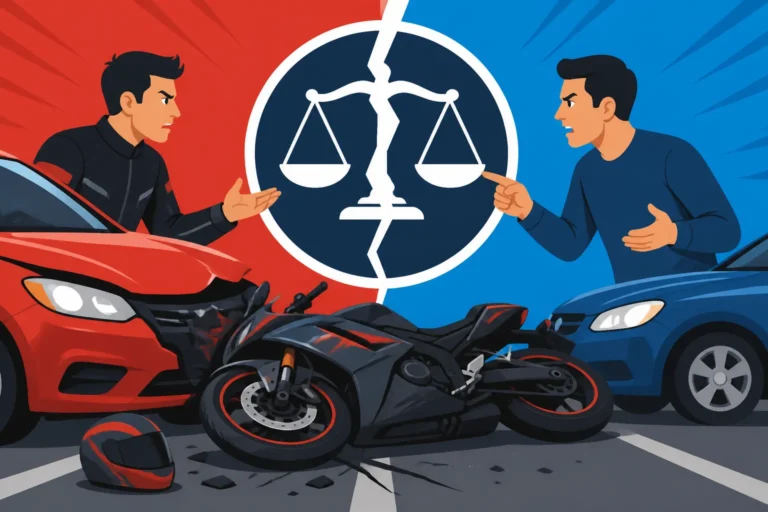
The impact of lane splitting on fault determination largely depends on the negligence laws in your state. Most states follow some form of comparative negligence, which means that fault can be shared between multiple parties in an accident. If you're involved in a crash while lane splitting, even if it's legal, and the other driver claims they didn't see you or that you were riding unsafely, a percentage of fault could still be assigned to you. For instance, in California, while lane splitting is legal, if you were exceeding the recommended speed differential or weaving aggressively, an insurance adjuster or jury might decide you contributed to the accident. This could lead to a reduction in your overall settlement. Understanding how Comparative Negligence in Motorcycle Accidents works is essential for any rider.
Some states, though far fewer, still adhere to contributory negligence. In these states, if you are found even 1% at fault for the accident, you are completely barred from recovering any damages. This is an incredibly harsh standard for riders. If you're riding in a contributory negligence state and get into an accident while lane splitting, even if the other driver was largely to blame, your lane splitting could be used to assign even a tiny percentage of fault to you, completely derailing your claim. This is why it's so important to be aware of the laws of the road.
Rider Bias and Insurance Company Tactics
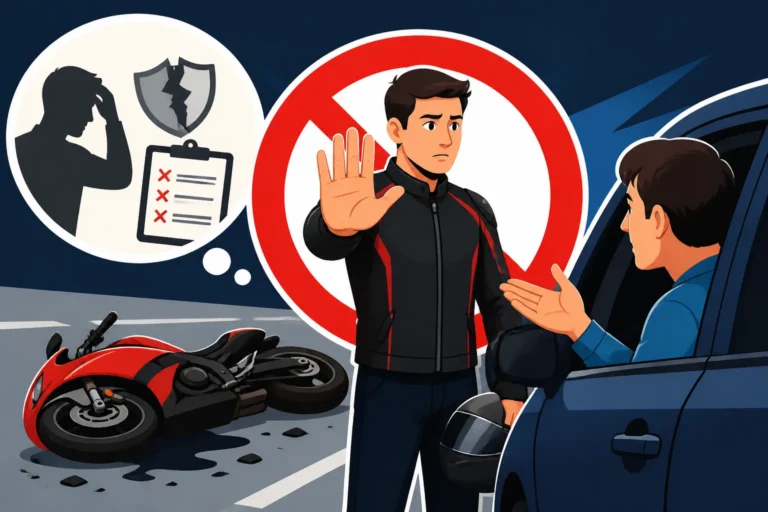
Unfortunately, riders often face an inherent bias when it comes to fault determination. The common misconception that motorcycles are inherently dangerous or that riders are reckless can influence police reports, witness statements, and, critically, how insurance companies assign blame to riders. Even in states where lane splitting is legal, insurance adjusters, particularly those representing the car driver, may try to argue that your lane splitting was inherently unsafe or contributed to the accident, regardless of the law. They might use the argument that you put yourself in a dangerous position, making it harder for the other driver to see you, even if the driver was negligent. This is often part of a broader tactic by insurance companies to minimize their payout.
If you were lane splitting, and the car driver performs an unsafe lane change or opens a door in your path, they might still try to pin some blame on you. This is why documenting everything thoroughly and having an advocate who understands these biases is crucial.
Proving Fault in Lane Splitting Accidents
When an accident happens during lane splitting, proving who is at fault can become a complex battle. The "I didn't see the motorcycle" defense is incredibly common, and even more so when a rider is moving between lanes of traffic. It's critical to gather specific evidence to counter these claims and establish the other driver's negligence.
Essential Evidence for Your Claim
To effectively prove fault in a motorcycle accident involving lane splitting, you'll need robust evidence. The first thing you should do after any accident, assuming you're medically able, is to gather as much information as possible.
- Police Report: The official police report is often the starting point for any investigation. While not always definitive on fault, it documents crucial details like the location, vehicle positions, initial statements, and any citations issued. If the police report doesn't accurately reflect what happened, you might need to know How to Correct a Wrong Police Report later.
- Witness Statements: Independent witnesses are incredibly valuable, especially in "he said, she said" scenarios common in lane splitting crashes. Did anyone see the other driver make an abrupt lane change without signaling? Did they confirm you were operating safely within the legal parameters of lane splitting?
- Dashcam or Helmet Cam Footage: This is arguably the most powerful piece of evidence you can have. A clear recording of the moments leading up to and during the crash can irrefutably show how the accident occurred, the speed of both vehicles, and the actions of the other driver. More and more riders are using helmet cameras, like those from Sena or GoPro, specifically for this reason – to protect themselves in case of a crash. This footage can be key in demonstrating How Dashcam Footage Proves Fault and countering claims that you were riding recklessly.
- Traffic Camera Footage: Many intersections and highways have traffic cameras. While often difficult for individuals to access, a legal professional can help retrieve this footage.
- Physical Evidence: Take extensive photos and videos of the accident scene, including vehicle damage, debris, skid marks, road conditions, and traffic signs. Pay particular attention to the position of vehicles and any damage that indicates the point of impact. This helps illustrate what happened.
- Medical Records: Documenting your injuries immediately after the crash is vital. This establishes a clear link between the accident and your injuries, which is essential for any claim for damages.
Remember, the goal is to paint a clear picture of the sequence of events and demonstrate that the other driver's actions, not your legal and safe lane splitting, were the direct cause of the collision.
Countering "I Didn't See the Motorcycle"
This defense is almost a cliché in motorcycle accident cases, and it's particularly prevalent in lane splitting scenarios. Car drivers often claim they "didn't see" the motorcycle because bikes have a smaller profile, are harder to spot, and often fall into blind spots. However, "I didn't see you" is generally not a valid legal defense for negligence. Drivers have a responsibility to be aware of their surroundings and check blind spots before changing lanes or opening doors.
To counter this defense, your evidence needs to demonstrate:
- Driver Negligence: Show that the other driver was distracted, failed to check mirrors, didn't signal, or otherwise failed in their duty of care. Were they on their phone? Did they swerve unexpectedly?
- Visibility: While smaller, motorcycles are still visible. Your legal lane splitting means you were operating in a manner permitted by law (if applicable), and the burden was on the driver to see you. Photos of the scene showing clear visibility or the driver's obstructed view (e.g., parked cars, large trucks) can be helpful.
- The Element of Surprise: If you were lane splitting legally and safely, you weren't "surprising" the driver; rather, the driver failed to exercise proper vigilance. This can be supported by expert testimony or accident reconstruction if necessary, especially in complex cases.
Navigating the aftermath of an accident, especially one involving the complexities of lane splitting, can be overwhelming. Understanding your rights, the laws in your state, and how to gather the right evidence is your first line of defense. Remember, acting quickly and thoroughly after a crash is critical for protecting your claim and ensuring you receive fair compensation for your injuries and damages. This is especially true when it comes to Motorcycle Accident Evidence for Proving Fault.
What to Do Immediately After a Lane Splitting Accident
The moments immediately following a motorcycle accident are chaotic and stressful, but your actions during this critical time can significantly impact your ability to prove fault and pursue a successful claim. Even if you feel okay, it's crucial to follow a systematic approach.
Prioritizing Safety and Seeking Medical Attention
Your personal safety and well-being should always be your absolute priority. Even if you feel shaken but not seriously injured, it's imperative to move yourself and your motorcycle to a safe location if possible, away from ongoing traffic. Turn on your hazard lights.
Next, and this cannot be stressed enough, seek medical attention immediately. Even if you think you only have minor scrapes or bruises, adrenaline can mask serious injuries. Head injuries, internal bleeding, or spinal trauma may not present symptoms for hours or even days after a crash. Visiting an emergency room or your doctor will not only ensure you receive proper care but also creates an official medical record of your injuries directly linked to the accident. This record is invaluable for your claim and helps document the full extent of your damages. Gaps in medical treatment can be used by insurance companies to argue that your injuries weren't serious or weren't caused by the accident.
Documenting the Scene and Gathering Information
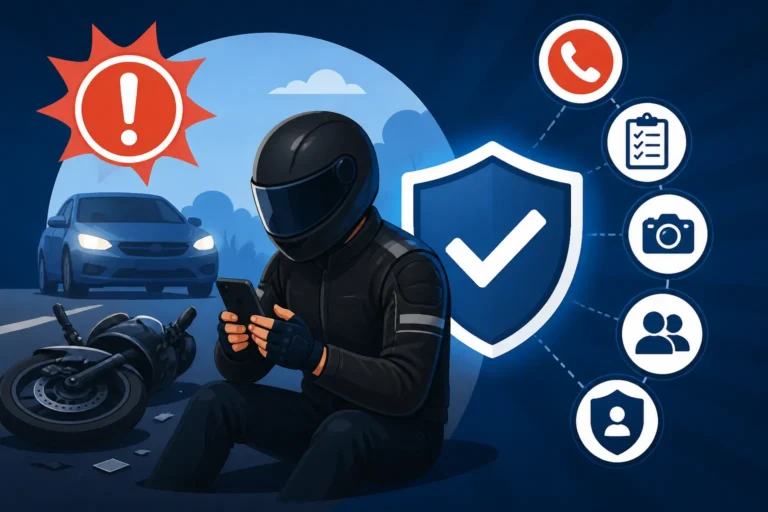
Once your immediate safety and medical needs are addressed, the next step is to meticulously document the accident scene. This is where you lay the groundwork for proving fault.
- Call the Police: Always call 911, regardless of how minor the accident seems. A police report provides an official record of the incident. When the police arrive, cooperate fully, but stick to the facts and do not admit fault, even implicitly. You can provide your account of what happened, but avoid speculating.
- Exchange Information: Get the other driver's name, contact information, insurance details (company and policy number), vehicle make, model, and license plate number.
- Take Photos and Videos: Use your phone to take comprehensive photos and videos of everything. This includes:
- Damage to your motorcycle and the other vehicle from multiple angles.
- The position of both vehicles relative to each other and the road.
- Road conditions (potholes, debris, weather).
- Traffic signs, signals, and any relevant road markings.
- Skid marks, broken glass, or other debris.
- Your injuries.
- The other driver and any passengers.
- Identify Witnesses: If anyone stopped to help or observed the accident, get their names and contact information. Their testimony can be crucial in corroborating your story, especially if the other driver disputes the facts.
- Note Key Details: Jot down the exact time, date, and location of the accident. Note the weather conditions, visibility, and any relevant actions of the other driver (e.g., on their phone, appearing distracted).
Legal Considerations and Protecting Your Rights
After an accident, especially one involving a nuanced maneuver like lane splitting, it's highly advisable to consult with a legal professional who specializes in motorcycle accidents. Insurance companies are not on your side; their primary goal is to pay out as little as possible. They might try to use rider stereotypes against you, or even the mere fact you were lane splitting, to shift blame.
A lawyer can help you understand your rights, navigate the complexities of fault laws in your state (such as Motorcycle Accident Fault Laws in California), and deal with aggressive insurance adjusters. They can also assist in gathering evidence, interpreting police reports, and negotiating a fair settlement for your injuries, medical bills, lost wages, and pain and suffering. They understand the intricacies of Shared Fault in Motorcycle Accidents and how to effectively argue on your behalf, even if some fault is initially assigned to you.
Remember, the period immediately following an accident is when you are most vulnerable. By taking these steps, you protect both your physical health and your legal claim.
Disclaimer
Please note that this article provides general information and should not be considered legal advice. Motorcycle accident laws, including those pertaining to lane splitting and fault, vary significantly by state and can change. It is crucial to consult with a qualified legal professional for advice specific to your situation and jurisdiction.