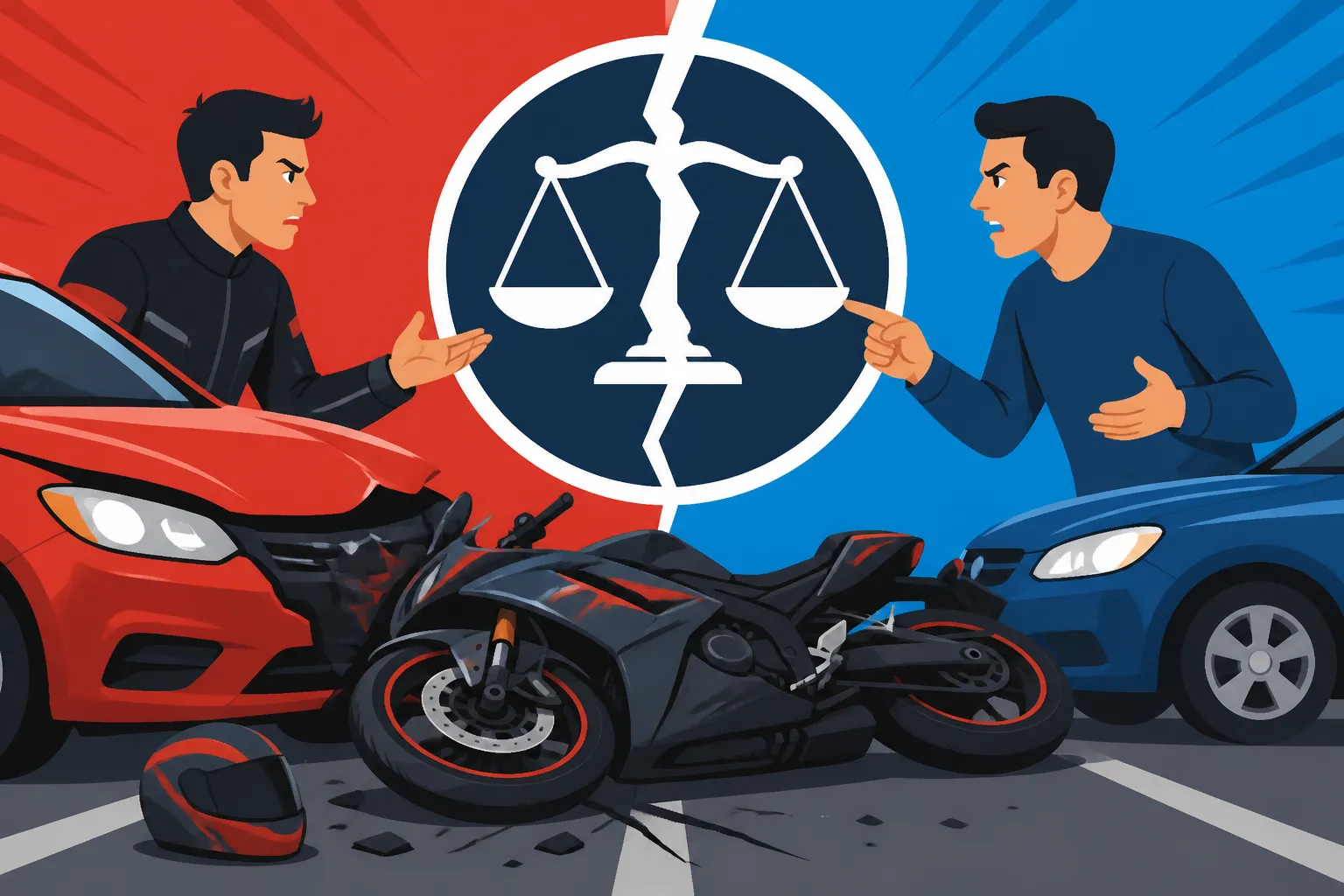
When Fault Is Disputed in a Motorcycle Crash
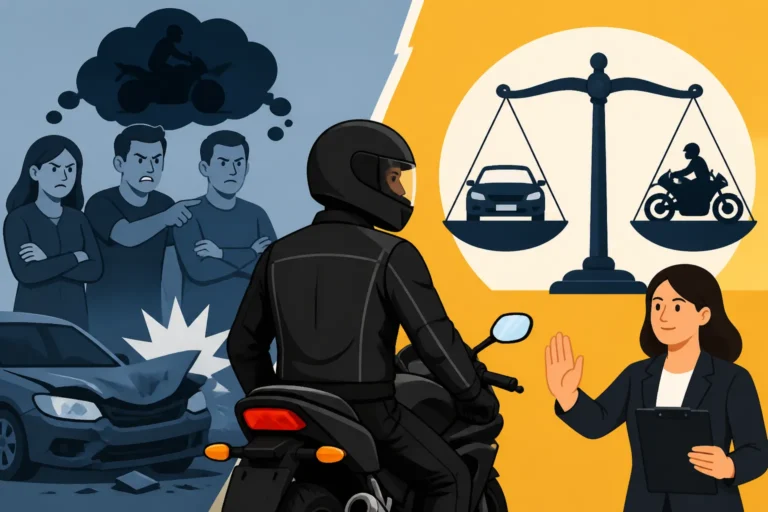
It's incredibly frustrating, and honestly, often infuriating, when you've been in a motorcycle crash and suddenly find that the other driver, or even their insurance company, is trying to shift the blame onto you. You're already dealing with injuries, bike damage, and emotional fallout, and then you have to fight tooth and nail just to prove what happened. This guide is here to walk you through exactly what happens when fault is disputed in a motorcycle crash, arming you with the knowledge to protect your rights and your claim.
Understanding How Fault Is Generally Determined in Motorcycle Accidents
When a motorcycle accident occurs, one of the most critical aspects for any injury claim is determining who was at fault. This isn't always a straightforward process, and often, initial assessments can be misleading or incomplete. Understanding the typical steps involved can help you anticipate potential disputes and prepare for them.
Initial Assessment by Law Enforcement
After a crash, law enforcement officers are usually among the first responders on the scene. Their primary role is to secure the area, attend to any immediate medical needs, and gather preliminary information to create an official police report. This report often includes crucial details like diagrams of the accident scene, witness statements, vehicle positions, and any citations issued. While incredibly important, it's vital to remember that a police report is not the final word on fault, especially in a civil claim for injuries. An officer's assessment might be based on limited information, initial statements from distressed parties, or a quick glance at the scene. Sometimes, they might even harbor an unconscious bias against motorcyclists, leading to an unfair initial assessment. For a deeper dive into how police reports factor into fault, check out our guide on How Police Reports Establish Fault.
For example, imagine a scenario on a busy street in Phoenix, Arizona. A car makes a sudden lane change, cutting off a motorcyclist, who then lays down their bike to avoid a direct collision. The police officer arrives, sees the motorcycle on the ground, and hears the car driver claim the motorcyclist was "speeding." Without any immediate evidence to contradict this, the officer might make a note that the motorcyclist was potentially at fault or issue a citation based on the initial narrative. This initial assessment, even if inaccurate, can then be used by insurance companies to try and dispute your claim.
The Role of Traffic Laws and Regulations
Traffic laws are the bedrock upon which fault is typically built. Every state, from California's bustling freeways to the rural roads of Montana, has specific rules governing how vehicles should operate. Violating these laws, such as running a red light, failing to yield, or making an illegal turn, often points directly to fault in a collision. For instance, if a driver fails to yield the right-of-way while turning left and hits a motorcyclist proceeding straight through an intersection, the driver's violation of the right-of-way rule is a strong indicator of their fault.
However, things can get complicated. Sometimes, even if another driver clearly broke a traffic law, they might argue that the motorcyclist was also somehow contributing to the accident. Perhaps the motorcyclist was lane splitting in a state where it's not explicitly legal, or maybe they were technically speeding, even if the primary cause of the accident was the other driver's egregious error. This is where a detailed understanding of Traffic Violations and Motorcycle Accident Fault becomes critical. Insurance companies will scrutinize every detail, looking for any infraction, no matter how minor, to shift some percentage of blame onto the rider. They might try to claim that even if the other driver was primarily at fault, your turn signal not being fully visible or your headlight being slightly dim played a role, however tenuous.
Evidence Collection at the Scene
Collecting evidence immediately after a motorcycle crash is paramount, especially when fault is likely to be disputed. This includes taking photographs and videos from multiple angles, getting contact information from any witnesses, noting road conditions, and preserving any damaged gear. The more objective evidence you have, the harder it is for someone to twist the narrative later.
Consider a rider involved in a rear-end collision on I-75 in Florida. They might feel fine at first, but later realize injuries. If they didn't take photos of the vehicles' positions, brake marks, or the other driver's insurance card, it becomes a "he said, she said" situation. The driver might claim you stopped suddenly, or that your brake light wasn't working. Without solid evidence, it's an uphill battle. This is why our comprehensive guide on Motorcycle Accident Evidence for Proving Fault emphasizes the importance of documenting everything, even small details. Skid marks, debris fields, traffic camera footage, and even vehicle damage patterns can all tell a story that words alone cannot.
Key Evidence for Disputed Fault Claims
| Type of Evidence | How it Helps Prove Fault | Potential Challenges |
|---|---|---|
| Police Report | Initial assessment, accident diagrams, witness info, citations. | Can be incomplete or biased; not always conclusive. |
| Photos/Videos | Shows vehicle positions, damage, road conditions, skid marks. | Quality can vary; must be taken carefully and comprehensively. |
| Witness Statements | Objective accounts from uninvolved third parties. | Witnesses may be reluctant to get involved or forget details. |
| Dashcam/Helmet Cam | Unbiased, real-time footage of the event. | Not all vehicles/riders have them; footage can be lost/overwritten. |
| Medical Records | Links injuries directly to the accident, establishes severity. | Insurers may challenge treatment necessity or pre-existing conditions. |
| Vehicle Damage | Impact points, severity, and direction can indicate collision dynamics. | Damage may be disputed or attributed to prior incidents. |
| Cell Phone Records | Can show distracted driving (for other driver) or prove non-distraction (for rider). | Privacy concerns; requires legal process to obtain for other party. |
Common Scenarios Leading to Fault Disputes
It's a sad reality that after a motorcycle accident, drivers and their insurance companies often look for ways to minimize their responsibility, and unfortunately, motorcyclists often bear the brunt of this blame-shifting. There are a few scenarios that frequently lead to intense fault disputes, and knowing them can help you prepare.
'I Didn't See the Motorcycle' Defense
This is perhaps the most infuriating and distressingly common excuse you'll hear after a car driver causes a crash involving a motorcycle. The phrase, "I didn't see the motorcycle," or "You came out of nowhere," is a classic attempt to deflect blame. It implies that the rider was somehow invisible or appeared too quickly, suggesting the rider, not the driver's inattention, was at fault. This defense completely ignores the driver's responsibility to look for all road users, and their failure to see something as obvious as a motorcycle is a clear sign of negligence.
For example, imagine riding your Harley-Davidson down a main thoroughfare in Los Angeles, California, in broad daylight, wearing bright gear and with your headlight on. A car suddenly pulls out from a side street, directly into your path, leading to a collision. When asked by the police, the driver shrugs and says they "just didn't see you." This is not a valid defense, but insurance adjusters will absolutely try to use it to argue for shared fault. They might suggest you should have been wearing even brighter colors, had more lights, or were in their "blind spot" – implying that you, the rider, were responsible for ensuring their attentiveness. Our guide on the 'I Didn't See the Motorcycle' Defense Explained goes into extensive detail about how to counter this infuriating tactic and prove that the driver's negligence, not your visibility, was the true cause.
Conflicting Witness Statements
After a chaotic event like a motorcycle crash, memories can be hazy, and accounts can differ wildly. When multiple witnesses provide conflicting statements, it creates a fertile ground for fault disputes. One witness might genuinely believe they saw the motorcyclist speeding, while another might attest that the car ran a stop sign. These discrepancies make it harder to establish a clear, undisputed narrative.
Consider a collision at a busy intersection in Chicago, Illinois. A car makes a right turn on red, hitting a motorcyclist. One pedestrian, engrossed in their phone, might only hear the crash and assume the motorcyclist was going too fast, even if they didn't see the light. Another witness, waiting for the bus, might have clearly seen the car blow through the red light but might miss the exact speed of the motorcycle. The insurance company for the car driver will seize on any conflicting testimony to muddy the waters and introduce doubt about their client's sole fault. This is why getting multiple witness accounts, cross-referencing details, and even using accident reconstruction experts to piece together the sequence of events, can be vital. If witnesses aren't identified and interviewed quickly after the crash, their memories fade, or they simply move on, making it harder to get objective input later.
Allegations of Rider Negligence
Unfortunately, there's a persistent stereotype that motorcyclists are inherently reckless. Insurance companies and opposing counsel are quick to exploit this bias by alleging rider negligence, even when it's not truly the cause of the accident. Common allegations include speeding, unsafe lane changes, lane splitting (even where legal), or not having the proper endorsement. Even if the other driver was clearly at fault, they'll often try to pin some percentage of blame on you.
For instance, if you were involved in a Motorcycle Accident Caused by a Left-Turn Collision, where a car turned directly in front of you, the driver's insurance might still try to argue that you were going "too fast for conditions" or that you could have avoided the crash if you had been more alert. In states like California, where lane splitting is legal, a driver might still claim that your lane splitting contributed to the accident, despite its legality. This tactic is a direct attempt to reduce their liability under comparative negligence rules, which we'll discuss in detail later. They might even dig into your driving record or social media, looking for anything that paints you as a "risky" rider. It's a calculated move to diminish your credibility and reduce your potential settlement, underscoring why it's crucial to understand When a Rider Is Partially at Fault and how to defend against these unfair accusations.
Strategies for Proving Your Side When Fault Is Disputed
When fault is disputed in a motorcycle crash, it often feels like you're fighting an uphill battle. But it's not a lost cause. There are concrete strategies you can employ to strengthen your position and prove your side of the story. The key is thoroughness, leveraging expertise, and having strong legal guidance.
Gathering Comprehensive Evidence
As we touched on earlier, robust evidence is your best friend when fault is disputed. The more concrete, objective proof you can present, the harder it is for the other side to argue their case. This isn't just about what you collected at the scene; it's an ongoing process.
Beyond immediate photos and witness contacts, consider other sources of information. Did any nearby businesses have surveillance cameras that might have captured the incident? Many stores, gas stations, and even private homes have security systems that might have recorded key moments. Retrieving this footage quickly is critical, as many systems automatically overwrite old data. Were there any traffic cameras or red-light cameras at the intersection? These can often provide invaluable, unbiased perspectives. Furthermore, your own motorcycle might have digital data recorders (often referred to as "black boxes" in cars) that log speed, braking, and other operational data in the moments leading up to a crash. Similarly, if the other vehicle was a newer model, it might also have such a device. These electronic records can be powerful tools to objectively demonstrate what happened. Documenting every single injury with medical records, from emergency room visits to physical therapy sessions, is also a form of evidence, tying your damages directly to the accident. Every doctor's note, every prescription, every hospital bill tells a part of your story and reinforces the impact of the other party's negligence.
Leveraging Expert Accident Reconstruction
Sometimes, the evidence isn't immediately obvious, or the accounts are so conflicting that a clear picture cannot be formed without specialized analysis. This is where an accident reconstruction expert becomes invaluable. These professionals are like forensic scientists for car crashes. They can analyze skid marks, vehicle damage, debris fields, traffic camera footage, and even weather conditions to create a scientific recreation of how the accident unfolded.
An accident reconstructionist can often determine factors like the speed of vehicles at impact, points of impact, braking patterns, and the sequence of events with remarkable precision. For example, if the other driver claims you were speeding excessively, an expert can use calculations based on skid marks and vehicle deformation to show that your speed was well within legal limits, or at least not a primary factor in the collision. They can counter the "I didn't see the motorcycle" defense by demonstrating how the other driver's line of sight, coupled with their turning radius and vehicle speed, indicates clear negligence. This scientific approach helps to cut through subjective biases and conflicting statements, offering an objective perspective that can be highly persuasive to insurance adjusters, and ultimately, to a jury. Our article on How Accident Reconstruction Determines Fault provides more insights into this critical process.
The Importance of Legal Representation
Facing a fault dispute alone, especially when dealing with injuries and property damage, is incredibly daunting. The other driver's insurance company has a team of adjusters and lawyers whose job it is to minimize payouts. They are not on your side, and they will use every trick in the book to assign blame to you or reduce the value of your claim. This is why having a seasoned motorcycle accident lawyer on your side is not just helpful, it's often essential.
A lawyer understands the intricacies of traffic laws, the tactics insurance companies employ, and the legal procedures for proving fault. They can quickly assess the strengths and weaknesses of your case, guide you on what evidence to collect, and negotiate fiercely on your behalf. They know how to effectively counter allegations of rider negligence and present your case in the most favorable light. Moreover, they can engage experts like accident reconstructionists, handle all communications with insurance adjusters, and if necessary, prepare your case for trial. Trying to handle these complex legal and factual disputes while recovering from injuries is a recipe for being taken advantage of. A legal professional acts as your shield and your sword, ensuring your rights are protected and you receive fair compensation. You can learn more about this by reading Do You Need a Motorcycle Accident Lawyer.
Navigating Insurance Company Tactics in Disputed Cases
Insurance companies are businesses, and their primary goal is to minimize payouts to protect their bottom line. When fault is disputed in a motorcycle crash, they often employ a range of tactics designed to shift blame, reduce your claim's value, or wear you down. Being aware of these strategies can empower you to respond effectively.
How Insurers Assign Blame
When you report a motorcycle accident, the at-fault driver's insurance company immediately initiates an investigation. They'll assign an adjuster whose job it is to gather information, but keep in mind, their "investigation" is geared towards their client's interests, not yours. They will collect the police report, contact their insured driver, and often try to get a recorded statement from you, the injured motorcyclist. They'll look for any inconsistencies, any perceived misstep on your part, or anything that can suggest shared fault.
Many insurance companies have internal guidelines or algorithms they use to assign percentages of fault, and these can often be biased against motorcyclists. They might rely on rider stereotypes, assuming you were speeding, reckless, or otherwise contributing to the accident, even without concrete evidence. They might also pressure you to give a recorded statement quickly, hoping you'll inadvertently say something that can be twisted to support their narrative. For example, if you say, "I think I saw him, but then he just pulled out," they might focus on the "I think I saw him" part to imply you had a chance to react and avoid the crash. Understanding How Insurance Companies Assign Blame to Riders is crucial to anticipate and counter these biased evaluations. Never give a recorded statement without first consulting with an attorney.
Dealing with Lowball Offers
One of the most common tactics used by insurance companies in disputed fault cases is to make a lowball settlement offer. This offer is often presented early in the process, before you fully understand the extent of your injuries, medical costs, or lost wages. The idea is to capitalize on your vulnerability and financial stress, hoping you'll accept a quick, inadequate payout rather than endure a lengthy dispute.
Imagine you're recovering from a broken arm and severe road rash after a collision in rural Pennsylvania. The other driver's insurance company calls you, offering a small sum that barely covers your initial medical bills and property damage. They might even explicitly state that they believe you were partly at fault, and this "offer" reflects that perceived shared responsibility. Accepting this offer might seem appealing to get some immediate relief, but it almost certainly means forfeiting your right to claim full compensation for future medical treatments, lost earning capacity, pain and suffering, and other long-term damages. This is why it's so important to resist the urge to settle quickly and to understand When to Reject a Settlement Offer. Your lawyer can help you accurately assess the true value of your claim, including both economic and non-economic damages, and negotiate for a fair settlement.
Protecting Your Rights Against Rider Bias
It's an unfortunate truth that a significant bias against motorcyclists exists, not just among some drivers, but sometimes within the legal system and insurance industry itself. Stereotypes of motorcyclists as thrill-seeking, reckless individuals often lead to an unfair presumption of fault in accidents. Insurance adjusters might leverage this bias to their advantage, implying that because you ride a motorcycle, you must have been taking unnecessary risks.
This bias can manifest in many ways. They might try to downplay your injuries, suggesting that you should have anticipated the crash and been more prepared. They might scrutinize your gear, trying to argue that if you had worn different protective equipment, your injuries wouldn't have been as severe, even if the primary cause was their driver's negligence. They might even bring up past riding experiences or preferences to paint a picture of irresponsibility. To effectively counter this, you need to present a strong, evidence-backed case that clearly demonstrates the other driver's negligence and your adherence to traffic laws. Showing up prepared, with documentation of your safety gear, riding experience, and a clean driving record, can help combat these unfair stereotypes. Most importantly, having an attorney who understands these biases and knows How Insurers Use Rider Stereotypes Against You is your best defense.
Legal Doctrines Affecting Disputed Fault Claims
When fault is disputed, the legal framework of the state where the accident occurred plays a massive role in how much compensation you can actually receive. Understanding these legal doctrines, particularly comparative and contributory negligence, is essential for any motorcyclist facing a challenging claim.
Comparative Negligence in Action
Most states in the U.S. follow some form of comparative negligence. This doctrine acknowledges that sometimes both parties in an accident might share some degree of fault. If you are found to be partially at fault, your total compensation will be reduced by your percentage of fault. For example, if you sustained $100,000 in damages but are found to be 20% at fault, you would only recover $80,000.
There are two main types of comparative negligence:
- Pure Comparative Negligence: In states like California, Florida, and New York, you can recover damages even if you are mostly at fault. So, even if you were 90% responsible for the accident, you could still recover 10% of your damages. This means that if your damages were $100,000, and you were 90% at fault, you could still claim $10,000. This system is generally more favorable to injured parties, as it ensures some recovery regardless of fault percentage.
- Modified Comparative Negligence: This is more common, used in states like Texas, Ohio, and Illinois. Under this rule, you can only recover damages if your percentage of fault is less than a certain threshold, usually 50% or 51%. If your fault meets or exceeds that threshold, you recover nothing. So, if you're in a "51% bar" state and are found 51% at fault, you walk away with nothing, even if the other driver was also negligent.
This distinction is massive for motorcyclists. Imagine you're riding in a state with modified comparative negligence and an adjuster tries to push your fault from 20% to 51%. That shift alone could mean the difference between recovering substantial damages and getting absolutely nothing. This is precisely why insurance companies fight so hard to assign a higher percentage of fault to riders. Our article on Comparative Negligence in Motorcycle Accidents provides a detailed breakdown of how these rules work and their implications.
Contributory Negligence States
While rare, a few states, such as Maryland, Alabama, North Carolina, and Virginia, still adhere to the strict doctrine of contributory negligence. This rule is brutal: if you are found to be even 1% at fault for the accident, you are completely barred from recovering any damages from the other party. Zero compensation.
This system creates an extremely challenging environment for motorcyclists. Because of the inherent bias against riders, and the ease with which an insurance company can try to pin a small percentage of fault on you (e.g., "you should have been wearing a brighter helmet," "you could have swerved differently"), it becomes very difficult to secure any compensation. In these states, proving the other driver was solely at fault is critical. Any argument of shared fault, however minor on your part, will completely derail your claim. This is a significant reason why legal representation is not just beneficial, but often absolutely essential in contributory negligence states, to fight against any attempts to assign even minimal blame to the rider.
How Shared Fault Impacts Your Settlement
Regardless of whether your state follows pure or modified comparative negligence, or even contributory negligence, shared fault directly impacts your potential settlement. The higher your assigned percentage of fault, the lower your eventual payout, if any. This is the primary reason why insurance companies vigorously dispute fault and try to shift blame to the motorcyclist.
They know that even a small percentage of fault attributed to you can save them a substantial amount of money. For instance, if you have a $500,000 claim and they can argue you were 30% at fault, that's $150,000 off their payout. This isn't just about financial numbers; it's about minimizing the impact of the other driver's negligence. When fault is disputed, every piece of evidence, every witness statement, and every expert opinion is aimed at either proving the other party's full responsibility or reducing your own perceived share of the blame. Understanding How Comparative Negligence Reduces Your Payout is vital for setting realistic expectations and for knowing what you're fighting for. Your attorney will work diligently to either eliminate any assertions of your fault or minimize the percentage assigned to you, maximizing the compensation you receive.
What Happens Next: The Resolution Process
Once all the evidence is gathered and fault remains disputed, the process shifts towards resolving the claim. This journey can take several paths, from negotiations to formal legal proceedings, each with its own set of complexities.
Negotiation and Mediation
Most motorcycle accident claims, even those with disputed fault, are resolved through negotiation. After your attorney has fully investigated the accident, gathered all evidence, and you have reached maximum medical improvement (MMI)—meaning your medical condition has stabilized—they will send a comprehensive demand letter to the at-fault driver's insurance company. This letter outlines the facts of the accident, details your injuries and damages (medical bills, lost wages, pain and suffering, etc.), and demands a specific settlement amount.
The insurance company will then respond, often with a counter-offer that is typically lower than what you've requested, especially if they still dispute fault. This initiates a back-and-forth negotiation process between your lawyer and the adjuster. Your lawyer will present evidence to support your position, refute allegations of shared fault, and advocate for a fair settlement. If negotiations stall, or the parties are far apart, mediation might be suggested. Mediation involves a neutral third party, a mediator, who facilitates discussions between both sides to help them reach a mutually agreeable settlement. The mediator doesn't make decisions but helps bridge gaps in communication and find common ground. This is often a good step before resorting to litigation, as it can resolve the case without the expense and time commitment of a trial.
When Litigation Becomes Necessary
If negotiations fail and mediation proves unsuccessful, your attorney might advise filing a lawsuit. This means taking your claim to court and initiating formal litigation. Filing a lawsuit is a significant step, as it signals to the insurance company that you are serious about pursuing full compensation and are willing to go the distance.
The litigation process involves several stages, including discovery, where both sides exchange information, documents, and conduct depositions (out-of-court sworn testimony). During this phase, your lawyer will work to gather even more evidence, interview additional witnesses, and potentially engage expert witnesses like accident reconstructionists or medical professionals to strengthen your case. The other side will do the same, aiming to find weaknesses in your claim or further bolster their arguments for shared fault. While most lawsuits still settle before trial, the prospect of a jury trial often incentivizes insurance companies to make more reasonable offers. It's a calculated risk for both sides, as trial outcomes are never guaranteed. For more on this, our guide on Motorcycle Accident Settlement vs Trial explains the differences in detail.
Understanding Settlement vs Trial Outcomes
Ultimately, a disputed fault claim will conclude either through a settlement or a trial verdict. A settlement is an agreement reached between you and the at-fault party (or their insurance company) outside of court. You agree to accept a certain amount of money, and in exchange, you release them from any further liability. Settlements offer certainty, save time, and avoid the unpredictability of a trial. When fault is heavily disputed, a settlement might involve a compromise from both sides, perhaps reflecting an agreed-upon percentage of shared fault, even if neither party fully agrees with that assessment.
A trial, on the other hand, involves presenting your case to a judge or jury, who will then decide on fault and damages. If the case goes to trial, the jury will hear all the evidence, including testimony from witnesses and experts, and will ultimately assign percentages of fault and determine the amount of compensation. The upside of a trial is the potential for a larger award if the jury sides completely with you, especially if the insurance company was being unreasonable in negotiations. The downside is the risk: the jury could find you more at fault than you expected, or award less in damages, or even zero if you're in a contributory negligence state. This uncertainty, coupled with the significant time and expense involved, is why both parties often prefer to settle. Your attorney will help you weigh the pros and cons of settlement versus trial based on the specifics of your case, the strength of the evidence, and the local legal climate.
Disclaimer
Please remember that this article provides general information and should not be considered legal advice. Motorcycle accident laws are complex and vary significantly by state. It is crucial to consult with a qualified motorcycle accident attorney in your jurisdiction for advice tailored to your specific situation.