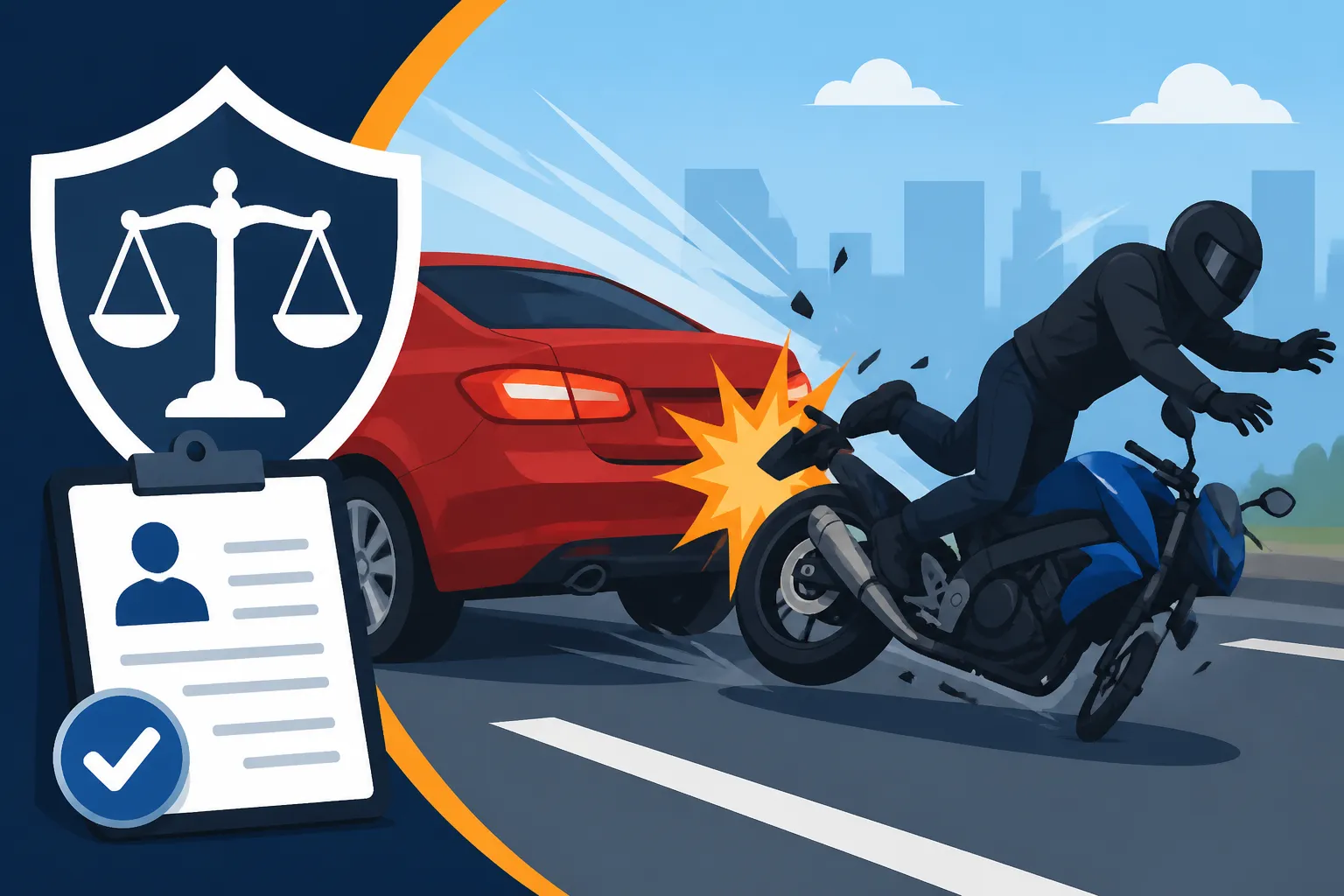
Motorcycle Accidents Caused by Rear-End Collisions
There’s almost nothing more frustrating for a motorcyclist than being suddenly and violently slammed from behind. One minute you’re cruising, perhaps slowing for a light or a traffic jam, perfectly aware of your surroundings, and the next, you’re flying through the air or being crushed between two vehicles. Rear-end collisions are a terrifying reality for many riders, and this guide is here to shed light on why they happen, who's typically at fault, and what you absolutely need to do if you ever find yourself in such a devastating situation.
The Harsh Reality of Rear-End Motorcycle Collisions
Let's face it, motorcycles are smaller, and sometimes, even when we do everything right, other drivers simply don't see us or don't react quickly enough. Rear-end collisions are a prime example of this inherent vulnerability, turning a moment of inattention from a car driver into a potentially life-altering event for a rider.
Why Motorcyclists Face Greater Risk
Motorcycles, by their very nature, occupy a smaller visual footprint on the road compared to cars, trucks, or SUVs. This isn't just a perception issue; it's a physical reality that puts riders at a distinct disadvantage, especially when dealing with drivers who are not paying full attention. Many drivers are simply not looking for motorcycles, their eyes trained to spot the larger silhouettes of other four-wheeled vehicles. When a car behind you is following too closely, or the driver is distracted, your smaller brake light can be easily overlooked, and the reduced time it takes to stop a motorcycle can be misinterpreted.
Furthermore, the design of a motorcycle offers virtually no crumple zone to absorb impact. In a car, the trunk, backseat, and even the engine compartment are designed to compress and dissipate kinetic energy during a collision, protecting the occupants. For a motorcyclist, there's no such buffer. When struck from behind, a rider is often propelled forward off the bike, potentially into oncoming traffic, or trapped between their own bike and the offending vehicle. This lack of protection dramatically escalates the potential for severe injuries compared to occupants in a similar car-on-car rear-end crash. This heightened vulnerability is a constant source of anxiety for many riders, and it's a critical factor in understanding the severity of these incidents.
Common Causes of Rear-End Crashes
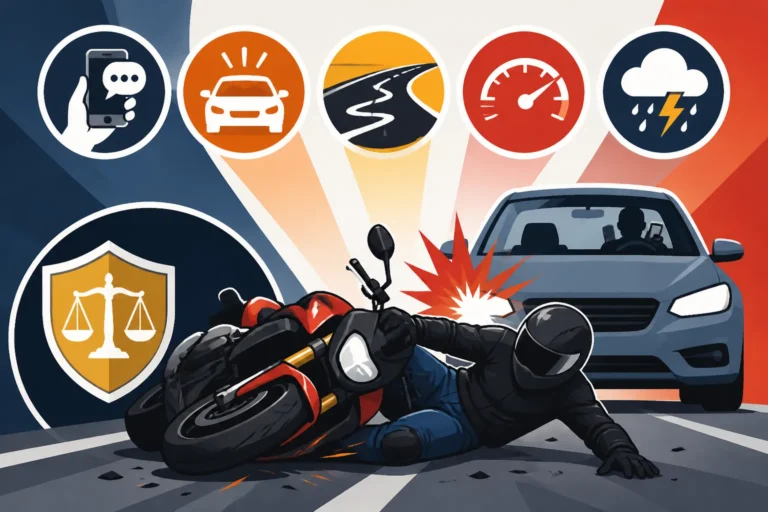
While the "I didn't see them" excuse is depressingly common after any motorcycle accident, in rear-end collisions, it often boils down to a few key preventable factors on the part of the trailing driver. Distracted driving is perhaps the most prevalent culprit in today's world. Think about it: a driver glancing down at their phone for just a few seconds to read a text message, change a song, or check a navigation app can travel a significant distance blind to the road ahead. If you're slowing down, even gradually, for a red light on a busy street like Sunset Boulevard in Los Angeles, that momentary distraction can be the difference between a safe stop and a violent impact.
Beyond distracted driving, aggressive driving and tailgating contribute significantly to these types of accidents. Some drivers have an unfortunate habit of following too closely, leaving insufficient space to react if the vehicle ahead, especially a motorcycle, suddenly slows or stops. Impaired driving, whether due to alcohol, drugs, or even extreme fatigue, also severely hampers a driver's reaction time and judgment, making them unable to perceive and respond to changes in traffic flow. Then there's simple inattention or carelessness – a driver who is daydreaming, tired, or simply not focused on the road can easily misjudge stopping distances or fail to notice a motorcycle slowing in front of them until it's too late. All of these factors underscore why motorcycle riders must always be hyper-aware of what's happening behind them, as well as in front and to the sides. It's a heavy burden to bear, but it's part of the reality of riding.
The Devastating Impact on Riders
The physical toll of a rear-end motorcycle collision can be catastrophic, far exceeding what one might expect in a car-on-car incident. Because there’s nothing between the rider and the impact, the forces involved are directly transferred to the rider’s body. This often results in a complex array of injuries, from serious bone fractures in legs, arms, and ribs, to debilitating Spinal Cord Injuries from Motorcycle Accidents if the impact forces the rider's spine into unnatural positions. Helmets, while absolutely vital, cannot prevent all head trauma, and riders can still suffer Motorcycle Accident Traumatic Brain Injuries if their head strikes the pavement or another object, or even from the violent whiplash effect.
Beyond the immediate injuries, riders frequently contend with severe road rash, which can range from minor abrasions to deep, painful wounds requiring skin grafts and extensive medical treatment. The psychological impact is also profound, often leading to post-traumatic stress disorder (PTSD), anxiety, and a significant loss of enjoyment of life. The fear of riding again, or even being a passenger in a car, can linger for years. Financially, the damages extend far beyond immediate medical bills. Riders often face extensive rehabilitation costs, lost wages from being unable to work, and diminished future earning capacity, especially if their injuries lead to permanent disability. These combined factors create a challenging path to recovery, emphasizing why full and fair compensation is so crucial.
Determining Fault in Rear-End Motorcycle Accidents
One of the first and most critical questions after any collision is, "Who is at fault in a motorcycle accident?" In rear-end situations, there’s a general understanding, often rooted in common law and traffic statutes, about who typically bears responsibility. However, it's not always as black and white as it might seem.
The "Always at Fault" Myth for Rear Drivers
It's a widely accepted principle in traffic law across the United States that the driver who rear-ends another vehicle is presumed to be at fault. This stems from the basic driving responsibility to maintain a safe following distance and to pay attention to traffic conditions ahead. The assumption is that if a driver were following at a safe distance and fully attentive, they would have enough time and space to react to any sudden stops or slowdowns by the vehicle in front. This principle applies equally, if not more so, when the lead vehicle is a motorcycle, given their smaller size and the heightened danger of a rear impact.
However, calling it a "myth" isn't entirely accurate; it's more of a strong legal presumption. This isn't an absolute rule, but rather a starting point for determining liability. While the burden of proof often lies with the rear driver to demonstrate why they weren't at fault, it’s not impossible for them to do so. This presumption significantly aids the injured motorcyclist, as it places the initial blame squarely on the car driver, but it doesn't mean the rider can simply assume a victory. Vigilance and thorough documentation are always key, because insurance companies will look for any reason to challenge this presumption.
Scenarios Where Rider Fault Might Be Alleged
Despite the strong presumption against the rear driver, there are specific, albeit rarer, circumstances where a motorcyclist's actions could contribute to, or even be deemed primarily responsible for, a rear-end collision. One common allegation is that the motorcyclist made an abrupt or sudden stop without warning. While motorcycles can brake more efficiently than cars, if a rider slams on their brakes for no apparent reason or engages in an unsafe maneuver, an insurance company might try to argue that this contributed to the crash. For example, if you were riding on a highway like I-5 near San Diego and stopped suddenly in a lane of fast-moving traffic, it could complicate fault determination.
Another scenario involves riding with non-functioning brake lights or other defective equipment. If your brake lights weren't working, or were obscured, the trailing driver could argue they had no visual warning that you were slowing down. Similarly, if a motorcyclist was riding erratically, perhaps weaving dangerously or engaging in road rage by brake-checking another vehicle, a claim of shared fault, or even primary fault, could be made. These situations are exceptions to the general rule, and proving them usually requires strong evidence from the trailing driver, but they highlight why riders must always ensure their bikes are in good working order and that they adhere to safe riding practices. Understanding How Fault Is Determined in Motorcycle Accidents is crucial, as the specifics can dramatically alter the outcome of your claim.
State Laws and Comparative Negligence
The legal landscape concerning fault can vary significantly depending on where your accident occurred. Most states operate under some form of "comparative negligence" or "contributory negligence" laws when it comes to shared fault. For instance, states like California and Florida follow "pure comparative negligence," meaning even if a rider is found 99% at fault, they could theoretically still recover 1% of their damages. This is a crucial distinction, as it allows for recovery even when shared responsibility is proven.
Other states, like North Carolina and Alabama, adhere to "contributory negligence," which is far stricter. Under this rule, if a motorcyclist is found to be even 1% at fault for the accident, they are completely barred from recovering any damages. This can be devastating for a rider who suffered severe injuries but made a minor error that contributed to the crash. Then there are "modified comparative negligence" states, which include a 50% or 51% bar. In these states, a rider can recover damages as long as their share of fault doesn't exceed 50% or 51%, depending on the specific state law. For example, in a state like Texas, which uses a 51% rule, if you're found 51% at fault, you get nothing. If you're 50% at fault, you can still recover half of your damages. This means that even in rear-end collisions, where the car driver is usually blamed, insurance adjusters will meticulously search for any evidence to assign even a small percentage of fault to the rider, especially in modified or pure contributory negligence states, to reduce or eliminate payout. Knowing the specific laws in your state is absolutely paramount to understanding your potential recovery after a crash.
Gathering Critical Evidence After a Rear-End Crash
In the chaotic aftermath of a motorcycle accident, it can be incredibly difficult to think clearly, especially if you're injured. However, the steps you take immediately following the collision, and in the days that follow, are absolutely vital for proving fault and maximizing your claim. This is where the old adage "a picture is worth a thousand words" truly comes to life.
Documenting the Scene and Your Injuries
After ensuring your immediate safety and seeking medical attention, documenting the accident scene becomes your top priority, even if you’re shaken. If possible, take as many photos and videos as you can with your smartphone. These visual records are invaluable. Get wide shots showing the overall scene, the positions of all vehicles involved, and the surrounding environment, including road conditions, traffic signals, and any relevant signage. Then, zoom in for detailed shots of the damage to your motorcycle and the other vehicle, focusing on the points of impact. Capture skid marks, debris on the road, and any broken vehicle parts. Don't forget to photograph the license plates of all vehicles involved and the other driver's insurance card and driver's license. For specific guidance, you can refer to Photos to Take to Prove Motorcycle Fault.
Beyond the scene itself, documenting your injuries is equally critical. Start taking daily photos of your visible injuries – road rash, bruises, swelling, cuts, and any cast or bandages – from day one and continue throughout your recovery. This creates a visual timeline of your pain and suffering and the progression of healing. Keep a detailed journal of your symptoms, pain levels, medical appointments, medications, and how your injuries affect your daily life, from sleeping to working to hobbies. This comprehensive record provides a robust foundation for your claim, painting a clear picture of the physical and emotional toll the accident has taken. Remember, the more thoroughly you document everything, the stronger your case will be when it comes time to negotiate with insurance companies.
The Role of Witness Statements and Police Reports
The objective accounts of others can significantly bolster your claim, particularly when disputes about fault arise. If there were any bystanders who witnessed the rear-end collision, make every effort to get their contact information – names, phone numbers, and email addresses. Even a brief, informal statement captured on your phone can be useful. Independent witnesses, those not involved in the crash, often carry significant weight with insurance adjusters and in court because they have no personal stake in the outcome. They can corroborate your account of how the accident unfolded, including details about the other driver's speed, following distance, or distracted behavior.
The police report is another cornerstone of your evidence. When officers arrive at the scene, they will investigate, speak to drivers and witnesses, and document their findings in an official report. This report typically includes details about the date, time, and location of the crash, the parties involved, vehicle damage, and, crucially, the investigating officer's preliminary determination of fault and any citations issued. While a police report isn't always the final word on liability, it provides a strong official perspective and can be instrumental in establishing initial fault, especially in clear-cut rear-end cases. For more on this, check out How Police Reports Establish Fault. Ensure you obtain a copy of the report as soon as it's available. If you believe the report contains inaccuracies, it's possible to seek an amendment, though this can be challenging.
Leveraging Technology: Dashcams and Accident Reconstruction
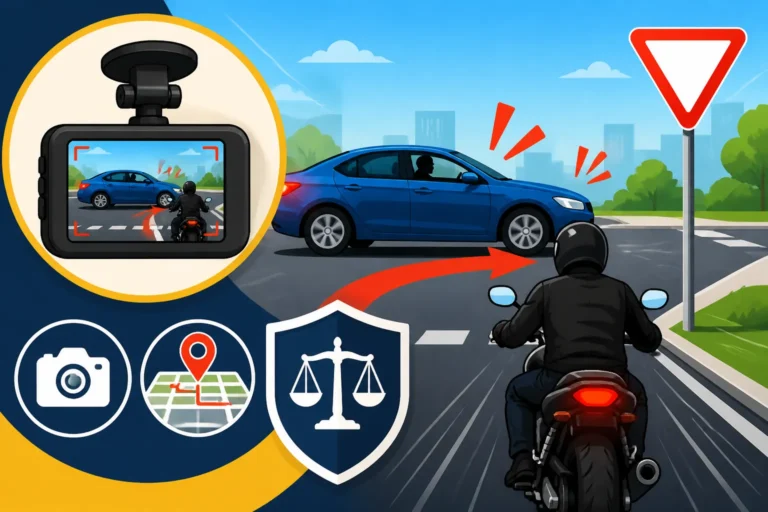
In today's world, technology offers powerful tools that can decisively prove fault in a rear-end collision. Dashcam footage, for instance, can be an absolute game-changer. Many car drivers, and an increasing number of motorcyclists, equip their vehicles with dashcams that record continuously. If the vehicle that rear-ended you, or another car nearby, had a dashcam rolling, that footage could provide irrefutable proof of how the accident occurred, showing the other driver's following distance, their speed, and whether they were distracted. Requesting this footage immediately after the accident is critical, as it can be overwritten or lost over time. This is why learning How Dashcam Footage Proves Fault is so beneficial.
For more complex cases, especially those involving serious injuries or disputed liability, accident reconstruction experts can provide a scientifically backed analysis of the collision. These specialists use physical evidence from the scene – such as skid marks, vehicle damage, debris fields, and even traffic camera footage – along with physics principles to determine vehicle speeds, angles of impact, and sequences of events leading up to the crash. They can create detailed diagrams, simulations, and expert testimony that can be incredibly persuasive in negotiations or in court. While typically brought in by attorneys, their work can definitively establish the actions (or inactions) that led to the rear-end collision, leaving little room for doubt about who was responsible.
| Evidence Type | Why It's Crucial for Rear-End Collisions | How It Helps Prove Fault |
|---|---|---|
| Photos/Videos | Documents vehicle positions, damage, road conditions, and environmental factors. | Shows impact points, lack of safe following distance, and clear evidence of rear impact. |
| Police Report | Official documentation of the scene, parties, and initial fault determination. | Often assigns fault to the rear driver based on presumption and scene evidence. |
| Witness Statements | Objective accounts from uninvolved parties. | Corroborates your narrative, identifies distracted or aggressive driving by other party. |
| Dashcam Footage | Irrefutable visual record of the events leading up to and during the crash. | Clearly shows following distance, braking, and the actions of both drivers. |
| Medical Records | Documents the extent and severity of your injuries. | Links injuries directly to the trauma of the collision, proving damages. |
| Accident Report | Provides scientific analysis of the crash mechanics. | Recreates sequence of events, proves speeds, and reinforces primary cause of impact. |
Common Injuries and Damages from Rear-End Collisions
Motorcyclists inherently face a higher risk of severe injuries in any accident, and rear-end collisions are no exception. The direct, often sudden, impact from behind can lead to a specific set of devastating physical consequences and financial burdens that require comprehensive understanding for proper compensation. Understanding the full range of Types of Damages in a Motorcycle Accident Claim is vital.
Whiplash and Spinal Injuries
Whiplash is a common injury in rear-end collisions, occurring when the head is suddenly jerked forward and then backward with extreme force. While often associated with car accidents, the lack of headrests and the open nature of a motorcycle mean that a rider's neck can experience even more severe hyperextension and hyperflexion. This violent movement can strain the muscles, ligaments, and tendons in the neck and upper back, leading to debilitating pain, stiffness, headaches, dizziness, and even radiating pain or numbness down the arms. The symptoms may not appear immediately, sometimes taking days to manifest, which is why immediate medical evaluation after any rear-end impact is critical, even if you feel fine at first.
Beyond whiplash, the forces involved can also cause more serious damage to the spine. Disc herniations, slipped discs, or even vertebral fractures can occur in the cervical (neck), thoracic (mid-back), or lumbar (lower back) regions. These types of spinal injuries can result in chronic pain, nerve damage, loss of mobility, and in the most severe cases, even paralysis. Recovering from such injuries often requires extensive physical therapy, chiropractic care, pain management, and sometimes even surgery. The long-term implications for a rider’s quality of life and ability to continue working can be profound, making these some of the most challenging injuries to overcome, both physically and financially.
Road Rash, Fractures, and Head Trauma
Even with protective gear, the abrupt contact with the pavement or other vehicles in a rear-end collision almost guarantees some degree of trauma beyond internal injuries. Road rash, caused by the skin sliding across rough surfaces, is an incredibly common injury for motorcyclists. Depending on the speed and friction, it can range from superficial scrapes to deep, third-degree abrasions that expose muscle and bone, requiring extensive wound care, skin grafts, and leaving permanent scarring. This isn't just a cosmetic issue; deep road rash can lead to severe infections, nerve damage, and chronic pain.
Fractures are also a frequent consequence, especially to the legs, arms, wrists, and collarbones, as riders instinctively try to brace themselves or are thrown from the bike. The sudden impact can twist or bend limbs in unnatural ways, resulting in simple or complex bone breaks that necessitate casts, surgery, and lengthy rehabilitation. Furthermore, despite wearing a DOT-approved helmet, head trauma remains a serious concern. While a helmet significantly reduces the risk of fatal head injuries, concussions, contusions, and even more severe traumatic brain injuries (TBIs) can still occur from the sheer force of impact, even if the head doesn't directly strike the ground. The jarring motion alone can cause the brain to impact the inside of the skull, leading to lasting cognitive, emotional, and physical impairments. These diverse injuries underscore why Common Motorcycle Accident Injuries are often so severe compared to other types of vehicle crashes.
Economic and Non-Economic Damages
When a rear-end motorcycle collision occurs, the financial and personal losses extend far beyond immediate medical attention. These losses are broadly categorized into economic and non-economic damages, both of which are crucial components of any personal injury claim. Economic damages are the quantifiable, out-of-pocket expenses you incur directly because of the accident. This includes the staggering cost of medical bills, which can encompass emergency room visits, surgeries, hospital stays, medication, physical therapy, and ongoing specialist appointments. It also covers lost wages, both past and future, if your injuries prevent you from working, as well as the cost of repairing or replacing your damaged motorcycle and any destroyed riding gear. For example, if you're a self-employed mechanic in Portland, Oregon, missing weeks of work due to a broken leg can devastate your income, and those losses must be accounted for.
Non-economic damages, on the other hand, are less tangible but equally significant. These are the subjective, personal losses that impact your quality of life. The most common is pain and suffering, which accounts for the physical agony, emotional distress, and discomfort you endure. This can also include compensation for emotional trauma, anxiety, depression, loss of enjoyment of life (e.g., inability to ride your motorcycle, participate in hobbies, or enjoy family activities), and permanent scarring or disfigurement from road rash or surgical procedures. While these damages don't come with an invoice, they represent a very real and often devastating impact on a rider's life. Accurately valuing these non-economic losses is often one of the most challenging aspects of a claim, as it requires a deep understanding of how such injuries truly affect a person's existence.
Navigating the Claims Process After a Rear-End Collision
After the dust settles and you've received medical care, the daunting task of navigating the insurance claims process begins. This phase is often complex, emotionally draining, and fraught with potential pitfalls for the unprepared motorcyclist. Knowing What to Do After a Motorcycle Accident is your first step.
Dealing with Insurance Adjusters
It’s crucial to understand that insurance adjusters, while seemingly friendly and helpful, work for the insurance company, not for you. Their primary goal is to settle your claim for the lowest possible amount to protect their company's bottom line. Immediately after a rear-end collision, expect an adjuster from the at-fault driver's insurance company to contact you. They might try to get you to provide a recorded statement, offer a quick settlement for your property damage, or even try to get you to sign a medical release form. It's imperative that you proceed with extreme caution.
Never provide a recorded statement without consulting with an attorney first. Anything you say can and will be used against you to minimize your injuries or shift blame. Similarly, signing general medical releases can give the insurance company access to your entire medical history, allowing them to search for pre-existing conditions they can use to argue your injuries aren't new. It’s also wise to avoid accepting any quick settlement offers for your property damage that include a general release for all claims. This could inadvertently close your entire personal injury claim before you even know the full extent of your medical damages, which often take weeks or months to fully manifest. Be polite but firm in declining these requests until you've had a chance to fully assess your situation and seek legal advice. Remember, you're not obligated to give them more information than necessary.
When to Consider Legal Representation
Many riders wonder if they truly need a lawyer, especially if the other driver seems clearly at fault in a rear-end collision. The truth is, When to Hire a Motorcycle Accident Lawyer is almost always a good idea, particularly when your injuries are anything more than minor bumps and bruises. If you’ve suffered significant injuries like fractures, head trauma, spinal injuries, or extensive road rash that require ongoing medical treatment, missed work, or resulted in permanent impairment, an attorney becomes indispensable. Insurance companies are notorious for undervaluing motorcycle accident claims, often leveraging stereotypes about riders or downplaying the severity of injuries.
A seasoned motorcycle accident attorney understands the complexities of these cases, the biases that exist against riders, and the tactics insurance adjusters employ. They can handle all communications with the insurance companies, gather crucial evidence, negotiate on your behalf, and ensure all your damages – both economic and non-economic – are properly calculated and pursued. They know how to effectively counter the "I didn't see him" defense or attempts to place partial blame on you. Furthermore, an attorney can navigate the intricacies of state-specific comparative negligence laws and ensure that any potential settlement reflects the true impact of your injuries on your life. Without legal representation, you risk being short-changed and overwhelmed by a system designed to protect the insurance company's interests, not yours.
Protecting Your Rights and Maximizing Your Recovery
To truly protect your rights and ensure you receive the maximum compensation you deserve after a rear-end motorcycle accident, a proactive and informed approach is essential. First and foremost, always seek immediate medical attention, even if you feel okay after the crash. Some serious injuries, especially to the brain and spine, have delayed symptoms. A documented medical record from the outset establishes a clear link between the accident and your injuries, which is critical for your claim. Follow all medical advice and attend all appointments – gaps in treatment can be used by insurance companies to argue your injuries aren't as severe as you claim.
Beyond medical care, continue to meticulously document everything. Keep records of all medical bills, receipts for expenses related to the accident (like transportation to appointments, medication, or over-the-counter pain relief), and records of lost wages from your employer. Maintain your injury journal detailing your daily pain, limitations, and emotional struggles. Preserve any damaged riding gear or motorcycle parts, as these can serve as powerful physical evidence of the impact. Most importantly, avoid discussing fault or the details of the accident with anyone other than the police and your attorney. Never admit fault, even casually, as this can severely damage your claim. By meticulously building your case and letting an experienced legal professional handle the intricacies, you significantly increase your chances of a fair and just recovery, allowing you to focus on what truly matters: your physical and emotional healing.
Disclaimer
Please remember that this article provides general information and insights into motorcycle accidents caused by rear-end collisions. It is not legal advice. Every accident is unique, and the specifics of your situation, including state laws and the extent of your injuries, will significantly impact the legal process and potential outcomes. If you have been involved in a motorcycle accident, it is highly recommended to consult with a qualified personal injury attorney to discuss your specific case and understand your legal rights and options.