Common Causes of Motorcycle Accidents
Riding a motorcycle offers an unparalleled sense of freedom, an open-road experience that car drivers can only dream of. Yet, this incredible joy comes with an undeniable vulnerability, as riders are often disproportionately affected when crashes occur. It's a harsh reality that too many drivers simply don't see us, or worse, don't pay attention. This guide will meticulously break down the common causes of motorcycle accidents, offering insights into why they happen and what factors often determine who is truly at fault.
The 'I Didn't See Them' Phenomenon: Driver Negligence
This is perhaps the most frustrating and tragically common refrain we hear after a motorcycle accident. It’s a phrase that dismisses a rider's presence, implying invisibility, and often places an unfair burden on the motorcyclist. The truth is, many car drivers simply aren't looking for motorcycles, leading to devastating consequences. Their failure to see us is a failure to exercise due care, and it’s a negligence that plays a significant role in countless crashes.
Left-Turn Collisions and Failure to Yield
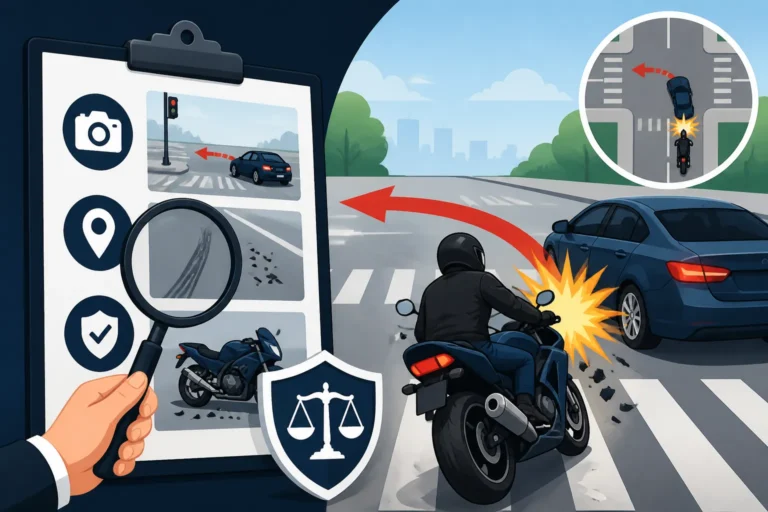
Picture this: you're cruising down a main thoroughfare, enjoying the ride, when suddenly a car from the opposite direction decides to make a left turn directly into your path. This scenario, known as a left-turn collision, is not just a common cause of motorcycle accidents; it's practically an epidemic for riders. The driver of the turning vehicle often claims they never saw the motorcycle, or misjudged its speed and distance, leading them to believe they had enough time to clear the intersection safely.
The underlying issue here is often a combination of factors: driver inattention, a failure to properly scan the intersection, and the notorious "looked but failed to see" phenomenon. Many drivers are conditioned to look for larger vehicles, like cars and trucks, and their brains simply filter out the smaller profile of an approaching motorcycle. This isn't just a minor oversight; it's a violation of basic traffic laws, as the turning vehicle almost always has a duty to yield the right-of-way to oncoming traffic, which includes motorcycles. When these accidents occur, the resulting injuries for the rider can be catastrophic due to the direct broadside impact and lack of protection. For more in-depth information on these specific types of incidents, you can refer to our article on Motorcycle Accidents Caused by Left-Turn Collisions.
Distracted Driving and Inattentiveness
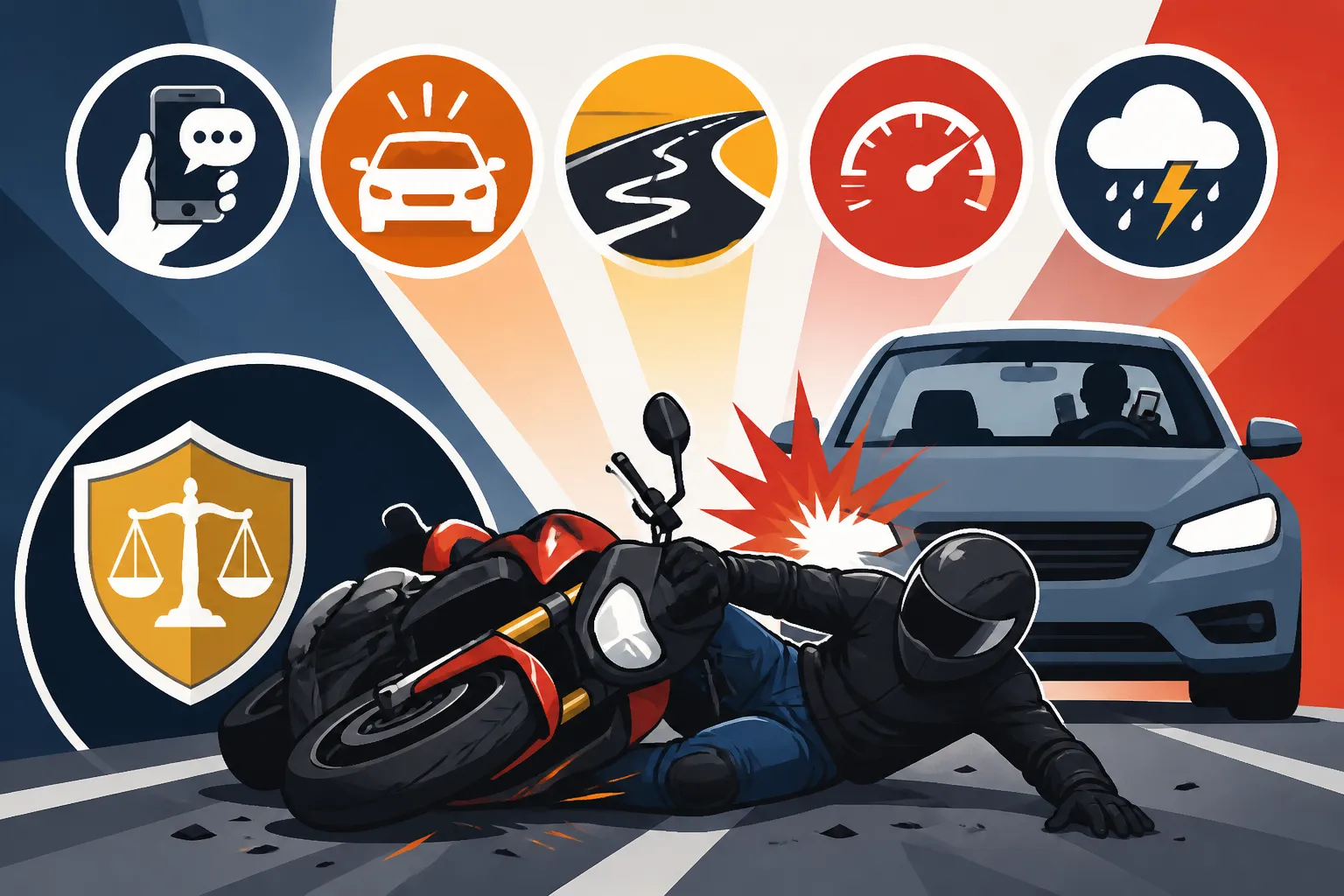
In our modern world, distraction is a pervasive and dangerous element on the roads. Drivers, unfortunately, are more frequently engaged with their phones, infotainment systems, or even passengers than they are with the road ahead. This lack of focus creates an incredibly hazardous environment for motorcyclists, who rely on other drivers being fully aware of their surroundings to avoid collisions. When a driver is texting, talking on the phone, fiddling with the radio, or even just daydreaming, their reaction time is severely compromised.
Imagine a driver staring at their phone, creeping forward at a stop sign. They glance up, see a gap, and pull out, completely missing the motorcycle that was clearly visible just moments before. These moments of inattention can have dire consequences. For a motorcyclist, even a split-second delay in a driver's reaction can mean the difference between a near-miss and a life-altering crash. Proving that another driver was distracted can be challenging, but vital for your claim. Our guide on How to Prove the Other Driver Was Distracted offers valuable strategies.
Unsafe Lane Changes and Blind Spots
Another all-too-common scenario involves drivers making abrupt or unsafe lane changes without properly checking their mirrors or blind spots. Motorcycles, being smaller, can easily be obscured in a vehicle's blind spot, particularly those of larger trucks or SUVs. It’s not just larger vehicles either; even standard cars have blind spots that can swallow a motorcycle whole if the driver isn't vigilant. Many drivers simply take a quick peek in their side mirror, see nothing, and then merge, completely forgetting to turn their head for a full shoulder check.
The consequences of such a maneuver can be devastating. A rider can be sideswiped, forced off the road, or even run over, leading to severe injuries like road rash, broken bones, or worse. It’s an incredibly frustrating experience for a motorcyclist to be riding defensively, only to have a driver carelessly merge into their lane as if they weren’t even there. This negligence highlights the importance of not just knowing your own blind spots but also anticipating that other drivers may not be as careful as they should be.
Speeding and Reckless Driving
Speeding isn't just about exceeding the posted limit; it's about driving too fast for the prevailing conditions, whether that's heavy traffic, adverse weather, or winding roads. When any driver, car or motorcycle, operates their vehicle at excessive speeds, it drastically reduces their ability to react to sudden changes, brake effectively, or maintain control, leading to a higher likelihood of accidents and more severe outcomes.
Exceeding Posted Limits
The speed limit signs aren't just suggestions; they are legally binding directives set to ensure the safe flow of traffic given the road's design and typical conditions. When drivers disregard these limits, they're not just risking a ticket; they're significantly increasing the risk of a collision, especially with a motorcycle. Higher speeds mean longer stopping distances and less time to perceive and react to hazards or other vehicles. If a car driver is speeding and a motorcyclist is merging, the car driver might not have enough time to slow down or stop, leading to a rear-end collision or a side impact.
For motorcyclists, while the thrill of speed is undeniably part of the appeal for many, exceeding the posted limits severely hampers their ability to maneuver out of dangerous situations, or to recover from unexpected events like a patch of gravel or a sudden swerve from another vehicle. It escalates the severity of any impact, turning minor incidents into major crashes with devastating injuries. When determining fault in an accident, if either party was found to be significantly exceeding the speed limit, it often weighs heavily against them, regardless of other contributing factors. The article, How Speeding Affects Motorcycle Accident Fault, delves deeper into this topic.
Driving Too Fast for Conditions
Beyond the black and white of posted speed limits lies the nuanced reality of driving too fast for conditions. This is a critical distinction that many drivers overlook. On a clear, dry day, 65 mph on the freeway might be perfectly safe. However, that same speed during a torrential downpour, dense fog, or on an icy patch is incredibly dangerous and utterly reckless. The road conditions, visibility, traffic density, and even the type of road surface (like uneven pavement or loose gravel) all dictate a safe operating speed, which can often be far below the posted maximum.
For motorcyclists, this is even more critical. Our bikes have less contact patch with the road, making them more susceptible to loss of traction on wet, sandy, or oily surfaces. Hydroplaning is a terrifying reality for a rider caught in heavy rain, and even a small patch of gravel in a turn can lead to a wipeout. When a driver of a larger vehicle is going too fast for these conditions and loses control, a motorcyclist nearby has very little room for error or escape. Conversely, a motorcyclist riding beyond their or their bike's capabilities in challenging conditions significantly increases their risk of a single-vehicle accident or contributing to a multi-vehicle crash. It’s a constant dance between enjoying the ride and respecting the unforgiving laws of physics and the environment.
Impaired Driving: Alcohol and Drugs
Impaired driving, whether by alcohol or drugs, is a completely inexcusable and tragically common cause of severe accidents on our roads. It's a choice that not only endangers the impaired driver but puts every other road user, especially vulnerable motorcyclists, at immense risk. The statistics on impaired driving are sobering, highlighting a persistent problem despite decades of public awareness campaigns and stricter laws.
Drunk Driving by Car Drivers
When a car driver gets behind the wheel after consuming alcohol, their judgment, reaction time, coordination, and ability to perceive danger are all severely compromised. For a motorcyclist, who is already less visible and lacks the protective shell of a car, a drunk driver represents one of the gravest threats on the road. Drunk drivers often weave in and out of lanes, ignore traffic signals, drive erratically, and completely fail to see motorcycles. Their delayed reactions mean they cannot brake in time or steer away from a collision.
The impact of a drunk driver's negligence on a motorcyclist is almost always catastrophic. These collisions frequently result in severe injuries like traumatic brain injuries, spinal cord damage, and even fatalities, simply because the drunk driver was too impaired to operate their vehicle safely. The legal system generally takes a very dim view of drunk driving, and proving that the other driver was intoxicated often strengthens a motorcycle accident claim significantly, potentially even leading to punitive damages in some jurisdictions. Our article, How Drunk Driving Affects a Motorcycle Claim, offers more details on this.
Impaired Riding by Motorcyclists
While much of the focus is rightly on car drivers, it's crucial to acknowledge that motorcyclists are not immune to the dangers of impaired driving. Riding a motorcycle demands an even higher level of concentration, balance, and swift decision-making than driving a car. Alcohol or drugs compromise every single one of these critical faculties, turning an already challenging activity into a deadly gamble. A rider who has consumed alcohol might misjudge a turn, fail to react to a sudden obstacle, or lose balance at low speeds, leading to a single-vehicle accident or involvement in a multi-vehicle crash.
The stereotype of the reckless biker can sometimes lead law enforcement and insurance companies to jump to conclusions, and impaired riding unfortunately plays into this bias. If a motorcyclist is found to be riding under the influence, it not only carries severe legal penalties but can also dramatically impact their ability to recover compensation for injuries, even if another driver was partially at fault. Such actions contribute to the negative perception of all riders and undermine efforts to promote motorcycle safety. It's a stark reminder that personal responsibility on the road extends to everyone, regardless of what they're driving or riding.
Road Hazards and Environmental Factors
Sometimes, accidents aren't solely caused by another driver's negligence or a rider's error. The very roads we travel can present significant dangers, especially for motorcyclists, whose smaller tires and two-wheeled stability make them far more susceptible to hazards that a car might easily shrug off. These environmental factors and road defects often contribute to single-vehicle accidents or become compounding elements in multi-vehicle crashes.
Potholes, Gravel, and Debris
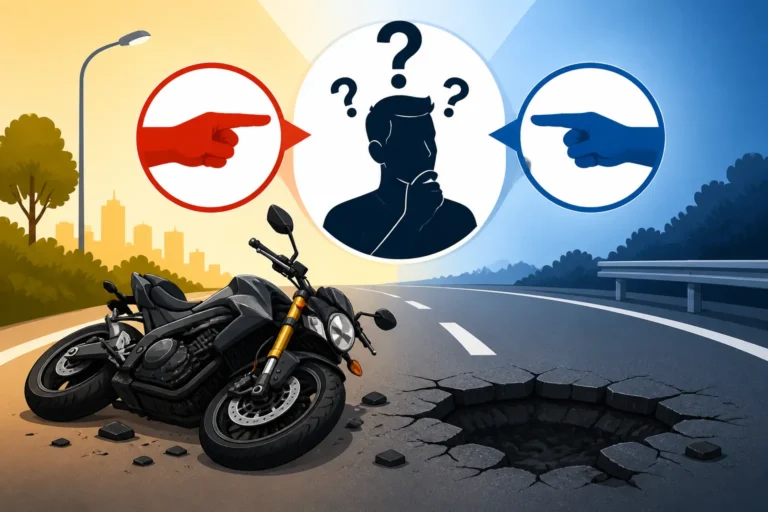
Imagine hitting a massive pothole in a car; it's jarring, might damage a tire, but you generally maintain control. For a motorcyclist, hitting that same pothole can mean a complete loss of control, a bent rim, or a sudden, violent spill. Potholes, cracks, uneven pavement, and raised manhole covers are constant threats. Similarly, loose gravel on a paved road, especially in turns or on newly repaired surfaces, can cause a tire to slip out from under the rider with little to no warning. Construction debris, discarded tires, fallen branches, or even spilled oil can create invisible hazards that a motorcyclist often has mere milliseconds to perceive and avoid.
These hazards are particularly dangerous because they can appear suddenly, especially at night or around blind corners. A rider performing a defensive maneuver to avoid a patch of gravel might swerve into another lane, creating a new danger, or simply lose traction and go down. The presence of these road hazards isn't always an act of nature; sometimes, they are the result of neglected road maintenance or improper construction site management. In such cases, the entity responsible for maintaining the road or the construction company could be held liable. For more on this, check out our piece on Who Is Liable for a Pothole Motorcycle Accident.
Poor Weather Conditions
Riding in perfect weather is one of life's great pleasures. Riding in adverse weather, however, can quickly turn into a terrifying and dangerous ordeal. Rain significantly reduces tire traction, turning asphalt into a slick, treacherous surface. Visibility plummets in heavy fog or rain, making it harder for riders to see hazards and for other drivers to see them. Crosswinds can be incredibly powerful, pushing a motorcycle sideways and requiring constant correction, which can be exhausting and distracting. Even sun glare, particularly at dawn or dusk, can blind drivers and riders alike, obscuring the road ahead or making oncoming vehicles invisible.
These conditions amplify the risks for motorcyclists far more than for drivers in enclosed vehicles. The lack of protection from the elements, combined with reduced traction and visibility, means that a rider must exercise extreme caution. Even when riding defensively, a sudden downpour can make braking distances increase dramatically, and other drivers, oblivious to the challenges a motorcyclist faces, might not adjust their own driving accordingly. Understanding the limitations imposed by weather and adjusting riding style is crucial, but sometimes, even the most careful rider can be caught off guard by a sudden change in conditions or another driver's inability to cope.
Government and Third-Party Liability
While we often focus on the actions of individual drivers or riders, sometimes the blame for an accident lies with entities responsible for road infrastructure or vehicle maintenance. Local, state, or federal government agencies have a duty to design, build, and maintain safe roads. If a dangerous road condition—like an unmarked sharp turn, a poorly designed intersection, or a prolonged failure to repair a severe pothole—directly leads to a motorcycle accident, the government entity responsible might be held liable. This can be a complex area of law, as governmental bodies often have specific immunities and notification requirements.
Beyond government, third-party liability can also come into play. This includes construction companies that leave debris or poorly marked work zones, private property owners whose overgrown vegetation obstructs sightlines, or even vehicle manufacturers if a defective part contributed to the crash. For example, if a motorcycle's brakes fail due to a manufacturing defect, leading to an accident, the manufacturer could be held accountable. This expands the scope of responsibility beyond the immediate parties involved in the collision, offering avenues for compensation when the accident wasn't a direct result of another driver's mistake or the rider's error.
Lane Splitting: A Divisive Topic
Lane splitting, also known as lane filtering or white-lining, is a practice where a motorcyclist rides between lanes of slow-moving or stopped traffic. It's often debated and misunderstood, but its impact on accident causation is undeniable, both in terms of potential risks and, in some contexts, benefits.
Understanding Lane Splitting Dynamics
The primary motivation behind lane splitting is to alleviate traffic congestion and reduce rider exposure to rear-end collisions. When traffic is at a standstill, motorcycles can navigate through the gaps between vehicles, effectively bypassing queues. This practice is rooted in the belief that it reduces the likelihood of a motorcyclist being rear-ended by an inattentive driver who fails to stop in heavy traffic. It also allows the motorcycle engine to cool, preventing overheating, especially in hot climates.
However, the dynamics of lane splitting are inherently risky. It requires exceptional rider skill, constant vigilance, and the assumption that car drivers are aware of their surroundings. The gaps between cars can be unpredictable, drivers may suddenly change lanes, or they might open their car doors (a "dooring accident") without warning. The sudden appearance of a motorcycle splitting lanes can surprise car drivers, leading to erratic reactions or a complete failure to see the rider until it's too late. The speed differential between the lane-splitting motorcycle and the stopped or slow-moving traffic is a critical factor, as higher differentials significantly increase the risk and severity of a collision.
The Risks and Legalities
The legal status of lane splitting varies significantly from state to state in the U.S. California was historically the only state to explicitly legalize it, though other states like Utah, Arizona, and Montana have since adopted their own forms of lane filtering or splitting. In states where it's illegal, a motorcyclist involved in an accident while lane splitting could automatically be assigned a significant percentage of fault, severely impacting their ability to recover damages. Even where it is legal, there are often specific regulations regarding speed differential and traffic conditions. For example, California law advises against lane splitting at speeds exceeding 10 mph over the speed of traffic, or when traffic is flowing above 30 mph.
The risks associated with lane splitting are multifaceted. Beyond the immediate danger of collision with a suddenly moving vehicle or an opening door, there's the emotional reaction of some car drivers who feel a lane-splitting motorcyclist is being aggressive or cutting in line. This can lead to hostile actions, though rare, such as intentionally blocking a rider. Furthermore, the limited maneuvering room means any unexpected event – a car swerving, a pedestrian stepping out, or road debris – leaves the rider with little to no escape route. Understanding the nuances of Lane Splitting and Motorcycle Accident Liability is crucial for any rider who practices or considers this maneuver.
Rider Error and Contribution to Accidents
While much attention is often focused on the negligence of car drivers (and rightly so, given the "I didn't see them" problem), it's equally important to acknowledge that motorcyclists can, and sometimes do, contribute to accidents through their own errors or lack of judgment. This isn't about victim-blaming; it's about a realistic assessment of all factors involved in a collision, which is essential for understanding fault and preventing future incidents.
Inexperience and Lack of Training
Riding a motorcycle is a skill that requires continuous learning and practice. Unlike driving a car, where minor errors can often be forgiven, a small mistake on a motorcycle can have immediate and severe consequences. Inexperienced riders, especially those who skip formal training courses, might lack crucial skills in emergency braking, evasive maneuvers, cornering techniques, or hazard perception. They might panic in a sudden situation, over-brake and lock up a wheel, or target fixate on an obstacle rather than steering around it.
New riders are also more prone to misjudging speeds, distances, and road conditions. They might take a turn too fast, fail to anticipate traffic flow, or not recognize dangerous road surfaces. This isn't necessarily recklessness, but rather a lack of developed instincts and practical experience. Comprehensive training, like that offered by the Motorcycle Safety Foundation (MSF), provides foundational skills that can make an enormous difference in a rider's ability to safely navigate complex traffic situations and react appropriately to emergencies, thereby reducing the likelihood of accidents caused by simple rider error.
Overconfidence and Risky Maneuvers
On the flip side of inexperience is overconfidence, which can be just as dangerous. Some riders, particularly those with a few years under their belt, may begin to overestimate their abilities or underestimate the risks involved in certain maneuvers. This can lead to engaging in risky behaviors such as excessive speeding, aggressive lane changes, tailgating, or attempting stunts on public roads. These actions not only put the rider at extreme risk but also endanger other motorists.
Imagine a rider weaving through traffic at high speed, pushing the limits of their motorcycle and their own reaction time. While exhilarating, this significantly increases the chances of a sudden lane change by another vehicle, an unexpected stop, or a road hazard catching them off guard. When an accident occurs due to such risky maneuvers, it becomes very difficult for the rider to claim they were not at fault, as their actions directly contributed to the crash. Unfortunately, these instances feed into negative stereotypes about motorcyclists, making it harder for all riders to receive fair treatment in the aftermath of any accident, regardless of who was truly responsible.
Vehicle Defects and Equipment Failure
While many accidents are attributed to human error, either by a driver or a rider, sometimes the vehicle itself is the culprit. A mechanical failure or a defect in a motorcycle or another vehicle can lead to a sudden loss of control, directly causing a crash. Identifying and proving such a defect can shift the focus of liability from individual actions to manufacturer responsibility or maintenance negligence.
Manufacturer and Maintenance Issues
Motorcycles, like all vehicles, are complex machines with thousands of parts. A defect in one of these components, stemming from the manufacturing process, design flaws, or even improper installation, can have catastrophic consequences. This could involve issues with the braking system, steering components, engine, or electrical systems. For example, a faulty brake line could rupture, leading to a sudden loss of stopping power, or a structural weakness in a frame could cause a component to fail under normal stress.
Beyond manufacturing, poor maintenance can also lead to equipment failure. If a motorcycle or car owner neglects routine servicing, such as checking tire pressure, inspecting brake pads, or replacing worn-out components, they are increasing the risk of mechanical failure. Imagine a rider who hasn't checked their tire tread in months, and a worn tire blows out at highway speeds. While this is rider negligence, if a certified mechanic failed to properly install a new part during a service, and that part subsequently fails, the mechanic's shop could bear responsibility. Proving a manufacturer defect can be incredibly challenging, requiring expert testimony and often in-depth accident reconstruction. Our article on Manufacturer Fault for Brake Failure explores specific examples.
Brake Failure, Tire Blowouts, and Other Mechanical Problems
Let's delve into some specific examples of mechanical failures that frequently lead to motorcycle accidents. Brake failure is terrifying; whether it's a sudden loss of pressure, seizing calipers, or a complete system malfunction, an inability to stop can lead to unavoidable collisions. A tire blowout, especially at highway speeds, can cause a violent loss of control, as the rider tries to wrestle the bike back into submission. This is exacerbated by the fact that motorcycles only have two wheels, making stability inherently more precarious than a four-wheeled vehicle.
Other mechanical issues include steering component failure, such as a faulty bearing or a broken steering head, which can cause the bike to wobble uncontrollably. Electrical system failures might lead to sudden loss of headlights or taillights, making the motorcycle invisible at night. Even a broken chain or drive belt can cause the rear wheel to lock up unexpectedly, throwing the rider. When these failures occur, the outcome is often severe, as the rider usually has no time to react or take evasive action. Gathering evidence of such mechanical failures often involves inspecting the damaged motorcycle, retrieving maintenance records, and potentially bringing in forensic engineers to determine the exact cause of the component failure.
Understanding Fault in Common Accident Scenarios
Determining fault after a motorcycle accident is rarely straightforward. It's not always a black-and-white situation where one party is entirely to blame. Often, multiple factors and parties can contribute to a collision, making the investigation process complex and the allocation of responsibility a contentious issue. This is especially true in states that apply comparative negligence rules.
Shared Fault and Comparative Negligence
The concept of shared fault is critical in motorcycle accident claims. Many states operate under a "comparative negligence" system. This means that if you, as the motorcyclist, are found to be partially responsible for the accident, your total compensation can be reduced by your percentage of fault. For example, in states like California, which follow a "pure comparative negligence" rule, even if you are found 80% at fault, you can still recover 20% of your damages. Other states, like Texas or Ohio, use a "modified comparative negligence" rule (often with a 50% or 51% bar), meaning if you are found to be 50% or 51% or more at fault, you may recover nothing at all.
This system is often weaponized against motorcyclists by insurance companies, who sometimes try to unfairly assign a higher percentage of fault to the rider due to existing biases or stereotypes. It's incredibly frustrating when you know another driver was primarily responsible, but the insurance adjuster tries to pin 20% or 30% of the blame on you for something minor, like a slightly worn tire that wasn't a direct cause of the crash. Understanding these rules is essential because even a small percentage of fault can significantly reduce your potential payout. Our guide on Comparative Negligence in Motorcycle Accidents provides a comprehensive overview of how this works.
Documenting Evidence to Prove Fault
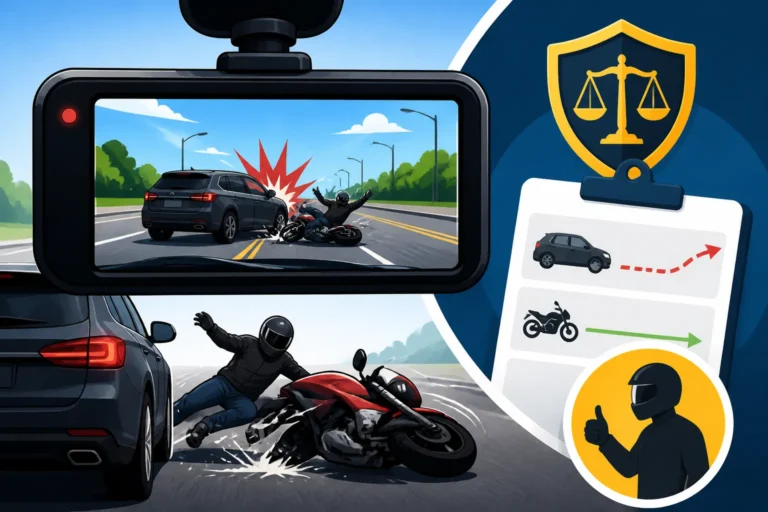
In the aftermath of an accident, establishing fault is paramount, and it hinges almost entirely on the evidence collected. This is why the first steps taken at the scene are so crucial. Photos and videos of the accident scene, including vehicle positions, damage, skid marks, road conditions, and traffic signs, are invaluable. Witness statements, especially from impartial third parties, can corroborate your account of events. The police report, while not always definitive on fault, provides official documentation of the incident, including any citations issued.
Beyond the immediate scene, medical records detailing your injuries, vehicle repair estimates, and even traffic camera footage or dashcam recordings from other vehicles can serve as powerful evidence. It’s not enough to simply say the other driver was at fault; you need concrete proof to back up your claim. Insurance companies will aggressively seek to minimize their payout by challenging fault, so having a robust collection of evidence is your best defense. This evidence allows for a clear and objective reconstruction of the accident, which is vital for proving who was truly responsible. Our article on Motorcycle Accident Evidence for Proving Fault details exactly what you need to gather.
Table: Common Causes of Motorcycle Accidents & Contributing Factors
| Cause Category | Specific Accident Scenarios | Primary Contributing Factors | Impact on Rider (Likely Injuries) | How Fault Is Often Assigned |
|---|---|---|---|---|
| Driver Negligence | Left-Turn Collisions | Driver failed to yield, "looked but failed to see" | Severe trauma, TBI, spinal cord injury | Driver of turning vehicle usually at fault |
| Distracted Driving | Texting, phone calls, inattentiveness | Range of injuries, often severe | Distracted driver often at fault, challenging to prove | |
| Unsafe Lane Changes / Blind Spots | Driver failed to check blind spot, no signal | Road rash, broken bones, crush injuries | Merging driver usually at fault | |
| Speeding & Reckless | Exceeding Posted Limits | Reduced reaction time, increased stopping distance | Catastrophic injuries, fatalities | Speeding party (car or motorcycle) at fault |
| Driving Too Fast for Conditions | Poor weather, heavy traffic, winding roads | Loss of control, severe multi-vehicle impact | Driver/rider not adjusting to conditions at fault | |
| Impaired Driving | Drunk/Drugged Driving (Car) | Impaired judgment, coordination, perception | Extremely severe injuries, often fatal | Impaired driver overwhelmingly at fault |
| Impaired Riding (Motorcycle) | Loss of balance, misjudgment, slow reactions | Single-vehicle crash, multi-vehicle impact | Rider at fault, severely impacts claim | |
| Road Hazards | Potholes, Gravel, Debris | Poor road maintenance, spilled cargo, construction negligence | Loss of control, broken bones, severe road rash | Government entity or responsible party may be liable |
| Poor Weather Conditions | Reduced visibility, low traction, hydroplaning | Loss of control, multi-vehicle pile-ups | Often shared fault, or driver/rider not adjusting speed | |
| Lane Splitting | Collision with moving/opening vehicle | Car driver not expecting rider, rider misjudgment of space | Sideswipe, crush injuries | Varies by state law & specific circumstances, often shared |
| Rider Error | Inexperience / Lack of Training | Improper braking, evasive maneuvers, cornering | Single-vehicle crash, loss of control | Rider often at fault, impacts claim |
| Overconfidence / Risky Maneuvers | Excessive speed, aggressive weaving, stunts | High-speed impact, catastrophic injuries | Rider overwhelmingly at fault | |
| Vehicle Defects | Brake Failure | Manufacturing defect, maintenance oversight, wear & tear | Rear-end collisions, loss of control | Manufacturer or maintenance facility may be liable |
| Tire Blowout | Defective tire, improper inflation, severe wear | Loss of control, high-speed crash | Manufacturer, maintenance, or rider if negligence proven |
What to Do Immediately After a Motorcycle Accident
The moments immediately following a motorcycle accident can be disorienting and terrifying. However, the actions you take (or don't take) in those crucial minutes and hours can profoundly impact your physical recovery and your ability to pursue a successful claim for damages. It's not just about proving fault; it's about protecting yourself and your future.
Ensuring Safety and Seeking Medical Attention
First and foremost, your health and safety are paramount. Even if you feel "fine," the adrenaline coursing through your veins can mask serious injuries. The first step, if you are able, is to move yourself and your motorcycle to a safe location out of the path of traffic. If you cannot move, remain where you are and wait for help. Immediately call 911 (or have someone call for you) to report the accident and request emergency medical services. Even if you decline an ambulance at the scene, seeking medical attention as soon as possible after the crash is critical.
A visit to an urgent care clinic or your primary care physician within 24-48 hours can identify injuries like concussions, whiplash, internal bleeding, or hairline fractures that might not be immediately apparent. Documenting these injuries early through medical professionals not only ensures you receive proper treatment but also creates an undeniable paper trail that links your injuries directly to the accident. Gaps in medical treatment or delays in seeking care can be used by insurance companies to argue that your injuries weren't severe or weren't caused by the crash. This is a crucial step in protecting your potential claim. For a detailed guide on these immediate actions, refer to What to Do Immediately After a Motorcycle Accident.
Documenting the Scene and Gathering Information
After ensuring your safety and calling for help, the next critical step is to document everything you possibly can at the accident scene. This means using your phone to take as many photos and videos as possible. Capture images of your motorcycle, the other vehicle(s) involved, their positions relative to each other, road conditions, skid marks, traffic signals, road signs, and any relevant landmarks. These visual records can be invaluable in reconstructing the accident and proving fault later on.
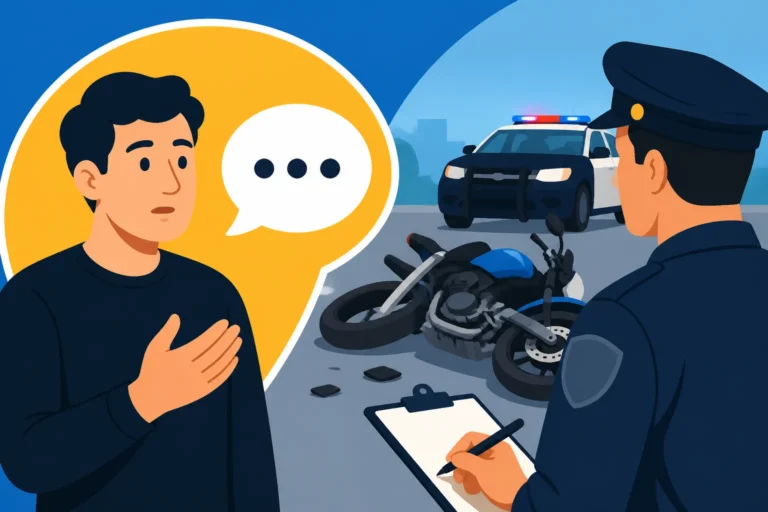
Equally important is gathering information from all parties involved. This includes exchanging insurance information, driver's license details, and contact information with the other driver(s). Also, make an effort to collect contact details from any witnesses, as their unbiased accounts can be incredibly powerful evidence. Do not admit fault or apologize to anyone at the scene, even if you feel shaken or confused. Stick to the facts. When police arrive, cooperate fully and provide an accurate account, but remember, you are not obligated to offer opinions or speculate on fault. Every piece of information you collect will serve as a building block for your claim and protect you from unfair blame.
Disclaimer
Please remember that this article provides general information and insights into common causes of motorcycle accidents and related legal concepts. It is not legal advice. Every accident is unique, and the specifics of your situation, including state laws, will dictate the best course of action. If you have been involved in a motorcycle accident, it is highly recommended that you consult with a qualified legal professional to discuss your specific case.