Who Is at Fault in a Motorcycle Accident
Getting into a motorcycle accident is one of the most terrifying experiences any rider can face. Beyond the immediate shock and the daunting prospect of injuries and bike damage, a huge question looms: "Who is at fault?" This isn't just a legal formality; it's the pivot point for everything that comes next, from your medical bills to your ability to replace your beloved ride. This comprehensive guide is here to cut through the confusion and explain exactly how fault is determined in motorcycle accidents, so you can understand your rights and know what to expect.
Understanding the Concept of Fault in Motorcycle Accidents
When we talk about fault after a motorcycle accident, it's more than just pointing fingers. It's a legal concept that dictates who is financially responsible for the damages, injuries, and losses suffered by everyone involved. For motorcyclists, understanding this is absolutely critical because of the inherent biases that sometimes exist against riders.
What "Fault" Really Means Legally
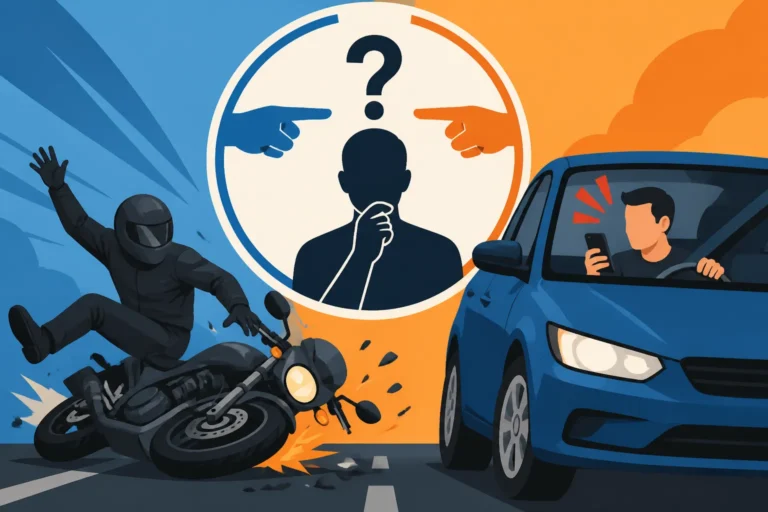
Legally, "fault" often refers to negligence. In simple terms, negligence means that someone failed to act with the reasonable care that a prudent person would have exercised in a similar situation, and this failure directly caused harm. For instance, if a car driver is texting while driving and swerves into your lane, their distracted driving is a negligent act that caused your accident. This failure to exercise reasonable care can manifest in many ways, from speeding to ignoring traffic signals to simply not paying attention.
The burden of proof usually falls on the person claiming to be injured or wronged. You, as the motorcyclist, would typically need to demonstrate that the other party's negligence led to your crash and subsequent damages. This isn't always straightforward, especially when the other driver might have a completely different account of events. It’s a complex dance of evidence, witness testimonies, and often, competing narratives.
Why Establishing Fault is Crucial for Your Claim
Establishing fault is the cornerstone of any personal injury claim. Without proving that another party was at fault, you generally cannot recover compensation for your medical expenses, lost wages, property damage, or pain and suffering. Think about it: if no one else was legally responsible, then you're left to cover all costs out of your own pocket or rely solely on your own insurance, which might not be enough.
The determination of fault directly impacts the insurance claims process. Insurance companies will meticulously investigate to assign a percentage of blame to each party involved. This percentage then dictates how much they are willing to pay out. In states like California, which follow a "pure comparative negligence" rule, even if you are found to be partially at fault, you can still recover damages, though your total compensation will be reduced by your percentage of fault. This is why knowing how fault is determined is absolutely vital. The more clearly you can establish the other party's fault, the stronger your position will be in securing a fair settlement.
The Bias Against Motorcyclists
It's an unfortunate truth that motorcyclists often face a societal and even legal bias when it comes to accident fault. The stereotype of the reckless biker, speeding and weaving through traffic, can sometimes influence initial impressions from police officers, witnesses, and even insurance adjusters. Drivers involved in accidents with motorcycles often claim, "I didn't see the motorcycle," a defense that can unfortunately carry weight despite the driver's clear failure to look.
This bias means that riders often start from a disadvantage, having to work harder to prove their innocence or the other driver's culpability. It's not uncommon for insurance companies to try and assign some level of fault to the motorcyclist, even when evidence clearly points otherwise, simply because they are riding a motorcycle. This makes diligent evidence collection and a clear understanding of traffic laws even more critical for riders. Being aware of this bias allows you to proactively gather strong evidence and present a compelling case that counters these preconceptions from the outset.
Common Scenarios Where Drivers Are at Fault
While it might sometimes feel like the world is against us on two wheels, the reality is that many motorcycle accidents are caused by the negligence of other drivers. Understanding these common scenarios can help you identify when you might not be to blame.
Left-Turn Collisions and "I Didn't See You"
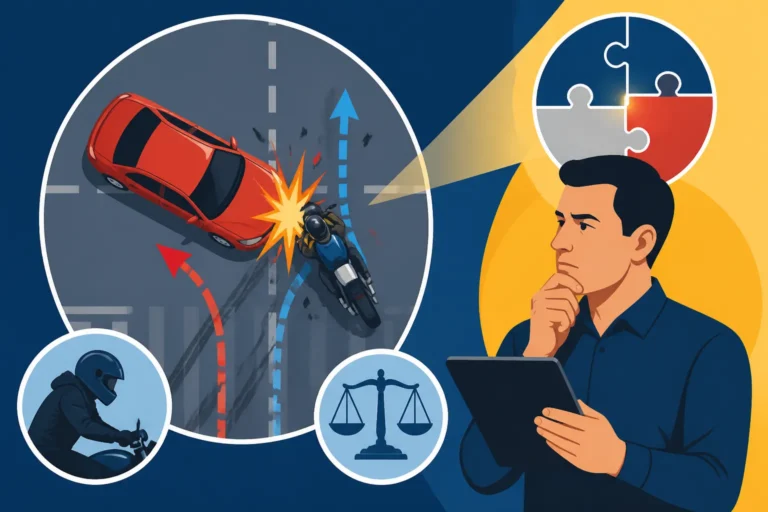
One of the most frequent and dangerous types of motorcycle accidents involves a car making a left turn directly in front of an oncoming motorcycle. This scenario is tragically common and often results in severe injuries for the rider. The driver of the turning vehicle often claims, "I didn't see the motorcycle," a phrase that, while perhaps true for them, doesn't absolve them of responsibility. Drivers have a legal obligation to yield to oncoming traffic, and that includes motorcycles.
These types of crashes typically occur at intersections. A car might be waiting to turn left, and misjudges the speed or distance of an approaching motorcycle, or simply fails to scan thoroughly enough to spot a smaller vehicle. The driver might perceive the motorcycle as being further away or traveling slower than it actually is, leading them to initiate their turn when it's unsafe. In almost all jurisdictions, the driver making the left turn is presumed to be at fault in such collisions, as they are typically required to yield the right-of-way. For a deeper dive, you can explore information about Left-Turn Motorcycle Accidents Explained.
Unsafe Lane Changes and Blind Spots
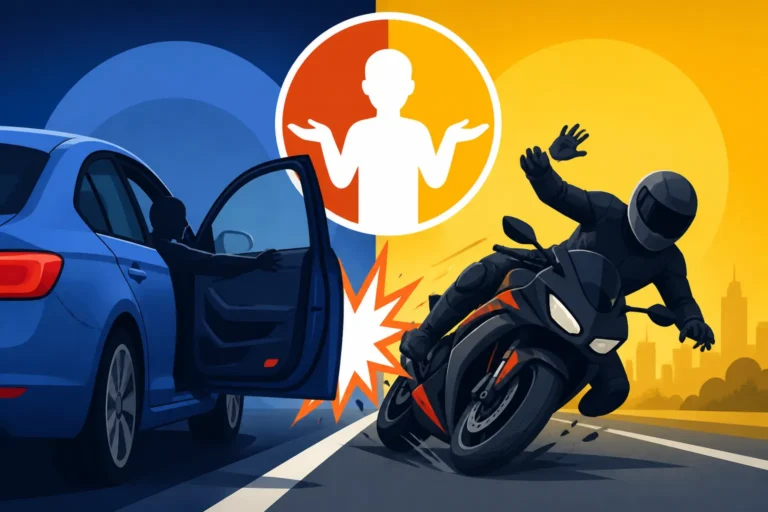
Another prevalent cause of motorcycle accidents is when a car driver makes an unsafe lane change, either merging into a lane already occupied by a motorcycle or cutting off a rider. Motorcycles, due to their smaller profile, can easily be overlooked in a vehicle's blind spot. However, this oversight doesn't excuse the driver. Drivers are legally required to check their blind spots and ensure the lane is clear before changing lanes. This often involves more than just a quick glance in the mirror; it means actively turning their head to check.
When a driver fails to do this and swerves into a motorcycle, the consequences can be catastrophic. The sudden impact or the need for an emergency maneuver can cause the rider to lose control, leading to a fall or a collision with other vehicles or obstacles. Even a minor collision can send a rider sprawling, resulting in road rash, broken bones, or worse. These incidents highlight the importance of defensive riding, but ultimately, the primary fault typically lies with the driver who failed to make a safe lane change.
Rear-End Accidents and Following Too Closely
Rear-end collisions are often considered clear-cut cases of fault: the driver who hits the vehicle in front is almost always deemed responsible. This holds true for motorcycle accidents as well. When a car follows a motorcycle too closely (tailgating) or fails to react in time when the motorcycle slows down or stops, a rear-end collision occurs. This can happen at traffic lights, in stop-and-go traffic, or even on the open highway if a driver is distracted.
For a motorcyclist, a rear-end impact can be incredibly dangerous. Unlike a car, a motorcycle offers little structural protection. The rider can be thrown from the bike, crushed between the vehicles, or suffer severe whiplash and spinal injuries. The "following too closely" rule is a fundamental principle of safe driving, and a breach of this rule almost always places the burden of fault on the trailing driver. Proving fault in a Rear-End Collisions Motorcycle Accident is generally straightforward, as the circumstances rarely allow for shared blame.
Distracted Driving and Failure to Yield
Distracted driving has become an epidemic on our roads, contributing to countless accidents, including those involving motorcycles. Texting, talking on the phone, eating, or even adjusting the radio can divert a driver's attention for crucial seconds. During these moments, a driver might run a red light, blow through a stop sign, or simply fail to see a motorcycle, leading to a collision.
Similarly, failure to yield the right-of-way is a common cause of accidents. This isn't limited to left-turn scenarios; it can happen when a driver pulls out from a side street, exits a parking lot, or merges onto a highway without adequate space or without heeding traffic signs. These actions demonstrate a blatant disregard for traffic laws and the safety of others on the road, placing the fault squarely on the negligent driver. When a driver fails to yield, it's often a direct result of inattention or aggressive driving, and the legal system typically assigns fault accordingly.
When a Motorcyclist May Share Fault
While many accidents are clearly the other driver's fault, it’s important to acknowledge that sometimes, a motorcyclist’s actions can contribute to a collision. It’s a tough pill to swallow, but understanding these situations is crucial for all riders. In many states, even partial fault can impact your ability to recover damages, as explained in articles about Comparative Negligence in Motorcycle Accidents.
Speeding and Reckless Driving
Speed limits and safe driving practices exist for a reason, and exceeding them significantly increases the risk of an accident. If a motorcyclist is traveling at an excessive speed or engaging in reckless maneuvers, such as weaving aggressively through traffic or performing stunts, they can be deemed partially or wholly at fault for a crash. For instance, if a car turns left in front of you, but you were traveling at 90 mph in a 45 mph zone, the car driver might still bear some fault for the left turn, but your excessive speed would undeniably be a contributing factor.
Reckless driving isn't just about speed; it's about any action that shows a blatant disregard for the safety of others. This could include sudden, unpredictable changes in speed or direction without signaling, or racing another vehicle. When a police report indicates that a motorcyclist received a citation for speeding or reckless driving at the scene of an accident, it becomes strong evidence that can be used by the opposing party's insurance company to assign a percentage of fault to the rider.
Lane Splitting and Its Legal Implications
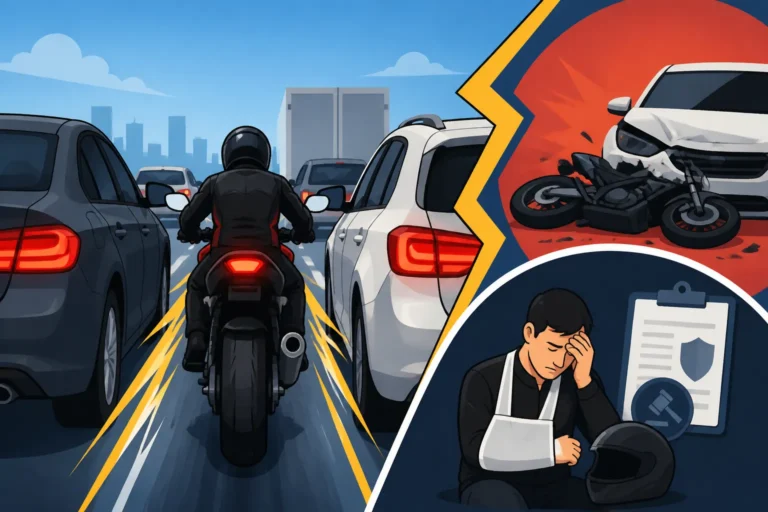
Lane splitting, the practice of a motorcycle riding between lanes of slow or stopped traffic, is a contentious topic. Currently, California is the only state where lane splitting is explicitly legal, provided it's done safely. In other states, it might be illegal, or at best, undefined. If a motorcyclist is lane splitting in a state where it's illegal or in an unsafe manner where it is legal (e.g., at high speeds, through congested areas), and an accident occurs, their actions could be cited as a contributing factor to the crash.
Even in California, where lane splitting is legal, a rider can still be found partially at fault if they were lane splitting at an unsafe speed or in a reckless manner, such as exceeding the speed of surrounding traffic by too much or doing so in conditions that weren't appropriate. For example, if you are lane splitting at 40 mph while traffic is at a standstill, and a driver suddenly changes lanes without looking, the driver will likely still bear the primary fault, but your excessive speed while splitting might lead to a minor reduction in your claim. Understanding Lane Splitting Legality and Fault by State is crucial for any rider.
Riding Under the Influence or Without Proper Endorsement
Just like any other vehicle operator, a motorcyclist who is riding under the influence of alcohol or drugs is putting themselves and everyone else on the road in extreme danger. If a rider is found to be impaired at the time of an accident, they will almost certainly be found at fault, regardless of any other contributing factors from another driver. Driving while impaired demonstrates a gross negligence that overrides most other considerations of fault.
Similarly, riding a motorcycle without a proper license or motorcycle endorsement can complicate a claim. While not having the correct license might not be the direct cause of an accident, it can be used by insurance companies and opposing counsel to argue that the rider was inherently negligent or unqualified to be on the road. This can potentially reduce a settlement amount or even prevent a full recovery of damages, especially if it can be argued that the lack of proper training contributed to the rider's inability to avoid the accident. It’s always best to be fully licensed and follow all applicable laws.
Comparative and Contributory Negligence Systems
The legal system uses different frameworks to handle situations where multiple parties share fault. It's critical to know which system your state follows, as it can significantly impact your ability to recover compensation.
Contributory Negligence: This is the harshest system, adopted by only a handful of states (such as Alabama, Maryland, North Carolina, and Virginia, along with Washington D.C.). Under pure contributory negligence, if you are found to be even 1% at fault for an accident, you are completely barred from recovering any damages from the other party. This means if a driver makes an illegal left turn and you were going 1 mph over the speed limit, theoretically, you could lose your entire claim.
Comparative Negligence: Most states use some form of comparative negligence, which is generally more forgiving.
- Pure Comparative Negligence: States like California, Florida, and New York follow this rule. Here, you can recover damages even if you are mostly at fault, but your compensation is reduced by your percentage of fault. For example, if you suffer $100,000 in damages but are found to be 30% at fault, you would still be able to collect $70,000.
- Modified Comparative Negligence (50% Bar Rule): States like Colorado, Georgia, Kansas, and Utah follow this. Under the 50% rule, you can recover damages as long as you are not more at fault than the other party. If you are 50% or less at fault, you can recover reduced damages. If you are found to be 51% or more at fault, you get nothing.
- Modified Comparative Negligence (51% Bar Rule): This is the most common system, used in states like Arizona, Illinois, Ohio, Pennsylvania, and Texas. Here, you can recover damages as long as you are not as much or more at fault than the other party. If you are 50% or less at fault, you can recover reduced damages. If you are found to be 51% or more at fault, you get nothing.
Understanding your state's specific rules on shared fault is paramount. Even if you believe the other driver was clearly in the wrong, insurance companies will almost always try to pin some blame on you to reduce their payout. Learning more about Contributory vs Comparative Negligence Explained can provide crucial context.
How Fault is Investigated and Determined
Determining fault isn't a simple process; it often involves a detailed investigation where multiple pieces of evidence are gathered and analyzed. This is where the objective facts start to paint the true picture of what happened, often cutting through conflicting stories.
The Role of Police Reports and Citations
Immediately after an accident, the police will usually respond to the scene, especially if there are injuries or significant property damage. The police officer's primary role is to secure the scene, ensure safety, and document the facts. They will interview drivers and witnesses, gather basic information, and often generate an official police report. This report can be incredibly influential in determining initial fault. It will typically include a narrative of the accident, diagrams, vehicle information, and most importantly, any citations issued.
If a driver receives a traffic citation, such as for failing to yield, speeding, or distracted driving, this is strong evidence of their negligence. However, it's vital to remember that a police report is not the final word on fault. While highly respected, it's still the officer's interpretation based on the information available at the scene, which can sometimes be incomplete or even inaccurate. An officer may not be trained in accident reconstruction, or they might have missed crucial details. Still, it's often the first and most critical piece of documentation for insurance companies and legal teams. Learn more about How Police Reports Establish Fault and how they can affect your claim.
Witness Statements and Dashcam Footage
In the aftermath of an accident, gathering information from independent witnesses can be invaluable. People who saw the crash unfold from a different perspective can offer objective accounts that corroborate your story and contradict the other driver's claims. Their observations about vehicle speeds, traffic light colors, or specific maneuvers can be crucial. It's important to collect their contact information at the scene, as their memory will be freshest immediately following the incident.
Even more powerful than witness testimony can be dashcam or security camera footage. With the rise of in-car cameras and widespread surveillance in cities, video evidence is becoming increasingly common. A dashcam recording from your motorcycle or a nearby vehicle, or footage from a traffic camera or local business, can provide irrefutable proof of who was at fault. Such video eliminates "he said, she said" arguments and can clearly show traffic violations, driver distraction, or a motorcycle's lawful actions. This type of evidence can dramatically strengthen your claim and expedite the fault determination process.
Accident Reconstruction Specialists
For complex or severe motorcycle accidents, especially those involving catastrophic injuries or fatalities, insurance companies or legal teams may employ accident reconstruction specialists. These experts use scientific principles, physics, and advanced technology to recreate the accident scene. They analyze various data points, including:
- Vehicle damage: The type and location of damage can indicate impact angles and forces.
- Skid marks: Length and direction of tire marks can reveal speed, braking, and point of impact.
- Debris fields: The spread of vehicle parts and personal items can help pinpoint the impact zone.
- Road conditions: Factors like road grade, surface type, and weather.
- Black box data: Modern vehicles often record data like speed, braking, and airbag deployment in the moments before a crash.
By meticulously piecing together these elements, an accident reconstructionist can provide an objective, expert opinion on how the accident occurred, who was at fault, and what actions (or inactions) led to the collision. Their testimony can be incredibly compelling in court or during settlement negotiations.
Examining Physical Evidence and Vehicle Damage
The physical evidence left at the scene of a motorcycle accident, as well as the damage sustained by the vehicles involved, tells a story. This evidence includes:
- Road debris: Broken glass, plastic fragments, and fluid spills indicate the area of initial impact.
- Gouges or scrapes on the road: These can show the path of a sliding motorcycle or vehicle.
- Paint transfers: Paint from one vehicle found on another can confirm contact points.
- Damage to the motorcycle and other vehicles: The nature, location, and extent of the damage can reveal the force and direction of the impact, helping to determine the points of contact and relative speeds. For example, a crumpled front end on a car that struck a motorcycle from behind would strongly indicate the car's fault in a rear-end collision.
Documenting all of this physical evidence through photographs and detailed notes immediately after the accident is crucial. Even small details can later become significant in determining who is truly at fault. When investigating Motorcycle Accident Evidence for Proving Fault, every scratch and dent contributes to the overall narrative.
Factors Beyond the Driver and Rider
Sometimes, fault isn't solely with the drivers involved. Other entities or external factors can contribute to a motorcycle accident, leading to third-party liability. This can add layers of complexity to a claim but also open up additional avenues for compensation.
Road Hazards and Government Responsibility
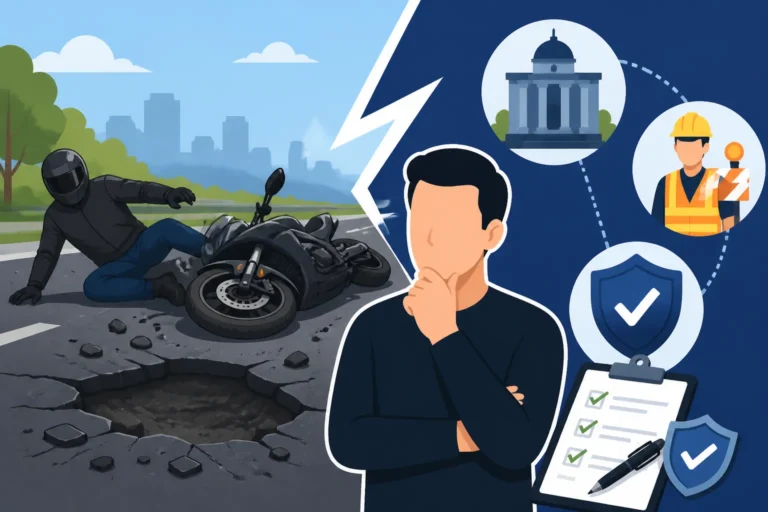
Our roads should be safe for all users, but unfortunately, this isn't always the case. Potholes, crumbling pavement, unexpected gravel or debris, oil spills, malfunctioning traffic signals, or poorly designed intersections can all create dangerous conditions for motorcyclists. Due to their two wheels, motorcycles are particularly vulnerable to road hazards that a car might easily navigate. If an accident is caused by a dangerous road condition, the government entity responsible for maintaining that road (e.g., city, county, state Department of Transportation) could be held partially or fully liable.
However, suing a government entity is notoriously difficult. There are often specific, strict deadlines (sometimes as short as 30 to 180 days) for filing a "notice of claim" against a government agency, and governmental immunity can protect them from certain lawsuits. Proving that the government entity knew or should have known about the hazard and failed to rectify it can also be challenging. Despite these hurdles, if a clear link can be established between a road defect and your accident, it's a potential avenue for recovery.
Defective Motorcycle Parts and Manufacturer Liability
While less common, sometimes a motorcycle accident can be directly attributed to a defective part or a design flaw in the motorcycle itself. This falls under product liability law. If a critical component, such as the brakes, tires, steering, or throttle, fails unexpectedly due to a manufacturing defect or poor design, and this failure leads to an accident, the manufacturer of the motorcycle or the defective part could be held liable.
For example, a sudden tire blow-out due to a manufacturing flaw or a brake failure due to a design defect could cause a rider to lose control and crash. Proving manufacturer liability requires extensive investigation, often involving expert mechanical engineers who can analyze the failed part and determine if it was inherently defective. These cases are complex and usually involve significant resources, but if successful, they can result in substantial compensation.
Third-Party Vendors and Maintenance Issues
Beyond the manufacturer, other third-party entities can sometimes share fault in a motorcycle accident. This often relates to improper maintenance or faulty repairs. For instance, if you had your motorcycle serviced at a local shop like a Harley-Davidson dealership or an independent mechanic, and they performed a negligent repair (e.g., improperly installed brakes, loose wheel nuts, incorrect tire pressure) that subsequently caused an accident, that vendor could be held liable.
Similarly, if a commercial truck sheds debris on the highway due to an unsecured load, and that debris causes a motorcyclist to crash, the trucking company could be held responsible for inadequate load securement. In these situations, proving fault involves tracing the causal link between the third party's negligence and the accident. Detailed records of maintenance, repair receipts, and testimony from mechanics or witnesses can be vital in establishing such a claim.
The Impact of Fault on Your Claim and Compensation
Understanding who is at fault is critical because it directly translates into your ability to get compensation for your injuries and losses. The determination of fault can be the difference between a full recovery and nothing at all.
How Fault Affects Your Settlement
The percentage of fault assigned to each party in a motorcycle accident is the primary determinant of how much compensation you can receive. In states with pure comparative negligence, if you are found 20% at fault for an accident with $100,000 in damages, your settlement would be reduced by 20%, meaning you'd receive $80,000. In modified comparative negligence states with a 51% rule, if you're found 51% at fault, you get nothing.
This makes fighting for every percentage point of fault crucial. The less fault assigned to you, the higher your potential settlement. Insurance adjusters will meticulously comb through every detail of the accident, looking for any possible way to assign a portion of fault to the motorcyclist, simply to reduce their company's payout. Therefore, being prepared to challenge these assertions with strong evidence is essential for maximizing your recovery. For more information, read our guide on How Fault Affects Your Settlement.
Insurance Companies and Blame Assignment
Insurance companies are not on your side, even your own. Their primary goal is to minimize payouts. After a motorcycle accident, both your insurance company and the other driver's insurer will conduct their own investigations to assign blame. They will review police reports, witness statements, medical records, and any photographic or video evidence. They often rely on their own adjusters, and sometimes accident reconstructionists, to come to a conclusion.
It's common for insurance companies to try and leverage common rider stereotypes against you, suggesting you were speeding, weaving, or otherwise acting recklessly, even without clear evidence. They might also try to get you to admit fault, or to give recorded statements that can be twisted against you later. This is why it's so important to be careful what you say to insurance adjusters and to consider consulting with a legal professional before giving any official statements or accepting any initial offers. They often aim for a lowball offer, hoping you'll accept it before fully understanding the extent of your injuries and losses. Check out How Insurance Companies Assign Blame to Riders for more insight.
Fighting Unfair Fault Assignments
It's not uncommon for a police report or an insurance company's initial assessment to assign fault unfairly to a motorcyclist. When this happens, it's not the end of the road. You have the right to challenge these assignments. This process usually involves:
- Gathering stronger evidence: This might mean seeking out additional witnesses, finding surveillance footage, or getting an independent accident reconstruction expert involved.
- Highlighting inconsistencies: Pointing out discrepancies in the other driver's story, witness accounts, or the police report itself.
- Demonstrating the other driver's clear negligence: Emphasizing specific traffic violations or reckless actions of the other driver that unequivocally caused the crash.
- Legal advocacy: A personal injury attorney specializing in motorcycle accidents can be instrumental here. They understand the tactics insurance companies use and can aggressively advocate on your behalf, presenting a compelling case that challenges unfair fault assignments and ensures your side of the story is heard clearly and forcefully.
Fighting an unfair fault assignment is often a battle, but it's a battle worth fighting, especially when significant injuries and damages are at stake. Don't let an initial blame assessment be the final word on your case.
Steps to Take After an Accident to Protect Your Claim
The moments immediately following a motorcycle accident are chaotic, but how you handle them can profoundly impact your ability to prove fault and recover fair compensation. Taking specific, deliberate steps can make all the difference.
Secure the Scene and Seek Medical Attention
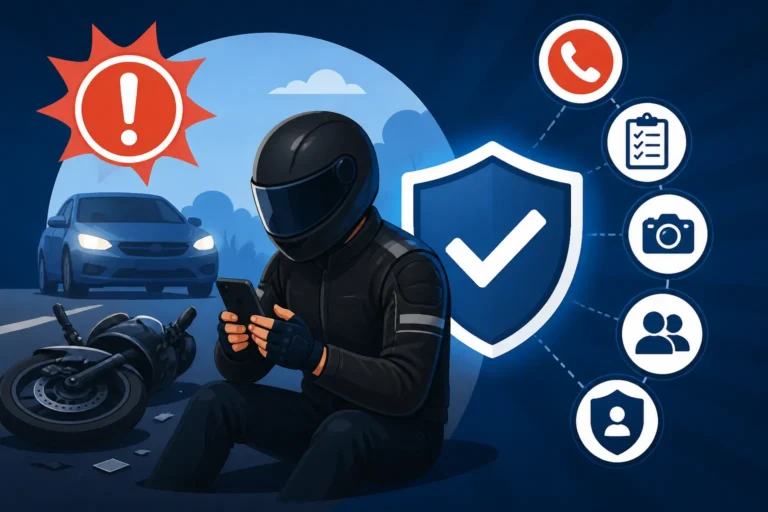
Your absolute first priority after a motorcycle accident is your safety and health. If possible and safe to do so, move yourself and your motorcycle to the side of the road to avoid further collisions. Turn on your hazard lights. If you're physically able, you should also check on anyone else involved in the accident. Even if you feel fine, call 911 immediately to report the accident. It ensures police will respond and an official record will be created.
More critically, seek medical attention right away. Even if your injuries seem minor, adrenaline can mask pain and serious internal injuries might not be immediately apparent. Refusing medical care or delaying a visit to the emergency room or urgent care can be detrimental to your claim later on. Insurance companies love to argue that if you didn't seek immediate treatment, your injuries couldn't have been severe or weren't caused by the accident. Always prioritize your health; your medical records will also become crucial evidence of your injuries. This guide on What to Do Immediately After a Motorcycle Accident offers more details.
Gather Evidence and Information
While you wait for emergency services, if your condition permits, try to gather as much information and evidence as possible from the accident scene. This includes:
- Photos and Videos: Use your phone to take extensive photos and videos. Document the position of all vehicles, damage to your motorcycle and the other vehicle(s), skid marks, road conditions, traffic signs or signals, and any visible injuries you or your passenger sustained. Take pictures from multiple angles and distances.
- Other Driver's Information: Exchange contact details, insurance information, and license plate numbers with all other drivers involved. Do not engage in arguments or admit fault.
- Witness Information: Ask anyone who witnessed the accident for their contact information. Independent witnesses can be vital in corroborating your account.
- Police Information: Get the name and badge number of the responding officer and the police report number.
- Location Details: Note the exact location, including street names, cross streets, and any landmarks.
The more detailed and comprehensive your documentation, the stronger your ability to prove fault will be later. Remember, a picture is worth a thousand words, and video can be undeniable.
Consulting with Legal Professionals
After you've secured medical attention and gathered initial information, one of the most important steps you can take is to consult with a personal injury attorney who specializes in motorcycle accidents. This isn't just about suing someone; it's about protecting your rights and ensuring you receive fair compensation for your injuries and losses. An experienced attorney can:
- Investigate the Accident: They will conduct their own thorough investigation, gathering additional evidence, interviewing witnesses, and potentially hiring accident reconstructionists.
- Deal with Insurance Companies: They will handle all communications with insurance adjusters, preventing you from accidentally saying something that could harm your case. They understand the tactics insurers use and will aggressively negotiate on your behalf.
- Prove Fault and Damages: They know what evidence is needed to prove fault and will work to establish the full extent of your economic (medical bills, lost wages) and non-economic (pain and suffering) damages.
- Navigate the Legal Process: From filing paperwork to negotiating settlements or even going to trial, they will guide you through the complex legal system.
Even if you're unsure if you have a strong case or if the other driver seems friendly, getting a professional opinion early can safeguard your future. Don't wait until the insurance company has already tried to deny or lowball your claim. Seeking legal advice for your Motorcycle Accident Liability: A Complete Guide ensures you're not navigating this difficult journey alone.
Disclaimer
The information provided in this guide is intended for general informational purposes only and does not constitute legal advice. Motorcycle accident laws vary significantly by state, and the specific facts of your case will determine your rights and potential outcomes. It is highly recommended to consult with a qualified legal professional for advice tailored to your individual situation.