Who Is at Fault in a Dooring Accidents Motorcycle Accident
Riding a motorcycle comes with an undeniable sense of freedom, but it also carries unique risks, and few are as sudden and terrifying as a dooring accident. One minute you're cruising along, minding your own business, and the next, a car door swings open directly into your path, leaving you no time to react. This guide will walk you through the complexities of determining fault in these frightening scenarios, helping you understand your rights and how to protect yourself after such a crash.
Understanding Dooring Accidents and Their Dangers
Dooring accidents are a cyclist and motorcyclist's worst nightmare. They happen in a blink, often with devastating consequences, and they highlight a critical lack of awareness from many vehicle occupants sharing our roads.
What Exactly Is a Dooring Accident?
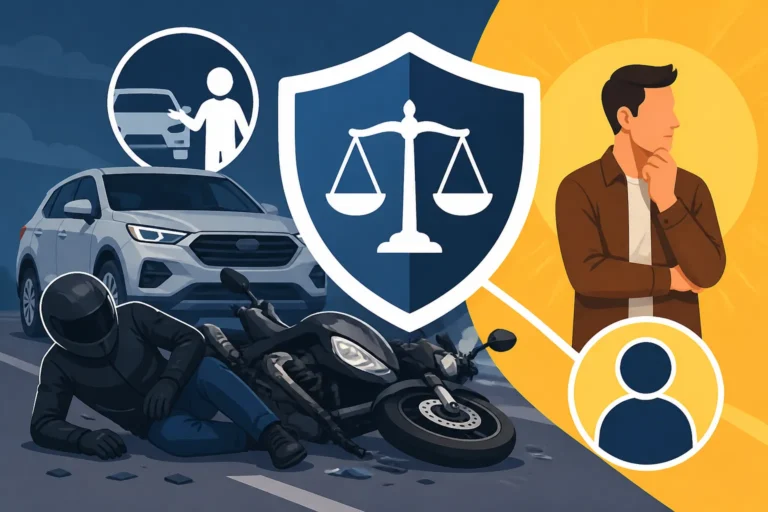
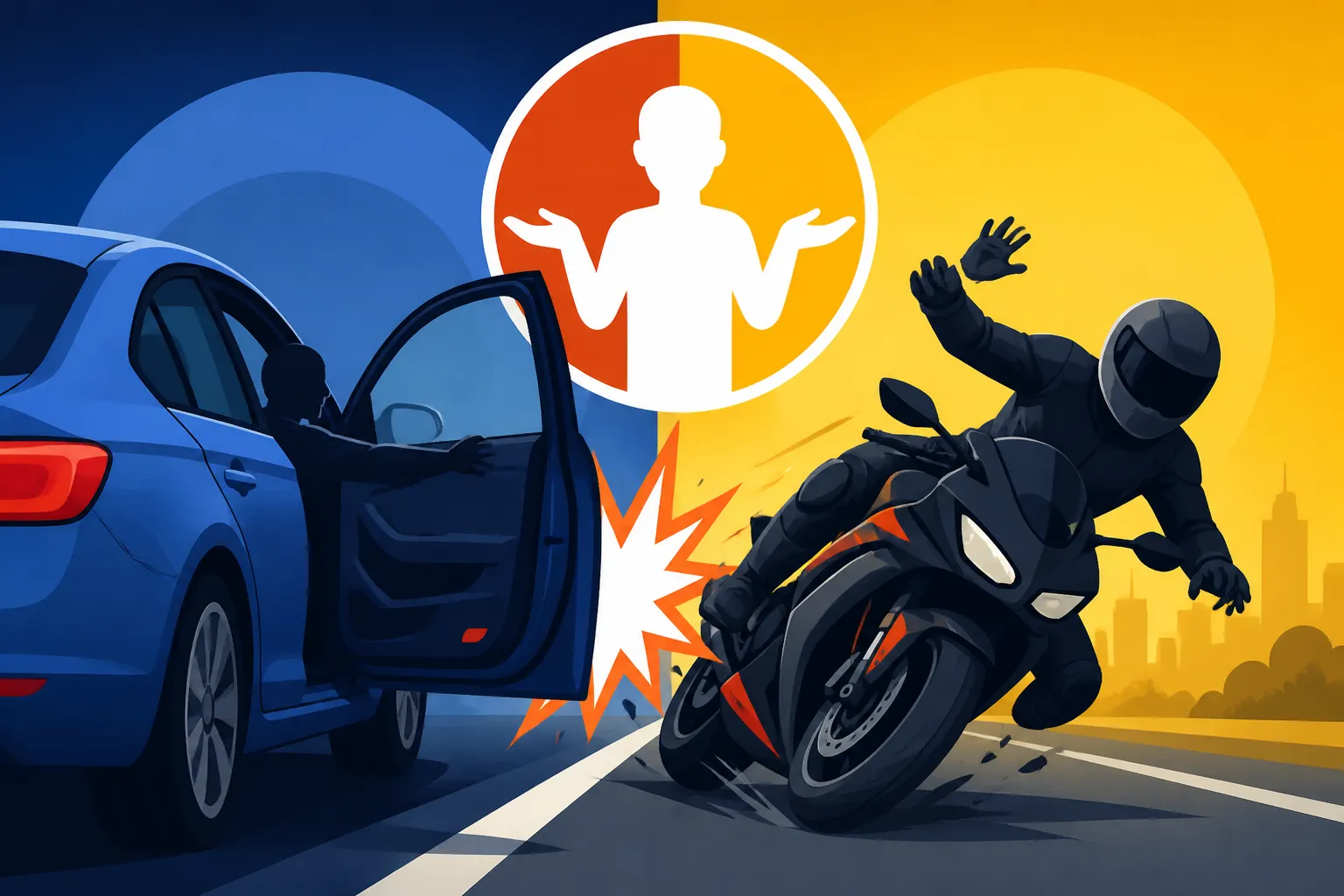
At its core, a dooring accident is a collision that occurs when a driver or passenger in a parked or stopped vehicle suddenly opens their door into the path of an oncoming motorcycle, bicycle, or even a pedestrian. Imagine you're riding your motorcycle down a busy street in downtown Los Angeles, carefully navigating between traffic lanes and parked cars, when a passenger in a sedan suddenly flings open their door to get out without so much as a glance in their side mirror. That's a dooring accident.
These incidents are particularly insidious for motorcyclists because of several factors. First, the suddenness of a door opening leaves virtually no reaction time. Unlike a car that might swerve or brake, a motorcyclist has limited options when a rigid object like a car door appears out of nowhere. Second, the exposed nature of riding means there's no protective metal cage around you. The impact often throws the rider from their bike, leading to a secondary impact with the road, other vehicles, or stationary objects. These scenarios are unfortunately common, especially in urban areas with high concentrations of parallel parking and frequent passenger drop-offs, like around busy shopping districts or restaurant rows.
Why Dooring Accidents Are So Devastating for Riders
The statistics bear out the severe impact of dooring accidents on motorcyclists. Because the rider is so exposed, these crashes frequently lead to catastrophic injuries. A common injury is head trauma, even for riders who wear a helmet. While a helmet significantly reduces the risk of fatal head injuries, a traumatic brain injury (TBI) can still occur, leading to long-term cognitive and physical challenges. This is why understanding Motorcycle Helmet Laws by State is so crucial, not just for compliance but for personal protection.
Beyond head injuries, riders often suffer broken bones, particularly to the arms, legs, and collarbone, as they brace for impact or are thrown from their bike. Road rash, while sometimes appearing superficial, can range from mild abrasions to severe, full-thickness skin loss that requires extensive medical treatment and even skin grafts. Spinal cord injuries are also a terrifying possibility, potentially leading to paralysis or chronic pain. The physical and emotional toll is immense. Riders often experience PTSD, anxiety, and a significant disruption to their daily lives and ability to work. This underscores why proper Motorcycle Safety Gear and Legal Protection is invaluable, acting as your first line of defense against the harsh realities of the road.
Determining Fault in a Dooring Accident
One of the most pressing questions after any motorcycle accident is, "Who is at fault?" In the context of a dooring accident, the answer is often quite clear, but it's crucial to understand the nuances.
The Driver's Primary Responsibility
In the vast majority of dooring accidents, the driver or passenger who opened the vehicle door is primarily at fault. This isn't just common sense; it's rooted in traffic laws across the United States. Most states have laws, often referred to as "dooring laws" or "door opening laws," that explicitly prohibit opening a vehicle door until it is reasonably safe to do so and can be done without interfering with the movement of other traffic.
For example, California Vehicle Code Section 22517 states: "No person shall open the door of a vehicle on the side available to moving traffic unless it is reasonably safe to do so and can be done without interfering with the movement of other traffic, nor shall any person leave a door open on the side of a vehicle available to moving traffic for a period longer than necessary to load or unload passengers." This kind of statute places a clear duty of care on vehicle occupants. They are expected to check their mirrors, look over their shoulder, and ensure the path is clear before opening a door. Their failure to do so is generally considered negligence, making them liable for any resulting accident and injuries. This falls squarely under the umbrella of Who Is at Fault in a Motorcycle Accident and how that determination is made.
When the Motorcycle Rider Might Share Some Fault
While the car occupant is usually the primary culprit, it's a harsh reality that in some cases, the motorcycle rider might be assigned a percentage of fault. This doesn't mean the car occupant is absolved, but rather that states operating under comparative negligence laws might reduce the rider's compensation based on their degree of responsibility. Understanding Comparative Negligence in Motorcycle Accidents is vital here.
Factors that could lead to a rider sharing some fault include:
- Speeding or Reckless Riding: If the motorcyclist was exceeding the speed limit or engaging in other reckless behavior, an argument might be made that they contributed to the crash by not being able to stop or react in time.
- Lack of Attention: While less common for the full impact of a dooring accident, if it can be proven that the rider was distracted (e.g., using a phone, not paying attention to the road), a small percentage of fault could be assigned.
- Improper Lane Positioning: Riding too close to parked cars, especially on a street where dooring is common, can sometimes be cited. However, this is often a weaker argument against a motorcyclist, as drivers still have the primary duty to ensure their door opens safely.
It's important to remember that even if you are found partially at fault, you may still be able to recover damages, though your overall settlement might be reduced. This concept is explored in more detail in articles like Shared Fault in Motorcycle Accidents and How Comparative Negligence Reduces Your Payout.
How Insurance Companies Assign Blame
When a dooring accident occurs, insurance companies for both parties will launch an investigation to determine fault. This process is crucial because the fault determination directly impacts who pays for damages and injuries. The investigation typically involves:
- Police Reports: The accident report filed by responding officers provides an initial assessment of the scene, witness statements, and any citations issued. While not the final word on fault, it's a powerful piece of evidence. This relates directly to How Police Reports Establish Fault.
- Witness Statements: Independent witnesses who saw the accident unfold can provide invaluable unbiased accounts. These individuals can often clarify who opened the door and the actions of the motorcyclist. Learn more about How Witnesses Affect Motorcycle Fault.
- Physical Evidence: This includes photos of vehicle damage, road marks, the position of the vehicles after impact, and even debris from the collision.
- Traffic Laws: The specific "dooring laws" in the state or municipality where the accident occurred will be a primary reference.
- Rider Bias: Unfortunately, motorcyclists sometimes face an unfair bias from insurance adjusters or even juries who might stereotype riders as reckless. This makes it even more critical to have strong evidence. The topic of How Insurance Companies Assign Blame to Riders delves into these challenges.
The insurance company will review all available information to assign a percentage of fault to each party involved. This percentage will then be used to calculate the amount of compensation payable.
Evidence Needed to Prove Fault
Proving fault in a dooring accident is paramount to securing the compensation you deserve. The quality and thoroughness of the evidence you collect can make or break your claim.
Crucial Evidence from the Scene
The moments immediately following an accident are often chaotic and stressful, but they are also a critical window for gathering evidence.
- The Police Report: As mentioned, this document is often the foundation of any accident claim. Ensure officers are called to the scene, even if injuries seem minor at first. The report will document key details like the date, time, location, involved parties, and often, the officer's initial assessment of what happened. While you can't control what the officer writes, make sure your account of events is clearly stated to them.
- Photos and Videos: In today's world, almost everyone has a smartphone. Use it! Take pictures from multiple angles of:
- The opened car door and its damage.
- The damage to your motorcycle.
- Your injuries (road rash, broken gear).
- The position of both vehicles after the impact.
- Road conditions, skid marks, and any debris.
- The general area and traffic signs.
These visual records are often undeniable proof of what occurred. Check out Photos to Take to Prove Motorcycle Fault for more detailed guidance.
- Witness Information: If anyone saw the accident, get their contact information (name, phone number, email). Their unbiased testimony can be incredibly powerful in countering any claims that you were at fault.
Post-Accident Documentation
The evidence-gathering doesn't stop at the scene. What you do in the days and weeks after the accident is just as important.
- Medical Records: Seek immediate medical attention, even if you feel fine. Some injuries, especially concussions or internal injuries, might not manifest symptoms for hours or even days. Your medical records will create an undeniable link between the accident and your injuries, documenting diagnoses, treatments, and prognosis. A gap in treatment can be used by insurance companies to argue your injuries weren't severe or weren't caused by the crash.
- Motorcycle Damage Estimates: Obtain detailed repair estimates or a total loss assessment from a reputable motorcycle repair shop. This quantifies the property damage you've sustained.
- Traffic Camera or Surveillance Footage: Many urban areas, including storefronts, traffic lights, and public buildings, have surveillance cameras. If you or someone you know can check for footage from nearby businesses shortly after the accident, it could provide irrefutable proof of how the door was opened. This type of evidence, like How Dashcam Footage Proves Fault, can be a game-changer.
Legal Considerations and Your Claim
Navigating the legal aftermath of a dooring accident can feel like riding through a maze, but understanding the rules of the road is key to protecting your rights and securing a fair settlement.
State-Specific Laws on Dooring
While the principle of "look before you open" is nearly universal, the specific statutes and how they're enforced can vary by state and even by municipality. Most states categorize improper door opening as a traffic violation, often punishable by a fine. For instance, in Washington state, RCW 46.61.620 echoes California's law, prohibiting opening a door into the path of moving traffic. In cities like New York City, dooring is a recognized problem, and laws are specifically aimed at preventing it.
The consistency across states regarding the driver's responsibility for door-opening acts as a strong legal basis for your claim. This makes it generally easier to prove the other driver's liability in dooring cases compared to some other types of motorcycle accidents.
Here's a general overview of dooring laws and their implications:
| Aspect | Typical Legal Principle (Most States) | Enforcement & Impact |
|---|---|---|
| Primary Duty | Vehicle occupant must not open door into moving traffic. | Negligence per se (fault assumed if law violated). |
| Statutory Basis | Often found in Vehicle Code/Traffic Laws (e.g., California VC 22517). | Provides clear legal grounds for liability. |
| Fines/Penalties | Usually a traffic infraction with associated fines. | Indicates legal wrongdoing by the door-opener. |
| Rider's Responsibility | Riders generally expected to maintain safe speed and control. | May lead to comparative fault in some jurisdictions. |
The Impact of Fault on Your Compensation
The determination of fault directly dictates the amount of compensation you can recover. If the other driver is found 100% at fault, you would typically be eligible for 100% of your damages. However, if you are assigned a percentage of fault, your total settlement will be reduced by that percentage in states that follow comparative negligence. For example, if your damages are assessed at $100,000, but you are found 20% at fault, you would only be able to recover $80,000.
Your compensation can be broadly divided into two categories:
- Economic Damages: These are quantifiable financial losses. They include current and future medical bills (hospital stays, surgeries, physical therapy, medication), lost wages (both current income and future earning capacity), property damage (motorcycle repair or replacement), and other out-of-pocket expenses related to the accident.
- Non-Economic Damages: These are subjective, non-monetary losses. The most common is pain and suffering, which accounts for physical pain, emotional distress, mental anguish, loss of enjoyment of life, and inconvenience caused by your injuries.
Understanding Economic vs Non-Economic Damages Explained can help you categorize your losses. Every element of your accident, from the severity of your injuries to the cost of your damaged gear, will contribute to your claim's value. This is why it’s so important to meticulously document everything and understand What Affects Your Motorcycle Accident Payout.
No rider wants to experience a dooring accident, but if you do, knowing these details can make a significant difference in the challenging journey toward recovery and justice.
Disclaimer
Please remember that this information is for educational and informational purposes only and not legal advice. Every accident is unique, and the laws governing motorcycle accidents can vary significantly by jurisdiction. It is always recommended to consult with a qualified legal professional to discuss the specifics of your situation.