Motorcycle Safety Gear and Legal Protection
Riding a motorcycle offers unparalleled freedom and exhilaration, but let's be honest, it also comes with inherent risks. One of the biggest fears for any rider isn't just the thought of a crash itself, but what happens after – dealing with injuries, insurance companies, and potentially a complex legal battle. Many riders think of safety gear purely in terms of physical protection, and while that's absolutely critical, they often overlook its immense value as a legal shield. This guide is here to shed light on how your motorcycle safety gear goes far beyond preventing scrapes and bruises; it’s a powerful asset in protecting your legal rights and claim after an accident.
Beyond Physical Protection: The Legal Shield of Safety Gear
When you swing a leg over your bike, strapping on your helmet and zipping up your jacket feels like second nature. It’s about keeping yourself safe, minimizing impact, and reducing the severity of potential injuries. But in the aftermath of an accident, that very gear takes on a new, equally vital role: it becomes a silent witness, a piece of evidence, and a testament to your responsibility as a rider.
The Core Purpose of Motorcycle Gear
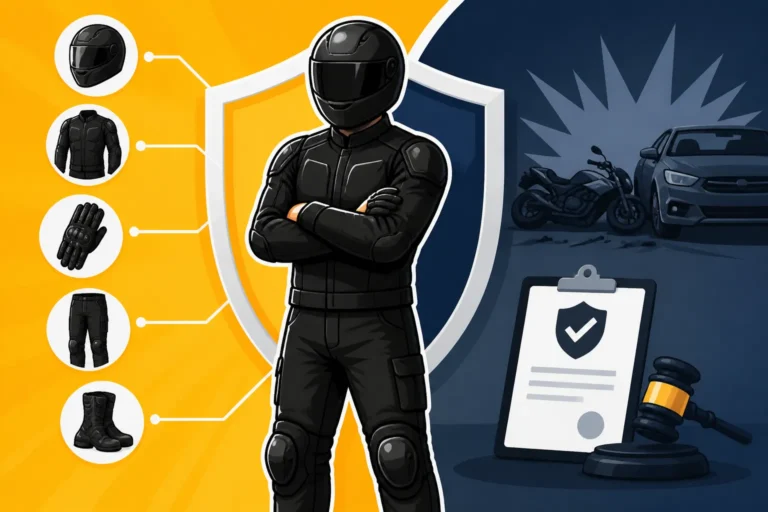
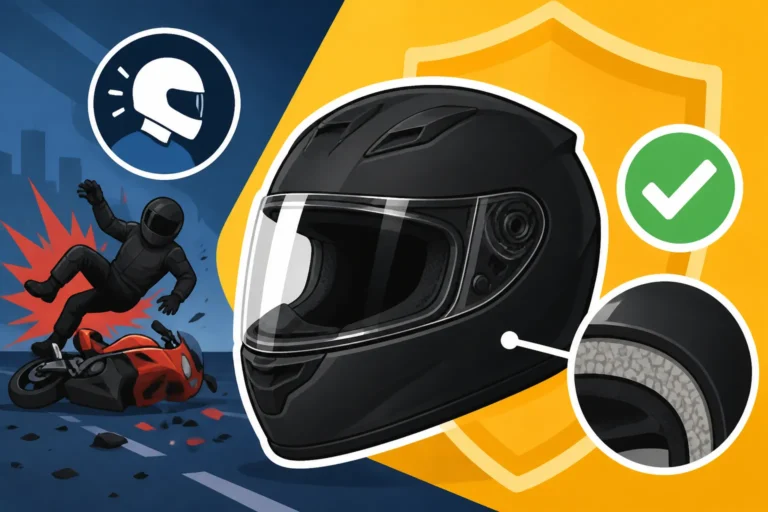
Let's start with the obvious: motorcycle gear is designed to protect your fragile body against the brutal realities of asphalt and impact. A quality helmet, for instance, is your first line of defense against traumatic brain injuries, which can be devastating and life-altering. Without a helmet, even a low-speed fall can lead to severe head trauma. Jackets, made from abrasion-resistant materials like leather or specialized textiles, are engineered to protect your skin, internal organs, and joints from road rash and blunt force. Think about sturdy riding pants, reinforced with Kevlar or CE-rated armor, saving your hips and knees from catastrophic fractures. And then there are gloves and boots, often overlooked, but crucial for protecting your hands and feet – extremities often first to hit the ground. This physical protection is paramount; it directly impacts your survival and the extent of your injuries.
Shifting the Narrative in Accident Claims
Unfortunately, motorcycle riders often face an unfair bias. Insurance companies, and even sometimes juries, might harbor preconceived notions about bikers being reckless thrill-seekers. This "reckless biker" stereotype can subtly, or sometimes overtly, influence how your accident claim is perceived and valued. This is where your safety gear steps in as a powerful counter-narrative. When you present yourself as a rider who took every reasonable precaution – wearing a DOT-approved helmet, a full riding suit, sturdy boots, and gloves – you immediately challenge that stereotype. You demonstrate due diligence and a commitment to your own safety. This isn't just about looking good; it's about proving you were a responsible road user. This show of responsibility can make a significant difference in how an adjuster or jury views your case, potentially swaying them towards a more favorable outcome for you. It helps establish that you were not negligent in your own safety, which can be critical when determining fault and damages.
Understanding Motorcycle Helmet Laws and Their Impact
Helmets are perhaps the most talked-about piece of motorcycle safety gear, and for good reason. Not only do they offer critical protection, but helmet laws vary significantly from state to state, directly impacting your legal position after a crash.
Universal vs. Partial Helmet Laws Explained
It's a patchwork out there, folks. Some states enforce what's called a "universal helmet law," meaning every single rider and passenger, regardless of age or experience, must wear a DOT-compliant helmet. States like California, Georgia, Nebraska, Oregon, and Washington are examples of universal helmet law states. The reasoning is clear: reduce fatalities and severe head injuries across the board.
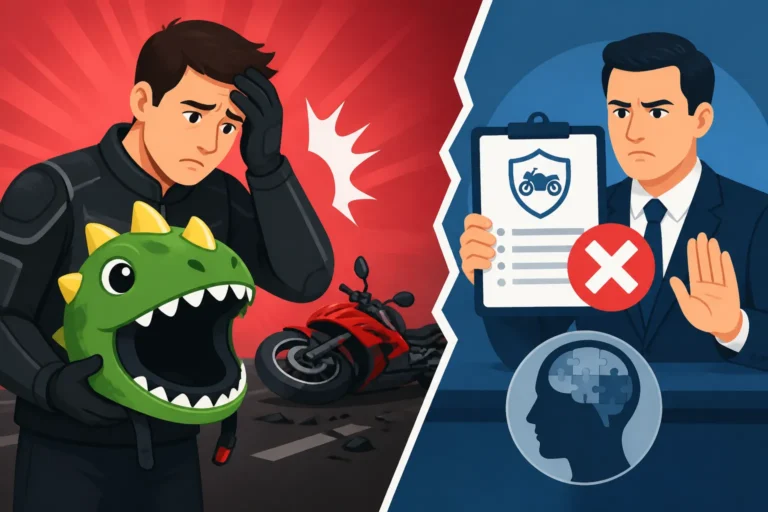
Then there are "partial helmet laws." These are often more nuanced and can be a real trap if you're not paying close attention. In states like Florida, Texas, and Pennsylvania, for instance, adult riders (typically over 21) might be exempt from wearing a helmet if they carry a certain amount of medical insurance, often $10,000 or more, specifically for motorcycle accident injuries. This doesn't mean you shouldn't wear a helmet, it just means you can legally ride without one under specific conditions. Other partial laws might require helmets only for riders under a certain age, say 18 or 21. And finally, a handful of states, such as Illinois, Iowa, and New Hampshire, have no helmet laws at all for adult riders. This intricate web of regulations means that what's perfectly legal in one state could be a violation that hurts your claim in another. Always know the local laws where you’re riding, especially if you're traveling across state lines. Even if it's legal not to wear one, consider the risks both physically and legally. Furthermore, it's crucial to understand what constitutes a DOT-compliant helmet. These are tested and certified to meet specific safety standards. Avoid "novelty helmets," which often lack true protective qualities and can severely undermine your claim.
The "Helmet Defense" and How Insurers Use It
Even if you weren't riding in a state with a universal helmet law, or if your injuries aren't head-related, insurance companies love to bring up "the helmet defense." This is a tactic where the opposing side argues that even if you weren't at fault for the accident itself, your failure to wear a helmet (or a DOT-compliant one) contributed to the severity of your injuries. They might argue that had you worn a helmet, your neck injury, for example, would have been less severe. It's a way for them to reduce the amount they have to pay out by shifting some blame for your injuries back to you, even if it feels completely illogical. This often comes into play under principles of comparative negligence, where your percentage of fault can be increased, thereby reducing your overall settlement. For instance, in states like Texas that use a modified comparative negligence rule, if you're found more than 50% at fault, you might recover nothing. Even a 10% reduction due to the "helmet defense" can significantly impact your payout.
Proving Compliance: What You Need to Know
If you were wearing a helmet, proving it is paramount. The first step is simple: do not discard your damaged helmet after a crash. It is crucial evidence. Take clear photographs of your helmet immediately after the accident, showing any damage and confirming it's on your head (if applicable) or near the scene. This visual documentation is incredibly powerful. The police report is another vital piece of evidence; officers are usually trained to note if a helmet was worn and if it was DOT-approved. Ensure the police report accurately reflects that you were wearing a helmet. If it doesn't, or if it's incorrect, you may need to take steps to correct a wrong police report. Witness statements can also corroborate your helmet use. If there were bystanders who saw you wearing your helmet, their testimony can be invaluable. This diligent documentation can effectively counter any "helmet defense" arguments an insurance company might try to raise.
The Crucial Role of Protective Apparel in Your Claim
Beyond helmets, the rest of your riding gear forms a critical protective barrier, and its presence—or absence—can significantly influence the trajectory of your legal claim.
Jackets, Pants, and Gloves: More Than Just Fashion
Think about what happens when you go down at speed. Your body slides, grinds, and tumbles across abrasive asphalt. Your jacket is your armor against this brutal encounter. High-quality motorcycle jackets, often made from thick leather or advanced abrasion-resistant textiles like Cordura or Dynema, are specifically designed to sacrifice themselves to protect your skin and underlying tissues. Brands like Alpinestars and Dainese are renowned for their protective features, often incorporating CE-rated armor in critical impact zones like shoulders and elbows. If you're wearing a textile jacket from, say, Cycle Gear, that robust material is what keeps you from suffering severe road rash injuries. Without it, you're looking at extensive skin damage, deep tissue wounds, and potentially the need for painful skin grafts. The same goes for riding pants. Regular jeans offer virtually no protection against abrasion. Reinforced riding jeans, often lined with Kevlar, or full riding pants with hip and knee armor, are designed to prevent catastrophic injuries to your lower body. My friends and I always make sure our gear is up to snuff before any long trip, remembering that one slide could change everything.
Gloves, too, are often underestimated. Our natural instinct is to put our hands out to break a fall. Without sturdy riding gloves, your hands will be shredded, leading to painful fractures, nerve damage, and severe road rash. A good pair of gauntlet-style gloves can literally save your hands from permanent disfigurement or loss of function, protecting those delicate bones and tissues. When you look at the medical bills for treating severe road rash on hands or the long-term therapy for broken wrists, the cost of proper gloves pales in comparison.
Boots and Eye Protection: Often Overlooked, Always Important
While helmets, jackets, pants, and gloves get a lot of attention, don't forget the importance of proper boots and eye protection. Imagine your ankle getting caught under your bike, or your foot dragging on the pavement at speed. Regular sneakers or low-cut shoes offer almost no protection. Sturdy, over-the-ankle motorcycle boots are designed with reinforced soles, ankle support, and often impact protection to prevent crushing injuries, fractures, and severe sprains. They keep your feet secure on the pegs and protect them in a slide. A broken ankle can put you out of commission for months, impacting your ability to work and enjoy life.
And eye protection? This is absolutely non-negotiable. Whether it's a full-face helmet visor, goggles, or protective eyewear, you need to shield your eyes from wind, dust, debris, insects, and frankly, anything else that might fly into your face at speed. A momentary loss of vision due to a bug hitting your eye or dust swirling up can lead to a catastrophic loss of control and an accident. In a legal context, if it can be argued that your lack of proper eye protection contributed to your accident by impairing your vision, you could face arguments of shared fault in your motorcycle accident. This means even if the other driver was primarily negligent, some blame could be shifted to you, reducing your settlement amount.
Quantifying the Protection: How Gear Mitigates Damages
Wearing comprehensive safety gear isn't just about reducing injury; it's also about reducing the damages associated with those injuries. When you're injured in an accident, one of the key factors in calculating your settlement is the severity of your injuries and the associated medical costs, lost wages, and pain and suffering. If you're wearing full gear, and it prevents a severe head injury, turning what could have been a traumatic brain injury into a concussion, you've effectively "mitigated" those damages. Your medical records will reflect less severe injuries, fewer days in the hospital, and a quicker recovery time, all thanks to your gear. This evidence can directly counter insurance company attempts to argue that your own negligence exacerbated your injuries.
Furthermore, the damage to your gear itself can serve as powerful evidence. A shredded jacket or a gouged helmet isn't just ruined apparel; it's a testament to the forces involved in the crash. It can corroborate your account of the accident's severity and impact points, supporting claims for vehicle damage and personal injury. It essentially acts as a tangible, physical record of the incident. It also boosts your credibility. When an insurance adjuster or jury sees that you went to the trouble of wearing all available protective gear, they are more likely to view you as a responsible individual and a credible witness, making them more receptive to your claims for compensation.
Navigating Comparative Negligence with Safety Gear
The concept of comparative negligence is incredibly important in motorcycle accident claims, especially regarding how your safety gear can influence the outcome. This legal principle allows for damages to be apportioned based on each party's degree of fault.
How Gear Demonstrates Due Care
In many states, if you are found to be partially at fault for an accident, your total compensation can be reduced by your percentage of fault. This is known as comparative negligence. For example, in a pure comparative negligence state like California, if you are 20% at fault and the other driver is 80% at fault, you would still recover 80% of your total damages. In modified comparative negligence states, like Texas or Florida, if you are found to be 51% or more at fault, you may recover nothing at all. This makes demonstrating your own responsible behavior absolutely crucial.
Wearing full, appropriate safety gear is one of the clearest ways to show you exercised "due care" for your own safety. It illustrates that you weren't cavalier or reckless. You took reasonable steps to protect yourself, and this proactive approach can directly impact how a judge or jury assigns fault. If the other side tries to argue that you contributed to your injuries by not wearing gear, your full gear ensemble becomes a powerful rebuttal. It proves you were not negligent in preparing for the inherent risks of riding. This can significantly reduce the percentage of fault attributed to you for your injuries, thereby preserving your claim's value and increasing the amount of your motorcycle accident settlement.
Mitigating Damages Arguments
Beyond simply showing due care, safety gear plays a critical role in addressing the "failure to mitigate damages" argument. This legal defense asserts that even if the other party caused the accident, you, as the injured party, had a responsibility to take reasonable steps to minimize your injuries and subsequent damages. If you weren't wearing a helmet and suffered a severe head injury, the opposing counsel might argue that your failure to wear a helmet constituted a failure to mitigate, and therefore, a portion of your head injury damages should not be recoverable.
However, if you were wearing a DOT-approved helmet, a protective jacket, gloves, and boots, you have a strong defense against such claims. You can demonstrate that you took all reasonable precautions, and therefore, you did mitigate potential damages. Your gear effectively prevents the insurance company from arguing that your injuries would have been less severe had you simply been more responsible. For example, if you sustained severe road rash but were wearing a quality leather jacket and riding pants, your lawyer can present evidence that without that gear, the injuries would have been far more extensive, potentially involving deeper tissue damage, infections, and longer recovery times. This foresight in wearing proper gear strengthens your position and makes it harder for the defense to diminish the value of your claim.
Documentation and Evidence: Making Your Gear Work for You
After the shock of an accident, your immediate focus is on your well-being. But as soon as you're able, thinking about documentation, especially concerning your safety gear, can make a monumental difference in your legal case.
Preserving Physical Evidence of Your Gear
This is a step many riders unfortunately overlook, and it can be a costly mistake. Your damaged gear is tangible evidence of the accident's force and the protection it provided. Do not throw away your helmet, jacket, gloves, or boots, no matter how mangled or useless they seem. Each scuff, tear, and crack tells a story.
Think about it: A cracked helmet with a visible impact point directly shows where your head took a hit and how the helmet absorbed that energy, potentially saving your life or preventing a more severe injury. A torn riding jacket, with specific areas of abrasion, visually demonstrates the slide distance and impact points on your body. These aren't just damaged items; they are forensic exhibits. Take numerous photos of your gear from all angles, clearly showing the brand, model, and especially any damage. Keep the gear in a safe place, ideally untouched, as soon as possible after the accident. You might consider using a large plastic bin or box, noting the date and location where it was stored. This physical evidence can be crucial for an accident reconstruction expert or for demonstrating the extent of the impact to an insurance adjuster or jury.
Collecting Witness Statements and Police Reports
The moment police arrive at the scene, they are creating a record. This record, the official police report, often includes details about whether a helmet was worn. It's not uncommon for police reports to explicitly state, "Rider was wearing a DOT-compliant helmet" or "Rider was not wearing a helmet." This detail can immediately establish or challenge a crucial piece of evidence in your favor. If you were wearing your gear, double-check the police report for accuracy. If it's missing or incorrect, it's vital to know how to correct a wrong police report, as this document carries significant weight.
Beyond official reports, gathering witness statements is equally important. Bystanders or other drivers might have seen you moments before or after the crash. If they can confirm you were fully geared up, their independent testimony can add powerful credibility to your claim. Imagine a witness stating, "He was wearing a full-face helmet and a really bright jacket – I saw him coming." This not only helps with your gear defense but also with establishing visibility and reducing the likelihood of the "I didn't see the motorcycle" defense often employed by negligent drivers. Such statements provide an unbiased third-party account that can be incredibly persuasive.
Medical Records and Expert Testimony
Your medical records are the backbone of any personal injury claim. They detail your injuries, treatments, prognoses, and the long-term impact on your health. When you were wearing protective gear, your medical records can, in many cases, indirectly highlight the effectiveness of that gear. For example, if you suffered severe road rash but avoided broken bones where armor was present, your doctor might note how the gear likely prevented more catastrophic injuries. This medical opinion can be a powerful piece of evidence.
In more complex cases, especially those involving significant injuries where liability or the extent of damages is heavily disputed, an accident reconstruction expert might be brought in. These professionals analyze everything from vehicle damage and skid marks to, yes, even the condition of your safety gear. They can use the damage patterns on your helmet or jacket to determine impact forces, trajectories, and how well the gear performed. Their expert testimony can provide scientific validation for your claims, directly linking the protective qualities of your gear to the mitigation of your injuries. This blend of medical documentation and expert analysis makes it exceedingly difficult for insurance companies to deny the value of your claim or argue against your responsible conduct.
Common Pitfalls and How to Avoid Them
Even with the best intentions, riders can sometimes make choices or statements that unintentionally undermine their legal standing after a crash. Being aware of these common pitfalls can save you a lot of grief.
The "Novelty Helmet" Trap
This is a big one. Many riders, for various reasons, opt for what are known as "novelty helmets." These often look cool or minimalist, but they are not certified by the Department of Transportation (DOT). This means they haven't undergone the rigorous testing required to meet federal safety standards. While they might offer some basic protection, it's usually minimal and nowhere near what a DOT-compliant helmet provides.
The legal ramifications are severe. If you're in an accident and wearing a novelty helmet, even if you're in a state with a partial helmet law, the insurance company will almost certainly argue that you were essentially riding without a helmet. They'll claim that because your helmet wasn't DOT-approved, it offered insufficient protection, and therefore, your head injuries are partially your own fault. This immediately weakens your position and gives them leverage to reduce your settlement. It essentially opens the door wide for "the helmet defense" and can lead to a significant reduction in your compensation for any head or even neck injuries. Always check for the DOT sticker on the back of your helmet and ensure it's legitimate. When you're buying gear at a place like Cycle Gear, make sure you're looking for helmets with proper safety certifications.
Gaps in Gear and Inconsistent Use
We've all heard the excuse, or perhaps even used it: "Oh, it's just a quick run to the corner store, I don't need my full gear." Or "It's too hot for my riding jacket." This inconsistent use of safety gear can be a critical vulnerability if you get into an accident. While you might feel fine riding without your riding boots for a short trip, if a crash happens, and you suffer a broken ankle or foot, the opposing counsel will jump on that. They will argue that your failure to wear appropriate protective gear, even for a short distance, directly contributed to the severity of your injuries.
Consistency is key. The "all the gear, all the time" mantra isn't just a safety recommendation; it's a legal strategy. By consistently wearing your full array of protective gear – helmet, jacket, gloves, pants, and boots – you eliminate any opportunity for the defense to claim you were negligent in your own safety. This leaves no room for doubt about your responsible behavior, making it much harder for them to reduce your payout based on a "failure to mitigate damages" argument.
Statements to Avoid After a Crash
In the immediate aftermath of a motorcycle accident, adrenaline is pumping, you might be in shock, and your judgment could be impaired. It's a chaotic scene, and it's easy to say something you'll regret. The absolute golden rule here is: never admit fault at the scene. Even a seemingly innocuous "I didn't see them" or "I should have been more careful" can be twisted and used against you by insurance companies. Remember, you might not have all the facts, and fault can be complex.
Stick to the facts, exchange necessary information, and provide minimal details to the police. Do not speculate, apologize, or make any statements that could be interpreted as accepting responsibility for the crash. Even if you think you might have been partially to blame, keep it to yourself. Let the investigation determine fault. Insurance adjusters are trained to extract admissions of fault, and they will use anything you say against you to reduce their payout. "Why You Should Never Admit Fault at the Scene" is a lesson learned the hard way by many. Focus on your health, gather basic contact info, and then contact a legal professional who can guide you on what to say and what not to say.
Enhancing Your Legal Position with Comprehensive Gear Choices
Choosing your motorcycle gear is more than just about looking good or feeling comfortable; it’s a strategic decision that directly impacts your safety and, should the unthinkable happen, your ability to recover damages in a legal claim.
Investing in Quality Protection
The adage "you get what you pay for" holds particularly true for motorcycle safety gear. While budget-friendly options exist, investing in high-quality, certified gear from reputable manufacturers offers superior protection. For example, helmets with features like Multi-directional Impact Protection System (MIPS) or advanced composite shells provide enhanced safety against rotational forces and multiple impacts. Premium jackets and pants from brands like Klim or Rev'it often feature higher-grade abrasion-resistant materials and more robust CE-rated armor in critical zones (shoulders, elbows, back, hips, knees). These materials are tested to withstand greater forces and longer slides, meaning a better chance of walking away with minor injuries instead of severe ones.
When you invest in quality gear, you're not just buying a product; you're buying an extra layer of protection, both for your body and your legal case. Showing that you prioritized your safety by choosing the best possible equipment demonstrates an exceptional level of due care. This commitment to safety can be a powerful factor in arguments related to comparative negligence or mitigation of damages, reinforcing your position as a responsible rider. Think of it as an insurance policy that works even before you need a lawyer.
Beyond the Basics: Airbags and Impact Protectors
For riders seeking the ultimate in protection and a virtually unassailable legal position regarding personal safety, advanced gear technology has come a long way. Motorcycle airbag vests or suits are a revolutionary innovation that provides instantaneous, inflatable protection to vital areas like the spine, chest, and collarbones upon detecting an impact or sudden loss of control. Brands like Helite and Dainese offer these cutting-edge systems, which can deploy in milliseconds, significantly reducing the severity of injuries that often lead to long-term disability or fatality.
Wearing such advanced safety gear not only drastically improves your chances of avoiding catastrophic injuries but also serves as an extraordinary testament to your commitment to safety. In the unfortunate event of a crash, presenting evidence that you were wearing an airbag system makes it incredibly difficult for opposing counsel or insurance adjusters to argue that you failed to take reasonable precautions or that your injuries were exacerbated by your own negligence. This level of proactive safety demonstrates an almost unparalleled commitment to mitigating risks and damages, providing a very strong foundation for your legal claim and potentially influencing how much your case settles for. It paints a picture of a rider who went above and beyond, leaving no room for doubt about their responsible actions.
Motorcycle Safety Gear: Legal Benefits Summary
To help clarify the various ways your gear provides legal protection, here’s a quick summary:
| Type of Gear | Primary Physical Protection | Key Legal Benefit | How It Helps Your Claim |
|---|---|---|---|
| Helmet | Head, Brain, Face | Compliance with state laws, defense against "Helmet Defense" | Avoids reduction in head injury compensation, demonstrates due care |
| Jacket | Torso, Arms, Skin, Joints | Prevents severe road rash, blunt trauma, demonstrates responsibility | Mitigates "failure to mitigate damages" arguments, reduces medical costs |
| Pants | Legs, Hips, Knees, Skin | Prevents severe road rash, fractures, demonstrates responsibility | Reduces injury severity, strengthens argument for full compensation |
| Gloves | Hands, Wrists | Prevents road rash, fractures, nerve damage | Avoids claims of self-inflicted hand injuries, supports responsible image |
| Boots | Feet, Ankles | Prevents crushing injuries, fractures, sprains | Undermines arguments that foot/ankle injuries were avoidable |
| Eye Protection | Eyes, Vision | Prevents vision impairment accidents, protects from debris, legal requirement (some states) | Counters claims of impaired vision contributing to accident, shows compliance |
| Airbag System | Spine, Chest, Collarbones | Proactive injury mitigation, exemplary due care | Drastically reduces catastrophic injury claims, strengthens negotiation position |
Disclaimer
The information provided in this guide is intended for general informational purposes only and does not constitute legal advice. Motorcycle accident laws vary significantly by state and specific circumstances. It is crucial to consult with a qualified motorcycle accident attorney in your jurisdiction for advice tailored to your individual situation. Relying solely on this information without professional legal counsel is not recommended.