What Riding Gear Is Legally Recommended
It's incredibly frustrating when you're trying to do everything right as a rider, but the sheer volume of information about motorcycle gear – what's truly essential, what's just recommended, and what's actually required by law – can feel like navigating a legal labyrinth. Nobody wants to be caught off guard, either by a traffic stop or, far worse, by an insurance adjuster trying to devalue their claim after an accident because of gear choices. This guide is here to cut through that confusion, helping you understand not just what gear is legally recommended, but also how your choices impact your safety and your potential motorcycle accident claim.
Understanding the Legal Landscape of Motorcycle Gear
When we talk about "legally recommended" gear, it's a bit of a nuanced term in the world of motorcycling. Most states have very specific laws regarding helmets, and often eye protection, but beyond that, the legal mandates for protective clothing like jackets, pants, gloves, and boots can get a lot fuzzier. However, what isn't mandated by law can still be highly recommended by safety experts and, critically, can significantly impact your recovery after a crash.
Universal vs. State-Specific Requirements
The first thing every rider needs to understand is that motorcycle laws are not uniform across the United States. While many states have adopted similar standards, there are significant differences, especially when it comes to helmet laws. Some states, like California, have Universal Helmet Laws by State which require all riders, regardless of age, to wear a DOT-compliant helmet. This means if you're riding your bike through Los Angeles, you must be wearing a helmet.
On the other end of the spectrum, you have states like Iowa and New Hampshire, which generally do not mandate helmet use for adult riders over a certain age. However, even in these states, there are often exceptions for younger riders or those with limited riding experience. This patchwork of laws means that what's legally required in your home state might not be the case a few miles down the road if you cross state lines. It’s crucial to research the specific motorcycle helmet law in Florida if you're planning a trip there, or to know the motorcycle helmet law in Texas if you're just passing through. Ignorance of the law, as they say, is no excuse, and can lead to tickets, fines, and potentially complicate matters if you're involved in an accident.
The Importance of DOT Compliance
Regardless of whether your state has a universal helmet law or not, if a helmet is required for you to ride, it must be DOT-compliant. "DOT" stands for the U.S. Department of Transportation, and a DOT certification means the helmet has met minimum safety standards designed to protect a rider's head in a crash. You'll usually see a DOT sticker on the back of certified helmets.
It's not just about having a helmet; it's about having a safe, legal helmet. There's a big difference between a cheap "novelty" helmet you bought at a swap meet that might not offer any real protection and a full-face helmet from a reputable brand like Shoei or Arai that meets DOT, Snell, or ECE standards. Insurance companies and courts take this seriously. If you're involved in a crash and suffer a head injury, and you weren't wearing a DOT-compliant helmet (or any helmet where one was required), this could lead to the "helmet defense" being used against you. This defense argues that your injuries would have been less severe had you been wearing proper protection, potentially reducing your Motorcycle Accident Settlement vs Trial and payout. Understanding what is a DOT-compliant helmet is vital not just for safety, but for your legal standing.
Essential Gear Beyond the Helmet
While helmets are often at the forefront of legal requirements, there’s a whole world of other protective gear that, while perhaps not universally mandated, is unequivocally recommended. This gear can make the difference between minor scrapes and life-altering injuries, and its absence can still open doors for insurance companies to challenge your claim.
Eye Protection Requirements
Many states that don't have universal helmet laws still require some form of eye protection. This makes perfect sense; imagine trying to navigate traffic at highway speeds with a bee, a pebble, or even just heavy rain hitting you directly in the eyes. It's a recipe for disaster. Eye protection requirements by state vary, but generally, this means wearing a face shield on your helmet, goggles, or even just glasses or sunglasses that offer adequate protection from wind, debris, and insects.
The law isn't just being nitpicky here; it's about maintaining clear vision and control of your motorcycle. An accident caused by a sudden obstruction to your vision is arguably preventable, and if you weren't wearing legally required eye protection, that could play a role in how fault is determined in motorcycle accidents. So, whether it's the integrated visor on your modular helmet or a pair of classic riding goggles, make sure your eyes are covered.
Protective Clothing: Jackets, Pants, Gloves, Boots
This is where the "legally recommended" aspect really shines, even if it's not strictly "legally required" in many places. Few states mandate full protective clothing for motorcyclists. However, the sheer vulnerability of a rider in shorts and a t-shirt compared to one wearing a full suit of armored gear is stark.
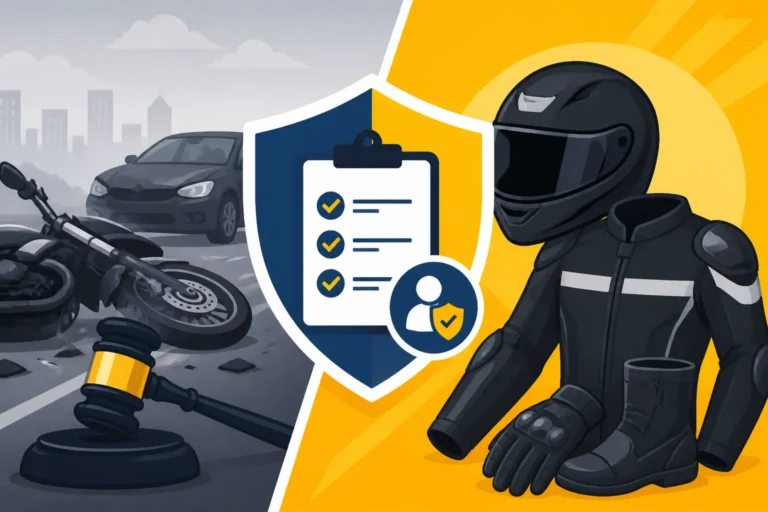
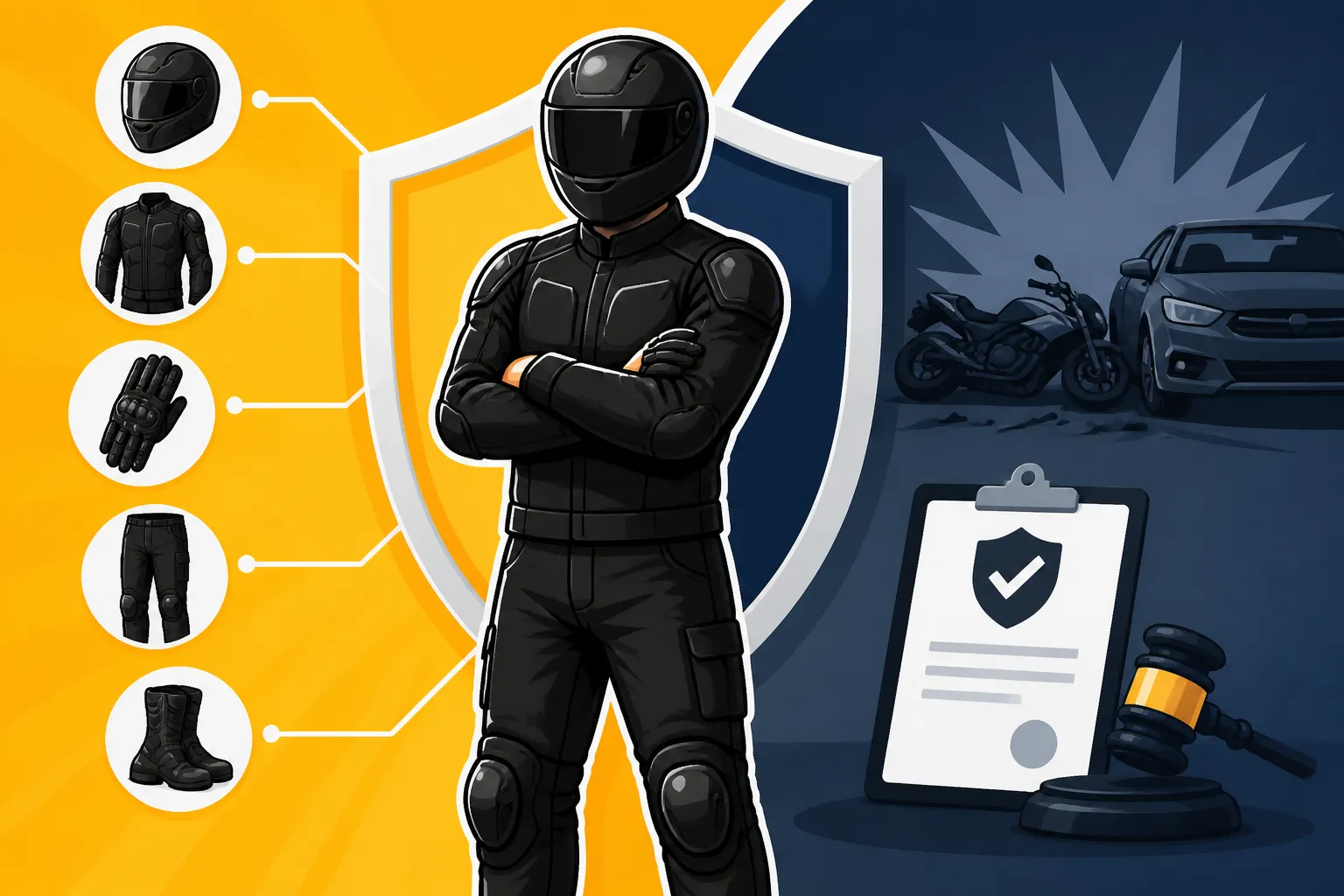
- Motorcycle Jackets: A good motorcycle jacket, often made of leather or textile, provides abrasion resistance that a regular denim jacket simply cannot. Many also come with CE-approved armor in critical areas like the shoulders, elbows, and back. Brands like Alpinestars and Rev'It! offer a wide range of jackets designed for various riding conditions and styles, combining safety with comfort. While you might not get a ticket for not wearing one, an insurance adjuster will definitely note if you suffered severe road rash while wearing only a flimsy windbreaker.
- Riding Pants: Similarly, specialized riding pants, whether leather or textile with reinforced stitching and armor for hips and knees, offer immense protection compared to jeans. Road rash from motorcycle accidents is incredibly painful and can lead to serious infections and scarring. Think about protecting your skin as much as possible with quality riding pants from companies such as Klim or Dainese.
- Motorcycle Gloves: Your hands are often the first thing to hit the ground in a fall. Good motorcycle gloves protect against abrasions, impacts, and offer better grip. They also come in various styles for different weather conditions. While some states might have vague laws about "appropriate footwear," very few explicitly require gloves. Yet, any experienced rider will tell you they are non-negotiable.
- Motorcycle Boots: Sturdy, ankle-covering boots are crucial for protecting your feet and ankles, which are highly susceptible to crush injuries and fractures in a crash. They also provide better grip on the pegs and shifter. Again, explicit legal requirements for boots are rare, but their protective value is immeasurable.
It’s easy to think of this gear as optional, especially on a hot summer day. But the reality is that without proper protective gear, even a low-speed slide can result in devastating injuries. These injuries, while potentially unrelated to your head, can still become points of contention in a claim, as the defense may argue you failed to mitigate your own damages by choosing not to wear available safety equipment.
How Gear Affects Your Claim Even if Not Mandated
This is a critical point that often surprises riders: even if a piece of gear isn't explicitly required by your state's laws, its absence can still be leveraged against you by insurance companies. The goal of an insurance adjuster is to minimize the payout, and they will look for any reason to argue that you contributed to your own injuries. This is where concepts like Comparative Negligence in Motorcycle Accidents come into play.
The "Helmet Defense" Principle Extended to Other Gear
You've probably heard of the "helmet defense," which is when an insurance company or opposing party argues that a rider's head injury would have been less severe, or perhaps avoided entirely, had they been wearing a compliant helmet. This can drastically reduce the amount of compensation for a traumatic brain injury.
However, this principle isn't always limited to just helmets. While perhaps not as direct in legal statutes, a similar argument can be made regarding other protective gear. If you sustained severe road rash across your arms and legs because you were wearing a t-shirt and shorts, rather than a proper riding jacket and pants, the insurance company might argue that you contributed to the severity of your own injuries. They might claim that your failure to wear reasonable protective gear constituted negligence on your part, even if it wasn't a legal requirement. This "failure to mitigate damages" argument can reduce your overall settlement, regardless of who was initially at fault in the collision. It's a frustrating reality for riders, but it's how insurance companies assign blame to riders.
Documenting Your Gear for a Claim
After a motorcycle accident, everything becomes evidence. This includes your gear. If you were wearing proper protective gear, it’s absolutely vital to document it. Take photos of your helmet, jacket, pants, gloves, and boots, especially if they show damage from the crash. This serves several purposes:
- Proving Protection: It demonstrates that you took reasonable precautions for your safety. A damaged, scuffed helmet is proof that it absorbed impact and potentially saved you from a much worse head injury.
- Supporting Injury Severity: The damage to your gear can correlate with the forces involved in the accident, helping to substantiate the severity of your injuries. For instance, a deeply gouged jacket or torn riding pants can support claims of significant road rash or fractures.
- Damage Claim: Your gear itself is property damage, and the cost to replace your high-quality helmet from an authorized Cycle Gear store, or your expensive riding suit, should be part of your claim.
Keep your damaged gear. Don't throw it away, even if it seems ruined. It's physical evidence that supports your narrative and can be crucial for an accident reconstruction expert or in proving Motorcycle Accident Evidence for Proving Fault. Take clear, well-lit photos of the gear from multiple angles, showing any scuffs, tears, or impact points. This foresight can be incredibly beneficial when pursuing compensation for your injuries and losses.
State-Specific Examples and Best Practices
As we’ve discussed, the legal landscape for motorcycle gear is a mosaic of different state laws. Understanding these variations and adopting best practices will not only keep you safer but also strengthen your position should you ever need to file a claim.
A Look at Diverse State Approaches
Let's dive a little deeper into how some states handle gear:
- California: California is known for its universal helmet law, meaning all riders and passengers must wear a DOT-compliant helmet, period. This is a clear-cut example where the law is unambiguous. There are no age exceptions for adults, and failure to comply can lead to fines and a potential weakening of any personal injury claim. Riders often frequent Cycle Gear locations across the state to ensure they have the latest in compliant helmets and safety gear.
- Florida: Florida has a more relaxed helmet law, allowing riders over 21 to ride without a helmet if they carry an insurance policy with at least $10,000 in medical benefits. This is a prime example of a state that makes helmet use optional for some, but attaches a financial condition to that choice. Riders are still strongly encouraged to wear helmets due to the high rate of motorcycle accidents in the state. So, while you can ride without a helmet under certain conditions, it's wise to consider how Florida's helmet law works and its implications for your safety and potential accident claim.
- Texas: Texas also has a partial helmet law, similar to Florida, where riders over 21 with proper insurance coverage can opt out of helmet use. However, for those under 21 or without specific insurance, a DOT-compliant helmet is mandatory. This makes understanding the nuances of Texas helmet law and insurance critical for riders in the Lone Star State.
- Iowa and New Hampshire: These states are often cited as examples with the most lenient helmet laws, generally not requiring helmets for adult riders. While this offers freedom of choice, it also places a greater onus on the rider to decide what level of protection they need, recognizing the significant risks involved in unhelmeted riding.
This diversity highlights the need for every rider to be aware of the specific laws in their operating state and any states they plan to visit. Relying on what's "normal" in your hometown can lead to legal trouble and jeopardize your safety elsewhere.
Why "Recommended" Often Means "Required" in Practice
Even in states where helmets are optional for adults, and other protective gear is never legally mandated, the concept of "recommended" often translates into "required" in a practical sense, especially after an accident. This isn't about legal statutes but about risk management, personal safety, and the cold, hard calculus of insurance claims.
Consider it this way: the medical community, law enforcement, and traffic safety organizations overwhelmingly recommend full protective gear. When you choose not to wear recommended gear, you are, in the eyes of many, increasing your own risk of injury. If you suffer a severe injury that could have been mitigated by wearing a jacket, gloves, or boots, even if not legally required, you might find yourself battling an insurance company that uses your gear choices to reduce your compensation. They will argue that you, as a reasonable person, should have taken steps to protect yourself given the known risks of motorcycling.
Ultimately, wearing comprehensive safety gear from a trusted retailer like Cycle Gear, even if not explicitly mandated by the letter of the law, is the smartest move a rider can make. It protects you physically from the harsh realities of a crash, and it protects your claim from potential challenges by insurance adjusters looking for any way to diminish your payout. Think of it as an investment in both your physical well-being and your financial future.
Here's a quick rundown of typical gear requirements and their practical implications:
| Gear Type | Common Legal Status (Varies by State) | Practical Safety & Claim Impact | Brands to Consider |
|---|---|---|---|
| Helmet | Required (Universal or Partial laws), Must be DOT-compliant | Crucial for head injury prevention. Absence can lead to "helmet defense" reducing TBI claims. | Shoei, Arai, HJC, Scorpion |
| Eye Protection | Required (Even if helmet not required in some states) | Prevents vision obstruction from debris/wind. Failure can be cited for contributing to accident causation. | Integrated helmet visors, goggles (e.g., Oakley), safety glasses |
| Motorcycle Jacket | Generally Recommended, rarely legally required | Excellent abrasion & impact protection (with armor). Reduces severity of road rash & other upper body injuries; strengthens claim. | Alpinestars, Rev'It!, Klim, Dainese, Joe Rocket |
| Riding Pants | Generally Recommended, rarely legally required | High abrasion resistance, impact protection (with armor). Prevents severe road rash, fractures. | Klim, Dainese, Alpinestars, Rev'It! |
| Motorcycle Gloves | Generally Recommended, rarely legally required | Protects hands from abrasion, impact. Maintains grip. | Held, Dainese, Alpinestars, Icon, Bilt |
| Motorcycle Boots | Generally Recommended, vague "appropriate footwear" laws | Protects feet/ankles from crush injuries, fractures. Improves control. | Sidi, TCX, Alpinestars, Dainese |
Remember, while the law might focus primarily on helmets and eye protection, your overall well-being and the strength of your accident claim hinge on a more comprehensive approach to riding gear. You want to make sure you have the best chance to recover fully, both physically and financially.
Disclaimer
Please remember that this article provides general information and insights. Motorcycle laws, including those related to helmets and gear, are subject to change and vary significantly by jurisdiction. This content is not a substitute for legal advice. For specific guidance regarding your situation or a motorcycle accident claim, it is always recommended to consult with a qualified legal professional in your state.