Average Motorcycle Accident Settlement Amounts
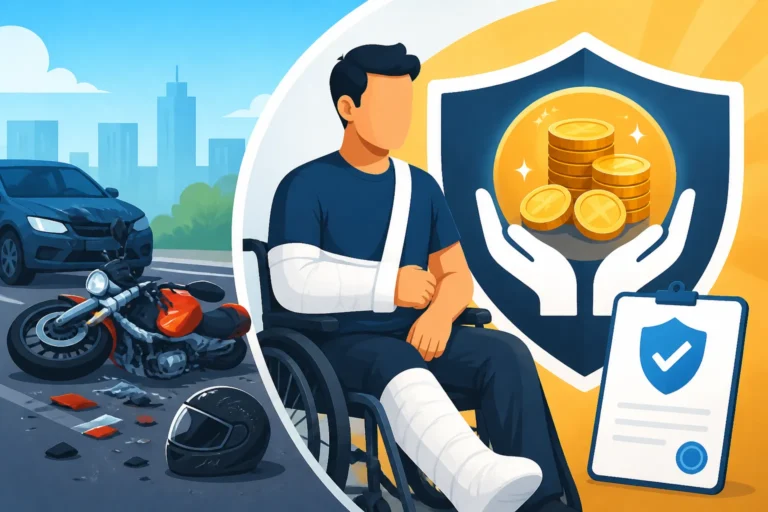
Getting into a motorcycle accident is a terrifying experience, often leaving riders not just physically scarred but mentally reeling, and then comes the daunting question: "What now?" One of the most pressing concerns for anyone who's been through such a traumatic event, especially when injuries are severe, is understanding the financial implications. You're likely wondering how you'll cover medical bills, lost wages, and repair costs, and inevitably, "What is the average motorcycle accident settlement amount?" This guide aims to shed light on that complex question, helping you navigate the uncertainties and understand the factors that truly shape your potential recovery.
The Elusive "Average" in Motorcycle Accident Settlements
It's natural to crave a simple answer, a clear number that tells you what your motorcycle accident claim might be worth. You might be furiously searching online, hoping to find a magic average settlement figure. But here's the honest truth, and it's a frustration many riders face: there isn't a single, straightforward "average" motorcycle accident settlement amount that applies universally. Every accident, every injury, and every person's life situation is unique, and these distinct circumstances are what truly dictate a settlement's value.
Why a Single Average Number is a Myth
Imagine two different motorcycle accidents. In one, a rider suffers minor road rash and a few bumps and bruises after a low-speed fender bender on a quiet street in Scottsdale, Arizona. They miss a week of work, and their vintage Harley-Davidson sustains some cosmetic damage. In another, a rider in downtown Los Angeles is T-boned by a distracted driver, resulting in multiple broken bones, a traumatic brain injury, months of hospitalization, and their custom chopper being totaled. Their recovery will be long, painful, and potentially permanent.
Clearly, the "average" settlement for these two vastly different scenarios cannot be the same. The notion of a single average is misleading because it tries to lump together minor scrapes with life-altering catastrophes. Insurance companies and legal professionals often use broad statistics, but these rarely reflect the nuance of an individual's suffering and loss. The real value lies in a detailed assessment of your specific damages, not a general benchmark.
The Unique Fabric of Every Motorcycle Accident Case
Your case is a tapestry woven from myriad threads, each contributing to its overall value. Factors like the specific state where the accident occurred, the laws governing personal injury claims there (such as Motorcycle Accident Fault Laws in California or Motorcycle Accident Fault Laws in Texas), and the precise details of the collision all play a role. Were you wearing a DOT-approved helmet? What kind of protective gear were you wearing? Was the other driver intoxicated, distracted, or speeding?
Furthermore, the impact on your life goes beyond just physical injury. It extends to your emotional well-being, your ability to work, your family's financial stability, and even your enjoyment of life. These are deeply personal elements that can't be squeezed into a generic statistical average. That's why relying on a generalized "average" can be incredibly detrimental, potentially leading you to undervalue your claim or misunderstand the potential range of outcomes.
Key Factors That Inflate or Deflate Your Settlement Amount
While a single average is a myth, there are very real, tangible factors that consistently influence the value of a motorcycle accident settlement. Understanding these elements is crucial for setting realistic expectations and effectively advocating for your rights. These aren't just bullet points; they're the foundational pillars upon which your claim's value is built.
Severity of Injuries and Medical Expenses
This is arguably the most significant driver of settlement value. The more severe and long-lasting your injuries, the higher the potential compensation. It's not just about the initial emergency room visit; it's about the entire continuum of care.
- Initial Medical Treatment: This includes ambulance rides, emergency room visits, diagnostic tests like X-rays, CT scans, and MRIs. The immediate aftermath of a serious crash can rack up tens of thousands of dollars in bills almost instantly. Insurance companies will scrutinize these initial costs, so comprehensive documentation is vital.
- Ongoing Medical Care and Rehabilitation: Beyond the initial treatment, many motorcycle accident injuries require extensive follow-up. This could mean surgeries, physical therapy, occupational therapy, chiropractic care, specialist consultations (orthopedists, neurologists, pain management doctors), and prescription medications. If you've suffered a serious injury like a Motorcycle Accident Traumatic Brain Injury or a spinal cord injury, the need for long-term care, adaptive equipment, or even in-home assistance can dramatically increase costs. Each therapy session, every doctor's visit, and every refill adds to the total economic damages.
- Future Medical Needs: This is where things get truly complex. For catastrophic injuries, predicting future medical needs can involve expert testimony from life care planners who project costs over decades. This might include future surgeries, medication, ongoing therapy, durable medical equipment replacement, and even long-term residential care. The greater the anticipated future medical costs, the higher your settlement needs to be to genuinely cover these expenses.
Lost Wages and Diminished Earning Capacity
An accident doesn't just hurt your body; it often hits your wallet hard. When you're recovering from injuries, you're likely unable to work, resulting in a loss of income that can quickly compound financial stress.
- Past Lost Wages: This covers the income you've already lost from the date of the accident up to the point of settlement or trial. This is usually straightforward to calculate if you have a consistent salary, but it can be more complicated for hourly workers, freelancers, or self-employed individuals. Documentation like pay stubs, tax returns, and employer statements are critical here.
- Future Lost Earning Capacity: This is a more profound and often higher-value component. If your injuries leave you with a permanent disability or impairment that prevents you from returning to your previous job, or limits your ability to work at the same capacity, you can claim damages for lost earning capacity. This looks at the difference between what you would have earned over your lifetime had the accident not occurred versus what you are now projected to earn. This often requires vocational experts and economists to provide projections, adding significant weight to your claim. A rider who can no longer perform their physically demanding construction job, for instance, might have a massive claim for lost earning capacity.
Pain, Suffering, and Emotional Distress
While economic damages are quantifiable, non-economic damages like pain and suffering are harder to put a number on, yet they often represent a substantial portion of a settlement. These damages acknowledge the profound impact the accident has had on your quality of life. Pain and Suffering Damages Explained delve into this more deeply.
- Physical Pain and Discomfort: This covers the actual physical pain you experience from your injuries, including acute pain immediately after the accident, chronic pain during recovery, and any lasting discomfort. It acknowledges the agony of recovery, the sleepless nights, and the daily struggles with movement.
- Emotional and Psychological Trauma: Motorcycle accidents are inherently terrifying events. Many riders experience significant emotional distress, including anxiety, depression, post-traumatic stress disorder (PTSD), fear of riding again, and even phobias related to driving or traffic. The psychological impact can be as debilitating as the physical injuries, affecting relationships, hobbies, and overall mental health.
- Loss of Enjoyment of Life: This covers your inability to participate in activities and hobbies you once enjoyed due to your injuries. Maybe you can no longer ride your motorcycle, play with your kids, pursue a beloved sport, or even perform simple household tasks without pain. This diminishes your overall quality of life, and compensation for this loss is a recognized component of damages.
Property Damage
While often overshadowed by severe personal injuries, the damage to your motorcycle and protective gear is a real and recoverable loss.
- Motorcycle Repair or Replacement: If your motorcycle can be repaired, the cost of parts and labor will be included. If it's totaled, you're entitled to its fair market value at the time of the accident. This can be contentious if your bike was customized or vintage, as insurance companies often use standard depreciation schedules that don't account for unique modifications.
- Damaged Gear: Don't forget your helmet, jacket, pants, boots, and gloves. High-quality motorcycle gear can be expensive, and it's designed to protect you in a crash. If it's damaged or destroyed, you're entitled to compensation for its replacement. This is an important detail that many riders overlook in the immediate aftermath of an accident, but documenting How Gear Damage Supports Your Claim is crucial.
How Fault and Liability Impact Your Payout
One of the most contentious aspects of any motorcycle accident claim, especially in states like California or Texas, is the determination of fault. The perception of motorcyclists often works against them, and insurance companies are quick to assign blame. Your settlement amount can be significantly reduced, or even entirely negated, depending on how much fault is attributed to you.
Comparative Negligence Rules: When You Share the Blame
Most states operate under some form of comparative negligence, which means your compensation can be reduced by your percentage of fault. For example, if you are deemed 20% at fault for an accident with damages totaling $100,000, your maximum recovery would be $80,000. It's a system that can feel incredibly unfair, especially when the other driver clearly initiated the crash.
- Pure Comparative Negligence: States like California follow a "pure" comparative negligence rule. This means you can recover damages even if you are mostly at fault (e.g., 90% at fault), though your settlement will be drastically reduced. If you suffered $100,000 in damages but were 90% at fault, you could still recover $10,000. While theoretically beneficial for partially at-fault riders, it means insurers will fight tooth and nail to inflate your percentage of blame.
- Modified Comparative Negligence: Many states, including Texas and Ohio, use a "modified" comparative negligence rule, typically with a 50% or 51% bar. If you are found to be 50% or more at fault (depending on the state), you may be completely barred from recovering any damages. If you're 49% at fault, you can recover 51% of your damages, but if you hit 50%, your claim is gone. This threshold is a huge battleground for insurance adjusters and attorneys. It underscores the critical need for robust evidence to prove the other driver's fault.
Proving the Other Driver's Fault Beyond a Reasonable Doubt
Establishing fault is not just about recounting what happened; it's about building an undeniable case with compelling evidence. Without clear proof that the other driver was negligent, your claim will flounder. This is where a thorough investigation comes into play, utilizing every available resource.
- Evidence Collection: This includes police reports, witness statements, photographs and videos from the scene, dashcam footage, and even cell phone records if distracted driving is suspected. The immediate aftermath of an accident is crucial for gathering this evidence, as detailed in Motorcycle Accident Evidence for Proving Fault. If you're physically able, documenting the scene with photos of vehicle positions, road conditions, and property damage can be invaluable.
- Expert Analysis: Sometimes, the nuances of a crash require more than just eyewitness accounts. Accident reconstruction experts can analyze skid marks, vehicle damage, and other physical evidence to recreate the accident sequence and definitively establish who was at fault. This is especially vital in complex scenarios or when fault is highly disputed. These experts can become powerful allies in proving How Fault Is Determined in Motorcycle Accidents.
Battling Rider Bias and Stereotypes
It's an unfortunate reality that motorcyclists often face a pervasive bias in the legal system and from insurance companies. There's a common, unfair stereotype that riders are reckless thrill-seekers, leading to an immediate assumption of fault, regardless of the actual circumstances of the crash.
- Insurance Company Tactics: Insurers frequently exploit these stereotypes, attempting to shift blame to the rider even when the evidence points elsewhere. They might argue you were speeding, lane splitting improperly, or simply "unseen" due to the nature of motorcycles, a tactic often referred to as the ‘I Didn't See the Motorcycle’ Defense Explained. They're looking for any reason to reduce their payout, and rider bias gives them an easy target.
- Countering the Bias: Overcoming this bias requires meticulous evidence and, often, experienced legal representation. Your attorney can present your case in a way that highlights the facts, debunks stereotypes, and focuses on the other driver's negligence. They can use evidence like traffic camera footage, toxicology reports from the other driver, and expert witness testimony to show that you were a responsible rider who was simply the victim of another's carelessness.
The Limiting Factor: Insurance Policy Limits
Even if you have an ironclad case and your injuries are severe, your settlement amount can ultimately be capped by the available insurance coverage. This is a harsh reality that many accident victims discover too late, leaving them with uncompensated damages.
The At-Fault Driver's Policy Limits
The primary source of compensation typically comes from the at-fault driver's liability insurance. Every state mandates minimum liability coverage, but these minimums are often woefully inadequate to cover serious motorcycle accident injuries.
- Understanding Minimum Coverage: In many states, the minimum liability coverage for bodily injury is as low as $25,000 per person and $50,000 per accident. For property damage, it might be $10,000 or $25,000. If your medical bills alone exceed $100,000, and the at-fault driver only has a $25,000 policy, you can quickly see the problem. Their policy becomes the ceiling, regardless of your actual damages.
- When Damages Exceed Coverage: If your damages far exceed the other driver's insurance limits, you have limited options. You might try to pursue a claim against their personal assets, but most individuals don't have enough liquid wealth to cover massive medical bills and lost wages. This situation underscores the importance of your own insurance coverage.
Underinsured and Uninsured Motorist (UM/UIM) Coverage
This is your personal safety net, and it's one of the most important coverages a motorcyclist can carry. UM/UIM coverage protects you when the at-fault driver either has no insurance (uninsured) or not enough insurance (underinsured) to cover your damages.
- How UM/UIM Works: If you have UM/UIM coverage, your own insurance company will step in to cover the difference between your damages and what the at-fault driver's policy pays out, up to your UM/UIM policy limits. For example, if you have $100,000 in damages, the at-fault driver has a $25,000 policy, and you have $100,000 in UM/UIM coverage, your UM/UIM policy could pay the remaining $75,000.
- Why It's Essential for Riders: Given the severe nature of Common Motorcycle Accident Injuries and the frequency of drivers carrying only minimum coverage, UM/UIM is practically non-negotiable for motorcyclists. It provides crucial protection against the financial irresponsibility of others. Many riders overlook this, but it can make the difference between full recovery and significant out-of-pocket expenses.
Stacking Policies for Greater Protection
In some states and under specific policy language, you might be able to "stack" your UM/UIM coverage. This means combining the limits from multiple policies or multiple vehicles on a single policy to increase your total available coverage.
- Intra-Policy Stacking: This allows you to combine UM/UIM limits for each vehicle insured on a single policy. For instance, if you have two motorcycles and a car, each with $50,000 UM/UIM coverage, you might be able to stack them to $150,000.
- Inter-Policy Stacking: This allows you to combine UM/UIM limits from separate policies you own (e.g., your motorcycle policy and a car policy from a different insurer).
- State-Specific Rules: Stacking rules vary significantly by state and insurance carrier. Some states prohibit it, while others allow it under certain conditions. It's crucial to understand your state's laws and your specific policy language regarding stacking, as this can dramatically increase the amount of available compensation when you need it most.
The Role of Legal Representation in Maximizing Your Settlement
While some minor accidents might be manageable on your own, a motorcycle accident, especially one involving injuries, is rarely simple. The decision to hire a qualified motorcycle accident attorney can be the single most impactful choice you make in determining your settlement amount. They are your advocate, navigating the complexities and ensuring your rights are protected. Do You Need a Motorcycle Accident Lawyer is a question many ask, and for most, the answer is a resounding yes.
Negotiating with Ruthless Insurance Companies
Insurance adjusters are not on your side. Their job is to minimize payouts, and they are incredibly skilled at it. They have vast resources, legal teams, and strategies designed to undervalue your claim or deny it outright. Trying to negotiate with them on your own, especially while recovering from injuries, is like going into a boxing match with one hand tied behind your back.
- Leveling the Playing Field: A seasoned motorcycle accident attorney brings expertise, experience, and leverage to the negotiation table. They understand the tactics insurers use, know the true value of your claim, and can present your case in a compelling way that demands fair compensation. They handle all communication, allowing you to focus on your recovery. How Lawyers Deal with Insurance Companies is a masterclass in strategy and persistence.
- Rejecting Lowball Offers: Insurance companies almost always start with a lowball offer, hoping you're desperate or unaware of your claim's true worth. An attorney can quickly identify an inadequate offer and persuasively counter it with evidence-backed arguments, protecting you from settling for far less than you deserve.
Case Valuation and Expert Witnesses
Accurately valuing a motorcycle accident claim goes far beyond adding up medical bills. It requires a comprehensive understanding of all economic and non-economic damages, often necessitating the input of various experts.
- Comprehensive Damage Assessment: Your attorney will meticulously gather all evidence of your damages, from medical records and bills to lost wage statements and property damage estimates. They'll also quantify your pain, suffering, and loss of enjoyment of life, using established legal methods and precedents. They know how to build a robust demand package that truly reflects the scope of your losses.
- Leveraging Expert Testimony: For serious injuries or disputed fault, expert witnesses are invaluable. This could include medical specialists to testify on the extent and prognosis of your injuries, vocational experts to assess lost earning capacity, economic experts to project future financial losses, or accident reconstructionists to establish fault, as detailed in When to Hire an Accident Reconstruction Expert. Their credible testimony can significantly bolster your claim and influence settlement negotiations or jury decisions.
Knowing When to Go to Trial
While most motorcycle accident claims are resolved through negotiation, sometimes settlement talks break down. When an insurance company refuses to offer fair compensation, your attorney will advise you on the viability of taking your case to court.
- Strategic Litigation: The threat of a lawsuit often prompts insurance companies to offer more reasonable settlements. They know the time, expense, and uncertainty involved in litigation. Your attorney will prepare your case as if it's going to trial from day one, giving you the strongest possible position.
- Trial vs. Settlement: Going to trial is a significant step, but for certain cases, it's the only way to achieve justice. Your attorney will explain the pros and cons, guiding you through the process if litigation becomes necessary. While settlements aim to avoid the courtroom, the willingness and ability of your attorney to go to trial can often secure a better settlement offer, as discussed in Motorcycle Accident Settlement vs Trial.
Understanding Specific Injury Settlement Ranges
While a general "average" is unhelpful, looking at typical settlement ranges for specific types of injuries can provide a more realistic picture. Remember, these are broad estimates, and individual cases can fall outside these ranges due to unique factors. The goal here is to give you a sense of scale, not a precise figure for your claim.
Road Rash and Minor Soft Tissue Injuries
These are the most common injuries in motorcycle accidents and often lead to lower settlement amounts compared to catastrophic injuries. However, "minor" can still mean significant pain and disruption.
- Road Rash: Even seemingly superficial road rash can be excruciatingly painful and prone to infection. Deeper road rash (third or fourth-degree) can require extensive wound care, debridement, skin grafts, and may leave permanent scarring. While a straightforward case of minor road rash might settle for a few thousand dollars, severe cases requiring surgery and leaving disfigurement could reach tens of thousands, sometimes even into six figures depending on the cosmetic impact and related emotional distress. Motorcycle Road Rash: Claims and Compensation provides more detail.
- Soft Tissue Injuries: This includes sprains, strains, bruising, and minor whiplash. While not involving broken bones, these injuries can still cause chronic pain, limit mobility, and require physical therapy. Settlements for these injuries typically range from a few thousand dollars to $25,000-$50,000, varying based on the extent of treatment, duration of pain, and impact on daily activities.
Broken Bones and Fractures
Fractures are common in motorcycle accidents and significantly increase settlement values due to the pain, medical intervention (surgery, casting), and recovery time involved.
- Simple Fractures: A clean break, often treated with a cast and healing without major complications, could lead to settlements in the $25,000 to $100,000 range. This accounts for medical bills, lost wages, and pain and suffering during recovery.
- Complex or Multiple Fractures: Compound fractures, comminuted fractures (bone shattered into pieces), or fractures requiring surgery with pins, plates, or rods significantly increase the value. These can lead to settlements ranging from $100,000 to $500,000 or more, especially if nerve damage, infection, or permanent mobility issues result. Fractures to weight-bearing joints (like the hip or knee) or critical areas (like the spine or skull) are particularly high value due to their long-term impact. Motorcycle Broken Bones: Claims and Compensation delves deeper into these types of injuries.
Catastrophic Injuries: TBIs, Spinal Cord, and Amputations
These are the most severe injuries and command the highest settlements, often reaching hundreds of thousands or even millions of dollars. They represent a life-altering event for the victim and their family.
- Traumatic Brain Injuries (TBIs): From mild concussions with lingering symptoms to severe TBIs causing permanent cognitive, emotional, or physical impairment, these injuries are incredibly serious. Settlements for moderate to severe TBIs can range from $250,000 to several million dollars, covering extensive medical care, lost earning capacity, lifelong therapy, and profound pain and suffering. The long-term effects of a TBI can be devastating, impacting every aspect of a person's life.
- Spinal Cord Injuries: These injuries can result in partial or complete paralysis (paraplegia or quadriplegia), leading to a lifetime of medical care, physical therapy, adaptive equipment, and loss of independence. Settlements for spinal cord injuries are among the highest, often ranging from $1 million to $5 million or even more, reflecting the astronomical lifetime costs and profound impact on quality of life.
- Amputations: The loss of a limb is a catastrophic injury with severe physical and emotional consequences. Settlements typically include costs for prosthetics (which need regular replacement), rehabilitation, pain management, psychological counseling, and significant compensation for pain, suffering, and disfigurement. These settlements can range from $500,000 to several million dollars, depending on the limb lost and the rider's age and profession.
Here's a simplified table to illustrate potential settlement ranges based on injury severity. Remember, these are very general estimates and not guarantees.
| Injury Type | General Settlement Range (Highly Variable) | Key Factors Influencing Value |
|---|---|---|
| Minor Road Rash / Soft Tissue Injuries | $5,000 – $50,000 | Extent of medical treatment, healing time, scarring, impact on daily activities. |
| Moderate Road Rash / Simple Fractures | $25,000 – $150,000 | Type of fracture (e.g., wrist, clavicle), need for surgery, recovery duration, lost wages, physical therapy. |
| Severe Fractures / Ligament Tears | $100,000 – $500,000 | Multiple fractures, complex surgeries (e.g., reconstructive knee surgery), permanent pain, partial disability, extensive rehabilitation. |
| Traumatic Brain Injury (Moderate) | $250,000 – $1,000,000+ | Cognitive impairment, emotional changes, long-term therapy, potential for seizure disorders, impact on work/life. |
| Spinal Cord Injury (Partial Paralysis) | $500,000 – $2,500,000+ | Level of paralysis, need for assistive devices, home modifications, ongoing medical care, lost earning capacity. |
| Spinal Cord Injury (Complete Paralysis) | $1,000,000 – $5,000,000+ | Lifelong care, nursing assistance, complex medical needs, complete loss of earning capacity, profound pain and suffering. |
| Amputations | $500,000 – $3,000,000+ | Type of limb, age of victim, prosthetic costs, phantom pain, psychological trauma, impact on profession and quality of life. |
The Motorcycle Accident Settlement Process and Timeline
Understanding the stages of a motorcycle accident claim can help manage expectations about how long it might take to reach a resolution. It's rarely a quick process, especially with serious injuries. You're not alone in feeling frustrated by the pace, but patience is often a virtue that pays off. How Long Does a Motorcycle Settlement Take is a common concern for many.
Initial Investigation and Demand Letter
After the accident, the first phase involves gathering all necessary information and beginning medical treatment. This is a critical period for documentation.
- Immediate Actions Post-Crash: The moments following a crash are chaotic, but if possible, documenting the scene, exchanging information, and contacting the police are crucial first steps. What to Do Immediately After a Motorcycle Accident covers these critical initial actions. Seeking prompt medical attention is paramount not only for your health but also for establishing a clear link between the accident and your injuries. Gaps in treatment can be used against you by insurers.
- Gathering Evidence: Your attorney will launch their own thorough investigation, collecting police reports, witness statements, medical records, bills, employment records, and photographs. They may also work with accident reconstructionists to establish fault unequivocally. This phase ensures that every piece of evidence supporting your claim is on hand.
- Reaching Maximum Medical Improvement (MMI): Most attorneys advise waiting until you reach MMI before demanding a settlement. MMI means your condition has stabilized, and further medical treatment isn't expected to significantly improve your condition. Reaching MMI allows your doctors to provide a complete prognosis, including any permanent impairments or future medical needs, enabling an accurate valuation of your long-term damages.
- Crafting the Demand Letter: Once all damages are documented and you've reached MMI, your attorney will draft a comprehensive demand letter. This letter details the accident, outlines the other driver's negligence, meticulously lists all your injuries and damages (medical bills, lost wages, pain and suffering, etc.), and states a specific monetary amount you are seeking to settle the claim.
Negotiation and Mediation
After the demand letter is submitted, the negotiation phase begins. This is often a back-and-forth process, sometimes involving a neutral third party.
- Initial Offers and Counteroffers: The insurance company will typically respond to your demand letter with a significantly lower offer, or sometimes even a denial of liability. This initiates a series of negotiations where your attorney will present evidence and legal arguments to justify a higher settlement amount, while the insurer attempts to poke holes in your case. This back-and-forth can take weeks or months.
- Mediation: If negotiations reach an impasse, the parties may agree to mediation. A neutral mediator (often a retired judge or experienced attorney) facilitates discussions, helping both sides understand the strengths and weaknesses of their positions and explore potential settlement figures. Mediation is non-binding, but it's often successful in resolving claims without resorting to trial. It offers a structured environment for compromise and can be a powerful tool for How to Negotiate a Motorcycle Accident Settlement.
Litigation and Settlement or Trial
If mediation fails or isn't pursued, your attorney may recommend filing a lawsuit to initiate litigation.
- Filing a Lawsuit: Filing a lawsuit officially begins the legal process and often intensifies settlement negotiations. Even after a lawsuit is filed, most cases still settle before trial.
- Discovery Phase: This involves formal exchange of information between both sides. Attorneys depose witnesses, request documents, and engage in interrogatories to gather more evidence and understand each other's cases fully. This phase can be lengthy, often taking many months or even a year or more.
- Trial: If a settlement still cannot be reached, the case proceeds to trial, where a judge or jury will hear the evidence and determine fault and damages. Trials are lengthy, expensive, and carry inherent risks for both sides. For most riders, settlement is often preferable due to the predictability and quicker resolution. However, a willingness to go to trial can often secure a more favorable settlement offer.
- Receiving Your Payout: Once a settlement is reached (or a verdict is rendered), the funds are typically paid to your attorney, who then deducts their contingency fees, case expenses, and settles any outstanding medical liens before disbursing the net amount to you.
Maximizing Your Potential Motorcycle Accident Settlement
While no one can guarantee a specific settlement amount, there are concrete steps you can take to significantly strengthen your claim and maximize your potential payout. These actions put you in the best possible position to recover the compensation you deserve.
Document Everything Meticulously
From the moment of the crash through your entire recovery, documentation is your most powerful ally. The more evidence you have, the harder it is for insurance companies to dispute your claim.
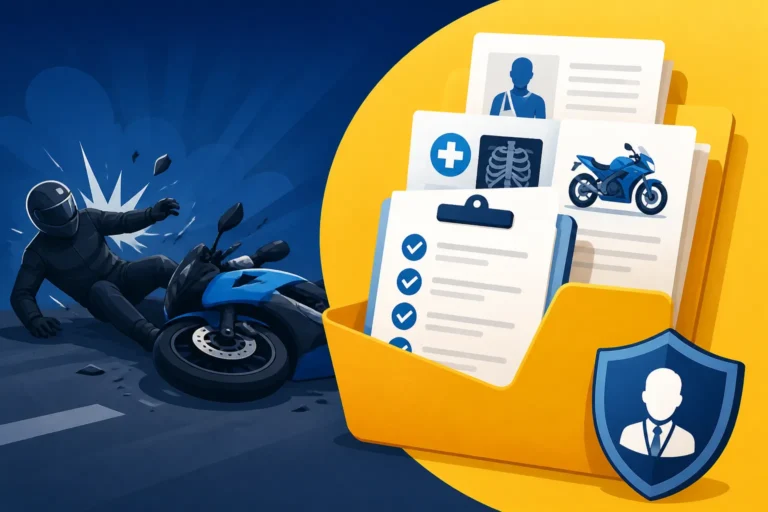
- Accident Scene: If able, take comprehensive photos and videos of everything at the scene: vehicle positions, damage to both vehicles, road conditions, traffic signs, skid marks, debris, and any visible injuries. Get contact information for witnesses. Even a quick snap on your phone can make a huge difference. Photos to Take to Prove Motorcycle Fault is an invaluable resource for this.
- Medical Records: This includes every doctor's visit, hospital stay, physical therapy session, medication prescribed, and diagnostic test result. Ensure your medical records clearly link your injuries to the accident. Keep a personal injury journal detailing your pain levels, limitations, and how your injuries impact your daily life.
- Financial Losses: Keep meticulous records of all medical bills, receipts for prescriptions, transportation costs to medical appointments, lost wage statements, and any out-of-pocket expenses related to your injuries. Also, document any property damage estimates or receipts for replacement gear.
Seek Prompt and Consistent Medical Attention
This is not just about your health (which is paramount), but also about the strength of your legal claim. Delaying medical treatment or having gaps in your care can severely jeopardize your settlement.
- Establishing Causation: Seeing a doctor immediately after the accident creates a clear, undeniable record linking your injuries directly to the crash. Insurance companies will scrutinize any delay, arguing that your injuries might be from another incident or are not as severe as claimed.
- Proving Severity: Consistent medical treatment, including specialists, physical therapy, and follow-up appointments, demonstrates the ongoing nature and severity of your injuries. Following your doctor's recommendations diligently is crucial, as non-compliance can be used to argue you're not as injured as you claim. Even if you feel okay after a minor incident, it’s always best to get checked out, as some Delayed Symptoms After a Motorcycle Crash can appear days or weeks later.
Avoid Early Settlement Offers and Be Wary of Insurance Adjusters
Insurance companies are notorious for trying to settle claims quickly and cheaply, especially for unrepresented victims. Their first offer is almost always a lowball, hoping you'll be eager for quick cash.
- Don't Rush to Settle: Never accept an offer before you fully understand the extent of your injuries and their long-term impact. This means waiting until you reach Maximum Medical Improvement (MMI). If you settle too early, you waive your right to seek further compensation, even if new complications arise or your recovery costs far exceed the settlement amount.
- Limit Communication: Avoid giving recorded statements to the other driver's insurance company. Adjusters are trained to ask leading questions that could get you to unknowingly admit partial fault or minimize your injuries. Direct all communication through your attorney. Remember, Why You Should Never Admit Fault at the Scene.
Consult with a Specialized Motorcycle Accident Attorney
This is, without a doubt, the single most important step you can take. A lawyer specializing in motorcycle accidents has the knowledge, resources, and experience to navigate the complexities of these cases, counter biases, and maximize your compensation.
- Expert Guidance: They understand the specific laws, prejudices, and unique challenges faced by motorcyclists. They know how to build a strong case, value your claim accurately, and negotiate effectively with insurance companies.
- Advocacy and Protection: Your attorney will handle all legal aspects, allowing you to focus on healing. They will protect you from predatory insurance tactics, ensure all deadlines are met, and fight tirelessly for the full and fair compensation you deserve. Finding an attorney who understands the nuances of motorcycle crashes is invaluable, as they can accurately present your narrative and counteract negative stereotypes.
Disclaimer
The information provided in this guide is for general informational purposes only and does not constitute legal advice. Every motorcycle accident claim is unique, and the potential settlement amount will vary significantly based on individual circumstances, jurisdiction, and specific facts of the case. It is crucial to consult with a qualified and experienced motorcycle accident attorney to discuss your specific situation and receive personalized legal advice.