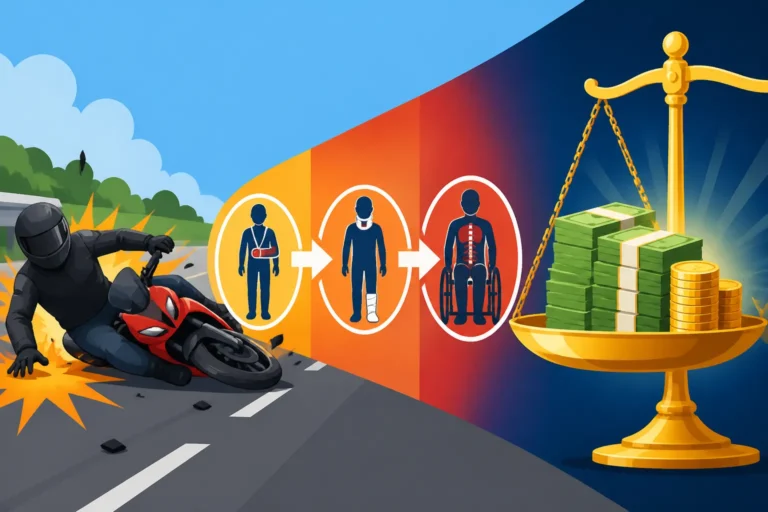
How Motorcycle Accident Settlements Are Calculated
Facing the aftermath of a motorcycle accident can feel incredibly overwhelming, especially when you're grappling with injuries, mounting medical bills, and the sheer frustration of getting your life back on track. One of the biggest questions that keeps riders up at night is, "How exactly is my settlement calculated?" It's not just about a number; it's about fair compensation for everything you've lost and endured. This comprehensive guide is here to demystify that complex process, breaking down the factors that influence your motorcycle accident payout so you can approach your claim with confidence.
Understanding the Building Blocks of a Motorcycle Accident Settlement
When you're trying to figure out what your motorcycle accident claim might be worth, it’s important to understand that a settlement isn't just one lump sum thrown your way. Instead, it’s a careful aggregation of different types of damages, each calculated based on specific criteria. Think of it like building a house – you need to lay a strong foundation with economic damages, add the structure of non-economic damages, and sometimes, for truly egregious acts, you might even put a special roof on it with punitive damages. Each component plays a vital role in determining the overall value of your claim, reflecting the true impact the accident has had on your life.
Economic Damages: The Tangible Losses
These are the easiest damages to quantify because they come with receipts, bills, and clear financial statements. Economic damages cover all the direct, out-of-pocket expenses and financial losses you've incurred or will incur as a direct result of the motorcycle accident. It’s the money that you can point to and say, "This is what this incident cost me, in dollars and cents."
First and foremost, we're talking about your medical bills. This includes everything from the ambulance ride and emergency room visit right after the crash to hospital stays, surgeries, doctor's appointments, prescription medications, physical therapy, rehabilitation, and even specialized equipment like wheelchairs or crutches. It's a running tally of every healthcare service you've needed and will need. Insurance companies will pore over these records, and it's crucial to keep a meticulous log of every single expense, no matter how small it seems. Even future medical care, which often includes long-term therapy, follow-up surgeries, or ongoing medication, will be estimated by medical professionals and factored into this total.
Then there are your lost wages. If your injuries prevent you from working, even for a short period, you're entitled to compensation for that lost income. This isn't just your regular paycheck; it can also include lost bonuses, commissions, tips, and even benefits you might have missed out on. For many riders, especially those who work in physically demanding jobs, a serious injury means weeks or months away from their livelihood. Beyond past lost wages, we also consider lost earning capacity, which refers to your potential future income if your injuries leave you with a permanent disability that limits your ability to work at your previous level or in your chosen profession. This is where it gets a bit more complex, often requiring vocational experts to project future losses based on your age, skills, and the severity of your long-term impairment.
Lastly, property damage is a significant part of economic damages for many motorcycle riders. Your bike is more than just transportation; it's often a passion, a lifestyle. If your motorcycle was damaged or totaled in the accident, the cost of repairs or its fair market value is a direct economic loss. But don't stop there. What about your helmet, leathers, boots, and other gear? These items are expensive and offer critical protection, and their replacement cost should also be included. Sometimes, even personal items like a shattered phone or broken sunglasses that were on you at the time of impact can be added to this category. The goal is to make you whole again, at least financially, for the tangible things that were taken or destroyed.
Non-Economic Damages: The Intangible Toll
While economic damages cover quantifiable financial losses, non-economic damages address the profound impact the accident has had on your quality of life. These are the "invisible" costs, the pain, suffering, and emotional distress that are very real but don't come with a price tag. Because they are subjective, they are often the most challenging to quantify and frequently become a major point of contention in negotiations. Understanding the full scope of your Pain and Suffering in Motorcycle Settlements is essential for a just outcome.
Pain and suffering is perhaps the most widely recognized non-economic damage. This encompasses the physical pain you experience from your injuries, whether it's the acute agony immediately following the crash or the chronic discomfort that lingers for months or even years. It’s not just about a headache; it’s about constant throbbing, burning sensations, stiffness, or nerve pain that interferes with daily life. Imagine the pain from extensive road rash injuries and claims, or a broken bone that requires multiple surgeries and a long, arduous recovery period. This category also includes mental anguish – the emotional distress, anxiety, depression, and even post-traumatic stress disorder (PTSD) that can follow a traumatic event like a motorcycle accident. Many riders report difficulty sleeping, nightmares, fear of riding again, or general anxiety about their future.
Beyond pain and suffering, there's also the loss of enjoyment of life. This refers to the inability to participate in activities and hobbies that brought you joy before the accident. Maybe you can no longer ride your bike, play with your kids, hike, or even perform simple tasks around the house without pain. If your injuries prevent you from engaging in these activities, or significantly diminish your ability to enjoy them, that's a loss that deserves compensation. For instance, a talented musician who suffers nerve damage in their hands might lose the ability to play, which is a devastating personal loss that goes beyond mere physical pain. This category seeks to compensate you for the diminished quality of life you now experience.
The challenge with non-economic damages is putting a monetary value on them. Insurance companies often use formulas, like the "multiplier method," where your total economic damages are multiplied by a number (typically between 1.5 and 5, depending on the severity of your injuries and the duration of your recovery). However, these are just starting points. A compelling narrative, detailed medical records, testimony from therapists or counselors, and even a personal journal documenting your daily struggles can significantly strengthen your claim for these vital, yet intangible, losses.
Punitive Damages: When Misconduct Is Extreme
Punitive damages are a different beast altogether. Unlike economic and non-economic damages, which aim to compensate the victim, punitive damages are not about making you whole. Instead, their purpose is twofold: to punish the at-fault party for particularly reckless, malicious, or egregious conduct, and to deter others from similar behavior in the future. They are relatively rare in personal injury cases but can be awarded in situations where the defendant's actions go far beyond simple negligence.
Consider a scenario involving a drunk driver who caused your accident. Their decision to get behind the wheel while intoxicated, knowing the risks, demonstrates a blatant disregard for the safety of others. In such cases, a court might award punitive damages to send a strong message. Other examples could include cases where a driver was excessively speeding, engaging in road rage, or driving recklessly with utter indifference to human life. It's not enough that the driver was at fault; their conduct must have been truly outrageous or reprehensible.
It’s important to understand that punitive damages are not awarded in every case, and indeed, they are only considered in a small fraction of motorcycle accident claims. Most states have specific legal standards that must be met to even consider asking for punitive damages, usually requiring "gross negligence," "willful and wanton disregard," or "malice." The bar is intentionally set high to ensure they are reserved for the most serious instances of misconduct. Proving a claim for punitive damages requires strong evidence of the at-fault driver's state of mind or extreme actions, which often necessitates a deep investigation into the circumstances leading up to the crash.
The Role of Injury Severity and Medical Treatment
The severity of your injuries and the extent of your medical treatment are arguably the most significant factors influencing the calculation of your motorcycle accident settlement. It's a direct correlation: more severe injuries generally lead to higher medical bills, greater pain and suffering, longer periods of lost work, and potentially permanent disabilities, all of which drive up the value of your claim. This is why the journey from the accident scene to your eventual recovery, and how thoroughly that journey is documented, is absolutely crucial.
Immediate Medical Attention and Its Importance
The very first thing you should do after any motorcycle accident, even if you feel "fine," is to seek immediate medical attention. Adrenaline can mask pain, and some serious injuries, especially head trauma or internal bleeding, may not manifest symptoms for hours or even days. Getting checked out by paramedics at the scene, or heading straight to an emergency room, isn't just about your health; it's also vital for your legal claim. This establishes a clear link between the accident and your injuries, creating an official record right from the start.
Gaps in treatment can be a major red flag for insurance companies. If you wait days or weeks to see a doctor after the accident, or if you start treatment but then stop for an extended period, the insurance adjuster will likely argue that your injuries weren't that serious, or worse, that they weren't caused by the accident. They might suggest you sustained your injuries doing something else, or that your condition worsened due to your own negligence in seeking care. This is why a consistent, uninterrupted course of medical treatment is critical. Follow your doctor's orders, attend all appointments, and document everything. This continuous record provides undeniable evidence of your injuries, your medical needs, and the impact the accident has had on your physical well-being. Keeping a detailed log of your symptoms and how they affect your daily life can also be incredibly powerful evidence when it comes to proving non-economic damages later on.
Diagnosing and Documenting Catastrophic Injuries
Motorcycle accidents unfortunately often result in some of the most severe and life-altering injuries. These catastrophic injuries, by their very nature, lead to much higher settlement values due to the extensive medical care, long-term rehabilitation, and permanent impact on a person's life. Understanding and thoroughly documenting these specific injuries is key to ensuring you receive fair compensation.
Traumatic brain injuries (TBIs) are among the most serious outcomes. Even a seemingly minor concussion can have long-lasting effects on cognitive function, mood, and personality. More severe TBIs can lead to permanent disabilities, requiring lifelong care, extensive therapy, and significant modifications to daily life. Claims involving Motorcycle Accident Traumatic Brain Injuries will necessitate expert testimony from neurologists, neuropsychologists, and life care planners to project future medical costs and lost earning capacity. Every scan, every therapy session, every cognitive assessment contributes to building a complete picture of the damage and its projected future costs.
Spinal cord injuries are another devastating consequence of severe motorcycle crashes. These injuries can result in partial or complete paralysis, profoundly altering a person's independence and quality of life. The cost of initial surgeries, extensive inpatient rehabilitation, ongoing physical and occupational therapy, adaptive equipment (like wheelchairs and home modifications), and personal care can easily run into the millions over a lifetime. For Spinal Cord Injuries from Motorcycle Accidents, comprehensive documentation is required not only for current medical expenses but also for future care, including the cost of future surgeries, medications, and the significant emotional and psychological support needed.
Amputations and severe fractures, particularly compound fractures or those requiring multiple surgeries and hardware, also fall into the catastrophic injury category. An amputation means a permanent loss of a limb, leading to the need for prosthetics, which can be incredibly expensive and require frequent replacement and fitting. Severe fractures might lead to chronic pain, limited mobility, and the development of arthritis. Documenting these through detailed surgical reports, physical therapy records, and expert opinions on long-term prognosis is critical. The long-term effects of these injuries, including ongoing pain management, assistive devices, and psychological counseling, must all be meticulously calculated to reflect the true cost of recovery and adaptation.
Reaching Maximum Medical Improvement (MMI)
One of the most crucial concepts in calculating a settlement is "Maximum Medical Improvement" (MMI). This isn't necessarily when you're "cured," but rather when your treating doctors determine that your medical condition has stabilized, and further medical treatment is unlikely to significantly improve your condition. You've reached the point where you've recovered as much as you possibly can. This milestone is incredibly important because it allows medical professionals to assess any permanent impairments you might have and to accurately project your future medical needs.
Waiting until you reach MMI is often advised before attempting to settle your claim, especially for serious injuries. If you settle too early, before the full extent of your injuries and their long-term impact are known, you risk accepting a settlement that won't cover all your future expenses. Imagine settling your case only to discover a year later that you need another major surgery related to the accident – if you've already settled, you won't be able to go back and ask for more funds. Once you sign that settlement agreement, it's usually final.
At MMI, your doctors can provide clear, definitive statements about your prognosis, any permanent restrictions you face, and the specific ongoing medical care you'll require. This could include continued medication, periodic doctor visits, future surgeries, physical therapy, or assistive devices. A life care plan, often developed by a specialist, can then outline all these anticipated future needs and assign a monetary value to them, creating a critical component of your total damages. This comprehensive approach ensures that your settlement accurately reflects the full, long-term financial burden the accident has placed upon you, rather than just the immediate costs.
How Insurance Companies Value a Claim
Understanding how insurance companies approach settlement calculations is vital because they are not on your side; their primary goal is to pay out as little as possible. They have sophisticated methods and an army of adjusters whose job it is to minimize claims. Knowing their tactics and how they weigh various factors can help you prepare and negotiate effectively.
The Adjuster's Perspective and Tactics
Insurance adjusters are trained negotiators. They evaluate thousands of claims, and they often come into the process with a pre-set idea of how much a claim "should" be worth, usually erring on the low side. Their initial offer, often called a "lowball offer," is almost never the full value of your claim. They do this for several reasons: they want to see if you'll accept it out of desperation or lack of knowledge, and they want to anchor the negotiation at a lower point. It's a classic negotiation strategy.
Adjusters will meticulously review every piece of evidence you provide, looking for anything that could diminish your claim's value. This includes scrutinizing medical records for "gaps in treatment," questioning the necessity of certain procedures, or trying to attribute your injuries to pre-existing conditions. They might even try to use rider stereotypes against you, subtly suggesting that motorcyclists are inherently risky or at fault, regardless of the actual circumstances. Their valuation might involve using computer programs that input certain data points about your injuries and expenses and then spit out a "fair" settlement range. However, these programs often fail to capture the unique human element of your pain, suffering, and the complete disruption to your life. Being aware of these tactics is the first step in effectively countering them.
Policy Limits and Underinsured/Uninsured Motorist Coverage
A significant, and often frustrating, reality in motorcycle accident claims is that the maximum amount you can recover is typically capped by the at-fault driver's insurance policy limits. Even if your damages total $500,000, but the other driver only carries the minimum state liability coverage, say $25,000, their insurance company will generally not pay out more than that $25,000. This is a harsh reality and one of the biggest reasons why many victims struggle to recover full compensation for serious injuries. It is a critical factor in How Insurance Policy Limits Affect Your Payout.
This is precisely why your own Underinsured/Uninsured Motorist (UM/UIM) coverage is so incredibly important. If the at-fault driver has no insurance (uninsured) or not enough insurance (underinsured) to cover your damages, your UM/UIM policy can step in to cover the difference, up to your policy's limits. For example, if your damages are $100,000, the at-fault driver has $25,000 in liability coverage, and you have $75,000 in UM/UIM coverage, your own policy could potentially cover the remaining $75,000. Riders often overlook this crucial coverage, or opt for lower limits to save money, only to find themselves in a dire financial situation after a serious accident. Reviewing your own policy's UM/UIM limits is a proactive step every rider should take.
Comparative Negligence and Fault Allocation
In many motorcycle accidents, fault isn't always black and white. There are situations where both parties might share some degree of responsibility for the crash. This concept is called comparative negligence, and it can significantly impact your final settlement amount. Most states follow some form of comparative negligence rules, which allow you to recover damages even if you were partially at fault, but your compensation will be reduced by your percentage of blame. Understanding Comparative Negligence in Motorcycle Accidents is paramount.
For example, imagine you're involved in a collision with a car that turned left in front of you, but you were also found to be speeding slightly. A jury might determine the car driver was 80% at fault, and you were 20% at fault. If your total damages were calculated at $100,000, under a comparative negligence system, your recoverable settlement would be reduced by 20%, leaving you with $80,000. Some states, like California, follow "pure comparative negligence," meaning you can recover even if you're 99% at fault, though your payout would be severely reduced. Other states adhere to "modified comparative negligence," often with a 50% or 51% bar. If you're found to be 50% or 51% (or more) at fault, you might be barred from recovering any damages at all.
Insurance companies will aggressively try to assign as much fault as possible to you, the rider, because every percentage point of fault they can shift to you reduces their payout. They might use stereotypes about motorcyclists, argue you were speeding, lane splitting (even if legal), or not paying enough attention. This is why gathering strong evidence to prove Who Is at Fault in a Motorcycle Accident is so critical. Evidence like police reports, witness statements, traffic camera footage, and accident reconstruction reports can be instrumental in accurately allocating fault and protecting your right to fair compensation.
Evidence is Key: Proving Your Damages
The strength of your motorcycle accident claim hinges almost entirely on the quality and quantity of evidence you can provide to support your demand for damages. It's not enough to simply say you're injured or that you've lost income; you need concrete proof. This evidence acts as the foundation upon which your settlement calculations are built, allowing insurers and, if necessary, a jury to truly understand the extent of your losses.
Gathering Comprehensive Medical Records
Your medical records are the bedrock of your personal injury claim. They are objective documents that detail the nature and severity of your injuries, the course of your treatment, your prognosis, and the causal link between the accident and your physical condition. This includes everything from the initial emergency room intake forms and paramedic reports to detailed doctors' notes, diagnostic imaging results (X-rays, MRIs, CT scans), surgical reports, physical therapy progress notes, and bills from every medical provider. Think of it as telling the complete story of your physical recovery journey, as documented by medical professionals.
It's also crucial to obtain expert medical opinions. For severe or complex injuries, your treating physicians might write detailed reports outlining your injuries, their permanence, and the necessity of future medical care. In some cases, a third-party medical expert, who has reviewed your records and perhaps examined you, might provide an independent opinion that strongly supports your claim, especially regarding long-term disability or future care needs. These detailed reports not only confirm your injuries but also provide the necessary documentation to calculate future medical costs and pain and suffering, as they illustrate the journey and the impact. Without thorough and continuous medical documentation, insurance adjusters will have ample opportunity to question the legitimacy or severity of your injuries, potentially leading to a significantly reduced settlement offer.
Documenting Lost Income and Earning Capacity
Proving lost wages and diminished earning capacity requires equally meticulous documentation. This category directly impacts the economic damages portion of your settlement, reflecting the financial hardship the accident has imposed on your ability to work and earn a living. The more detailed and consistent your records, the harder it is for insurance companies to dispute your claims.
For past lost wages, you'll need pay stubs, W-2 forms, income tax returns (typically for the past few years to show a consistent earning history), and a letter from your employer confirming your time off and lost income. If you're self-employed or work on commission, this can be a bit trickier, but bank statements, invoices, and tax returns that clearly show your income before and after the accident can serve as powerful evidence. The key is to demonstrate a verifiable loss of income that directly resulted from your inability to work due to your injuries.
When it comes to lost earning capacity, the calculation becomes more complex. This addresses the future income you would have earned if not for the permanent limitations or disabilities caused by the accident. This often requires the input of vocational experts or economists. A vocational expert can assess your pre-injury career path, education, and skills, then evaluate how your post-injury limitations impact your ability to perform your job or pivot to a new career. They can then project your lost future income based on these factors. This evidence is critical for substantial long-term claims, as it bridges the gap between your current inability to work and your potential future earnings, ensuring that your settlement fully accounts for the total economic impact on your professional life.
Photographs, Videos, and Witness Statements
While medical and financial records provide the "what" and "how much," photographic, video, and witness evidence often provide the crucial "how" and "why." These types of evidence paint a vivid picture of the accident scene, the damage sustained, and the immediate aftermath, which can be invaluable in proving Proving Fault in a Motorcycle Accident and the extent of your damages. It’s not just about numbers; it’s about context and visual proof.
Photos and videos taken at the accident scene are incredibly powerful. This includes wide shots of the overall scene (road conditions, traffic signs, vehicle positions), close-ups of your damaged motorcycle, the other vehicle, and any visible injuries you or your passenger sustained. Don't forget to capture skid marks, debris on the road, traffic signals, and any relevant road hazards. These visuals can help establish the sequence of events, prove the severity of the impact, and counter claims that your bike or gear wasn't significantly damaged. Post-accident photos of your injuries as they heal, documenting things like road rash, bruising, or surgical scars, can also be extremely effective in demonstrating the physical and emotional toll you've endured, validating your claims for pain and suffering.
Witness statements from anyone who saw the accident unfold can also be critical. Independent witnesses, who have no vested interest in the outcome, can provide unbiased accounts of what happened, often corroborating your version of events and directly contradicting the at-fault driver's narrative. Their perspective can be particularly helpful in determining How Fault Is Determined in Motorcycle Accidents, especially in complex scenarios like intersection accidents or sudden lane changes. Even if they didn't see the exact impact, witnesses who observed the aftermath – your injuries, the emotional distress, the damage to the vehicles – can offer valuable support to your claim. Collecting contact information from potential witnesses at the scene is one of the first and most important steps to take after a motorcycle accident.
The Negotiation Process and Settlement Strategies
Once you’ve gathered all your evidence and understand the full scope of your damages, the real work of negotiating with the insurance company begins. This isn't just a friendly chat; it's a strategic process that requires patience, preparation, and a clear understanding of your claim's worth. Approaching negotiations without a plan is like riding into a strong headwind without the right gear – you're unlikely to make much progress. This is where understanding How to Negotiate a Motorcycle Accident Settlement becomes incredibly valuable.
Crafting a Strong Demand Letter
The first formal step in negotiation is usually submitting a comprehensive demand letter to the at-fault driver's insurance company. This isn't just a simple request for money; it's a carefully constructed document that lays out your entire case. It begins with a detailed factual account of the accident, clearly establishing the other driver's fault. This includes citing relevant traffic laws they violated and providing supporting evidence like police reports and witness statements.
Following the narrative of the accident, the demand letter meticulously details all your damages. This means a clear, itemized list of all economic damages – medical bills, lost wages, property damage – backed up by your compiled evidence. But it doesn't stop there. The letter then compellingly argues for your non-economic damages, describing your pain, suffering, emotional distress, and loss of enjoyment of life, often supported by excerpts from medical records or personal journals. The goal is to present a full and undeniable picture of the impact the accident has had. Finally, the letter concludes with a specific demand for a settlement amount, which is typically higher than what you're willing to accept, leaving room for negotiation. A well-written demand letter sets a strong tone for negotiations, demonstrating that you are serious about pursuing fair compensation and have thoroughly prepared your case.
Countering Lowball Offers and Holding Your Ground
As mentioned earlier, the insurance company's initial offer is almost always a lowball. It's a tactic designed to test your resolve and knowledge. When you receive this offer, it's crucial not to panic or accept it immediately. Instead, view it as the beginning of the negotiation. The key is to understand why their offer is low and to be prepared to articulate why your demand is justified. This means having a firm grasp of all your damages, both economic and non-economic, and being able to back them up with evidence.
You'll need to send a counter-offer, explaining why their initial offer is inadequate. This might involve highlighting specific medical costs they undervalued, pointing out significant pain and suffering they ignored, or emphasizing the long-term impact of your injuries. Don't be afraid to cite specific pieces of evidence from your demand package. The negotiation process can involve several rounds of offers and counter-offers. It requires patience and persistence. If you've hired an attorney, they will handle this back-and-forth, leveraging their experience to push for a higher settlement. They know the common arguments insurance companies use to minimize payouts and how to effectively challenge them, ensuring that you don't leave money on the table due to unfamiliarity with the process or pressure tactics.
Mediation and Litigation: Escalating the Fight
If negotiations with the insurance company reach a stalemate, and you cannot agree on a fair settlement amount, there are typically two main avenues for escalation: mediation and, ultimately, litigation (filing a lawsuit). These steps signal that you are prepared to take your case further to achieve a just outcome, often prompting the insurance company to re-evaluate its stance.
Mediation involves a neutral third-party mediator who facilitates discussions between you (or your attorney) and the insurance company. The mediator doesn't make decisions or impose a settlement; instead, they help both sides communicate, understand each other's positions, and explore potential compromises. Mediation is often a less formal and less expensive process than going to court, and it offers an opportunity to resolve the dispute amicably. Many cases settle during mediation, as it encourages both parties to consider the strengths and weaknesses of their case and the risks associated with going to trial. It’s a good way to see if a middle ground can be found before committing to a lengthy legal battle.
If mediation fails, or if the insurance company remains unwilling to offer a fair settlement, the next step is typically to file a lawsuit and proceed to litigation. This is a formal legal process that can be lengthy, complex, and expensive, but it demonstrates your commitment to seeking justice. Going to trial means presenting your case before a judge or jury, who will ultimately decide liability and the amount of damages. While most lawsuits still settle before reaching a final verdict, the threat of trial often motivates insurance companies to make more reasonable offers. Having an experienced legal team by your side is essential at this stage, as they will navigate the court procedures, conduct discovery, depose witnesses, and prepare a compelling case for presentation in court, significantly increasing your chances of success.
Factors That Can Reduce Your Net Settlement
When you hear about a "settlement amount," it's important to understand that this isn't necessarily the exact amount of money you'll walk away with. Several significant deductions typically come out of your gross settlement, reducing it to your net payout. Being aware of these factors upfront can help manage your expectations and prevent surprises later on. Understanding how these deductions work is crucial to calculating How Much of a Settlement You Actually Keep.
Attorney Fees and Case Expenses
One of the most substantial deductions from a personal injury settlement typically comes from attorney fees. Most motorcycle accident attorneys work on a contingency fee basis, meaning they don't get paid unless you win your case. Their fee is a percentage of the final settlement or court award, usually ranging from 25% to 40%, but often around 33.3% to 40%. This structure is beneficial for accident victims because it allows access to legal representation without upfront costs, regardless of their financial situation.
In addition to attorney fees, there are also case expenses. These are the costs directly incurred in pursuing your claim, such as filing fees, court costs, fees for obtaining medical records and police reports, expert witness fees (e.g., medical experts, accident reconstructionists, vocational experts), deposition costs, and investigation expenses. These expenses can add up quickly, especially in complex cases involving serious injuries. Typically, your attorney will front these costs, and they will be reimbursed from the settlement amount before the attorney's percentage fee is calculated. It's vital to have a clear understanding of your attorney's fee agreement and how case expenses will be handled, which should be outlined in your initial retainer agreement.
Medical Liens and Subrogation Claims
Another significant chunk of your settlement can go towards repaying medical providers or health insurance companies. If you received medical treatment for your injuries and your health insurance, Medicare, Medicaid, or even workers' compensation paid for some of your bills, they likely have a "lien" or "subrogation claim" against your personal injury settlement. This means they have a legal right to be reimbursed from the funds you receive for the medical care they covered that was related to the accident.
For example, if your health insurance paid $50,000 for your hospital stay and surgeries, they will expect to be repaid that $50,000 from your settlement. Your attorney can often negotiate these liens down, reducing the amount you owe, especially if the settlement amount is limited or if the health insurer is a private entity. However, government-backed programs like Medicare and Medicaid often have non-negotiable repayment requirements. Understanding how How Medical Liens Get Paid from a Settlement is essential, as these can significantly reduce your final net payout. It's a complex area, and your attorney's expertise in negotiating these liens can save you a substantial amount of money.
Taxes on Settlement Funds
Many people worry about paying taxes on their motorcycle accident settlement, and while certain portions are generally tax-free, others can be subject to taxation. Generally, compensation received for physical injuries or sickness, which includes most economic damages like medical expenses and lost wages due to physical injury, and non-economic damages like pain and suffering, is not taxable under federal law. This applies to both lump-sum and structured settlements.
However, there are exceptions. If you received compensation for lost wages, but those wages weren't directly tied to physical injury or illness (e.g., emotional distress-only claims without a physical component), that portion could be taxable. Punitive damages are almost always taxable, as they are not considered compensatory. Additionally, interest earned on a settlement (e.g., if the money is held in an interest-bearing account while waiting for distribution) is also typically taxable. It is always wise to consult with a qualified tax professional to understand the specific tax implications of your settlement, as individual circumstances and state laws can vary. They can provide personalized advice to ensure you comply with all tax regulations and avoid any unforeseen issues.
Understanding Settlement Timelines and Payouts
The question "How long does a motorcycle accident settlement take?" is one of the most common, and understandably frustrating, inquiries. The answer is rarely straightforward, as the timeline can vary wildly from a few months to several years, depending on a multitude of factors. Managing expectations about the duration of the process and understanding the different ways you might receive your funds is crucial for your financial planning and overall peace of mind.
How Long the Process Can Take
There's no single answer to how long your motorcycle accident claim will take. Simple cases involving minor injuries, clear liability, and cooperative insurance companies might resolve in six months to a year. However, more complex cases, especially those involving severe injuries, disputed fault, or multiple parties, can easily stretch for two to three years, or even longer if the case goes to trial. The severity of your injuries is often the biggest determinant of timeline; as discussed earlier, waiting until you reach What Reaching MMI Means for Your Settlement can take significant time, particularly if you have a traumatic brain injury or spinal cord injury.
Other factors influencing the duration include the specific state laws (like the statute of limitations, which dictates how long you have to file a lawsuit), the caseload of the courts, the responsiveness of the insurance company, and whether liability is clear. If the other driver disputes fault or if there's any suggestion that you were partially at fault (e.g., for Lane Splitting and Motorcycle Accident Liability), the investigation and negotiation process will take longer. Furthermore, the sheer volume of documentation required for extensive medical treatment and lost wages can mean weeks or months just to compile and organize all the necessary records before a demand letter can even be sent. Patience is a virtue, but understanding these complexities can help you anticipate the journey ahead.
Lump Sum vs. Structured Settlements
When your case finally settles, you'll typically receive your compensation in one of two main ways: a lump-sum payment or a structured settlement. Each has its own advantages and disadvantages, and the best option for you will depend on your specific financial needs, the severity of your injuries, and your long-term financial goals.
A lump-sum settlement means you receive the entire settlement amount (after deductions for attorney fees, expenses, and liens) in one single payment. This offers immediate financial control. You can use the money to pay off debts, make investments, purchase a home, or cover immediate and future medical expenses. However, it also places the responsibility of managing a large sum of money squarely on your shoulders. Without careful planning and financial advice, there's a risk of mismanaging the funds, especially if you have long-term care needs. For those with significant medical needs, a large lump sum might seem appealing but could easily be depleted if not managed wisely.
A structured settlement, on the other hand, involves receiving your compensation in a series of periodic payments over an agreed-upon period, rather than all at once. The money is invested in an annuity, providing a steady, reliable stream of income. This can be particularly beneficial for individuals with permanent injuries who require lifelong care or those who might struggle with managing a large sum of money. The payments can be tax-free (for qualifying damages) and offer financial security, ensuring that funds are available for future medical needs and living expenses. The downside is that you don't have immediate access to the full amount, which can be a limitation if you have urgent, large expenditures. Your attorney and a financial advisor can help you weigh the pros and cons to decide which option aligns best with your circumstances.
Getting Your Funds: The Final Steps
Once a settlement agreement is reached, there are a few final steps before you actually receive your money. The first is typically signing a "Release of All Claims" document. This is a legally binding agreement stating that in exchange for the settlement funds, you release the at-fault party and their insurance company from any further liability related to the accident. Once you sign this, you cannot go back and ask for more money later, even if new medical issues arise related to the accident. This highlights why it's so important to be at MMI before settling and to fully understand the long-term implications of your injuries.
After the release is signed, the insurance company will issue the settlement check. This check is usually made out to both you and your attorney, or sometimes just to your attorney's trust account. Once the check clears, your attorney will then disburse the funds. This involves deducting their fees, reimbursing themselves for case expenses, paying off any medical liens or subrogation claims, and then finally issuing you a check for your net settlement amount. This entire process, from signing the release to receiving your final funds, can take a few weeks or even a couple of months, depending on the insurance company's processing times and the complexity of lien negotiations. Your attorney will keep you informed throughout this final stage, ensuring transparency and that all financial obligations are met before you receive your final payout.
Disclaimer
Please remember that this article provides general information and should not be considered legal advice. Motorcycle accident laws and regulations vary significantly by state, and every case has unique facts and circumstances. If you have been involved in a motorcycle accident, it is highly recommended to consult with an experienced motorcycle accident attorney to discuss your specific situation and understand your legal rights and options.