What to Do When the Driver Is Underinsured
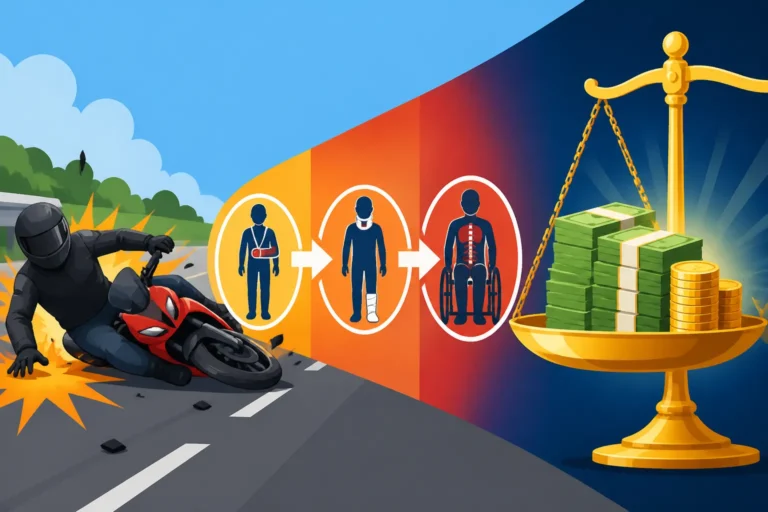
You’ve just been involved in a motorcycle accident, and the physical and emotional toll is immense. Then comes the next devastating blow: you find out the at-fault driver, the person who caused all this chaos, doesn't carry nearly enough insurance to cover your medical bills, lost wages, and the extensive damage to your bike. It’s a frustrating, heartbreaking situation that leaves many riders feeling utterly lost and wondering where to turn next. This guide is designed to cut through that confusion, offering practical, empathetic advice on navigating the complex world of underinsured motorist claims so you can secure the compensation you truly deserve.
The Harsh Reality of Underinsured Drivers
Let's be real for a moment: nobody expects to be in an accident, and even fewer expect to be hit by someone who can't cover the damages. It's a particularly bitter pill for motorcyclists, who often face more severe injuries and higher medical costs than those in car accidents. The term "underinsured" isn't just a legal nicety; it describes a very real financial crisis that can engulf your life after a crash.
What "Underinsured" Truly Means
When we talk about an "underinsured" driver, it means their liability insurance coverage limits are simply too low to adequately compensate you for the full extent of your damages. Every state has minimum liability insurance requirements, but these minimums are often shockingly low compared to the actual costs of a serious motorcycle accident. For example, in a state like Florida, the minimum bodily injury liability is often just $10,000 per person and $20,000 per accident. Imagine sustaining a broken leg, extensive road rash, and a concussion from a crash. A single ambulance ride, emergency room visit, and a few follow-up appointments could easily gobble up that $10,000 before you even consider physical therapy, lost income, or the pain and suffering you're enduring.
This isn't about the at-fault driver having no insurance at all – that's a whole separate (and equally frustrating) issue of uninsured motorists. Instead, it's about hitting a wall when their policy limits are maxed out, and you're still left with a mountain of unpaid bills and ongoing suffering. It means that while their insurance might pay out their maximum, it's still a drop in the bucket compared to what you truly need to recover and rebuild your life.
Why This Situation is So Frustrating for Riders
Motorcyclists often experience a unique kind of vulnerability on the road. Despite riding safely and defensively, the sheer lack of physical protection compared to a passenger vehicle means that even minor collisions can result in catastrophic injuries. You could be facing multiple broken bones, a traumatic brain injury, or severe road rash requiring skin grafts. These aren't just minor scrapes; these are life-altering injuries that demand extensive, expensive medical care, often stretching into years of rehabilitation and therapy.
The frustration is amplified by the common perception bias against motorcyclists. Insurance companies, and even juries, sometimes implicitly try to assign blame to the rider, regardless of who truly caused the accident. When the at-fault driver's insurance is exhausted, and you're left holding the bag, it feels incredibly unfair. You followed the rules, you wore your gear, and now you’re suffering due to someone else's negligence and insufficient planning. It's a slap in the face when your financial recovery is capped by the minimal coverage of the person who hurt you.
Understanding Your Own Insurance Coverage
The good news, if there is any in such a tough situation, is that your own insurance policy often holds the key to financial recovery when the other driver is underinsured. This is where a specific type of coverage, often overlooked until it's desperately needed, comes into play: Underinsured Motorist (UIM) coverage.
The Lifeline of Underinsured Motorist UIM Coverage
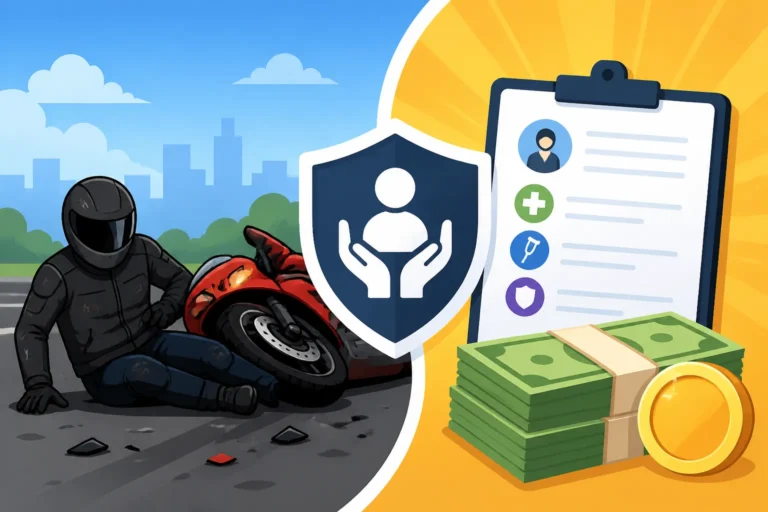
Underinsured Motorist (UIM) coverage is your personal safety net. It's designed to kick in when the at-fault driver's liability insurance isn't enough to cover your damages. Think of it as your own insurance company stepping up to fill the gap between what the other driver's policy pays out and the actual cost of your injuries and other losses, up to your UIM policy limits. It’s a critical component that can literally save you from financial ruin after a severe motorcycle accident.
Many riders, myself included, often focus on the required liability and comprehensive/collision coverage, sometimes glossing over options like UIM. However, given the prevalence of low minimum insurance requirements across states and the severity of motorcycle accident injuries, having robust UIM coverage is arguably one of the most important coverages you can carry as a motorcyclist. It directly addresses the very real possibility that you'll be hit by someone whose policy is simply inadequate.
Stacking UIM Coverage to Maximize Payouts
One powerful feature of UIM coverage, depending on your state and policy, is the ability to "stack" it. Stacking means combining the UIM limits from multiple policies or multiple vehicles on a single policy to create a larger pool of coverage. There are typically two types of stacking:
- Intra-policy stacking: This applies when you have multiple vehicles on a single insurance policy. If your UIM coverage is $50,000 per vehicle and you have two motorcycles and a car on the same policy, you might be able to stack your UIM coverage, effectively giving you $150,000 in coverage for a single accident, even if only one vehicle was involved.
- Inter-policy stacking: This applies if you have UIM coverage on separate policies, for example, if you have one policy for your motorcycle and another for your car with a different insurer. In some states, you might be able to stack these separate coverages.
This ability to stack can significantly increase your available compensation when the other driver's limits are exhausted. For instance, if the at-fault driver has $25,000 in liability coverage, but your damages are $100,000, and you have $50,000 in UIM coverage that can be stacked twice for a total of $100,000, your UIM policy could pay the remaining $75,000. It's a complex area, and the rules vary wildly by state and specific policy language, which is why understanding how UM/UIM Coverage Increases Payouts is crucial, and why getting professional advice can make all the difference.
Other Potential Avenues in Your Policy
Beyond UIM, your own insurance policy might offer other avenues for recovery, even if they don't cover all the damages. Your Medical Payments (MedPay) or Personal Injury Protection (PIP) coverage can provide immediate funds for medical treatment, regardless of fault. This is invaluable, especially in the chaotic aftermath of a crash when bills start piling up and you're unsure who will pay what. These coverages are designed to help you get necessary medical care without delay, which is vital for both your health and your eventual claim.
Additionally, your collision coverage will pay for the damage to your motorcycle, minus your deductible, even if the other driver is at fault and underinsured. While this doesn't help with your personal injuries, it ensures your ride gets fixed or replaced sooner rather than later. These elements of your own policy are important because they can provide direct relief, bridging the gap while the more complex UIM and liability claims are being sorted out. Understanding How Insurance Policy Limits Affect Your Payout across all these different coverages is critical to maximizing your overall recovery.
Here's a quick comparison of common coverage types that become important after an underinsured driver incident:
| Coverage Type | What It Covers | When It Kicks In | Key Benefit |
|---|---|---|---|
| Liability | Damages (injuries/property) you cause to others. | You are at fault, or to cover the at-fault driver. | Fulfills legal obligation, compensates others. |
| Collision | Damage to your motorcycle from a collision, regardless of fault. | Your bike is damaged in a crash. | Repairs or replaces your motorcycle quickly. |
| Comprehensive | Damage to your motorcycle from non-collision events (theft, fire, vandalism). | Bike stolen, hail damage, etc. | Protects investment outside of crash scenarios. |
| Medical Payments/PIP | Your medical expenses and sometimes lost wages, regardless of fault. | You or your passengers are injured in an accident. | Immediate medical care without waiting for fault determination. |
| Uninsured Motorist (UM) | Your injuries/damages if an uninsured driver hits you. | At-fault driver has NO insurance. | Protects you from drivers who illegally lack insurance. |
| Underinsured Motorist (UIM) | Your injuries/damages if an underinsured driver hits you (their limits are too low). | At-fault driver has some insurance, but it's insufficient. | Fills the gap between inadequate third-party coverage and your actual costs. |
Immediate Steps After the Accident
The moments immediately following a motorcycle accident are critical, not just for your health, but for preserving your ability to make a successful claim later. When an underinsured driver is involved, these steps become even more crucial because you'll need every piece of evidence to justify seeking additional compensation from your own UIM policy.
Documenting Everything Meticulously
From the very first moments after impact, if you're physically able, start documenting everything. This isn't just about taking a few photos; it's about building a comprehensive record that tells the full story of the accident and your subsequent injuries. Take pictures of the accident scene from multiple angles, showing vehicle positions, road conditions, traffic signals, and any debris. Capture images of both your damaged motorcycle and the other vehicle involved. Don't forget to take photos of your injuries, even minor scrapes and bruises, as these can escalate or be indicative of internal damage.
Gather contact and insurance information from the other driver. Get their name, address, phone number, driver's license number, and insurance company name and policy number. If there are any witnesses, politely ask for their contact information as well. Remember, their testimony can be invaluable in establishing Who Is at Fault in a Motorcycle Accident and countering any potential claims by the other driver or their insurer that you were somehow to blame. This detailed documentation, including photos, videos, and witness statements, forms the bedrock of your claim and strengthens your position when you inevitably need to prove fault and the extent of your damages. For more comprehensive advice, refer to our guide on First Steps to Protect Your Motorcycle Claim.
Seeking Medical Attention Without Delay
This cannot be stressed enough: seek medical attention immediately after a motorcycle accident, even if you feel okay. Adrenaline is a powerful thing, and it can mask pain and symptoms of serious injuries for hours or even days. What feels like a minor bump could be a concussion, and what seems like simple soreness could be a developing spinal injury. Head straight to an emergency room or an urgent care clinic.
Timely medical documentation creates an undeniable link between the accident and your injuries. If you delay seeking treatment, the insurance company will almost certainly try to argue that your injuries weren't caused by the crash, or that you're exaggerating their severity. This "gap in treatment" argument is a common tactic used by insurers to reduce settlement amounts. By getting checked out right away, you establish a clear medical record that proves your injuries are a direct result of the collision. It's not just about your legal claim; it's about your health and ensuring you catch any underlying issues that might not be immediately apparent.
Notifying Your Insurance Company
As soon as you can after ensuring your immediate safety and seeking medical care, you need to notify your own insurance company about the accident. This might seem counterintuitive if the other driver was at fault, but it's a crucial step, especially when an underinsured driver is involved. You’ll need to initiate a claim with them to access your UIM coverage, MedPay, or collision coverage.
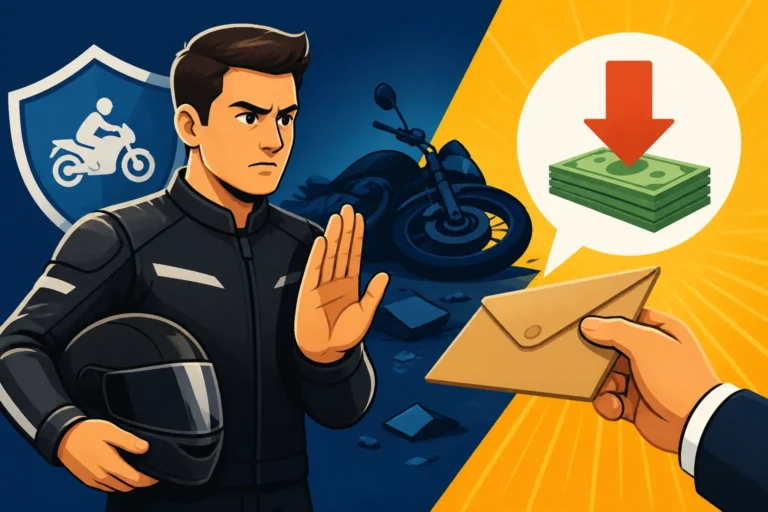
Be careful what you say during this initial notification. Stick to the facts: when, where, and what happened. Avoid speculating about fault or the extent of your injuries. Simply report that an accident occurred, and that you were injured and your motorcycle damaged. You don't need to give a recorded statement right away, and it's often wise to consult with an attorney before doing so. Your own insurer needs to be aware so they can begin their internal processes, but remember, even your insurance company might try to minimize payouts, especially on a UIM claim, as they will essentially be paying you directly. This is why understanding What Happens When Damages Exceed Coverage and preparing for a potentially complex negotiation is so important.
Navigating the UIM Claim Process
Once the immediate aftermath is handled, you'll find yourself entering the more formal claims process. This can be daunting, especially when dealing with both the at-fault driver's minimal insurance and your own UIM policy. It's a two-front battle, and understanding the nuances is key.
Initiating Your UIM Claim
After the at-fault driver's insurance company has offered and paid out their maximum policy limits, and it's clear these limits won't cover your total damages, it's time to formally initiate your Underinsured Motorist (UIM) claim with your own insurance company. You'll need to submit documentation proving the other driver's policy limits have been exhausted and that your damages far exceed that amount. This usually involves providing copies of all your medical bills, records, lost wage documentation, and repair estimates for your motorcycle.
Your insurance company will then open a UIM claim. They will review all the evidence, much like they would for a regular liability claim, to determine the full value of your damages. While they are your insurer, their primary goal is still to protect their bottom line, so expect them to scrutinize your claim carefully. They may send you to an independent medical examination (IME) or request more information. This process can feel like a betrayal, as you're now fighting your own insurer, but it's a standard part of UIM claims.
The Role of an Attorney in UIM Claims
This is precisely where the value of a skilled motorcycle accident attorney becomes immeasurable. While you might feel you can handle a simple claim on your own, a situation involving an underinsured driver and a UIM claim is anything but simple. An experienced attorney knows how to prove fault in a motorcycle accident and navigate the complexities of dealing with two different insurance companies, including your own. They understand the intricacies of UIM laws in your state, how stacking works, and how to effectively negotiate for a fair settlement.
An attorney can:
- Handle Communication: They can take over all communication with both insurance companies, shielding you from their tactics.
- Gather Evidence: They will meticulously collect and organize all necessary evidence, including accident reports, medical records, wage statements, and expert testimony to build a strong case for your full damages.
- Value Your Case Accurately: They have the experience to accurately calculate the full scope of your damages, including economic damages (medical bills, lost wages, property damage) and non-economic damages (pain and suffering, emotional distress, loss of enjoyment of life). This ensures you’re not leaving money on the table.
- Negotiate Effectively: They know the strategies insurance companies use to lowball offers and can aggressively negotiate on your behalf to secure the maximum possible payout from both the at-fault driver's limited policy and your UIM coverage. This is especially important for How to Negotiate a Motorcycle Accident Settlement.
- Litigate if Necessary: If negotiations fail, they are prepared to take your case to court, ensuring your rights are protected throughout the entire process. This is why knowing Do You Need a Motorcycle Accident Lawyer is essential in these complex scenarios.
Negotiation Strategies for UIM Claims
Negotiating a UIM claim often feels like a delicate dance. You've established that the other driver's insurance is insufficient, and now you're asking your own insurer to pay out. This means they'll be looking for reasons to reduce the amount. A strong negotiation strategy involves meticulously documenting all your damages. This includes not just current medical bills but also projections for future medical care, especially if you're dealing with long-term effects of motorcycle injuries.
Your attorney will compile a comprehensive demand package outlining all your losses. This package will highlight not only your tangible economic damages, but also the significant non-economic damages, like pain and suffering, which are often substantial in motorcycle accidents. They'll emphasize the severity of your common motorcycle accident injuries and how they've impacted your quality of life. Be prepared for your insurer to make a lower initial offer; this is a common tactic. Your attorney will counter these offers, presenting compelling evidence and arguments to justify a higher settlement, drawing on their experience to highlight what your case is truly worth.
What if UIM Isn't Enough or Doesn't Exist?
Sometimes, even with robust UIM coverage, the extent of your injuries and damages can exceed even those limits. Or perhaps, due to various reasons, you didn't have UIM coverage on your policy. In these dire situations, it can feel like you've hit a dead end, but there might still be alternative avenues for recovery worth exploring.
Exploring Other Liable Parties
The at-fault driver might not be the only party responsible for your accident. In some complex scenarios, there could be other individuals or entities that share liability. For example, if the accident was caused by a defective part on the other driver's vehicle, the manufacturer could be held partially liable. If the crash happened due to poor road conditions like a huge pothole or unmarked construction, a government entity responsible for road maintenance might be at fault.
Another example could be if the at-fault driver was intoxicated and had been overserved at a bar or restaurant in a state with "dram shop" laws. In such a case, the establishment that served them could potentially share responsibility. Your attorney can investigate the accident thoroughly to identify all potential parties that might have contributed to the crash, expanding the pool of available insurance coverage and assets to pursue. This diligent investigation into Who Is at Fault in a Motorcycle Accident can sometimes uncover unexpected sources of recovery.
Personal Assets and Litigation
If all insurance avenues are exhausted and your damages still aren't fully covered, the final option might be to pursue the at-fault driver's personal assets through a lawsuit. This is often a complex and challenging path, as many drivers with minimal insurance coverage may also have limited personal assets. However, in cases of severe, catastrophic injuries where a significant judgment is necessary, it might be the only way to seek full compensation.
A successful lawsuit could result in a judgment against the at-fault driver, which they would then be legally obligated to pay. This might involve garnishing wages, seizing property, or other collection methods, depending on state law. This route is typically considered a last resort due to its complexity and the uncertainty of collection, but it's an option that an attorney can discuss with you, especially when you're facing life-altering injuries and Catastrophic Motorcycle Injuries Explained.
Government Assistance and Other Resources
While not a direct form of compensation from the at-fault party, don't overlook government assistance programs and other resources that might be available to you, especially if you're facing long-term disability or inability to work. State and federal disability programs, Medicaid, and other social safety nets can provide crucial support for medical expenses, living costs, and rehabilitation services when all other avenues have been exhausted or are insufficient.
These resources are designed to help individuals who have suffered debilitating injuries and are facing severe financial hardship. While they won't replace a personal injury settlement, they can provide a vital lifeline, covering expenses that might otherwise go unpaid. Your medical providers or a social worker might be able to help you navigate these options.
Disclaimer
Please remember, the information provided in this guide is for informational purposes only and does not constitute legal advice. Every motorcycle accident claim is unique, and the laws regarding insurance, liability, and personal injury vary significantly by state. It is crucial to consult with a qualified motorcycle accident attorney in your jurisdiction to discuss the specifics of your case and understand your legal rights and options.