How to Handle a Lowball Settlement Offer
It’s incredibly frustrating when you’ve been through the trauma of a motorcycle accident, endured injuries, and are facing mounting bills, only to receive a settlement offer from the insurance company that feels insultingly low. This common tactic can leave you feeling undervalued and unsure of your next move. This guide will walk you through exactly what a lowball offer is, why insurance companies make them, and how you can effectively push back to secure the fair compensation you deserve.
Understanding What a Lowball Offer Is
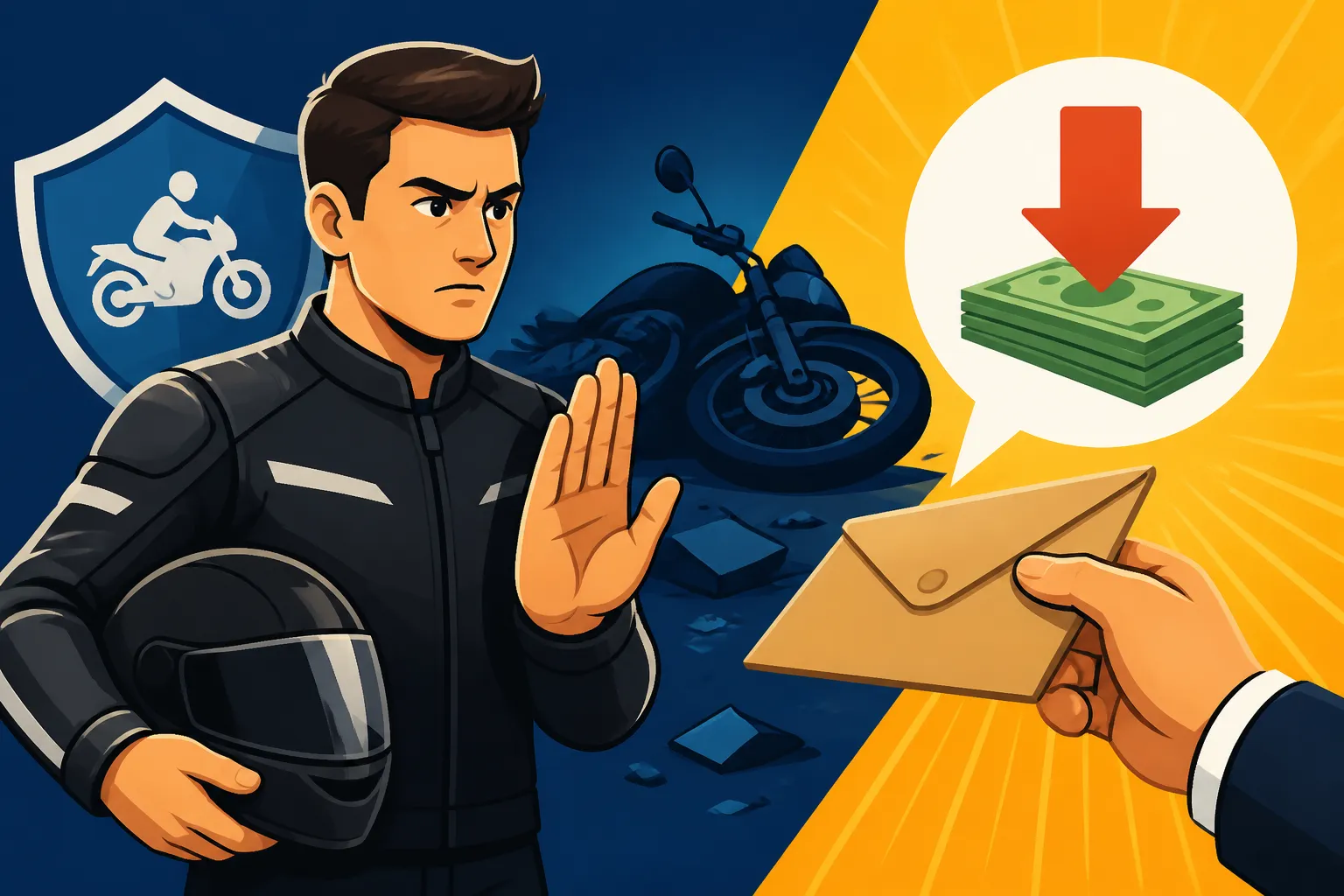
Receiving a settlement offer after a motorcycle accident should ideally bring a sense of relief, a step closer to putting the incident behind you. But all too often, that first offer feels like a slap in the face. It’s significantly less than what you expected, nowhere near what your damages truly warrant, and it can instantly deflate your hopes for a straightforward resolution. This is precisely what we call a "lowball offer." It’s not just a slightly conservative estimate; it’s an intentionally reduced offer designed to test your resolve and see if you’ll accept less than your claim is worth.
Recognizing the Signs
How do you know if you're truly looking at a lowball offer versus just a difficult negotiation starting point? One of the clearest indicators is the sheer discrepancy between your documented costs and the offer amount. If you’ve compiled all your medical bills, lost wage statements, and property damage estimates, and the insurance company’s offer covers only a fraction, that’s a red flag. For instance, if your medical treatment alone has totaled $15,000, and they’re offering $18,000 to cover everything, including your lost income and the pain you’ve endured, it’s highly probable you’re dealing with a lowball.
Another sign is a vague or unsupported rationale for their valuation. They might just state a number without detailing how they arrived at it, or they might make broad generalizations about your injuries being "minor" despite medical evidence to the contrary. They might also try to quickly pressure you into accepting, implying that this is their "best and final" offer right out of the gate. This urgency is often a tactic to prevent you from taking the time to fully evaluate your claim and understand its true value. Don’t fall for the rush; take your time.
Comparing it to Your Damages
To accurately assess if an offer is a lowball, you first need a solid understanding of your total damages. This isn't just about what you've paid out of pocket so far. It encompasses a wide range of costs and losses, both economic and non-economic. Economic damages are the easily quantifiable losses like past and future medical expenses, lost wages from time off work, and any property damage to your motorcycle and gear. Non-economic damages, though harder to quantify, are equally important. These include your physical pain and suffering, emotional distress, loss of enjoyment of life, and the inconvenience the accident has caused.
You should have a detailed ledger of all these costs. Think about physical therapy appointments, specialist visits, prescription medications, repairs or replacement costs for your motorcycle, and even the income you missed from a part-time job or commissions. For a deeper dive into what influences your payout, you might find our guide on how your total damages are calculated in a motorcycle accident claim particularly helpful. When the insurance company’s offer falls dramatically short of this comprehensive tally, especially on the non-economic side, it's a clear signal that they’re trying to minimize their payout, and you need to prepare for a fight.
Why Insurance Companies Make Lowball Offers
It's easy to take a lowball offer personally, but it's crucial to understand that it's usually not about you. It's a calculated business strategy employed by insurance companies to protect their bottom line. They are for-profit entities, and every dollar they pay out in claims is a dollar that impacts their profitability. They have sophisticated algorithms and highly trained adjusters whose primary goal is to settle claims for the lowest possible amount.
Profit Motives and Tactics
At the heart of every lowball offer is the insurance company's desire to maximize profits. They operate on a simple principle: the less they pay out in claims, the more money they keep. So, their initial offer isn't typically what they think your case is truly worth; it's what they hope you'll accept. They rely on the fact that many accident victims are under financial stress, overwhelmed by medical bills, and eager to resolve their situation quickly. They also know that many people aren't fully aware of the full scope of their damages or the intricacies of personal injury law.
Adjusters are often incentivized to close cases quickly and cheaply. They might try to use your inexperience against you, suggesting that you don't need all the medical treatment you're receiving or questioning the severity of your pain. They might also attempt to shift some blame onto you, even if subtly, to reduce their liability. Understanding these motivations helps you depersonalize the offer and approach the negotiation with a clear, strategic mindset rather than emotional reactivity.
Rider Bias and Stereotypes
Unfortunately, motorcycle riders often face an uphill battle when it comes to claims, largely due to ingrained biases and stereotypes. Many people, including some insurance adjusters and even jurors, hold preconceived notions that motorcyclists are inherently reckless, speed excessively, or are simply "asking for it" by riding a bike. This perception can lead to a phenomenon known as "rider bias in fault determination," where insurers might unfairly assign blame or minimize damages based on the mere fact that you were on a motorcycle.
This bias can manifest in a lowball offer, as the insurance company might believe they can get away with paying less because a jury might be less sympathetic to a rider. They might also try to argue that you contributed to your own injuries by not wearing specific gear (even if it wasn't legally required) or by engaging in a common riding practice like lane splitting, even if it's legal in your state. Being aware of these biases is vital. You need to be prepared to firmly counter these assumptions with facts, evidence, and, if necessary, the expertise of someone who understands how to combat these unfair characterizations.
Strategies for Responding to a Lowball Offer
When you receive an offer that just doesn't sit right, your immediate instinct might be to react emotionally. However, the most effective response is a calm, strategic one. This isn't just about saying "no"; it's about building a compelling case that clearly outlines why their offer is insufficient and what a fair settlement truly looks like.
Formulating Your Counteroffer
The first rule of responding to a lowball offer is: never accept the first offer, especially if it feels low. Instead, you need to prepare a well-reasoned counteroffer. This isn't just pulling a higher number out of thin air; it needs to be meticulously calculated and supported by every piece of evidence you have. Start by reviewing all your damages: medical bills, estimated future medical costs, lost wages, property damage, and a reasonable valuation for your pain and suffering.
Your counteroffer should be significantly higher than their initial offer, but still within a realistic range that you can justify. For instance, if they offered $18,000 for $15,000 in medical bills, and you believe your total damages are closer to $75,000 (including pain and suffering, lost wages, etc.), you might counter at $100,000 or $120,000 to leave room for negotiation. This allows you to signal that you know the true value of your claim without appearing unreasonable. Detail every component of your claim that justifies this higher number, ensuring no stone is left unturned.
The Power of a Demand Letter
One of the most effective tools in your arsenal when facing a lowball offer is a comprehensive demand letter. This isn't just a casual email; it's a formal, persuasive document that lays out your entire case in detail. A strong demand letter should include:
- A narrative of the accident: Clearly establishing the other party's fault. You might reference our guide on proving fault in a motorcycle accident here.
- A detailed account of your injuries: Including medical diagnoses, treatments, and prognosis.
- Itemized economic damages: All medical bills, lost wages (past and future), and property damage.
- A compelling argument for non-economic damages: Explaining the impact of your pain, suffering, and emotional distress on your daily life.
- Supporting documentation: Medical records, bills, wage statements, accident reports, and photos.
- Your settlement demand: The specific amount you are seeking, clearly justified by the evidence.
A well-crafted demand letter forces the insurance company to confront the full reality of your situation and the strength of your case. It demonstrates that you are serious, organized, and prepared to fight for what you deserve. Without this detailed justification, your higher counteroffer might simply be dismissed as arbitrary. This formal approach shows them you mean business and aren't easily intimidated.
Documenting Everything
In any personal injury claim, documentation is king, especially when dealing with a lowball offer. From the moment of the accident, you should be meticulously documenting everything related to your injuries, treatment, and losses. This includes:
- Medical Records: Every single doctor's visit, specialist consultation, physical therapy session, prescription, and imaging result (X-rays, MRIs).
- Bills and Receipts: All medical bills, transportation costs to appointments, receipts for over-the-counter pain medication, and any other out-of-pocket expenses.
- Lost Wage Statements: Pay stubs, employer letters confirming missed work, tax returns for self-employed individuals, and evidence of lost earning capacity.
- Photos and Videos: Pictures of the accident scene, your motorcycle damage, and crucially, your injuries as they heal (or don't heal).
- Personal Journal: A daily log detailing your pain levels, emotional state, limitations, and how your injuries affect your daily life. This can be powerful evidence for pain and suffering.
- Communication Log: Keep records of all calls, emails, and letters with the insurance company, noting dates, times, and summaries of conversations.
The more detailed and organized your documentation, the harder it is for the insurance company to dispute your damages or claim that your injuries are not severe. This robust collection of evidence forms the backbone of your counteroffer and demonstrates the undeniable impact of the accident on your life.
Gathering Evidence to Support Your Counteroffer
A strong counteroffer isn't just a number; it's a well-supported narrative. Each component of your demand must be backed by concrete evidence. Without this, your higher number remains just a wish, easily dismissed by an insurer who deals with these claims every day.
Medical Records and Bills
Your medical records are arguably the most critical piece of evidence in proving your injuries and their severity. Insurance companies scrutinize these documents for inconsistencies, gaps in treatment, or any suggestion that your injuries aren't as serious as you claim. Therefore, you need to provide a complete and chronological set of records, including:
- Emergency room reports: The initial assessment of your injuries.
- Doctor's notes and diagnoses: Showing consistent treatment and progression (or lack thereof) of your recovery.
- Specialist reports: Orthopedists, neurologists, physical therapists, etc., who can attest to the specialized care required.
- Hospitalization records: If applicable, detailing your stay.
- Prescription records: Documenting medications for pain, inflammation, or other accident-related issues.
Additionally, all medical bills, from the ambulance ride to ongoing physical therapy, must be itemized and presented. Ensure you gather statements showing the full amount charged, not just what your health insurance paid. This provides a clear financial picture of your immediate and ongoing medical expenses. When the insurer makes a lowball offer on medical damages, it's often because they're downplaying the necessity of your treatment or the severity of your condition, so comprehensive records directly counter this. You might also look into how medical bills affect your settlement to get a better understanding of what to include.
Lost Wages and Future Earning Capacity
Motorcycle accident injuries often mean time away from work, leading to significant financial strain. Proving lost wages is crucial for your counteroffer. Collect pay stubs from before and after the accident, employer statements verifying your missed workdays and salary, and any documentation of lost bonuses, commissions, or other benefits. If you're self-employed, tax returns, profit and loss statements, and invoices from clients can help establish your income.
Beyond immediate lost wages, consider the impact on your future earning capacity. If your injuries are severe or permanent, they might prevent you from returning to your previous job or working at the same capacity. This long-term financial impact is a substantial component of your damages. You might need to consult with vocational experts or economists to project future lost income, especially in cases involving catastrophic injuries. The difference between what you could have earned and what you will earn due to the injury is a significant number that insurance companies often try to ignore in their lowball calculations. Our article on how lost wages are calculated can offer more insight.
Pain and Suffering Documentation
While economic damages are straightforward to calculate, pain and suffering is subjective and therefore a frequent target for lowball offers. Insurance companies often use generic multipliers or downplay your experience. To effectively counter this, you need to meticulously document the impact your injuries have had on your daily life.
Your personal injury journal is invaluable here. Detail how your pain affects sleep, hobbies, family time, and even simple tasks like getting dressed or walking. Include photos of your injuries as they progress (or don’t). Statements from friends, family, or colleagues who can attest to changes in your mood, physical capabilities, and overall enjoyment of life can also be powerful. Medical professionals can also provide statements about your prognosis, chronic pain potential, and limitations. For complex cases, psychological evaluations documenting emotional distress, anxiety, or PTSD can further bolster this claim. Understanding the specifics of pain and suffering damages explained can help you articulate this critical component effectively.
Negotiation Tactics to Maximize Your Settlement
Successfully navigating a lowball offer requires more than just evidence; it demands strategic negotiation. It’s a dance between firmness and patience, knowing when to push and when to hold your ground.
Maintaining a Professional Demeanor
It’s completely natural to feel angry or frustrated when dealing with a lowball offer, especially after everything you’ve been through. However, letting those emotions get the best of you during negotiations can be detrimental. Insurance adjusters are trained to handle emotional outbursts, and an angry claimant might be seen as less credible or more prone to making impulsive decisions.
Instead, maintain a calm, collected, and professional demeanor. Present your arguments factually and logically. Refer to your evidence, medical reports, and documented losses. If an adjuster is being difficult or dismissive, simply reiterate your position based on the facts. This professional approach shows that you are serious, informed, and capable of handling the complexities of the claim process. It also helps to prevent any misinterpretations or miscommunications that could harm your case down the line. Remember, every conversation with the insurance company could potentially be used against you.
Highlighting Weaknesses in Their Offer
When an insurance company presents a lowball offer, they often do so by selectively interpreting facts, downplaying injuries, or ignoring significant portions of your damages. Your job in the negotiation is to systematically dismantle their offer by highlighting these weaknesses.
For instance, if they've dismissed your neck pain as minor whiplash, but you have MRI scans showing herniated discs and a physical therapist's report detailing chronic stiffness, you present that evidence clearly. If they've undervalued your lost wages, show them precise calculations from your employer. If they try to imply your riding style contributed to the accident, use the police report or witness statements to show the other driver was clearly at fault. For example, if you were involved in a left-turn motorcycle accident, statistics often show the driver is liable. The goal is to make it clear that their valuation is not only inadequate but also demonstrably false when held against the complete body of evidence. Each point you refute with concrete facts strengthens your position and weakens theirs, forcing them to re-evaluate their stance. Knowing how to counter an insurance offer effectively is key here.
Leveraging Legal Counsel
While some minor claims might be handled independently, attempting to negotiate a serious injury claim, especially after a lowball offer, often benefits immensely from legal representation. An experienced motorcycle accident lawyer knows the tactics insurance companies employ and how to effectively counter them. They can accurately assess the true value of your claim, including often-overlooked future damages, and present a formidable case.
Lawyers can communicate with the insurance company on your behalf, shielding you from their tactics and allowing you to focus on your recovery. They know the applicable laws in your state, understand how to interpret complex medical and financial documents, and can bring in expert witnesses if needed. Perhaps most importantly, the threat of litigation often makes insurance companies take your claim more seriously. They know that a lawyer isn't afraid to go to court, which can be far more expensive for them than settling fairly out of court. If you're wondering, "Do you need a motorcycle accident lawyer?", the answer is often a resounding yes when a lowball offer is on the table.
Knowing When to Walk Away or Escalate
Negotiation is a process of give and take, but there comes a point when you need to recognize that the other side isn't negotiating in good faith or that their offer will simply never meet your needs. Knowing when to escalate your claim or even consider going to trial is a crucial part of the process.
Understanding Policy Limits and UIM Coverage
Before you consider walking away from negotiations or filing a lawsuit, it’s critical to understand the insurance policy limits involved. The at-fault driver's insurance policy has a maximum amount it will pay out. If your damages exceed these limits, no amount of negotiation will get you more from that specific policy. This is where you might face a genuine ceiling, rather than a lowball offer based on undervaluation.
However, this doesn't mean you're out of options. If the at-fault driver is underinsured, your own uninsured/underinsured motorist (UM/UIM) coverage might kick in to cover the remaining damages. This is why having robust UM/UIM coverage is so important for riders. Understanding what happens when damages exceed coverage and how UM/UIM coverage increases payouts can provide additional avenues for recovery beyond the at-fault driver's minimal policy. Your attorney will investigate all potential sources of recovery.
Considering Litigation
If, after sustained negotiation, the insurance company refuses to offer a fair settlement that reflects your damages, you may have no choice but to consider filing a personal injury lawsuit. This is a significant step, but it’s often the necessary one to achieve justice, especially in cases involving severe injuries or clear liability. Filing a lawsuit opens up the discovery process, allowing your legal team to gather more evidence, depose witnesses, and potentially uncover facts the insurance company withheld.
It's important to understand that most personal injury lawsuits still settle before reaching a jury trial. The act of filing a lawsuit often signals to the insurance company that you are serious and willing to take your case all the way. This can prompt them to offer a more reasonable settlement to avoid the expense and uncertainty of a trial. However, you must be prepared for the possibility of going to court, which is a lengthy and complex process. Our guide on motorcycle accident settlement vs trial discusses these considerations in depth.
The Role of a Lawyer
Throughout this entire process, from evaluating the lowball offer to potentially escalating to litigation, a skilled motorcycle accident lawyer is your most valuable asset. They can accurately assess your case's value, including complex calculations for future medical costs and lost earning capacity. They understand how to build a strong legal argument, navigate legal procedures, and represent your best interests.
A lawyer will handle all communications with the insurance company, ensuring you don't inadvertently say or do anything that could jeopardize your claim. They will negotiate aggressively on your behalf, and if a fair settlement cannot be reached, they will be prepared to take your case to court. Their expertise is particularly crucial when fault is disputed in a motorcycle crash, or when the insurance company employs sophisticated tactics to reduce payouts. Having a dedicated legal professional in your corner can significantly increase your chances of securing the maximum possible compensation, turning a frustrating lowball situation into a successful resolution.
Comparing Offers: Lowball vs. Fair Settlement
To truly understand the gap between an unfair offer and what you deserve, let's look at a hypothetical comparison.
| Damage Category | Insurance Lowball Offer | Justified Counteroffer (Backed by Evidence) | Explanation of Discrepancy |
|---|---|---|---|
| Medical Bills | $15,000 | $28,000 | Insurer only covered initial ER and a few follow-ups, ignoring specialist visits, physical therapy, and future pain management recommendations. Counteroffer includes all documented past and estimated future treatment. |
| Lost Wages | $2,500 | $12,000 | Insurer only covered 1 week of missed work, ignoring documentation of 4 weeks of full disability and an additional 8 weeks of reduced capacity (part-time). Counteroffer includes lost commissions and overtime missed. |
| Property Damage | $8,000 | $15,000 | Insurer offered a "totaled" value far below market value for the specific motorcycle model and condition, and didn't account for damaged custom gear (helmet, jacket, boots). Counteroffer includes expert valuation and gear replacement costs. |
| Pain & Suffering | $5,000 | $75,000 | Insurer used a minimal multiplier, dismissing severe, chronic nerve pain, sleep disturbances, and inability to engage in pre-accident hobbies. Counteroffer is based on medical prognosis, pain journal entries, and the significant impact on quality of life, using a more appropriate multiplier for severe injuries. |
| Total Offer/Demand | $30,500 | $130,000 | The lowball offer is less than a quarter of the justified demand, highlighting how severely insurers can undervalue claims without a strong counter. |
This table illustrates a common scenario where an initial lowball offer barely covers economic damages, completely neglecting or severely minimizing non-economic damages. Your goal is to move the negotiation from their lowball column to your justified counteroffer, backed by irrefutable evidence.
Disclaimer
The information provided in this guide is for general informational purposes only and does not constitute legal advice. Every motorcycle accident claim is unique, and the specific facts and applicable laws will influence the outcome. It is highly recommended to consult with a qualified personal injury attorney to discuss your individual situation and receive personalized legal advice.