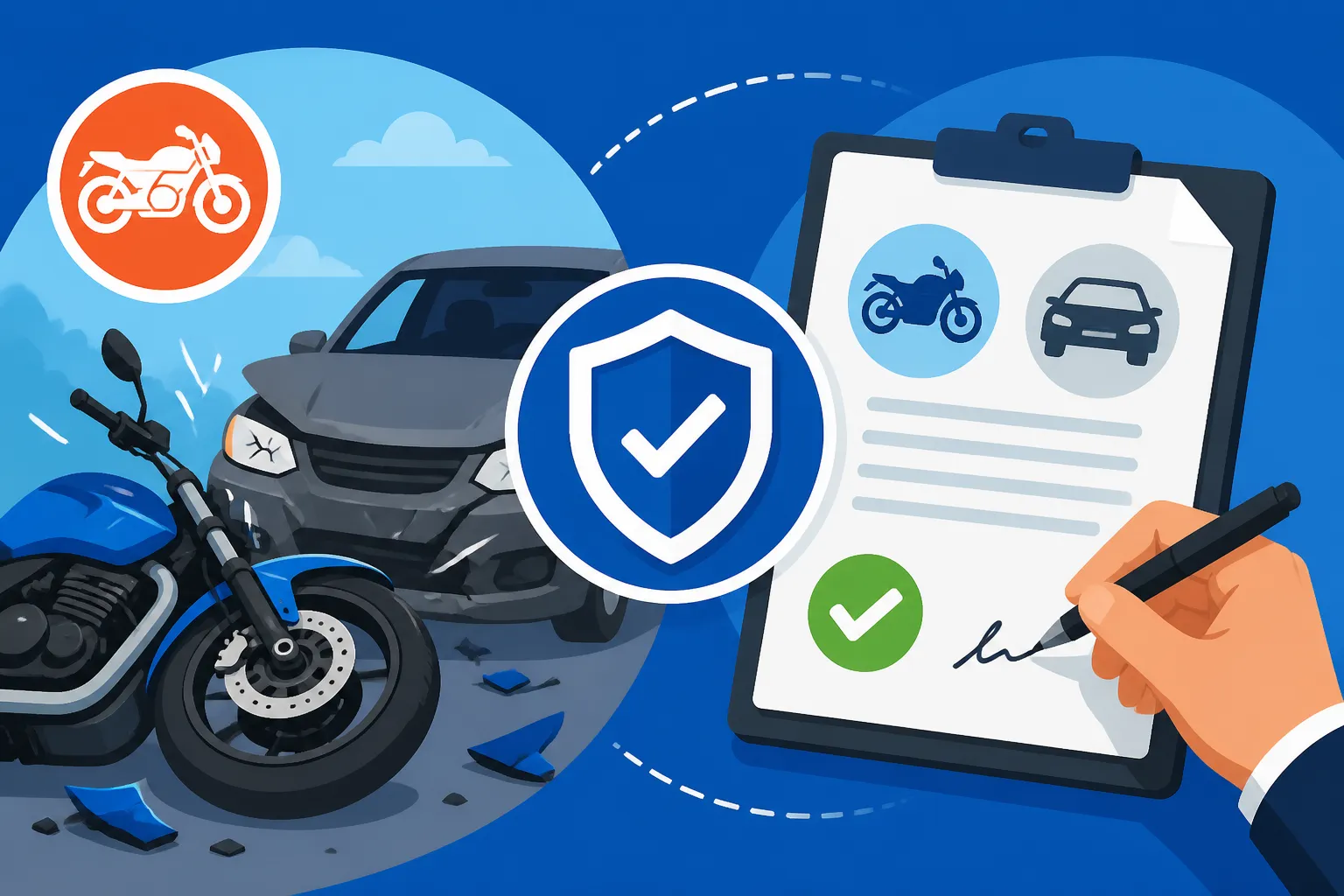
What a Property Damage Release Is
After a motorcycle accident, one of the first things you'll likely encounter, even before you've fully grasped the extent of your injuries, is the insurance company wanting to settle the damage to your bike. It feels like a relief, a quick win, but signing any document, especially a "property damage release," without fully understanding its implications can be a massive mistake that could seriously jeopardize your entire claim. This guide is here to break down exactly what a property damage release is, why insurers present it, and the critical factors you need to consider before putting your signature on the dotted line.
What Exactly is a Property Damage Release?
When you’re reeling from a motorcycle accident, the sight of your damaged bike can be just as heartbreaking as any physical pain. The insurance company, whether it’s your own or the at-fault driver’s, will often move quickly to assess this damage and offer a settlement. This is where a property damage release comes into play, a document that seems straightforward but carries significant weight.
Defining the Document
At its core, a property damage release is a legal agreement between you, the injured party, and the insurance company. By signing it, you are essentially stating that you accept the offered payment as full and final compensation for the damage to your motorcycle and any other personal property (like your helmet, gear, or phone) that was damaged in the crash. It's a formal way of closing the book on the property damage portion of your claim. Once you sign this release and accept the payment, you typically cannot go back and ask for more money for those specific damages, even if you later discover additional issues with your bike that weren't apparent initially.
Think of it like this: the insurance company is offering you a sum of money, and in exchange for that money, you're relinquishing your right to pursue any further claims related to that specific property damage. It seems fair on the surface, especially when you just want to get your bike fixed or replaced, but the devil is always in the details, particularly concerning what else you might be releasing.
The Scope of a Property Damage Release
The scope of a property damage release is usually limited to tangible items: your motorcycle, its accessories, your riding gear, and anything else physically damaged in the crash. For example, if your prized Harley-Davidson Road King suffered frame damage and your Shoei helmet was cracked, a property damage release would address the repair or replacement costs for those items. It's meant to cover the financial losses directly tied to your physical possessions.
However, the tricky part is ensuring that the release only covers property damage and nothing else. Some insurance companies might try to sneak in language that broadly releases them from all claims arising from the accident, which could include your personal injury claim. This is a huge red flag and why careful review is absolutely essential. A properly drafted property damage release should explicitly state that it pertains only to property damage and leaves your bodily injury claim entirely open for future negotiation. Always scrutinize the wording to ensure it’s not a general release designed to end all your potential claims.
How It Differs from a Bodily Injury Release
This distinction is perhaps the most crucial point for any motorcyclist involved in a crash. A property damage release, if drafted correctly, deals only with your damaged possessions. A bodily injury release, on the other hand, is a much broader document that covers any and all physical and emotional injuries you sustained in the accident, as well as associated medical bills, lost wages, and pain and suffering.
The danger lies in confusing the two, or worse, signing a document that functions as a combined release without realizing it. Many states and jurisdictions allow for separate property damage and bodily injury claims, meaning you can settle the property damage portion without affecting your ability to pursue compensation for your injuries. This is often the ideal scenario because property damage can usually be assessed and resolved much faster than personal injuries, which often take weeks, months, or even years to fully manifest and heal. When considering your Motorcycle Accident Settlement Process Explained, remember these are distinct phases.
Here’s a quick comparison to highlight the differences:
| Feature | Property Damage Release | Bodily Injury Release |
|---|---|---|
| What it Covers | Damages to motorcycle, gear, personal belongings. | Physical injuries, emotional trauma, medical bills, lost wages, pain and suffering. |
| Timing of Settlement | Often settled quickly, usually within weeks. | Typically settled much later, after injuries are fully assessed (Maximum Medical Improvement – MMI). |
| Impact on Other Claims | Should not affect bodily injury claim if properly worded. | Finalizes all injury claims; prevents future claims for injuries from the same accident. |
| Complexity | Generally simpler, focused on repair/replacement costs. | Highly complex, involving future medical costs, loss of earning capacity, and non-economic damages. |
| Financial Stakes | Costs of property repair/replacement. | Potentially life-altering compensation for medical care, lost income, and quality of life. |
Understanding these differences is paramount to protecting your rights after a motorcycle accident. Never assume one covers the other, and always proceed with caution.
Why Insurance Companies Push for Property Damage Releases
It might seem like insurance companies are being incredibly efficient by offering to settle your property damage claim quickly after an accident. While efficiency is part of it, there are deeper strategic reasons why they often push for these releases, and understanding them is key to protecting yourself.
Expediting the Claim Process
For insurance companies, time is money. The longer a claim remains open, the more administrative costs they incur, and the greater the uncertainty about the final payout. By offering a quick property damage settlement, they can close one aspect of the claim file, reducing their active caseload and overhead. They also know that getting your bike fixed or replaced quickly is a priority for most riders, and they leverage this urgency.
Imagine you're a rider in Phoenix, Arizona, and your custom chopper just got T-boned. You're without your primary mode of transportation, maybe even your passion. The insurer knows you want your bike back on the road ASAP. By offering a swift settlement for the damage, they tap into that desire, often presenting it as a helpful, no-hassle solution. However, this speed can come at the cost of your future rights if you're not careful. They want to move things along and reduce the total time their adjusters spend on each individual case, making the overall process more streamlined for them.
Limiting Future Liability
This is arguably the most significant reason insurance companies want you to sign a property damage release. While a properly drafted release should only cover property, a vaguely worded or combined release can be a powerful tool to limit all their potential liability for the accident. If they can get you to sign away your right to pursue further compensation for anything related to the crash, they will.
By offering a quick property damage settlement, an insurer might hope that you'll either overlook your injuries, underestimate their severity, or simply be so relieved to have one part of the ordeal over with that you'll accept whatever they offer, even if it's less than you deserve. If a release is ambiguous and you sign it, they might later argue that you settled all claims, including personal injury, even if that wasn't your intention. This tactic is especially common when the bodily injury claim might be substantial, involving serious injuries like a Motorcycle Accident Traumatic Brain Injury or spinal damage. They want to nip the larger, more expensive part of the claim in the bud if they can.
The "Easy Money" Appeal
Let's be honest, after an accident, getting a check in hand can feel like a lifeline. You might have repair bills looming, or you need to put a down payment on a new motorcycle if yours was totaled. The insurance company understands this immediate financial pressure and uses it to their advantage. They present the property damage settlement as "easy money" – a straightforward transaction where you get paid quickly without much fuss.
They count on you being stressed, possibly injured, and eager to move past the incident. The adjuster might emphasize how simple it is: "Just sign here, and we'll get you a check for your bike's repairs this week!" For many riders, especially those unfamiliar with the complexities of personal injury law, this immediate gratification is incredibly tempting. This is why it's so important to resist the urge to rush and to understand What Affects Your Motorcycle Accident Payout in the long run, not just the short term. Remember, their "easy money" is usually the lowest amount they think they can get away with, and it often doesn't consider the full scope of your losses.
The Risks of Signing a Property Damage Release Prematurely
While the immediate relief of settling your property damage might be appealing, signing a release too soon can have severe, long-lasting consequences for your entire motorcycle accident claim. It's a move that often benefits the insurance company far more than it benefits you.
Unforeseen Damages and Depreciation
Motorcycles are complex machines, and accident damage isn't always obvious at first glance. Frame damage, hidden electrical issues, or engine problems might not become apparent until weeks or even months after the initial inspection or repair. For example, if your bike suffered a hard impact in a crash near Sacramento, California, the body shop might fix visible dents, but a subtle misalignment of the frame could lead to handling issues later on, or a cracked engine mount might only reveal itself after extensive riding.
If you've already signed a property damage release, you've accepted a specific amount of money as full compensation for your bike's damage. When these new, hidden issues surface, you typically have no legal recourse to go back to the insurance company and demand more money for those repairs. You've released them from that obligation. Furthermore, even a perfectly repaired motorcycle might suffer from diminished value – it's simply not worth as much as an identical bike that hasn't been in a major accident. This "depreciation" isn't often covered in initial property damage offers, and once you sign the release, that opportunity for compensation is lost.
Impact on Your Bodily Injury Claim
This is the most critical risk. While a property damage release should ideally be separate from a bodily injury claim, some insurance companies will use a single, broad release form that encompasses all damages from the accident. They might title it something innocuous, like "Release of All Claims," without explicitly distinguishing between property and personal injury. If you sign such a document, you could inadvertently waive your right to pursue compensation for your medical expenses, lost wages, and pain and suffering.
Consider a scenario in which you initially feel fine after a low-speed collision, your primary concern is getting your bike fixed, and you sign a "general release" for a few thousand dollars to cover property damage. A few weeks later, you start experiencing severe neck pain, diagnosed as whiplash, requiring extensive physical therapy and time off work. If that release you signed included bodily injury, you could be out of luck for these new, costly injuries. This is why it's essential to understand Why You Shouldn't Sign a General Release Early and to always prioritize your health over a quick property settlement. Your bodily injury claim is often worth far more than your property damage.
The Irreversibility of the Agreement
Once you sign a property damage release and accept payment, it's generally a legally binding contract. Reversing it is incredibly difficult, if not impossible, except in very specific and rare circumstances (like proving fraud or extreme duress). This means you usually can't change your mind, demand more money, or claim new damages that emerge later.
This finality is precisely what the insurance company wants. It provides them with certainty and absolves them of further financial responsibility. For you, however, it can mean being stuck with inadequate compensation that doesn't fully cover your losses, especially if you haven't had a chance to fully assess your injuries or the true extent of your bike's damage. This is why getting professional advice and being absolutely certain about the terms before you sign is non-negotiable.
When It's Generally Safe to Sign a Property Damage Release
Despite the risks, there are situations where signing a property damage release can be a reasonable and efficient step. The key is ensuring that all other potential claims are fully protected and that you're not signing away more than you intend.
No Personal Injuries Sustained
The safest scenario to consider signing a property damage release is when you are absolutely certain you have not sustained any personal injuries whatsoever. This means you've been thoroughly checked by a medical professional, perhaps even sought a second opinion, and have been given a clean bill of health. You haven't experienced any soreness, stiffness, headaches, or unusual symptoms in the days and weeks following the accident.
Even in what seems like a minor fender bender in a parking lot, adrenaline can mask pain, and some injuries, like whiplash or concussions, have delayed onset. So, certainty is the operative word here. If there's even a shadow of a doubt about your physical well-being, or if you haven't completed a full medical evaluation, then signing any release is premature. Your physical health and potential Common Motorcycle Accident Injuries always take precedence over property repairs.
Property Damage is Fully Assessed and Agreed Upon
Before signing, you must be confident that the insurance company's offer accurately and completely covers the cost to repair or replace your motorcycle and any other damaged property. This isn't just about accepting their first estimate. You should:
- Get multiple repair estimates: Take your bike to reputable motorcycle repair shops, preferably those specializing in your make and model, for detailed quotes. Don't rely solely on the insurance adjuster's estimate, which might be lower than actual costs.
- Account for all parts: Ensure the estimate includes genuine OEM parts if that's what you prefer, or at least quality aftermarket parts that meet your standards.
- Consider diminished value: If your bike was significantly damaged but repairable, its market value might still decrease because of the accident history. Some states allow claims for "diminished value."
- Include all damaged items: Don't forget your helmet, riding jacket, boots, gloves, and any personal electronics or items on your person that were damaged. These are legitimate parts of your property damage claim. How Property Damage Are Calculated in a Motorcycle Claim involves more than just the bike itself.
Only when you have thoroughly reviewed all damages, obtained independent estimates, and reached a fair agreement with the insurer on the total compensation for these items should you even consider signing the property damage release.
Your State's Specific Laws on Releases
Laws regarding property damage releases and their impact on personal injury claims can vary significantly from state to state. While many states allow for bifurcated (separate) property damage and bodily injury settlements, it's not universal. Some states might have specific language requirements or deadlines.
For example, in a state like Florida, which has a modified no-fault insurance system, the rules around what type of release is permissible and how it affects different aspects of a claim can be intricate. Understanding your local laws is crucial. This is where consulting with a legal professional becomes invaluable. A knowledgeable attorney specializing in motorcycle accidents will be intimately familiar with the specific regulations in your state and can advise you on whether a property damage release is safe to sign in your particular circumstances. They can also ensure the document is drafted correctly, explicitly protecting your right to pursue a bodily injury claim.
Navigating the Property Damage Settlement Process
Dealing with the aftermath of a motorcycle accident is stressful enough without having to haggle with insurance companies over your damaged bike. However, a little preparation and understanding of the process can make a big difference in ensuring you get a fair settlement for your property damage.
Documenting Your Property Damage
The foundation of any successful property damage claim is thorough documentation. The more evidence you have of your bike's condition before the accident and the damage sustained, the stronger your position will be.
- Take photos and videos at the scene: As soon as it's safe, document everything. Get wide shots of the accident scene, close-ups of your damaged motorcycle from multiple angles, and photos of any other damaged personal items like your helmet or gear.
- Keep all receipts for custom parts or modifications: If your bike had aftermarket parts, custom paint, or recent upgrades, gather receipts to prove their value. Standard insurance appraisals often only account for stock bikes.
- Obtain repair estimates: As mentioned before, get at least two or three detailed estimates from reputable motorcycle repair shops. These should itemize parts, labor, and paint costs.
- Document all communication: Keep a log of every phone call, email, and letter you exchange with the insurance company. Note the date, time, who you spoke with, and what was discussed. This helps ensure transparency and accountability.
- Don't forget your gear: Your protective gear isn't just clothing; it's a critical safety item. If your helmet, jacket, or gloves were damaged, they should be included in your claim. Even seemingly minor scuffs can compromise their protective integrity.
Comprehensive documentation not only proves the extent of your losses but also helps counter any lowball offers from the insurance adjuster. It shows you're serious and have done your homework. For more on what to gather, check out Motorcycle Accident Evidence for Proving Fault, as much of that evidence can also support your damage claim.
Getting a Fair Valuation for Your Motorcycle
This is where many riders get frustrated. Insurance companies typically use valuation tools to determine your bike's actual cash value (ACV) or repair costs. These tools, while standardized, don't always capture the nuances of a customized motorcycle or the true market value in your specific area.
- Understand Actual Cash Value (ACV) vs. Replacement Cost: Most policies cover ACV, which is the cost of replacing your bike with a similar one, minus depreciation. Replacement cost coverage, if you have it, would pay for a brand-new equivalent. Know what your policy offers.
- Research comparable sales: Look at online marketplaces (like Cycle Trader, eBay, or local dealerships) for motorcycles similar to yours in make, model, year, mileage, and condition before the accident. This gives you leverage to dispute an adjuster's low valuation.
- Highlight unique features and upgrades: If you invested in custom paint, performance upgrades, or rare parts, make sure these are individually itemized and valued. Standard valuation guides often miss these details. Present receipts and photos.
- Negotiate: Don't just accept the first offer. This is a negotiation. Present your evidence, explain your valuation, and be prepared to push back. For tips on this, see How to Negotiate a Motorcycle Accident Settlement.
The goal is to ensure that the settlement allows you to either fully restore your motorcycle to its pre-accident condition or replace it with a comparable one without incurring out-of-pocket expenses beyond your deductible.
Dealing with Total Loss Declarations
Sometimes, the damage to your motorcycle is so extensive that the cost of repairs exceeds a certain percentage of its actual cash value. When this happens, the insurance company declares the bike a "total loss." The threshold for a total loss varies by state and insurer, but it's typically when repair costs reach 70-80% of the ACV.
- Understanding the total loss process: If your bike is totaled, the insurer will offer you its ACV, minus your deductible, and take possession of the salvage.
- Disputing a low total loss valuation: Just like with repair costs, you can dispute the ACV offered for a total loss. Use your research on comparable sales and documentation of custom parts to argue for a higher payout.
- Keeping the salvage: In some cases, you might be able to keep the totaled motorcycle (the "salvage") if you want to repair it yourself or use it for parts. If you do this, the insurance company will deduct the salvage value from your payout, and you'll typically receive a "salvage title," which can make future registration or resale difficult.
- Outstanding loan considerations: If you have an outstanding loan on a totaled motorcycle, the insurance payout will first go towards paying off that loan. If the payout is less than what you owe, you'll be responsible for the difference (unless you have gap insurance).
Navigating a total loss can be emotionally tough, especially if your bike was a cherished possession. It's crucial to ensure you're compensated fairly so you can replace it and get back on two wheels.
Essential Steps Before You Sign Any Release
You've been in a crash, your adrenaline is still pumping, and you might be overwhelmed by medical appointments and repair estimates. It's tempting to want to just get it all over with. But rushing into signing a release without proper due diligence can be one of the costliest mistakes you make.
Understand All Terms and Conditions
This might sound obvious, but how many of us truly read every line of every document we sign? With a property damage release, this is not the time to skim. Every word matters.
- Read the entire document carefully: Don't just look for the dollar amount. Read the fine print. Pay close attention to titles like "Release of All Claims" versus "Property Damage Release."
- Identify what you are releasing: Does it explicitly state "property damage only"? Or does it include broader language about "all claims arising from the accident"? If the latter, do not sign it.
- Check for lienholders: If you have a loan on your motorcycle, your lender is a lienholder. The release might require their signature, or the check might be made out to both you and the lender. Ensure this is handled correctly.
- Understand the finality: Does the document clearly state that this is a full and final settlement for the specific damages it covers, meaning no further claims can be made for those items? Be aware that once signed, this is generally irreversible.
If you don't understand something, ask. If the adjuster cannot or will not clearly explain a clause to your satisfaction, that's a warning sign. Never sign a document that leaves you with questions or doubts.
Consult with Legal Counsel
This is arguably the single most important step you can take. While you might think your property damage claim is simple enough to handle on your own, having an experienced motorcycle accident attorney review any release before you sign it can save you from monumental headaches and financial losses down the road.
- Expert review of the release: An attorney will know exactly what language to look for, what questions to ask, and how to ensure the release protects your personal injury claim. They can spot hidden clauses or ambiguous wording that could jeopardize your future rights.
- Advice on fair valuation: Even if you've done your homework, an attorney can offer insight into whether the property damage offer is truly fair, considering all factors like diminished value or unique custom parts.
- Protection of your personal injury claim: Their primary role will be to ensure that settling your property damage does not inadvertently close out your more valuable personal injury claim. They can help you understand Types of Damages in a Motorcycle Accident Claim beyond just property.
- Negotiation power: Having legal representation sends a clear message to the insurance company that you are serious about your claim and won't be easily intimidated or misled.
Many personal injury attorneys offer free consultations, making it accessible to get professional advice without upfront cost. Given the potential risks, this small step is a wise investment in your financial and legal well-being. Don't wonder Do You Need a Motorcycle Accident Lawyer – just call one.
Ensure All Damages Are Accounted For
Before any signature goes on paper, you must be confident that every single item of damage, from your motorcycle to your smallest personal belonging, has been thoroughly identified, valued, and included in the settlement offer.
- Comprehensive damage list: Create your own detailed list of every item damaged in the crash, no matter how small. This includes the motorcycle itself, customizations, helmet, jacket, pants, gloves, boots, eyeglasses, phone, watch, or any other items you were carrying.
- Verify each item's value/repair cost: Compare the insurance company's offer for each item against your own estimates and research. Are they offering fair market value for totaled items? Are repair costs sufficient to return items to their pre-accident condition?
- Consider future needs: For your motorcycle, are the repairs guaranteed? What if issues arise shortly after repair? While a property damage release closes this claim, understanding the quality of repairs and any warranties is important for your peace of mind.
Taking the time to be meticulously thorough now will prevent regret and frustration later. Your goal is not just to settle, but to settle fairly, ensuring you are made whole for all your property losses from the accident.
Disclaimer
Please remember that this information is intended for educational purposes only and does not constitute legal advice. Every motorcycle accident claim is unique, and the laws regarding property damage releases and personal injury claims vary significantly by jurisdiction. It is always recommended to consult with a qualified motorcycle accident attorney to discuss the specifics of your situation and ensure your rights are fully protected.