Motorcycle Accident Traumatic Brain Injuries
A motorcycle accident is a terrifying experience, but for many riders, the true nightmare begins after the initial chaos, when they realize a seemingly minor bump to the head has far-reaching, devastating consequences. Traumatic Brain Injuries (TBIs) from motorcycle crashes are not just head injuries; they can fundamentally alter who you are, impacting everything from your memory and personality to your ability to work and enjoy life. This comprehensive guide will delve deep into understanding these complex injuries, exploring their profound impact, the medical care required, and how to navigate the challenging path of securing fair compensation.
Understanding Traumatic Brain Injuries from Motorcycle Accidents
When we talk about a motorcycle accident, often the immediate thoughts turn to broken bones, road rash, or spinal injuries. But behind the scenes, a force far more insidious can be at play: a traumatic brain injury. It’s an injury that doesn’t always show up as a visible wound, yet its effects can be life-altering, leaving victims and their families struggling with challenges they never anticipated.
What is a TBI and How Does it Occur in Motorcycle Crashes
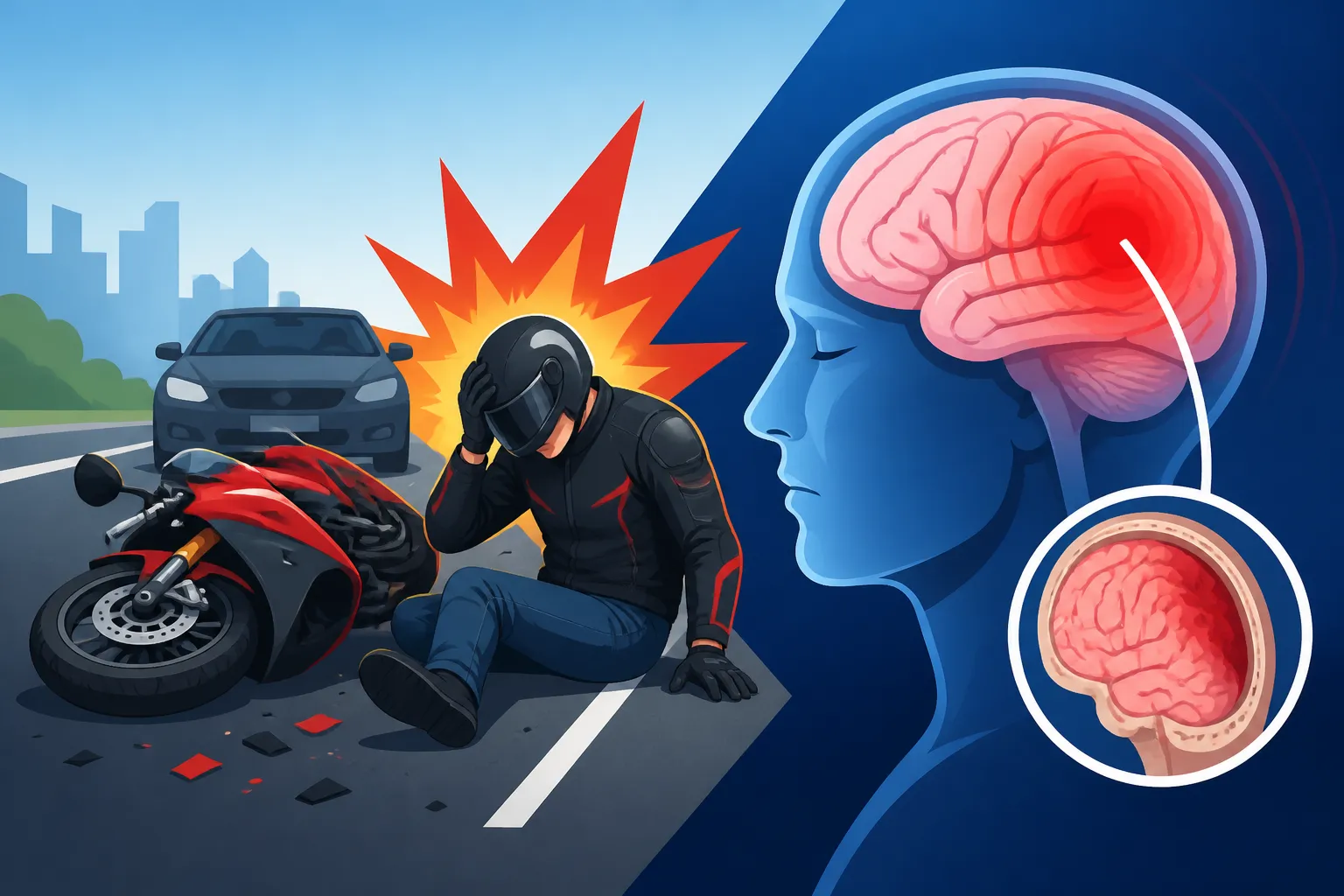
At its core, a traumatic brain injury is any injury to the brain caused by an external force. For us riders, this external force is usually a sudden, violent impact to the head or a rapid deceleration of the body that causes the brain to violently collide with the inside of the skull. Think about it: you’re on a motorcycle, exposed, often traveling at speed. If you're involved in a collision, whether it's a left-turn collision or a rear-end impact, the forces involved are immense. Your head might strike the pavement, a vehicle, or even the ground with significant force, even if you’re wearing a helmet.
The brain, a soft and delicate organ, is essentially floating in cerebrospinal fluid within the hard confines of your skull. When that skull is suddenly accelerated, stopped, or rotated, the brain continues to move due to inertia, slamming into the bone. This direct impact, or the twisting and shearing forces created by rotational movement, can damage brain cells, tear blood vessels, and disrupt neurological function. It's not just about a direct hit; even a sudden jolt can cause micro-traumas throughout the brain, leading to diffuse axonal injury, which can be incredibly debilitating.
Types of TBIs Common in Motorcycle Wrecks
TBIs aren't a one-size-fits-all injury. They manifest in various forms, each with its own set of challenges and potential long-term outcomes. Understanding the specific type of TBI is crucial for both diagnosis and treatment, as well as for assessing the full scope of damages in a claim.
Concussions (Mild TBI): These are perhaps the most commonly diagnosed TBIs, often dismissed as just "getting your bell rung." While they might not involve a loss of consciousness, or only a brief one, concussions are still serious brain injuries. They result from the brain moving rapidly within the skull, causing temporary disruption of brain function. Symptoms can include headaches, dizziness, confusion, memory problems, and sensitivity to light and sound. The scary part is that these symptoms can be delayed, sometimes appearing days or even weeks after the crash, which is why immediate medical attention after a motorcycle accident is always recommended. Repeated concussions, or a severe single concussion, can lead to Post-Concussion Syndrome, with persistent and frustrating symptoms.
Contusions: Imagine a bruise, but on your brain. That’s essentially what a contusion is. It’s a localized area of bleeding and swelling on the brain tissue, often occurring at the point of impact (coup injury) or on the opposite side of the brain as it recoils and hits the skull (contrecoup injury). These can range from small, superficial bruises to larger, deeper ones that can cause significant neurological deficits depending on their location and size. For example, a contusion in the frontal lobe might affect personality or decision-making, while one in the temporal lobe could impact memory.
Hematomas: These are more severe forms of bleeding within or around the brain.
- Epidural Hematoma (EDH): This occurs when bleeding happens between the dura mater (the outermost membrane covering the brain) and the skull. Often caused by a skull fracture tearing an artery, it can lead to rapid pressure buildup and is a medical emergency requiring immediate surgical intervention.
- Subdural Hematoma (SDH): This type of bleeding occurs beneath the dura mater, between the dura and the brain itself. SDHs can be acute (symptoms appearing rapidly after the injury) or chronic (developing slowly over weeks or months, often in older individuals or those on blood thinners). They are typically caused by torn veins and can also exert dangerous pressure on the brain.
- Intracerebral Hemorrhage (ICH): This is bleeding directly within the brain tissue. These are often the most difficult to treat surgically, and their effects depend heavily on the area of the brain affected.
Diffuse Axonal Injury (DAI): This is one of the most devastating types of TBI and a frequent consequence of the rotational forces experienced in high-speed motorcycle impacts. Instead of a localized injury, DAI involves widespread tearing and shearing of the brain's white matter, particularly the axons—the long connecting fibers of nerve cells. This damage disrupts the brain's ability to transmit signals, leading to profound and often permanent neurological impairments, coma, or even death. Because the damage is microscopic and widespread, DAI can be very difficult to detect on standard imaging tests immediately after an accident, often requiring advanced MRI techniques for diagnosis.
The Immediate and Delayed Symptoms of a TBI
The frustrating thing about TBIs, especially after a motorcycle crash, is that the symptoms aren't always immediately obvious. Adrenaline is a powerful thing, and in the moments following a serious incident, your body goes into survival mode. You might feel "fine," only for symptoms to creep up hours, days, or even weeks later. This is why it's so vital to seek medical attention right away, even if you feel okay.
Immediate Symptoms:
- Loss of Consciousness: From a brief "blackout" to a prolonged coma.
- Headache: Persistent, throbbing, or severe pain.
- Confusion or Disorientation: Not knowing where you are, what happened, or struggling to follow conversations.
- Dizziness or Loss of Balance: Feeling unsteady on your feet.
- Nausea or Vomiting: These are classic signs of increased intracranial pressure.
- Slurred Speech: Difficulty forming words clearly.
- Dilated Pupils: One or both pupils appearing larger than normal or reacting differently to light.
- Seizures or Convulsions: Uncontrolled shaking or loss of body control.
Delayed Symptoms:
- Persistent Headaches: Headaches that don't go away or worsen over time.
- Memory Problems: Difficulty recalling new information or events leading up to the accident.
- Concentration Difficulties: Struggling to focus on tasks, easily distracted.
- Fatigue: Unusual tiredness, even after adequate rest.
- Sleep Disturbances: Insomnia, sleeping too much, or altered sleep patterns.
- Mood Changes: Irritability, anxiety, depression, sudden emotional outbursts.
- Sensitivity: Increased sensitivity to light (photophobia) or sound (phonophobia).
- Changes in Smell or Taste: A loss or alteration of these senses.
- Personality Changes: Becoming more impulsive, withdrawn, or exhibiting behaviors uncharacteristic of your pre-injury self.
These delayed symptoms are particularly concerning because they can make it hard for others, and even the injured person, to connect them directly to the motorcycle accident. Family members might be the first to notice these subtle but significant shifts. Understanding these symptoms is also critical when pursuing a claim, as insurers often try to downplay injuries that aren't immediately apparent. Documenting your injuries for a claim will be extremely important here.
The Devastating Impact of TBIs on Riders
When you climb onto your motorcycle, you're embracing freedom, the open road, and a sense of exhilaration. You're not expecting to lose parts of yourself to an accident. Yet, for riders who suffer traumatic brain injuries, that's exactly what can happen. The impact of a TBI extends far beyond the physical injury itself, weaving its way into every facet of a person's life, and often, the lives of their loved ones. It’s a challenge that demands immense resilience and a comprehensive support system.
Physical and Cognitive Challenges
The brain is the command center for everything we do, think, and feel. When it's injured, the ripple effects on physical and cognitive functions can be profound and incredibly frustrating. Many TBI survivors experience a host of new limitations that can make daily life a constant uphill battle.
Physical Impairments: Depending on the area of the brain affected, a TBI can lead to a range of physical disabilities. This might include persistent headaches that make it hard to concentrate, chronic dizziness or vertigo that affects balance and increases the risk of falls, or vision problems like blurred or double vision. More severe injuries can result in motor control issues, such as weakness or paralysis on one side of the body (hemiparesis or hemiplegia), making it difficult to walk, grasp objects, or perform fine motor tasks. Spasticity, involuntary muscle contractions, can also develop, causing pain and limiting movement. These physical changes don't just affect mobility; they impact independence, making simple tasks like getting dressed, cooking, or even personal hygiene incredibly challenging.
Cognitive Deficits: This is where the true, invisible burden of a TBI often lies. Survivors might struggle with memory—both short-term (difficulty learning new information) and long-term (trouble recalling past events). Executive functions, which include planning, organizing, problem-solving, and decision-making, can be severely impaired. Imagine trying to manage your finances, plan a meal, or even just follow a recipe when your brain struggles with sequencing and logic. Attention and concentration are frequently compromised, leading to easy distractibility and difficulty focusing on conversations or tasks. Processing speed can slow down considerably, making it frustrating to keep up with fast-paced discussions or work environments. These cognitive changes can lead to immense frustration, social isolation, and an inability to return to previous educational or professional pursuits.
Emotional and Behavioral Changes
Beyond the physical and cognitive, TBIs can radically alter a person's emotional landscape and behavior, which can be just as, if not more, distressing for both the survivor and their family. The person you once knew might seem fundamentally different, creating immense strain on relationships.
Mood Swings and Instability: It's common for TBI survivors to experience heightened emotional lability. This can manifest as sudden bursts of anger or tears that seem disproportionate to the situation, or extreme shifts from happiness to profound sadness in short periods. This emotional dysregulation is a direct result of brain damage affecting areas that control mood and impulse. The person might feel overwhelmed, anxious, or perpetually frustrated by their limitations, leading to increased irritability.
Anxiety and Depression: The reality of a TBI can be profoundly depressing. Losing independence, struggling with formerly simple tasks, facing persistent pain, and feeling misunderstood can all contribute to significant depression. Anxiety is also rampant, often stemming from fear of future injury, social situations, or the sheer uncertainty of their recovery path. These conditions can become chronic, requiring ongoing therapy and medication, further adding to the complexity of recovery. Many survivors also experience Post-Traumatic Stress Disorder (PTSD) related to the accident itself, creating flashbacks, nightmares, and heightened arousal.
Personality Shifts: Perhaps the most challenging aspect for loved ones is the change in personality. Someone who was once patient might become easily frustrated; a gregarious individual might become withdrawn; a careful planner might become impulsive. Damage to the frontal lobe, in particular, can affect inhibition, leading to socially inappropriate comments or actions. While these changes are not intentional, they can strain marriages, friendships, and family dynamics, leaving everyone feeling lost and grieving the person they knew before the crash.
Financial Burdens of Long-Term Care
The immediate medical bills after a motorcycle accident are often staggering, but for TBI survivors, these initial costs are just the tip of the iceberg. The long-term financial burden of a TBI can be catastrophic, draining savings, forcing career changes, and placing immense stress on families.
Medical and Rehabilitation Costs: A TBI is rarely a one-and-done treatment. It often requires an extensive and multidisciplinary rehabilitation process that can last for months or even years. This includes physical therapy to regain motor skills, occupational therapy to relearn daily living activities, speech therapy for communication issues, cognitive therapy to improve memory and problem-solving, and psychological counseling for emotional and behavioral challenges. These therapies are often expensive and may not be fully covered by standard health insurance, especially for long-term care. Furthermore, ongoing medical appointments with neurologists, neuropsychologists, and other specialists, along with medications for pain, seizures, or mood disorders, contribute to a continuous financial drain.
Loss of Income and Earning Capacity: Many TBI survivors are unable to return to their previous employment, especially if their job required significant cognitive function, physical dexterity, or high-pressure decision-making. Some may be unable to work at all, while others may have to accept lower-paying jobs with fewer responsibilities. This loss of income, coupled with potential diminished earning capacity for the rest of their working lives, represents a massive financial blow. It impacts not only their current livelihood but also their future retirement savings and overall financial security. For younger riders, a severe TBI can completely derail a promising career before it even begins.
Home Modifications and Assistive Devices: Depending on the severity of physical impairments, survivors may need significant modifications to their homes to ensure accessibility. This could include ramps, widened doorways, bathroom modifications, or even specialized vehicles. Assistive devices, such as wheelchairs, walkers, communication aids, or specialized computer software, can also be costly. These expenses are essential for maintaining independence and quality of life but represent another substantial financial outlay. The cumulative effect of these costs highlights why calculating economic damages from a TBI requires a deep understanding of future needs, not just current bills.
Diagnosis and Medical Treatment for Motorcycle TBI
Experiencing a motorcycle accident is inherently traumatic, but the moments immediately following for someone with a suspected TBI are critical. The swiftness and accuracy of diagnosis and the subsequent medical interventions can dramatically impact the long-term prognosis. It’s a complex journey from the accident scene to ongoing rehabilitation, involving a team of dedicated medical professionals.
Initial Medical Response and Assessment
The journey of TBI diagnosis begins the moment first responders arrive at the scene of the motorcycle crash. Their initial assessment is vital for recognizing potential brain injury and ensuring the victim gets to the right facility.
Scene Assessment and Stabilization: When paramedics arrive, their priority is to stabilize the patient, control any immediate life-threatening injuries, and ensure vital functions like breathing and circulation are maintained. For a suspected head injury, cervical collar immobilization is standard to protect the spinal cord, as spinal cord injuries from motorcycle accidents often coexist with TBIs. They'll perform a quick neurological check, looking for signs like responsiveness, pupil reaction, and gross motor function. If a TBI is suspected, especially one that impacts consciousness, the patient is often rushed to a trauma center capable of handling severe neurological emergencies. This early phase is absolutely critical for saving lives and minimizing secondary brain damage.
Emergency Room Evaluation: Once at the emergency room, a more comprehensive assessment begins. Doctors will perform a detailed neurological exam, often using the Glasgow Coma Scale (GCS) to objectively measure the patient's level of consciousness, eye-opening, and motor and verbal responses. They'll also check for focal neurological deficits, such as weakness on one side of the body, abnormal reflexes, or changes in sensation. A thorough medical history, if obtainable, is crucial, including any pre-existing conditions or medications that might complicate the clinical picture. Family members, if present, can provide invaluable insights into the patient's pre-accident health and current symptoms. This careful and immediate evaluation forms the cornerstone of future treatment decisions.
Advanced Diagnostic Tools and Their Importance
While clinical observation is important, modern medicine relies on advanced imaging and neurological tests to precisely diagnose the type and extent of a TBI. These tools are indispensable for guiding treatment and prognosis.
Computed Tomography (CT) Scans: A CT scan is usually the first imaging test performed in the emergency room for a suspected TBI. It's quick and effective at detecting acute issues like skull fractures, large contusions, and most importantly, epidural and subdural hematomas (bleeding around the brain), which require immediate surgical intervention. A CT scan helps rule out life-threatening conditions and guides decisions about whether emergency surgery is needed to relieve pressure on the brain. However, CT scans are not as sensitive for detecting subtle brain injuries, such as diffuse axonal injury or smaller lesions, especially in the initial hours or days.
Magnetic Resonance Imaging (MRI): If the patient's condition is stable, or if symptoms persist despite a "clear" CT scan, an MRI may be ordered. MRI provides much more detailed images of brain tissue compared to a CT scan. It is superior for detecting smaller contusions, subtle areas of bleeding, and the microscopic tearing of nerve fibers characteristic of diffuse axonal injury (DAI). Specialized MRI techniques, such as Diffusion Tensor Imaging (DTI), can even visualize the white matter tracts and detect damage that conventional MRI might miss. The information gleaned from an MRI is incredibly important for understanding the full extent of brain damage, especially when it comes to prognosis and long-term rehabilitation planning.
Neuropsychological Testing: Once the acute phase has passed and the patient is stable, neuropsychological testing becomes a crucial diagnostic tool. This involves a series of standardized tests administered by a neuropsychologist to assess various cognitive functions, including memory, attention, problem-solving, language, and executive functions. Unlike imaging, which shows the structure of the brain, neuropsychological testing assesses how the brain is functioning. It can objectively quantify cognitive deficits, establish a baseline for recovery, track progress over time, and provide essential documentation for disability claims and educational or vocational planning. These tests are particularly helpful in diagnosing and quantifying the impact of milder TBIs or subtle deficits not evident on imaging.
Comprehensive Treatment Plans and Rehabilitation
Treatment for a TBI is rarely a single intervention; it’s usually a long, arduous, and multidisciplinary journey focused on stabilizing the patient, managing symptoms, and maximizing functional recovery.
Acute Care and Medical Management: In the immediate aftermath of a severe TBI, acute care focuses on preventing secondary brain injury. This includes managing intracranial pressure (ICP), maintaining adequate blood flow and oxygen to the brain, controlling seizures, and preventing infections. This phase might involve medications, ventilation support, or even neurosurgery to remove hematomas or repair skull fractures. The goal is to keep the brain environment as stable as possible to allow it to begin healing. For milder TBIs, acute care might simply involve rest, symptom management, and careful monitoring for any worsening signs.
Inpatient and Outpatient Rehabilitation: Once medically stable, the rehabilitation phase begins. This can be extensive, starting with inpatient rehabilitation at specialized centers where patients receive intensive daily therapy from a team of professionals including physical therapists, occupational therapists, speech-language pathologists, and neuropsychologists. The focus is on regaining lost functions, adapting to new limitations, and learning compensatory strategies. After discharge, many patients transition to outpatient rehabilitation, continuing therapy while gradually reintegrating into their home and community life. The duration and intensity of rehab depend heavily on the severity of the TBI and the individual's progress.
Long-Term Support and Adaptation: For many TBI survivors, recovery is a lifelong process, not a destination. Some may face permanent disabilities, requiring ongoing medical care, assistive devices, and even personal care assistants. Long-term support can also include vocational rehabilitation to help individuals find suitable employment, psychological counseling for persistent emotional challenges, and support groups for connection and shared experience. The focus shifts from "recovering" to "adapting" and building a meaningful life within the parameters of their new reality. This holistic approach, often involving a patient's family, is crucial for improving the overall quality of life following a severe TBI.
Documenting Your TBI for a Motorcycle Accident Claim
After the physical and emotional trauma of a motorcycle accident that results in a TBI, one of the most daunting tasks can be navigating the legal and insurance landscape. Proving the full extent of your brain injury and its impact on your life is not always straightforward. Insurance companies, unfortunately, are often skeptical, especially with "invisible" injuries like TBI. This is where meticulous documentation becomes your most powerful tool.
The Critical Role of Medical Records
Your medical records are the backbone of any personal injury claim, and for a TBI, they are absolutely non-negotiable. They provide objective, professional evidence of your injury, its severity, and the course of your treatment. Without them, your claim stands on shaky ground.
Immediate Documentation is Key: From the moment paramedics arrive at the crash scene, every single interaction with a healthcare professional should be documented. This includes ambulance reports, emergency room records, admission notes, discharge summaries, and all physician and specialist reports. It’s crucial that you report all symptoms, no matter how minor they seem, to every medical provider. That headache you shrugged off or the slight dizziness that went away after an hour? If it’s not in your initial medical records, an insurer might argue it wasn’t caused by the accident. Make sure your records explicitly state how the injury occurred, linking it directly to the motorcycle accident. This is critical for establishing causation.
Ongoing Treatment and Specialist Reports: A TBI journey often involves a multitude of specialists: neurologists, neurosurgeons, neuropsychologists, physical therapists, occupational therapists, and speech therapists. Every visit, every test result (CT scans, MRIs, EEGs, neuropsychological evaluations), and every treatment plan must be carefully recorded. These ongoing records show the progression of your injury, the intensity of your treatment, and the challenges you face in recovery. For example, reports from a neuropsychologist detailing your cognitive deficits provide objective proof of your brain’s impaired function. Without these continuous records, insurers might claim you didn't receive adequate treatment or that your symptoms aren't as severe as you assert. Remember, a gap in treatment can severely hurt your claim, giving the impression your injuries weren't serious enough to warrant consistent care.
Prognosis and Future Medical Needs: One of the most challenging aspects of a TBI claim is quantifying future damages. Your medical records, particularly those from your treating physicians and specialists, should clearly outline your prognosis, including any anticipated long-term or permanent impairments. Doctors can provide opinions on your future medical needs, such as ongoing therapy, potential surgeries, medications, and assistive devices. These projections are invaluable for calculating future medical costs, which can be astronomical for a severe TBI. A life care plan, often developed by a medical expert based on these records, provides a detailed projection of all future expenses, giving a concrete figure for compensation needed. This thorough documentation is paramount for assessing the average settlement for a TBI.
Maintaining a Detailed Injury Journal
While medical records offer a clinical picture, your personal injury journal provides the human story of your TBI. It fills in the gaps, capturing the daily struggles, pain, and emotional toll that no doctor’s note can fully convey. This personal account can be incredibly powerful in illustrating the true impact of your injury.
Daily Symptom Tracking: Start a journal immediately after the accident, if you are able, or have a loved one help you. Document every symptom you experience, even seemingly minor ones. This includes headaches (location, severity, duration), dizziness, memory lapses, confusion, fatigue, sleep disturbances, mood swings, difficulty concentrating, and any physical limitations. Note the time of day, triggers, and what, if anything, provides relief. For instance, "Today, I tried to read a book for 10 minutes but had to stop due to a throbbing headache and overwhelming confusion. I couldn't remember what I had just read." This level of detail helps establish a pattern of symptoms and shows their pervasive impact on your daily life.
Emotional and Social Impact: A TBI affects more than just your brain; it affects your entire life. Use your journal to record the emotional and psychological toll. Are you experiencing anxiety, depression, irritability, or crying spells? How are these impacting your relationships with family and friends? Have you withdrawn from social activities? For example, "I snapped at my spouse today over a small thing; I felt so guilty afterward, but I just couldn't control my frustration. I used to love going to the weekly bike night, but now the noise and crowds make me feel disoriented and overwhelmed, so I stay home." These entries vividly demonstrate the non-economic damages, such as emotional distress and loss of enjoyment of life, which are crucial components of your claim.
Impact on Daily Activities and Work: Detail how your TBI has affected your ability to perform daily tasks and work. Can you still drive? Cook? Clean? Take care of your children? If you're employed, document missed workdays, lost wages, and any difficulties you experience if you try to return to work, even on light duty. If you can no longer perform your job, describe why. For example, "Tried to go back to work today, but I couldn't concentrate on spreadsheets for more than 20 minutes without a pounding headache. My boss was understanding, but I couldn't get anything done. I missed three days this week alone." This directly supports your claim for lost wages and diminished earning capacity, painting a clear picture of how your TBI has disrupted your professional and personal life.
Gathering Other Crucial Evidence
Beyond medical records and your personal journal, a variety of other evidence can significantly bolster your TBI claim, painting a comprehensive picture for insurers and, if necessary, a jury.
Accident Report and Witness Statements: The police report from the motorcycle accident is often the first piece of official evidence. It details the circumstances of the crash, identifies the parties involved, and sometimes assigns initial fault. Witness statements from individuals who saw the accident or observed your condition immediately afterward can be invaluable. Did they see your head hit the ground? Did they notice you seemed dazed or confused at the scene? Even a minor observation can help connect your symptoms directly to the crash.
Photos and Videos: Visual evidence is incredibly powerful. Take photos of the accident scene, vehicle damage (including your motorcycle), and any visible injuries you sustained. Importantly, continue to take photos of your injuries as they heal, or in the case of a TBI, photos that show the impact of your injury, such as a messy house you can no longer manage, or a confused look on your face captured by a loved one (with consent). Dashcam footage from your motorcycle or other vehicles, or security camera footage from nearby businesses, can also provide irrefutable evidence of the collision itself and the forces involved. This can be key in proving fault in a motorcycle accident.
Expert Testimony: For severe TBIs, expert testimony is often indispensable. This might include accident reconstruction experts who can detail the mechanics of the crash and the forces exerted on your head. Medical experts, such as neurologists or neuropsychologists, can explain the nature of your brain injury, its prognosis, and its impact on your cognitive and physical functions to a jury in an understandable way. Vocational experts can assess your lost earning capacity, while life care planners can project your future medical and personal care costs. These experts translate complex medical and financial data into compelling evidence that justifies the compensation you are seeking.
Valuing Your Traumatic Brain Injury Claim
One of the most anxiety-inducing questions after suffering a TBI in a motorcycle accident is: "How much is my claim actually worth?" It's a question without a simple answer, as TBI claims are notoriously complex. Unlike a broken bone with a relatively clear recovery path, a TBI's impact can be diffuse, long-lasting, and difficult to quantify. However, understanding the categories of damages and the factors that influence their valuation can help you manage expectations and fight for fair compensation.
Calculating Economic Damages from a TBI
Economic damages are the quantifiable financial losses you've incurred or will incur as a direct result of your TBI. These are often easier to calculate because they come with receipts, bills, or clear wage statements, but for a TBI, projecting future costs can be incredibly complex and substantial.
Medical Expenses: Past and Future: This is often the largest component of economic damages in a TBI case. It includes everything from ambulance rides, emergency room visits, hospital stays, surgeries, and medications, to extensive rehabilitation therapies (physical, occupational, speech, cognitive, psychological). It’s not just the bills you've already received; it's also the projected costs of future medical care. For severe TBIs, this could include years of ongoing therapy, future surgeries, specialized equipment, home modifications, and even in-home nursing care for the rest of your life. A life care plan, developed by a medical professional, is crucial here to forecast these expenses accurately. These costs can easily run into the hundreds of thousands or even millions of dollars, depending on the severity and permanence of the injury.
Lost Wages and Diminished Earning Capacity: If your TBI prevents you from working, or forces you into a lower-paying job, you are entitled to compensation for lost income. This includes wages you've already lost since the accident and, critically, future lost earning capacity. For a long-term or permanent TBI, this can be a devastating financial blow. An economist or vocational expert might be brought in to calculate the total amount of income you would have earned over your lifetime had the accident not occurred, accounting for promotions, raises, and benefits. They compare your earning potential before the accident to your earning potential after the TBI. For younger riders whose careers were just starting, this calculation can be substantial, as the injury has affected their entire working life.
Other Out-of-Pocket Expenses: Beyond medical bills and lost wages, TBI victims often incur a host of other expenses that might seem minor individually but add up significantly. These can include travel costs to and from medical appointments (gas, mileage, parking, public transport), prescription co-pays, over-the-counter medications, adaptive equipment (like specialized computer software or shower chairs), childcare costs if you're unable to care for your children, or even hiring help for household chores you can no longer perform. Keep meticulous records and receipts for every single expense, as these contribute to the overall economic damage calculation. Remember, even seemingly small expenses can add up and should not be overlooked.
Assessing Non-Economic Damages like Pain and Suffering
Non-economic damages are the intangible losses that don’t come with a direct bill but profoundly impact your quality of life. For a TBI, these can be even more significant than economic damages, reflecting the immense personal toll of the injury.
Physical Pain and Discomfort: A TBI often comes with persistent physical pain, most commonly chronic headaches, but also neck pain, back pain, and other body aches resulting from the accident. The constant physical discomfort can be debilitating, affecting sleep, concentration, and overall well-being. This is distinct from the medical costs of treating the pain; it's the actual experience of suffering. Your injury journal, detailing your daily pain levels and how they affect you, is vital here.
Emotional Distress and Psychological Impact: As discussed earlier, TBIs frequently lead to severe emotional distress, including anxiety, depression, mood swings, irritability, and PTSD. These psychological scars are very real and can be just as debilitating as physical ones. The fear, frustration, anger, and sadness associated with your new reality are all components of emotional distress. Therapy notes, psychological evaluations, and testimony from mental health professionals can help establish the extent of this suffering.
Loss of Enjoyment of Life and Quality of Life: This category encompasses the loss of your ability to participate in activities you once loved or to live life to its fullest. Did you love riding your motorcycle, playing sports, hiking, spending time with family, or engaging in hobbies? If your TBI has robbed you of these simple pleasures, that is a compensable loss. If you can no longer work, not only do you lose income, but you also lose the sense of purpose and fulfillment that work provided. If your personality has changed, impacting relationships, that too is a profound loss of enjoyment. This is often where a jury, moved by your story, will assign substantial value, recognizing that a TBI can take away the very essence of who you are. The way to prove this is through your own testimony, the testimony of loved ones, and your detailed injury journal.
How Injury Severity and Permanence Affect Payouts
The severity and permanence of your TBI are arguably the most crucial factors dictating the potential payout of your claim. A minor concussion will be valued vastly differently than a severe, permanent brain injury.
Severity of the Initial Injury: The initial diagnosis, as well as the immediate symptoms, play a significant role. A TBI that resulted in a prolonged coma, significant bleeding on the brain, or diffuse axonal injury will inherently be valued higher than a mild concussion with transient symptoms. The more objective evidence of severe injury (e.g., extensive findings on MRI, long hospital stays, multiple surgeries), the stronger your case for substantial compensation. Insurers and juries recognize the inherent devastating nature of severe brain trauma.
Permanence and Long-Term Impairment: This is where the long-term prognosis becomes paramount. If your TBI results in permanent cognitive deficits, physical disabilities, or intractable emotional problems that will last for the rest of your life, the value of your claim will be much higher. This accounts for lifelong medical care, ongoing therapy, lost earning capacity over decades, and permanent loss of enjoyment of life. For instance, a permanent disability might involve being unable to walk independently, needing 24/7 care, or never being able to work again. This requires expert medical testimony to firmly establish the permanent nature of the impairments. When seeking to maximize your motorcycle accident settlement, emphasizing the long-term impact of your TBI is essential.
Age and Pre-Injury Health: Your age at the time of the accident and your overall pre-injury health also impact the valuation. A younger person with a severe TBI who has many decades of potential earning and living ahead of them will typically receive a higher payout for lost earning capacity and future damages than an older person nearing retirement. Similarly, if you were in excellent health and highly active before the accident, the impact of the TBI on your quality of life and ability to engage in activities will be viewed as more significant compared to someone who had significant pre-existing conditions. However, even with pre-existing conditions, the "eggshell skull rule" generally applies, meaning the at-fault party takes the victim as they find them, and any aggravation of a prior condition is still compensable.
Challenges in TBI Claims and How to Overcome Them
Navigating a TBI claim after a motorcycle accident is rarely a smooth ride. You'll likely encounter a gauntlet of skepticism, complex legal maneuvers, and frustrating delays from insurance companies. It's important to be prepared for these challenges and understand how to effectively overcome them to protect your rights and ensure you receive the compensation you deserve.
Disputed Causation and Pre-Existing Conditions
One of the most common tactics insurance companies use to minimize or deny TBI claims is to dispute that the injury was actually caused by the motorcycle accident, or to argue that a pre-existing condition is truly to blame. This can be infuriating, especially when you know the accident irrevocably changed your life.
Proving the Accident Caused the TBI: Insurers might argue that your symptoms aren't consistent with the mechanism of injury, that there was a delay in seeking treatment, or that your symptoms are due to something else entirely. For instance, they might claim that because your helmet was intact, you couldn't have sustained a severe brain injury. Or, if a CT scan immediately after the accident was "clear," they might suggest any later-diagnosed TBI isn't accident-related, overlooking the limitations of CTs for certain injuries like DAI or the delayed onset of symptoms. Overcoming this requires a solid medical paper trail from the moment of the crash, linking your symptoms directly to the incident. Detailed medical records showing consistent complaints, diagnostic tests, and specialist reports that explicitly state the TBI was caused by the trauma are essential. Expert medical testimony from neurologists or neuropsychologists can also powerfully refute these arguments by explaining the causal link and the scientific basis for your diagnosis.
The "Pre-Existing Condition" Defense: Insurance companies love to dig into your medical history. If you've ever had a prior concussion, a history of migraines, depression, anxiety, or even unrelated medical issues, they will try to attribute your current TBI symptoms to these pre-existing conditions. Their goal is to prove that your symptoms were either already present or would have developed regardless of the motorcycle accident. This is a particularly nasty tactic, as it implies your suffering isn't "new." However, the legal principle of the "eggshell skull rule" is on your side: you take the victim as you find them. Even if you had a pre-existing condition, if the accident aggravated it or made it worse, the at-fault party is still liable for that aggravation. A skilled attorney will gather your complete medical history to show a clear change in your health and symptoms post-accident and have medical experts differentiate between pre-existing issues and new or exacerbated TBI symptoms.
Overcoming Rider Bias and Misconceptions
Unfortunately, motorcycle riders often face an unfair societal bias. Some people, including jurors and even claims adjusters, might hold preconceived notions that riders are inherently reckless, implying a rider is always somehow at fault or deserving of their injuries. This pervasive "rider bias" can be a significant hurdle in a TBI claim.
The Stereotype Trap: The image of the "outlaw biker" or the "daredevil" can subtly influence how a TBI claim is perceived. Insurers might attempt to paint you as irresponsible or to minimize the severity of your injuries because "you knew the risks of riding." This bias can lead to an unjust reduction in your settlement or an outright denial. It's an unfair stereotype, but it's one that a TBI victim has to contend with, especially if the crash occurred in a way that fuels common misconceptions, such as a lane splitting accident or a perceived speeding violation.
Emphasizing Responsible Riding and Safety Gear: To counter this bias, it's crucial to emphasize your responsible riding habits. If you had proper endorsements, obeyed traffic laws, and wore all appropriate safety gear, including a DOT-compliant helmet, this information needs to be front and center. While some states have partial helmet laws, wearing a helmet universally demonstrates a commitment to safety and can counter arguments about shared fault. Demonstrating your commitment to safety, perhaps by taking advanced rider courses or having a clean driving record, can help dismantle negative stereotypes. Photos of your damaged, but properly worn, helmet can serve as powerful evidence not only of impact force but also of your diligent safety practices.
Focusing on the Other Driver's Negligence: Ultimately, the best way to overcome rider bias is to clearly establish the other driver's fault. Many motorcycle accidents are caused by car drivers failing to see motorcyclists, making unsafe lane changes, or failing to yield. By meticulously gathering evidence like police reports, witness statements, traffic camera footage, and accident reconstruction, you can shift the focus from any perceived "rider risk" to the clear negligence of the at-fault driver. When the facts undeniably show the other driver caused the crash, it becomes much harder for insurance companies or juries to apply an unfair bias against you.
Dealing with Lowball Settlement Offers
After months of medical treatment and financial strain, receiving a lowball settlement offer from the insurance company can feel like a punch to the gut. It's a common tactic, especially in TBI cases where the full extent of damages can be hard to immediately quantify.
Why Insurers Offer Low: Insurance companies are businesses, and their primary goal is to minimize payouts. They know you're likely in a vulnerable position, facing mounting medical bills and lost income. They might offer a quick, low settlement hoping you'll accept it out of desperation or lack of understanding of your claim's true value. They might also try to minimize your non-economic damages, arguing that your pain and suffering isn't as severe as you claim, or that your TBI symptoms are temporary. They may also apply their own valuation methods, which are often skewed in their favor, ignoring the true impact on your life.
Never Accept the First Offer: The golden rule in personal injury claims is: never accept the first settlement offer without careful consideration, especially in a TBI case. It's almost always significantly lower than what your claim is truly worth. Accepting it means you forfeit your right to seek any further compensation, even if your TBI symptoms worsen or new problems arise down the road. If you settle too early, before reaching Maximum Medical Improvement (MMI), you risk leaving substantial money on the table for future treatments or long-term care that you didn't anticipate.
The Importance of a Strong Counter-Offer: To fight a lowball offer, you need a compelling counter-offer backed by comprehensive evidence. This includes all your medical records, bills, lost wage documentation, detailed injury journal entries, and expert reports (medical, vocational, economic). A well-crafted demand letter, usually prepared by your attorney, articulates the full scope of your economic and non-economic damages, clearly explaining why the insurer's offer is insufficient. It highlights the long-term impact of your TBI, emphasizing the loss of enjoyment of life and diminished earning capacity. This negotiation process often involves several rounds of offers and counter-offers, and sometimes, the threat of litigation is what it takes for the insurer to take your claim seriously.
The Role of Legal Representation in TBI Cases
When dealing with the life-altering consequences of a traumatic brain injury from a motorcycle accident, trying to navigate the complex legal and insurance systems on your own can be an insurmountable challenge. The stakes are incredibly high, and the intricacies of TBI claims demand specialized expertise. This is where an experienced motorcycle accident lawyer becomes not just helpful, but absolutely crucial.
Why a Specialized Attorney is Crucial
A TBI claim is not like a fender bender. It involves complex medical science, long-term financial projections, and aggressive defense tactics from insurance companies. A general personal injury lawyer might handle simple cases well, but a TBI demands a different level of specialization.
Understanding the Medical Nuances of TBI: A lawyer experienced in TBI cases understands the subtle differences between various types of brain injuries, the limitations of different diagnostic tools, and the often-delayed onset of symptoms. They know which medical specialists to consult (neurologists, neuropsychologists, physiatrists) and how to interpret their reports to build a strong case. They grasp concepts like diffuse axonal injury, post-concussion syndrome, and how pre-existing conditions affect a TBI claim. This deep medical understanding allows them to effectively communicate the complexities of your injury to insurance adjusters and, if necessary, to a jury, ensuring that the invisible aspects of your brain injury are seen and understood.
Navigating Complex Valuation and Long-Term Damages: Valuing a TBI claim is an art and a science. It's not just about current medical bills; it’s about projecting future medical needs, lost earning capacity over decades, and the lifelong impact on quality of life. A specialized TBI attorney knows how to work with vocational experts, economists, and life care planners to accurately quantify these long-term damages, which can easily reach into the millions of dollars for severe injuries. They understand the intricacies of structured settlements versus lump-sum payments and how to best protect your long-term financial interests. Without this expertise, you risk underestimating your losses and settling for far less than you need to cover your lifetime of care.
Countering Aggressive Insurance Tactics: Insurance companies are notorious for their aggressive defense strategies in TBI cases. They will scrutinize your medical history, question the cause of your injury, downplay your symptoms, and try to shift blame or offer minimal settlements. A TBI lawyer is intimately familiar with these tactics and knows how to effectively counter them. They act as your shield, protecting you from manipulative questions and ensuring that your rights are vigorously defended. They handle all communication with the insurance company, allowing you to focus on your recovery without the added stress of legal battles.
How Attorneys Prove the Extent of TBI Damages
Proving the true extent of TBI damages is a multifaceted endeavor that requires a systematic and evidence-based approach. A skilled attorney acts as the conductor of this orchestra, assembling all the necessary elements to build an undeniable case.
Collecting and Organizing Comprehensive Evidence: Your attorney will meticulously gather all relevant evidence, leaving no stone unturned. This includes obtaining all your medical records (from emergency response to ongoing rehabilitation), diagnostic imaging (CT, MRI, DTI scans), and detailed reports from all your treating physicians and specialists. They will also collect police reports, witness statements, accident reconstruction reports, and any available photos or videos of the accident scene and your injuries. If you kept a detailed injury journal, your attorney will help you integrate its powerful narrative into your claim. This organized collection of evidence forms the factual foundation of your case.
Engaging Expert Witnesses: For TBI cases, expert testimony is often the linchpin of success. Your attorney will identify and retain highly qualified expert witnesses who can credibly explain the medical, vocational, and economic impact of your TBI. This could include:
- Neurologists or Neuropsychologists: To explain the nature of your brain injury, its severity, prognosis, and the causal link to the accident.
- Vocational Experts: To assess your pre-injury earning capacity versus your post-injury earning capacity and determine your lost future wages.
- Economists: To calculate the financial present value of your lost earnings and future medical expenses.
- Life Care Planners: To project the full scope of your long-term medical care, therapies, equipment, and personal assistance needs for the remainder of your life.
- Accident Reconstructionists: To illustrate how the accident occurred and the forces that led to your brain injury.
These experts provide objective, authoritative opinions that can educate and persuade adjusters and juries.
Highlighting the Human Impact: While hard evidence is critical, an effective attorney also understands the importance of conveying the human story of your TBI. They will help you articulate how the injury has affected every aspect of your life – your relationships, hobbies, independence, and overall quality of life. They might arrange for testimony from family members or close friends who can speak to the changes they’ve observed in your personality, mood, and abilities. By combining compelling factual evidence with a poignant narrative of your suffering and loss, they can effectively communicate the profound non-economic damages like pain and suffering, emotional distress, and loss of enjoyment of life, ensuring your compensation reflects the full personal toll of your injury.
Navigating the Complexities of TBI Litigation
While many TBI claims settle out of court, an attorney must always be prepared to go to trial if a fair settlement cannot be reached. Litigation for a TBI is an incredibly complex and demanding process, requiring seasoned legal experience.
Pre-Trial Procedures and Discovery: The litigation process begins with filing a formal lawsuit. This is followed by the "discovery" phase, where both sides exchange information. Your attorney will send interrogatories (written questions) and requests for documents to the at-fault driver's legal team and insurance company. They will also prepare you for depositions, where you provide sworn testimony about the accident and your injuries. Simultaneously, they will depose the at-fault driver and any relevant witnesses or experts. This phase is crucial for uncovering evidence and assessing the strengths and weaknesses of both sides of the case. Your attorney ensures you are fully prepared and protected during these challenging proceedings.
Mediation and Settlement Negotiations: Before a trial, many courts require or encourage mediation. This is a structured negotiation process facilitated by a neutral third party (the mediator) who helps both sides explore settlement options. Your attorney will represent your interests fiercely during mediation, presenting your case and evidence while also advising you on the strengths and weaknesses of various offers. They aim to achieve a fair settlement that avoids the uncertainties and stresses of a trial. If mediation fails to produce an acceptable offer, your attorney will then prepare to take your case to court.
Trial Preparation and Presentation: If the case proceeds to trial, your attorney will meticulously prepare every aspect of your case. This involves selecting a jury, preparing opening and closing statements, cross-examining defense witnesses, and presenting your expert witnesses' testimony in a clear and compelling manner. For TBI cases, this often involves using visual aids to help the jury understand the brain's anatomy and the nature of your injury. Your attorney will present all the evidence collected, including medical records, photos, and personal testimony, to demonstrate the at-fault driver's negligence and the full extent of your TBI damages. They will tirelessly advocate for you, aiming for a verdict that justly compensates you for all your losses.
Disclaimer
Please remember that this article provides general information and insights into traumatic brain injuries from motorcycle accidents. It is not a substitute for professional legal advice. Every case is unique, and the specifics of your situation, including state laws, will significantly impact your claim. For personalized advice regarding your motorcycle accident claim, it is crucial to consult with a qualified personal injury attorney.