Motorcycle Accident Evidence for Proving Fault
Getting into a motorcycle accident is terrifying, and the aftermath can feel like a relentless uphill battle, especially when you're trying to prove it wasn't your fault. Insurance companies, and sometimes even the general public, often harbor unfair biases against motorcyclists, making the process of seeking justice incredibly frustrating. This guide is here to cut through that noise, empowering you with a detailed understanding of the critical evidence needed to establish fault in a motorcycle crash.
The Unseen Battle: Why Evidence is Everything
When the unthinkable happens and you find yourself picking up the pieces after a motorcycle accident, the immediate shock and pain can make focusing on anything else nearly impossible. Yet, the moments following a crash are absolutely crucial for gathering the information that will ultimately determine who is held responsible. Without solid, undeniable evidence, you risk having your claim minimized or even dismissed, leaving you to bear the heavy burden of medical bills, lost wages, and repair costs on your own. It's a daunting prospect, but understanding the power of evidence is your first line of defense.
Overcoming Rider Bias and Stereotypes
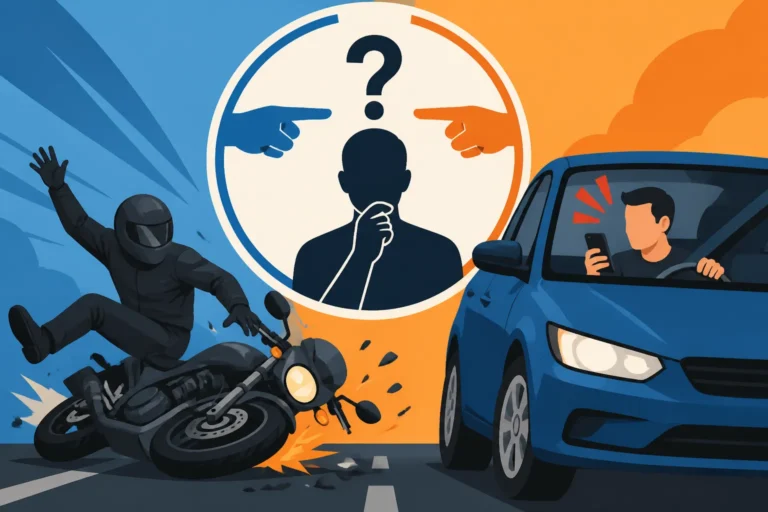
Let's be brutally honest: motorcyclists often face an uphill battle in the court of public opinion, and by extension, in the eyes of insurance adjusters and juries. The unfair stereotype of the reckless rider, speeding or weaving through traffic, can subtly (or not so subtly) influence how your accident is perceived, regardless of the actual circumstances. This "rider bias" is a real frustration that many of us have faced, and it means we often have to work twice as hard to prove our innocence.
This pervasive bias means that simply stating "the other driver didn't see me" isn't enough; you need concrete proof to counteract any preconceived notions about your riding behavior. Your evidence package needs to be so robust and compelling that it leaves no room for doubt or misinterpretation. It's about meticulously building a case that demonstrates the facts, not just relying on narratives that can easily be skewed against you. Understanding Rider Bias in Fault Determination is key to preparing your strongest possible claim.
The Burden of Proof in Injury Claims
In any personal injury claim stemming from a motorcycle accident, the legal responsibility falls upon the injured party – that's you – to prove that the other party was at fault and that their negligence directly caused your injuries and damages. This is what we call the "burden of proof." It's not enough to simply say the other driver ran a stop sign; you have to show it, through a combination of tangible facts and credible accounts.
This burden extends beyond just establishing who caused the collision. You also have to prove the extent of your injuries and the financial and emotional impact they've had on your life. Every medical bill, every lost workday, every moment of pain and suffering needs to be meticulously documented and connected directly to the accident. Without this thorough approach, even if fault seems clear, you might struggle to recover the full compensation you deserve.
Unearthing the Truth at the Scene
The accident scene itself is a treasure trove of information, a silent witness waiting to tell its story. The physical remnants left behind can paint a vivid picture of what transpired, often more accurately than confused memories or biased accounts. The challenge, of course, is knowing what to look for and how to properly document it before it's cleared away. This is why being prepared, even in the chaos, is so incredibly vital.
Physical Clues and Debris Fields
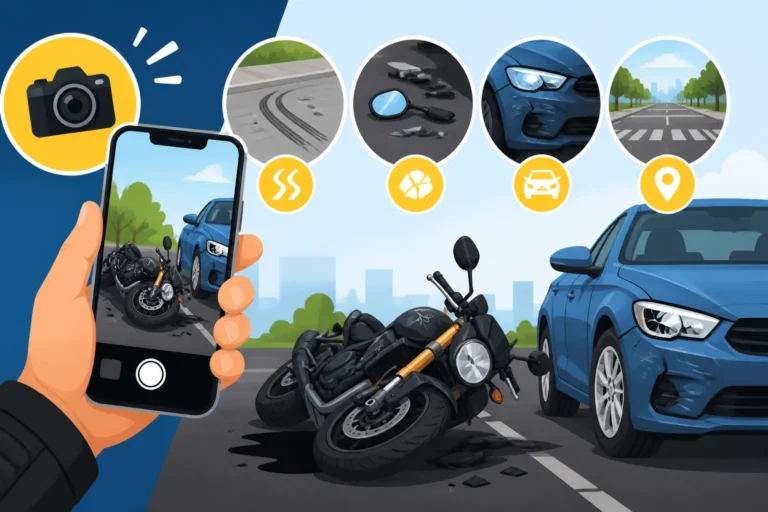
When a motorcycle collides with another vehicle, or even the road itself, there are almost always tell-tale signs left behind. Skid marks, for instance, are critical pieces of evidence. Their length, direction, and type (e.g., braking, scuff, yaw marks) can help accident reconstruction experts determine the speed of the vehicles involved, the point of impact, and whether either driver attempted to brake before the collision. A long, straight skid mark from the other driver's vehicle leading up to the point of impact, for example, could strongly suggest they reacted late or were traveling too fast.
Beyond skid marks, the debris field itself – shattered glass, plastic fragments, paint chips, fluid spills – provides vital information. The spread and location of this debris can pinpoint the exact point of impact and the trajectory of the vehicles post-collision. Small pieces of painted metal or plastic can often be matched to specific vehicles, confirming involvement or disputing claims that a vehicle wasn't part of the crash. Don't underestimate these seemingly insignificant details; they are often the silent witnesses that speak volumes.
Vehicle Damage as a Narrative
The damage sustained by both your motorcycle and the other vehicle(s) involved isn't just about repair costs; it's a powerful narrative tool. The type, location, and severity of the damage can reveal crucial information about the angles of impact, the force of the collision, and even the speed at which the vehicles were traveling. For instance, extensive front-end damage to a car combined with damage to the side of your motorcycle strongly suggests a T-bone or broadside collision, often pointing to the car failing to yield the right-of-way.
It's important to document damage to all vehicles involved, not just your own. Even seemingly minor damage to the other vehicle can corroborate your account of the accident, especially if the other driver tries to downplay their involvement or shift blame. Don't let your severely damaged motorcycle distract you from capturing the details of the other vehicle's damage as well.
Road Conditions and Environmental Factors
Sometimes, the road itself plays a role in an accident, and these conditions must be documented. Potholes, cracks, uneven pavement, loose gravel, oil slicks, standing water, or even missing signage can all contribute to a crash. If you suspect that a road hazard played a part in your accident, it's crucial to capture photographic or video evidence of it. This might be evidence for a claim involving Government Liability for Road Hazards.
Environmental factors like obscured sightlines due to overgrown vegetation, malfunctioning traffic lights, or even the time of day and sun glare can also be significant. For example, if the sun was directly in the other driver's eyes during a left-turn collision, that's a factor that can be argued in court. Always take note of the weather conditions at the time of the crash, as rain, fog, or ice can affect visibility and traction, influencing how fault is determined. Documenting these elements can be just as important as the physical vehicle damage.
Capturing the Moment: Photos, Videos, and Audio
In our increasingly digital world, the camera on your smartphone is one of your most potent tools after an accident. What you capture visually, and even audibly, can provide undeniable, objective proof that bypasses human memory lapses or intentional misstatements. This visual record preserves the scene exactly as it was, offering clarity that written descriptions simply can't match.
The Power of Visual Documentation
Pictures and videos are often worth a thousand words – or thousands of dollars in a settlement. They provide an objective, undeniable record of the accident scene, the vehicles involved, your injuries, and even environmental factors. Unlike human witnesses, a photograph doesn't forget details, get confused under pressure, or become susceptible to bias. It freezes a moment in time, allowing experts and insurers to later analyze the scene with precision.
Think of your camera as a silent witness that was there from the immediate aftermath. It can show the final resting positions of vehicles, the severity of damage, the presence of road debris, and the conditions of the road and weather. Without this visual proof, proving the precise circumstances of the crash can become a "he-said, she-said" situation, which rarely works in the motorcyclist's favor.
Strategic Photography Angles and Details
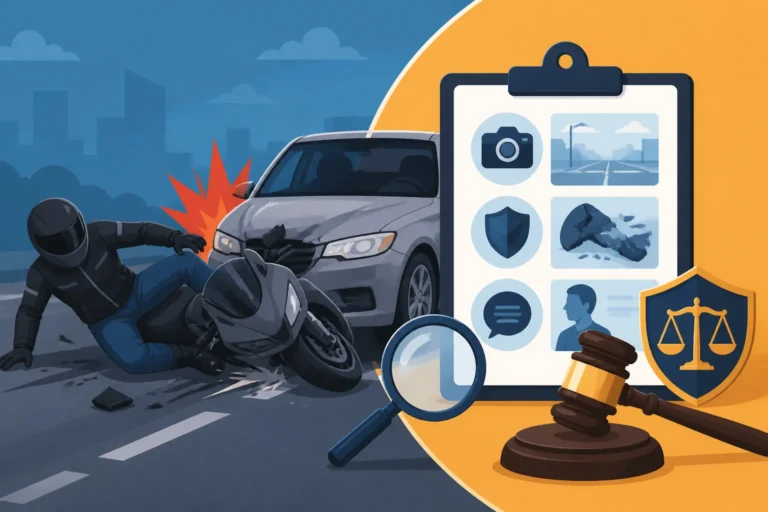
Taking photos isn't just about snapping a few quick shots; it's about strategic documentation. You need to capture a wide array of images from various angles. Start with overall shots of the accident scene, showing the surrounding area, intersections, and the relative positions of all vehicles involved. Then, move closer to take detailed photos of vehicle damage, including scrapes, dents, broken parts, and deployed airbags. Remember to get shots of your motorcycle's damage from multiple perspectives. For specific guidance, review Photos to Take to Prove Motorcycle Fault.
Don't forget to photograph skid marks, debris, traffic signs, road markings, and any road hazards. If there are visible injuries, take clear pictures of them too, even if they seem minor at first. Capture any witnesses present, and if possible, their vehicles and license plates. The more detailed and comprehensive your photographic record, the stronger your case will be. Remember to take photos that show distance and context, using landmarks if possible.
Video Footage from Dashcams and Cellphones
Dashcams are becoming increasingly common in both cars and on motorcycles, and their footage can be a game-changer. A dashcam provides a continuous, unbiased recording of the moments leading up to, during, and after an accident, offering irrefutable evidence of who did what, when, and how. This can directly contradict false claims from the other driver or even clear up ambiguities in police reports. If you have a dashcam, preserve that footage immediately! Learn more about How Dashcam Footage Proves Fault.
Even without a dashcam, your cell phone can be used for video. After securing your safety, a quick walk-around video of the scene, narrating what you see, can be incredibly powerful. Capture the movement of traffic, the reactions of drivers, and the general atmosphere. This can sometimes pick up crucial audio details or dynamic elements that static photos might miss. Just remember to prioritize your safety and only record if it's safe to do so.
The Human Element: Witness Accounts
While physical evidence and visual documentation are invaluable, the statements of independent eyewitnesses can often solidify your claim and provide a human perspective that reinforces the objective facts. When someone else saw what happened, their account can carry significant weight, especially if they are impartial.
Identifying and Securing Witness Statements
In the immediate aftermath of an accident, people often stop to help or simply observe. These individuals are potential eyewitnesses, and identifying them quickly is paramount. Don't rely solely on the police to gather this information; they might be focused on other aspects of the scene. Politely approach anyone who stopped and ask if they saw what happened. Even if they only saw a part of the incident, their perspective can be helpful.
Once you identify potential witnesses, gather their contact information – full name, phone number, and email address. If they're willing, ask them to briefly describe what they saw right then and there. You might even record their statement on your phone (with their permission, of course). The freshness of their memory is key. Detailed information on How Witnesses Affect Motorcycle Fault can help you understand their importance.
The Credibility and Impact of Eyewitnesses
Not all witness statements are created equal. The most impactful witnesses are those who were not involved in the accident, have no vested interest in the outcome, and had a clear, unobstructed view of the events. Their accounts can corroborate your version of events, refute the other driver's claims, and provide details that you might have missed due to the shock of the collision.
An independent witness can be particularly powerful in countering the common "I didn't see the motorcycle" defense, a frequent tactic used by drivers who strike riders. If a witness clearly saw you, or saw the other driver acting negligently, their testimony can be incredibly difficult for insurance companies or opposing counsel to dismiss. Their objective perspective adds a layer of authenticity and reliability to your case that's hard to dispute.
Official Documentation and Expert Analysis
Beyond what you can gather yourself at the scene, official reports generated by law enforcement and professional analysis by experts provide critical, often indisputable, evidence. These resources can serve as foundational pillars for your motorcycle accident claim.
The Police Accident Report: A Double-Edged Sword
After any significant motorcycle accident, law enforcement officers will typically respond and generate an official police accident report. This document often contains a wealth of information: details about the location and time of the crash, identifying information for all parties and vehicles involved, witness statements, diagrams of the scene, and, crucially, the investigating officer's determination of fault or contributing factors.
While a police report can be incredibly helpful if it assigns fault to the other driver, it can also be a double-edged sword. If the officer, perhaps influenced by Rider Bias in Fault Determination or incomplete information, assigns you partial or full fault, it can create a significant hurdle for your claim. It's essential to understand that police reports are not always infallible and can sometimes be contested or clarified. For more on this, see How Police Reports Establish Fault. If you believe the report is inaccurate, gather additional evidence to challenge its findings.
Accident Reconstruction: Unraveling Complex Crashes
For particularly complex or severe motorcycle accidents, especially when fault is heavily disputed, an accident reconstruction expert can be invaluable. These professionals use scientific principles, physics, and engineering analysis to recreate the accident sequence. They examine everything from skid marks, vehicle damage, and debris patterns to speed data, road conditions, and witness statements.
An accident reconstruction expert can often determine precise details such as vehicle speeds, points of impact, braking distances, and vehicle trajectories, often providing a highly accurate and objective explanation of how the crash occurred. Their findings, presented through detailed reports, diagrams, and even 3D animations, can be incredibly persuasive in negotiations with insurance companies or during a trial. Understanding How Accident Reconstruction Determines Fault can give you an edge.
Traffic Cameras and Surveillance Footage
In our increasingly surveilled world, many public and private spaces are equipped with cameras. Traffic cameras, often found at intersections or along major roadways, might have captured your accident. Businesses, homes, or even nearby dashcams belonging to other drivers could also have surveillance footage. This type of video evidence is extremely powerful because it offers an objective, real-time view of the collision.
The challenge is often identifying and securing this footage quickly. Surveillance systems frequently record over old footage, so there's a narrow window to request and obtain it. Your legal team can help identify potential camera locations and issue preservation requests or subpoenas to retrieve this crucial evidence, especially if it's held by a city or state Department of Transportation.
Your Body's Story: Medical Records and Injury Documentation
While proving fault is about showing what the other driver did, proving damages is about showing what the accident did to you. Your medical records, from the moment of the crash until your full recovery (or maximum medical improvement), are the cornerstone of this aspect of your claim. They document your physical suffering and the financial impact of your injuries.
Immediate Medical Care and Diagnosis
After a motorcycle accident, your absolute first priority, beyond ensuring your safety at the scene, should be seeking immediate medical attention. Even if you feel "okay," the adrenaline rush can mask serious injuries. Delayed symptoms are incredibly common after a high-impact event like a motorcycle crash. Going to the emergency room, an urgent care clinic, or seeing your primary care physician promptly establishes a direct link between the accident and your injuries.
Every doctor's visit, every diagnostic test (X-rays, MRIs, CT scans), every prescription, and every referral to a specialist generates medical records. These documents detail your symptoms, diagnoses, treatment plans, and prognoses. They are the objective evidence that proves the existence and severity of your injuries, which are fundamental to calculating damages like medical expenses and pain and suffering.
Chronic Issues and Long-Term Impact
Unfortunately, many motorcycle accident injuries don't resolve quickly. Traumatic brain injuries, spinal cord damage, complex fractures, and severe road rash can lead to chronic pain, permanent disability, and a need for ongoing medical care, physical therapy, or even adaptive equipment. These long-term effects significantly increase the value of your claim because they represent future medical expenses and a permanent reduction in your quality of life or earning capacity.
It's critical that your medical records clearly reflect any ongoing or permanent issues. Consult with your doctors about the long-term implications of your injuries and ensure these discussions are documented. Reports from specialists detailing your prognosis, future care needs, and limitations are indispensable for demonstrating the full extent of your damages.
Keeping an Injury Journal
While medical records are objective, your personal experience of pain and suffering is subjective but still a compensable damage. Keeping a detailed injury journal can provide a powerful narrative of your daily struggles. In this journal, document your pain levels, how your injuries impact your daily activities, sleep patterns, mood, and any limitations on hobbies or work.
For example, you might write about how a broken leg prevents you from riding your motorcycle, playing with your kids, or performing your job duties. This journal creates a vivid, personal account that complements your medical records and helps to humanize your claim, making it easier to convey the true extent of your pain and suffering to insurers or a jury.
The Digital Footprint: Electronic Evidence
In the modern age, many vehicles and even personal devices constantly collect data. This "digital footprint" can sometimes hold crucial pieces of evidence that shed light on what happened leading up to and during a motorcycle accident. Tapping into this source of information can uncover details that traditional methods might miss.
Vehicle Black Box Data and Telematics
Many newer vehicles, both cars and motorcycles, are equipped with Event Data Recorders (EDRs), often referred to as "black boxes." These devices continuously record data for a short period, typically seconds, before, during, and after a crash. The information captured can include vehicle speed, brake application, throttle position, steering input, seatbelt usage, and even airbag deployment times.
This EDR data can be incredibly powerful in proving fault. For instance, if the other driver claims they were going slowly and braked hard, but their EDR shows they were speeding and barely touched the brakes, it provides undeniable proof to the contrary. Accessing and interpreting this data usually requires specialized tools and expertise, but it's an avenue worth exploring in serious cases.
Cell Phone Records and Distracted Driving
Distracted driving, particularly due to cell phone use, is a pervasive problem and a major cause of motorcycle accidents. If you suspect the other driver was distracted by their phone at the time of the crash, their cell phone records can provide critical evidence. These records can show whether calls were made or received, and crucially, whether text messages or data were being used during or immediately before the accident.
Obtaining cell phone records typically requires a subpoena, which means legal action has usually begun. However, if these records confirm active cell phone use at the moment of impact, it can strongly establish negligence on the part of the other driver, significantly strengthening your claim for Motorcycle Accidents Caused by Distracted Driving.
Wrapping It Up
Gathering the right evidence after a motorcycle accident is paramount to proving fault and securing the compensation you deserve. It’s a painstaking process, but every piece of information, from the smallest fragment of debris to the most detailed medical report, contributes to building a strong case. Being proactive and thorough in collecting this evidence can make all the difference, helping you overcome biases and ensure the truth of what happened is heard.
| Evidence Type | Source(s) | What It Proves | Importance |
|---|---|---|---|
| Photos/Videos | Cell phone, dashcam, surveillance cameras | Scene layout, vehicle damage, road conditions, injuries, relative positions | High – Objective, visual record, hard to dispute |
| Police Report | Responding law enforcement | Officer's findings on fault, scene diagram, initial statements, citations | High – Official record, but can be challenged |
| Witness Statements | Eyewitnesses | Independent accounts of the crash events | High – Corroborates facts, counters biased narratives |
| Vehicle Damage | Both vehicles involved | Impact points, force, speed, angle of collision | High – Physical manifestation of the event |
| Skid Marks/Debris | Accident scene | Vehicle speed, braking, point of impact, post-impact trajectory | High – Physics-based evidence, analyzed by experts |
| Medical Records | Hospitals, doctors, specialists | Nature and extent of injuries, treatment, prognosis | Crucial – Establishes damages, link to the accident |
| Accident Reconstruction | Expert analysis of scene, vehicle data, reports | Detailed scientific explanation of crash mechanics and causes | Very High – Resolves complex fault disputes, often definitive |
| EDR (Black Box) Data | Vehicles' onboard recorders | Pre-crash speed, braking, throttle, steering input | Very High – Objective, real-time vehicle performance data |
| Cell Phone Records | Cell phone carriers | Usage patterns (calls, texts, data) around time of crash | High – Proves distracted driving |
| Road Conditions | Accident scene, weather reports | Environmental factors contributing to the crash | Moderate – Can shift or share fault (e.g., Road Hazards Motorcycle Accident) |
Disclaimer
This article provides general information and insights into motorcycle accident claims and evidence. It is not intended as legal advice, nor does it create an attorney-client relationship. Every accident is unique, and the specific laws and evidence applicable to your case may vary. For personalized advice, you should consult with a qualified legal professional in your jurisdiction.