Motorcycle Accidents Caused by Distracted Driving
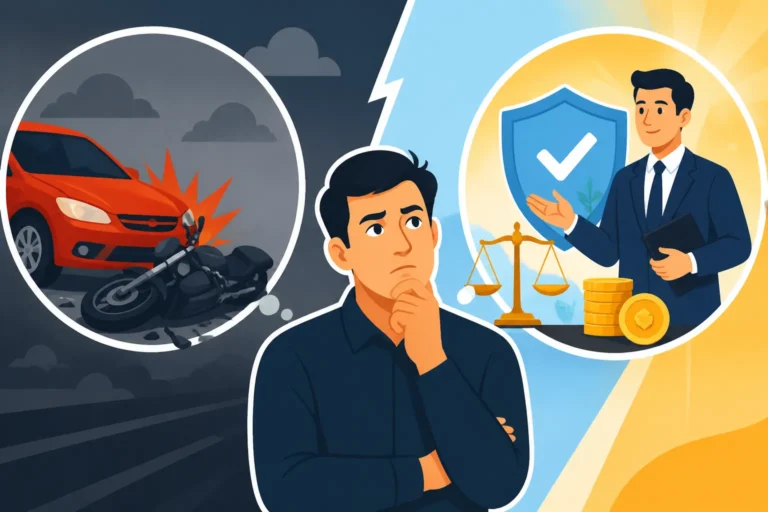
It’s a frustrating, terrifying reality on our roads: the driver who isn't paying attention, glued to their phone, fiddling with the radio, or just lost in thought. For those of us on two wheels, distracted driving isn't just an annoyance; it's a direct threat that can lead to devastating motorcycle accidents. When a driver's eyes wander even for a few seconds, they might not see a motorcycle, leading to catastrophic consequences. This guide is dedicated to shedding light on the alarming frequency of motorcycle accidents caused by distracted driving, helping you understand how they happen, what steps to take if you're involved, and how to protect your rights in the aftermath.
Understanding Distracted Driving and Its Dangers for Motorcyclists
Distracted driving is a pervasive problem that impacts everyone on the road, but its consequences can be particularly severe for motorcyclists. We’ve all seen it: a driver veering slightly, tapping their brakes unexpectedly, or just staring blankly ahead, clearly not engaged with the act of driving. For us riders, who are already often overlooked, this inattention is a direct pathway to danger, making everyday commutes or scenic rides fraught with unnecessary risk.
What Qualifies as Distracted Driving
When we talk about distracted driving, we're not just talking about cell phones, though that's certainly a huge part of it. Distraction actually comes in three main forms: visual, manual, and cognitive. A visual distraction takes your eyes off the road, like glancing at a billboard or checking a notification on your phone. Manual distraction means taking your hands off the wheel, such as reaching for a dropped item, eating, or adjusting the GPS. And cognitive distraction is when your mind wanders from the task of driving, like being deep in thought about work, engaging in an intense conversation with a passenger, or being overly focused on the radio.
Sometimes, a driver can experience all three types of distraction at once. Imagine a driver who picks up their phone (manual), looks down at the screen to read a text (visual), and then mentally processes what they just read (cognitive). Even a few seconds of this multi-faceted distraction can mean traveling a significant distance without truly observing traffic or road conditions, turning what should be a routine drive into a potential minefield for motorcyclists. It’s this combination of factors that makes identifying and proving distracted driving so crucial in the wake of an accident.
Why Motorcyclists Are Particularly Vulnerable
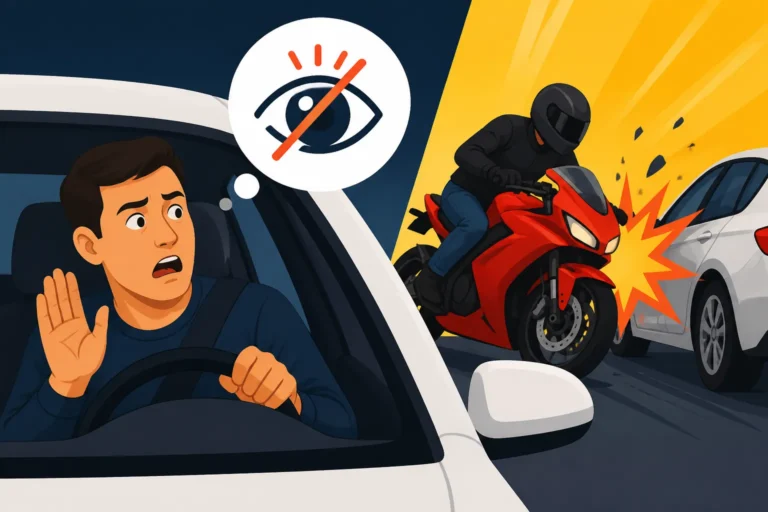
Let's be honest, we motorcyclists already face an uphill battle when it comes to visibility on the road. Our smaller profile means we can easily be hidden in blind spots, masked by road furniture, or simply overlooked by drivers who aren't actively scanning for us. This inherent vulnerability is exponentially compounded when a driver is distracted. If a driver isn't fully engaged, their brain is even less likely to register a motorcycle, even if it's right in front of them or in an adjacent lane. This phenomenon is often summed up in the infuriating phrase, "I didn't see the motorcycle."
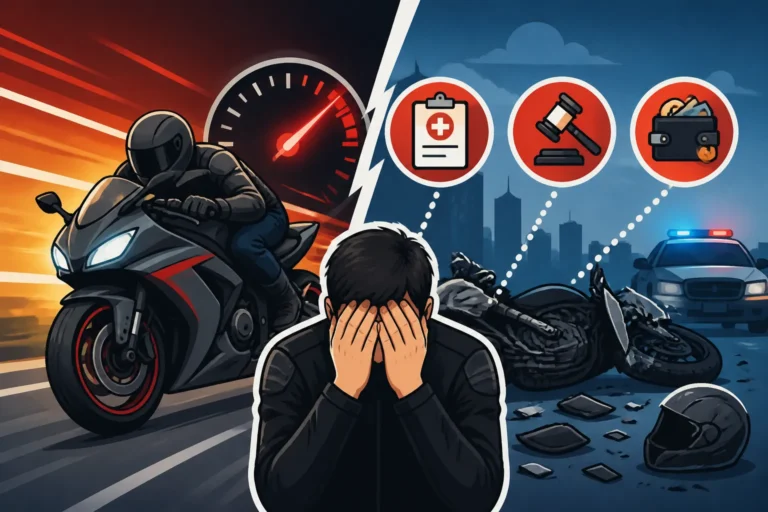
Moreover, unlike drivers in cars or trucks who have steel cages, airbags, and seatbelts, we have very little to protect us in a collision. Even minor impacts from a distracted driver can send a rider flying, leading to severe injuries like road rash, broken bones, or even catastrophic traumatic brain injuries. The stakes are simply higher for us, making a distracted driver’s momentary lapse in judgment a life-altering event. This disparity in protection means that even a small error on the part of a distracted driver can have devastating and often fatal consequences for a rider, underscoring the critical need for drivers to maintain their full attention on the road at all times.
Common Scenarios of Distracted Driving Motorcycle Accidents
When a driver isn't paying attention, the ways they can cause an accident are numerous, but some scenarios are particularly common and hazardous for motorcyclists. Understanding these patterns can not only help you identify the signs of a distracted driver but also provide valuable insight if you ever find yourself involved in such a crash. These aren't just theoretical situations; they're daily realities on roads across the country, from the bustling highways of Los Angeles to the quieter streets of rural Texas.
Texting While Driving Collisions
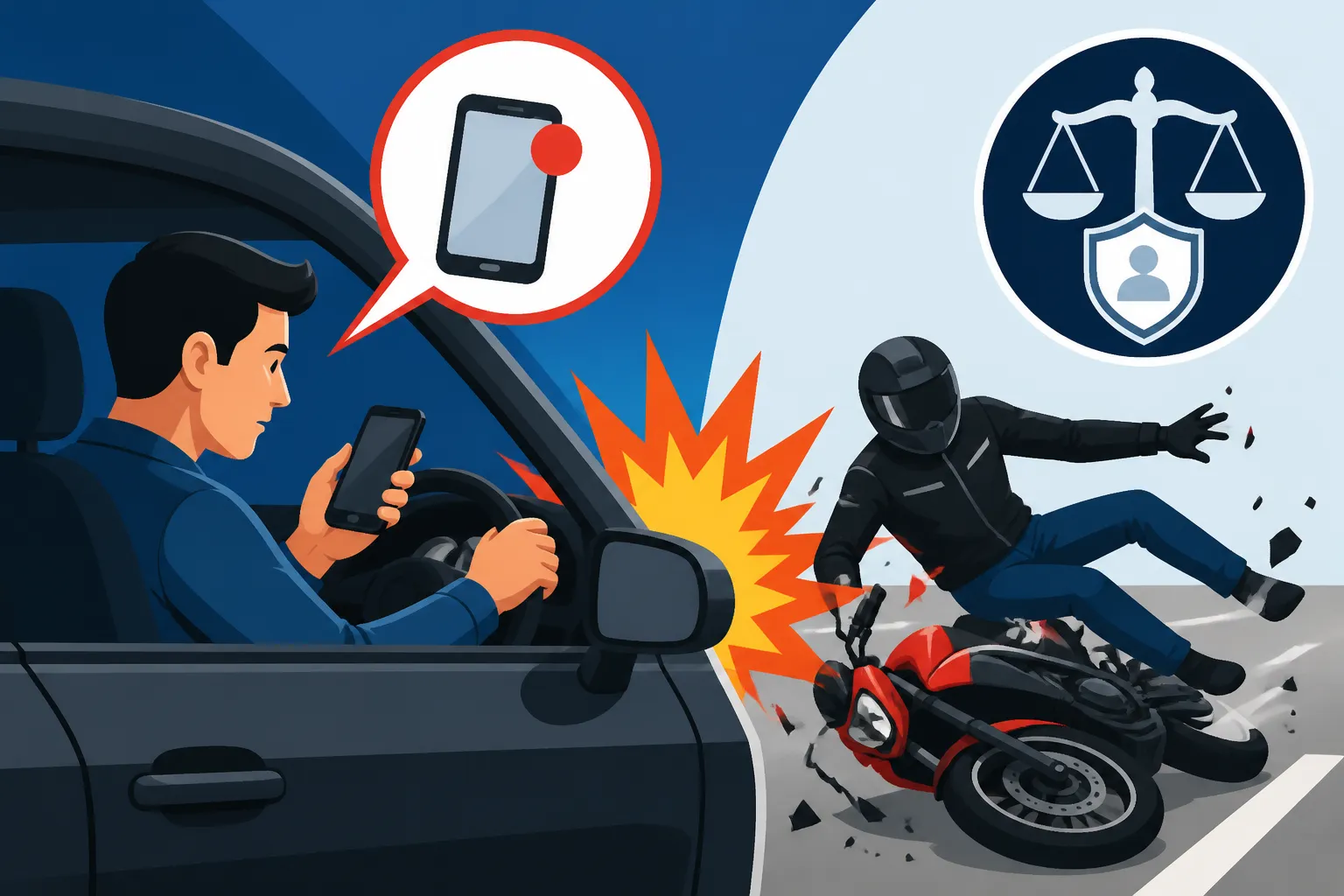
Texting while driving is arguably one of the most dangerous forms of distraction, combining visual, manual, and cognitive elements simultaneously. A driver texting can take their eyes off the road for an average of five seconds. At 55 mph, that’s like driving the length of a football field blindfolded. This can lead to a variety of tragic outcomes for motorcyclists. We often see these crashes occur when a texting driver fails to notice a motorcycle slowing down ahead of them, resulting in a devastating Motorcycle Accidents Caused by Rear-End Collisions. The rider might be stopped at a traffic light, or simply navigating slower traffic, and the distracted driver plows into them from behind, causing severe trauma.
Another common scenario involves a texting driver drifting out of their lane. They might be attempting to read or respond to a message, causing them to swerve into an adjacent lane where a motorcyclist is riding. The motorcyclist, often having less room to maneuver or react, can be sideswiped, forced off the road, or directly hit. These incidents highlight how even a brief moment of distraction can erase critical reaction time, which is already minimal for motorcyclists due to their smaller footprint. Proving that texting was the cause often relies on gathering specific evidence, such as cell phone records, which we'll discuss later.
Inattentive Drivers at Intersections
Intersections are notorious hotspots for motorcycle accidents, and distracted driving only escalates the danger. Many drivers, even when not actively looking at a phone, might be cognitively distracted—lost in thought, focused on a conversation, or simply tired. This can lead to them missing critical traffic signals or failing to yield the right-of-way. How often have you seen a driver inching into an intersection, seemingly oblivious to oncoming traffic, only to slam on their brakes at the last second? For a motorcyclist, that sudden brake or hesitation can be disastrous, forcing us to take evasive action or face a direct collision.
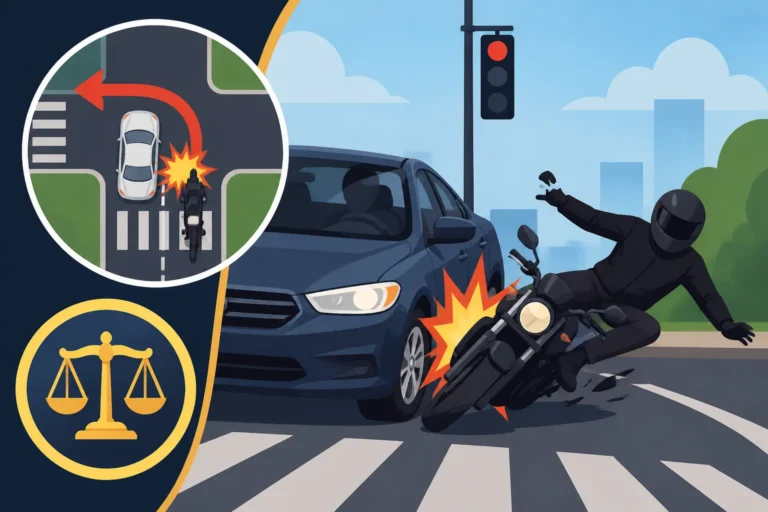
One of the most frequent types of intersection accidents involving distracted drivers is the "left-turn accident." A driver making a left turn might be distracted and simply fail to see an oncoming motorcycle, turning directly into its path. We cover these types of incidents in depth in our guide on Motorcycle Accidents Caused by Left-Turn Collisions. Another common issue is a distracted driver failing to stop at a red light or stop sign, T-boning a motorcyclist who legally entered the intersection. In these situations, the driver's inattention means they don't even register the motorcycle until it's too late, often claiming they "never saw them."
Distracted Drivers Making Unsafe Lane Changes
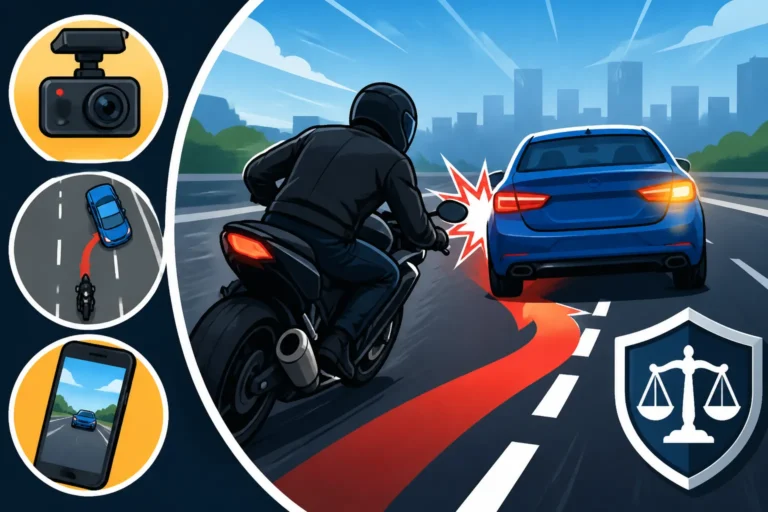
Merging onto a highway or simply changing lanes in heavy traffic requires a driver's full attention, yet it's another area where distracted driving frequently causes motorcycle accidents. A driver who is visually or cognitively distracted might not properly check their blind spots, or might glance too quickly, missing a motorcycle that is lawfully riding alongside them. This can lead to an unsafe lane change where the driver veers into the motorcyclist's lane, effectively squeezing them out or directly colliding with them.
In some cases, a driver might be reaching for something, adjusting the radio, or talking to passengers, taking their hands off the wheel or their eyes off the mirrors. This lack of control and awareness can cause them to drift haphazardly between lanes, posing an immense risk to any motorcyclists sharing the road. When a distracted driver makes an Motorcycle Accidents Caused by Unsafe Lane Changes, the consequences can be particularly brutal for a rider who is suddenly trapped between a moving vehicle and a concrete barrier or another car. These collisions often highlight the critical need for drivers to continuously scan their surroundings and make deliberate, safe lane changes, not just quick, distracted glances.
Proving Distracted Driving in a Motorcycle Accident Claim
After a motorcycle accident caused by a distracted driver, one of the biggest challenges you'll face is proving that distraction was indeed the cause. Insurance companies and opposing legal teams are often quick to suggest the motorcyclist was at fault or that the distraction wasn't a contributing factor. This is where meticulous evidence gathering and expert support become absolutely indispensable. It’s not enough to suspect distraction; you need to build a solid case to demonstrate it definitively.
Types of Evidence to Gather
Building a case that proves distracted driving requires collecting a wide array of evidence, often immediately following the incident. Your first step should always be to ensure your safety and call for help, but if you're able, start gathering information at the scene. This includes taking photos of the accident scene from multiple angles, capturing vehicle damage, road conditions, traffic signs, and any skid marks. If the other driver admitted to being distracted, even in passing, make a note of it. The police report can be a critical piece of evidence, as officers often record initial statements and observations about driver behavior. We discuss this further in our guide on How Police Reports Establish Fault.
Beyond on-scene evidence, look for opportunities to secure digital proof. If you suspect cell phone use, requesting the other driver’s cell phone records can be highly effective. These records can show call logs, text messages, and data usage around the time of the accident. While these records are often protected by privacy laws, a subpoena can compel their release if deemed relevant by a court. Furthermore, check for local surveillance cameras (traffic cameras, business security cameras) that might have captured the incident. Many modern vehicles also have dashcam footage or event data recorders (EDRs), sometimes called "black boxes," which can record speed, braking, and steering input leading up to a crash. This level of detail about Motorcycle Accident Evidence for Proving Fault can be the linchpin of your claim.
The Role of Witnesses and Expert Testimony
Eyewitnesses are invaluable in proving distracted driving. Unlike physical evidence, a witness can often directly observe a driver's behavior just before impact. Imagine a bystander at a coffee shop who saw the driver looking down at their lap, or a passenger in another vehicle who noticed the driver fumbling with a phone. Their testimony, detailing what they saw and heard, can be incredibly compelling, especially if their account aligns with other evidence. It's crucial to get their contact information at the scene, as detailed in our advice on How Witnesses Affect Motorcycle Fault.
In complex cases, or when direct evidence is scarce, accident reconstruction experts can be brought in. These professionals can analyze physical evidence from the scene—skid marks, vehicle damage, debris patterns—and combine it with known factors like vehicle speeds and reaction times to piece together what happened. They can often provide a scientific opinion on how a driver's inattention would have altered the outcome, supporting the argument that had the driver been paying attention, the accident might have been avoided. Their detailed reports and testimony can be instrumental in demonstrating causation, even when direct proof of distraction (like cell phone records) isn't immediately available, helping to paint a clear picture of fault.
Legal Implications and Fault Determination
Understanding the legal ramifications of a motorcycle accident caused by distracted driving is crucial for protecting your rights and securing fair compensation. In most jurisdictions, the core principle revolves around negligence, and distracted driving is a textbook example of a breach of that duty of care. However, the exact process of determining who is at fault can be complex, especially when insurance companies try to shift some blame onto the motorcyclist.
How Distracted Driving Establishes Negligence
In personal injury law, negligence is the legal theory that holds a person responsible for harm caused by their carelessness. To prove negligence in a motorcycle accident claim, you generally need to demonstrate four key elements: duty, breach, causation, and damages. Every driver on the road has a fundamental "duty of care" to operate their vehicle safely and attentively. When a driver engages in distracted driving, they are clearly "breaching" that duty. For example, a driver texting while driving on a busy street in Miami is not acting with the same care a reasonable person would under similar circumstances.
The next step is proving "causation" – that the distracted driving directly led to your injuries and damages. If a distracted driver runs a stop sign and collides with your motorcycle, their distraction is the direct cause of the accident. Finally, you must show "damages," which include your medical bills, lost wages, pain, and suffering. When these elements are clearly established, the distracted driver is legally considered at fault, and you have a strong basis for seeking compensation. This foundation is essential for any Motorcycle Accident Liability: A Complete Guide moving forward.
Comparative Negligence When a Rider is Partially at Fault
Even with clear evidence of distracted driving by the other party, insurance companies may try to argue that the motorcyclist was also partially at fault. This concept is known as comparative negligence, and it varies significantly from state to state. For instance, in states like California, which follow "pure comparative negligence," you can still recover damages even if you are 99% at fault, though your compensation will be reduced by your percentage of blame. So, if you suffered $100,000 in damages but were found 10% at fault, you would receive $90,000.
Other states, like Texas or Ohio, operate under "modified comparative negligence" (often the 51% rule or 50% rule). In these states, if you are found to be more than 50% (or 51%) at fault, you may be completely barred from recovering any damages. This is a critical distinction that can significantly impact your potential settlement. For example, if a distracted driver made an unsafe lane change and hit you, but the insurer argues you were speeding, they might try to assign you a percentage of fault. This is why it's so important to understand Comparative Negligence in Motorcycle Accidents and actively counter any attempts to unfairly assign blame to you, the rider.
| Type of Distraction | Description | Potential Impact on Motorcyclists | Key Evidence for Proof |
|---|---|---|---|
| Visual | Taking eyes off the road (e.g., looking at phone, GPS, billboard) | Failure to see motorcycle in intersection, blind spot, or ahead | Cell phone records, dashcam, witness statements, surveillance video |
| Manual | Taking hands off the wheel (e.g., texting, eating, adjusting radio) | Loss of steering control, delayed braking, drifting into lane | Driver admission, witness statements, accident reconstruction |
| Cognitive | Taking mind off driving (e.g., deep thought, intense conversation, fatigue) | Delayed reaction times, failure to yield, running lights/signs | Witness statements, police report (driver demeanor), expert testimony |
| Auditory | Distracted by sounds (e.g., loud music, phone call, screaming kids) | Failure to hear horn, emergency vehicle sirens, or other warnings | Witness statements (if sounds were external), police report |
Navigating the Aftermath: Steps to Take After a Distracted Driving Crash
The moments and days following a motorcycle accident, especially one caused by a distracted driver, can be incredibly disorienting and stressful. You might be in pain, confused, and unsure of what to do next. However, the actions you take immediately after the crash, and in the days that follow, are incredibly important for your health and the strength of any potential legal claim. These steps can make a monumental difference in proving fault and securing the compensation you deserve.
Immediate Actions at the Scene
Your absolute first priority after any motorcycle accident is your safety and the safety of others. If possible and safe to do so, move yourself and your motorcycle out of the flow of traffic to prevent further collisions. Then, call 911 immediately. Even if you feel okay, many serious injuries, especially those involving the head or spine, can have delayed symptoms. Paramedics can assess your condition, and the police will create an official accident report. This report is crucial for documenting the initial details of the crash, including the other driver's information and any preliminary findings regarding fault. A thorough understanding of What to Do After a Motorcycle Accident is essential.
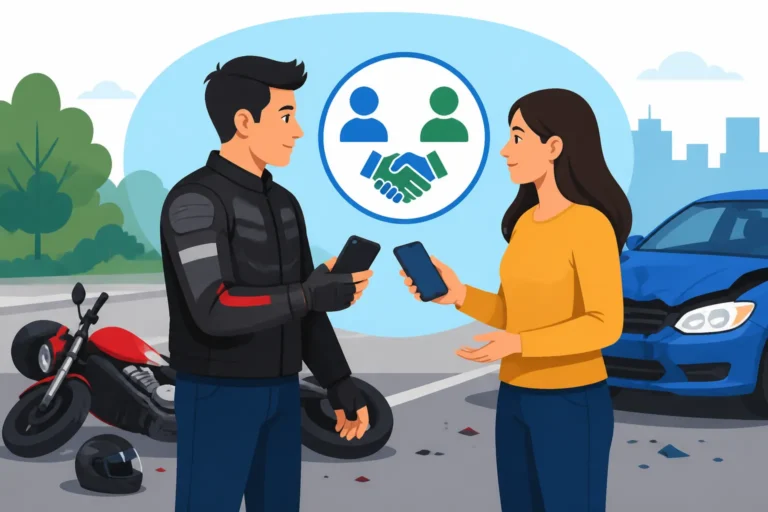
While waiting for emergency services, if your condition allows, start gathering information. Exchange contact and insurance details with the other driver. Do not, under any circumstances, admit fault or apologize, as this can be used against you later by insurance companies. Take as many photos as possible: vehicle damage, the position of the vehicles, road conditions, traffic signs, skid marks, and anything that might indicate driver distraction, such as a cell phone near the driver or specific markings on the road. Look for witnesses and get their contact information. Their statements about the other driver's behavior just before the crash, such as looking down at a phone, can be vital evidence in proving distracted driving.
Documenting Your Injuries and Damages
After leaving the accident scene, your next critical step is to seek medical attention, even if you’ve already been seen by paramedics. A full medical evaluation by a doctor is essential for diagnosing any injuries, especially those with delayed onset like whiplash, internal injuries, or concussions. Follow all medical advice, attend all appointments, and complete any prescribed therapies. Gaps in medical treatment can be used by insurance companies to argue that your injuries weren't serious or weren't caused by the accident. Maintain a detailed record of all medical expenses, including doctor visits, prescriptions, physical therapy, and any adaptive equipment you might need. We discuss the importance of this in How to Document Injuries for a Claim.
Beyond physical injuries, document all other losses you incur. This includes lost wages from time off work, reduced earning capacity if your injuries affect your ability to perform your job, and the cost of repairing or replacing your motorcycle and damaged gear. Keep a pain and symptom journal where you detail your daily struggles, pain levels, and how your injuries impact your quality of life. This helps quantify "non-economic damages" like Pain and Suffering Damages Explained. All of this documentation forms the basis for your personal injury claim, allowing you to seek compensation for all the Types of Damages in a Motorcycle Accident Claim you've suffered due to the other driver's negligence.
Disclaimer
The information provided in this guide is intended for general informational purposes only and does not constitute legal advice. Motorcycle accident laws vary significantly by jurisdiction, and the specifics of your case will depend on many factors. It is highly recommended to consult with a qualified motorcycle accident attorney to discuss your individual situation and legal options.