Motorcycle Accident Liability: A Complete Guide
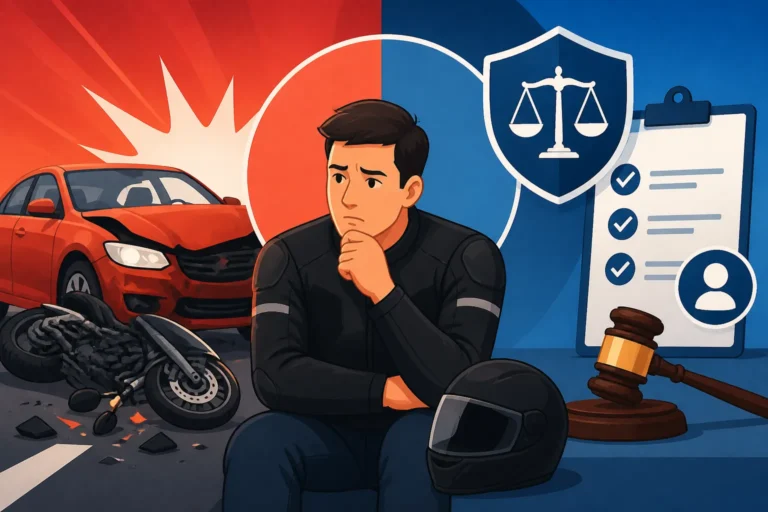
Riding a motorcycle offers unparalleled freedom, but it also comes with unique risks, especially when navigating roads shared with less attentive drivers. When the unthinkable happens, and you find yourself involved in a crash, one of the most pressing and often frustrating questions is: who is responsible? This guide delves deep into the complex world of motorcycle accident liability, aiming to demystify how fault is determined, what factors influence it, and what steps you can take to protect yourself and your rights after a crash.
Understanding Motorcycle Accident Liability: The Basics
Motorcycle accidents are often devastating, not just physically and emotionally, but also financially. The legal concept of liability is at the heart of any personal injury claim, determining who is financially responsible for the damages incurred. For riders, understanding this framework is crucial, as public perception and systemic biases can sometimes complicate matters.
Defining Legal Liability
At its core, legal liability in a motorcycle accident means being held accountable for the harm caused by your actions or inactions. When a person is legally liable, they are typically obligated to compensate the injured party for their losses. This compensation can cover everything from medical bills and lost wages to pain and suffering. It's not just about pointing fingers; it's about establishing a legal basis for recovery. For instance, if a car driver undeniably runs a red light and collides with your motorcycle, their liability is often clear because their actions directly led to the crash and your injuries. Without a clear determination of who is liable, seeking fair compensation becomes incredibly difficult, leaving injured riders in a vulnerable position.
The Concept of Negligence
Most personal injury claims, including those stemming from motorcycle accidents, revolve around the concept of negligence. Negligence is essentially the failure to exercise the care that a reasonably prudent person would have exercised in the same circumstances. In other words, did someone act carelessly, and did that carelessness cause your accident and injuries? To prove negligence, four key elements typically need to be established: duty, breach, causation, and damages. For example, every driver on the road has a duty of care to operate their vehicle safely. If a driver breaches this duty by texting while driving and causes a crash, that breach directly causes your injuries (causation), leading to tangible losses (damages). Understanding these fundamental elements of negligence is vital in any claim.
Unique Challenges for Riders
While the principles of liability apply universally, motorcyclists often face unique challenges that can complicate the determination of fault. There's an unfortunate, underlying bias against motorcyclists in society, sometimes even among jury members or insurance adjusters, who might subconsciously assume the rider was acting recklessly or somehow "asking for it." This prejudice can manifest as the "I Didn't See the Motorcycle" Defense Explained, a common claim by drivers that attempts to shift blame or mitigate their own negligence. Furthermore, the inherent vulnerability of riders means injuries are often severe, leading to higher damage claims, which can make insurance companies fight even harder to assign partial fault to the motorcyclist. Navigating these implicit biases requires a strategic approach and a deep understanding of how to effectively counter them.
Common Causes of Motorcycle Accidents and Their Impact on Liability
Many motorcycle accidents aren't random occurrences; they stem from specific actions or inactions, often by other drivers, that directly impact liability. Understanding these common scenarios is crucial for riders seeking to understand "who is at fault in a motorcycle accident" and build a strong case.
Left-Turn Collisions and Failure to Yield
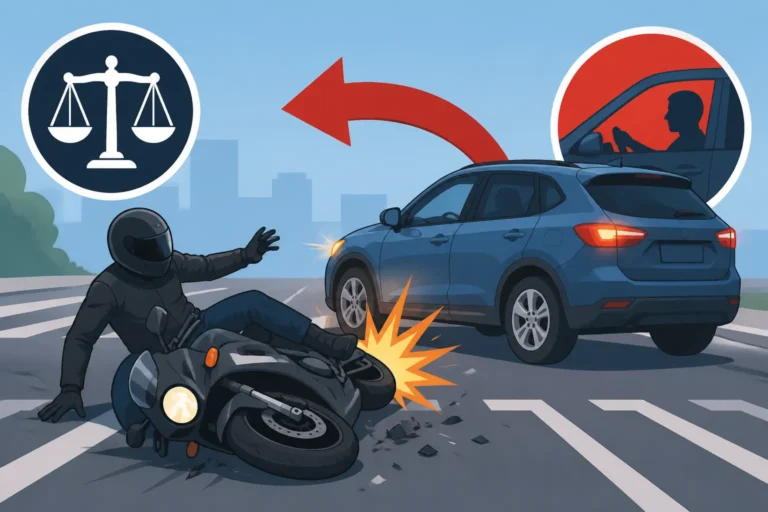
One of the most frequent and dangerous types of motorcycle accidents involves a car making a left turn in front of an oncoming motorcycle. Despite motorcycles often having their headlights on, drivers frequently misjudge their speed or simply fail to see them altogether. This often falls under the category of a failure to yield, where the turning driver had a legal obligation to wait for the motorcycle to pass. For example, imagine you're cruising down a main street in Phoenix, Arizona, approaching an intersection, and suddenly a sedan attempts to turn left directly into your path without adequate space or time. The driver's clear violation of traffic laws in this scenario usually places liability squarely on their shoulders. These types of collisions highlight the critical need for drivers to be extra vigilant and recognize motorcycles in traffic.
Distracted and Impaired Driving
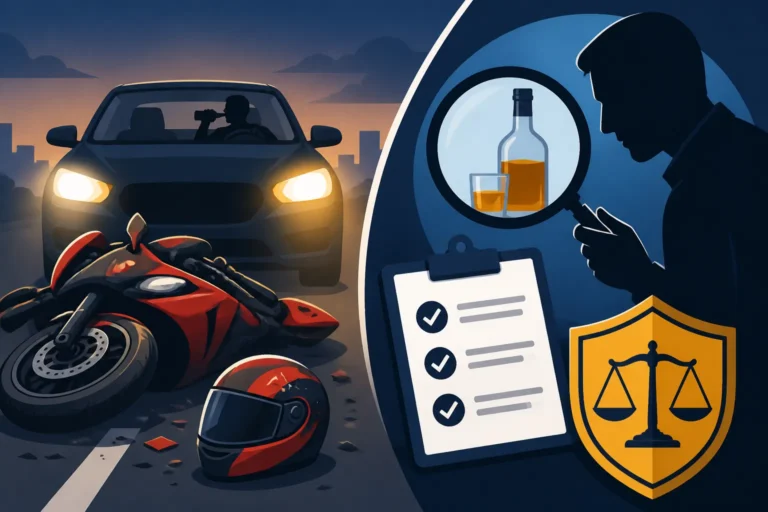
In today's world, distracted driving is an epidemic, and it poses an extreme threat to motorcyclists. Drivers who are texting, talking on the phone, eating, or even just daydreaming are not fully attentive to the road, dramatically increasing the risk of an accident. Similarly, impaired driving, whether due to alcohol, drugs, or even fatigue, severely compromises a driver's reaction time, judgment, and awareness. If a driver in Miami, Florida, veers into your lane because they were updating their social media, or if they run a stop sign while under the influence, their clear negligence makes them liable for any resulting crash. Proving that another driver was distracted or impaired can be challenging, but evidence like phone records, witness statements, or police reports indicating sobriety tests can be critical in establishing their fault.
Road Hazards and Unsafe Lane Changes
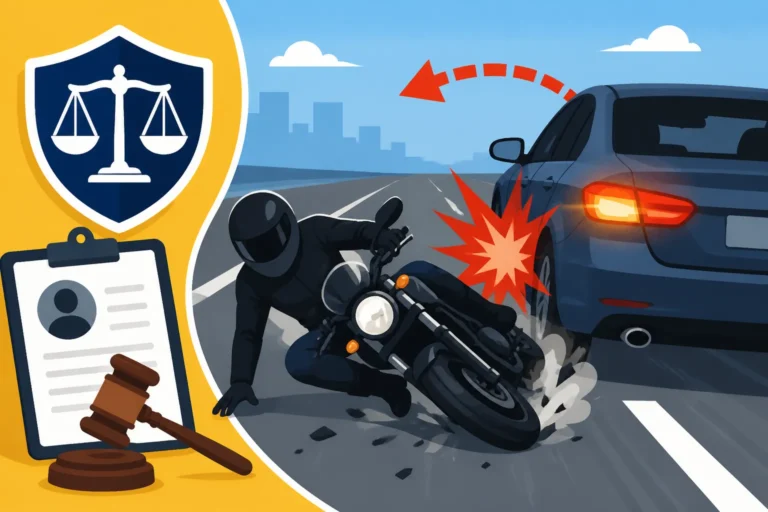
Sometimes, the "fault" isn't solely with another driver, but with the road itself, or with aggressive driving maneuvers. Potholes, gravel, uneven pavement, or poorly maintained construction zones can be minor annoyances for cars but pose serious threats to motorcycles, potentially causing a rider to lose control. If a city or state government failed to properly maintain a road, and that defect caused your crash, they could bear some liability. Furthermore, sudden, unsafe lane changes by other vehicles are a significant hazard. A driver who merges without checking their blind spots or signals, cutting off a motorcyclist, creates an incredibly dangerous situation. Let's say you're riding on a busy interstate near Dallas, Texas, and a semi-truck abruptly changes lanes into your space, forcing you off the road. This negligent maneuver makes the truck driver liable for the accident and any injuries you sustain. Understanding these varied scenarios is crucial for determining Common Causes of Motorcycle Accidents and assigning proper responsibility.
Proving Fault in a Motorcycle Accident: Gathering Evidence
After a motorcycle accident, the moments immediately following the crash are critical for securing evidence that can later prove fault. Insurance companies and legal teams will meticulously review every detail, and the strength of your claim often hinges on the quality and quantity of evidence you collect.
The Importance of the Accident Scene
The accident scene itself is a treasure trove of information, but it's often a chaotic and stressful place. As difficult as it may be, if your injuries allow, try to document everything before vehicles are moved. Take copious photographs and videos from multiple angles, capturing the positions of the vehicles, road conditions, traffic signs, skid marks, and any debris. These visual records can provide irrefutable proof of how the accident occurred and where the point of impact was. For instance, if a driver claimed they were in a different lane, photos showing their vehicle's final resting position could disprove their statement. Moreover, details about the time, weather conditions, and exact location are crucial. Even the smallest details, like a broken headlight or a scratch pattern on your bike, can tell a story to accident reconstruction experts. This immediate documentation is foundational for Motorcycle Accident Evidence for Proving Fault.
Collecting Witness Testimonies and Police Reports
Eyewitnesses can provide invaluable, objective accounts of what transpired, often filling in gaps that you, as the injured rider, might have missed due to the shock or injury. Always try to get contact information for any witnesses at the scene – names, phone numbers, and email addresses. Their statements can corroborate your version of events and counter potentially biased narratives from the other driver. Equally important is the official police report. While not always definitive, a police report often includes details about who received citations, a diagram of the accident, and initial assessments of fault, which can heavily influence an insurance company's initial stance. If the officer cited the other driver for a traffic violation like running a red light or Motorcycle Accidents Caused by Unsafe Lane Changes, this serves as strong evidence in your favor. Make sure to obtain a copy of this report as soon as it's available.
Leveraging Technology: Dashcams and Reconstruction
In the modern age, technology offers powerful tools for proving fault. Dashcams, whether mounted on your motorcycle or the other driver's vehicle, can provide undeniable video evidence of the moments leading up to and during the crash. If you have a helmet camera or a dashcam on your bike, that footage can be gold. It removes all doubt and often discredits false claims made by the other party. Beyond direct recordings, accident reconstruction experts can use data from vehicle black boxes, GPS, and even cell phone tower data to piece together the sequence of events with scientific precision. They analyze factors like vehicle speeds, braking distances, and impact angles to determine precisely How Fault Is Determined in Motorcycle Accidents. In complex cases, especially those with severe injuries, consulting with an expert who can interpret this technical data becomes essential for building a robust case.
How Insurance Companies Assign Blame to Riders
When you're involved in a motorcycle accident, one of the first and most critical hurdles you'll face is dealing with insurance companies. Their primary goal, often, is to minimize payouts, and they have sophisticated strategies to assign blame, or at least partial blame, to the motorcyclist.
Rider Bias and Stereotypes
It's an unfortunate truth that motorcyclists often face an inherent bias. Insurance adjusters, and even sometimes jurors, might harbor preconceived notions that riders are reckless, speeding, or engaging in dangerous maneuvers like lane splitting (even where it's legal, such as in California). They might subtly use these stereotypes to frame the narrative, suggesting that the rider's "inherent risk-taking" contributed to the accident, regardless of the actual circumstances. For example, if you were wearing a "novelty" helmet instead of a DOT-compliant one, an adjuster might try to imply you were less serious about safety, even if helmet type had no bearing on the cause of the crash itself. This bias can lead to unfair fault assignments and lower settlement offers. Recognizing this systemic tendency is the first step in effectively countering it and ensuring that the true facts of the accident, not stereotypes, dictate liability. How Insurance Companies Assign Blame to Riders can be a frustrating experience if you're unprepared.
Investigating the Claim
Once a claim is filed, the insurance company will launch its own investigation. This isn't always about uncovering the truth; it's about finding information that supports their position. They will scrutinize police reports, witness statements, vehicle damage, and especially your medical records. They'll look for any inconsistencies in your story, gaps in medical treatment, or even pre-existing conditions they can link to your current injuries to reduce their liability. They might call you shortly after the accident, trying to get a recorded statement when you're still shaken or heavily medicated, hoping you'll say something they can later use against you. It's crucial to be aware that anything you say can and will be used to their advantage. They may even send out their own investigators to the scene, looking for details that could shift fault away from their insured client.
The "I Didn't See the Motorcycle" Defense
This is perhaps one of the most maddeningly common defenses employed by drivers and, by extension, their insurance companies. A driver might genuinely claim, "I looked, but I just didn't see them," when making a left turn or changing lanes. While this might be true from their perspective, it doesn't absolve them of liability. Under the law, drivers have a duty to see what is plainly visible and to exercise reasonable care. The "I Didn't See the Motorcycle" defense often highlights the driver's own inattention or negligence, rather than proving the motorcyclist was at fault. An experienced legal team can dismantle this defense by demonstrating factors like:
- Conspicuity: Was your motorcycle well-lit? Were you wearing bright gear?
- Line of Sight: Was there anything physically obstructing the driver's view, or did they simply fail to look adequately?
- Driver Duty: Did the driver have a legal obligation to yield or check thoroughly before proceeding?
This defense, while frustrating, often underscores the very negligence it attempts to excuse, as it points to a driver's failure to meet their duty of care on the road.
Shared Fault and Comparative Negligence in Motorcycle Accidents
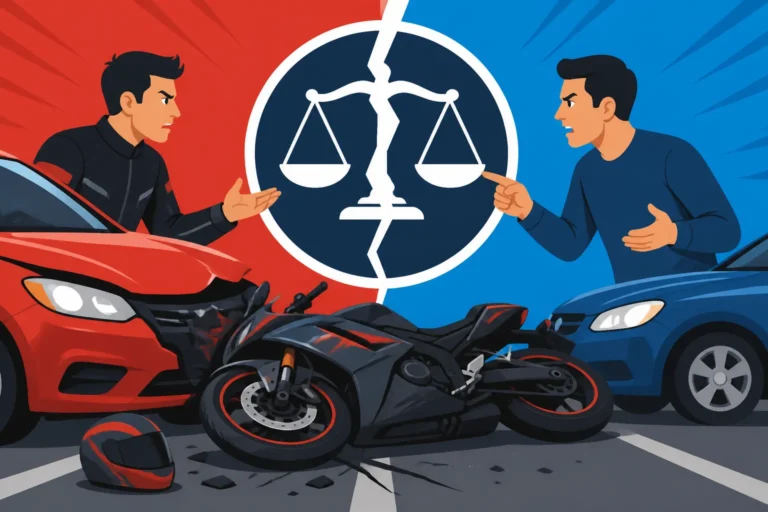
The idea of "fault" isn't always black and white. In many motorcycle accidents, both parties might share some degree of responsibility. This concept is handled differently depending on the state where the accident occurred, thanks to laws surrounding comparative negligence.
Understanding Comparative Negligence Rules
Comparative negligence is a legal principle that allows an injured party to recover damages even if they were partially at fault for the accident, but their compensation will be reduced by their percentage of fault. There are generally two main types of comparative negligence:
- Pure Comparative Negligence: In states like California, Florida, and New York, an injured party can recover damages no matter how much they were at fault. If you were found 80% at fault for a crash, you could still recover 20% of your damages. This can be critical for a rider who, for example, was slightly speeding but was still hit by a driver who ran a stop sign.
- Modified Comparative Negigence: Most states, including Texas, Ohio, and Pennsylvania, follow a modified comparative negligence rule, often with a 50% or 51% bar.
- 50% Rule: If you are 50% or more at fault, you cannot recover any damages. If you are 49% at fault, you can recover 51% of your damages.
- 51% Rule: If you are 51% or more at fault, you cannot recover any damages. If you are 50% at fault, you can recover 50% of your damages.
Understanding which rule applies in your state is paramount, as it directly impacts your ability to recover compensation. For a detailed breakdown of how fault affects your payout, you might want to read more about How Comparative Negligence Reduces Your Payout.
Let's look at a quick comparison of these rules in some key states:
| State | Comparative Negligence Rule | Description |
|---|---|---|
| California | Pure Comparative Negligence | Injured parties can recover damages regardless of their percentage of fault, with their recovery reduced proportionally. For example, 70% at fault means you recover 30% of damages. |
| Texas | Modified Comparative (51% Bar) | Injured parties can recover damages only if their fault is 50% or less. If found 51% or more at fault, they cannot recover any damages. |
| Florida | Pure Comparative Negligence | Similar to California, allows recovery even if largely at fault, with damages reduced by the percentage of fault. |
| Ohio | Modified Comparative (55% Bar) | Injured parties can recover damages only if their fault is 50% or less. If found 51% or more at fault, they cannot recover any damages. Note: Ohio refers to it as a 51% bar in practice, preventing recovery if fault is equal to or greater than the plaintiff's. |
| Pennsylvania | Modified Comparative (51% Bar) | Injured parties can recover damages only if their fault is 50% or less. If found 51% or more at fault, they cannot recover any damages. |
How Partial Fault Affects Your Settlement
When an insurance company or court determines you share some responsibility for the accident, this percentage directly reduces the amount of compensation you can receive. For example, if your total damages (medical bills, lost wages, pain and suffering) are calculated at $100,000, and you are found to be 20% at fault under a pure comparative negligence system, you would only be able to recover $80,000. In a modified comparative negligence state with a 51% bar, if you were found 51% at fault, you would receive nothing. Insurance adjusters are experts at trying to assign a higher percentage of fault to motorcyclists, even when the evidence doesn't fully support it, precisely because it significantly reduces their payout. This is why having strong evidence and legal representation is vital When a Rider Is Partially at Fault.
Contributory Negligence States: A Different Standard
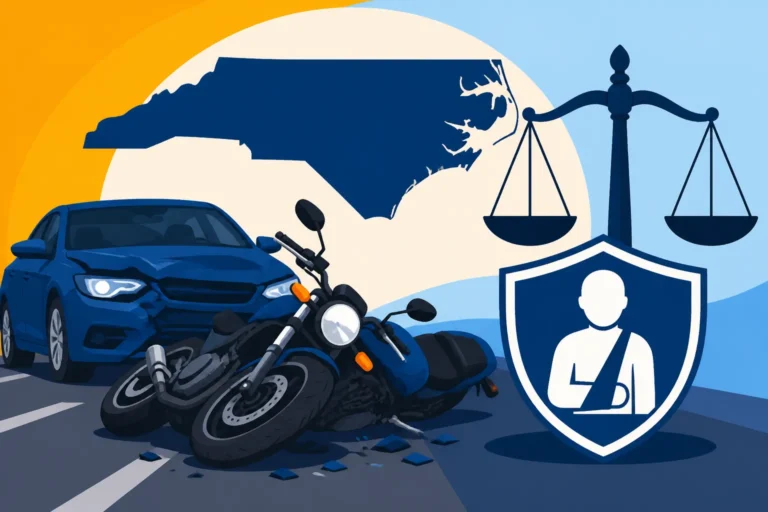
A small number of states still adhere to the traditional "contributory negligence" rule, which is far more stringent. In these states, if you are found to be even 1% at fault for the accident, you are completely barred from recovering any damages from the other party. This "all or nothing" approach makes it incredibly challenging for injured riders to seek compensation if there's any perceived contribution to the crash on their part. For example, in North Carolina, a state that largely follows contributory negligence, if you were T-boned by a driver who ran a red light, but an investigation showed you were traveling 5 mph over the speed limit, you could potentially be denied any compensation for your severe injuries and damages. Given the severe implications, understanding if your state follows contributory negligence is absolutely critical, as it requires a completely different legal strategy.
When Others Are Liable: Beyond the Other Driver
While the immediate focus after a motorcycle accident is often on the other driver involved, liability can sometimes extend to other parties. These third-party claims can be crucial, especially in cases where the primary driver's insurance coverage is insufficient or when the accident resulted from systemic issues beyond human error.
Government Liability for Road Defects
Sometimes, a dangerous road condition, rather than a negligent driver, is the primary cause of a motorcycle accident. Potholes, crumbling pavement, missing or obscured traffic signs, inadequate lighting, or even poorly designed intersections can create deadly hazards for motorcyclists. If a governmental entity – whether it's the city, county, or state – was responsible for maintaining that road and failed to do so, and that failure directly led to your accident, they could be held liable. For instance, if you hit a massive, unmarked pothole on a highway in Washington State that caused you to lose control and crash, and that pothole had been reported multiple times but not fixed, the responsible government agency might bear some liability. Suing a government entity, however, involves complex procedures, strict deadlines (often much shorter than typical personal injury statutes of limitations), and specific notice requirements. It’s a specialized area of law, but one that can be vital for recovery if a dangerous road caused your injuries. Learn more about Government Liability for Road Hazards.
Manufacturer Liability for Defective Parts
In some tragic cases, a motorcycle accident isn't caused by driver negligence or road conditions, but by a mechanical failure due to a defective part. Imagine your motorcycle's brakes suddenly fail, or a tire blows out due to a manufacturing defect, leading to a catastrophic crash. In such scenarios, the manufacturer of the defective part, or even the motorcycle manufacturer itself, could be held liable under product liability laws. This often falls into categories like:
- Design Defects: The product was inherently dangerous due to its design, even if manufactured perfectly.
- Manufacturing Defects: A flaw occurred during the manufacturing process, making a specific unit dangerous.
- Warning Defects (Failure to Warn): The product lacked adequate warnings about non-obvious dangers.
Proving a product defect requires expert testimony and a detailed investigation into the motorcycle's components and history. It's a complex and often expensive undertaking, but if successful, it can provide significant compensation, especially if the defect caused severe, life-altering injuries. This type of claim requires meticulous documentation and often involves legal teams well-versed in complex engineering and safety standards.
Third-Party Responsibilities
Liability doesn't always stop at the driver or the government. Other third parties might also bear some responsibility for a motorcycle accident. For example:
- Maintenance Companies: If a commercial truck's brakes failed, and it was recently serviced by a maintenance company that performed negligent repairs, that company could be held liable.
- Employers: If the negligent driver was on the clock, driving a company vehicle at the time of the accident, their employer might be vicariously liable under the "respondeat superior" doctrine. This is particularly relevant if the employer knew the driver had a poor record or failed to train them properly.
- Vehicle Owners: If the driver who caused the accident was borrowing a vehicle from someone else, the owner might have some liability, especially if they knowingly lent the vehicle to an unlicensed or impaired driver.
- Businesses Serving Alcohol: In some states, under "dram shop laws," a bar or restaurant could be held liable if they over-served an intoxicated customer who then caused a motorcycle accident.
These additional avenues for liability can be crucial for securing full compensation, especially in cases involving catastrophic injuries where the primary at-fault driver's insurance limits might be insufficient to cover all damages. Exploring these options requires a thorough investigation into all contributing factors of the accident.
Legal Protections and What to Do After a Motorcycle Accident
The moments immediately following a motorcycle accident are often chaotic and terrifying. However, the actions you take (or don't take) in the immediate aftermath can significantly impact your ability to recover compensation and protect your legal rights. Knowing what to do can make all the difference.
Immediate Steps to Protect Your Claim
Your health and safety are always the top priority. If you're able, move to a safe location away from traffic and call 911 immediately. Even if you feel okay, it's crucial to seek medical attention. Adrenaline can mask pain, and some serious injuries, like internal bleeding or concussions, might not manifest symptoms for hours or even days. A prompt medical examination creates an official record of your injuries, linking them directly to the accident – a critical piece of evidence for your claim.
Beyond seeking medical care, if you're physically able:
- Document the Scene: As mentioned, take photos and videos of everything: vehicle positions, damage, road conditions, traffic signals, skid marks, debris, and any visible injuries.
- Exchange Information: Get the other driver's name, contact information, insurance details, and vehicle license plate number. Do not discuss fault or apologize.
- Gather Witness Info: Collect names and contact details of any eyewitnesses.
- Cooperate with Police: Provide a factual statement to the police. Do not speculate or admit fault. The police report can be a vital document.
- Do NOT Give a Recorded Statement to the Other Driver's Insurer: They are not on your side. Refer them to your legal counsel.
These immediate actions lay a strong foundation for your case and can prevent insurance companies from later downplaying your injuries or disputing the accident's cause. Following these steps closely is crucial for What to Do After a Motorcycle Accident.
The Role of a Motorcycle Accident Attorney
Hiring a motorcycle accident attorney isn't just about going to court; it's about leveling the playing field against experienced insurance adjusters whose job it is to minimize your payout. A knowledgeable attorney specializes in motorcycle cases and understands the biases riders face. They will:
- Investigate Thoroughly: Gather evidence, interview witnesses, obtain police reports, and if necessary, work with accident reconstructionists.
- Handle Communication: Manage all correspondence and negotiations with insurance companies, protecting you from common tactics designed to undermine your claim.
- Prove Fault and Damages: Build a compelling case demonstrating the other party's negligence and quantifying all your economic and non-economic damages.
- Navigate Legal Complexities: Understand state-specific laws, comparative negligence rules, and statutes of limitations that apply to your case.
- Maximize Your Settlement: Fight for the full and fair compensation you deserve, often achieving significantly higher settlements than individuals attempting to negotiate on their own.
An attorney serves as your advocate, allowing you to focus on your recovery while they handle the legal burdens.
Understanding State Laws and Helmet Use
Motorcycle laws vary significantly from state to state, and understanding them is crucial, especially regarding helmet use. Most states have either universal helmet laws (requiring all riders to wear a DOT-compliant helmet) or partial helmet laws (requiring helmets for riders under a certain age, often 18 or 21). A few states have no helmet law at all for adult riders.
While not wearing a helmet may not directly cause an accident, it can absolutely impact your ability to recover damages for head injuries, even if the other driver was clearly at fault. This is known as the "helmet defense," where the defense argues that your injuries would have been less severe had you been wearing a helmet. For instance, in a state like Florida, which has a partial helmet law (riders over 21 can go without a helmet if they have certain insurance coverage), if you sustain a head injury without a helmet, the defense might argue that your non-use contributed to the severity of that specific injury, potentially reducing your compensation.
Even if your state doesn't have a universal helmet law, wearing a DOT-approved helmet is always the safest choice for your well-being and can remove an easy argument for the defense to reduce your claim. It's a layer of protection that goes beyond preventing injury; it protects your legal standing too.
Navigating the Legal Process and Maximizing Your Claim
After a motorcycle accident, understanding the legal process can feel overwhelming, especially when you're focusing on recovery. However, a clear grasp of how damages are calculated, how negotiations proceed, and the overall settlement process is empowering.
Calculating Damages: Economic vs. Non-Economic
The core of any motorcycle accident claim is determining the full extent of your damages. These are generally categorized into two main types:
- Economic Damages: These are quantifiable, objective losses that can be calculated with bills, receipts, and other financial records. They include:
- Medical Expenses: Past and future costs for hospital stays, doctor visits, surgeries, medications, physical therapy, rehabilitation, and adaptive equipment.
- Lost Wages: Income you've lost from being unable to work, both in the past and projected into the future (loss of earning capacity).
- Property Damage: The cost to repair or replace your motorcycle, helmet, and any other damaged gear.
- Out-of-Pocket Expenses: Costs like transportation to medical appointments, home modifications, or domestic help.
- Non-Economic Damages: These are more subjective and compensate you for the intangible impacts of your injuries on your life. They include:
- Pain and Suffering: Physical pain and emotional distress caused by the accident and injuries.
- Emotional Distress: Anxiety, depression, PTSD, or psychological trauma.
- Loss of Enjoyment of Life: Inability to participate in hobbies, activities, or aspects of life you once enjoyed.
- Disfigurement and Scarring: Compensation for permanent physical changes.
- Loss of Consortium: In some cases, a spouse can claim damages for the loss of companionship and intimacy.
A critical part of maximizing your claim is ensuring all these damages are thoroughly documented and accurately calculated, especially future medical needs and the long-term impact on your quality of life. This is where an experienced legal professional truly shines, making sure no stone is left unturned in assessing your true losses.
Negotiating with Insurance Companies
Once your damages are compiled, the negotiation phase begins. Insurance companies are notorious for offering lowball settlements initially, hoping you'll accept out of desperation or lack of knowledge. They have sophisticated teams whose goal is to save the company money. This is where the value of legal representation becomes abundantly clear. Your attorney will:
- Prepare a Demand Letter: This comprehensive document outlines the facts of the accident, evidence of fault, a detailed account of your injuries and medical treatment, and a precise calculation of all your damages, culminating in a specific demand for compensation.
- Engage in Strategic Negotiations: Your lawyer will go back and forth with the insurance adjusters, presenting arguments, countering their offers, and leveraging the threat of litigation to secure a fairer amount. They understand the tactics insurers use and how to effectively respond.
- Advise on Offers: Your attorney will evaluate every offer, explaining whether it's fair based on the strength of your case and your damages, and advising you on whether to accept or push for more.
A strong negotiation strategy, backed by solid evidence and a willingness to go to trial if necessary, is key to achieving a favorable outcome. This entire process determines How Motorcycle Accident Settlements Are Calculated and what you ultimately receive.
The Settlement Process Explained
The settlement process typically follows several steps, assuming your case doesn't go to trial:
- Initial Investigation & Treatment: After the accident, you seek medical attention and your attorney begins investigating the crash, gathering evidence.
- Medical Treatment Concludes (or Reaches Maximum Medical Improvement – MMI): It's often best to wait until your medical treatment is largely complete, or you've reached MMI, meaning your condition is stable and unlikely to improve further. This ensures all current and future medical costs can be accurately assessed.
- Demand Package Submission: Your attorney compiles all evidence, medical records, bills, lost wage documentation, and an assessment of non-economic damages into a comprehensive demand letter.
- Negotiations: The insurance company reviews the demand and typically makes a counteroffer. Multiple rounds of negotiation may follow.
- Mediation/Arbitration (Optional): If negotiations stall, parties might agree to non-binding mediation with a neutral third party, or binding arbitration, to reach a resolution without going to court.
- Settlement Agreement: If an agreement is reached, a formal settlement agreement is drafted and signed by both parties.
- Payment and Distribution: Once signed, the insurance company issues payment. Your attorney will then disburse funds, paying off any medical liens (e.g., from health insurance or medical providers), deducting their contingency fees and case expenses, and then releasing the remaining net settlement to you.
The entire process, from accident to final payout, can take anywhere from a few months for minor injuries to several years for complex cases with severe, long-term injuries. Patience and persistent legal advocacy are often required to achieve a just outcome.
Disclaimer
Please note that this guide provides general information about motorcycle accident liability and is not intended as legal advice. Every accident case is unique, and the laws governing personal injury claims vary significantly by state. It is crucial to consult with a qualified motorcycle accident attorney to discuss the specific details of your situation and understand your legal rights and options.