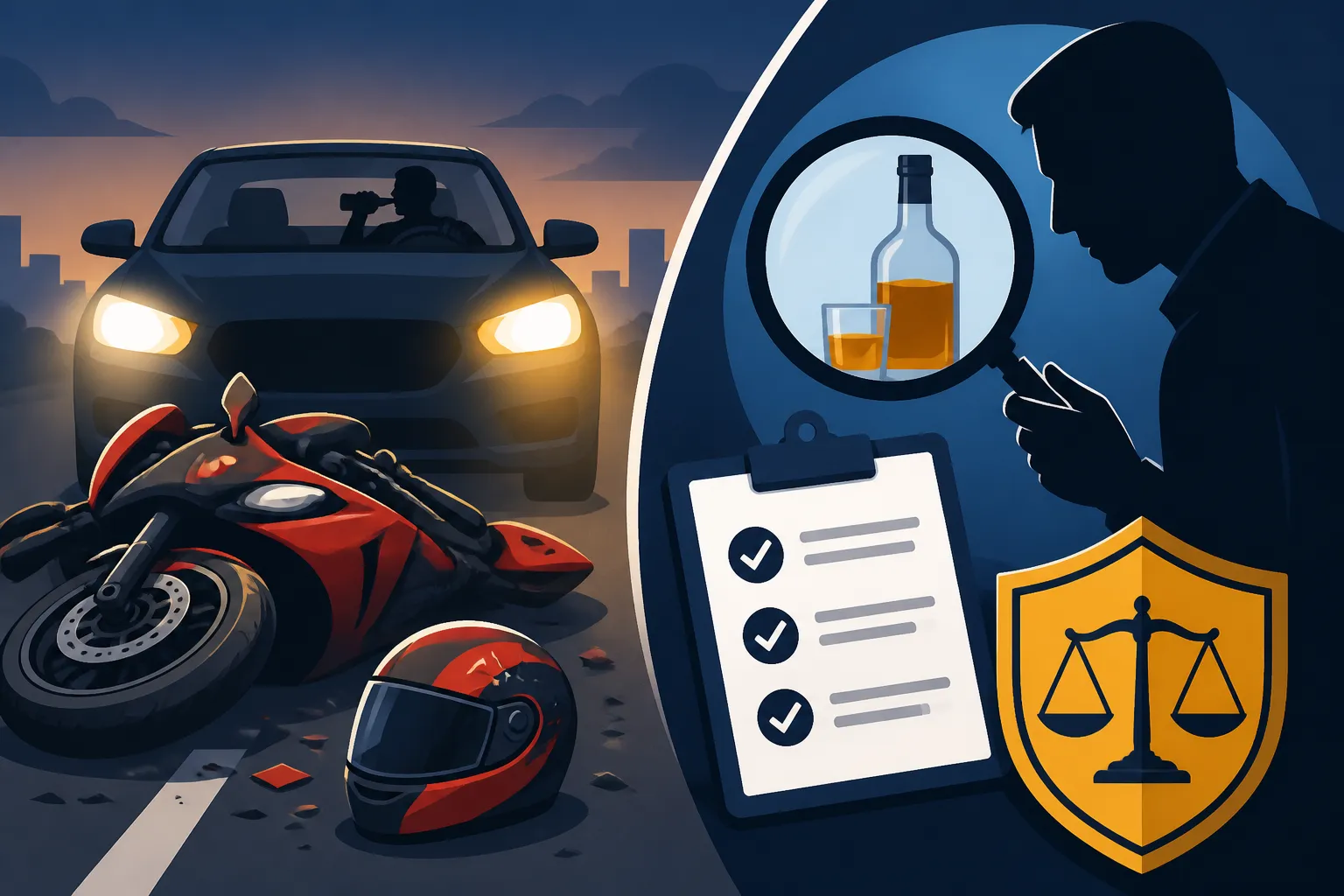
How to Prove Fault in a Drunk Driving Crash
Getting into a motorcycle accident is a nightmare on its own, but discovering the other driver was drunk takes that nightmare to a whole new level of outrage and frustration. You're not just dealing with the physical pain and the damage to your bike; you're grappling with the sheer injustice of someone else's reckless choice impacting your life so severely. This guide will walk you through exactly how to prove fault in a drunk driving crash, ensuring you have the knowledge to hold the responsible party accountable.
The Immediate Aftermath: Securing Crucial Evidence at the Scene
When you're involved in a motorcycle accident where you suspect drunk driving, the moments immediately following the crash are incredibly critical. Your first priority, always, is your safety and medical well-being. But once that's addressed, gathering specific types of evidence related to intoxication can make all the difference in proving fault. Remember, every piece of evidence builds a stronger case. For more general advice, consider reading about what to do immediately after a motorcycle accident.
Police Report and DUI Charges
The police are your first and most vital resource in a suspected drunk driving crash. When officers arrive at the scene, they are trained to look for signs of impairment. This includes slurred speech, bloodshot eyes, an odor of alcohol, unsteady gait, and erratic behavior. If they observe these signs, they will likely administer field sobriety tests and potentially a breathalyzer. The results of these tests, along with any subsequent arrest for Driving Under the Influence (DUI) or Driving While Intoxicated (DWI), will be meticulously documented in the official police report.
This report is paramount. It will detail the officer's observations, any sobriety test results, and whether the other driver was charged with a crime. While a criminal conviction for DUI is separate from your civil personal injury claim, it provides incredibly strong evidence of negligence in your case. In many states, a conviction can even establish prima facie negligence, meaning the court presumes the driver was at fault due to their intoxication. Even if the driver isn't immediately arrested, any mention of alcohol use, an open container, or observations of impairment by the responding officer will bolster your claim. It’s also important to understand how police reports establish fault in general.
Witness Statements and Observations
Beyond the police, independent witnesses can be invaluable. Drivers and pedestrians who saw the accident unfold, or even observed the other driver's behavior before the crash, can provide crucial testimony. Did they see the driver swerving erratically? Did they notice the driver stumble out of their car or slur their words when exchanging information? Did they smell alcohol on the driver's breath? These observations, especially if consistent among multiple witnesses, paint a powerful picture of impairment.
It's not just about what happened at the exact moment of impact. If someone saw the drunk driver leaving a bar or driving recklessly just minutes before, that information can be critical. Always try to get contact information from any witnesses at the scene. Their unbiased perspective can counteract any attempts by the drunk driver or their insurance company to deny intoxication or shift blame to you. Their statements can vividly recount how the crash occurred and corroborate the signs of impairment, strengthening your assertion that the driver's intoxication was the direct cause of the accident. How witnesses affect motorcycle fault can often be a game-changer.
Gathering Concrete Proof Beyond the Crash Site
Proving fault in a drunk driving crash often extends far beyond the immediate accident scene. There are layers of evidence that can be uncovered through investigation, medical records, and legal processes, all of which contribute to building an undeniable case against the intoxicated driver.
Medical and Toxicology Reports
Following a serious collision, especially one involving suspected drunk driving, medical professionals may draw blood or collect urine samples from the at-fault driver. This is particularly common if the driver is transported to an emergency room for injuries. These samples can be tested for Blood Alcohol Content (BAC) and the presence of other impairing substances. A toxicology report showing a BAC above the legal limit (which is 0.08% in most states, including California and Florida, though some commercial drivers have a lower limit) is irrefutable evidence of intoxication.
These medical records and toxicology results provide scientific proof that the driver was operating their vehicle while impaired. This evidence is incredibly difficult for the at-fault driver or their insurance company to dispute. It directly links their impairment to the accident, establishing a clear line of causation for your injuries and damages. It is a cornerstone of proving that their negligence, stemming from their decision to drink and drive, was the direct cause of your motorcycle accident. Understanding how specific injuries like a motorcycle traumatic brain injury are compensated becomes vital here.
Digital and Forensic Evidence
In today's world, digital evidence is becoming increasingly important. Dashcam footage from your motorcycle, the other driver's vehicle, or even a bystander's car can provide a crystal-clear record of the events leading up to and during the crash. Surveillance video from nearby businesses, traffic cameras, or residential security systems might also capture the incident or the driver's erratic behavior just before. This visual evidence can show not only the negligent driving but sometimes even the driver's demeanor post-crash, further supporting claims of intoxication.
Furthermore, accident reconstruction experts can analyze the scene, vehicle damage, skid marks, and other physical evidence to determine the speed, trajectory, and impact points. Their expert testimony can conclusively show how the crash occurred and often correlate it with the behavior of an impaired driver. For example, excessive speed, failure to brake, or crossing into another lane suddenly are all behaviors consistent with impaired driving and can be scientifically proven through reconstruction. Collecting and preserving such evidence is part of motorcycle accident evidence for proving fault.
Understanding the Legal Landscape: How Drunk Driving Affects Your Claim
When the at-fault driver is intoxicated, it changes the dynamics of your motorcycle accident claim significantly. The legal system views drunk driving as a particularly egregious form of negligence, which can impact both how fault is assigned and the types of damages you may be able to recover.
Criminal vs. Civil Cases
It's crucial to understand the difference between the criminal charges a drunk driver faces and your civil personal injury claim. The criminal case, pursued by the state or local prosecutor, focuses on punishing the driver for breaking the law. This might result in fines, license suspension, jail time, or mandated alcohol education programs. The burden of proof in a criminal case is "beyond a reasonable doubt," which is a very high standard.
Your civil case, however, focuses on compensating you for your injuries and losses. The burden of proof here is "preponderance of the evidence," meaning it's more likely than not that the drunk driver was at fault. While separate, the outcomes often influence each other. If the driver is convicted of DUI, that conviction can be used as powerful evidence in your civil claim, often making it much easier to prove negligence. Even if the driver avoids a criminal conviction, the evidence gathered by law enforcement during their investigation can still be used in your civil case to prove they were impaired and at fault. In essence, while the criminal case punishes the act, your civil case addresses the harm caused by the act. This plays a significant role in who is at fault in a motorcycle accident.
Increased Damages and Punitive Claims
One of the most significant impacts of drunk driving on a motorcycle accident claim is the potential for increased compensation. Because driving under the influence is considered gross negligence – a reckless disregard for the safety of others – you may be eligible to seek not only economic and non-economic damages but also punitive damages. Economic damages cover tangible losses like medical bills, lost wages, and property damage. Non-economic damages address intangible losses like pain and suffering, emotional distress, and loss of enjoyment of life. These are typical types of damages in a motorcycle accident claim.
Punitive damages, however, are different. They are not meant to compensate you for a specific loss but rather to punish the at-fault driver for their egregious conduct and to deter similar behavior in the future. Courts or juries award punitive damages in cases where the defendant's actions were particularly reckless, malicious, or showed a willful disregard for safety – all of which apply to drunk driving. For example, if you were hit by a drunk driver in Arizona, the courts might consider punitive damages. While not guaranteed, the possibility of punitive damages significantly increases the stakes for the insurance company and the at-fault driver, often leading to higher settlement offers. This is why how drunk driving affects a motorcycle claim is such an important aspect.
Here's a quick look at the typical evidence categories in a drunk driving crash:
| Type of Evidence | Description | Strength in Proving Fault |
|---|---|---|
| Police Report | Officer observations, field sobriety test results, breathalyzer, DUI charges | Very High |
| Witness Statements | Accounts of erratic driving, signs of intoxication, post-crash behavior | High |
| Medical/Toxicology Reports | Blood Alcohol Content (BAC) test results, drug screens from hospitals | Extremely High |
| Dashcam/Surveillance Video | Visual record of the accident, driver's actions, and demeanor | Very High |
| Accident Reconstruction | Expert analysis of crash dynamics, speed, and cause | High |
| Driver's Admissions | Any statements made by the drunk driver admitting alcohol consumption | High |
Overcoming Common Defenses and Challenges
Even with strong evidence, drunk drivers and their insurance companies might try to minimize their fault or shift blame. It's a frustrating reality, but being prepared helps. They might argue you were speeding, lane splitting, or otherwise contributing to the accident. Understanding how fault is determined in motorcycle accidents is important, but a drunk driver's actions usually heavily outweigh any alleged minor contribution from the rider.
For instance, they might claim that even though they had been drinking, their impairment wasn't the cause of the crash. This is often countered by presenting a comprehensive narrative using all the evidence discussed above. An attorney specializing in motorcycle accidents will be able to meticulously dismantle these defenses, using the overwhelming evidence of intoxication to show that the drunk driver's actions were the primary, if not sole, cause of the collision. They can ensure that the legal process focuses on the driver's gross negligence, rather than allowing trivial counter-arguments to dilute the impact of their impaired driving.
Disclaimer
Please remember that this guide offers general information and insights into proving fault in motorcycle accidents involving drunk drivers. Every accident case is unique, and the laws governing personal injury claims vary significantly by state. It is always advisable to consult with a qualified legal professional specializing in motorcycle accident cases to discuss the specifics of your situation and understand your legal options. This information should not be taken as legal advice.