Left-Turn Accidents: Why Drivers Are Usually Liable
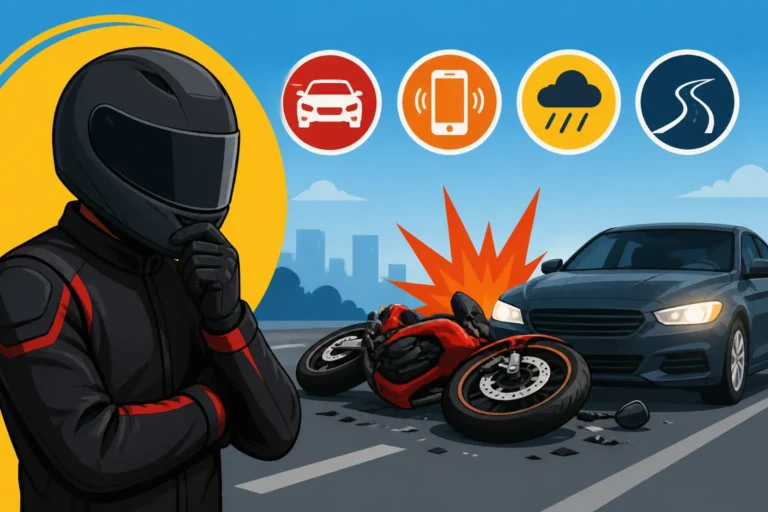
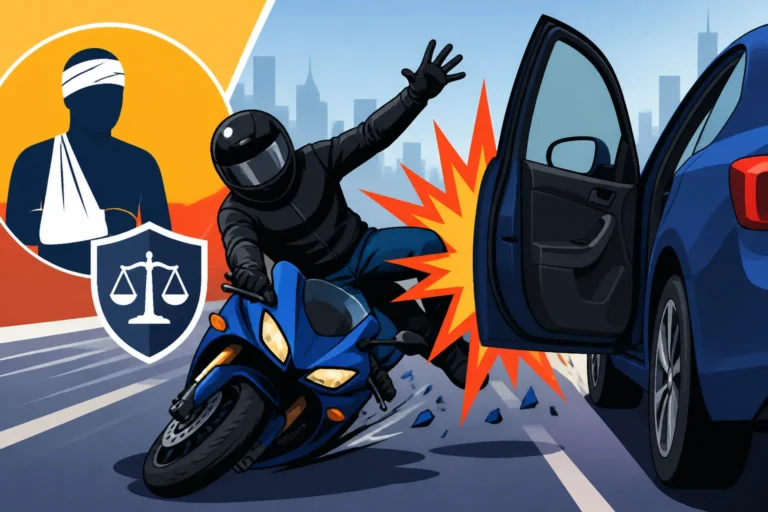
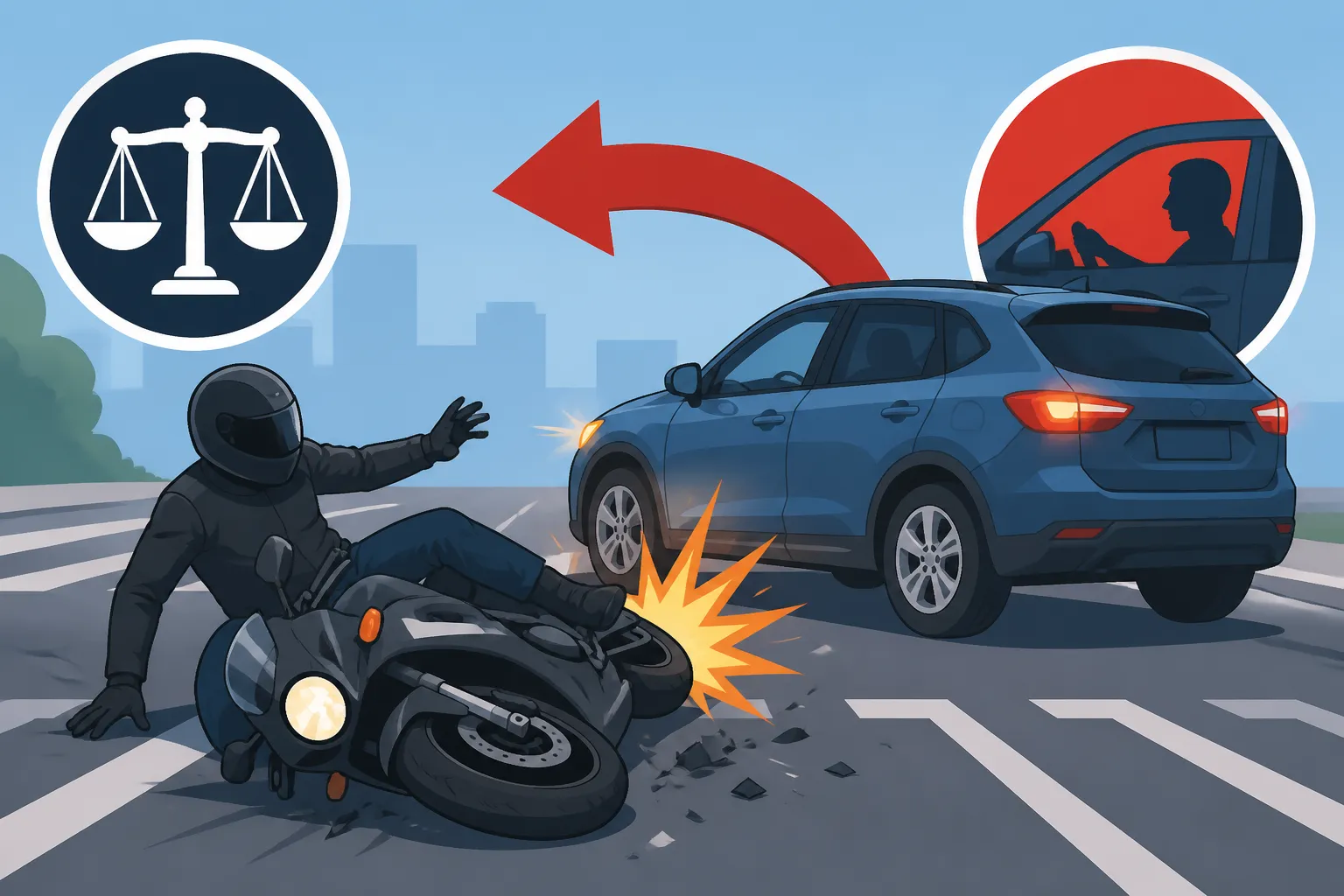
It’s a scenario far too many riders face: you're cruising along, minding your own business, when suddenly a car in the oncoming lane decides to make a left turn right into your path. These collisions are not just frustrating; they’re incredibly dangerous for motorcyclists, often leading to severe injuries and a complex web of blame. This guide will walk you through why, in most left-turn motorcycle accidents, the driver of the car is held liable and what factors come into play.
The Inherent Danger of Left-Turn Accidents for Motorcyclists
Motorcyclists often bear the brunt of collisions, and left-turn accidents are a particularly egregious example of this vulnerability. It's not just about the impact itself, but the systemic challenges riders face when drivers fail to see them.
Why Riders are Disproportionately Affected
The reason riders suffer so much in these types of crashes isn't hard to grasp once you consider the physics involved. A motorcycle, even a large cruiser, is a fraction of the size and weight of an average passenger vehicle. When a car makes a left turn and strikes a motorcycle, the rider is typically ejected from their bike, slamming into the turning vehicle, the pavement, or other objects. There's no steel cage, no airbags, no crumple zones to absorb the impact. This severe lack of protection means that what might be a minor fender bender for a car driver can result in catastrophic injuries or even death for a motorcyclist.
Think about the human body's response to such violent forces. We're talking about direct impact to limbs, torso, and head, leading to injuries like traumatic brain injuries, spinal cord damage, multiple fractures, and severe road rash. Even with full protective gear, the sheer kinetic energy involved in a collision with a moving car is immense, often overwhelming the gear's protective capacity. This stark reality underscores why left-turn accidents are so feared in the riding community and why accountability is so critical.
Common Scenarios Leading to Left-Turn Collisions
Left-turn accidents don't just happen out of the blue; they often stem from a few predictable, yet entirely preventable, human errors on the part of the turning driver. One of the most prevalent causes is a driver misjudging the speed and distance of an approaching motorcycle. Because of a motorcycle's smaller front profile, it can appear further away or be perceived as moving slower than it actually is, leading drivers to believe they have enough time to complete their turn safely. This perceptual error, sometimes called "motion camouflage," is a well-documented phenomenon that unfortunately puts riders at immense risk.
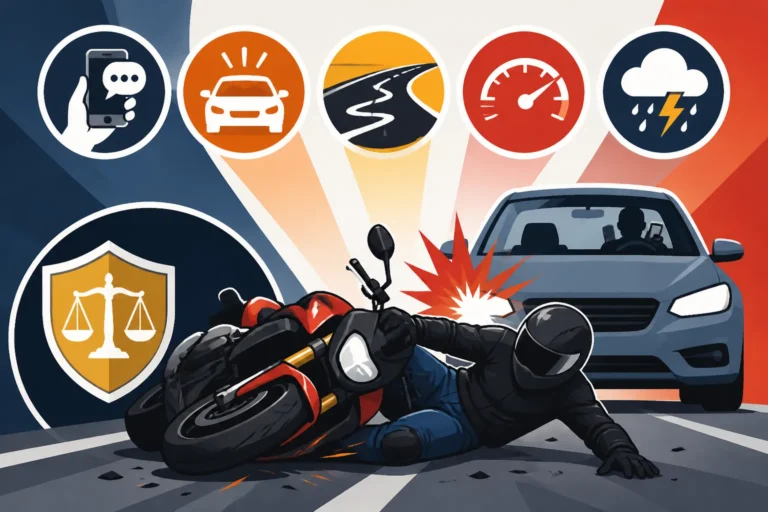
Another significant factor is distracted driving. In today's world, where drivers are constantly bombarded with cell phones, infotainment systems, or even just deep in thought, their attention can easily stray from the road. A quick glance might miss a motorcycle that would otherwise be obvious, especially if the driver is only looking for the larger outline of another car or truck. By the time they finally register the motorcycle, it's often too late to stop or avoid the collision. Sadly, the rise of in-vehicle technology and smartphone use only exacerbates the risk of these tragic errors.
Finally, and perhaps most fundamentally, these accidents often occur because a driver simply fails to yield the right-of-way. Whether it's impatience, a momentary lapse in judgment, or an outright disregard for traffic laws, a driver turning left without a protected green arrow is almost always required to yield to oncoming traffic, including motorcycles. When they choose to disregard this fundamental rule, they create an immediate and severe hazard that can shatter a rider's life in an instant.
Understanding the Rules of the Road: Right-of-Way in Left Turns
When it comes to traffic laws, the rules governing left turns are pretty clear. These regulations are designed to prevent conflicts and ensure the safe flow of traffic, but all too often, drivers in cars fail to adhere to them when a motorcycle is involved.
The Legal Obligation to Yield
In almost every jurisdiction across the United States, a driver making a left turn is legally obligated to yield the right-of-way to all oncoming vehicles, including motorcycles, unless they have a protected left-turn signal (a green arrow). This isn't just a suggestion; it's a fundamental traffic law, enshrined in statutes like California Vehicle Code Section 21801 or Texas Transportation Code Chapter 545. The intent behind this law is to prevent exactly the type of collision we're discussing – a turning vehicle cutting off traffic that has the right to proceed straight.
For example, imagine you're riding your Harley-Davidson down a busy street in Austin, Texas, with a solid green light. An SUV coming from the opposite direction signals a left turn but doesn't have a green arrow. Under Texas law, that driver has a duty to wait until it is safe to turn, meaning you, as the oncoming traffic, have the right-of-way. If that SUV turns in front of you, forcing a collision, the driver has violated a clear traffic regulation. This legal precedent is a cornerstone in determining who is at fault in a motorcycle accident.
The only real exception to this general rule is when the turning driver has a dedicated green arrow. In this specific scenario, they do have the right-of-way, and oncoming traffic is expected to stop. However, in the vast majority of left-turn accidents involving motorcycles, there's no protected arrow, making the turning driver's failure to yield the primary cause. This is why when you're asking, "Who Is at Fault in a Left-Turn Collisions Motorcycle Accident", the answer usually points to the car driver.
Exceptions and Nuances to Right-of-Way
While the general rule is that the turning driver must yield, there can be rare exceptions or nuances that complicate the determination of fault. For instance, if a driver attempts to make a left turn against a red light, which is illegal, any collision would almost certainly place fault squarely on them. However, this is distinct from turning on a green light without a green arrow. Another scenario could involve a driver making an unsafe lane change just before initiating their left turn, perhaps cutting across multiple lanes to get into the left-turn lane at the last minute. In such a case, the unsafe lane change itself contributes to the hazard, potentially adding another layer of negligence to the turning driver's actions.
It's also important to consider if the motorcyclist was contributing to the accident in some way, though this rarely absolves the turning driver of primary responsibility. For example, if the motorcyclist was excessively speeding, riding without a functional headlight at night, or performing dangerous maneuvers like stunt riding through an intersection, their actions could be considered a contributing factor. While these scenarios are not common, they highlight the complex nature of how fault is determined in motorcycle accidents. Even in these cases, the turning driver's duty to see and yield often remains paramount.
Ultimately, while there are always hypotheticals, the core principle holds true: a driver making a left turn must exercise extreme caution and ensure the path is clear before proceeding. The burden of avoiding a collision generally rests much more heavily on the shoulders of the person initiating the turn.
Proving Liability: Evidence Collection and Key Factors
After a left-turn motorcycle accident, establishing who was at fault is paramount for any successful claim. Without solid proof, insurance companies, such as GEICO or Progressive, might try to shift blame or minimize their payout. This means meticulous evidence collection is crucial. For more on this, you might find our guide on "Motorcycle Accident Evidence for Proving Fault" very helpful.
Crucial Evidence to Establish Driver Fault
One of the most critical pieces of evidence is the police report. When officers arrive at the scene, they investigate the accident, speak to witnesses, and often issue citations. If the turning driver was cited for "failure to yield" or a similar traffic violation, this is powerful documentation pointing to their fault. The police report will detail the officer's assessment of how the accident occurred, the positions of the vehicles, and any contributing factors they observed. While not always the final word, it's a strong starting point for proving liability.
Witness statements also play an invaluable role. An independent third party who saw the accident unfold can corroborate your version of events and often directly contradict the turning driver's narrative, especially if they claim not to have seen you. Their unbiased account can be the difference-maker. Try to get contact information for any witnesses at the scene. Furthermore, the increasing prevalence of dashcams in personal vehicles and surveillance cameras on businesses or traffic lights means that video footage can sometimes be obtained. This visual evidence is often irrefutable and can paint a clear picture of how the left-turn accident occurred.
Beyond direct accounts, physical evidence at the scene matters. The location of skid marks, the final resting positions of both vehicles, and the distribution of debris on the road can all be analyzed by accident reconstruction specialists. These experts can use scientific principles to determine the speed, angles of impact, and sequence of events, providing an objective view of the crash. For more in-depth knowledge, consider reading our post on "How Accident Reconstruction Determines Fault."
Overcoming the "I Didn't See You" Defense
The dreaded "I didn't see the motorcycle" defense is one of the most common and frustrating excuses offered by drivers after a left-turn collision. As a rider, you know it's infuriating because you were right there, often with a bright headlight and even reflective gear. This defense, however, is often more of an admission of negligence than a valid excuse. The law generally holds that drivers have a duty to operate their vehicles safely and to see what is plainly visible on the road. The fact that they "didn't see" you doesn't automatically absolve them of fault. We've even got a detailed explanation on the "'I Didn't See the Motorcycle' Defense Explained."
To counter this defense, you need evidence that demonstrates you were visible and that the driver had ample opportunity to see you. This includes proof of your working headlight, often required to be on at all times in many states (like Washington or Oregon), whether it's daytime or night. Photos of your bike, showing its condition and any modifications like brighter lights or reflective decals, can be useful. Your testimony, backed by witness statements, that you were proceeding lawfully and visibly, is also key.
Moreover, accident reconstruction can sometimes prove that, given the sightlines and traffic conditions, the driver should have seen you had they been paying proper attention. The legal argument is often that "failure to see" is a failure to exercise reasonable care, which amounts to negligence. Therefore, while frustrating, this defense rarely holds up on its own against a well-documented case of the turning driver's failure to yield. It reinforces the duty of every driver to look effectively and not just glance when making a maneuver as risky as a left turn.
How Comparative Negligence Can Impact Your Claim
While the turning driver is typically liable in left-turn motorcycle accidents, it's not always an open-and-shut case where the other driver shoulders 100% of the blame. Sometimes, the motorcyclist might be found partially at fault, and this can significantly impact the amount of compensation you receive. This concept is known as comparative negligence.
Understanding Shared Fault in Motorcycle Accidents
Comparative negligence is a legal principle that allows for damages to be apportioned based on each party's degree of fault in an accident. It recognizes that sometimes, more than one person can contribute to a collision. For example, if the car driver makes an illegal left turn, but you, as the motorcyclist, were speeding excessively, a jury or insurance adjuster might decide that both parties share some responsibility. Our article "Comparative Negligence in Motorcycle Accidents" delves deeper into this often-complex topic.
There are different types of comparative negligence rules across the states:
- Pure Comparative Negligence: States like California and Florida follow this rule. Even if you are 99% at fault, you can still recover damages for the 1% of the fault attributed to the other party. If a court decides the turning driver was 80% at fault and you were 20% at fault, your total compensation would be reduced by 20%.
- Modified Comparative Negligence (50% Bar Rule): Many states, including Montana and New Jersey, use this rule. You can only recover damages if you are found 50% or less at fault. If you are 51% or more at fault, you get nothing.
- Modified Comparative Negligence (51% Bar Rule): States like Texas, Ohio, and Pennsylvania adhere to this. You can recover damages as long as your fault is not greater than the defendant's (i.e., you are 50% or less at fault). If you are found 51% or more at fault, you cannot recover any compensation.
Let's say you're riding in a state with a 51% modified comparative negligence rule. If you suffered $100,000 in damages, and the turning driver was deemed 70% at fault, you would be able to recover $70,000. However, if you were found 60% at fault, you would recover nothing at all. This highlights how critical it is to mitigate any actions that could be construed as contributing to the accident. Even "What Happens If You Were Speeding on a Motorcycle" can become a factor.
States with Different Negligence Rules
The impact of shared fault varies significantly depending on where your accident occurs. Knowing your state's specific comparative negligence laws is crucial for understanding your potential recovery. For example, in a state like California, which practices pure comparative negligence, even if you were found partly to blame for the left-turn accident—perhaps you were exceeding the speed limit by a small margin—you could still recover a portion of your damages. If your total damages were $50,000 and you were found 10% at fault, you'd still be eligible for $45,000. This system aims to ensure that everyone pays for the portion of the harm they caused, regardless of how minor their contribution might be.
Contrast that with a state like Texas, which uses a modified comparative negligence rule with a 51% bar. If you're involved in a left-turn collision there, and the jury determines you were 51% or more at fault for, say, running a yellow light that had already turned red, you would be entirely barred from recovering any damages, even if the turning driver was also negligent. However, if your fault was determined to be 50% or less, your damages would simply be reduced by that percentage. For example, if you were found 40% at fault, you could still recover 60% of your total damages.
It's clear that these varying legal frameworks have a profound effect on what you can expect after a crash. Understanding these nuances, especially how "How Traffic Violations Affect Fault" in your specific state, is paramount. This makes the investigative process even more critical, ensuring that every piece of evidence supports your case and minimizes any potential assignment of fault to you as the rider. This is also why many riders consult with legal professionals who are well-versed in the specifics of "Motorcycle Accident Fault Laws in Texas" or other relevant states.
Table: Key Factors in Left-Turn Accident Liability Assessment
| Factor | Driver's Action/Contribution (Turning Vehicle) | Rider's Action/Contribution (Motorcycle) | Typical Weight in Fault Determination |
|---|---|---|---|
| Right-of-Way | Failed to yield to oncoming traffic (most common) | Had right-of-way (most common) | High (favors rider) |
| Visibility | "Didn't see" motorcycle, obstructed view | Visible (headlight on, reflective gear), clear path | High (favors rider, refutes driver) |
| Distraction | Using phone, eating, focusing elsewhere | Attentive, eyes on road | High (favors rider) |
| Speed | Appropriate for turn, or speeding through intersection | Within speed limit, or excessive speeding (can shift some blame) | Moderate (can be shared) |
| Traffic Signals | Ran red light, turned on stale yellow | Green light, proceeded lawfully | High (favors lawful party) |
| Signaling | Failed to signal turn, signaled too late | Had no obligation to signal (unless changing lanes) | Low to Moderate (minor contributing) |
| Impatience | Rushed turn, misjudged gap | Patient, waiting for clear path | High (favors rider) |
| Vehicle Condition | Defective brakes, bald tires (less common but possible) | Defective headlight/taillight (less common but possible) | Low (can be shared) |
Disclaimer
Please remember that this article provides general information and should not be considered legal advice. Motorcycle accident laws are complex and vary significantly by state. If you've been involved in a motorcycle accident, it's always best to consult with a qualified legal professional to discuss the specifics of your situation and understand your rights.