Motorcycle Accident Fault Laws in Virginia
Navigating the aftermath of a motorcycle accident is already a nightmare, filled with pain, confusion, and medical bills piling up. But for riders in Virginia, there's an added layer of stress and complexity: the state's incredibly strict fault laws. Unlike most places, Virginia operates under a rule that can quickly turn your legitimate claim into a devastating zero. This guide will meticulously break down Virginia's motorcycle accident fault laws, helping you understand what you're up against and how to protect yourself.
Understanding Virginia's Contributory Negligence Law
When you’re a motorcycle rider in Virginia and you've been involved in a crash, one of the most critical legal concepts you'll face is something called "contributory negligence." It’s a pretty old-school rule, and frankly, it puts riders in a very tough spot. This isn't just legal jargon; it's a fundamental aspect of how your case will be handled and whether you can recover any compensation at all.
What Contributory Negligence Means for Riders
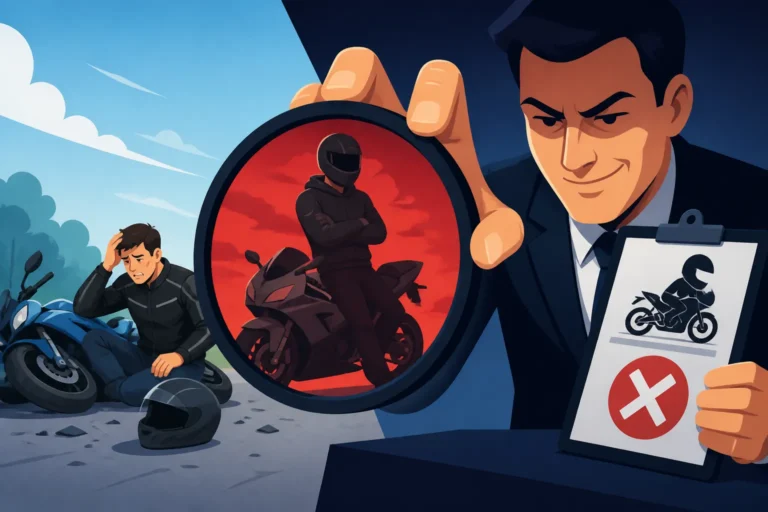
Here’s the gut punch: in Virginia, if you are found to be even 1% at fault for your motorcycle accident, you are generally barred from recovering any damages from the other driver. Let that sink in. One single percentage point of blame, even if the other driver was 99% responsible, can wipe out your entire claim for medical bills, lost wages, bike repairs, and pain and suffering. It's an all-or-nothing system, and it's incredibly unforgiving, especially for motorcyclists who already face an uphill battle against unfair stereotypes.
Imagine this scenario: you're cruising down I-95 in Richmond, paying attention, riding responsibly. Suddenly, a car merges into your lane without looking, cutting you off. You swerve to avoid a direct collision, but in doing so, you might slightly exceed the speed limit or maybe you didn't check your blind spot quite perfectly in that split second. If the other driver's insurance company can successfully argue that your evasive maneuver, however slight, contributed in any way to the incident, even minimally, your claim could be completely dismissed. It feels deeply unfair, and honestly, it often is. This is why understanding How Insurance Companies Assign Blame to Riders is so crucial, as they will undoubtedly try to pin some fault on you.
How Virginia Differs from Other States
Many states in the U.S. have moved away from this harsh rule and adopted what's known as "comparative negligence." Under comparative negligence, if you're partially at fault, your compensation is simply reduced by your percentage of fault. For example, if you're found 20% at fault for an accident in a comparative negligence state, you could still recover 80% of your damages. This is a much more equitable system that recognizes accidents often involve multiple contributing factors.
Virginia, however, sticks to the strict contributory negligence rule, making it one of only a handful of states that still adhere to it. This stark difference means that tactics that might work in a state like California or Florida simply won't cut it in the Commonwealth. The bar for proving the other party was solely at fault is incredibly high, turning every motorcycle accident claim into a high-stakes legal battle. This fundamental difference is why articles like Contributory vs Comparative Negligence Explained are so vital for riders to grasp, especially those who might have ridden in other states.
Here's a quick comparison to illustrate the significant difference:
| Feature | Virginia (Contributory Negligence) | Most Other States (Comparative Negligence) |
|---|---|---|
| Fault Threshold | Any fault (even 1%) for the injured party bars all recovery. | Recovery is reduced by the injured party's percentage of fault. |
| Recovery Outcome | All or nothing. If you are even slightly at fault, you get nothing. | Partial recovery is possible. If 20% at fault, you recover 80% of damages. |
| Burden of Proof | Rider must prove the other driver was 100% at fault. | Rider must prove the other driver was more at fault than them. |
| Insurance Tactics | Insurers aggressively seek any evidence of rider fault. | Insurers seek evidence of shared fault to reduce payouts. |
The "Last Clear Chance" Doctrine as a Small Exception
There is one very narrow exception to Virginia's contributory negligence rule called the "last clear chance" doctrine. This doctrine essentially states that even if you, the injured motorcyclist, were initially negligent, you might still be able to recover damages if the other driver had the "last clear chance" to avoid the accident but failed to do so.
Think of it this way: you might have made a mistake, perhaps drifted slightly out of your lane. But if the driver behind you saw your mistake and had ample opportunity to react safely (e.g., brake, swerve) but chose not to, or was distracted and didn't react, then they might be held liable under this doctrine. However, proving the "last clear chance" doctrine applies is exceedingly difficult. It requires demonstrating that the other driver knew or should have known of your peril and had a real opportunity to prevent the collision but carelessly or willfully failed to act. This is not a loophole that's easily exploited; it's a highly specific legal argument that demands a lot of solid evidence and a skilled legal team to argue successfully. It's truly a rare win for a rider facing contributory negligence.
Proving Fault in a Virginia Motorcycle Accident
Given the harsh reality of contributory negligence in Virginia, establishing who is at fault in a motorcycle accident isn't just important; it's absolutely paramount. You're not just trying to show the other driver was negligent; you're trying to prove they were 100% negligent, and you were not negligent at all. This high bar requires meticulous evidence collection and a strategic approach from day one. Understanding How Fault Is Determined in Motorcycle Accidents is your first step.
Gathering Evidence at the Scene
What you do in the moments and hours following a motorcycle crash in Virginia can make or break your entire claim. Because of contributory negligence, every piece of evidence counts toward establishing the other driver's complete culpability and your own innocence.
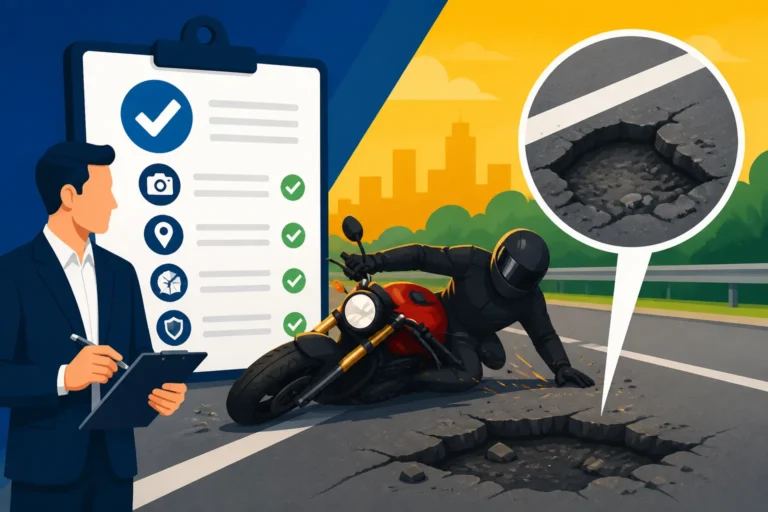
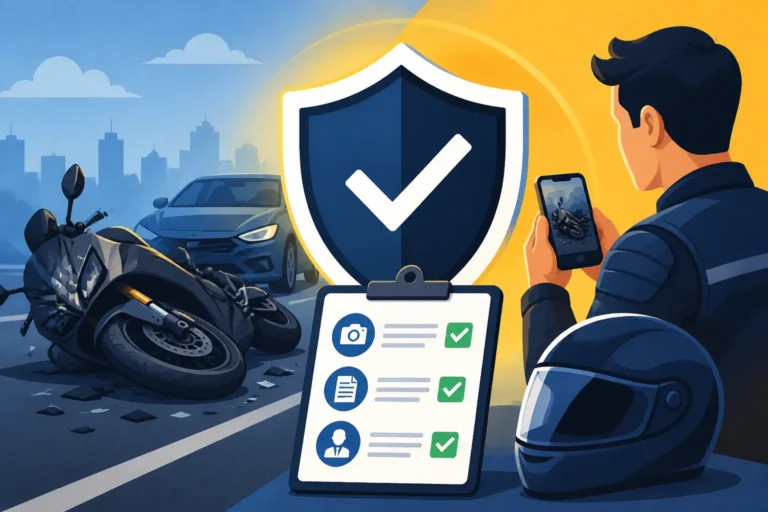
- Photos and Videos: Take pictures and videos of everything. This means your motorcycle, the other vehicle, the position of both vehicles, skid marks, road debris, traffic signs, road conditions, and any visible injuries. Get wide shots, close-ups, and multiple angles. If you were involved in a Motorcycle Accident Caused by Road Hazards, clear photos of potholes, gravel, or construction debris are non-negotiable. Don't just focus on the damage; capture the scene's overall context.
- Witness Statements: If there are witnesses, get their contact information immediately. Even a brief conversation about what they saw, recorded on your phone, can be incredibly valuable. Their objective account can contradict biased statements from the other driver or their insurance company. Remember, How Witnesses Affect Motorcycle Fault can be pivotal, especially in a contributory negligence state.
- Police Reports: Make sure law enforcement is called to the scene. The police report, while not always definitive on fault in a civil case, provides an official record of the accident details, including diagrams, statements, and initial findings. A well-documented police report outlining the other driver's traffic violation, for example, can be a cornerstone of your case. Even if it's not perfect, How Police Reports Establish Fault can set a strong foundation for your claim.
- Exchange Information: Get the other driver's name, insurance information, license plate number, and phone number. Do not discuss fault or apologize; simply exchange facts.
The Burden of Proof on the Rider
In any personal injury case, the plaintiff (the injured party, which would be you) generally bears the burden of proof. In Virginia, this burden is magnified for motorcyclists due to contributory negligence. You must affirmatively demonstrate, with clear and convincing evidence, that the other driver's actions were the sole cause of the accident and your injuries. You also need to show that you acted with reasonable care and did nothing to contribute to the crash.
This is where the nuances become challenging. For instance, if you were involved in a Motorcycle Accidents Caused by Left-Turn Collisions, it might seem obvious the turning driver is at fault. However, the other driver's insurance will aggressively investigate whether you were speeding, if your headlight was off, or if you were otherwise contributing to the inability of their driver to see you. They will pick apart every detail, looking for that 1% sliver of fault. This is not a casual endeavor; it requires a detailed, evidence-backed narrative of events.
Common Scenarios and How Fault is Assessed
Let's look at a couple of common motorcycle accident scenarios and how Virginia's fault laws might come into play:
- Left-Turn Accidents: This is perhaps the most common type of car-motorcycle collision. A car turns left in front of an oncoming motorcycle. In many states, this is almost automatically the car driver's fault. In Virginia, while the turning driver is often primarily at fault for Left-Turn Motorcycle Accidents Explained, their insurance company will immediately investigate if the motorcyclist was speeding, lane splitting where illegal, or otherwise contributing. If they can show you were going 5 mph over the limit, even if the car turned directly into your path, your claim could be denied.
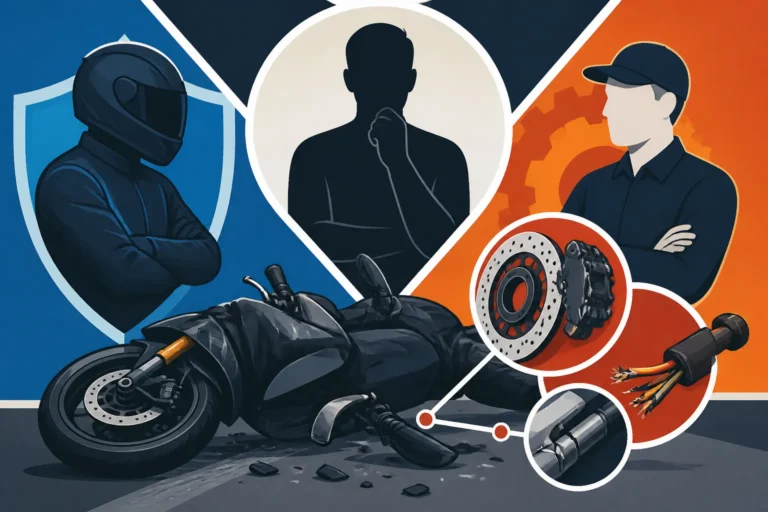
- Rear-End Collisions: If you're rear-ended, it's almost always the fault of the driver who hit you from behind, as they have a duty to maintain a safe following distance. However, even in this seemingly clear-cut situation, expect the other insurance company to probe if your brake lights were working, if you stopped suddenly and unreasonably, or if your motorcycle had any issues that might have contributed to the crash. They're looking for anything to shift even a tiny bit of blame your way. For comprehensive guidance on determining blame in these situations, consult Who Is at Fault in a Motorcycle Accident.
The takeaway here is that no matter how clear-cut you think the fault might be, in Virginia, you must be prepared to defend your actions and prove the other party's total responsibility.
The Impact of Fault on Your Motorcycle Accident Claim in Virginia
The determination of fault in Virginia doesn't just decide who pays; it dictates whether you get paid at all. This makes every stage of the claims process incredibly high-stakes, as insurance companies are well aware of the power of contributory negligence.
The Zero-Sum Game of Damages
In states with comparative negligence, your damages might be reduced. In Virginia, if you are found to be even minimally at fault, your damages are simply gone. This applies to every type of compensation you might seek:
- Medical Expenses: All your emergency room visits, surgeries, physical therapy, prescriptions – if you're found partially at fault, you pay for it yourself.
- Lost Wages: The income you lose from being unable to work due to your injuries won't be recoverable.
- Property Damage: The cost to repair or replace your motorcycle, gear, and other damaged property will fall squarely on you.
- Pain and Suffering: The emotional distress, physical pain, and loss of enjoyment of life that are often significant in motorcycle accidents will go uncompensated.
This isn't just a reduction; it's a complete wipeout. This harsh reality is why riders need to know about Types of Damages in a Motorcycle Accident Claim and how their state's fault laws dramatically impact them.
Insurance Companies and Contributory Negligence
Insurance adjusters are trained professionals, and they know Virginia's contributory negligence law inside and out. They will use it as their primary weapon against your claim. Their strategy will be to investigate every aspect of the accident, scrutinizing your actions, speed, lane position, gear, and even your riding history, to find any shred of evidence that suggests you contributed to the crash.
They might try to:
- Delay tactics: Hope you get frustrated or desperate enough to accept a lowball offer before the full extent of your injuries is known.
- Request extensive documentation: Demand records that go beyond the scope of the accident, hoping to find something that can be twisted against you.
- Offer quick, low settlements: Especially if your injuries initially seem minor, they might offer a fast payout for property damage and a small amount for injuries, hoping you'll settle before realizing the long-term implications or consulting with an attorney. For insights into how insurers approach these situations, you can refer to How Insurers Use Rider Stereotypes Against You.
Their goal isn't just to reduce their payout; it's to avoid paying anything at all by proving your partial fault. This makes interacting with insurance companies after a Virginia motorcycle accident extremely perilous without experienced guidance.
Navigating a Claim with Potential Shared Fault
What if, after a honest assessment, it seems there's a chance you might bear some minimal fault? Does that mean your case is hopeless in Virginia? Not necessarily, but it means you face an incredibly difficult battle. This is precisely why engaging with a legal professional who specializes in Virginia motorcycle accident law is not just a good idea, but often a necessity.
Even if there's a perceived possibility of shared fault, a skilled attorney might still be able to:
- Challenge the other side's assertions: They can poke holes in the evidence presented by the other driver's insurance, demonstrating that your actions, even if imperfect, did not legally contribute to the cause of the accident.
- Utilize the "last clear chance" doctrine: As discussed earlier, while rare, this exception can be argued effectively by an attorney who understands its strict requirements.
- Negotiate strategically: Sometimes, an insurer might settle for a reduced amount rather than risk a jury finding their client 100% at fault, especially if the evidence is ambiguous or strongly favors you. However, this is a delicate dance that very few individuals can perform successfully on their own.
Without a strong legal advocate, the chances of recovering compensation in a Virginia motorcycle accident where any shared fault is even suggested are slim to none. This makes the question of When a Rider Is Partially at Fault a high-stakes inquiry in the Old Dominion.
Protecting Your Rights After a Virginia Motorcycle Accident
Given the unique and stringent nature of Virginia's contributory negligence laws, protecting your rights after a motorcycle accident becomes an urgent and critical priority. Every step you take, or fail to take, can have monumental consequences for your ability to recover compensation.
Why Legal Counsel is Paramount
For motorcyclists in Virginia, hiring an experienced motorcycle accident attorney isn't just about maximizing a settlement; it's about having any chance at a settlement. The legal landscape here is simply too unforgiving to navigate alone. An attorney specializing in Virginia's accident laws will:
- Understand Contributory Negligence: They know how insurers will try to use it against you and can proactively build a case that rigorously proves the other driver's sole fault.
- Investigate Thoroughly: They have the resources to conduct a comprehensive investigation, gathering crucial evidence that you might miss, like traffic camera footage, cell phone records (for distracted drivers), black box data from vehicles, or accident reconstruction expert testimony. For details on what they do, see What a Motorcycle Accident Lawyer Does.
- Negotiate with Insurers: They know the tactics insurance companies employ and can counter their lowball offers and delay strategies effectively. They speak the insurance company's language and are not intimidated by their aggressive posturing.
- Represent You in Court: If a fair settlement isn't possible, they are prepared to take your case to trial, a necessity in many Virginia claims where liability is disputed.
Considering the all-or-nothing nature of contributory negligence, asking Do You Need a Motorcycle Accident Lawyer in Virginia usually has a resounding "yes" as the answer. Don't wait; the sooner you engage legal help, the better your chances.
What to Do Immediately After a Crash
Beyond gathering initial evidence, there are crucial steps to take right after a Virginia motorcycle accident to protect your claim:
- Seek Medical Attention Immediately: Even if you feel okay, get checked out by paramedics or go to an emergency room. Some severe injuries, especially internal ones or motorcycle traumatic brain injury, might not manifest symptoms right away. Gaps in medical treatment can be used by insurance companies to argue your injuries weren't serious or weren't caused by the accident. This is the absolute first step outlined in What to Do After a Motorcycle Accident.
- Do NOT Admit Fault: This is perhaps the most critical piece of advice in a contributory negligence state. Do not apologize, do not speculate about what happened, and do not tell the other driver, police, or insurance company that you think you might have been at fault in any way. Stick to the facts.
- Limit Communication with Insurers: Provide only basic information (name, contact, insurance policy number). Do not give a recorded statement to the other driver's insurance company without consulting your attorney first. Anything you say can and will be used against you to establish that 1% fault.
- Preserve Your Motorcycle and Gear: Do not have your motorcycle immediately repaired or your damaged gear discarded. These items are crucial physical evidence of the impact and accident dynamics.
Documenting Your Injuries and Recovery
Your medical records are the backbone of any personal injury claim, but they are even more critical in Virginia. They serve as concrete proof of your injuries, their severity, and their direct link to the accident.
- Follow All Medical Advice: Attend all appointments, therapy sessions, and take all prescribed medications. Inconsistent treatment can suggest your injuries aren't as severe as claimed.
- Keep Detailed Records: Maintain a journal of your pain levels, limitations, emotional distress, and how your injuries impact your daily life. Document lost workdays, missed events, and struggles with everyday tasks.
- Track All Expenses: Keep receipts for medical bills, prescription co-pays, transportation to appointments, over-the-counter pain relievers, and any other out-of-pocket costs related to your recovery.
- Consider Mental Health Support: Motorcycle accidents are traumatic. If you experience anxiety, depression, or PTSD, seek professional help. These mental health impacts are legitimate damages, and documentation of treatment strengthens your claim for Pain and Suffering in Motorcycle Settlements.
Thorough documentation not only supports your claim for damages but also helps to counter any arguments by the defense that your injuries are exaggerated or not directly related to the crash. In Virginia, where proving 100% fault is essential, comprehensive records are invaluable tools in your fight for justice.
Disclaimer
Please remember that this article provides general information and is not a substitute for legal advice. Laws are complex and constantly evolving, and the specifics of your case will always depend on its unique facts and circumstances. If you've been involved in a motorcycle accident in Virginia, you should consult with a qualified attorney in your state as soon as possible to discuss your individual situation and legal options.