Motorcycle Accidents Caused by Left-Turn Collisions
There's a scenario that haunts almost every motorcyclist, a moment of stark terror as a car turns left directly into your path, the driver looking right through you. It's not just a common accident type; it's one of the most devastating, often resulting in severe injuries for riders. This comprehensive guide will illuminate the specific dangers of motorcycle accidents caused by left-turn collisions, delve into why they so frequently occur, explain the complex process of fault determination, and outline the critical steps you can take to protect yourself and your potential claim.
Understanding the Dynamics of Left-Turn Collisions for Motorcyclists
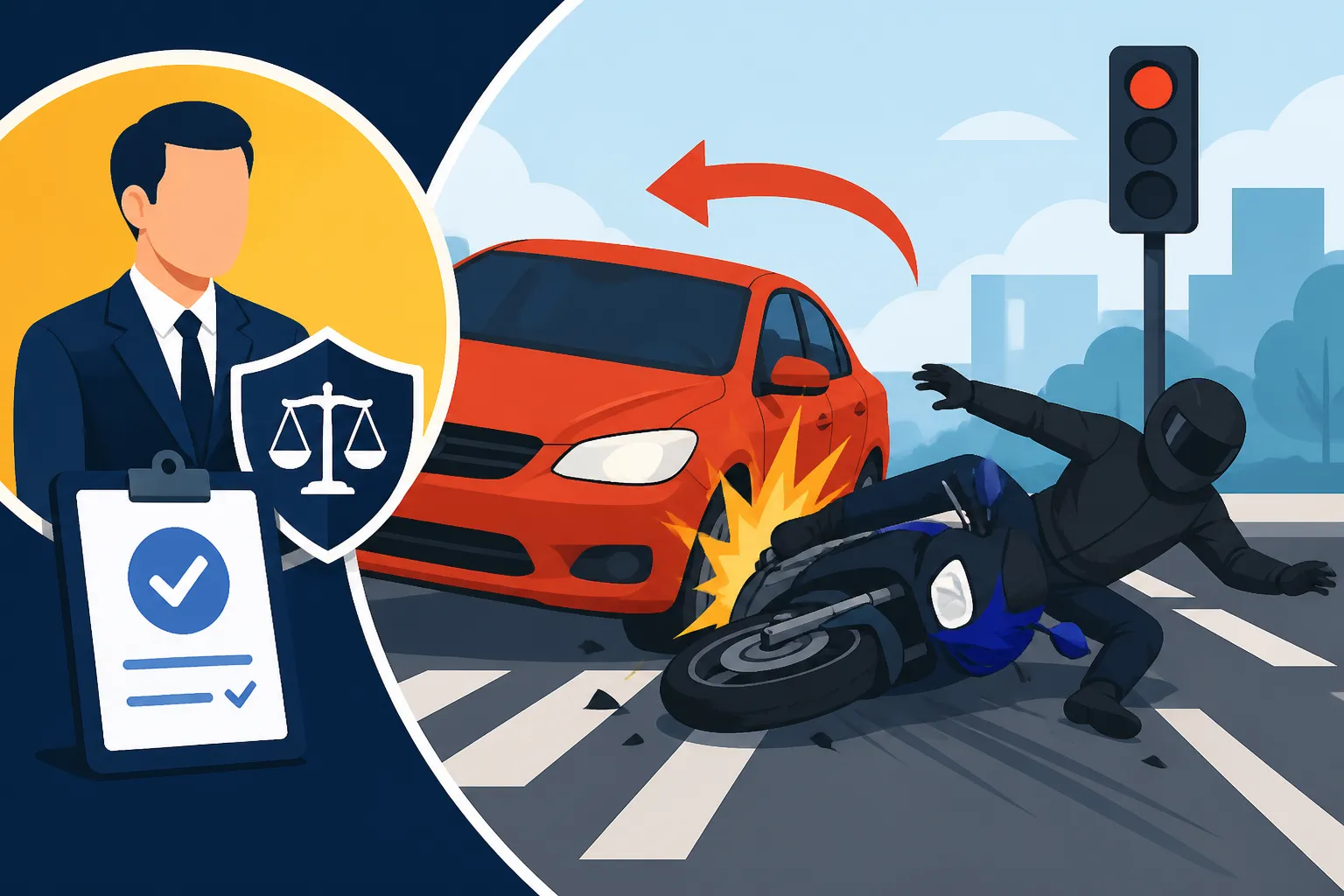
Left-turn collisions are, unfortunately, a tragically common occurrence for motorcyclists. These types of accidents represent a disproportionately high percentage of serious and fatal motorcycle crashes. When a vehicle is making a left turn, and a motorcycle is approaching from the opposite direction or attempting to pass, the potential for a catastrophic impact is alarmingly high. It's a moment of truth where a driver's momentary lapse in judgment or perception can change a rider's life forever.
The Perilous Intersection Scenario
Intersections are, without a doubt, some of the most dangerous places for motorcyclists. The complexity of traffic flow, the presence of multiple vehicles, and the need for quick decisions create a high-risk environment. For a rider, navigating an intersection means being acutely aware of every vehicle, especially those poised to make a left turn. The danger intensifies when a car turning left fails to accurately judge a motorcycle's speed or distance, or worse, simply doesn't see the motorcycle at all. This often happens because drivers are conditioned to look for larger vehicles, leading them to misinterpret or overlook the presence of a motorcycle. The result is often a T-bone collision, where the motorcycle strikes the turning vehicle or is struck by it, leading to a direct impact with minimal opportunity for the rider to avoid the crash.
This isn't just a matter of bad luck; it's a systemic problem rooted in driver perception and attention. Many drivers might glance in an intersection and, due to various factors we'll explore, literally not register the motorcycle's presence even if it's right in front of them. The speed and size of a motorcycle can contribute to this "invisibility," making an already dangerous maneuver exponentially riskier for riders. The suddenness of such an event leaves little to no time for evasive action, making defensive riding, while always important, sometimes insufficient against an inattentive driver.
The Physics of Impact and Rider Vulnerability
The inherent vulnerability of a motorcyclist in any collision is a stark reality, but it's particularly pronounced in left-turn accidents. Unlike occupants in a car, who are encased in a protective frame of steel, airbags, and seatbelts, a motorcyclist has virtually no external protection. The rider's body becomes the primary impact absorber. The sheer physics of a car, weighing thousands of pounds, colliding with a motorcycle and its rider, is grim. The forces involved in such an impact are immense, leading to devastating injuries that can include traumatic brain injuries, spinal cord damage, multiple fractures, and severe road rash.
Even at relatively low speeds, the impact can throw a rider from their bike, sending them hurtling onto the pavement or into other objects. This secondary impact often compounds the initial injuries. The trajectory and angle of a left-turn collision frequently result in the rider being hit directly on the side or head-on, areas that are extremely susceptible to severe trauma. This is why when we discuss common motorcycle accident injuries, those from left-turn collisions often top the list for severity. The lack of crumple zones, the direct exposure to impact forces, and the risk of being crushed or dragged by the other vehicle all contribute to the catastrophic potential of these crashes.
Common Reasons Drivers Fail to See Motorcycles in Left Turns
The phrase "I didn't see the motorcycle" is one of the most infuriating and frequently heard excuses after a left-turn accident. It's a statement that discounts the rider's presence and often attempts to shift blame, even when the driver clearly had a duty to yield. This pervasive issue isn't always malicious; often, it stems from a combination of psychological, physiological, and behavioral factors that make motorcycles particularly susceptible to being overlooked by other drivers, especially during a left turn.
Perceptual Errors and "Looked But Didn't See"
One of the primary culprits behind left-turn accidents is a phenomenon known as "looked but didn't see" (LBDNS). This isn't about drivers intentionally ignoring motorcycles; it's about the brain's limitations in processing visual information. When drivers are scanning traffic, their brains are often cued to look for larger, more common vehicles like cars, trucks, and SUVs. Motorcycles, being smaller and having a single headlight, can blend into the background or simply not register as a significant threat in the driver's mental model of traffic. This is a form of "inattentional blindness," where a person fails to perceive an unexpected stimulus that is in plain sight because they are focused on something else.
Furthermore, factors like "motion camouflage" can play a role. A motorcycle approaching an intersection might appear to be stationary or moving slower than it actually is, especially against a complex background or when viewed from an angle. The brain misinterprets the visual input, leading the driver to believe they have ample time to complete their turn. This perceptual error, combined with the inherent challenges of depth and speed perception, means a driver can genuinely look in the direction of an oncoming motorcycle and still initiate a turn directly into its path, utterly convinced the lane is clear.
Distracted Driving and Impaired Judgment
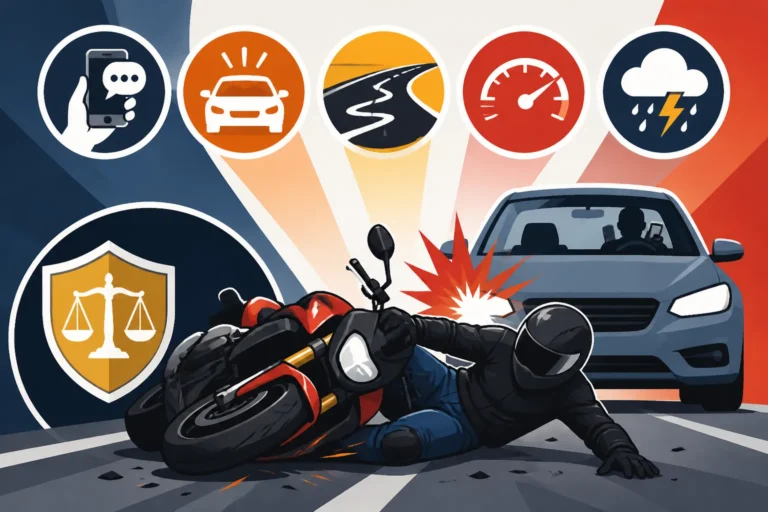
Beyond perceptual errors, the rampant issue of distracted driving significantly escalates the risk of left-turn collisions. In today's world, drivers are constantly bombarded with distractions, from cell phones and infotainment systems to conversations with passengers or even just daydreaming. A driver making a left turn requires their full attention: judging gaps in traffic, monitoring oncoming vehicles, and anticipating movements. Any distraction, however minor, can pull their focus away for crucial seconds, leading to a failure to yield.
An impaired driver, whether by alcohol, drugs, or fatigue, poses an even greater threat. Impairment severely diminishes a driver's ability to perceive danger, react in time, and make sound judgments, particularly complex ones like timing a left turn. Their reaction times are slowed, their peripheral vision is compromised, and their ability to process visual cues, like the presence and speed of a motorcycle, is drastically reduced. While not every left-turn collision involves impairment, when it does, the consequences are almost always more severe, and proving fault in a distracted driving motorcycle accident becomes paramount.
Size Perception Bias and Motorcyclist Stereotypes
There's an inherent size perception bias at play that often works against motorcyclists. Drivers are simply not accustomed to actively looking for or accurately judging the presence of smaller, less visually prominent vehicles. Their brains are wired to identify and react to the dominant forms on the road. This bias means that even when a driver's attention isn't otherwise distracted, a motorcycle can still be overlooked because it doesn't fit the "mental template" of what they expect to see.
Coupled with this, unfortunately, are pervasive motorcyclist stereotypes. Some drivers carry preconceived notions that motorcyclists are reckless or inherently less visible, implicitly (or explicitly) placing some blame on the rider before the facts are even considered. Insurance companies, too, may try to leverage these biases to assign blame to riders. This "rider bias in fault determination" is a real challenge that can complicate a claim. Even if a driver genuinely failed to see a motorcycle due to their own inattention or bias, they might still argue that the rider was somehow at fault for "being hard to see" or "coming out of nowhere." This highlights why detailed evidence and a strong legal strategy are essential after a left-turn collision.
How Fault is Determined in Left-Turn Motorcycle Accidents
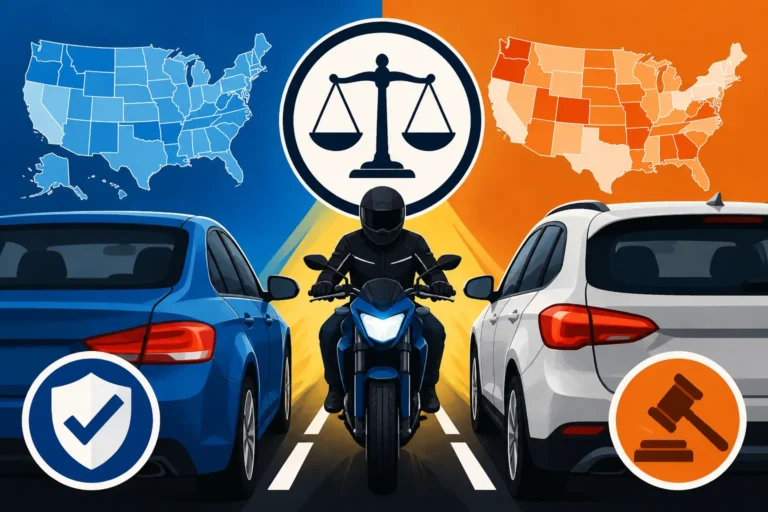
Determining fault in a motorcycle accident is rarely straightforward, and left-turn collisions are no exception. While conventional wisdom often points to the turning vehicle, various factors can complicate the issue, including rider conduct. The legal framework of a state, whether it follows pure comparative negligence or modified comparative negligence, also plays a significant role in how fault affects your ability to recover damages.
Driver's Duty to Yield in Left Turns
In the vast majority of jurisdictions across the United States, a driver making a left turn has a legal duty to yield the right-of-way to oncoming traffic. This is a fundamental rule of the road designed to prevent intersection collisions. For example, in states like California, Vehicle Code 21801(a) explicitly states that a driver turning left must yield to any vehicle approaching from the opposite direction that is "so close as to constitute a hazard." This means the driver turning left must wait until it is safe to proceed without impeding oncoming traffic.
When a driver violates this duty and turns directly into the path of an oncoming motorcycle, they are almost invariably deemed at fault. Their failure to yield is considered negligence, a breach of their legal obligation to drive safely and observe traffic laws. The "I didn't see the motorcycle" defense explained earlier does not absolve them of this duty; rather, it often highlights their negligence. Proving that the driver failed to yield typically involves showing the driver’s turn was made when it was unsafe, directly causing the collision with the motorcycle. This crucial piece of evidence, combined with witness statements, traffic camera footage, or even the damage to the vehicles, can clearly establish the other driver's liability.
When a Rider Might Share Some Blame
While the driver making the left turn is usually found at fault, there are specific circumstances where a motorcyclist might share a percentage of the blame. This is particularly relevant in states that follow comparative negligence rules. For instance, if the motorcyclist was speeding significantly, running a red light, or riding under the influence, their actions could be considered contributing factors to the accident. If it can be proven that the rider's actions contributed to the collision, their percentage of fault could reduce their overall settlement.
Another scenario involves lane splitting, which is legal in some states like California but illegal or unaddressed in others. If a motorcyclist was lane splitting at an unsafe speed or in an unsafe manner and a driver turned left, there could be an argument for shared fault. Similarly, if the motorcycle had a defective headlight or was otherwise operating in violation of equipment laws that made it harder to see, an argument could be made for partial rider fault. However, it's critical to understand that even if a rider is found partially at fault, it doesn't automatically mean they can't recover damages, thanks to comparative negligence laws. The principle is that the other driver's failure to yield remains a significant cause of the collision, regardless of minor contributing factors by the rider.
States with Comparative and Contributory Negligence
The legal landscape concerning shared fault varies significantly depending on the state where the accident occurs. Understanding your state's laws on negligence is crucial for any motorcycle accident claim.
-
Comparative Negligence: Most states operate under some form of comparative negligence. In a pure comparative negligence state (e.g., California, Florida), a plaintiff can recover damages even if they are 99% at fault, though their compensation will be reduced by their percentage of fault. So, if a jury awards $100,000 but finds the rider 20% at fault, the rider would receive $80,000. Many states use modified comparative negligence, which comes in two main forms:
- 50% Bar Rule: In these states (e.g., Colorado, Wisconsin, Georgia), you can only recover damages if your fault is 49% or less. If you are found 50% or more at fault, you recover nothing.
- 51% Bar Rule: In these states (e.g., Texas, Illinois, Ohio), you can recover damages if your fault is 50% or less. If you are found 51% or more at fault, you recover nothing.
-
Contributory Negligence: A few states still follow the much harsher contributory negligence rule (e.g., Maryland, Virginia, Alabama, North Carolina, and Washington D.C.). In these states, if a motorcyclist is found even 1% at fault for the accident, they are completely barred from recovering any damages. This is why when a rider is partially at fault, it can be devastating for their claim in a contributory negligence state.
This table illustrates the impact of different negligence laws:
| Negligence System | Description | Example: Rider 25% at Fault | Example: Rider 50% at Fault | Example: Rider 51% at Fault |
|---|---|---|---|---|
| Pure Comparative | Plaintiff can recover damages regardless of their percentage of fault, reduced by their share of blame. | Recovers 75% of damages | Recovers 50% of damages | Recovers 49% of damages |
| Modified (50% Bar) | Plaintiff can recover if their fault is 49% or less. If 50% or more, they recover nothing. | Recovers 75% of damages | Recovers nothing | Recovers nothing |
| Modified (51% Bar) | Plaintiff can recover if their fault is 50% or less. If 51% or more, they recover nothing. | Recovers 75% of damages | Recovers 50% of damages | Recovers nothing |
| Contributory | Plaintiff cannot recover any damages if they are found even 1% at fault. | Recovers nothing | Recovers nothing | Recovers nothing |
Given these complexities, understanding how comparative negligence reduces your payout is critical, and it often underscores the necessity of experienced legal representation to navigate these challenging legal waters.
The "I Didn't See Them" Defense and How to Combat It
Few phrases sting a motorcyclist more after a collision than "I didn't see you." It’s not just an excuse; it's a common defense strategy employed by at-fault drivers and their insurance companies to deflect blame and reduce their liability. However, this defense is far from impenetrable and, in many cases, can actually be turned against the driver.
Deconstructing the Common Driver Excuse
The "I didn't see the motorcycle" defense is often rooted in the perceptual biases and inattentional blindness discussed earlier. While it might be a genuine statement from the driver, legally, it rarely absolves them of fault. The law typically holds that drivers have a duty of care to observe the road carefully and yield the right-of-way when necessary. A driver's failure to see what was "plainly there to be seen" is, in itself, a form of negligence. It suggests they were either distracted, not paying adequate attention, or their perception was impaired.
Insurance adjusters often latch onto this defense because it subtly implies the motorcyclist was somehow invisible or at fault for not being seen. They might argue the motorcycle was in a blind spot, was traveling too fast, or had inadequate lighting, even if none of these factors are true. The goal is to sow doubt and shift blame to the rider, thereby reducing the settlement amount or denying the claim outright. This tactic relies on the common public bias against motorcyclists and the misconception that they are inherently harder to see. Overcoming this requires dismantling these assumptions with solid evidence and a clear legal argument.
Legal Strategies to Overcome This Defense
Combating the "I didn't see the motorcycle" defense requires a proactive and strategic approach. The core of this strategy is to prove that the driver should have seen the motorcycle, regardless of whether they actually did.
-
Establishing Visibility: This involves gathering evidence that demonstrates the motorcycle was clearly visible.
- Time of Day/Weather Conditions: Was it broad daylight? Was visibility clear? If so, it's harder for a driver to claim poor visibility.
- Motorcycle's Lighting: Was your headlight on? Were you wearing high-visibility gear (e.g., a bright yellow jacket, reflective helmet)? This shows you took precautions. Even though most states have laws requiring headlights to be on at all times, demonstrating proactive safety measures can counter the narrative that you were "hard to see."
- Traffic Camera Footage/Dashcams: These can be invaluable in showing the motorcycle's position and the driver's movements leading up to the crash. If the motorcycle was clearly in the frame, the "didn't see" defense crumbles.
- Witness Testimony: Eyewitnesses who saw the motorcycle before the crash can attest to its visibility.
-
Proving Driver Inattention/Negligence: This strategy focuses on the driver's failure to meet their duty of care.
- Accident Reconstruction: Experts can analyze the scene, vehicle damage, and other factors to demonstrate that the driver had ample time and opportunity to see the motorcycle if they had been attentive. They can show lines of sight and reaction times.
- Black Box Data: Many modern vehicles record data, including speed, braking, and steering inputs, in the moments before a crash. This data can sometimes reveal if a driver was distracted or failed to react in time.
- Traffic Laws: Emphasizing the driver's clear legal duty to yield right-of-way when making a left turn is paramount. Their failure to see the motorcycle is a failure to exercise that duty. The fact that the driver made a left-turn collision against an oncoming motorcycle is often enough to establish negligence.
By focusing on these points, you can effectively counter the "I didn't see the motorcycle" defense and strengthen your claim. This is a primary reason why you need a motorcycle accident lawyer who understands these specific challenges and how to present compelling evidence.
Evidence Crucial for Proving Fault in Left-Turn Crashes
After the dust settles from a left-turn motorcycle collision, the real work of piecing together what happened begins. Your ability to recover damages for your injuries, medical bills, and lost wages hinges almost entirely on the quality and comprehensiveness of the evidence you gather. In these specific types of accidents, certain pieces of evidence become critically important to establish the other driver’s fault and counter any attempts to blame you.
Documenting the Scene and Gathering Key Information
The moments immediately following a motorcycle accident are chaotic, but they are also crucial for collecting vital evidence. This is where the foundation of your entire claim will be built.
-
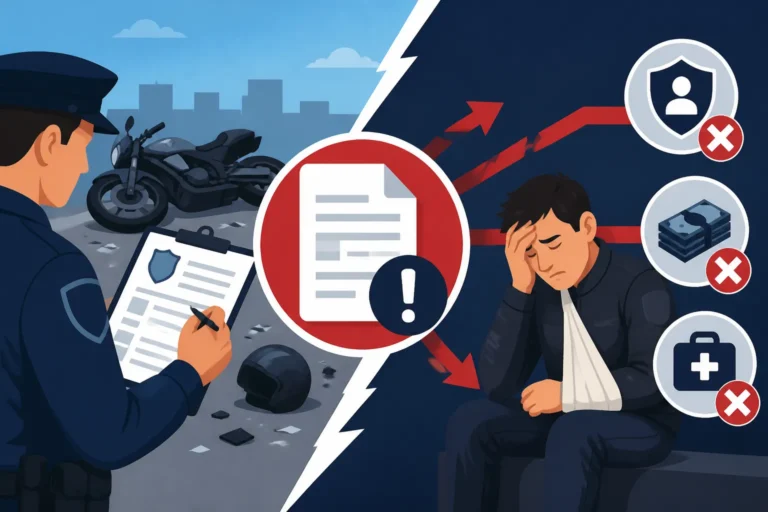
Call the Police and Medical Personnel: First and foremost, ensure your safety and that of others. Always call 911. A police report, while not always definitive on fault, will document the basic facts, diagram the scene, and record witness information. It’s a vital official record. Seek medical attention immediately, even if you feel fine. Injuries, especially internal ones or whiplash, can have delayed symptoms after a motorcycle crash. Medical records are critical for documenting your injuries for a claim.
-
Photographs and Video: If you are physically able, take as many photos and videos as possible with your phone. Capture the overall scene, the positions of both vehicles, damage to your motorcycle and the other vehicle, skid marks (or lack thereof), road conditions, traffic signs/signals, and any debris on the road. Don't forget to photograph your own injuries and any damage to your gear, like a scratched helmet or torn riding jacket, as this can serve as protective gear as evidence in a claim. These visual records offer irrefutable proof of the impact and its aftermath.
-
Witness Information: Independent witnesses are invaluable, particularly if the other driver attempts the "I didn't see you" defense. Obtain names, phone numbers, and email addresses from anyone who saw the collision. Their unbiased accounts can confirm that the other driver turned illegally or unsafely. Ask them what they saw, and if they noticed the other driver acting distracted. Their testimony can be crucial for establishing fault in a motorcycle accident.
-
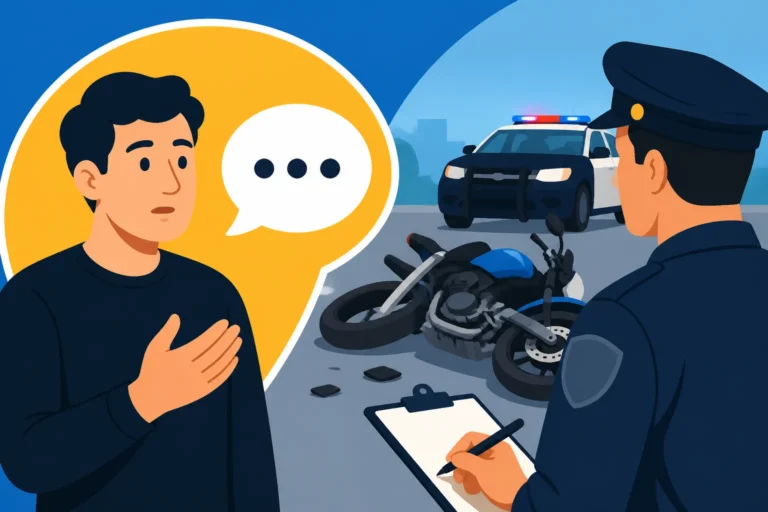
Exchange Information: Get the other driver's name, contact information, insurance details, and vehicle license plate number. Do not discuss fault at the scene, simply exchange information. You should never admit fault at the scene, even if you feel disoriented or believe you might have contributed.
By meticulously documenting the scene, you're building a strong foundation for your case. This includes keeping an injury journal detailing your pain, treatments, and impact on daily life.
Expert Testimony and Accident Reconstruction
Sometimes, the evidence gathered at the scene isn't enough, or the facts become disputed. This is where expert testimony, particularly from an accident reconstructionist, becomes critical.
-
Accident Reconstructionists: These highly specialized experts can recreate the dynamics of the crash using scientific principles, physics, and available data. They analyze skid marks, vehicle damage, debris fields, traffic light sequencing, driver statements, and even dashcam footage to determine speed, angles of impact, and who had the right-of-way. Their analysis can definitively prove that the turning driver created an unsafe situation, or failed to see what they should have. For example, they can often calculate whether a motorcycle was speeding or not based on the post-impact trajectory and damage, directly countering claims of excessive speed.
-
Medical Experts: In cases of severe injuries common in left-turn collisions, medical experts become essential. They can testify about the extent of your injuries, their causation (linking them directly to the accident), and their long-term prognosis. This is crucial for calculating future medical costs, loss of earning capacity, and pain and suffering damages. For catastrophic injuries like a traumatic brain injury or spinal cord injury, expert medical testimony is vital to underscore the full impact on your life.
-
Human Factors Experts: Sometimes, a human factors expert can be brought in. These experts study human perception, reaction times, and cognitive processes in specific environments, like driving. They can explain to a jury why a driver should have seen a motorcycle, even if the driver claims they didn't, by discussing visual conspicuity, attention allocation, and the phenomenon of "looked but didn't see."
These experts provide unbiased, scientific support to your claim, making it much harder for the opposing side to dispute fault or minimize the extent of your damages. When fault is disputed in a motorcycle crash, these expert witnesses can often turn the tide in your favor.
Legal Implications and Your Rights After a Left-Turn Collision
Surviving a left-turn motorcycle collision is just the beginning of a long and challenging journey. Beyond physical recovery, you'll face a mountain of medical bills, potential lost income, and the daunting task of navigating the legal and insurance systems. Understanding your rights and the types of compensation available is crucial to ensure you receive a fair settlement.
Understanding Your Damages: Economic and Non-Economic
When you've been injured in a left-turn motorcycle accident due to another driver's negligence, you are entitled to seek compensation for a wide range of damages. These typically fall into two main categories: economic and non-economic.
-
Economic Damages: These are quantifiable, out-of-pocket expenses that have a clear monetary value.
- Medical Expenses: This includes everything from emergency room visits, ambulance rides, hospital stays, surgeries, medications, physical therapy, and rehabilitation. It also covers future medical costs, which can be substantial for long-term injuries.
- Lost Wages: If your injuries prevent you from working, you can claim compensation for the income you've already lost.
- Loss of Earning Capacity: If your injuries result in a permanent disability or impairment that reduces your ability to earn at the same level as before the accident, you can seek damages for this future loss.
- Property Damage: This covers the cost to repair or replace your motorcycle, helmet, gear, and any other personal property damaged in the crash.
- Out-of-Pocket Expenses: This includes things like transportation costs to medical appointments, prescription co-pays, assistive devices, and even household help you might need while recovering.
-
Non-Economic Damages: These are more subjective losses that don't have a direct bill or invoice but significantly impact your quality of life.
- Pain and Suffering: This is compensation for the physical pain, discomfort, and emotional distress you endure due to your injuries. It accounts for both the immediate agony and the chronic pain you may experience.
- Emotional Distress: Beyond physical pain, the psychological toll of a severe accident, including anxiety, depression, PTSD after a motorcycle accident, and fear of riding again, is compensable.
- Loss of Enjoyment of Life: If your injuries prevent you from participating in hobbies, social activities, or daily routines you once enjoyed, you can seek damages for this diminished quality of life.
- Disfigurement and Scarring: Especially common with road rash injuries or severe fractures, permanent scarring or disfigurement can warrant significant compensation.
The combined value of these damages determines how motorcycle accident settlements are calculated. It's often difficult for an individual to accurately assess these, especially non-economic damages, which is why legal expertise is so vital.
The Importance of Seeking Legal Counsel
Navigating the aftermath of a left-turn motorcycle accident can be overwhelming. You're trying to heal, deal with insurance adjusters, and understand complex legal processes all at once. This is precisely why seeking legal counsel from an experienced motorcycle accident lawyer is not just helpful, but often critical to securing fair compensation.
-
Dealing with Insurance Companies: Insurance adjusters, even those from your own company, are not on your side. Their primary goal is to minimize the payout, not to ensure you receive maximum compensation. They may use tactics like making lowball settlement offers, delaying communication, or attempting to get you to admit fault. A lawyer understands these tactics and can protect your rights, handling all communications and negotiations on your behalf. They know how to counter an insurance offer effectively.
-
Proving Fault and Maximizing Settlement: An experienced attorney knows exactly what evidence is needed to prove the other driver's fault, especially against the "I didn't see them" defense. They can gather police reports, witness statements, accident reconstruction data, and medical records. They also understand how to value your case accurately, including both economic and non-economic damages, ensuring that potential future costs are factored in. This significantly helps how to maximize your motorcycle accident settlement.
-
Navigating Legal Complexities: The legal system is intricate, with strict deadlines (statutes of limitations), rules of evidence, and procedures. Your attorney will ensure all necessary paperwork is filed correctly and on time, whether it's dealing with medical liens or understanding the nuances of your state's comparative negligence laws. They can explain who is at fault in a motorcycle accident based on legal precedent and evidence.
-
Litigation and Trial: While most cases settle out of court, if a fair settlement cannot be reached, your attorney will be prepared to take your case to trial. This means filing a lawsuit, conducting discovery, and presenting your case to a jury. Their trial experience can be a powerful leverage point in negotiations.
Ultimately, having a dedicated legal advocate allows you to focus on your recovery while they tirelessly work to protect your financial future. If you're wondering, "Do you need a motorcycle accident lawyer?", especially after a left-turn collision, the answer is almost always yes. The stakes are simply too high to go it alone. Consider contacting a legal professional when to hire a motorcycle accident lawyer as soon as possible after your crash.
Disclaimer
Please remember that this article provides general information and is not intended as legal advice. Every motorcycle accident claim is unique, and the information presented here may not apply to your specific situation. Laws regarding motorcycle accidents, fault, and compensation vary significantly by state and jurisdiction. For personalized guidance and legal counsel, it is essential to consult with a qualified motorcycle accident attorney in your area.