Motorcycle Accidents Caused by Lane Splitting
Riding a motorcycle offers unparalleled freedom, but it also comes with unique risks, especially when navigating congested traffic. Many riders utilize a technique called lane splitting, moving between stopped or slowly moving vehicles. While it can save time and reduce rear-end collision risks in certain situations, it also opens the door to devastating accidents. This guide dives deep into the complexities of motorcycle accidents caused by lane splitting, exploring how they happen, who is typically at fault, and what steps you can take to protect your rights and recovery.
Understanding Lane Splitting and Its Controversies
Lane splitting, often misunderstood by the general public and even some riders, is a practice that can be both praised for its efficiency and condemned for its perceived danger. It's a topic that generates a lot of debate, and understanding its nuances is crucial, especially when an accident occurs.
What Exactly Is Lane Splitting?
At its core, lane splitting involves a motorcycle riding between two lanes of traffic moving in the same direction. Imagine you're on a crowded freeway, traffic is bumper-to-bumper, crawling at a snail's pace. A motorcyclist might choose to carefully maneuver their bike in the space between the far left lane and the lane next to it, slowly passing the cars. This isn't the same as lane filtering, which usually refers to moving to the front of a line of stopped cars at a red light. While related, the critical difference often lies in the speed of the surrounding traffic and the intent. Lane splitting typically happens when traffic is moving slowly or stopped on multi-lane roads, like a highway. The primary arguments for it are that it reduces traffic congestion, helps motorcyclists avoid being rear-ended by inattentive drivers in stop-and-go traffic, and can reduce engine overheating in air-cooled bikes. However, opponents often cite safety concerns, arguing it puts riders at undue risk.
The Legal Landscape of Lane Splitting
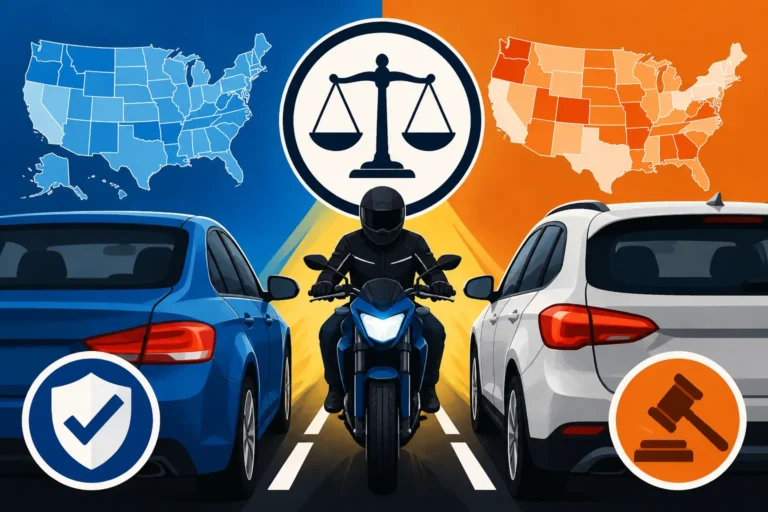
The legality of lane splitting is far from uniform across the United States. While some states have embraced it, often with specific guidelines, many others prohibit it entirely or have no explicit law addressing it. California was the first state to legalize lane splitting, codifying specific rules around speed differentials and traffic conditions. For example, in California, riders are generally advised not to lane split at speeds greater than 30 mph or more than 10 mph faster than the surrounding traffic. States like Utah and Arizona have also passed laws permitting lane filtering, a more restrictive form of passing stopped vehicles. Other states, like Oregon and Washington, have explored or implemented their own versions of motorcycle passing laws. Understanding the specific Lane Splitting Legality and Fault by State is paramount because if you are involved in an accident while lane splitting in a state where it is illegal, your claim could be severely impacted. Even in states where it is legal, there are often conditions, and violating these conditions could shift liability to the rider.
Common Misconceptions and Rider Bias
One of the biggest hurdles motorcyclists face after a lane splitting accident is the prevailing public perception, or what we often call "rider bias." Many drivers, and even some jurors, incorrectly believe that any form of lane splitting is inherently reckless and illegal, regardless of the actual law in their state. This misconception can lead to an automatic assumption that the motorcyclist was at fault. Insurance adjusters, too, might try to leverage this bias to assign a higher percentage of fault to the rider, even if the driver was clearly negligent. For instance, a driver might testify that they "didn't see the motorcycle," a common defense, even if the rider was legally splitting lanes and highly visible. It's frustrating, but this bias can complicate your recovery. This is why accurately documenting the scene and understanding the legal context is absolutely vital for any rider involved in such an incident.
How Lane Splitting Accidents Happen
Despite debates about its safety, lane splitting accidents often occur not because of the act of splitting itself, but due to other drivers' lack of awareness or negligent actions. These crashes can be particularly dangerous, leaving riders with severe injuries.
Sudden Lane Changes by Drivers
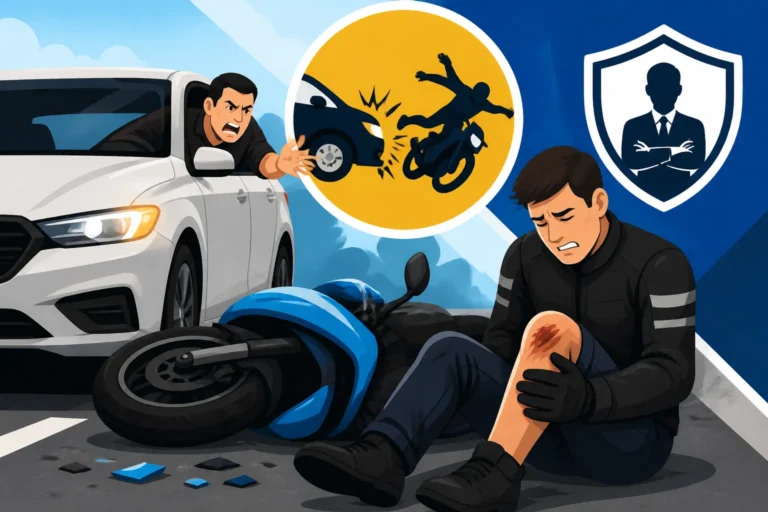
This is perhaps the most common scenario for lane splitting accidents. You're riding between lanes, perhaps on a busy highway like the I-5 in Southern California or a crowded stretch of I-95 in Florida, moving carefully through slow traffic. Suddenly, a driver in one of the lanes decides to switch lanes without looking or signaling. They might be trying to get to an exit, avoid a slow vehicle, or simply change their mind about which lane they want to be in. In a fraction of a second, your safe path disappears, and you're either forced to brake hard, potentially losing control, or you collide with the side of their vehicle. Because motorcycles are smaller and can be harder to spot, drivers often fail to check their blind spots thoroughly, especially when they don't expect a vehicle to be in the narrow space between lanes. These sudden, unexpected movements by cars are a huge hazard and a leading cause of Motorcycle Accidents Caused by Unsafe Lane Changes, creating a dangerous dynamic even when the rider is obeying all legal lane splitting guidelines.
Rear-End Collisions in Slow Traffic
While lane splitting is often touted as a way to avoid rear-end collisions, it can sometimes contribute to them, or riders can still be victims in different ways. When traffic is moving slowly, a rider might be splitting lanes, but then traffic ahead of them comes to a complete stop, or slows more abruptly than anticipated. If the rider doesn't react quickly enough, or if the driver they are passing suddenly brakes hard, the rider can be forced into the back of a vehicle. Conversely, imagine a situation where a driver behind the lane-splitting motorcycle is distracted and fails to notice the motorcycle slowing down to accommodate traffic. While less common than direct impact with a lane-changing car, these rear-end scenarios can still lead to serious injuries, especially if the rider is caught between two vehicles or thrown from their bike. The core issue remains driver inattention, whether it's the driver changing lanes or the driver behind failing to maintain a safe following distance.
"Dooring" Accidents and Unexpected Obstacles
Another harrowing way lane splitting accidents can occur is through "dooring" incidents. This happens most often in urban environments or areas with parallel parking, where a vehicle is stopped in traffic and a passenger or driver suddenly opens their car door into the path of the lane-splitting motorcycle. Imagine navigating through a busy street in downtown Portland or Chicago during rush hour. You're carefully passing a line of stopped cars, and out of nowhere, a door swings open, giving you no time to react. The impact can send a rider flying, leading to severe injuries. These accidents highlight the unpredictability of human behavior and the unique vulnerabilities of motorcyclists. Furthermore, unexpected road hazards like potholes, debris, or even construction barriers can become magnified threats when a rider is attempting to lane split, as their escape routes are limited, and their focus must be split between the road ahead and the immediate surroundings of multiple vehicles. A small patch of gravel that might be a minor inconvenience for a car can be catastrophic for a motorcycle at speed, especially if it's encountered while maneuvering between cars.
Determining Fault in Lane Splitting Accidents
Figuring out who's at fault after a motorcycle accident, especially one involving lane splitting, can feel like a twisted puzzle. The laws are intricate, and insurance companies are notoriously quick to point fingers at the rider. It's a frustrating reality for many of us who ride.
Legal Standards for Lane Splitting Liability
The foundation of determining fault in a lane splitting accident heavily relies on the specific laws of the state where the incident occurred. As we discussed, if you're in California, which permits lane splitting under certain conditions, the legal analysis will be vastly different than if you're in a state where it's explicitly illegal. In states where lane splitting is legal, liability often falls on the driver of the car if they made an unsafe lane change, failed to check their mirrors, or were otherwise negligent. However, even in these states, riders have a duty to operate their motorcycles safely. If a rider was lane splitting at excessive speeds, weaving erratically, or failing to maintain proper control, they could be found partially at fault. The specific parameters, such as speed differentials (e.g., not exceeding 10 mph faster than traffic), are crucial. Violating these guidelines, even in a legal lane splitting state, can undermine your claim significantly. For instance, if you were splitting lanes at 45 mph while traffic was moving at 5 mph, a court might view your actions as reckless, regardless of the car driver's negligence. Understanding these legal standards is a critical step in establishing How Fault Is Determined in Motorcycle Accidents.
Evidence Critical to Proving Fault
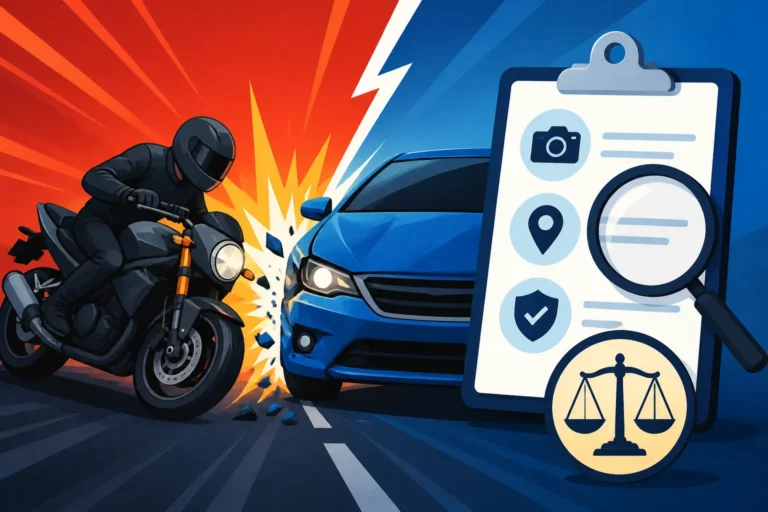
After a lane splitting accident, gathering compelling evidence is not just important—it's absolutely non-negotiable. Without solid proof, it's very easy for insurance companies to dismiss your claim or blame you, often citing "rider bias."
Here's what you need to focus on:
- Police Report: The official police report is often the first document an insurance company or court will look at. It details the officers' initial findings, including diagrams of the scene, witness statements, and any citations issued. While not the final word on fault, it can be very influential.
- Witness Statements: Independent witnesses are gold. Their unbiased accounts can confirm that the car driver made an unsafe lane change, failed to signal, or was distracted. Get their contact information at the scene if you can. For more information on this, check out our guide on How Witnesses Affect Motorcycle Fault.
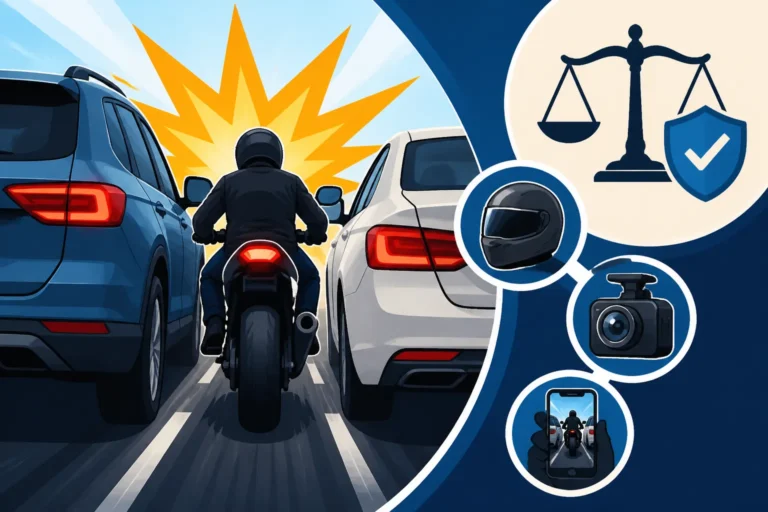
- Dashcam or Helmet Camera Footage: This is increasingly becoming the most powerful piece of evidence. If you or the other driver had a dashcam or helmet cam, the footage can provide an undeniable, objective record of what happened, showing exactly how the accident occurred and who was at fault.
- Photographs and Videos: Pictures of the accident scene, vehicle damage, road conditions, traffic signs, and any visible injuries are crucial. These visuals can help reconstruct the event and corroborate other evidence. Take photos from multiple angles, wide shots and close-ups.
- Traffic Laws: A thorough understanding of your state's specific Lane Splitting Legality and Fault by State is key. Your lawyer will use these statutes to argue why the other driver's actions constituted negligence and why your lane splitting was within legal bounds.
Comparative Negligence and Shared Fault Scenarios
Here's where things get really complicated, and frankly, often unfair for riders. Most states operate under some form of comparative negligence. This legal doctrine acknowledges that more than one party can share fault in an accident. If you're found to be partly at fault for a lane splitting accident, your recoverable damages (the money you can get for injuries, medical bills, etc.) can be reduced by your percentage of fault. For example, in a pure comparative negligence state like California, if you sustained $100,000 in damages but were found 20% at fault for lane splitting too fast, you would only recover $80,000. Many states, however, follow modified comparative negligence, which often uses a 50% or 51% bar. If you are found to be 50% or 51% or more at fault (depending on the state), you might not be able to recover any damages. This is a huge deal, and insurance companies know it. They will aggressively try to assign a higher percentage of fault to the motorcyclist, playing on that underlying rider bias we talked about. They might argue you were speeding, weaving, or simply creating an unsafe situation, even if the driver cut you off. This is why a detailed understanding of Comparative Negligence in Motorcycle Accidents is so important, and why fighting an unfair fault assignment is often a battle that requires skilled legal help.
| State | Lane Splitting Legality | Conditions/Restrictions | Impact on Fault |
|---|---|---|---|
| California | Legal | Must be done safely; generally advised not to exceed 10 mph faster than traffic, nor exceed 30 mph. | If within guidelines, fault often on negligent driver. If violating guidelines, rider can be assigned partial fault under pure comparative negligence, reducing settlement. |
| Utah | Legal (Lane Filtering) | Permitted when traffic is stopped; speed limit of 15 mph or less for filtering. | Rider still has duty of care. If filtering unsafely or above speed limit, rider may be assigned partial fault. |
| Arizona | Legal (Lane Filtering) | Permitted when traffic is stopped at a red light; speed limit of 15 mph or less for filtering. | Similar to Utah; unsafe filtering or speeding can lead to shared fault. |
| Montana | Legal | Permitted when traffic is stopped or moving at 10 mph or less. | Rider must exercise due care. Unsafe practices can lead to comparative fault. |
| Other States (generally) | Illegal or No Explicit Law | Varies greatly; typically treated as an illegal maneuver like passing on the right or reckless driving. | If illegal, rider almost always assigned significant, if not total, fault. Can severely limit or bar recovery due to modified comparative negligence rules in many states. |
Note: Laws can change rapidly. Always consult the most current state traffic laws or a qualified legal professional for definitive guidance.
Common Injuries and Damages from Lane Splitting Crashes
Motorcyclists, by their very nature, are more vulnerable than occupants of enclosed vehicles. When a lane splitting accident occurs, the outcomes are often far more severe, leading to a host of serious injuries and significant financial burdens.
Specific Injury Types from Lane Splitting Impacts
The sheer mechanics of a motorcycle accident, particularly one where a rider is ejected or directly impacts another vehicle at speed, often result in devastating injuries. These aren't just bumps and bruises; they're life-altering.
- Road Rash: This is almost a given in any motorcycle accident where skin makes contact with the pavement. Depending on the speed and the quality of your gear, road rash can range from minor abrasions to deep, third-degree wounds requiring extensive medical treatment, skin grafts, and leaving permanent scarring. It's not just cosmetic; deep road rash can lead to severe infections.
- Traumatic Brain Injuries (TBIs): Even with a DOT-compliant helmet, the sudden jolt and impact of a collision can cause a TBI. These injuries can range from concussions to severe brain damage, leading to long-term cognitive, emotional, and physical impairments. The long-term effects of a TBI can be profound, impacting everything from memory to personality. Our article on Motorcycle Traumatic Brain Injury: Claims and Compensation covers this in more detail.
- Broken Bones and Fractures: Arms, legs, ribs, collarbones – nearly any bone can be broken in a motorcycle crash. The force of impact, being thrown from the bike, or being crushed between vehicles can lead to multiple fractures, sometimes compound or comminuted (where the bone breaks into several pieces), requiring extensive surgeries, pins, plates, and a long recovery period.
- Spinal Cord Injuries: These are among the most feared injuries for any rider. The violent impact can damage the spinal cord, leading to partial or complete paralysis below the injury site. Even less severe spinal injuries can result in chronic pain, loss of sensation, and limited mobility, forever changing a rider's quality of life. Learn more about Motorcycle Spinal Cord Injury: Claims and Compensation.
- Internal Injuries: The blunt force trauma from a collision can cause internal bleeding, organ damage (like ruptured spleen or liver), and collapsed lungs, which may not be immediately apparent at the scene but can quickly become life-threatening. This is why seeking immediate medical attention after a crash is always crucial, even if you feel okay.
Calculating Economic Damages
Economic damages are the tangible, quantifiable financial losses you incur directly because of the accident. These are the "receipts" of your suffering, and they form a significant part of your claim.
- Medical Expenses: This is usually the largest component. It includes everything from emergency room visits, ambulance rides, surgeries, hospital stays, medication, physical therapy, rehabilitation, and future medical care. Keeping meticulous records of every single medical bill and treatment is absolutely essential. This also includes any modifications to your home or vehicle if your injuries result in permanent disability.
- Lost Wages and Earning Capacity: If your injuries prevent you from working, you can claim lost wages for the time you missed. If your injuries are permanent and affect your ability to earn at the same level as before the accident, you can also claim loss of future earning capacity. This calculation can be complex, especially for self-employed riders or those whose careers were significantly impacted.
- Property Damage: This covers the cost of repairing or replacing your motorcycle, helmet, gear, and any other personal property damaged in the crash. Get detailed repair estimates or fair market value assessments for your bike.
- Other Out-of-Pocket Expenses: Don't forget smaller, but accumulating costs, like transportation to medical appointments, childcare if you're unable to care for your children, or even assistive devices like crutches or wheelchairs. Every expense directly related to the accident should be documented.
Addressing Non-Economic Losses
While economic damages are straightforward to calculate with bills and pay stubs, non-economic losses are trickier because they relate to the intangible suffering you endure. However, they are just as real and often constitute a significant portion of a motorcycle accident settlement.
- Pain and Suffering: This refers to the physical pain and discomfort you experience from your injuries, both immediately after the accident and throughout your recovery. It also includes chronic pain that may persist long-term.
- Emotional Distress: Motorcycle accidents are traumatic. Many riders experience anxiety, depression, fear of riding again (or driving), post-traumatic stress disorder (PTSD), and other psychological impacts. These mental health challenges are legitimate and compensable.
- Loss of Enjoyment of Life: This covers the diminished quality of life you experience because of your injuries. Perhaps you can no longer enjoy hobbies like hiking, playing with your kids, or even riding your motorcycle. This loss of enjoyment is a very real consequence of severe injuries.
- Disfigurement and Scarring: Especially relevant with severe road rash or facial injuries, permanent scarring or disfigurement can cause significant emotional distress and impact self-esteem. Compensation for this acknowledges the lasting physical and psychological toll.
Proving these non-economic damages often relies on comprehensive medical records, psychological evaluations, personal journals detailing your daily struggles, and testimonies from friends and family about how your life has changed. For more details, explore our guide on Types of Damages in a Motorcycle Accident Claim.
Navigating the Aftermath: What to Do Post-Accident
The moments and days following a motorcycle accident can be chaotic and overwhelming. Yet, the actions you take during this critical period can profoundly impact your ability to recover compensation and prove your case. It’s not just about getting medical help; it’s about protecting your rights from the start.
Immediate Steps at the Scene
Even if you’re shaken up, remember these crucial steps that can make all the difference. Your health is, of course, the absolute priority, but securing evidence comes a close second.
- Prioritize Safety and Medical Attention: First and foremost, check yourself for injuries. If you are able, move to a safe location away from traffic. Call 911 immediately to report the accident and request medical assistance, even if you feel only minor pain. Adrenaline can mask serious injuries. Allowing paramedics to check you out is crucial for both your health and documenting your injuries from the earliest possible moment. Our guide on What to Do After a Motorcycle Accident offers more immediate steps.
- Call the Police: Always call the police, even for seemingly minor incidents. A police report, which documents the details of the crash, witness statements, and any citations issued, is a vital piece of evidence for your insurance claim and potential legal proceedings.
- Document Everything: If you're physically able, start gathering evidence. Take photographs and videos of the accident scene from multiple angles: vehicle positions, damage to your motorcycle and the other vehicle, road conditions, traffic signals, skid marks, and any visible injuries you or your passenger sustained. Get the other driver's contact information, insurance details, and license plate number. Seek out any witnesses and ask for their names and phone numbers.
- Do Not Admit Fault: This is a golden rule: never, ever admit fault or apologize at the scene of an accident. Even a simple "I'm sorry" can be twisted and used against you by insurance companies later on. Stick to the facts when speaking with police and the other driver.
Dealing with Insurance Companies
The moment you report the accident, you're entering a highly strategic game with the insurance company, and their primary goal is to minimize payouts. They are not on your side.
- Report the Accident Promptly: Notify your own insurance company as soon as reasonably possible. However, when speaking with the other driver's insurance adjuster, be cautious. They might try to get you to give a recorded statement, offer a quick lowball settlement, or pressure you into signing documents.
- Be Wary of Recorded Statements: It’s almost always advisable to decline giving a recorded statement to the other driver's insurance company without first consulting with an attorney. These statements are often used to find inconsistencies or elicit information that can be used to deny or devalue your claim.
- Don't Accept a Quick Settlement: Insurance adjusters sometimes offer a quick settlement, especially for property damage or seemingly minor injuries. This is almost always a lowball offer, designed to get you to sign away your rights before the full extent of your injuries and long-term costs are known. Once you accept a settlement, you can't go back and ask for more money later, even if new medical issues arise. Understanding How Insurance Companies Assign Blame to Riders will help you be prepared for their tactics.
- Track All Expenses: Keep a meticulous record of all your medical appointments, treatments, prescriptions, lost wages, and any other out-of-pocket expenses. This detailed documentation is crucial for calculating your total damages.
The Role of Legal Counsel
The complexities of motorcycle accident claims, especially those involving lane splitting, make legal representation not just helpful, but often essential.
- Understanding State Laws and Liability: An experienced motorcycle accident attorney understands the nuances of traffic laws, including specific lane splitting regulations in your state. They can analyze the evidence to accurately determine Who Is at Fault in a Motorcycle Accident and build a strong case against the negligent driver. They are adept at proving Motorcycle Accident Evidence for Proving Fault, ensuring nothing is overlooked.
- Dealing with Insurance Companies: Lawyers are skilled negotiators and know how to counter the tactics insurance adjusters use to devalue claims or shift blame. They can handle all communications with insurance companies, protecting you from saying anything that could jeopardize your case. They will also meticulously calculate all your damages, including future medical costs and pain and suffering, to ensure you seek a full and fair settlement. They can also help you fight an unfair fault assignment if the insurance company tries to use Rider Bias in Fault Determination against you.
- Litigation and Trial: If a fair settlement cannot be reached through negotiation, your attorney will be prepared to take your case to court. They will represent you throughout the litigation process, presenting your case to a judge or jury, advocating for your rights and seeking the compensation you deserve. This can be particularly vital in cases where Shared Fault in Motorcycle Accidents becomes a contentious issue.
Protecting Yourself: Safety Tips for Lane Splitting
While we’ve discussed the aftermath of an accident, preventing one in the first place is always the best strategy. If you choose to lane split, doing so responsibly and defensively can drastically reduce your risk. It’s about being smart, visible, and aware.
Best Practices for Safer Lane Splitting
Even in states where lane splitting is legal, it’s not a free-for-all. There are best practices that significantly enhance safety for riders. Adhering to these principles goes beyond just obeying the law; it’s about survival in dense traffic.
- Maintain a Safe Speed Differential: The most critical rule is to keep your speed relative to the surrounding traffic low. California, for example, recommends a speed no more than 10 mph faster than the cars you're passing, and never exceeding 30 mph while splitting. This gives you precious reaction time if a driver makes an unexpected move. Anything faster dramatically increases your risk and potential injury severity.
- Stay Alert and Anticipate: Your eyes should be constantly scanning for potential hazards. Watch for drivers who appear distracted, are looking at their phones, or are otherwise not paying attention. Observe tire movements – a slight turn of the wheels can indicate an impending lane change. Be ready to brake or swerve at a moment's notice. Always assume a driver doesn’t see you, even if you think they do.
- Choose the Right Lanes and Conditions: Lane splitting is generally safer between the far left lane and the lane next to it, as drivers in these lanes are typically less likely to suddenly swerve right to exit or enter. Avoid splitting next to large trucks, RVs, or vehicles with trailers, as their blind spots are massive, and their movements can be less predictable. Heavy rain, high winds, or poor visibility are absolutely not the conditions for lane splitting, regardless of legality.
- Avoid Blind Spots: Try to position yourself so that drivers can see you in their mirrors. Don’t linger in a vehicle’s blind spot any longer than absolutely necessary.
Essential Gear and Visibility
Being seen is half the battle for motorcyclists, and it's even more critical when lane splitting. You need to do everything in your power to stand out in a sea of four-wheelers.
- High-Visibility Gear: Forget subtle colors. Bright, fluorescent colors (lime green, orange, yellow) on your helmet, jacket, and even your bike itself can dramatically increase your visibility, especially in daylight. Reflective materials are essential for night riding, catching headlights and making you noticeable.
- Proper Lighting: Ensure your motorcycle's headlights (high beam during the day, if legal and appropriate for conditions), taillights, and turn signals are always functional and clean. Consider aftermarket LED lights or modulators (if legal in your state) that make your headlights flash, further drawing attention to you.
- Helmet and Protective Clothing: While not directly increasing visibility to others, wearing a full-face, DOT-approved helmet, armored jacket, riding pants, gloves, and sturdy boots significantly reduces your risk of severe injury should an accident occur. This protective gear, while it won't prevent the accident, will help you survive it and How Gear Affects Injury Severity is well documented. In the event of an accident, this gear also becomes crucial evidence that you were taking reasonable precautions for your safety.
Driver Awareness and Education
Ultimately, a significant part of the problem lies with car drivers who are either unaware of lane splitting, don't understand its legality, or simply aren't paying enough attention. While you can't control other drivers, awareness campaigns and rider advocacy play a role.
- Public Education Initiatives: In states where lane splitting is legal, campaigns to educate car drivers about the practice can help reduce misunderstandings and increase vigilance. These initiatives aim to remind drivers to check their mirrors, use turn signals, and be aware that motorcycles may be sharing lanes.
- Rider Advocacy: Organizations like the American Motorcyclist Association (AMA) actively advocate for rider rights, including safe lane splitting, and work to educate both riders and the public. Supporting such groups contributes to a safer riding environment for everyone.
- Maintain Your Space: As a rider, even when not lane splitting, practicing defensive riding means constantly creating and maintaining a buffer zone around yourself. When you are splitting, that buffer zone shrinks dramatically, demanding even higher levels of focus and caution. Never assume that a driver will make space for you or yield to you; always be prepared for them not to.
By understanding the laws, adhering to best practices, maximizing your visibility, and being constantly vigilant, you can significantly reduce the risks associated with lane splitting, turning a potentially hazardous maneuver into a more manageable aspect of motorcycle commuting.
Disclaimer
Please remember, this information is intended for educational purposes only and should not be considered legal advice. Motorcycle accident laws are complex and vary significantly by state. If you or a loved one has been involved in a motorcycle accident, especially one involving lane splitting, it is highly recommended to consult with a qualified attorney in your jurisdiction to discuss your specific situation and legal options.