Shared Fault in Motorcycle Accidents
It’s a frustrating reality for many riders: you’ve been involved in a motorcycle accident, you’re injured, and now the other driver’s insurance company (or even your own) is trying to pin some of the blame on you. This common tactic, known as shared fault or comparative negligence, can drastically reduce your compensation or even prevent you from recovering anything at all. This guide will walk you through the complexities of shared fault in motorcycle accident claims, helping you understand how it works and what you can do about it.
Understanding Shared Fault in Motorcycle Accidents
When you’re involved in a motorcycle accident, it’s natural to feel that the other driver, who may have cut you off or failed to see you, is entirely at fault. However, the legal system isn't always black and white. In many cases, particularly those involving motorcycles, the concept of "shared fault" comes into play. This means that both parties involved in the accident might be found to have contributed to the crash in some way. It’s a bitter pill to swallow when you’re dealing with serious injuries and property damage, but it’s a reality riders often face.
The Concept of Comparative Negligence
Comparative negligence is the legal principle that allows an injured party to recover damages even if they were partially at fault for the accident. Instead of completely barring recovery, it reduces the amount of compensation proportional to their degree of fault. For instance, if a jury determines you suffered $100,000 in damages but were 20% responsible for the crash, your payout would be reduced by 20%, leaving you with $80,000. This system aims for a fairer distribution of responsibility and compensation, though "fair" can feel quite subjective when you’re the one on the bike.
The crucial aspect of comparative negligence is understanding that it doesn't just apply to the most obvious violations. It can encompass a wide range of actions or inactions. Maybe you were speeding slightly, or perhaps your headlight wasn't as bright as it could have been. These seemingly minor details can be used by opposing parties to argue for a percentage of fault against you. The system acknowledges that accidents are rarely caused by a single, isolated factor and often involve a chain of events where multiple parties bear some responsibility.
Why Riders Often Face Blame
One of the most infuriating realities for motorcyclists is the pervasive "rider bias" that often surfaces after an accident. There's an unfair stereotype that motorcycles are inherently dangerous and that riders are reckless. This bias can influence everything from police reports to insurance adjusters' assessments and even jury perceptions. You might have been riding defensively, within the speed limit, and yet still face an uphill battle to prove the other driver's sole negligence. This is why understanding Rider Bias in Fault Determination is so crucial.
Insurance companies, in particular, are adept at leveraging this bias. They might try to argue that because you were on a motorcycle, you were "less visible" or "more vulnerable," implying a heightened responsibility for self-preservation that somehow translates into partial fault. They might also scrutinize your actions with a fine-tooth comb, looking for any deviation from perceived perfect riding, no matter how minor. This could include arguments about your lane position, braking technique, or even the type of gear you were wearing. It's a frustrating situation that requires proactive measures to counteract.
Contributory Negligence vs. Comparative Negligence
While comparative negligence allows for partial recovery, there's an older, much harsher legal doctrine still in effect in a few states: contributory negligence. Under this rule, if you are found to be any percentage at fault for an accident – even 1% – you are completely barred from recovering any damages from the other party. It’s an all-or-nothing system that can be incredibly punitive for motorcycle riders, who often face inherent biases. Imagine being severely injured, and because a jury finds you negligibly at fault, you get nothing.
States like North Carolina, Maryland, Virginia, and Alabama still adhere to the pure contributory negligence rule, which can make pursuing a claim there exceptionally challenging for motorcyclists. This system predates the modern approach to accident law and is often criticized for its rigidity. If you live in or have an accident in one of these states, understanding the significant difference between Contributory vs Comparative Negligence Explained is paramount. It means that proving the other driver was 100% at fault becomes an absolute necessity, leaving no room for shared responsibility.
How Shared Fault Laws Vary by State
The application of shared fault isn't uniform across the United States. Each state adopts one of several systems, which dramatically impacts how a motorcycle accident claim is handled and what compensation you can realistically expect. It's not just a legal technicality; it's a fundamental difference that could make or break your ability to recover from a serious crash. Knowing your state's specific laws is essential for any rider.
Pure Comparative Negligence States
In states that follow a "pure comparative negligence" rule, you can recover damages even if you are mostly at fault for the accident. Your compensation is simply reduced by your percentage of blame. For example, if you are 90% at fault for a motorcycle accident in California, but the other driver was 10% negligent, you could still recover 10% of your total damages. While this might seem like a small percentage, for catastrophic injuries with hundreds of thousands in medical bills, even 10% can be a significant amount of financial relief.
California and Florida are two prominent examples of states that use pure comparative negligence. This system is often seen as the most equitable because it ensures that every party bears financial responsibility commensurate with their contribution to the accident. However, it also means that even if you believe the other driver was entirely to blame, their legal team will certainly try to assign some percentage of fault to you to reduce their payout. The flexibility of pure comparative negligence can lead to intense negotiations over the exact percentages of fault.
Modified Comparative Negligence States
The majority of states operate under some form of "modified comparative negligence." This system blends elements of both pure comparative and contributory negligence. Typically, it allows an injured party to recover damages only if their percentage of fault is below a certain threshold—usually 50% or 51%. If your fault meets or exceeds that threshold, you are completely barred from recovering compensation. This is often referred to as the "50% rule" or the "51% rule."
Let's look at a couple of examples. In states following the "50% rule," like Texas or Ohio, if a jury finds you 50% or more at fault for your motorcycle accident, you get nothing. If you're 49% at fault, your damages are reduced by 49%. In states with the "51% rule," such as Illinois or New York, you can recover as long as your fault is 50% or less. If you're found to be 51% or more at fault, your claim is denied. Understanding How the 50% Fault Rule Works or How the 51% Fault Rule Works is critical, as a single percentage point can mean the difference between significant compensation and nothing at all.
States with Contributory Negligence
As mentioned earlier, a handful of states still cling to the rigid doctrine of "pure contributory negligence." In these jurisdictions, if you are found to have contributed to the accident in any way, even 1%, you cannot recover damages from the other driver. This is a very challenging environment for motorcycle accident victims because it places an incredibly high burden on the rider to prove absolutely no fault of their own.
North Carolina is a classic example of a contributory negligence state. This means if you're involved in a motorcycle accident there, and the insurance company or court can prove you were even slightly negligent—perhaps you didn't signal quite long enough, or you were riding slightly above the speed limit—your entire claim for damages could be dismissed. This makes it especially important to secure ironclad evidence and meticulously document everything if you're involved in a crash in one of these states. It’s why some people feel States Where 1% Fault Bars Recovery are particularly unfair to vulnerable road users.
Here's a quick reference table outlining how common states approach shared fault:
| State | Type of Shared Fault Rule | Description | Impact on Recovery |
|---|
When You're in a Motorcycle Accident and the Police Report Blames You
Getting into a motorcycle accident is already a nightmare scenario, filled with pain, confusion, and fear. But imagine this: you're lying there, perhaps seriously injured, and the responding police officer, without fully understanding the dynamics of the crash or your perspective, starts making assumptions. Then, in the days that follow, you receive the official police report, and it unfairly assigns blame to you, the rider. It's a gut punch, a terrible feeling of injustice, and unfortunately, it's a frustration many riders experience. This isn't just about pride; an unfavorable police report can severely damage your ability to recover compensation for your injuries and damages.
Police officers, while well-intentioned, are not always accident reconstruction experts, especially when it comes to the unique physics and vulnerabilities of motorcycles. They often arrive at the scene after the fact, relying on immediate observations, witness statements (which can be biased or incomplete), and initial impressions. If the scene is chaotic, or if the other driver presents a more convincing initial narrative, the officer's preliminary findings can easily skew against the motorcyclist. This report then becomes a foundational document that insurance companies use to justify denying or devaluing your claim.
Why Police Reports Can Get It Wrong for Riders
Police reports are meant to be an objective account of an accident, but when it comes to motorcycle crashes, they can unfortunately carry an inherent bias or simply miss critical details. Officers might not have specific training in motorcycle dynamics, leading them to misinterpret skid marks, impact points, or rider actions. For example, a car driver might claim they "didn't see" the motorcycle, and an officer, without further investigation, might note that as a contributing factor, implicitly shifting some blame to the rider for not being visible enough, rather than focusing on the driver's failure to look. This 'I Didn't See the Motorcycle' Defense Explained is a classic example of how riders get unfairly scapegoated.
Moreover, the scene itself can be deceiving. A motorcycle, being lighter and smaller, might leave less obvious impact evidence on the road compared to a larger vehicle. The rider's injuries are often more severe, leading to immediate transport to the hospital, meaning their direct input at the scene might be limited or nonexistent. Meanwhile, the car driver might be able to calmly explain their version of events, shaping the officer's initial narrative. All of these factors combine to create a situation where the police report, despite its official appearance, might not fully or accurately reflect what truly happened. It's a difficult reality to confront, but recognizing it is the first step in addressing the issue.
The Immediate and Long-Term Impact of an Unfavorable Report
An unfavorable police report can feel like a heavy weight on your chest, and its implications are far-reaching. Immediately, it can make dealing with insurance companies incredibly difficult. Insurers often seize upon any indication of rider fault in the report to justify a lower settlement offer or an outright denial. They might argue that since the police report indicates you were at fault, or partially at fault, their policyholder isn't fully liable. This can lead to a protracted battle just to get them to acknowledge your claim. This is a common tactic, and understanding How a Police Report Can Hurt Your Claim is vital.
In the long term, if your case proceeds to litigation, that police report can influence a judge or jury. While not always admissible as definitive proof of fault, it can certainly color perceptions. Jurors might implicitly trust the "official" account from law enforcement. It can also be used during depositions and cross-examinations to challenge your credibility or your version of events. Furthermore, if you received a traffic citation based on the officer's assessment of fault, resolving that citation (pleading guilty, for example) can be seen as an admission of fault, further complicating your personal injury claim.
Strategies for Correcting an Inaccurate Police Report
Discovering that the official police report unfairly pins blame on you can be incredibly disheartening. You might feel powerless, like the system is already stacked against you. But it's not a lost cause. While difficult, it is sometimes possible to get an inaccurate report corrected or, at the very least, to gather enough counter-evidence to mitigate its negative impact. This requires diligence, a clear understanding of the process, and often, professional guidance.
Steps to Challenge and Amend the Report
The first step is to obtain a copy of the full police report yourself. Read it carefully, highlighting any inaccuracies, omissions, or statements that you believe are factually incorrect or based on flawed assumptions. Pay close attention to descriptions of the accident scene, vehicle positions, witness statements, and the officer's conclusions regarding fault or contributing factors. Once you have a clear picture of what's wrong, you can begin to formulate your challenge.
Next, you'll need to contact the law enforcement agency that issued the report. Many police departments have a formal process for requesting an amendment or an addendum to an accident report. This usually involves submitting a written statement detailing the errors you've identified, along with any supporting evidence you have. This could include photos or videos from the scene, statements from other witnesses that contradict the report, or even expert opinions if you've already engaged an accident reconstruction specialist. Be polite, factual, and persistent. Remember, the goal is not to accuse the officer of malfeasance, but to present new information that clarifies the actual events. Learning How to Correct a Wrong Police Report can provide crucial insights into this process.
Gathering Contradictory Evidence
Even if you can't get the official report formally amended, compiling robust contradictory evidence is paramount. This evidence serves to tell your side of the story, allowing you to present a more accurate narrative to insurance companies and, if necessary, to a court. Think of everything that could shed light on the true sequence of events.
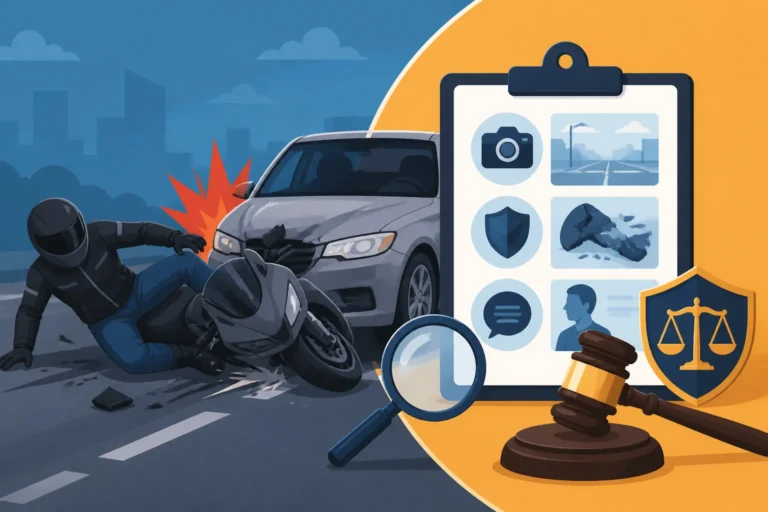
Dashcam footage from your motorcycle, or from nearby vehicles or businesses, can be incredibly powerful. It offers an objective, real-time account that often trumps subjective interpretations. Witness statements, especially from those who saw the accident unfold from a different vantage point than the reporting officer, can also be critical. If you were wearing protective gear, and it shows damage consistent with being struck (e.g., a scuff on your helmet), this can reinforce your narrative. Medical records, detailing the nature and severity of your injuries, can also indirectly support claims about the force of impact and how the collision occurred. Every piece of verifiable information you gather helps to build a stronger case that challenges the report's conclusions.
Proving Fault When the Police Report Blames You
When the police report is working against you, it feels like you're fighting an uphill battle. But it doesn't mean your claim is dead in the water. Proving the other driver's fault, or at least minimizing your own alleged blame, becomes even more critical. This often involves a multi-pronged approach, focusing on evidence, expert analysis, and a thorough understanding of accident dynamics. You can recover, but you have to be smart and strategic about it.
The Importance of Thorough Accident Investigation
Even after the police have left the scene and submitted their report, the real investigation into your motorcycle accident is just beginning. This is where meticulous attention to detail can make all the difference. Start by revisiting the accident scene, if safe and possible, to look for details the police might have missed. This could include additional skid marks, debris patterns, or road conditions that were overlooked. Take extensive photographs and videos from multiple angles, at different times of day if lighting was a factor.
Beyond the physical scene, consider seeking out additional witnesses. Sometimes people who didn't speak to the police might have seen something important. Check for nearby businesses that might have surveillance cameras pointed towards the road. Obtain traffic light sequencing data if it was an intersection accident, or delve into the other driver's cell phone records if distracted driving is suspected. The more information you can uncover, the better equipped you'll be to challenge the police report's conclusions and build a compelling case for Proving Fault in a Motorcycle Accident.
Expert Witnesses and Accident Reconstruction
When fault is disputed, especially if the police report is inaccurate, an accident reconstruction expert can be an invaluable asset. These professionals use scientific principles, physics, and advanced technology to analyze every piece of available evidence—from vehicle damage and skid marks to road conditions and traffic camera footage—to create a detailed, objective recreation of how the accident occurred. Their findings can often contradict or completely overturn the initial conclusions drawn in a police report. This is particularly useful in complex scenarios or when dealing with vague or biased witness statements.
For example, an expert might analyze the angle of impact and the trajectory of your motorcycle to demonstrate that the other driver made an illegal turn, even if the police report simply noted "failure to yield." They can also provide expert testimony in court, explaining complex concepts in an understandable way to a jury, lending significant weight to your claim. This kind of specialized expertise can illuminate aspects of the crash that were simply beyond the scope or training of the initial responding officer. Knowing When to Hire an Accident Reconstruction Expert is a key step in protecting your rights.
The Role of a Motorcycle Accident Attorney
Perhaps the most crucial step when facing an unfavorable police report is to consult with a seasoned motorcycle accident attorney. These legal professionals understand the biases riders face and have extensive experience challenging police reports and insurance company narratives. They know how to identify weaknesses in the report, gather compelling counter-evidence, and effectively negotiate with adjusters who are trying to devalue your claim.
An attorney can also ensure that all legal deadlines are met, guide you through the complexities of the legal system, and represent your best interests should your case go to trial. They often have established relationships with accident reconstruction experts and other specialists who can bolster your claim. Trying to navigate this alone, especially when injured and up against powerful insurance companies, can be overwhelming and lead to a significantly reduced settlement or even no compensation at all. An attorney is your advocate, working to ensure that the facts of your case, rather than preconceived notions, determine the outcome.
Dealing with Insurance Companies When Fault is Disputed
Insurance companies are formidable opponents, especially when the police report indicates rider fault. Their primary goal is to minimize payouts, and an unfavorable report gives them potent ammunition. You need to approach these interactions with caution and a clear strategy, knowing that anything you say can and will be used against you.
How Insurers Use Rider Stereotypes Against You
Insurance adjusters are trained negotiators, and they often capitalize on the same rider biases that can influence police officers. They might subtly suggest that motorcyclists are inherently more prone to accidents or that you, as the rider, should have been more vigilant. They might also try to downplay your injuries or property damage, implying that motorcycle accidents are "expected" to be severe, thus reducing the perceived culpability of their insured driver. These tactics are designed to make you doubt your own case and accept a lower offer. This is precisely How Insurers Use Rider Stereotypes Against You.
It's common for adjusters to start by offering a very low settlement, or even outright denying the claim, based largely on the police report's fault assignment. They might send letters referencing the report, putting the burden of proof squarely on you to disprove it. They’ll look for any inconsistencies in your statements, scrutinize your past driving record, and even probe your social media activity to find anything that can be spun to support their narrative of rider fault. Being aware of these tactics is the first step in defending yourself against them.
Negotiating a Settlement with Shared Fault Allegations
Successfully negotiating a settlement when shared fault is alleged requires a strategic and informed approach. Your primary goal is to gather undeniable evidence that either minimizes your perceived fault or unequivocally proves the other driver's negligence. This means presenting all your collected evidence—witness statements, photographs, video, expert reports—to directly counter the police report and the insurer's arguments.
It's crucial to never admit fault or sign any documents without legal review. An experienced motorcycle accident attorney can take over communications with the insurance company, shielding you from their aggressive tactics. They can present a strong demand letter, outlining all your damages and the evidence supporting the other driver's liability. If the insurer still refuses to offer a fair settlement, your attorney can advise on escalating the claim, potentially through mediation, arbitration, or even a lawsuit. They understand the nuances of How to Negotiate a Motorcycle Accident Settlement even under challenging circumstances.
When to Escalate to a Lawsuit
If negotiations with the insurance company hit a wall, and they remain unwilling to offer fair compensation due to their reliance on an unfavorable police report or their continued allegations of shared fault, pursuing a lawsuit might become necessary. This is a significant decision that should always be made in consultation with your attorney, as it involves greater time, expense, and emotional investment. However, sometimes it's the only way to achieve justice.
Taking your case to court allows a judge or jury to hear both sides of the story, weigh all the evidence, and make a determination of fault and damages. While the police report will likely be presented, your attorney will have the opportunity to introduce counter-evidence, present expert testimony from accident reconstructionists, and cross-examine the officer or any biased witnesses. This formal legal process often forces insurance companies to take your claim more seriously, sometimes leading to a more favorable settlement offer before the case ever reaches a trial verdict.
The Consequences of Shared Fault on Your Payout
Beyond the frustration and emotional toll, shared fault has very real financial consequences for your motorcycle accident claim. The amount of compensation you receive can be drastically reduced, or even eliminated entirely, depending on the laws of the state where the accident occurred and the final determination of fault. It's a critical factor that directly impacts your ability to cover medical bills, lost wages, and other damages.
How Your Compensation is Reduced
In states with comparative negligence, your total damages are directly correlated to your assigned percentage of fault. For example, if your total damages (medical bills, lost wages, pain and suffering, property damage) are assessed at $150,000, but you are found to be 30% at fault, your recoverable compensation would be reduced by 30%, leaving you with $105,000. This reduction applies to all categories of damages, both economic and non-economic. Understanding How Comparative Negligence Reduces Your Payout is fundamental to managing expectations and fighting for a fair outcome.
This reduction isn't always clear-cut from the start. Insurance companies will often make their initial offers based on their own assessment of shared fault, which is typically biased against the rider. It's up to you and your attorney to present a strong counter-argument to minimize that percentage. The back-and-forth negotiations often revolve around this very issue, with each side presenting evidence to push the fault percentage in their favor.
When Your Claim Can Be Barred Entirely
The harshest consequence of shared fault comes into play under certain state laws, specifically contributory negligence and modified comparative negligence rules with specific thresholds. In pure contributory negligence states, even a sliver of fault—say, 1%—is enough to completely bar you from recovering any compensation. This means you could be left with enormous medical bills and no recourse, even if the other driver was overwhelmingly responsible for the crash.
In modified comparative negligence states, your claim is barred if your fault reaches or exceeds a certain percentage (usually 50% or 51%). For example, in a 51% bar state, if a jury determines you were 51% at fault and the other driver 49%, you receive absolutely nothing. This stark reality underscores why fighting tooth and nail against unfair fault assignments in the police report and during negotiations is so critically important. For a deeper dive, consider reviewing Can You Still Recover If You Were Partly at Fault.
Maximizing Your Payout Despite Shared Fault Allegations
Even with allegations of shared fault, there are proactive steps you can take to maximize your potential payout. The most important is thorough documentation of everything. Keep meticulous records of all medical treatments, doctor visits, prescription costs, and any out-of-pocket expenses related to your injuries. Document your lost wages with pay stubs, employment verification, and a clear account of missed workdays. For property damage, get multiple repair estimates.
Beyond economic damages, track your pain and suffering through a daily journal. Note how your injuries impact your daily life, your hobbies, your sleep, and your emotional well-being. Photos and videos of your injuries as they heal can also be powerful evidence. The more comprehensive and detailed your documentation, the harder it is for insurance companies to dispute the extent of your damages, even if they succeed in assigning some percentage of fault. A strong, evidence-backed claim can often compel insurers to offer a more reasonable settlement, even if a degree of shared fault is ultimately accepted.
Disclaimer
Please note that this article provides general information and does not constitute legal advice. Motorcycle accident laws, including those pertaining to shared fault, are complex and vary significantly by jurisdiction. The information provided here is for educational purposes only and should not be used as a substitute for consulting with a qualified legal professional regarding your specific situation.