How the 50% Fault Rule Works
It’s a scenario no rider ever wants to face: you've been in a motorcycle accident, you’re injured, your bike is damaged, and then the unthinkable happens – the insurance company tries to pin part of the blame on you. For many riders, the idea of being even partially at fault can be a crushing blow, not just emotionally, but financially. This guide is here to shed light on how the "50% fault rule" works in motorcycle accident claims, detailing its nuances, and explaining how it could dramatically affect your ability to recover compensation for your injuries and damages.
Understanding the 50% Fault Rule in Motorcycle Accidents
When a motorcycle accident happens, rarely is one party 100% fault-free. Often, there’s a complex interplay of actions and inactions that contribute to the crash. This is where the concept of comparative negligence comes into play, and it's absolutely critical for any rider to understand. The 50% fault rule is a specific application of comparative negligence that can either save your claim or completely sink it.
What is Modified Comparative Negligence?
Many states operate under what's called "modified comparative negligence." This legal doctrine acknowledges that multiple parties can share fault for an accident. Instead of a simple "all or nothing" approach, it allows injured parties to recover damages even if they were partially responsible, but only up to a certain point. Think of it as a sliding scale, but with a hard cut-off. If you are found to be a certain percentage at fault, your compensation is reduced by that percentage. For example, if you sustained $100,000 in damages but were found 20% at fault, you would only be able to recover $80,000.
The "modified" part means there's a threshold. If your fault exceeds that threshold, you can't recover anything. This is different from "pure comparative negligence" states, like California, where you can recover damages no matter how much you were at fault (even if you were 99% at fault, you could still recover 1% of your damages). While pure comparative negligence sounds appealing for riders, the reality in most states is far stricter. Understanding Comparative Negligence in Motorcycle Accidents is the first step in protecting your rights.
How the 50% Bar Differs from Other Rules
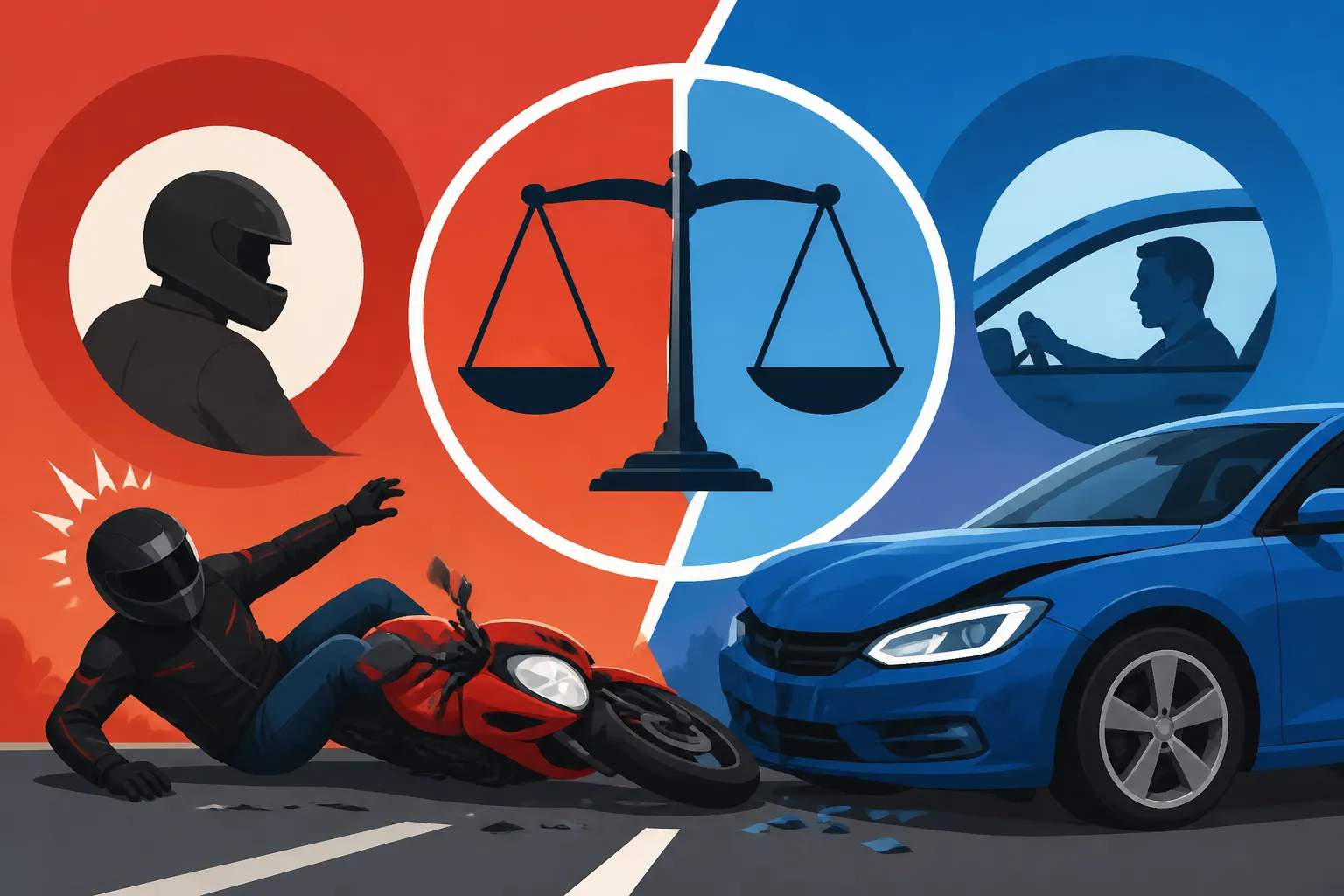
The 50% fault rule is one of two main thresholds used in modified comparative negligence states. In these states, if you are found to be 50% or more at fault for the motorcycle accident, you are legally barred from recovering any compensation. Zero. Zilch. It’s a complete bar to recovery. This is a very significant distinction that every rider needs to grasp.
The other common threshold is the "51% fault rule." In states using this rule, you can still recover damages if you are found to be up to 50% at fault. It's only if your fault reaches 51% or higher that you are barred from recovery. This single percentage point difference can be the deciding factor between receiving a substantial settlement and walking away with nothing, even if the other driver was also negligent.
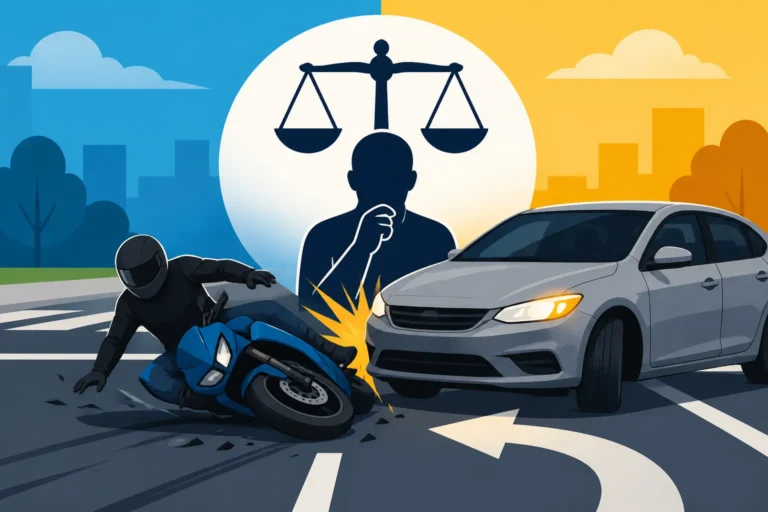
This distinction is not just legal jargon; it has real-world consequences. Imagine you're riding through Colorado, a state that follows the 50% rule, and a car unexpectedly cuts you off, causing a collision. If a jury determines you were 50% at fault (perhaps for slightly exceeding the speed limit, or not reacting quickly enough), you would receive nothing for your medical bills, lost wages, or pain and suffering. If that same accident happened in a state with a 51% rule, you would still be able to recover 50% of your damages. This stark difference underscores why knowing your state's specific laws is paramount when dealing with a motorcycle accident claim.
How the 50% Fault Rule Impacts Your Motorcycle Accident Claim
The 50% fault rule isn't just an abstract legal concept; it's a sword hanging over every motorcycle accident claim in the states that adopt it. Insurance companies, always looking to minimize payouts, will aggressively try to push your percentage of fault to that 50% mark or beyond. This isn't about fairness to them; it's about their bottom line.
Calculating Damages Under the 50% Rule
Let's walk through how this rule directly affects the monetary value of your claim. First, all your damages – medical expenses, lost wages, property damage, pain and suffering, and other non-economic damages – are tallied up to establish the total value of your claim. This initial calculation is crucial, but it’s only the beginning. For a deeper dive, consider reviewing How Comparative Negligence Reduces Your Payout.
Once the total damages are established, the next step is to determine the percentage of fault for each party involved. If you are found to be 25% at fault, your total damages will be reduced by 25%. So, if your total damages were $100,000, you would receive $75,000. This is pretty straightforward. However, if the determination of fault tips to 50% or higher in a "50% bar" state, you get nothing.
Here’s a practical table illustrating the impact of fault percentages under the 50% rule:
| Total Damages Claimed | Rider's Percentage of Fault | Driver's Percentage of Fault | Recoverable Damages (50% Rule) | Outcome |
|---|---|---|---|---|
| $100,000 | 10% | 90% | $90,000 | Recovery |
| $100,000 | 30% | 70% | $70,000 | Recovery |
| $100,000 | 40% | 60% | $60,000 | Recovery |
| $100,000 | 49% | 51% | $51,000 | Recovery |
| $100,000 | 50% | 50% | $0 | No Recovery |
| $100,000 | 60% | 40% | $0 | No Recovery |
As you can see, that 50% mark is an absolute cliff. Even if the other driver was substantially at fault, if your percentage hits that threshold, your claim evaporates. This is why disputing fault and understanding Who Is at Fault in a Motorcycle Accident is so vital from the very beginning.
Real-World Examples of Fault Assignment
Let’s consider a couple of real-world examples to illustrate how fault is assigned and what that 50% line truly means.
Scenario 1: The "Missed" Motorcycle
You're riding down a busy street in Ohio, a state with the 50% fault rule, within the speed limit. Suddenly, a car turns left directly in front of you without yielding, leading to a collision. The driver claims they "didn't see you." The police report notes the driver's failure to yield but also mentions that your motorcycle's headlight was flickering slightly, or perhaps you were in their blind spot for a moment.
The insurance company investigates and tries to argue that while the driver was clearly negligent, your flickering headlight contributed to you not being seen, assigning you 10% fault. Or perhaps, they argue you had a split second to react and could have swerved, assigning 20% fault. In these cases, your damages would be reduced, but you would still recover. However, if the insurance company successfully argues that your lane positioning or a minor traffic infraction on your part was equally contributing, pushing your fault to 50%, your entire claim would be denied. This is a common tactic by insurers when trying to minimize payouts.
Scenario 2: Shared Responsibility
Imagine you're lane splitting (where legal) in Georgia, another 50% fault rule state, and a car merges into your lane without looking, causing an accident. The car driver is clearly negligent. However, the investigation reveals you were exceeding the posted speed limit while lane splitting, which is a violation even in states where lane splitting is generally allowed.
The insurance adjusters might argue that while the driver's unsafe lane change was a primary cause, your speeding while lane splitting contributed significantly to the severity of the accident and your inability to react safely. They could argue your fault percentage is 50% or higher. For more on this, you might find information on Motorcycle Accidents Caused by Lane Splitting helpful. If their argument holds up in court or during negotiations, you could lose your entire settlement. This highlights why When a Rider Is Partially at Fault is a complex and often devastating aspect of a claim.
Proving Your Case and Overcoming the 50% Hurdle
Navigating a motorcycle accident claim in a 50% fault state is like walking a tightrope. Every piece of evidence, every witness statement, and every detail can be crucial in shifting the balance of fault. The goal is always to demonstrate that the other party was primarily responsible, keeping your fault percentage below that critical 50% threshold.
Gathering Evidence to Minimize Your Fault
Right after an accident, what you do (or don't do) can profoundly impact your ability to prove the other driver's fault and minimize your own. The moments immediately following a crash are chaotic, but they are also golden opportunities for evidence collection. First and foremost, always prioritize your safety and seek medical attention, but once that's handled, turn your attention to gathering facts.
Take copious photographs and videos of the accident scene from multiple angles. Document the position of the vehicles, road conditions, traffic signs, skid marks, and any visible injuries. If you were wearing a helmet, take photos of it, especially if it's damaged. This can counter the "helmet defense" often used by insurers. Get contact information from witnesses, as their unbiased accounts can be invaluable. Even if you think you might be partly to blame, never admit fault at the scene. This can be used against you later by the insurance companies. For a comprehensive checklist, refer to Motorcycle Accident Evidence for Proving Fault.
Beyond the immediate aftermath, maintaining detailed records of your medical treatment, appointments, and how your injuries affect your daily life is vital. These records are not just for calculating damages; they also contribute to the narrative of the accident and the impact it had on you. Anything that can demonstrate the severity of the other driver's actions or minimize any perceived negligence on your part is a powerful tool.
The Importance of Legal Representation
In a 50% fault state, trying to handle a motorcycle accident claim on your own is incredibly risky. Insurance companies have vast resources and experienced adjusters whose primary job is to protect the company's profits by denying or minimizing payouts. They are experts at finding ways to assign fault to the rider, knowing that if they can get you to 50%, they owe nothing. This is particularly true given the inherent biases many people, including jurors and sometimes even adjusters, hold against motorcyclists.
A seasoned motorcycle accident lawyer understands How Insurance Companies Assign Blame to Riders and can effectively counter these tactics. They will investigate the accident thoroughly, often hiring accident reconstruction experts if necessary, to piece together what truly happened and prove the other driver's negligence. They know how to collect the right evidence, interview witnesses, and present a compelling case that minimizes any perceived fault on your part. For instance, they might be able to use traffic camera footage, black box data from vehicles, or even expert testimony to demonstrate that the other driver's actions were the overwhelming cause of the crash.
Furthermore, a lawyer can negotiate with the insurance company on your behalf, preventing you from inadvertently saying or doing something that could harm your claim. They understand the intricacies of How Fault Is Determined in Motorcycle Accidents and can artfully argue your case to keep your fault percentage below that critical 50% mark, ensuring you get the compensation you deserve. If you're wondering Do You Need a Motorcycle Accident Lawyer, in a 50% fault state, the answer is almost always a resounding yes. They are your best defense against unfair fault assignment and the potential complete loss of your rightful compensation.
States That Apply the 50% Fault Rule
It's absolutely essential for any motorcycle rider to know the specific fault laws of the state they're riding in, especially if they travel across state lines. The legal landscape for accident claims varies significantly, and what might be a recoverable accident in one state could result in zero compensation in another.
Key Differences in State Laws
While the general concept of the "50% fault rule" is straightforward (50% or more fault means no recovery), the exact wording and application can have subtle differences. It's often referred to as "modified comparative negligence, 50% bar."
States that typically follow a form of the 50% comparative fault rule include:
- Colorado
- Georgia
- Kansas
- Maine
- Nebraska
- North Carolina
- Ohio
- South Carolina
- Tennessee
- West Virginia
It's important to remember that laws can change, and interpretations can vary based on specific court decisions. Always consult with a legal professional familiar with the laws in the specific state where your accident occurred. This list is not exhaustive and serves as a general guide. Knowing the specific fault laws in your state, such as Motorcycle Accident Fault Laws in Ohio or Motorcycle Accident Fault Laws in North Carolina, empowers you to make informed decisions.
Practical Implications for Riders in These States
For riders in states with the 50% fault rule, every action on the road carries increased weight. If you're involved in an accident, the burden of proof to demonstrate the other driver's fault and minimize your own becomes even more critical.
The implications are clear:
- Vigilance is Key: Always adhere strictly to traffic laws, maintain proper lane position, and ensure your motorcycle's equipment (lights, brakes, tires) is in perfect working order. Any minor infraction could be used by the defense to push your fault percentage higher.
- Documentation is Paramount: From the moment of a crash, document everything. Take photos, gather witness statements, and ensure medical records are comprehensive. The more evidence you have to support your version of events and minimize your contribution to the crash, the better. Consider reviewing What to Do Immediately After a Motorcycle Accident for a step-by-step guide.
- Expert Legal Counsel: Engaging a lawyer experienced in motorcycle accidents in your specific state is almost non-negotiable. They understand the local legal landscape, the courts, and how to effectively combat insurance company tactics designed to shift blame. They can help you How to Fight an Unfair Fault Assignment and protect your right to compensation. Without strong legal advocacy, you risk falling into the 50% fault trap and losing everything.
Ultimately, the 50% fault rule is a tough reality for motorcyclists in many parts of the country. It demands a proactive and meticulous approach to both riding safely and, unfortunately, to protecting your rights if an accident occurs.
Disclaimer
Please remember that this article provides general information and insights into the 50% fault rule in motorcycle accident claims. It is not legal advice. Laws vary significantly by state and specific circumstances. If you have been involved in a motorcycle accident, it is crucial to consult with a qualified personal injury attorney in your jurisdiction to discuss your specific situation and understand your legal rights and options.