How the 51% Fault Rule Works
Riding a motorcycle offers unparalleled freedom, but it also means facing unique challenges, especially after an accident. One of the most confusing and frustrating aspects for riders is understanding how fault is assigned, and more importantly, how that assignment impacts your ability to recover damages. This guide will meticulously break down the "51% fault rule," a common legal principle that can make or break your motorcycle accident claim.
Understanding the Basics of the 51% Fault Rule
When you're involved in a motorcycle accident, one of the first questions that arises is "who is at fault?" The answer isn't always black and white, and the legal system has various ways of handling situations where both parties might share some responsibility. The 51% fault rule, often referred to as a form of "modified comparative negligence," is one such system that can significantly influence your claim. It's crucial for any rider to grasp this concept because it directly affects your financial recovery.
What is Modified Comparative Negligence with a 51% Bar?
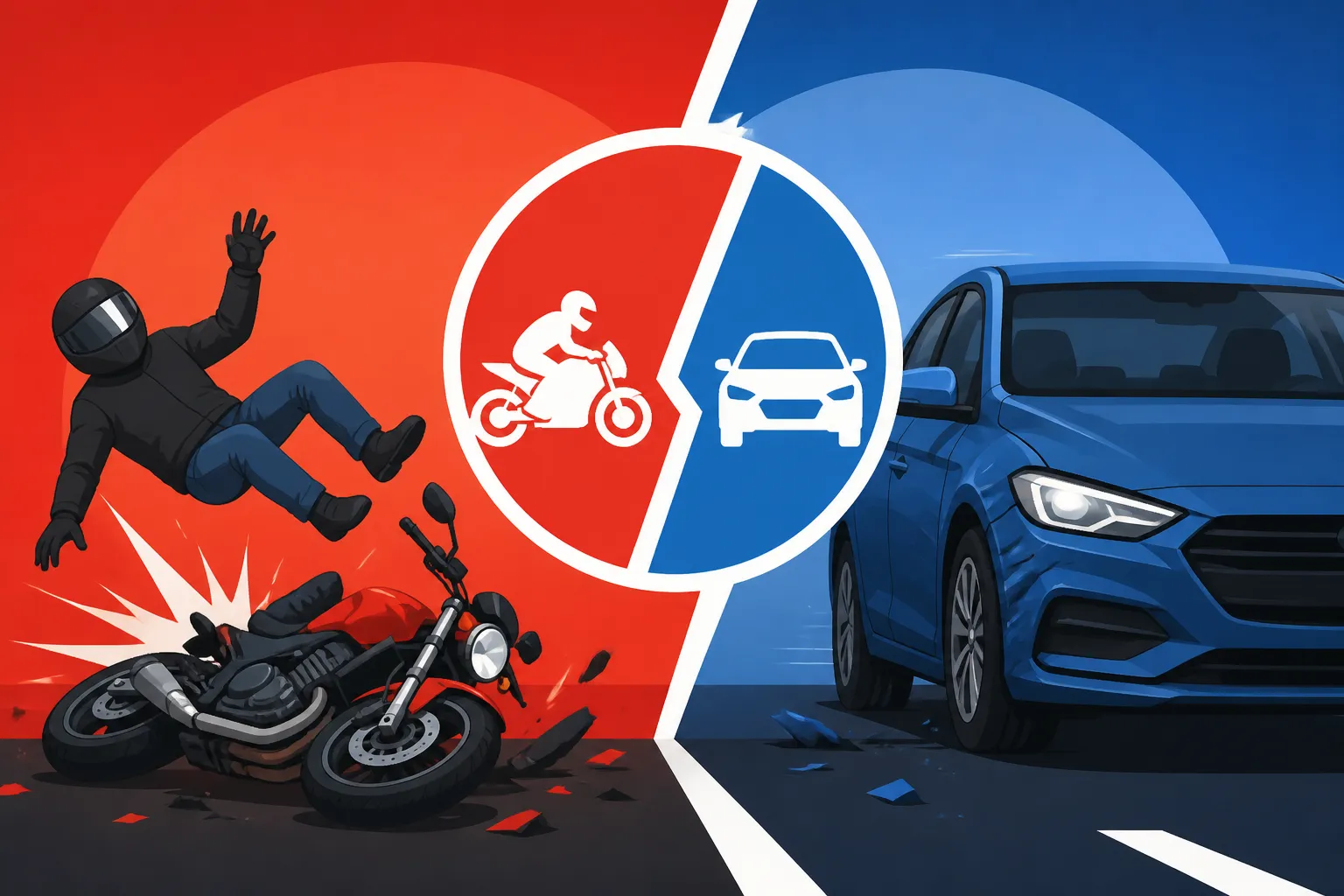
Modified comparative negligence with a 51% bar means that you can only recover damages if your share of fault for the accident is 50% or less. If a court or insurance adjuster determines that you are 51% or more responsible for the crash, you are completely barred from recovering any compensation from the other party. Think of it as a critical threshold: cross 50% fault, and your claim is essentially extinguished. This system is designed to allow some recovery even if you bear a portion of the blame, but it draws a very firm line in the sand. For example, if you were T-boned by a car making an illegal left turn, but you were also found to be speeding slightly, your compensation might be reduced. However, if that slight speeding pushed your fault past 50% in the eyes of the law, you'd get nothing. This is why understanding "Who Is at Fault in a Motorcycle Accident" is so vital from the outset.
Consider a hypothetical scenario in a state like Ohio, which uses the 51% rule. You're riding your Harley-Davidson down a busy street when a driver in a Toyota Camry suddenly swerves into your lane without signaling. You react quickly, but still clip their rear bumper, causing you to lay down your bike and suffer some pretty severe road rash. During the investigation, it's discovered that you were technically riding 5 mph over the speed limit. The insurance company for the Camry driver might argue that your speeding contributed to the accident, claiming you could have avoided it if you were going slower. If a jury ultimately decides you were 40% at fault, you could still recover 60% of your damages. But if they push that number to 51%, suddenly, your entire claim for medical bills, lost wages, and pain and suffering vanishes into thin air.
How It Differs from Other Fault Systems
The 51% fault rule sits squarely between two other major systems: pure comparative negligence and contributory negligence. Each system approaches shared fault differently, and these differences can dramatically alter a rider's outcome after a crash.
- Pure Comparative Negligence: In states that follow pure comparative negligence, like California or Florida, you can recover damages even if you are mostly at fault. Your compensation is simply reduced by your percentage of fault. For instance, if you were 80% at fault for an accident, you could still recover 20% of your damages. There is no bar to recovery, no matter how high your fault percentage, as long as someone else also contributed. This provides a much wider window for recovery, which is a significant advantage for motorcyclists who often face a bias in fault assessment. This system is often discussed in the context of "Comparative Negligence in Motorcycle Accidents".
- Contributory Negligence: This is the harshest system, adopted by only a handful of states, such as Alabama, Maryland, North Carolina, and Virginia, along with Washington D.C. Under contributory negligence, if you are found even 1% at fault for an accident, you are completely barred from recovering any damages. It's an all-or-nothing approach that leaves no room for shared responsibility. Imagine being hit by a clearly distracted driver, but a court finds you were briefly glancing at your GPS. If that slight distraction leads to a 1% fault assessment against you, your claim is gone. This system is particularly unforgiving for motorcyclists, who are often unfairly scrutinized.
- Modified Comparative Negligence (51% Rule vs. 50% Rule): The 51% fault rule is a variation of modified comparative negligence. There's also the "50% fault rule," which is subtly different. Under the 50% rule, you can only recover if your fault is less than the other party's, meaning if you are 50% at fault, you get nothing. So, in a 50% rule state, if you and the other driver are both found to be 50% at fault, neither party can recover from the other. With the 51% rule, however, if you are 50% at fault, you can still recover 50% of your damages. This difference, though small, is critically important for riders whose fault might be teetering on that halfway mark. Understanding the nuances of "Pure vs Modified Comparative Negligence" can greatly empower you.
How the 51% Rule Impacts Motorcycle Accident Claims
The 51% fault rule has profound implications for how motorcycle accident claims are handled, negotiated, and ultimately resolved. It introduces a high-stakes scenario where even a small percentage point can dictate whether you receive substantial compensation or nothing at all. This makes every piece of evidence, every witness statement, and every expert opinion critically important in states that adhere to this rule.
The Threshold for Recovery: What 51% Really Means
As we discussed, the 51% fault rule establishes a clear boundary: if your fault is determined to be 50% or less, you can recover damages, reduced by your percentage of fault. If your fault is 51% or more, you are completely barred from recovering anything. This isn't just a theoretical point; it's a practical reality that shapes every decision in your claim. Imagine a common scenario: a car driver turns left in front of you, causing a collision. This is a frequent type of motorcycle accident, and often the car driver is primarily at fault. However, if the insurance company for the driver can successfully argue that you were, for example, accelerating too quickly or riding without your headlight on during dusk, they might try to push your fault percentage past that 50% mark.
Let's say a jury in a 51% fault state like Michigan finds the car driver 60% at fault and you, the motorcyclist, 40% at fault. In this situation, you would be able to recover 60% of your total damages. This means if your medical bills, lost wages, and pain and suffering amounted to $100,000, you would receive $60,000. This is still a significant recovery, and it acknowledges the other driver's primary negligence. However, if that same jury were to decide you were 51% at fault, perhaps due to strong arguments about your speed or an alleged illegal maneuver, you would walk away with nothing. The entire $100,000 in damages would be unrecoverable from the at-fault driver's insurance. This stark difference highlights why proving fault in a motorcycle accident is such a critical undertaking. The negotiation with insurance companies will heavily revolve around these fault percentages, with their adjusters often trying to inflate your perceived blame.
The "Rider Bias" Factor and Fault Assignment
Unfortunately, motorcyclists often face a subtle but pervasive bias when fault is being determined after an accident. There's a common, albeit unfair, perception that motorcyclists are inherently risk-takers or that they somehow "ask for trouble" by riding. This prejudice can creep into the minds of police officers writing accident reports, insurance adjusters evaluating claims, and even jurors. This "rider bias" can be particularly damaging in 51% fault states. If an insurance company can leverage this bias to push your perceived fault just a few percentage points higher, they can avoid paying out your claim entirely. It's an insidious tactic that riders need to be acutely aware of.
For instance, consider an accident in Texas (a 51% modified comparative negligence state) where a truck driver changes lanes without looking, colliding with your motorcycle. While the truck driver's negligence seems clear, the insurance company might try to argue that you were in their blind spot, suggesting you should have anticipated their movement, or perhaps that you were riding too close to their vehicle. They might even bring up stereotypes about motorcyclists' driving habits, subtly influencing the fault assessment. This is where "How Insurance Companies Assign Blame to Riders" becomes a crucial read. They might even try to suggest you were lane splitting, even if it wasn't the case, just to introduce doubt. This subtle manipulation of fault can push a rider's percentage from, say, 45% (where they can still recover 55% of damages) to 51% (where they get nothing). This makes meticulous evidence collection and strong advocacy absolutely essential for motorcyclists in these states.
Practical Implications for Riders in 51% Fault States
Navigating a motorcycle accident claim in a state with the 51% fault rule requires a strategic approach from the very moment an incident occurs. Every action you take, and every piece of information gathered, can become vital evidence that either supports your claim or pushes you over that dangerous 50% fault threshold. Being prepared and understanding what's at stake is your best defense.
Documenting Evidence to Minimize Your Perceived Fault
In a 51% fault state, minimizing your perceived contribution to the accident is paramount. This starts immediately at the scene of the crash. Memories fade, evidence gets compromised, and critical details can be lost if not secured promptly. The burden of proof often falls heavily on the injured party to demonstrate the other driver's negligence and their own minimal fault.
Here’s a breakdown of essential documentation:
- Photographs and Videos: Use your smartphone to take extensive photos and videos of the accident scene. Capture vehicle positions, damage to both vehicles (especially your motorcycle, which can often be completely totaled), skid marks, road conditions, traffic signals, street signs, and any debris. Get wide shots to show the overall scene and close-ups of specific damage or hazards. Documenting your injuries is also crucial; photos of road rash, bruising, or other visible trauma provide undeniable proof. These visual records are incredibly powerful in disproving claims that you were more at fault. Remember to include your gear, especially your helmet, as "How to Document the Scene to Prove Fault" is often overlooked in the chaos.
- Witness Information: Obtain contact details from anyone who saw the accident. Independent witnesses can corroborate your version of events and counter biased statements from the other driver or their insurance company. A neutral third party's account can often be the deciding factor when fault is disputed.
- Police Report: While not always definitive, a police report can provide an official account of the accident, including initial fault assessments, diagrams, and citations issued. It's a key piece of evidence, but remember that "How a Police Report Can Hurt Your Claim" if it inaccurately assigns fault, so it's important to review it carefully.
- Medical Records: Seek immediate medical attention, even if you feel fine. Some injuries, especially those like concussions or internal bruising, may not manifest symptoms right away. Comprehensive medical records link your injuries directly to the accident and demonstrate the severity of your physical damages. Gaps in treatment can be used by insurance companies to argue your injuries weren't serious or weren't caused by the crash.
- Traffic Laws and Regulations: Understanding the specific traffic laws in your state, particularly those related to motorcycles, can help you demonstrate compliance. For example, if you were in a lane-splitting accident, knowing your state's laws (e.g., California allows it, most other states do not) is essential for "Lane Splitting Legality and Fault by State".
By diligently collecting and preserving this evidence, you build a robust case that directly challenges attempts by the other party's insurance company to push your fault beyond that crucial 50% threshold.
States That Adhere to the 51% Rule
It's absolutely vital for riders to know the specific fault laws of the state where their accident occurred, as well as any states they regularly ride through. The 51% fault rule is prevalent across many parts of the U.S. and is often referred to as "modified comparative negligence with a 51% bar."
Here's a table listing some of the states that generally follow the 51% comparative negligence rule:
| State | Comparative Negligence Rule | Details |
|---|---|---|
| Arizona | 51% Rule | If a plaintiff is 51% or more at fault, they cannot recover damages. Otherwise, damages are reduced by their percentage of fault. |
| Colorado | 51% Rule | Known as "modified comparative fault." A plaintiff cannot recover if their fault is equal to or greater than the defendant's (50% or more). |
| Georgia | 51% Rule | Plaintiff's fault must be less than 50% to recover. |
| Illinois | 51% Rule | Damages reduced by plaintiff's fault, but no recovery if plaintiff's fault is 51% or more. |
| Indiana | 51% Rule | Plaintiff cannot recover if their fault is greater than 50%. |
| Michigan | 51% Rule | Similar to other 51% states, but has a "no-fault" system for certain injury claims, which can complicate motorcycle accidents. |
| Ohio | 51% Rule | A claimant's recovery is barred if their comparative negligence is greater than the combined negligence of all defendants. |
| Oregon | 51% Rule | The plaintiff's fault must not be greater than the combined fault of the defendants. |
| Pennsylvania | 51% Rule | Plaintiff cannot recover if their fault is greater than 50%. |
| Texas | 51% Rule | Known as "proportionate responsibility." If a claimant is more than 50% responsible, they recover nothing. |
| Wisconsin | 51% Rule | Plaintiff's fault must be less than 51% to recover. |
This table is not exhaustive, and state laws can change, so always verify the current regulations for the specific state where your accident occurred. Knowing this rule fundamentally affects how you approach your claim. For example, if you're riding from California (pure comparative negligence) into Arizona (51% rule) and get into an accident, the laws of Arizona would apply, and your potential for recovery could be drastically different. This knowledge is not just academic; it's a practical necessity for every rider.
Strategies for Navigating a Claim Under the 51% Rule
When you're dealing with the aftermath of a motorcycle accident in a 51% fault state, the stakes are incredibly high. The difference between 50% and 51% fault can mean tens or hundreds of thousands of dollars in medical bills, lost income, and pain and suffering. This isn't a situation to tackle lightly or on your own. Strategic planning and expert guidance become indispensable tools to protect your rights and maximize your chances of recovery.
The Importance of a Thorough Investigation
In a system where a single percentage point can wipe out your entire claim, a superficial investigation simply won't cut it. You need a deep dive into every aspect of the accident to gather ironclad evidence that supports your narrative and minimizes any perceived fault on your part. This often goes far beyond what a police report might capture.
A thorough investigation should include:
- Accident Reconstruction: For serious accidents, an "How Accident Reconstruction Determines Fault" expert can be invaluable. These professionals use scientific principles, physics, and sometimes even 3D modeling to recreate the accident scene, analyze vehicle speeds, angles of impact, braking distances, and more. Their objective findings can be critical in countering biased accounts or vague police reports, providing a clear picture of what truly happened and who was responsible.
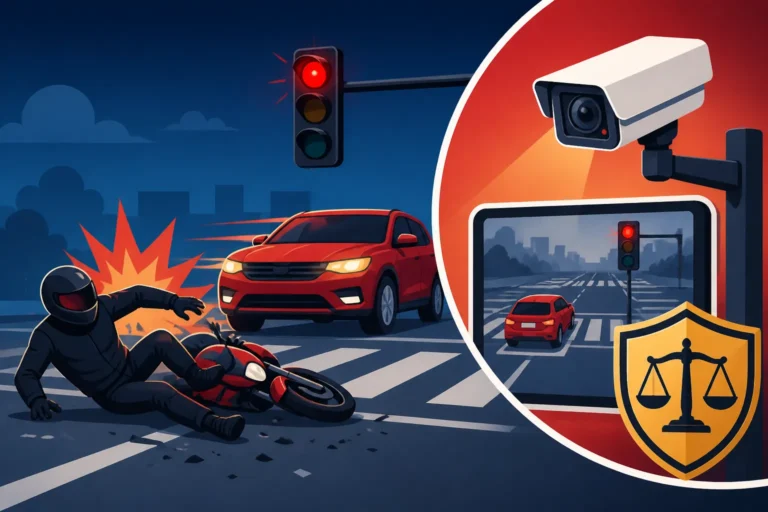
- Traffic Camera Footage: Many intersections and commercial areas have surveillance cameras. Footage from these cameras can provide irrefutable evidence of how the accident unfolded, confirming traffic light status, driver actions, and your movements. This is often far more reliable than witness testimony, which can be flawed.
- Vehicle Data Recorders (Black Boxes): Modern cars often contain "black box" event data recorders (EDRs) that record information like speed, braking, and steering inputs in the moments leading up to a crash. Accessing this data can provide objective proof of the other driver's actions.
- Expert Witnesses: Beyond accident reconstructionists, you might need experts in areas like medical illustration to demonstrate the severity of your injuries, or vocational experts to detail your lost earning capacity. Each expert adds weight and credibility to your claim, especially when facing a skeptical insurance company.
- Digging Deep for Details: This means looking into the other driver's cell phone records if distracted driving is suspected, obtaining maintenance records for their vehicle if mechanical failure is a factor, or checking their driving history for similar incidents. Every detail, no matter how small, can contribute to building a stronger case against the other party and reducing your attributed fault.
Remember, the goal is to leave no stone unturned, creating an undeniable narrative that positions the fault clearly on the negligent party and keeps your percentage below that critical 51% threshold.
Negotiation Tactics and Settlement Expectations
Negotiating with insurance companies in 51% fault states is a delicate dance, as their primary objective is to pay out as little as possible, and they will absolutely use the fault rule to their advantage. They know that if they can convince you, a jury, or a judge that your fault is 51% or higher, they owe you nothing.
- Be Prepared for Lowball Offers: Insurance adjusters will often start with a low settlement offer, usually accompanied by an exaggerated assessment of your fault. They might cite minor traffic infractions, alleged unsafe riding behaviors, or even general "rider bias" to justify their position. It's crucial not to take their initial assessment at face value or to admit any fault. Remember "Why You Should Never Admit Fault at the Scene".
- Strong Documentation is Your Leverage: Your meticulously collected evidence, witness statements, accident reconstruction reports, and medical records are your greatest assets. Each piece of evidence helps refute the insurance company's attempts to shift blame to you. Presenting a comprehensive demand package that clearly outlines the other driver's negligence and your damages, backed by solid proof, is essential for "How to Negotiate a Motorcycle Accident Settlement".
- Understanding "How Comparative Negligence Reduces Your Payout": Even if your fault is below 51%, it will still reduce your total compensation. If your total damages are $200,000 and you are found 30% at fault, your maximum recovery will be $140,000. Knowing these calculations beforehand helps set realistic expectations and prevents you from accepting an unfair offer.
- The Role of a Skilled Attorney: This cannot be stressed enough. A motorcycle accident attorney who is intimately familiar with the specific fault laws of your state and has a track record of handling motorcycle claims is invaluable. They understand the nuances of the 51% rule, know how to counter insurance company tactics, and can effectively present your case. They can push back against unfair fault assignments, negotiate aggressively on your behalf, and, if necessary, take your case to court. Without skilled legal representation, you are at a severe disadvantage, risking losing your entire claim due to a slight miscalculation of fault. They can also advise you on "When a Rider Is Partially at Fault" and what that means for your specific case.
Navigating a motorcycle accident claim in a 51% fault state is a challenging journey, but with careful preparation, thorough investigation, and expert legal guidance, you can fight to ensure you receive the compensation you deserve.
Disclaimer
Please remember that this article provides general information and should not be considered legal advice. Motorcycle accident laws, including fault rules, are complex and vary by state. It is always recommended to consult with a qualified motorcycle accident attorney in your specific jurisdiction to discuss the details of your case.