Motorcycle Accident Fault Laws in Kentucky
Riding a motorcycle in the Bluegrass State is an experience like no other – the winding roads, the scenic beauty, it's pure freedom. But when that freedom is suddenly ripped away by an accident, the aftermath can be incredibly confusing and stressful. One of the biggest hurdles riders face is figuring out who is actually at fault and how Kentucky's unique laws will impact their ability to recover from the often-devastating injuries and damages. This guide is here to shed light on Kentucky's motorcycle accident fault laws, giving you a clear understanding of what you're up against and how to protect your rights.
Understanding Kentucky's Fault System for Motorcycle Accidents
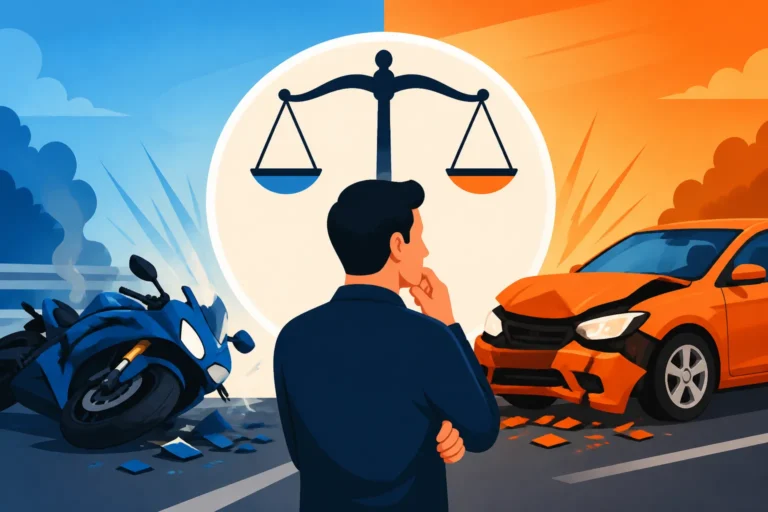
Dealing with the aftermath of a motorcycle crash is tough enough without trying to decipher complex legal terms. In Kentucky, we operate under a specific type of fault system that's crucial to understand: pure comparative negligence. This isn't just a fancy legal phrase; it directly impacts how much compensation you can receive if you're injured in a motorcycle accident.
Pure Comparative Negligence in the Bluegrass State
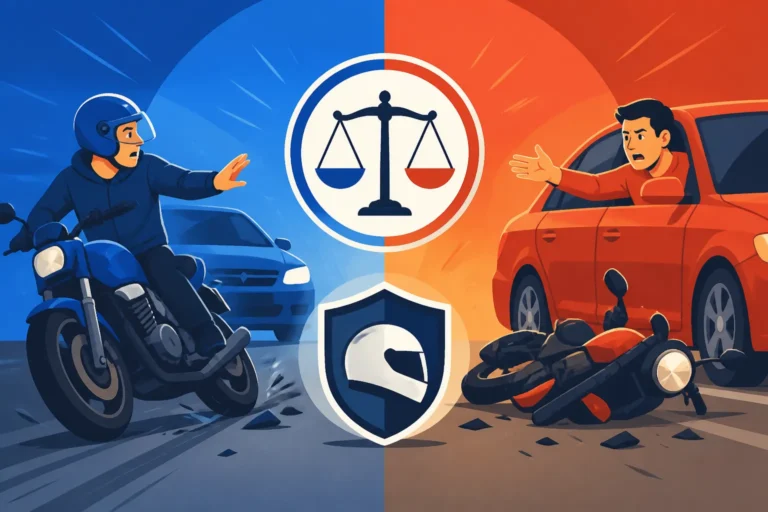
Unlike some states that have strict "50% bar" rules, where you can't recover anything if you're found to be 50% or more at fault, Kentucky takes a different approach. Our state follows the principle of pure comparative negligence. What this means for you, the rider, is that even if you are found to be partially at fault for an accident, you can still recover damages from the other party. However, your total compensation will be reduced by the percentage of fault assigned to you.
Let's say you're cruising down I-64 near Louisville, and a driver suddenly pulls out from a side street, causing a collision. Initially, it seems clear they're at fault for failing to yield. But then, an investigation reveals you were traveling 10 mph over the speed limit. Under pure comparative negligence, a jury might determine the other driver was 80% at fault for the accident, but you were 20% at fault due to your speed. If your total damages (medical bills, lost wages, pain and suffering) are calculated at $100,000, your recovery would be reduced by 20%, meaning you would receive $80,000. It's a system designed to ensure everyone bears responsibility for their contribution to a crash, but it can feel incredibly unfair if you're the one dealing with severe injuries. This concept is vital to grasp when considering Comparative Negligence in Motorcycle Accidents.
How Fault is Assessed in Kentucky
Determining who is truly at fault in a motorcycle accident is rarely straightforward, and it's certainly not a quick process. In Kentucky, fault assessment involves a meticulous review of all available evidence to reconstruct the events leading up to the crash. This process often starts with the police report, which provides an initial assessment from law enforcement at the scene. While not always the final word, a police report can significantly influence initial perceptions of fault and is an important piece of Motorcycle Accident Evidence for Proving Fault.
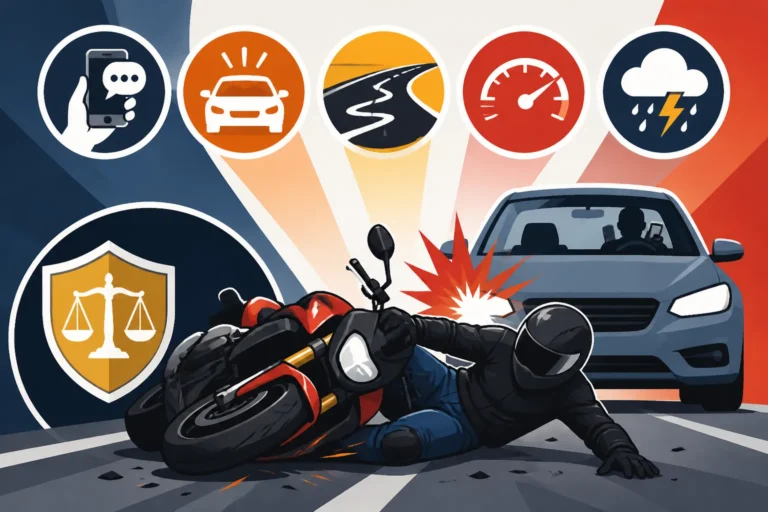
Investigators will look at several factors. These include traffic violations committed by any party, such as speeding, running a red light, or illegal turns. Witness statements are invaluable, as are photographs and videos from the scene, which can capture vehicle positions, road conditions, and the extent of damage. Even seemingly minor details, like skid marks or debris patterns, can tell a story. For example, if you were involved in a crash because another driver was on their phone, proving Motorcycle Accidents Caused by Distracted Driving can be key to establishing their fault. Each piece of evidence helps to build a comprehensive picture, allowing attorneys, insurance adjusters, and potentially a jury to assign percentages of fault to each party involved. This careful assessment is how How Fault Is Determined in Motorcycle Accidents ultimately affects your case.
Common Scenarios and How Kentucky Law Applies
As a rider, you're constantly aware of the risks on the road, often due to other drivers not seeing you. Kentucky law attempts to address these scenarios, but the application of fault can still be a challenging uphill battle, especially when unique riding practices are involved.
Left-Turn Collisions and Driver Liability
One of the most terrifying and sadly common scenarios for motorcyclists is a left-turn collision. You're riding straight, minding your own business, and suddenly, a car from the opposite direction makes a left turn directly into your path. This kind of accident is devastating and often leads to severe injuries for the motorcyclist. In Kentucky, as in most states, the driver making a left turn is typically found to be primarily at fault in these situations. This is because drivers making left turns have a legal duty to yield to oncoming traffic, including motorcycles, unless they can safely complete the turn.
However, even in such clear-cut cases, insurance companies might try to assign some percentage of fault to the motorcyclist. They might argue you were speeding, that your headlight wasn't on, or that you could have taken evasive action. For example, if a car turns left in front of you on a busy street in Lexington, causing you to lay down your bike to avoid a direct impact, the other driver is likely responsible. Yet, their insurance might point to a cracked taillight on your bike as a reason for partial fault. This is why it's crucial to understand Who Is at Fault in a Left-Turn Collisions Motorcycle Accident and how to effectively prove the other driver's negligence. Understanding Left-Turn Motorcycle Accidents Explained can truly make a difference in your claim.
Lane Splitting and Fault in Kentucky
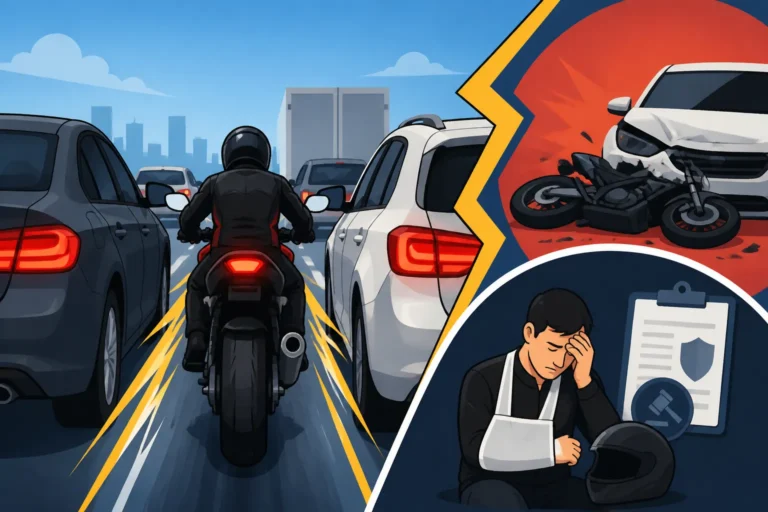
Lane splitting is a practice where a motorcyclist rides between lanes of slow or stopped traffic. While it's common and even legal in some states, like California, it's generally illegal in Kentucky. This means that if you're involved in an accident while lane splitting, even if another driver makes an egregious error, your actions could significantly impact the assignment of fault and, consequently, your compensation.
Imagine you're lane splitting on a congested stretch of the I-75 in Florence, and a car suddenly swerves into your path without signaling. While the car driver clearly committed an unsafe lane change, your act of lane splitting, which is illegal in Kentucky, could be cited by the insurance company as contributory negligence. The jury might still find the car driver mostly at fault, perhaps 60-70%, but you could easily be assigned 30-40% of the blame simply for being engaged in an illegal maneuver. This percentage would then reduce your overall settlement. This is a critical point to consider because even if another driver caused the crash, your engagement in an illegal activity can be used against you. The nuances of Lane Splitting and Motorcycle Accident Liability are complex, and it’s a topic many riders have questions about.
The Impact of Fault on Your Motorcycle Accident Claim in Kentucky
Once fault is determined, it's not just a matter of who points the finger at whom; it has a very real, tangible impact on your ability to recover financially. This is where Kentucky's pure comparative negligence system really comes into play, affecting the bottom line of your settlement.
How Damages are Reduced by Your Share of Fault
Under Kentucky's pure comparative negligence rules, the amount of compensation you can receive for your injuries and damages is directly tied to your assigned percentage of fault. Simply put, if you are found to be 25% responsible for the accident, your total awarded damages will be reduced by 25%. This isn't just theoretical; it's a practical calculation that impacts every dollar you might receive.
For example, let's consider a scenario where you've sustained significant injuries, including a broken leg and extensive road rash, leading to $75,000 in medical bills, lost wages, and pain and suffering. If the other driver is deemed 100% at fault, you would be eligible for the full $75,000. However, if an investigation or jury finds you 20% at fault, perhaps for not having a working turn signal or riding slightly too fast for conditions, your $75,000 in damages would be reduced by 20% ($15,000), leaving you with a maximum recovery of $60,000. This system can be incredibly frustrating for riders, as even a small percentage of fault can significantly diminish your much-needed compensation. Knowing How Comparative Negligence Reduces Your Payout is essential for managing your expectations.
Here's a simplified table illustrating how fault percentages can reduce a hypothetical $100,000 total damage claim in Kentucky:
| Rider's Percentage of Fault | Other Driver's Percentage of Fault | Recoverable Damages from Other Driver (Hypothetical $100,000 Claim) |
|---|---|---|
| 0% | 100% | $100,000 |
| 10% | 90% | $90,000 |
| 25% | 75% | $75,000 |
| 50% | 50% | $50,000 |
| 75% | 25% | $25,000 |
| 90% | 10% | $10,000 |
The Role of Insurance Companies in Fault Determination
It's no secret that insurance companies are in the business of making money, and one way they do that is by minimizing payouts on claims. After a motorcycle accident in Kentucky, expect the other driver's insurance company to conduct its own investigation with the primary goal of assigning as much fault as possible to you, the motorcyclist. They know that even a small percentage of fault can significantly reduce what they owe.
Insurance adjusters often start with an inherent bias against motorcyclists, playing into stereotypes that riders are inherently reckless or prone to dangerous behavior. They might seize on any minor detail, like an aftermarket exhaust or the lack of specific protective gear (even if not legally required), to imply you contributed to your injuries or the accident itself. They might even try to use a slightly inaccurate police report or an ambiguous witness statement to bolster their argument. This is a common tactic, and it's why understanding How Insurance Companies Assign Blame to Riders is so important. They might offer a quick, lowball settlement hoping you'll accept before fully understanding your rights or the true value of your claim. It’s a harsh reality, but being aware of these tactics is the first step in combating them and knowing when it's time to How to Fight an Unfair Fault Assignment.
Protecting Your Rights and Proving Fault in Kentucky
After a motorcycle accident, you're likely shaken, possibly injured, and trying to make sense of what just happened. Taking the right steps immediately after the crash and understanding how to build your case can significantly impact your ability to prove fault and recover the compensation you deserve under Kentucky law.
Evidence Collection for Your Claim
The moments immediately following a motorcycle accident are critical for gathering evidence that can prove fault. While your first priority is always your safety and seeking medical attention, if you are able, documenting the scene is paramount. This isn't just about taking a few casual snapshots; it's about meticulously collecting details that an insurance adjuster or jury will later review. Take photos and videos from multiple angles, showing the position of all vehicles involved, road conditions, traffic signs, skid marks, and any debris. Capture close-ups of damage to your bike and the other vehicle, and don't forget to photograph your injuries and any damaged gear like your helmet or jacket.
Collect contact information from any witnesses, even if they only saw a small part of the incident. Their unbiased accounts can be invaluable. If a police report is filed, ensure you get a copy. Remember to continue documenting your injuries and recovery process, including all medical appointments, treatments, and how your injuries affect your daily life. Keep records of all medical bills, receipts for expenses related to the accident, and documentation of lost wages. This diligent record-keeping forms the backbone of your claim and helps establish Motorcycle Accident Evidence for Proving Fault. It's a lot to manage, but these details are what ultimately make or break your case. In the chaos, remembering What to Do Immediately After a Motorcycle Accident can be challenging, but these steps are vital.
When Legal Guidance Becomes Essential
While some minor fender benders might be manageable on your own, a motorcycle accident rarely falls into that category, especially when injuries are involved. Kentucky's pure comparative negligence system, combined with the inherent bias many insurance companies have against riders, makes navigating a claim incredibly complex. If you've suffered anything more than minor scrapes, have substantial property damage, or if fault is being disputed, seeking legal guidance becomes not just helpful, but truly essential.
An experienced motorcycle accident lawyer in Kentucky understands the nuances of state law, knows how to counter insurance company tactics, and can properly value your claim to include all economic and non-economic damages. They can gather crucial evidence, interview witnesses, work with accident reconstructionists if necessary, and negotiate on your behalf. More importantly, they protect your rights and ensure you don't inadvertently say or do something that could jeopardize your case. They also know the strict deadlines for filing a lawsuit, known as the Statute of Limitations for Motorcycle Claims in Kentucky, which is generally two years from the date of the accident for personal injury claims. Missing this deadline means losing your right to sue, so timely action is critical. Deciding Do You Need a Motorcycle Accident Lawyer can be one of the most important decisions you make after a crash.
Disclaimer
Please remember that this article provides general information and is not a substitute for legal advice. Laws can change, and every accident case is unique. For specific guidance regarding your motorcycle accident claim in Kentucky, it is highly recommended to consult with a qualified legal professional in your state.