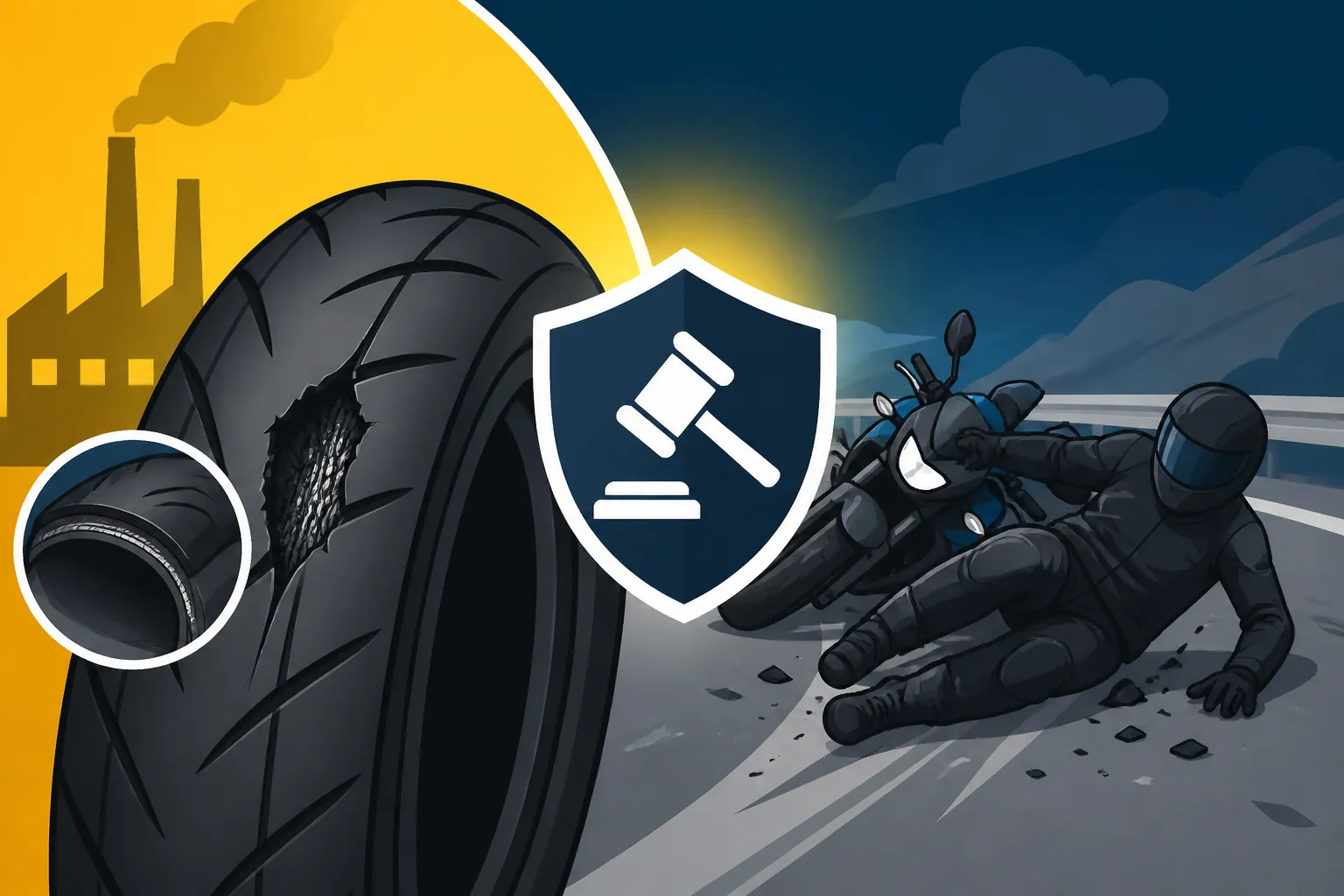
Manufacturer Fault for Tire Defects
There's a special kind of frustration that hits you when you realize your motorcycle accident might not have been due to another driver's carelessness or even your own momentary lapse, but something completely out of your control: a defective tire. It’s a gut-wrenching feeling, knowing that a part you trusted, designed to keep you safe, failed catastrophically. This guide is here to walk you through the complex landscape of understanding and pursuing a claim when a faulty tire from the manufacturer is the root cause of your motorcycle crash.
Understanding Tire Defects and Their Dangers
When you're out on the open road, the tires are your only connection to the pavement. They're critical components that dictate handling, stability, and ultimately, your safety. The idea that a tire could be inherently flawed from its creation is unsettling, but it's a reality that can lead to devastating motorcycle accidents.
Common Types of Tire Defects
Not all tire problems are due to wear and tear or road hazards. Many stem from issues during the manufacturing process itself. These defects can be insidious, often hidden until they manifest catastrophically on the road.
One of the most frequently cited and dangerous defects is tread separation. This is where the layers of rubber that make up the tire's tread begin to detach from the tire casing. Imagine cruising down I-40 near Memphis, and suddenly, at highway speed, your tread peels off. The sudden loss of grip and stability can send a rider into a violent wobble or even a high-side crash with almost no warning. This isn't just a flat; it's a structural failure that can cause an immediate and complete loss of control.
Another critical defect is delamination, which is similar to tread separation but refers to the internal layers of the tire coming apart. This can lead to bulges, vibrations, and eventually, a complete blowout. Then there's belt separation, where the steel or fabric belts within the tire's structure detach from each other or the rubber. This compromises the tire's integrity, leading to instability, uneven wear, and an increased risk of a sudden failure. These internal issues are almost impossible for a rider to detect through a casual visual inspection, making them particularly dangerous.
Beyond these structural failures, manufacturing flaws can also include improper curing, where the rubber isn't heated or cooled correctly, leading to weak spots. You might also find issues like improper material mixing, where the rubber compound itself isn't uniform, leading to areas of reduced durability. Even tiny foreign objects accidentally embedded in the rubber during production can weaken the tire over time, setting the stage for a future failure. These aren't defects that develop over time due to poor maintenance; they are inherent weaknesses present from the moment the tire leaves the factory floor.
How Defects Lead to Motorcycle Accidents
The consequences of a tire defect on a motorcycle are often far more severe than in a car. Motorcycles are inherently less stable and offer less protection to the rider. When a tire fails, especially at speed, the rider has minimal time to react, and the outcome can be catastrophic.
Consider a scenario: you're riding your Harley-Davidson on a sunny day through the twists and turns of California's coastal highways. Suddenly, a defect causes a sudden blowout in your front tire. In a car, this might lead to a loss of control, but in a motorcycle, it often means an instant loss of steering and balance. The front wheel locks or collapses, and the bike is almost guaranteed to go down, often at high speed. The physics involved mean that even a minor failure can have outsized consequences.
Loss of control is the primary danger. Whether it's a rapid deflation, a tread peeling off, or a structural collapse, the tire's inability to maintain its shape or grip fundamentally compromises the motorcycle's handling characteristics. This can lead to uncontrollable wobbling, swerving, or an inability to properly lean into a turn. If you're cornering on your Triumph through the Ozarks and your rear tire suddenly delaminates, your bike can lose traction instantly, leading to a slide-out and a potential collision with guardrails or oncoming traffic.
The effects can also be more subtle initially, developing over time until a critical point is reached. A tire with an internal defect might exhibit excessive vibration or unusual handling characteristics that worsen over time. A rider might initially dismiss these as minor issues, only for them to escalate into a full-blown failure. These are scenarios where the rider often has no way of knowing the underlying cause until it's too late. The forces exerted on motorcycle tires are immense, and any deviation from perfect manufacturing can compromise their ability to perform under stress, especially during braking, acceleration, or hard cornering. This is why when a manufacturer is at fault for defective parts, it's crucial to understand the devastating impact it can have.
Proving Manufacturer Fault in a Tire Defect Accident
Being involved in any motorcycle accident is traumatic, but discovering that a defective part might be to blame adds another layer of complexity and anger. The good news is that legal avenues exist to hold manufacturers accountable. However, proving manufacturer fault in a motorcycle accident is a specialized area of law known as product liability, and it requires specific evidence and expertise.
The Burden of Proof: What You Need to Show
In a product liability claim involving a defective motorcycle tire, you, as the injured rider, generally bear the burden of proving a few key elements. This isn't like proving a distracted driver ran a red light; it's about demonstrating a flaw in a product's design, manufacturing, or warnings.
First and foremost, you must demonstrate that the tire was defective. This means proving that it had a flaw that made it unreasonably dangerous when used as intended. There are generally three types of defects:
- Manufacturing Defect: This is when the tire departs from its intended design, even if all possible care was exercised in the manufacturing process. For example, if a specific batch of Dunlop tires had an issue where the rubber compound was mixed incorrectly, leading to premature tread separation, that would be a manufacturing defect. This is the most common type of defect we see in tire failure cases.
- Design Defect: This occurs when the inherent design of the tire itself makes it unreasonably dangerous, regardless of how well it was manufactured. Perhaps a certain tire model from Michelin, despite being perfectly made, had a design flaw that made it inherently unstable on wet roads for motorcycles, leading to an unreasonable risk of hydroplaning.
- Warning Defect (or Failure to Warn): This is when the manufacturer fails to provide adequate warnings or instructions about the tire's potential dangers or proper use. If a particular Bridgestone tire model had a known tendency to degrade rapidly in extreme heat conditions, but the manufacturer failed to include clear warnings about this on the tire or in its documentation, that could constitute a warning defect.
Secondly, you need to show that the defect existed when the tire left the manufacturer's control. This can be tricky because tires experience wear and tear. The defense will often argue that the defect was due to improper maintenance, punctures, or rider abuse. You need to present evidence that the defect was inherent in the tire from the start, or developed due to a latent manufacturing flaw, rather than something that happened after you bought it.
Finally, you must prove that the defect caused your injuries and damages. This involves a clear link between the tire failure and the accident, and then between the accident and your physical injuries, lost wages, and other losses. This often requires expert testimony, not just from accident reconstructionists but from tire forensic experts who can analyze the failed tire and pinpoint the exact nature and origin of the defect. Without these experts, it's often your word against a multi-billion dollar corporation, which is a battle you don't want to fight alone.
Key Evidence to Collect After the Crash
After the chaos of a motorcycle accident, especially one suspected to be caused by a tire defect, collecting the right evidence is absolutely paramount. What you do in the moments and days following the crash can make or break your claim.
The single most critical piece of evidence is the defective tire itself. Do everything in your power to preserve it exactly as it was found after the accident. Do not allow it to be discarded, repaired, or tampered with. If your motorcycle was towed, ensure that the tow yard or salvage company knows that the tire is vital evidence and must be stored securely. Ideally, photographs of the tire on the bike at the accident scene, and then detailed close-ups of the damage and any visible defects, should be taken immediately. These photos can be invaluable in illustrating the nature of the failure.
Beyond the tire, comprehensive photographs and videos of the accident scene are crucial. Document everything: road conditions, vehicle positions, skid marks, debris, and any damage to your motorcycle and other vehicles involved. Capturing the full context of the scene can help accident reconstruction experts understand how the tire failure contributed to the overall crash dynamics. This also includes photos of your injuries and any damaged riding gear, which can help support your claim for damages.
The official police report will document the circumstances of the accident, including weather conditions, time of day, and initial observations. While a police report might not definitively state "tire defect," it will provide an objective account that can corroborate other evidence. Gathering witness statements from anyone who saw the accident unfold is also vital. They might have observed the tire failure or your motorcycle's erratic behavior just before the crash, providing independent verification. You can learn more about how witnesses affect motorcycle fault.
Don't forget your motorcycle's maintenance records. These can be used to counter claims that the accident was due to improper upkeep or old tires. If you had routine service done at a dealership like House of Harley-Davidson or at an independent shop, those records show that you were a responsible rider, which strengthens your position. Furthermore, any records of purchasing the specific tire in question, including dates and mileage, are important. This evidence helps establish a timeline and connects the tire to your bike. A thorough collection of evidence is critical for proving fault in a motorcycle accident.
Identifying Responsible Parties Beyond the Manufacturer
While the manufacturer is the primary target in a tire defect claim, they aren't always the only party that could be held responsible. The chain of commerce, from production to sale to installation, involves several entities, each with potential duties of care. Understanding who else might share liability can open up additional avenues for compensation and strengthen your overall claim.
Retailers and Distributors
Even if a tire leaves the manufacturing plant with no inherent flaw, issues can arise further down the supply chain. Retailers and distributors have responsibilities regarding the products they sell and handle.
For instance, a distributor might be liable if they stored the tires improperly. Imagine a shipment of Pirelli tires sitting out in extreme heat or freezing cold for extended periods in a non-climate-controlled warehouse in Arizona. Such conditions can degrade the rubber compounds, making the tires more susceptible to failure even before they are sold. If a retailer like RevZilla or Cycle Gear sells tires that have visible damage from improper handling during shipping or storage, and fails to inspect them before sale, they could also bear some responsibility. They have a duty to ensure the products they sell are safe and free from obvious damage.
In some cases, a retailer could be held liable for selling a tire that they knew or should have known was defective. If a manufacturer issues a recall for a specific batch of tires due to a defect, and a retailer continues to sell those tires without checking the recall list, they could be seen as negligent. The legal principle here is that every entity in the chain of distribution has a responsibility to ensure that the products reaching the consumer are safe. This means not just selling, but also properly inspecting, storing, and handling the product. If their negligence contributes to the defect or allows a known defect to reach a consumer, they could be held accountable.
Tire Installers and Service Centers
Once you purchase a new set of tires, their proper installation is paramount to your safety. Tire installers and service centers also have a duty to perform their work competently. If a motorcycle tire is installed incorrectly, it can lead to dangerous situations, even if the tire itself was perfectly fine from the factory.
Consider scenarios where an installer might be at fault:
- Improper Installation: This is a big one. If a mechanic at a local shop in Orlando over-tightens or under-tightens lug nuts, fails to properly seat the tire bead, or damages the tire during installation, it can lead to a rapid deflation, a tire coming loose, or premature wear. Incorrect balancing can also cause severe vibrations and handling issues.
- Using Wrong Tires: A service center might negligently install a tire that is the wrong size, speed rating, or load capacity for your specific motorcycle model. Putting a touring tire on a sportbike might seem minor, but it can drastically alter handling dynamics and lead to catastrophic failure under stress.
- Failing to Identify Defects During Service: While a service center isn't expected to be a tire forensics lab, they do have a duty to conduct reasonable inspections. If they're installing a new tire or performing routine maintenance and they notice a clear manufacturing defect, like a visible bulge or tread separation, but fail to bring it to your attention or refuse to install it, they could share liability. They're considered experts in their field, and that expertise comes with a responsibility to identify obvious safety hazards.
In these situations, the installer's negligence directly contributes to the accident, even if the tire itself wasn't originally defective. It highlights why finding a reputable and experienced motorcycle mechanic is so crucial. When determining who is at fault in a motorcycle accident, it's not always a single entity. Sometimes, shared fault in motorcycle accidents can apply, distributing responsibility among multiple negligent parties.
Legal Process and Potential Challenges
Navigating a motorcycle accident claim, especially one involving a complex product liability issue like a tire defect, is a journey fraught with legal intricacies. It's not a simple insurance claim; it’s a full-blown legal battle against potentially massive corporations with vast resources. Understanding the process and preparing for common challenges is essential for maximizing your motorcycle accident settlement.
Navigating a Product Liability Claim
A product liability claim for a defective tire begins much like any other personal injury claim: with immediate medical attention, accident reporting, and evidence collection. However, the investigation quickly delves into highly technical areas.
The first crucial step is to secure and preserve the tire. This cannot be overstated. Without the actual tire, proving a manufacturing defect becomes incredibly difficult, if not impossible. Your legal team will arrange for the tire to be stored in a secure, climate-controlled facility and will eventually bring in expert witnesses. These experts are often engineers or material scientists specializing in tire forensics. They will meticulously examine the tire, looking for signs of tread separation, belt damage, improper curing, or other flaws using specialized equipment and techniques. Their findings will be crucial to establishing the existence and nature of the defect.
Next, your legal team will typically engage in a process called discovery. This involves formally requesting documents, internal memos, design specifications, quality control records, and testing data from the tire manufacturer. They might also depose (interview under oath) company employees, engineers, and quality assurance personnel. This process aims to uncover evidence that the manufacturer knew or should have known about the defect, or that their manufacturing process was flawed. For example, if discovery reveals a pattern of similar defects in other tires from the same production run or design, it significantly strengthens your case.
This phase can be lengthy and contentious. Manufacturers are notoriously defensive in product liability cases, as a finding against them can open the floodgates to other lawsuits and severely damage their reputation. They will employ their own team of experts to counter your claims, attempting to find any alternative explanation for the tire failure, such as improper inflation, road hazards, or rider error. This is why having strong Motorcycle Accident Evidence for Proving Fault is so important. Throughout this process, your legal team will also be calculating your damages, including medical bills, lost wages, pain and suffering, and future care needs, to determine a fair settlement value.
Common Defenses and How to Counter Them
Tire manufacturers and their insurance companies are well-versed in defending against product liability claims. They have standard playbooks designed to shift blame away from their product. Being aware of these common defenses allows your legal team to proactively gather evidence and build a stronger counter-argument.
One of the most frequent defenses is improper maintenance or use. The manufacturer will often argue that the rider failed to properly inflate the tires, overloaded the motorcycle, or simply didn't maintain the tires according to recommendations. They might point to worn tread, punctures, or signs of dry rot and claim these were the cause, not an inherent defect. To counter this, you'll need comprehensive maintenance records, testimony from mechanics, and expert analysis of the tire showing that the failure originated from within, independent of maintenance. Photos of your garage and motorcycle prior to the accident showing good maintenance can also be persuasive.
Another defense is that the accident was caused by a road hazard, not the tire defect. They might claim you ran over a nail, pothole, or debris, and that the tire's failure was a consequence of that impact, not an inherent flaw. This is where detailed accident scene photos and police reports are critical. If there's no evidence of a road hazard at the scene, or if the expert examination of the tire shows a failure mode inconsistent with impact damage (e.g., internal belt separation without external puncture), you can effectively challenge this defense. Government liability for road hazards is a separate claim entirely, and insurers will try to conflate the two.
Manufacturers might also argue rider error or comparative negligence. They may try to suggest you were speeding, riding recklessly, or simply lost control for reasons unrelated to the tire. This is a common tactic in motorcycle accident cases, as there's often an unfair bias against riders. Your clean driving record, witness statements, and accident reconstruction evidence can help demonstrate that your riding was not negligent and that the tire failure initiated the loss of control. Understanding how comparative negligence in motorcycle accidents works is vital here, as it can reduce your potential payout.
Finally, they may simply claim there was no defect at all, and that the tire failed due to normal wear and tear or unforeseen circumstances. This is where your tire forensic expert is indispensable. Their scientific analysis, often involving microscopy and material testing, can prove the presence of a defect that a layperson or even a less specialized mechanic might miss. They can pinpoint precisely where the manufacturing process went wrong, turning a seemingly ordinary failure into a legally actionable defect. This is why when you're asking, "Do you need a motorcycle accident lawyer?", the answer is almost always yes, especially for cases like these.
| Defense Argument | How to Counter | Key Evidence Needed |
|---|---|---|
| Improper Maintenance/Use | Present records of regular maintenance, show adherence to manufacturer guidelines, expert testimony that failure originated internally, not from wear. | Maintenance records, tire purchase receipts, expert tire analysis, photos of tire condition before accident (if available). |
| Road Hazard Caused Failure | Prove no significant road hazard at the scene, expert analysis showing tire failure inconsistent with impact damage, police report, witness statements. | Accident scene photos, police report, expert tire analysis, witness testimony. |
| Rider Error/Comparative Fault | Present clean riding history, accident reconstruction showing tire failure initiated loss of control, witness statements, lack of traffic violations. | Driving record, accident reconstruction report, witness statements, medical records showing no impairment. |
| No Defect Existed | Rely heavily on tire forensic expert to identify specific manufacturing or design flaw, compare with industry standards, look for patterns in other similar tires. | Preserved tire, expert tire analysis report, discovery documents from manufacturer (e.g., internal quality control data). |
Disclaimer
Please remember that this information is intended for general guidance and informational purposes only, and does not constitute legal advice. Every motorcycle accident claim is unique, and the specific facts and applicable laws can vary significantly. It is always recommended to consult with an experienced motorcycle accident attorney to discuss your individual situation and get personalized legal advice.