Lane Splitting and Motorcycle Accident Liability
Riding a motorcycle offers unparalleled freedom, but it also comes with unique challenges, especially when navigating dense traffic. One of the most talked-about and often misunderstood practices is lane splitting, where a motorcyclist rides between lanes of slow-moving or stopped traffic. If you've ever been involved in a collision while lane splitting, you know the frustration of trying to understand who is actually at fault and how your claim might be impacted. This comprehensive guide will demystify lane splitting, explain its legal implications, and explore how it affects liability in a motorcycle accident.
Understanding Lane Splitting and Its Practice
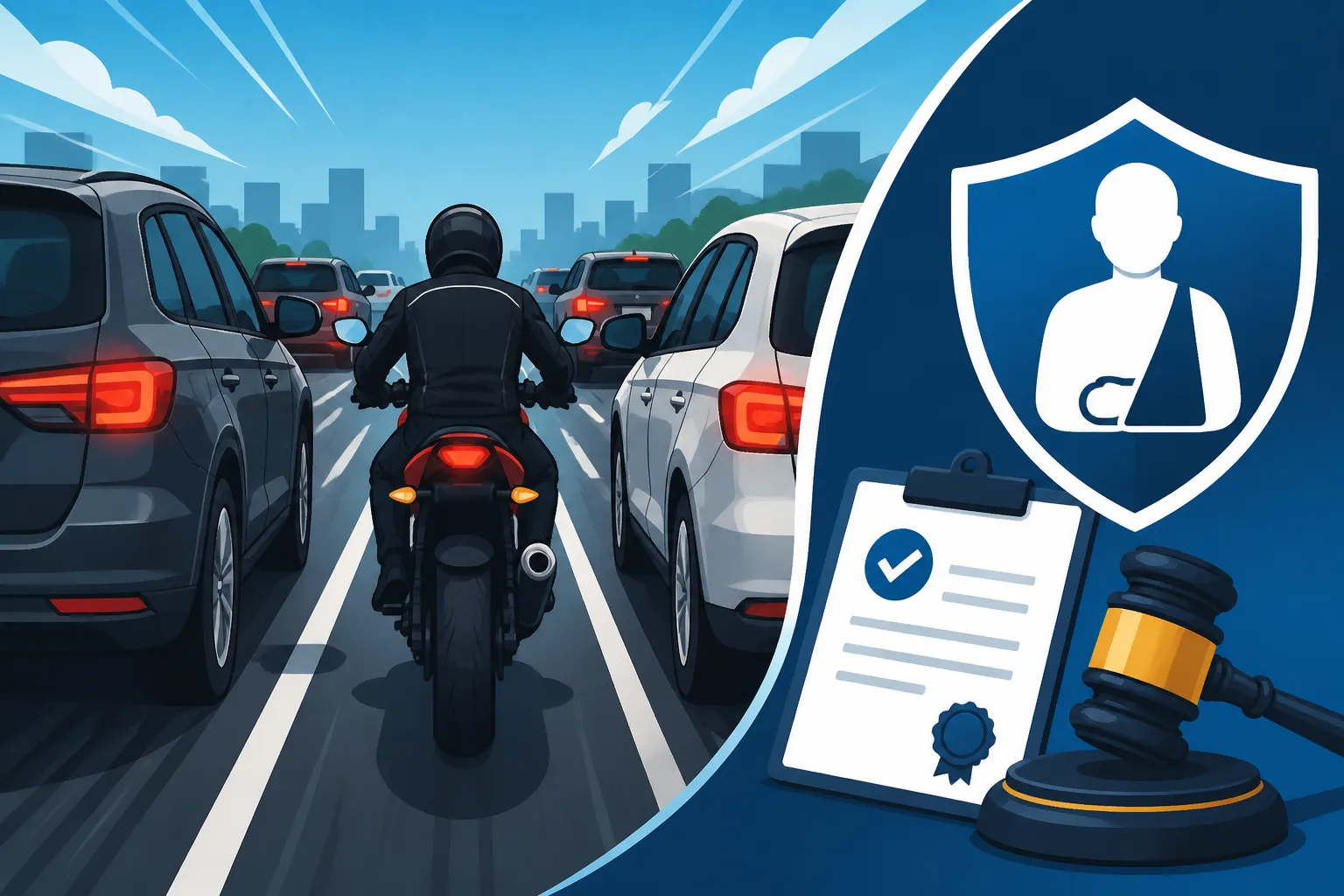
Lane splitting is a riding technique where a motorcyclist moves between two lanes of vehicles traveling in the same direction, typically when those vehicles are stopped or moving slowly. It’s not just about getting ahead; for many riders, it’s a strategy for safety and efficiency. However, the perception of lane splitting varies wildly, from a clever way to bypass congestion to a reckless maneuver.
Defining Lane Splitting Versus Filtering
It’s crucial to understand that not all "riding between cars" is the same, and the law sometimes makes distinctions. While often used interchangeably, there's a subtle difference between lane splitting and lane filtering, which some states, like Utah, explicitly recognize.
Lane splitting generally refers to riding between lanes of moving traffic, often at higher speeds relative to the flow of traffic, or even when traffic is moving at speed. It’s what you might see on a busy freeway where cars are doing 40 mph, and a motorcycle zips between them. Lane filtering, on the other hand, is usually defined as riding between rows of stopped or very slow-moving traffic, typically at intersections or in heavily congested areas, to get to the front. The intent behind filtering is often to move out of the "crush zone" where a rear-end collision by an inattentive driver could have devastating consequences for a rider. This distinction, though subtle, can sometimes play a role in how a police officer or an insurance adjuster perceives the incident, impacting who is deemed responsible.
Why Riders Choose to Lane Split
For many motorcyclists, lane splitting isn't just about saving time; it's a matter of safety. When you’re sitting stationary in traffic, especially on a hot day, you’re vulnerable. Cages, as we often call cars, are constantly stopping and starting, and distracted drivers are unfortunately common. A quick glance down at a phone can lead to a devastating rear-end collision for a rider, potentially pinning them between two vehicles.
By moving between lanes, riders can extract themselves from this vulnerable position, putting less experienced or less attentive drivers behind them. It also helps prevent overheating for air-cooled engines, which can be a real concern in bumper-to-bumper traffic. While some perceive it as aggressive, it often stems from a rider's awareness of their own fragility on the road and a desire to mitigate risk where possible. Riders often operate under the "loud pipes save lives" mantra, but sometimes, avoiding the danger zone altogether is the safest bet.
Legality of Lane Splitting Across States
The legal landscape for lane splitting is, to put it mildly, a patchwork quilt across the United States. It's not a universal right or prohibition, which leads to immense confusion for riders, especially those traveling interstate. What's perfectly legal in one state could land you a ticket, or worse, be used against you in a civil claim in another. This inconsistency makes it incredibly important for every rider to know the specific laws of the state they're riding in.
States Where Lane Splitting Is Legal
California has long been the pioneer, being the first state to officially legalize lane splitting in 2017 with Assembly Bill 51. The law allows riders to split lanes when traffic is moving, but it doesn't specify a speed limit or speed differential. Instead, it offers general guidelines for safe lane splitting, encouraging riders to use their judgment. This means you won’t find a hard-and-fast rule like "only below 30 mph" in California statute, though safety recommendations often suggest lower speeds.
Since California's move, other states have begun to follow suit, albeit with more restrictive conditions. Utah, for example, legalized "lane filtering" – notice the distinction – but only when traffic is stopped and the motorcycle is traveling at 15 mph or less. Similar laws have passed in Arizona, Montana, and Washington, with specific speed restrictions and conditions, often only permitting the practice when traffic is at a standstill or moving very slowly, usually below 10-25 mph. These states often emphasize filtering to the front of a traffic light rather than splitting through fast-moving freeway congestion. It's a clear legislative effort to mitigate the dangers of being rear-ended by a distracted driver.
States Where Lane Splitting Is Illegal or Restricted
The vast majority of states currently prohibit lane splitting, considering it an unsafe maneuver. In these states, a motorcyclist caught lane splitting can face traffic citations, fines, and points on their license. Beyond that, if an accident occurs, the very act of lane splitting can be cited as evidence of negligence, automatically putting the rider at a disadvantage in determining who is at fault in a motorcycle accident. Even in states where it's not explicitly forbidden by statute, law enforcement or insurance companies might interpret it under general reckless driving or unsafe lane change laws.
For instance, in states like Texas or Florida, where lane splitting is illegal, if you're involved in a crash while doing it, the opposing counsel or insurance adjuster will quickly point to your illegal act. This can be a huge hurdle, even if the other driver was clearly distracted or made an unsafe lane change. They'll argue that your presence in that "illegal" space contributed to the accident. It's a prime example of how local laws can dramatically shape the narrative of an accident claim.
Gray Areas and Emerging Legislation
There are also a handful of states that fall into a "gray area" where lane splitting isn't explicitly illegal but also isn't explicitly legal. In these states, the legality often depends on how local law enforcement interprets general traffic laws or if a specific case has set a precedent. This ambiguity can be particularly frustrating for riders, as it creates uncertainty.
However, the trend is slowly moving towards legalization with specific conditions, often driven by studies showing lane splitting can actually be safer in certain circumstances and can help alleviate traffic congestion. Organizations like the American Motorcyclist Association (AMA) have been instrumental in advocating for these changes, citing studies that suggest lane splitting reduces a motorcyclist's exposure to rear-end collisions and decreases engine overheating in hot weather. As more states consider legislation, it's crucial for riders to stay informed about their local laws and any proposed changes, as these can directly impact their liability in the event of a crash.
| State | Lane Splitting/Filtering Legality | Conditions (if legal) |
|---|---|---|
| California | Legal | Safe and prudent, no specific speed limits (guidelines apply) |
| Utah | Legal (filtering only) | Traffic stopped, speed <= 15 mph |
| Arizona | Legal (filtering only) | Traffic stopped, speed <= 15 mph |
| Montana | Legal (filtering only) | Traffic stopped, speed <= 20 mph |
| Washington | Legal (filtering only) | Traffic stopped, speed <= 10 mph |
| Delaware | Legal (filtering only) | Traffic stopped, speed <= 20 mph, 2+ lanes of traffic |
| Hawaii | Legal (filtering only) | Traffic stopped, speed <= 10 mph |
| Oregon | Legal (filtering only) | Traffic stopped, speed <= 10 mph |
| Virginia | Illegal | Explicitly prohibited |
| Texas | Illegal | Explicitly prohibited |
| Florida | Illegal | Explicitly prohibited |
| New York | Illegal | Explicitly prohibited |
| Most other states | Illegal (by general traffic laws) | Implicitly prohibited or not addressed |
Note: This table is a general overview and laws can change. Always verify current regulations in your specific state or jurisdiction.
How Lane Splitting Impacts Fault Determination
This is where things get really complicated after an accident. Determining fault in motorcycle accidents is never straightforward, but when lane splitting is involved, it adds layers of complexity and often prejudice. Even if the other driver clearly made a mistake, your act of lane splitting can quickly become a central point of contention.
The Role of Comparative Negligence
Most states in the U.S. follow some form of comparative negligence. This legal principle allows for fault to be shared between multiple parties in an accident. Instead of one party being 100% at fault, a jury or an insurance adjuster can assign percentages of fault to each driver. If you, the rider, were lane splitting in a state where it's legal, and another driver merges into your lane without looking, they would likely be found primarily at fault. However, even in legal lane splitting states, if you were doing it at an excessive speed or unsafely, you might still be assigned a percentage of fault. For more on this, you might want to read our article on Comparative Negligence in Motorcycle Accidents.
The real challenge comes in states where lane splitting is illegal. In these jurisdictions, if you were lane splitting at the time of the accident, you are inherently breaking a traffic law. This illegal act can automatically assign you a percentage of fault, even if the other driver was egregious in their negligence. For example, if a car driver failed to signal and swerved into your lane, causing a crash, they would definitely be at fault. But if you were lane splitting illegally, a court might say the driver was 70% at fault and you were 30% at fault. This 30% fault could then reduce any compensation you receive by 30%, significantly impacting your settlement. Understanding how the 50% fault rule works in your state is absolutely critical.
Insurance Company Bias Against Riders
Let’s be honest: there’s a pervasive bias against motorcyclists. Many people, including some insurance adjusters, view riders as reckless thrill-seekers. This unfair stereotype often surfaces in accident claims, and it intensifies when lane splitting is involved. An insurance company might seize on the fact that you were lane splitting, even if it was legal, to try and shift more blame onto you. They might argue that you were traveling too fast for conditions, or that you "came out of nowhere," regardless of what the evidence truly shows.
Their goal is always to minimize their payout. If they can pin even a small percentage of fault on you, they reduce their financial responsibility. This is where the concept of Rider Bias in Fault Determination truly plays out. They’ll use language that implies you were taking unnecessary risks, regardless of the actual circumstances of the accident. It's a tactic designed to exploit public perception and statutory ambiguity, and it's something every rider needs to be prepared for when dealing with an insurance claim after a lane splitting incident.
Common Accident Scenarios Involving Lane Splitting
Lane splitting, by its very nature, places motorcyclists in close proximity to other vehicles, increasing the potential for certain types of collisions. While riders often split lanes for safety, others may not anticipate a motorcycle appearing between lanes. Understanding these common scenarios is crucial for both preventing accidents and properly documenting them if they do occur.
Vehicle Merging or Changing Lanes
This is perhaps the most frequent and dangerous scenario for lane-splitting riders. Imagine you're riding through heavy, stop-and-go traffic on a multi-lane highway near Los Angeles, where lane splitting is legal. You're carefully making your way between the number one and number two lanes, maintaining a safe speed differential. Suddenly, a driver in the number two lane, perhaps distracted by their phone or simply not checking their blind spot adequately, decides to merge into the number one lane, directly into your path. This sudden movement leaves you with little to no time to react, often leading to a collision.
The driver may later claim, "I didn't see the motorcycle," a defense that is unfortunately common but rarely holds up if proper lookout wasn't maintained. In these situations, proving How Dashcam Footage Proves Fault can be incredibly valuable, as can witness statements from other drivers who saw the car merge without signaling or looking. Even in legal lane-splitting areas, the burden often falls on the car driver to ensure a clear path before changing lanes.
Drivers Opening Doors (Dooring)
While less common on high-speed freeways, dooring accidents are a significant risk in urban areas, especially when filtering through slow or stopped traffic. Picture yourself filtering forward in bumper-to-bumper traffic on a busy city street in San Francisco. A passenger in a parked car, or even a driver waiting in traffic, might decide to open their door to get out, grab something, or talk to someone on the sidewalk.
Because you're moving in a space they don't expect a vehicle to be, they often don't check their mirrors before swinging the door open. The result can be catastrophic for a motorcyclist, leading to severe injuries as they collide with the suddenly opened door. Dooring Accidents and Liability typically fall heavily on the person opening the car door, as they have a legal responsibility to ensure it's safe to do so. However, if the motorcyclist was lane splitting illegally or at an excessive speed in a prohibited area, their own negligence could be brought into question.
Rear-End Collisions
Although lane splitting is often touted as a way to avoid rear-end collisions by escaping the "sandwich zone," they can still occur. This happens most often when a rider has successfully lane split to the front of a line of traffic at an intersection, but then an impatient or distracted driver behind them fails to stop in time. Or, conversely, if a rider attempts to lane split but then gets caught in a sudden deceleration of traffic and is unable to stop.
Even more subtly, a rider might be "filtered" in front of a stopped car, and then the car behind that stopped car rear-ends it, pushing it into the motorcycle. This highlights the ever-present danger for motorcyclists, regardless of whether they are splitting lanes or not. The concept of Motorcycle Accidents Caused by Rear-End Collisions generally places fault on the rear-ending driver, but if the motorcyclist put themselves in a precarious position by illegally or unsafely lane splitting, their fault could be argued.
Proving Fault in a Lane Splitting Accident
After a lane splitting accident, you're likely facing not only physical injuries but also an uphill battle with insurance companies. Proving that the other driver was at fault, or at least mostly at fault, is critical to your claim. This often requires diligent collection of evidence and a clear understanding of both traffic laws and legal principles like comparative negligence.
Gathering Critical Evidence at the Scene
The moments immediately following an accident are chaotic, but what you do (or don't do) can significantly impact your ability to prove fault later. First and foremost, if you are able, document everything. This means taking abundant photographs and videos of the accident scene, including:
- The position of all vehicles involved, especially your motorcycle and the car you collided with.
- Damage to both vehicles, from multiple angles.
- Skid marks, debris on the road, and any broken motorcycle parts.
- Traffic signs, signals, and road conditions.
- Close-ups of any injuries you sustained.
Beyond photos, gather contact information from any witnesses who saw the accident unfold. Even a short statement from a passerby can be invaluable, as they are often seen as impartial observers. If a police report is filed, make sure to get the incident number. While police reports establish who is at fault, they aren't always perfect, and sometimes How a Police Report Can Hurt Your Claim if it contains inaccuracies or unfavorable conclusions based on initial assessments. You might need to know how to correct a wrong police report later.
Utilizing Witness Statements and Expert Testimony
Witnesses are often your best friends in a contested liability case. An impartial third party who saw the other driver suddenly merge without signaling, or who observed you lane splitting safely and prudently, can be a game-changer. Their testimony can counteract the common "I didn't see him" defense often used by drivers involved in motorcycle accidents. Make sure to collect names, phone numbers, and email addresses. Even if they don't want to get directly involved, a brief recorded statement (with their permission) can be incredibly helpful.
In more complex cases, especially when the actions of both parties are disputed, an accident reconstruction expert may be necessary. These professionals can analyze physical evidence from the scene—such as vehicle damage, skid marks, and traffic camera footage—to scientifically determine the sequence of events leading up to the crash. They can often provide clear, unbiased testimony that explains vehicle speeds, angles of impact, and who had the right-of-way, effectively proving How Accident Reconstruction Determines Fault. This kind of expert analysis is particularly powerful when dealing with the nuances of lane splitting.
Insurance Company Tactics and Lane Splitting Claims
Dealing with insurance companies after any motorcycle accident is a challenge, but when lane splitting is involved, adjusters often come armed with specific strategies to minimize their payouts. They know the public perception, and they’re often prepared to exploit any legal ambiguities or popular misconceptions about motorcycle riders.
Denying Claims Based on "Reckless Driving"
One of the most common tactics is to outright deny or severely devalue a claim by labeling your lane splitting as "reckless driving." Even in states where lane splitting is legal, insurance adjusters might argue that you were doing it unsafely—too fast, too close to other vehicles, or in conditions that weren't appropriate. If you were lane splitting in a state where it's illegal, this argument becomes even stronger for them, as they can claim you were breaking the law and, therefore, solely or largely responsible for the accident.
They'll often point to the inherent danger of "weaving through traffic," regardless of whether you were truly being reckless or simply exercising a legal maneuver. This tactic aims to intimidate you into accepting a lower settlement or dropping your claim altogether. It's an unfair generalization that unfortunately plays into existing Rider Bias in Fault Determination. It’s why documenting your speed, position, and the traffic conditions at the time of the accident is so important—it gives you a factual basis to counter their broad claims of recklessness.
Using Rider Stereotypes to Shift Blame
Insurance companies are masters at subtly, or not so subtly, using rider stereotypes to their advantage. They often paint motorcyclists as inherently dangerous, adrenaline-junkie individuals who choose to put themselves at risk. When lane splitting is part of the accident scenario, this narrative intensifies. They might suggest that because you ride a motorcycle, and because you were lane splitting, you were actively seeking out a dangerous situation, and therefore bear significant responsibility for your injuries.
They might try to imply that the other driver simply couldn't have seen you, not because they were inattentive, but because you were in a place you "shouldn't have been." This kind of victim-blaming is a classic tactic. You might find more insight on this in our article How Insurance Companies Assign Blame to Riders. It’s a frustrating and often demoralizing experience, especially when you know you were riding responsibly. This is precisely why having strong evidence and potentially legal representation can be critical to fighting back against these unfair generalizations and ensuring your claim is judged on its merits, not on stereotypes.
Maximizing Your Claim After a Lane Splitting Accident
Being involved in a motorcycle accident is tough enough, but when lane splitting is a factor, getting the compensation you deserve can feel like an impossible uphill climb. However, with the right strategy and a clear understanding of your rights, you can significantly improve your chances of a fair outcome.
Seeking Immediate Medical Attention
Your health is paramount, and it's also foundational to any personal injury claim. Even if you feel okay after a lane splitting accident, you need to seek immediate medical attention. Adrenaline can mask pain, and some serious injuries, like internal bleeding or a motorcycle traumatic brain injury, might not manifest symptoms for hours or even days. A delay in seeking treatment can allow the opposing insurance company to argue that your injuries weren't severe or weren't directly caused by the accident.
Establishing a clear medical record from day one provides undeniable proof of your injuries and their direct link to the collision. This includes everything from emergency room visits to follow-up appointments with specialists, physical therapy, and prescriptions. Thorough documentation of How to Document Injuries for a Claim is essential for calculating your economic and non-economic damages, ensuring that your pain and suffering are accurately reflected in your claim.
Documenting All Damages and Losses
Beyond your medical records, you need to meticulously document every single loss you incur as a result of the accident. This includes:
- Property Damage: Get repair estimates for your motorcycle, helmet, gear, and any other personal items damaged in the crash. Take pictures of all damage before repairs.
- Lost Wages: Keep detailed records of any time you missed from work, including pay stubs, employment contracts, and a letter from your employer verifying your missed time and pay rate. If your injuries impact your ability to earn in the future, that needs to be calculated as well.
- Medical Bills: Keep track of every single bill—doctor visits, hospital stays, medication, physical therapy, assistive devices, etc.
- Pain and Suffering: While difficult to quantify, keeping a journal of your daily pain levels, emotional distress, and how your injuries impact your daily life and hobbies can be powerful evidence.
This comprehensive documentation helps in calculating How Motorcycle Accident Settlements Are Calculated and provides a clear picture to the insurance adjuster of the true extent of your losses. Don't underestimate the value of your damaged gear; pictures of a scuffed helmet or torn riding jacket can visually demonstrate the force of impact and underscore the severity of your injuries, even if they protected you from worse harm.
Consulting with a Motorcycle Accident Attorney
Let's face it, trying to navigate the complex world of insurance claims and legal jargon while recovering from an accident is a nightmare. This is especially true with lane splitting, where liability can be so heavily disputed. An experienced motorcycle accident attorney can be your greatest advocate. They understand the specific laws surrounding lane splitting in your state and are adept at countering insurance company tactics and How Insurers Use Rider Stereotypes Against You.
A lawyer can investigate the accident, gather crucial evidence, interview witnesses, and even bring in accident reconstruction experts if needed. They will handle all communication with the insurance companies, protecting you from saying anything that could jeopardize your claim. Most importantly, they will fight to ensure you receive fair compensation for all your damages, including medical bills, lost wages, and pain and suffering. If you're wondering Do You Need a Motorcycle Accident Lawyer, a lane splitting accident is almost certainly a situation where their expertise is invaluable to achieving a just outcome.
Disclaimer
The information provided in this guide is for general informational purposes only and does not constitute legal advice. Laws regarding motorcycle lane splitting and accident liability vary significantly by state and can change. You should consult with a qualified legal professional for advice regarding your specific situation.