Dooring Accidents and Liability
Riding your motorcycle, enjoying the open road, or navigating city streets can be an exhilarating experience. But one of the most unexpected and terrifying hazards a rider can face is a car door suddenly opening into their path. These "dooring accidents" aren't just frustrating; they can be incredibly dangerous, leading to severe injuries and leaving you wondering who is responsible for the chaos and physical pain. This guide is here to walk you through everything you need to understand about dooring accidents and who is held liable when they happen.
The Sudden Danger of Dooring Accidents for Motorcyclists
When you're on a motorcycle, your vulnerability is undeniable. Unlike being encased in a car, there's no steel frame around you, no airbags, and nothing to absorb the impact of a sudden collision. A car door swinging open without warning can transform a routine ride into a life-altering event in a split second.
What is a Dooring Accident and Why is it So Unexpected?
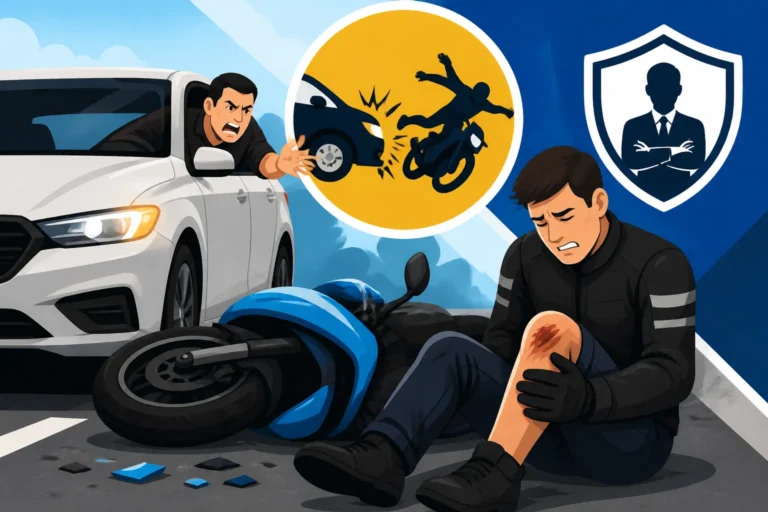
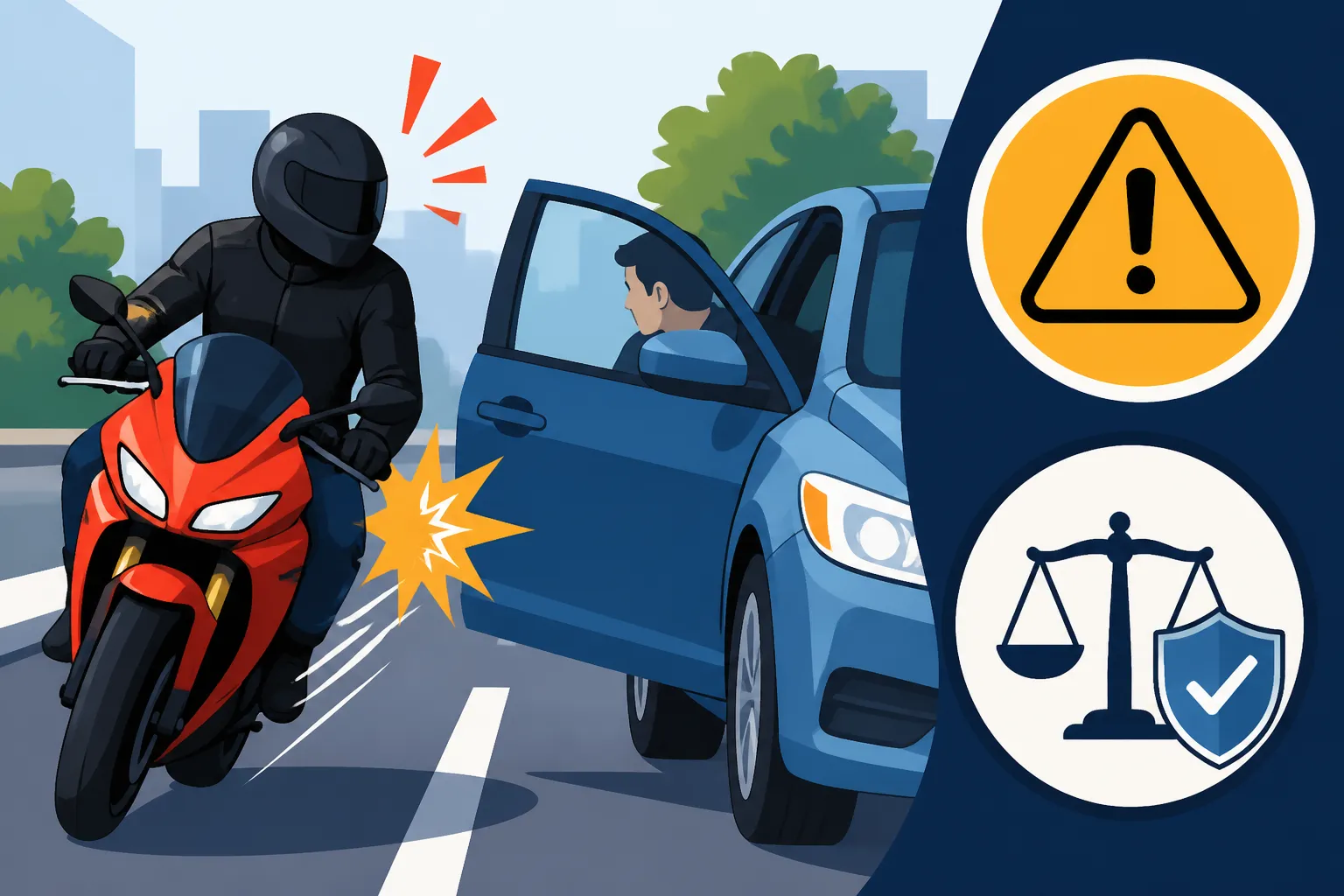
At its core, a dooring accident happens when a parked vehicle's occupant opens their door directly into the path of an oncoming vehicle, pedestrian, or, most commonly, a cyclist or motorcyclist. It's not a collision initiated by a moving car, but rather by a stationary one that suddenly creates an obstruction. The driver or passenger might be distracted, in a hurry, or simply fail to check their mirrors and blind spots adequately before flinging the door open. Imagine you're riding along a busy street in a city like Boston or Chicago, perhaps even legally lane splitting where permitted, and suddenly, a sedan's door on your left swings out. You have virtually no time to react.
The unexpected nature is what makes these accidents so insidious. Riders are constantly scanning the road for moving threats—cars changing lanes, pedestrians stepping off curbs, potholes. But a stationary vehicle suddenly creating a moving hazard is a different beast entirely. It violates the unspoken expectation that parked cars remain static. This abrupt, unforeseen obstacle can lead to a direct impact with the door itself, causing the rider to be thrown from their bike, or swerving sharply to avoid the door and colliding with another vehicle or object. In the chaos, determining fault can feel overwhelming, but understanding the basics is your first step.
The Devastating Impact on Riders
Motorcyclists unfortunately bear the brunt of dooring accidents due to their lack of external protection. While a driver in a car might just incur a dented door and some minor whiplash, a rider can suffer catastrophic injuries. We're talking about direct impact injuries, like broken bones in the legs, arms, or ribs from hitting the door, or head and spinal cord trauma if thrown over the handlebars.
Even if you're wearing a DOT-compliant helmet, a direct impact with a car door or the subsequent fall can lead to a traumatic brain injury. Road rash, which we often talk about, can be severe in dooring accidents as the rider slides across asphalt or concrete. Internal injuries are also a significant concern, as the force of the impact can cause damage to organs that isn't immediately visible. The aftermath isn't just physical; the emotional trauma, the fear, and the long road to recovery can be immense. These aren't minor fender-benders; they are often life-altering events with serious consequences, highlighting why it’s critical to understand Common Motorcycle Accident Injuries.
Determining Legal Liability in Dooring Incidents
When a dooring accident occurs, the question of who is at fault is paramount for any motorcycle accident claim. Generally, the person who opened the door is held liable, but proving this can sometimes be more complex than it seems.
The Driver's Clear Duty to Look
In most jurisdictions across the United States, drivers and passengers have a legal "duty of care" to other road users. This duty includes taking reasonable precautions before opening a car door into traffic. This means checking mirrors, looking over their shoulder, and making sure the path is clear. Many cities, including New York City and Portland, even promote the "Dutch Reach" method – opening the car door with the hand furthest from the door, which naturally forces you to turn your body and look over your shoulder.
Failing to perform this simple check constitutes negligence. If a driver or passenger opens their door without looking and a motorcyclist collides with it, that individual has likely breached their duty of care. This negligence is the cornerstone of establishing liability in these accidents. It's not about malice; it's about a lack of reasonable care that directly leads to a preventable accident and your injuries. Without this element of negligence, proving that they are liable can be an uphill battle.
Essential Evidence to Establish Fault
Proving that the driver or passenger was negligent and therefore liable requires collecting specific evidence. This isn't just about pointing fingers; it's about building a factual case.
- Police Report: The responding police officer will typically document the scene, interview witnesses, and often assign fault in their report. A police report that clearly states the car's occupant opened the door unsafely is a powerful piece of evidence for How Police Reports Establish Fault.
- Witness Statements: Did anyone see the door open into your path? Independent witnesses can corroborate your account and provide an unbiased perspective. Getting their contact information at the scene is crucial.
- Photos and Videos: Immediately after the crash, if you are able, take photos of the scene, the position of the vehicles, the damaged car door, your motorcycle, and any visible injuries. Dashcam footage or nearby security camera recordings can be invaluable in establishing exactly how the accident happened.
- Damage to Vehicles: The location and nature of the damage to both the car door and your motorcycle can illustrate the direction of impact and reinforce your account of the event.
- Your Account: A detailed, consistent account of what happened, recorded as soon as possible, is important. However, remember the golden rule: never admit fault at the scene.
| Type of Evidence | Importance in Dooring Accidents | Key Details to Capture |
|---|---|---|
| Police Report | Official documentation of incident and initial fault assessment. | Officer's name, badge number, report number, any citations issued. |
| Witness Accounts | Unbiased confirmation of events. | Name, phone, email of any independent witnesses. |
| Photos/Videos | Visual proof of scene, damage, and conditions. | Vehicle positions, road marks, door damage, motorcycle damage, visible injuries, street signs, weather. |
| Vehicle Damage | Physical evidence supporting impact dynamics. | Clear close-ups of damage to car door and motorcycle. |
| Medical Records | Documenting injuries sustained. | All diagnostic reports, treatment plans, prognoses from doctors. |
What if a Passenger Opened the Door?
It's a common misconception that only the driver is responsible. In many dooring accidents, it's actually a passenger—perhaps someone in a rideshare vehicle or just a friend in the back seat—who opens the door. When a passenger opens the door, liability can still fall on them. However, it can also extend to the driver, especially if the driver had a duty to ensure their passengers exited safely, such as in a taxi or Uber/Lyft scenario. In these cases, the driver may have failed in their duty to oversee the safe discharge of passengers, particularly in busy traffic areas. This can introduce complexities, potentially involving multiple insurance policies and more detailed investigations into who specifically was negligent in opening the door. Knowing Who Is at Fault in a Motorcycle Accident can clarify these situations.
Navigating Common Defenses and Shared Responsibility
Even when the facts seem clear, the at-fault party's insurance company will often try to minimize their responsibility or shift some of the blame onto you, the motorcyclist. This is a common tactic to reduce the amount they have to pay out.
Countering the "Didn't See You" Argument
One of the most frequently used defenses in dooring and other motorcycle accidents is the age-old, "I didn't see the motorcycle." While this might be a genuine statement from the driver, it's often not a legal defense against negligence. In fact, it often highlights their negligence because it suggests they weren't looking properly in the first place. Motorcyclists are smaller and can be harder to spot, but that doesn't absolve other drivers of their responsibility to scan for all traffic, including bikes.
To counter this argument, your evidence becomes even more vital. If you can show that you were operating your motorcycle safely, within speed limits, with headlights on (as many states require motorcycles to have headlights on even during the day), and that the door was opened without warning, the "I didn't see you" defense loses much of its power. This is where witness statements and any video footage become incredibly powerful. If the driver simply wasn't paying attention, their failure to see you is part of their negligence, not an excuse to avoid liability.
Understanding Comparative Negligence in Dooring Cases
Sometimes, even if the other driver is clearly at fault for opening their door, the insurance company might argue that you, the motorcyclist, were also partially to blame. This concept is called comparative negligence or contributory negligence, depending on the state you're in. For instance, they might claim you were speeding, following too closely, or riding in a way that made it impossible to avoid the door, even if it was opened suddenly.
In states with comparative negligence laws, if you are found to be partially at fault, your total settlement could be reduced by your percentage of fault. For example, if your damages are $100,000 and you are found to be 20% at fault, you would only receive $80,000. Some states have "modified comparative negligence" rules, like the 50% or 51% rule, where you can only recover damages if your fault is below a certain threshold. Other, stricter "contributory negligence" states, like Alabama, Maryland, North Carolina, and Virginia, might bar you from recovery entirely if you are found even 1% at fault. Understanding Comparative Negligence in Motorcycle Accidents is crucial. It's often up to insurance adjusters or, if necessary, a jury, to determine these percentages. This is precisely why it’s so important to have strong evidence and a clear narrative of what happened to defend against any attempts to shift blame onto you unfairly.
Protecting Your Claim After a Dooring Accident
The moments, days, and weeks following a dooring accident are critical for your health and the strength of your future claim. Taking the right steps immediately can make a significant difference in your ability to recover compensation.
Critical First Steps at the Scene
Your immediate priority after any motorcycle accident is safety and seeking medical attention.
- Check for Injuries: First, assess yourself and anyone else involved for injuries. Dooring accidents often result in significant impact, and even if you feel okay, adrenaline can mask pain. Seek medical attention immediately. Call 911.
- Move to Safety: If possible and safe to do so, move your motorcycle and yourself out of the flow of traffic to prevent further accidents.
- Call the Police: Even if the damage seems minor, always call the police to report the accident. A police report is vital for your claim, documenting the scene, witness statements, and initial fault assessment. Ensure the officer correctly identifies it as a dooring incident.
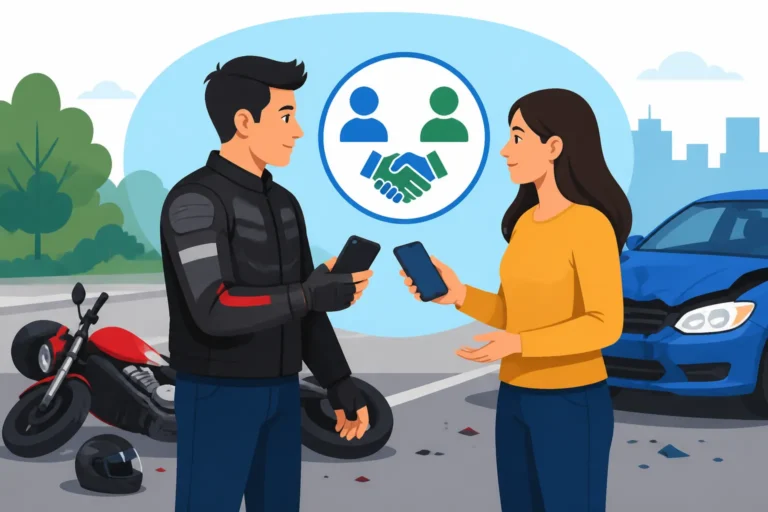
- Exchange Information: Get the driver's (and if applicable, the passenger's) name, contact information, insurance details, and license plate number. Do not engage in arguments or discussions of fault; simply gather facts.
- Document the Scene: Use your phone to take as many photos and videos as possible. Capture the position of the car and your motorcycle, damage to both, the open car door, road conditions, traffic signs, and any visible injuries. Look for potential security cameras on nearby buildings. This is critical for How to Document the Scene to Prove Fault.
Remember, your health comes first. Even if you feel shaken but unhurt, get checked by paramedics or visit an emergency room. Some serious injuries, like internal bleeding or concussions, might not manifest symptoms immediately.
Dealing with Insurance Adjusters
Soon after the accident, you'll likely receive a call from the other driver's insurance company. Their primary goal is to settle your claim for the lowest possible amount. They might ask for a recorded statement or try to get you to admit some level of fault. It’s important to be polite but cautious.
- Do Not Give a Recorded Statement: You are not legally obligated to give a recorded statement to the other party's insurance company. Anything you say can be used against you.
- Do Not Sign Anything: Do not sign any medical releases or settlement offers without consulting with an attorney. You could inadvertently waive your rights to future compensation.
- Keep Records: Maintain meticulous records of all medical appointments, treatments, prescriptions, and out-of-pocket expenses. Also, track any lost wages due to your injuries. This documentation is essential for calculating your damages and proving How Medical Bills Affect Your Settlement.
- Be Patient: Insurance companies may try to rush you into a quick settlement, especially if they know their policyholder is clearly at fault. They might offer a lowball amount, hoping you'll take it out of desperation. A fair settlement often takes time, especially while you are still recovering and your full medical expenses are unknown.
When to Seek Professional Legal Help
Dealing with a dooring accident, especially one that results in serious injuries, can be incredibly complex. From navigating aggressive insurance adjusters to understanding the nuances of liability laws in your state, it's a daunting task, particularly when you're also trying to recover physically.
An experienced motorcycle accident lawyer can be an invaluable asset. They understand how insurance companies operate and can protect your rights. They can:
- Investigate the accident thoroughly, collecting evidence you might not even know exists.
- Handle all communications with the insurance companies on your behalf.
- Accurately assess the full extent of your damages, including future medical costs and lost earning capacity, to ensure you don't settle for less than you deserve.
- Negotiate fiercely for a fair settlement.
- Represent you in court if a fair settlement cannot be reached.
While some minor accidents might be manageable on your own, a dooring accident with significant injuries or disputed liability is almost always a situation where Do You Need a Motorcycle Accident Lawyer becomes a resounding yes. They know the tactics insurers use, such as How Insurers Use Rider Stereotypes Against You, and can counter them effectively, ultimately helping you maximize your motorcycle accident settlement.
Disclaimer
Please remember that the information provided in this article is for general informational purposes only and does not constitute legal advice. Motorcycle accident laws vary significantly by state and jurisdiction, and the specifics of your case will dictate the applicable laws and potential outcomes. It is crucial to consult with a qualified legal professional for advice tailored to your specific situation.