Who Is at Fault in a Distracted Driving Motorcycle Accident
It's a tough reality out there on two wheels. You’re doing everything right, riding defensively, wearing your gear, and then, out of nowhere, a driver who isn’t paying attention changes your life in an instant. Being involved in a motorcycle accident is terrifying enough, but when it’s caused by someone glued to their phone or lost in thought, the frustration and anger can be overwhelming. This guide is here to break down exactly who is at fault in a distracted driving motorcycle accident and how you can work to prove it, giving you the clarity and steps you need in such a challenging situation.
Understanding Distracted Driving and Its Grave Risk to Riders
Distracted driving isn't just a minor annoyance; it's a major safety hazard that puts everyone on the road at risk, especially motorcyclists. When a driver diverts their attention from the road, even for a split second, they lose precious reaction time that could prevent a collision. For us riders, with less protection than a car and a smaller profile, those seconds can literally mean the difference between a close call and a catastrophic injury. It's a truly unsettling thought that someone's momentary lapse in focus could have such profound consequences for our lives.
What Constitutes Distracted Driving
Before we dive into proving fault, let's get clear on what "distracted driving" actually means. It’s more than just texting; it encompasses anything that takes a driver's attention away from the primary task of operating a vehicle safely. Generally, distractions fall into three main categories:
- Visual Distractions: These are anything that causes a driver to take their eyes off the road. Think about someone staring at their phone screen, looking at a billboard, or turning to scold a child in the back seat. Even adjusting a GPS can fall into this category, as it requires a driver's visual focus away from what's happening ahead.
- Manual Distractions: These are actions that require a driver to take one or both hands off the steering wheel. Common examples include texting, eating, drinking, adjusting the radio, or reaching for something on the passenger seat. Any task that compromises a driver's ability to maintain full control of the vehicle manually counts.
- Cognitive Distractions: These are perhaps the trickiest to spot, as they involve a driver's mind wandering from the task of driving. This could be daydreaming, being deep in conversation with a passenger, talking on a hands-free phone, or being upset about a personal issue. While their eyes might be on the road, their mind isn't processing the crucial information needed to react safely, which is particularly dangerous when encountering motorcycles.
Many distractions, like texting, combine all three types—visual (looking at the phone), manual (holding the phone and typing), and cognitive (thinking about the message). This triple threat makes it incredibly dangerous, and unfortunately, it's a distressingly common factor in motorcycle accidents.
The Amplified Danger for Motorcyclists
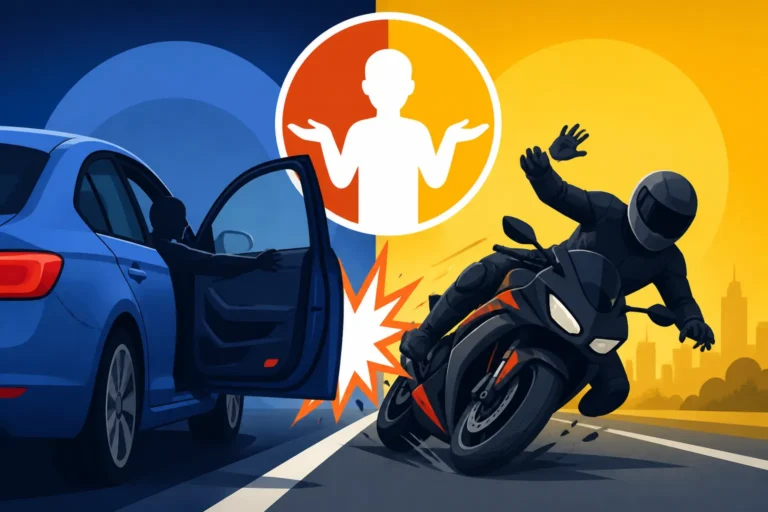
You and I both know the common refrain: "I didn't even see them!" This defense is frustratingly common in motorcycle accidents, and it’s often a direct result of distracted driving. Because motorcycles are smaller and less visible than cars, drivers need to be extra vigilant. When a driver is distracted, they are even less likely to notice a motorcycle, especially when performing maneuvers like changing lanes or making a left turn.
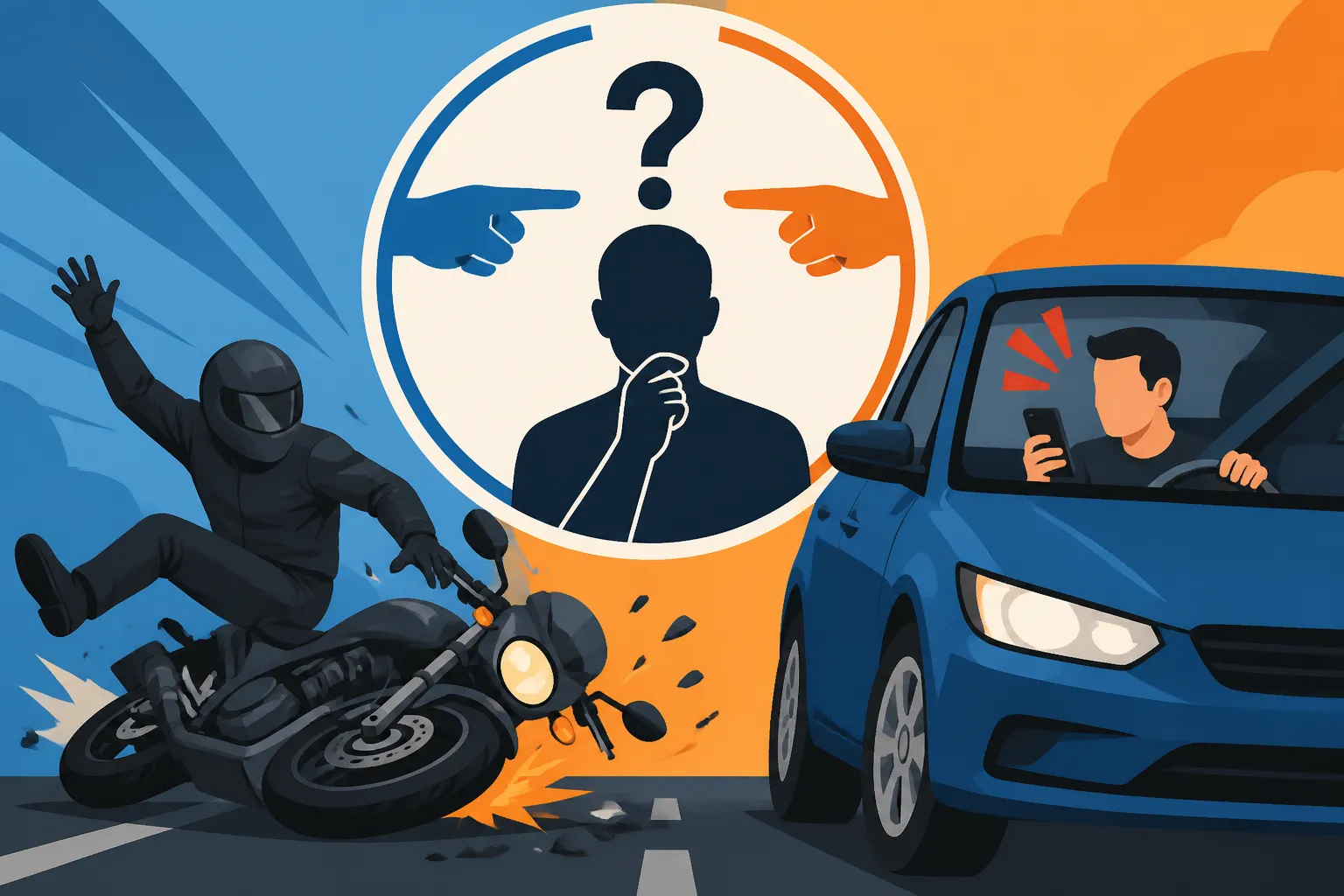
Consider a scenario in a busy intersection in, say, downtown Austin, Texas. A driver is idling at a red light, scrolling through social media on their phone. You, on your bike, are approaching from the opposite direction, signaling a left turn. When the light turns green, the distracted driver finally looks up, but because their attention was elsewhere, they don't register your motorcycle. They proceed straight, causing a devastating collision. This isn’t a hypothetical; it’s a daily risk we face, making distracted driving one of the Common Causes of Motorcycle Accidents that riders need to be acutely aware of, and prepared to prove in the aftermath.
Proving Fault in a Distracted Driving Motorcycle Accident
Pinpointing fault in any motorcycle accident can be a challenge, but when distracted driving is involved, it adds another layer of complexity. The other driver will rarely admit, "Yes, I was on my phone." It becomes your job, or your legal team's, to gather enough compelling evidence to show that their inattention directly led to the crash. This process is crucial because proving fault directly impacts your ability to recover compensation for your injuries and damages.
The Critical Role of Evidence
Building a strong case means meticulously collecting every scrap of evidence that points to the other driver's distraction. It's not enough to know they were distracted; you have to prove it. This can be an uphill battle, but with the right approach and a thorough investigation, it's absolutely possible to paint a clear picture of what really happened. The sooner you start gathering this information, the better, as evidence can quickly disappear or be deliberately concealed.
The burden of proof typically falls on the injured party, meaning you need to demonstrate that the other driver owed you a duty of care, they breached that duty by being distracted, and this breach directly caused your injuries and damages. This is a fundamental principle in how fault is determined in motorcycle accidents.
Types of Evidence to Establish Distraction
When it comes to proving a driver was distracted, you need to think broadly about all available resources. Some types of evidence are stronger than others, but every piece can contribute to a compelling narrative:
- Police Accident Reports: While not always definitive, a police report can be incredibly valuable, especially if the responding officer noted any signs of distraction or if the driver admitted to it at the scene. Officers are trained to look for contributing factors, and their initial observations can be critical in establishing fault. However, sometimes a police report can hurt your claim if it contains inaccuracies or biases. It's important to review it carefully.
- Witness Statements: Independent witnesses who saw the other driver's behavior before the crash can provide powerful testimony. Did they see the driver looking down at their lap? Were they swerving erratically? Did they mention seeing a phone? Their unbiased accounts can be invaluable in court or during settlement negotiations. This is why collecting details from How Witnesses Affect Motorcycle Fault is so vital at the accident scene.
- Cell Phone Records: This is often the "smoking gun" in distracted driving cases, particularly involving texting or active calls. Subpoenaing the driver's phone records can reveal if they were actively using their device at or immediately before the time of the accident. Keep in mind that securing these records often requires legal action, as phone companies won't just hand them over without a court order. This is a primary method for How to Prove the Other Driver Was Distracted.
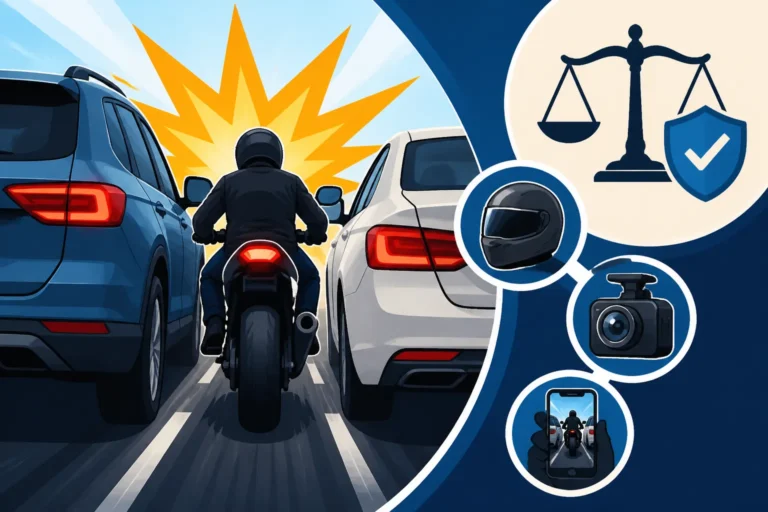
- Dashcam Footage and Surveillance Video: Many vehicles now come equipped with dashcams, and businesses or traffic intersections often have surveillance cameras. If captured, this footage can be irrefutable proof of a driver's distraction. A video showing a driver looking down at their lap moments before impact, or failing to react to a clear hazard, can be incredibly powerful. This highlights why How Dashcam Footage Proves Fault is becoming an increasingly important piece of evidence.
- Driver Admissions: It's rare, but sometimes a distracted driver will admit to their negligence at the scene, perhaps out of shock or guilt. They might say, "I was just checking my GPS," or "My kid dropped their toy." Even if they later recant, this initial admission can be documented by police or by your own memory, strengthening your claim. However, you should never admit fault at the scene yourself, as it can severely jeopardize your claim.
- Accident Reconstruction: In complex cases, experts can recreate the accident using physics, vehicle damage, and other data. Their analysis can sometimes infer distraction, for example, if a driver failed to brake or steer despite ample opportunity, suggesting a lack of cognitive awareness.
- Forensic Analysis of Electronic Devices: Beyond just phone records, forensic experts can analyze a driver's phone or vehicle infotainment system to see if apps were active, if calls were made, or if texts were sent or received around the time of the collision. This kind of detailed analysis can often fill in the gaps that simple phone records might miss.
Here's a quick look at common distractions and the type of evidence that often helps prove them:
| Type of Distraction | Common Examples | Key Evidence to Look For |
|---|---|---|
| Electronic Device | Texting, talking on phone, browsing | Cell phone records, dashcam/CCTV footage, witness statements |
| In-Vehicle Systems | Adjusting GPS, radio, climate control | Dashcam footage, driver admissions, accident reconstruction |
| Eating/Drinking | Consuming food or beverages | Witness statements, police report notes, interior vehicle photos |
| Passengers/Pets | Interacting with occupants | Witness statements, driver admissions, dashcam/CCTV footage |
| External Events | Looking at scenery, billboards, another crash | Witness statements, driver admissions, accident reconstruction |
| Cognitive | Daydreaming, emotional distress | Witness statements (about erratic driving), accident reconstruction |
Remember, the more evidence you can gather that points to the other driver's inattention, the stronger your case will be.
Navigating the Complexities of a Distracted Driving Claim
Even with solid evidence, dealing with the aftermath of a distracted driving motorcycle accident is rarely straightforward. Insurance companies, in particular, are adept at minimizing payouts, and they often use specific tactics against motorcyclists. It's a frustrating reality, but being prepared for these challenges can make a significant difference in your ability to recover fair compensation.
The "I Didn't See the Motorcycle" Defense
This is perhaps the most infuriating and commonly used defense by drivers who hit motorcycles. While it might sound like a simple statement, it's often a veiled admission of distraction or negligence. A responsible driver, paying full attention, should be scanning the road and actively looking for other vehicles, including motorcycles. When they claim they "didn't see" you, it often means they weren't looking properly in the first place, or their attention was diverted elsewhere.
Insurance companies often latch onto this defense to imply that the motorcycle rider was somehow at fault, perhaps by being "invisible" or riding in a "blind spot." This is a classic example of Rider Bias in Fault Determination that many of us have unfortunately experienced. You need to be ready to counter this by demonstrating that any reasonable, attentive driver would have seen you. This is where evidence like your bright riding gear, reflective strips, or even the time of day and visibility conditions become important, as they show you were doing everything possible to be seen.
Insurance Company Tactics and Shifting Blame
Once you file a claim, don't expect the insurance company to simply accept your version of events, especially if their insured driver was distracted. Their primary goal is to pay out as little as possible. They might try to:
- Downplay the distraction: They'll argue that the distraction was minor, momentary, or not directly related to the crash.
- Shift blame to you: They might claim you were speeding, lane splitting, or otherwise riding unsafely, even if entirely unfounded. This often happens if they can't effectively argue against the distraction itself. Understanding things like Comparative Negligence in Motorcycle Accidents becomes critical here, as any percentage of fault assigned to you can reduce your overall compensation.
- Offer a lowball settlement: They might quickly offer a small amount hoping you'll accept it before you fully understand the extent of your injuries or the true value of your claim.
This is why having an experienced advocate on your side is so crucial. They understand these tactics and can effectively How to Fight an Unfair Fault Assignment and ensure your rights are protected.
Immediate Steps to Take After a Distracted Driving Motorcycle Accident
The moments immediately following a motorcycle accident are chaotic and stressful. Your adrenaline is pumping, and you might be injured. However, the actions you take (or don't take) in these critical moments can significantly impact your ability to prove fault and recover compensation for your damages later on.
Prioritize Safety and Seek Medical Attention
Your health and safety are always the number one priority. Even if you feel okay, the shock of a crash can mask serious injuries. Road rash, concussions, and internal injuries might not be immediately apparent.
- Move to Safety: If possible and safe to do so, move yourself and your motorcycle out of the flow of traffic to prevent further collisions.
- Check for Injuries: Assess yourself and others involved for injuries. Don't try to be tough; pain is a signal.
- Call 911: Always call emergency services. Even for minor-appearing collisions, a police report is essential. Medical professionals will also be dispatched, ensuring you get checked out immediately. Insist on a medical evaluation, even if it's just by paramedics at the scene. This initial medical documentation is vital for your claim. This is a crucial step in What to Do Immediately After a Motorcycle Accident.
Documenting the Scene and Gathering Information
While difficult amidst pain and stress, collecting information at the scene is incredibly important for establishing the other driver's distraction and overall fault. This is your chance to collect vital Motorcycle Accident Evidence for Proving Fault.
- Exchange Information: Get the other driver's name, contact information, insurance details, driver's license number, and vehicle license plate number. Do not engage in arguments or accusations, and definitely do not apologize or admit any fault.
- Take Photos and Videos: Use your phone to extensively document the scene. Take pictures from multiple angles of your motorcycle, the other vehicle, damage to both, skid marks, road conditions, traffic signs, and any visible injuries. Crucially, if you notice the other driver's phone out, or any items inside their car indicating distraction (e.g., fast food wrappers, makeup), snap photos. These Photos to Take to Prove Motorcycle Fault can be incredibly persuasive.
- Identify Witnesses: Look for anyone who saw the crash. Get their names and contact information. Their independent statements can corroborate your account and be crucial in proving distraction. Ask if they saw the other driver on their phone or looking away from the road.
- Talk to the Police: Cooperate fully with the responding officers. Provide a factual account of what happened, emphasizing anything you observed about the other driver's distracted behavior. However, stick to the facts and avoid speculation. The information in the police report can significantly influence your case, so ensuring accuracy is vital.
Seeking Legal Guidance Early
After ensuring your medical needs are met and you've gathered initial evidence, your next critical step is to consult with a motorcycle accident lawyer. Dealing with insurance companies and navigating the legal complexities of a distracted driving claim is not something you should attempt on your own, especially while recovering from injuries.
An experienced lawyer can:
- Investigate the Distraction: They have the legal tools, like subpoenas, to obtain crucial evidence such as cell phone records or traffic camera footage that you wouldn't be able to access on your own.
- Handle Insurance Companies: They will communicate with the at-fault driver's insurance company on your behalf, protecting you from common tactics designed to undervalue or deny your claim. They understand how to counter the "I didn't see the motorcycle" defense and advocate for your rights.
- Calculate Your Damages: They will assess not just your immediate medical bills and bike damage, but also lost wages, future medical needs, pain and suffering, and other long-term impacts of your injuries, ensuring you seek a comprehensive settlement.
- File Necessary Paperwork: They will ensure all legal deadlines, like the statute of limitations, are met, and all necessary paperwork is filed correctly.
Taking these First Steps to Protect Your Motorcycle Claim seriously, especially after a crash caused by distracted driving, gives you the best chance for a fair outcome. Don't let someone else's negligence cost you more than it already has.
Disclaimer
Please remember that this article provides general information and is not legal advice. The specifics of any motorcycle accident claim, including issues of fault and compensation, depend heavily on the unique facts of your case and the laws of your state. For personalized advice, you should consult with a qualified legal professional specializing in motorcycle accident cases.