How to Prove Fault in a Lane Splitting Crash
Riding a motorcycle offers unparalleled freedom, but it also means navigating roads where other drivers might not always be paying attention, especially when you're doing something like lane splitting. If you've been in a motorcycle accident while lane splitting, you know the frustration – even if you were riding legally and safely, there's often an immediate bias against the motorcyclist. Proving fault in these situations can feel like an uphill battle, but it's absolutely crucial for protecting your rights and securing any compensation you might be owed. This guide will walk you through the essential steps and evidence needed to prove fault in a lane-splitting crash.
Understanding Lane Splitting Laws and Liability
Before diving into how to prove fault, it’s critical to understand what lane splitting actually is and how its legality varies, as this forms the backbone of any liability argument.
What Exactly is Lane Splitting?
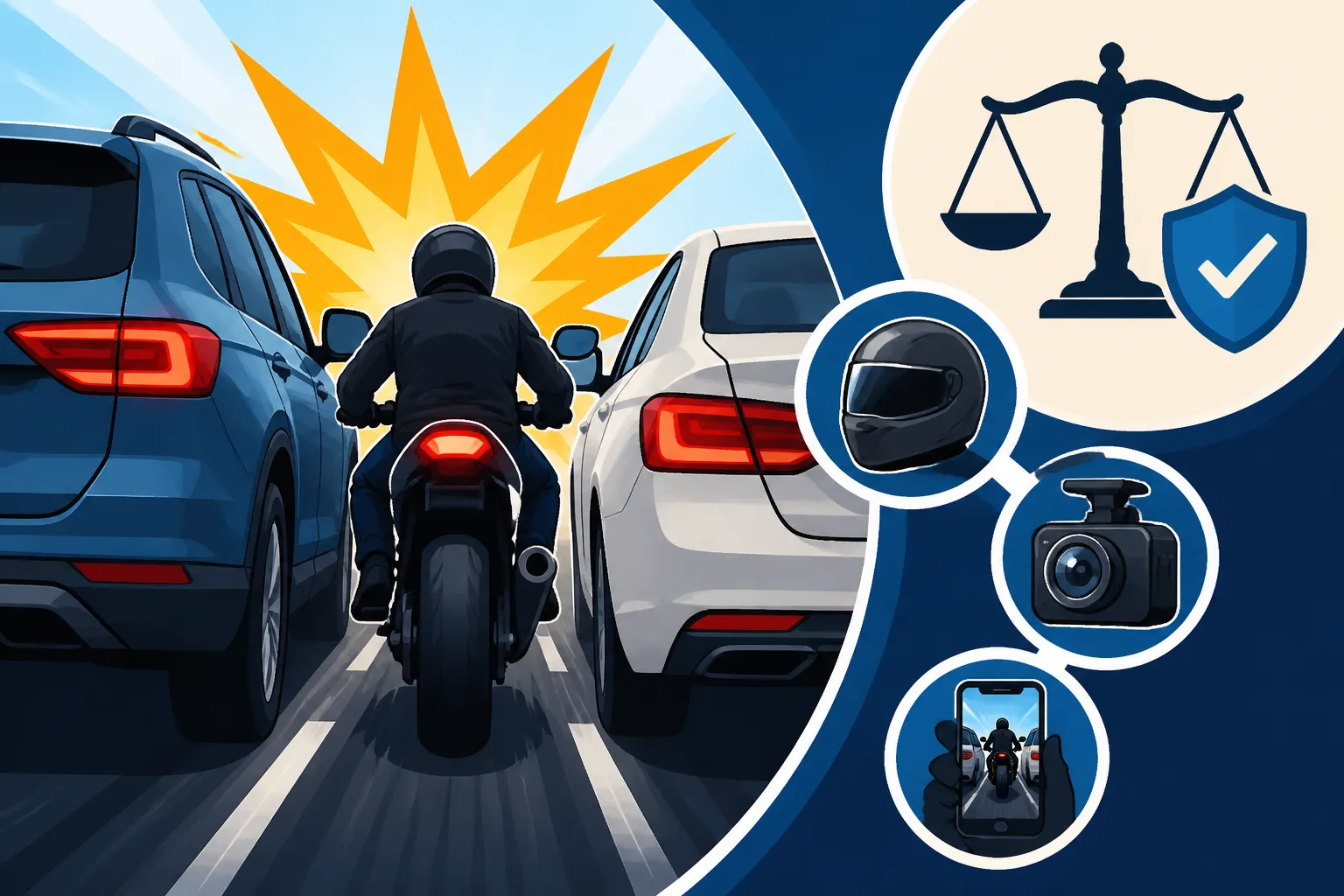
Lane splitting, sometimes called lane filtering, occurs when a motorcyclist rides between lanes of stopped or slow-moving traffic. The idea behind it, from a rider's perspective, often revolves around safety and efficiency. Many riders argue that it can reduce the risk of being rear-ended by inattentive drivers, especially in stop-and-go traffic. It also helps mitigate overheating for air-cooled engines and allows riders to move through congestion more quickly.
However, for many car drivers, the sight of a motorcycle zipping between vehicles can be startling or even perceived as reckless. This perception is a significant hurdle you'll face when trying to prove fault after a lane-splitting accident. It's not just about what happened, but often about the preconceived notions people have about motorcycle riders and this specific maneuver.
State-Specific Lane Splitting Laws
Here’s where things get really complex and frustrating: the legality of lane splitting is not universal across the United States. In fact, it varies significantly from one state to another, making it a legal minefield if you're not aware of the specific regulations where your accident occurred.
Currently, California is the only state that explicitly permits lane splitting for motorcycles, and even there, it comes with specific guidelines regarding speed and traffic conditions. For instance, in California, it's generally recommended that riders don't exceed the speed of surrounding traffic by more than 10 mph and that it's done only when traffic is moving slowly. Utah has legalized lane filtering, a more restricted version where motorcycles can move to the front of a stoplight at low speeds. Montana also allows lane filtering under certain conditions. Most other states either explicitly prohibit it, or their laws are silent on the matter, which often defaults to it being illegal or at least highly questionable in a court of law.
Understanding these state-specific rules is paramount. If you were involved in a crash while lane splitting in a state where it's illegal, that fact alone will present a significant challenge to your case. However, it doesn't automatically make you 100% at fault, as we’ll discuss next. For a deeper dive into the legal landscape, you might want to look at a guide on Lane Splitting Legality and Fault by State.
How Lane Splitting Influences Fault Determination
Even when lane splitting is legal, insurance companies and opposing legal teams will almost always try to use it against you. They'll argue that your presence between lanes created an unforeseen hazard, or that you contributed to the accident by putting yourself in a vulnerable position. This is where concepts like Comparative Negligence in Motorcycle Accidents or shared fault come into play.
In states that follow comparative negligence rules, fault can be assigned as a percentage to each party involved. So, even if the other driver made a sudden lane change without looking, if you were lane splitting outside of legal parameters (e.g., too fast, or in a state where it's illegal), you might still be assigned a percentage of fault. This percentage directly impacts your ability to recover damages and the total amount you can receive. For example, if you are deemed 20% at fault, your total compensation could be reduced by 20%. This is why gathering robust evidence to clearly establish the other driver’s negligence is so important, regardless of the legality of your lane splitting at the time. A thorough understanding of How Fault Is Determined in Motorcycle Accidents is crucial.
Key Evidence for Proving Fault in Lane Splitting Accidents
After a lane-splitting crash, the immediate aftermath can be chaotic and overwhelming. However, what you do in those crucial moments can make or break your ability to prove the other driver's fault. Collecting specific types of evidence is absolutely critical.
Accident Scene Documentation
The scene of the accident is a treasure trove of information, and documenting it thoroughly is your first line of defense. Don't rely solely on the police or anyone else to do this for you; your perspective as the rider is invaluable.
- Photos and Videos: Capture everything. This means taking pictures and videos from multiple angles – close-ups of vehicle damage, wide shots showing the position of your motorcycle and the other vehicle in the lanes, debris fields, skid marks, traffic signals, road conditions (potholes, gravel), and any relevant road signs. Crucially, try to capture the exact location relative to lane lines. If the other vehicle moved into your lane, document the lane lines to show their path. Don't forget photos of your injuries and damaged gear. This visual evidence can powerfully refute claims that you "came out of nowhere" or were riding recklessly. You can find more detail on this in Photos to Take to Prove Motorcycle Fault.
- Witness Statements: Eyewitnesses can provide unbiased accounts of what they saw. This is particularly vital in lane-splitting incidents, as they can corroborate that the other vehicle suddenly swerved, changed lanes without signaling, or was distracted. Get their names, phone numbers, and email addresses. Even if they only saw part of the incident, their perspective can be valuable. How Witnesses Affect Motorcycle Fault explains just how important these accounts can be.
- Police Report: The police report is an official document that records initial findings, statements, and sometimes an officer's opinion on fault. While it's not always the final word on liability, it carries significant weight. Make sure an officer is called to the scene and that a report is generated. Review it carefully for accuracy later on; police officers are not immune to biases against motorcyclists, and mistakes can happen. Find out more about its impact in How Police Reports Establish Fault.
Traffic Data and Vehicle Information
Beyond the immediate scene, there's digital and forensic evidence that can provide irrefutable proof of what happened.
- Dashcam Footage: This is gold. If the other vehicle or any surrounding vehicles had dashcams, that footage could provide a crystal-clear picture of the events leading up to the crash, including the other driver’s actions and your motorcycle’s position. Many modern cars also have built-in cameras.
- Event Data Recorders (EDRs): Often called "black boxes," EDRs in modern vehicles record data like speed, braking, steering input, and seatbelt usage in the moments before a crash. This data can scientifically prove whether the other driver suddenly braked, swerved, or accelerated, which is crucial in refuting claims that you were solely responsible.
- Traffic Camera Footage: Depending on where the accident occurred, there might be nearby traffic cameras or surveillance cameras from businesses that captured the incident. This is often something an attorney will pursue.
- Accident Reconstruction: For complex cases, especially when liability is heavily disputed, an accident reconstruction expert can analyze all physical evidence, vehicle data, and witness statements to scientifically recreate the crash sequence. Their findings can be incredibly persuasive in proving fault. You may want to understand When to Hire an Accident Reconstruction Expert for your case.
Rider and Driver Conduct
Finally, your conduct and the other driver's actions leading up to the accident are central to determining fault.
- Other Driver's Negligence: Was the other driver distracted? Were they texting, talking on the phone, or otherwise not paying attention? Did they make an illegal lane change without signaling or checking their blind spots? Proof of these actions, such as phone records or witness testimony, can strongly establish their negligence. This is especially true in cases of Motorcycle Accidents Caused by Unsafe Lane Changes or Motorcycle Accidents Caused by Distracted Driving.
- Rider's Adherence to Laws: If lane splitting is legal in your state, did you adhere to all the conditions? Were you within the speed differential limits? Was traffic moving slowly enough? Your ability to prove you followed the rules is essential. If you were adhering to all the laws and operating safely, it significantly strengthens your claim that the other driver’s negligence was the sole cause. If you're concerned about how your own actions might be viewed, an article on What Happens If You Were Lane Splitting can provide more context.
Challenges and Strategies in Proving Fault
Even with solid evidence, proving fault in a lane-splitting accident often comes with unique hurdles. Understanding these challenges and having strategies to overcome them is key to a successful claim.
Overcoming Rider Bias
One of the most insidious challenges motorcyclists face after an accident, particularly a lane-splitting incident, is the pervasive bias against riders. Many drivers, law enforcement officers, and even jury members hold preconceived notions that motorcyclists are inherently reckless, speeding, or putting themselves in dangerous situations. This bias can unfairly influence initial police reports, witness statements, and even an insurance adjuster's assessment of fault. It's a frustrating reality for many in the riding community.
To combat this, your strategy must be calm, factual, and unwavering. Focus entirely on the objective evidence: the positions of the vehicles, the other driver's actions (or inactions), and adherence to traffic laws. Avoid emotional arguments. Your demeanor throughout the process – from the accident scene to discussions with insurance adjusters – needs to project responsibility and adherence to the rules. A detailed resource on Rider Bias in Fault Determination can offer more insights into how these stereotypes are used against riders and strategies to counter them. Additionally, it's worth reviewing How Insurers Use Rider Stereotypes Against You to anticipate their tactics.
Dealing with the "I Didn't See You" Defense
This is perhaps the most common defense uttered by drivers involved in collisions with motorcycles, especially during lane splitting. While frustrating, it's not a legal excuse. Drivers have a fundamental duty to operate their vehicles safely, which includes thoroughly checking mirrors and blind spots before making any maneuvers, like changing lanes. The fact that they "didn't see" a motorcycle, even one lane splitting, often points directly to their negligence and failure to uphold this duty.
Your evidence needs to directly counter this defense. Dashcam footage or traffic camera footage showing the motorcycle clearly visible before the crash is incredibly powerful. Witness testimony that the other driver abruptly changed lanes without looking can also dismantle this defense. Furthermore, an accident reconstructionist can often demonstrate that given the conditions and visibility, the driver should have seen your motorcycle, regardless of their claim. The legal implications and strategies to overcome this defense are often discussed in articles like 'I Didn't See the Motorcycle' Defense Explained.
The Role of Accident Reconstruction
When the facts are heavily disputed, or the physical evidence is complex, an accident reconstruction expert becomes an invaluable asset. These highly specialized professionals use scientific principles, physics, and engineering to analyze every piece of available data – from skid marks and vehicle damage to EDR data and witness statements – to create a detailed, objective recreation of the accident sequence.
Their expertise can determine:
- Exact speeds: Both your motorcycle's and the other vehicle's at impact.
- Points of impact: Precisely where the vehicles collided.
- Vehicle trajectories: How each vehicle moved before and after the collision.
- Driver inputs: Such as braking, steering, or acceleration from EDR data.
The findings from an accident reconstruction report can be incredibly persuasive in settlement negotiations or, if necessary, in court. They provide an impartial, scientific basis for assigning fault, often cutting through subjective biases and conflicting eyewitness accounts. This level of detail can be the difference-maker, especially when an insurance company tries to assign partial fault to you without compelling evidence. The decision to pursue such an expert is usually made in consultation with your legal team, who will assess the complexity and potential value of your case. For more on this, check out How Accident Reconstruction Determines Fault.
Steps to Take Immediately After a Lane Splitting Crash
The moments following a motorcycle accident, especially one involving lane splitting, are critical. Your actions can significantly impact your ability to prove fault and ultimately recover damages.
Prioritize Safety and Medical Attention
Your health and safety are paramount. Even if you feel shaken but generally okay, you absolutely must prioritize getting medical attention.
- Move to a Safe Location: If you are physically able and it is safe to do so, move your motorcycle and yourself out of the flow of traffic to prevent further collisions. However, do not move anything if you believe it will compromise evidence or if you are severely injured.
- Call 911: Always call emergency services. Even if injuries seem minor, having police and paramedics respond creates an official record of the accident. Paramedics can assess your injuries on the scene, and police will file an accident report, which is crucial for your claim.
- Seek Medical Evaluation: Adrenaline can mask pain, and some serious injuries, like internal bleeding or concussions, might not be immediately apparent. See a doctor or go to the emergency room as soon as possible, even if you decline ambulance transport. A delay in seeking treatment can be used by insurance companies to argue that your injuries weren't caused by the accident or aren't as severe as you claim. Timely medical documentation is foundational for any personal injury claim. This important step is covered in detail in What to Do Immediately After a Motorcycle Accident.
Document Everything at the Scene
The accident scene is fleeting; gather as much information as you can while it's fresh.
- Photos and Videos are Your Best Friends: We covered this in detail earlier, but it bears repeating. Get photos of everything – vehicle positions, damage, road conditions, traffic signs, debris, skid marks, and anything that shows where your bike was in relation to the car and lane lines. Don't forget your injuries and damaged gear. The more visual evidence, the better.
- Gather Information: Exchange contact and insurance information with the other driver. Get their full name, phone number, address, driver's license number, and insurance company details.
- Identify and Speak to Witnesses: This is incredibly important in lane-splitting cases. Ask anyone who saw the crash for their name and contact information. Their unbiased account can be invaluable in countering the "I didn't see you" defense or claims of reckless riding.
- DO NOT Admit Fault: This is a golden rule after any accident. Even a polite "I'm sorry" can be twisted and used against you later as an admission of guilt. Stick to the facts. Don't speculate or offer opinions about what happened. You can learn more about this crucial advice in Why You Should Never Admit Fault at the Scene.
Report to Authorities and Your Insurer
Once the immediate scene is handled and you've sought medical care, your next steps involve official reporting.
- Cooperate with Police: Provide them with an accurate, factual account of what happened. Be clear about your location in the lane, the other driver's sudden movement, and any traffic law violations you observed. Make sure they know you were lane splitting (if you were) and whether it's legal in your state. Ensure they file a report.
- Notify Your Insurance Company: You should notify your own insurance company about the accident promptly. However, keep your initial statement brief and factual. You are generally only obligated to cooperate with your own insurer. When it comes to the other driver's insurance company, be very cautious.
- Consult with an Attorney: This is perhaps the most crucial step. Before giving any detailed statements to the other driver's insurance company or signing any documents, speak with a qualified motorcycle accident attorney. Insurance adjusters are trained to minimize payouts, and they will use anything you say against you. An attorney can advise you on your rights, handle all communications with insurance companies, gather additional evidence, and build a strong case to prove fault. For deeper insights into navigating the aftermath, check out First Steps to Protect Your Motorcycle Claim.
By meticulously documenting the scene, understanding the relevant laws, and strategically managing communication, you significantly increase your chances of proving fault and securing fair compensation after a lane-splitting crash.
Important Evidence for Lane Splitting Accident Claims
To consolidate, here's a quick look at the critical types of evidence you’ll want to gather and present to prove fault in a lane-splitting accident:
| Evidence Type | What It Proves |
|---|---|
| Photos/Videos | Vehicle positions, damage, road conditions, lane lines, driver's lack of signal, your adherence to safe riding. |
| Witness Statements | Independent accounts of the other driver's negligence (e.g., sudden lane change), corroborates your story. |
| Police Report | Official record of the incident, initial findings, statements, and sometimes preliminary fault assessment. |
| Dashcam/Traffic Footage | Objective, irrefutable visual evidence of the accident sequence, driver actions, and your visibility. |
| Event Data Recorders | Scientific data on speed, braking, steering input of the other vehicle moments before impact, proving their actions. |
| Medical Records | Documents your injuries, treatment, and directly links them to the accident, establishing damages. |
| Accident Reconstruction | Expert analysis recreating the crash, providing scientific backing for fault determination in complex cases. |
| Traffic Law Evidence | Proof that you were lane splitting legally (if applicable) and the other driver violated traffic laws. |
This table highlights the multifaceted approach required to build a compelling case. Each piece of evidence plays a role in telling the complete story and countering potential defenses.
Disclaimer
The information provided in this guide is intended for general informational purposes only and does not constitute legal advice. Motorcycle accident laws, including those related to lane splitting and fault determination, vary significantly by jurisdiction. It is crucial to consult with a qualified legal professional for advice tailored to your specific situation and location.