Motorcycle Accident Fault Laws in Missouri
After a motorcycle accident in Missouri, one of the most overwhelming and confusing aspects can be figuring out who is actually to blame. It’s not just about pointing fingers; fault determination directly impacts whether you can recover damages for your injuries, your medical bills, and the sheer trauma you’ve endured. This guide will walk you through the specifics of motorcycle accident fault laws in Missouri, helping you understand your rights and the steps you need to take to protect your claim.
Understanding Missouri's Comparative Negligence System
When you've been in a motorcycle accident, especially one that wasn't your fault, it's natural to assume the other driver's insurance will simply pay for everything. However, the legal reality, particularly in Missouri, is a bit more nuanced. Missouri operates under a specific legal doctrine known as "pure comparative negligence." This concept is incredibly important because it dictates how much compensation you can receive, even if you share some degree of responsibility for the crash.
Imagine you're cruising down a scenic stretch of Highway 13 outside Springfield, enjoying a perfect afternoon, and suddenly, a car makes an unexpected turn, causing you to lay down your bike. While the other driver might be primarily at fault, an investigation could potentially assign a small percentage of fault to you—perhaps for riding slightly above the speed limit, even if that wasn't the direct cause of the collision. In a pure comparative negligence state like Missouri, this assigned fault directly impacts your final settlement.
Pure vs. Modified Comparative Negligence in Missouri
It's easy to get comparative negligence mixed up with other systems, but understanding Missouri's "pure" form is crucial. In some states, known as "modified comparative negligence" states, if you are found to be 50% or 51% or more at fault, you might be completely barred from recovering any damages. That's a huge hurdle for riders, as insurance companies often try to place a disproportionate amount of blame on motorcyclists due to prevailing biases.
However, in Missouri, the rules are different. Under Pure vs Modified Comparative Negligence Explained, even if you are found to be 99% at fault for an accident, you could technically still recover 1% of your damages. While recovering only a tiny fraction of your losses isn't ideal, it means the door to compensation is never completely closed based on your percentage of fault alone. This makes fighting for an accurate fault assessment incredibly important, no matter how small your perceived contribution to the accident might seem.
For example, if you sustained $100,000 in damages (medical bills, lost wages, pain and suffering), and a jury or insurance adjuster determines you were 20% at fault, your recoverable damages would be reduced by 20%. Instead of $100,000, you would receive $80,000. If you were found 60% at fault, you'd receive $40,000. It's a direct, proportional reduction. This system is designed to ensure that all parties who contribute to an accident share some financial responsibility, but it doesn't completely block recovery based on a fault threshold.
How Fault Impacts Your Settlement Amount
The percentage of fault assigned to you directly translates into a reduction in the total compensation you can receive. This applies to all types of damages, including economic and non-economic losses. Economic damages cover things like medical bills, lost wages, and property damage, which are relatively easy to quantify. Non-economic damages, on the other hand, compensate for things like pain and suffering, emotional distress, and loss of enjoyment of life, which are more subjective but often constitute a significant portion of a motorcycle accident settlement.
Let's consider a scenario in St. Louis. You're riding your Harley-Davidson and another driver, distracted by their phone, swerves into your lane, causing a collision. You suffer a broken leg, requiring surgery, and extensive road rash. Your medical bills alone are $40,000, you lose $10,000 in wages, and your pain and suffering are valued at $50,000. Total damages: $100,000. If the other driver is found 100% at fault, you could potentially recover the full $100,000. However, if the insurance company or a jury determines you were 15% at fault (maybe you weren't wearing a DOT-compliant helmet, for example, even if it didn't cause the crash, it might be used to argue some contribution to your injuries), your total recovery would be reduced to $85,000. Understanding how this reduction works is key to understanding How Fault Affects Your Settlement in Missouri.
Insurance companies, knowing Missouri's pure comparative negligence rules, will almost always try to assign some fault to the motorcyclist. It's a tactic to reduce their payout, and it's a frustrating reality many riders face. They might allege you were speeding, not paying attention, or that your bike's modifications somehow contributed to the crash. This is why meticulous documentation and a strong legal advocate are indispensable.
Common Scenarios and Fault Determination in Missouri
Motorcycle accidents often involve unique circumstances that can make fault determination complex. Beyond the simple "who hit whom," there are specific scenarios where Missouri law, common prejudices, and evidence play a critical role in establishing liability. Understanding these can help you anticipate the challenges you might face.
Left-Turn Accidents and the "Didn't See Me" Defense
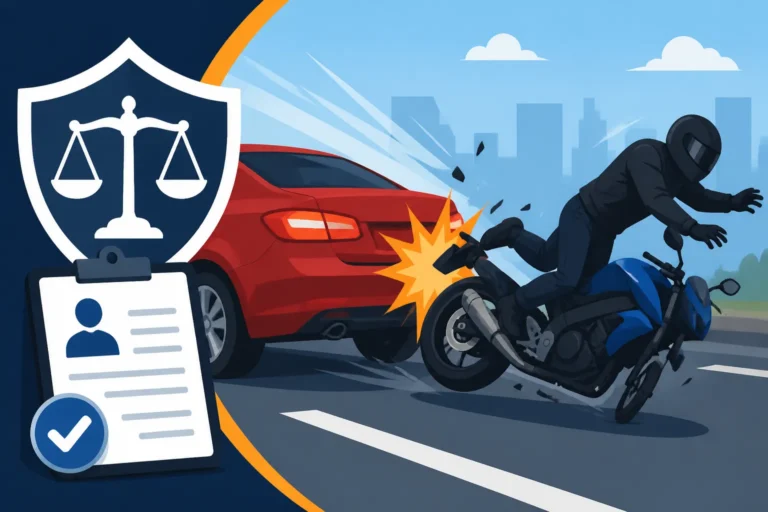
One of the most common and dangerous types of motorcycle accidents involves a car making a left turn in front of an oncoming motorcycle. This scenario is tragically frequent and often leads to severe injuries for riders. In Missouri, as in many states, the driver making a left turn is generally required to yield to oncoming traffic, including motorcycles. Therefore, in most cases, the turning driver is found at fault for Left-Turn Motorcycle Accidents Explained.
However, you'll almost inevitably hear the classic defense: "I didn't see the motorcycle." This isn't just a casual excuse; it's a common plea that insurance companies use to shift blame or reduce the at-fault driver's liability. They might argue that the motorcycle was in the driver's blind spot, that its smaller profile made it less visible, or even that the rider was speeding, thereby reducing the driver's reaction time. It's a deeply frustrating argument that feeds into the unfair stereotype that riders are somehow invisible or reckless. To combat this, detailed evidence of the crash scene, traffic light sequencing, dashcam footage, and witness statements are paramount.
Lane Splitting and Fault in Missouri
Lane splitting, the practice of a motorcycle riding between lanes of slow or stopped traffic, is a hot topic among riders. While it's legal in some states, it is not legal in Missouri. Currently, Missouri law prohibits lane splitting. This is a critical point for any rider involved in a crash while engaging in this practice.
If you are involved in an accident while lane splitting on, say, I-70 near Kansas City, the fact that you were violating the law could be used against you to assign a significant percentage of fault. Even if another driver commits a clear error, an insurance company will likely argue that your illegal lane splitting contributed to the accident or your injuries. For example, if a car unexpectedly changes lanes and hits you while you're splitting, the car driver might still be primarily at fault for the unsafe lane change. However, your illegal lane splitting could reduce your recoverable damages under Missouri's pure comparative negligence system. It's a tough pill to swallow, but it's the reality of the law.
Other Factors Affecting Fault: Speeding, Distracted Driving, and Road Hazards
Beyond specific maneuvers, many other factors can influence how fault is determined in a motorcycle accident in Missouri.
- Speeding: If you were speeding, even if another driver initiated the incident, your speed could be used to argue that you contributed to the severity of the crash or reduced your ability to react, thereby assigning you a percentage of fault. This is true whether you're riding through rural Missouri or downtown Columbia.
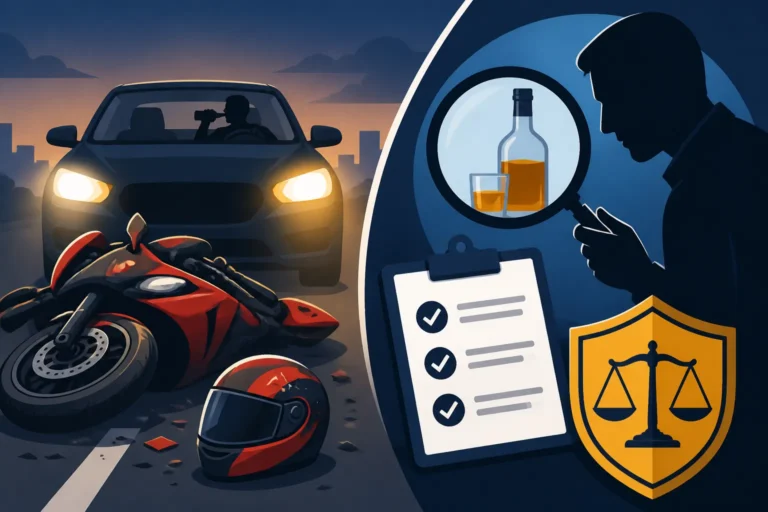
- Distracted Driving: This is a huge problem. Car drivers using their phones, adjusting navigation, or engaging in other distracting behaviors are a leading cause of collisions. Proving the other driver was distracted can significantly strengthen your case, as it establishes clear negligence. This evidence often comes from witness statements, phone records, or even the driver's own admission. You can learn more about How to Prove the Other Driver Was Distracted in a crash.
- Road Hazards: Sometimes, the other "at-fault party" isn't another driver but the condition of the road itself. Potholes, gravel, debris, or poorly maintained construction zones can be incredibly dangerous for motorcycles. If a road hazard caused your accident, the responsible entity (city, county, or state government, or a construction company) might be liable. However, suing a governmental entity has its own set of complex rules and shorter deadlines, often requiring specialized legal knowledge. Understanding Government Liability for Road Hazards is key in such cases.
Proving Fault and Protecting Your Claim in Missouri
The burden of proving fault generally falls on the injured party. This means that after a motorcycle accident in Missouri, it's your responsibility to gather evidence and build a compelling case that clearly demonstrates the other party's negligence. This can feel overwhelming, especially when you're recovering from injuries, but every piece of evidence can be crucial.
Gathering Critical Evidence at the Scene
The moments immediately following an accident are chaotic, but they are also a critical window for collecting evidence. If you are physically able, here are some steps to take to strengthen your claim:
- Take Photos and Videos: Use your phone to extensively document the scene. Get pictures of your motorcycle, the other vehicles involved, road conditions, skid marks, traffic signs, debris, and any visible injuries. Capture different angles and distances. This visual record is often irrefutable evidence.
- Collect Witness Information: Bystanders often disappear quickly. If anyone saw the crash, get their names, phone numbers, and email addresses. Their unbiased accounts can be invaluable, especially against the "I didn't see you" defense. You can learn more about How Witnesses Affect Motorcycle Fault.
- Exchange Information: Get the other driver's license plate number, driver's license details, insurance information, and phone number. Do not engage in arguments or admit fault, even if you think you might be partially to blame. Simply exchange information.
- Seek Medical Attention: Even if you feel okay, get checked out by paramedics or go to an urgent care clinic or emergency room. Some serious injuries, like concussions or internal bleeding, might not show symptoms immediately. Prompt medical documentation links your injuries directly to the accident.
The Role of Police Reports and Witness Statements
The police report is often the first official documentation of your accident. While it's an important piece of evidence, it's not always the final word on fault. A police officer's determination of fault in a report is their opinion based on the evidence available at the scene, not a legal ruling. Sometimes, officers, due to common biases, may assign undue fault to a motorcyclist. If the police report contains inaccuracies or unfairly places blame on you, it is possible to contest it or provide additional evidence to set the record straight. Understanding How a Police Report Can Hurt Your Claim is important for protecting your interests.
Witness statements, particularly those from impartial third parties, can carry significant weight. They can corroborate your version of events, contradict the other driver's claims, and provide crucial details that might not be visible in photos. For instance, a witness might have seen the other driver distracted by their phone or making an abrupt lane change without signaling.
Why Legal Guidance is Crucial in Missouri
Navigating the complexities of Missouri's pure comparative negligence laws and dealing with insurance companies can be incredibly challenging, especially when you're recovering from injuries. An experienced motorcycle accident attorney in Missouri understands the tactics insurance adjusters use to minimize payouts, including trying to shift blame to the rider. They can help you gather the necessary evidence, interview witnesses, work with accident reconstruction experts, and build a strong case to prove the other driver's fault and maximize your compensation. This is one of the most compelling Signs You Need a Motorcycle Accident Lawyer.
Navigating the Aftermath: Insurance and Legal Steps in Missouri
After the initial shock of a motorcycle accident, the reality of dealing with insurance companies and the legal system quickly sets in. Knowing what to expect and how to protect yourself is vital for any rider in Missouri.
Dealing with Insurance Adjusters
Insurance adjusters, whether from your company or the at-fault driver's, are not on your side. Their primary goal is to settle your claim for the lowest possible amount. They are trained to find ways to reduce their liability, and in Missouri's comparative negligence system, that often means trying to assign a percentage of fault to you.
When talking to adjusters, be polite but guarded. Stick to the facts you know. Never admit fault, even implicitly. Avoid giving recorded statements without first consulting with an attorney. They might ask leading questions or try to get you to speculate about what happened. Simply state that you're seeking medical treatment and that your attorney will handle further communication. Remember, what you say can and will be used against you to reduce your settlement amount. This is a critical step in What to Do Immediately After a Motorcycle Accident.
Missouri's Statute of Limitations for Motorcycle Accidents
Time is a critical factor in personal injury claims in Missouri. The state has strict deadlines for filing lawsuits, known as the "statute of limitations." For most personal injury claims resulting from a motorcycle accident, including those seeking compensation for medical expenses, lost wages, and pain and suffering, you generally have five (5) years from the date of the accident to file a lawsuit.
While five years might seem like a long time, it passes quickly, especially when you're focused on recovery. Missing this deadline almost certainly means losing your right to pursue compensation, regardless of how strong your case might be. There are limited exceptions to this rule, but it's dangerous to rely on them. It's always best to consult with an attorney as soon as possible after your accident to ensure all deadlines are met and your rights are protected. For wrongful death claims, the statute of limitations is generally three years. Understanding these timelines is crucial to safeguarding your ability to recover damages.
Key Aspects of Missouri Motorcycle Accident Fault Laws
To help consolidate some of the key information, here’s a quick overview of how fault impacts motorcycle accident claims in Missouri:
| Aspect of Fault | Missouri Law Summary | Impact on Rider |
|---|---|---|
| System Type | Pure Comparative Negligence: You can recover damages even if you are mostly at fault (e.g., 99% at fault, still recover 1% of damages). | Damages are reduced proportionally to your assigned fault percentage. |
| Left-Turn Accidents | Drivers making left turns generally must yield to oncoming motorcycles. If they fail to do so, they are usually at fault. The "I didn't see them" defense is common but not automatically absolving. | Strong case for rider, but adjusters may still try to assign partial fault. |
| Lane Splitting | Illegal in Missouri. If engaged in lane splitting during an accident, it can be used against the rider to assign partial fault, reducing potential compensation. | Significant risk of partial fault assignment, even if another driver makes an error. |
| Speeding | If the motorcyclist was speeding, it can contribute to their percentage of fault, as it may argue reduced reaction time or increased impact severity. | Reduces potential compensation. |
| Distracted Driving | Strong evidence (e.g., phone records, witness statements) of the other driver's distraction can establish clear negligence and support the rider's claim. | Increases likelihood of other driver being found primarily at fault. |
| Road Hazards | Government entities or private contractors may be liable for accidents caused by poorly maintained roads or hazards. Suing these entities involves specific procedures and deadlines. | Can provide an avenue for recovery, but requires navigating complex legal processes. |
| Statute of Limitations | Generally five (5) years from the date of the accident for personal injury claims. | Missing this deadline can permanently bar your claim. Act promptly. |
| Rider Bias | Insurance companies and juries may have inherent biases against motorcyclists, often attempting to assign more fault to riders. | Requires proactive evidence gathering and strong legal advocacy to counter. |
Disclaimer
Please remember, this article provides general information and is not a substitute for professional legal advice. Every motorcycle accident case is unique, and the laws can be complex. If you've been involved in a motorcycle accident in Missouri, it's highly recommended to consult with a qualified personal injury attorney to discuss the specifics of your situation and understand your legal options.