Motorcycle Accident Fault Laws in Indiana
Riding your motorcycle on Indiana's scenic roads, whether it's cruising along Lake Michigan or navigating the rural routes of Amish Country, is a profound sense of freedom. But that freedom can quickly turn into a nightmare if you're involved in a crash, leaving you injured and confused about who's responsible and what your legal options are. This guide is here to cut through the legal jargon and explain Indiana's motorcycle accident fault laws, helping you understand how fault is determined and how it impacts your ability to recover compensation after a crash.
Understanding Indiana's At-Fault System
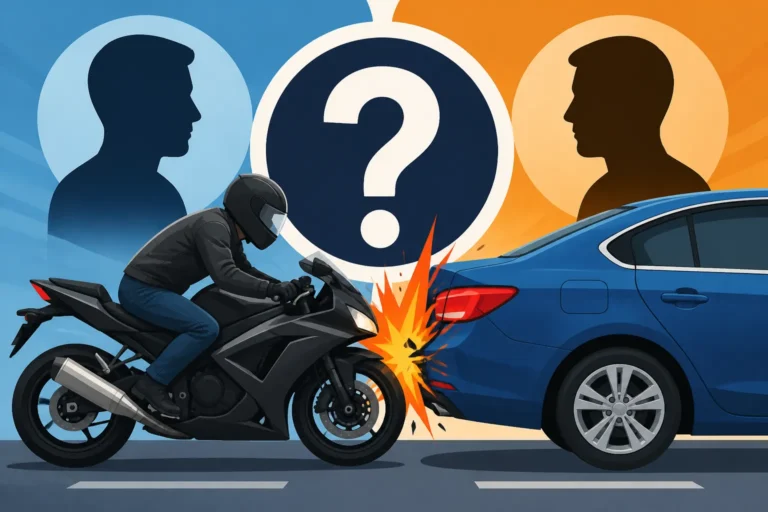
When a motorcycle accident happens in Indiana, one of the first and most critical questions everyone asks is, "Who's at fault?" It’s a natural human reaction, but in the eyes of the law, determining fault isn't always as straightforward as it seems. Indiana operates under an "at-fault" system, which means that the person who caused the accident is financially responsible for the damages suffered by others. This stands in contrast to "no-fault" states where your own insurance covers some initial costs regardless of who was to blame. For motorcycle riders in Indiana, this means assigning blame is paramount to getting the compensation you deserve.
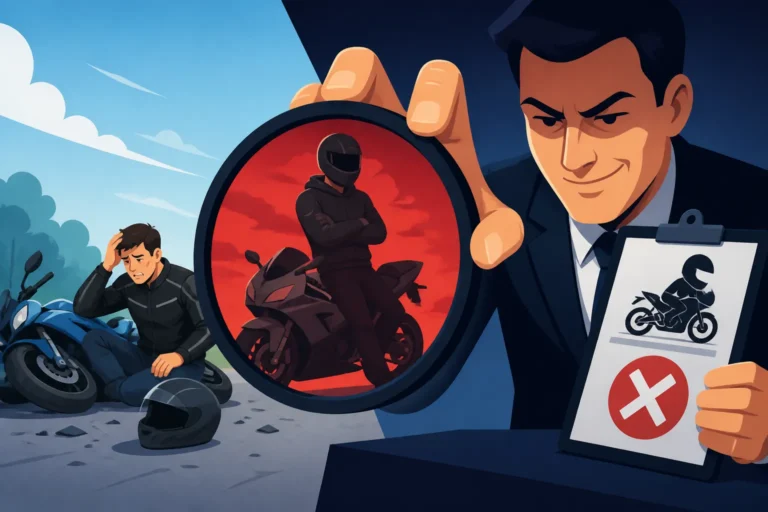
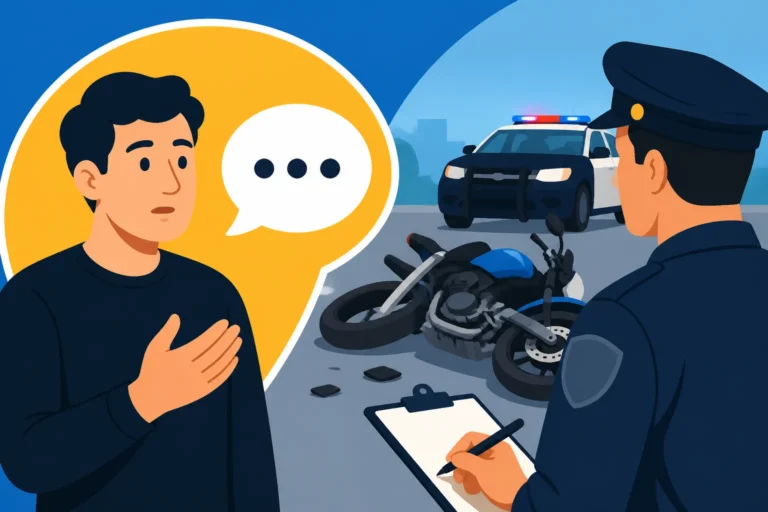
The journey to proving fault often starts at the scene, with police reports and witness statements. However, it's not uncommon for both parties to believe the other was in the wrong, leading to disputes that can drag on for months, or even years. Insurance companies, true to form, will go to great lengths to minimize their payout, often by trying to shift some or all of the blame onto the motorcycle rider. This can feel incredibly unfair, especially when you know you were riding safely, but it's a reality many riders face. Understanding how the state's specific fault rules work is your first line of defense.
The Basics of Comparative Negligence in Indiana
Indiana doesn't follow a strict "all or nothing" rule when it comes to fault. Instead, it uses a legal principle known as "modified comparative negligence." This concept is a bit nuanced, but it's vital for any rider involved in a crash to grasp. Essentially, it means that even if you bear some responsibility for the accident, you might still be able to recover damages from the other party, as long as your share of fault doesn't cross a specific threshold. This is different from "contributory negligence" states, where even 1% fault on your part would completely bar you from recovery.
Imagine you're riding through Indianapolis, enjoying a beautiful day, and a car unexpectedly merges into your lane, causing a collision. While the car driver is clearly mostly at fault, perhaps an investigation reveals you were slightly exceeding the speed limit, or maybe your headlight was out, making you less visible. In a pure contributory negligence state, that minor infraction on your part would mean you get nothing. However, in Indiana, those small percentages of fault matter, but they don't automatically disqualify you from seeking compensation. This system acknowledges that accidents are often complex events with multiple contributing factors, not just a single culprit. You can learn more about how this works in our comprehensive guide on Comparative Negligence in Motorcycle Accidents.
How Modified Comparative Negligence Works The 51% Rule
The specific cutoff point in Indiana's modified comparative negligence system is often referred to as the "51% rule." This rule states that if a motorcycle rider is found to be 50% or less at fault for an accident, they can still recover damages, but their compensation will be reduced by their percentage of fault. However, if a rider is deemed 51% or more at fault, they are completely barred from recovering any damages from the other party. This is a critical distinction that can make or break your claim.
Let's walk through an example. Suppose you were involved in a collision on I-65 near Carmel, and the total damages, including medical bills, lost wages, and pain and suffering, amount to $100,000.
- Scenario 1: The court or insurance adjusters determine you were 20% at fault, perhaps for not reacting quickly enough, and the other driver was 80% at fault. Under Indiana's 51% rule, you would still be eligible for compensation, but your $100,000 award would be reduced by 20%, meaning you would receive $80,000.
- Scenario 2: If, however, you were found 55% at fault (e.g., for an unsafe lane change), and the other driver 45% at fault, you would receive nothing. That 51% mark is a hard line, and crossing it effectively ends your claim for damages. This highlights the immense pressure and importance of accurately establishing who is primarily responsible for the crash. Understanding How Comparative Negligence Reduces Your Payout is crucial for managing expectations and strategizing your claim.
Establishing Fault After a Motorcycle Accident in Indiana
Establishing who is at fault after a motorcycle accident is rarely simple, especially in a state like Indiana with its modified comparative negligence laws. It's not just about pointing fingers; it's about meticulously collecting and presenting evidence to paint a clear picture of what happened. Insurance companies and legal teams on both sides will be digging deep, scrutinizing every detail to either prove or disprove negligence. This process can be incredibly stressful, particularly when you're also dealing with painful injuries and the disruption to your life. That’s why knowing what evidence is crucial and how common scenarios play out legally can give you a significant advantage. Our guide on Who Is at Fault in a Motorcycle Accident provides a broader overview of this complex topic.
Key Evidence for Proving Fault
The cornerstone of any successful motorcycle accident claim in Indiana is solid evidence. Without it, your claim is essentially a "he said, she said" situation, which rarely ends favorably for the injured rider. From the moment an accident occurs, everything becomes potential evidence. This includes the scene itself, the vehicles involved, and even your own physical condition and mental state. Delaying the collection of this evidence can severely weaken your position, as crucial details can be lost or forgotten over time.
Here's a breakdown of the critical pieces of evidence you'll need:
- Police Report: This is often the first official document detailing the accident. While not always definitive proof of fault in court, it provides an objective account from law enforcement, including observations, witness statements, and initial conclusions. A police report can significantly influence how insurance companies view the initial fault assessment. Learn more about How Police Reports Establish Fault.
- Witness Statements: Independent witnesses who saw the accident unfold can provide invaluable unbiased accounts. Their perspective can corroborate your story or contradict the other driver's, making them powerful tools in determining fault.
- Photos and Videos: Snap pictures and videos of everything at the scene: vehicle damage, road conditions, skid marks, traffic signals, surrounding landmarks, and your injuries. Modern smartphones make this easy, and these visual records can capture details that might be overlooked or change after the fact.
- Medical Records: Comprehensive medical documentation of your injuries, treatment, and recovery journey is essential. This not only proves the extent of your damages but can also link your injuries directly to the accident.
- Traffic Camera Footage/Dashcam Footage: Many intersections in cities like Fort Wayne or Bloomington are equipped with traffic cameras. If available, this footage can be irrefutable evidence. Similarly, if either vehicle had a dashcam, that video could be a game-changer.
- Accident Reconstruction: For complex accidents, experts can analyze physical evidence, vehicle damage, and other data to reconstruct the accident's sequence, often providing a scientific basis for fault determination.
- Your Own Testimony: Your detailed account of the events leading up to, during, and immediately after the crash is also a crucial piece of evidence. Consistency and credibility are key here.
Collecting and preserving these types of evidence is a proactive step that can dramatically improve your chances of a fair outcome in an Indiana motorcycle accident claim. For a deeper dive into what evidence to gather, check out our article on Motorcycle Accident Evidence for Proving Fault.
Common Scenarios and Fault Determination
While every motorcycle accident is unique, certain scenarios commonly lead to crashes and have established patterns for fault determination, especially within Indiana's legal framework. Knowing these can help you understand the likely initial assessment of blame, although it's never a guarantee.
Consider a few common situations:
- Left-Turn Collisions: This is perhaps one of the most common and dangerous types of motorcycle accidents. A car turning left directly into the path of an oncoming motorcycle is almost always found at fault, as the turning vehicle typically has the duty to yield to oncoming traffic. The classic line, "I didn't see the motorcycle," is a frequent, yet legally insufficient, excuse.
- Rear-End Collisions: If a car rear-ends your motorcycle, the striking vehicle is almost always presumed to be at fault. Drivers are expected to maintain a safe following distance and be able to stop in time. Exceptions might occur if the motorcycle suddenly stopped for no reason or had non-functional brake lights.
- Unsafe Lane Changes: When a driver changes lanes without properly checking their blind spots or signaling, causing them to collide with a motorcycle, they are usually held responsible. This highlights the vulnerability of motorcycles, often unseen in a car's blind spot.
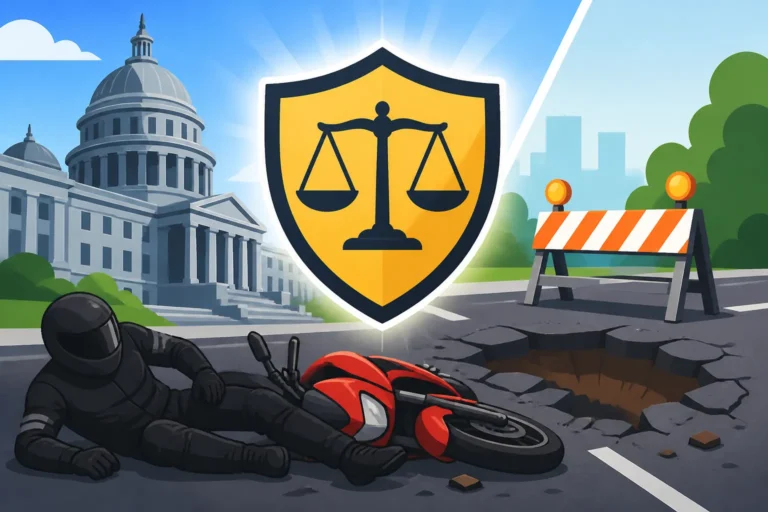
- Road Hazards: Sometimes, the fault might not lie with another driver but with a municipality or maintenance company responsible for road conditions. Potholes, gravel, or construction debris can all cause a motorcycle rider to lose control, and the entity responsible for maintaining that road could be liable.
In each of these scenarios, the modified comparative negligence rule still applies. Even if the other driver is primarily at fault, an insurance company might try to argue that you contributed to the accident in some way. For instance, in a left-turn collision, they might claim you were speeding. In a rear-end collision, they might say your brake light was out. It's these contested points where the nuances of Indiana's fault laws truly come into play, and where strong evidence becomes indispensable.
| Common Accident Type | General Fault Expectation (Indiana) | Potential Rider Fault Defense by Insurer |
|---|---|---|
| Left-Turn Collision | Turning driver at fault | Rider was speeding, in blind spot, or failed to react |
| Rear-End Collision | Rear driver at fault | Rider stopped suddenly, had non-functional brake lights, or cut off driver |
| Unsafe Lane Change | Changing driver at fault | Rider was in blind spot, riding too close, or speeding |
| Road Hazard | Municipality/responsible party | Rider was speeding, riding recklessly, or failed to avoid visible hazard |
| "Failure to Yield" (Stop/Sign) | Non-yielding driver at fault | Rider was speeding, not visible, or failed to take evasive action |
This table illustrates the common legal starting points, but it's crucial to remember that actual fault determination involves a deep investigation into all the specific facts and evidence surrounding your particular crash. This detailed process is part of How Fault Is Determined in Motorcycle Accidents.
How Fault Affects Your Motorcycle Accident Claim
Understanding Indiana's fault laws isn't just an academic exercise; it directly impacts the financial recovery you can achieve after a motorcycle accident. The percentage of fault assigned to each party in a collision has a tangible effect on the amount of compensation you might receive for your injuries and damages. It's often the central point of contention in negotiations with insurance companies, who will aggressively seek to minimize their client's fault and maximize yours. This is where the rubber truly meets the road, transforming legal theory into real-world financial consequences for injured riders.
Calculating Damages with Shared Fault
The 51% rule of modified comparative negligence in Indiana means that the greater your assigned fault, the less you will ultimately receive, or potentially nothing at all. This isn't just about your physical injuries and medical bills; it applies to all types of damages you might claim. When a settlement or judgment is reached, the total value of your damages is determined, and then that figure is reduced by your percentage of fault. This can be a disheartening reality for riders who were undeniably injured by someone else's negligence but still bear some minor blame.
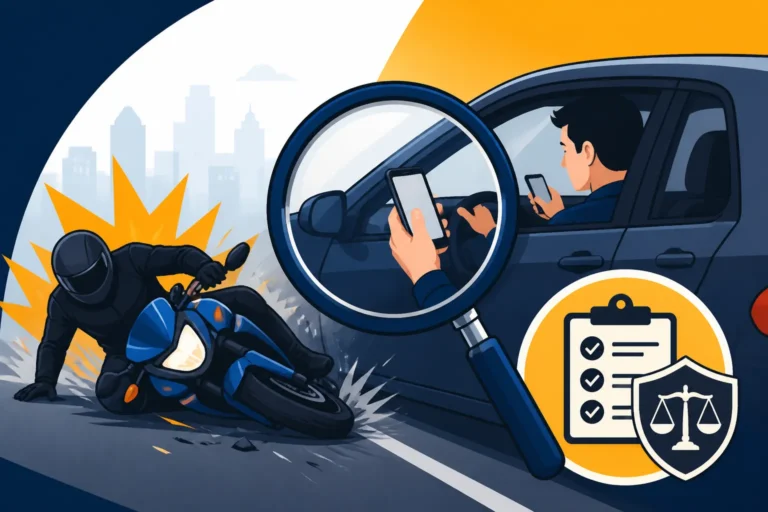
Let's revisit our $100,000 damage example. Suppose the other driver was clearly distracted by their phone, but you were found 30% at fault for riding slightly above the speed limit on a stretch of highway near Lafayette.
- Total Proven Damages: $100,000 (medical bills, lost wages, motorcycle repair, pain and suffering).
- Your Assigned Fault: 30%.
- Other Driver's Assigned Fault: 70%.
- Recoverable Damages: $100,000 – (30% of $100,000) = $70,000.
This reduction directly impacts your ability to cover mounting medical expenses, loss of income, and the pain and suffering you've endured. It's why every percentage point of fault becomes a fiercely debated issue. The goal in any claim is to minimize your own comparative fault, which requires thorough documentation and a strong legal strategy. This direct correlation between fault and payout is a cornerstone of Motorcycle Accident Liability: A Complete Guide.
The "Helmet Defense" and Other Factors in Indiana
Beyond the direct circumstances of the collision, other factors can influence the perception of fault and, consequently, your compensation in Indiana. One of the most prominent for motorcycle riders is the "helmet defense." While Indiana law mandates helmet use only for riders under 18 years of age, or for those with an instruction permit or temporary license, the decision to wear a helmet can still significantly impact your claim if you're injured.
Here's how it works:
- The Helmet Defense: If you were not wearing a helmet and suffered a head injury, the opposing insurance company or defense attorney will almost certainly argue that your injuries would have been less severe, or perhaps avoided entirely, if you had been wearing a helmet. They will then try to attribute a percentage of your head injury damages to your own negligence for not wearing a helmet, even if you were legally allowed to ride without one.
- For example, if you sustained a traumatic brain injury (TBI) and were not wearing a helmet, they might argue that 40% of the cost of your TBI-related medical treatment and suffering should not be covered by them, even if their driver caused the accident. This is a common tactic to reduce payouts. Our in-depth look at The Helmet Defense Explained offers more insights.
- Other Factors: Beyond helmets, other aspects of your conduct can be scrutinized. Were you riding without a valid motorcycle endorsement? Was your motorcycle properly maintained (e.g., working lights, tread on tires)? Were you engaging in unsafe maneuvers like lane splitting (which is generally not legal in Indiana)? Even if these actions didn't directly cause the accident, an aggressive defense might attempt to use them to assign some level of comparative fault, further reducing your potential settlement.
It’s a tough pill to swallow, but insurance companies are adept at finding any reason to reduce their liability. Being aware of these potential arguments upfront allows you to prepare a stronger counter-argument and protect your rightful compensation. This illustrates the complex interplay of various factors that can affect How Insurance Companies Assign Blame to Riders.
Navigating the Legal Complexities of an Indiana Motorcycle Claim
Dealing with the aftermath of a motorcycle accident in Indiana is already overwhelming, from managing physical recovery to handling damaged property. Layered on top of this are the legal intricacies that can make or break your ability to secure fair compensation. The legal system, especially when dealing with personal injury claims, has specific rules, deadlines, and procedures that must be followed. Failing to understand or adhere to these can severely jeopardize your claim, leaving you feeling frustrated and helpless. It's crucial to be informed about these elements to protect your rights and ensure a smoother path toward recovery.
Indiana's Statute of Limitations for Injury Claims
One of the most critical legal deadlines you'll face in an Indiana motorcycle accident claim is the statute of limitations. This is a legal term referring to the maximum amount of time you have to file a lawsuit after an incident. In Indiana, for most personal injury claims arising from a motorcycle accident, the statute of limitations is generally two (2) years from the date of the accident. This means you have two years to formally file a lawsuit in an Indiana civil court.
This deadline applies to claims for both personal injuries and property damage. While two years might seem like a long time, it passes much faster than you think, especially when you're focused on recovery.
- Why is this deadline so important? If you fail to file your lawsuit within this two-year window, you will almost certainly lose your right to pursue compensation through the court system, regardless of how strong your case might be or how severe your injuries are. The court will simply dismiss your case.
- What about negotiations? While you can negotiate with insurance companies outside of court, those negotiations must often conclude, or a lawsuit must be filed, before the statute of limitations expires. Insurance companies are well aware of this deadline and may drag out negotiations, hoping you'll miss it.
There are rare exceptions that can extend this deadline, such as if the injured party was a minor at the time of the accident, or if the injury wasn't discovered until much later (the "discovery rule"). However, these are complex legal nuances, and it's never wise to assume an exception applies without expert advice. Understanding How Long You Have to Hire a Lawyer is a vital piece of the puzzle.
When to Consider Legal Counsel in Indiana
Given the complexities of Indiana's modified comparative negligence laws, the aggressive tactics of insurance companies, and the strict deadlines like the statute of limitations, navigating a motorcycle accident claim on your own can be incredibly challenging and risky. While it's tempting to try and handle a minor fender bender yourself, serious injuries or disputed fault situations almost always benefit from professional legal assistance.
Here are scenarios where consulting with a knowledgeable motorcycle accident attorney in Indiana becomes not just helpful, but often essential:
- Serious Injuries: If you've suffered significant injuries like a traumatic brain injury, spinal cord injury, multiple fractures, or extensive road rash, your medical bills alone can be astronomical. An attorney can accurately calculate all your damages, including future medical costs, lost earning capacity, and pain and suffering, ensuring you don't accept a settlement that falls far short of your needs.
- Disputed Fault: If the other driver, or their insurance company, is trying to place blame on you, or if fault is unclear, an attorney can gather evidence, interview witnesses, and present a compelling argument on your behalf to minimize your assigned comparative fault.
- Insurance Company Tactics: Insurance adjusters are professionals trained to minimize payouts. They might offer a quick, lowball settlement, try to get you to admit fault, or downplay your injuries. An attorney can handle all communications, negotiate effectively, and protect you from these tactics.
- Multiple Parties: If the accident involved more than two vehicles, or if a road hazard contributed to the crash, determining liability can become incredibly complex, often involving multiple insurance companies and potentially even government entities.
- Uninsured/Underinsured Drivers: If the at-fault driver has little or no insurance, an attorney can help you explore other avenues for compensation, such as your own uninsured/underinsured motorist (UM/UIM) coverage.
- Wrongful Death: In the tragic event of a fatal motorcycle accident, legal counsel is absolutely critical to help surviving family members pursue a wrongful death claim and navigate the profound legal and emotional challenges.
A qualified Indiana motorcycle accident attorney understands the state's specific laws, has experience dealing with local insurance companies (like GEICO, Progressive, or State Farm), and can build a strong case to maximize your chances of a fair settlement or judgment. They can guide you through every step, from gathering evidence and negotiating with insurers to, if necessary, representing you in court. Knowing What to Do After a Motorcycle Accident often includes seeking legal advice promptly. For guidance on finding the right legal partner, our article on How to Choose a Motorcycle Accident Attorney can be a great resource.
Disclaimer
Please remember that this article provides general information and is not a substitute for legal advice from a qualified attorney. Motorcycle accident laws can be complex and vary based on the specific circumstances of your case and changes in legislation. If you have been involved in a motorcycle accident in Indiana, it is highly recommended that you consult with an experienced motorcycle accident lawyer to discuss your individual situation and legal options.