How a Police Report Can Hurt Your Claim
You've just been in a motorcycle accident, adrenaline is pumping, and the last thing on your mind is how a piece of paper might complicate your future. But here's the harsh reality: the police report, often seen as an unassailable record of what happened, can sometimes contain inaccuracies or biases that seriously jeopardize your motorcycle accident claim. This guide will walk you through the surprising ways a police report can work against you and, more importantly, what you can do about it to protect your rights and recovery.
The Apparent Authority of Police Reports and Their Hidden Pitfalls
When a police officer arrives at the scene of an accident, we naturally look to them to be the objective authority, the one who will sort out the chaos and document the facts. And for the most part, officers do their best to fulfill that role. However, it's crucial to understand that a police report is ultimately one person's interpretation of events, often based on limited information, quick assessments, and sometimes, even subconscious biases. This isn't to say police reports are worthless; they are often a foundational piece of evidence. But their perceived authority can make any errors or biased statements within them incredibly damaging.
Police Reports Aren't Always the Whole Story
Imagine the scene: sirens blaring, traffic backing up, injured parties, and damaged vehicles. An officer has a lot to manage, and they're under pressure to clear the scene and restore order. In this high-stress environment, they might not have the luxury of conducting a deep, forensic investigation. They're typically gathering statements from potentially rattled witnesses and drivers, observing the immediate aftermath, and making rapid judgments.
This means a police report might miss key details, or the narrative might be skewed by the first or most coherent account given, which isn't always the most accurate. For example, a driver might quickly state, "I didn't see the motorcycle," a common defense that can unfairly shift blame. If this statement is recorded without further investigation into why the driver didn't see you, it can become a narrative problem for your claim later on. An officer might not always delve into the intricacies of how fault is determined in motorcycle accidents at the scene itself, focusing more on immediate traffic violations.
Initial Officer Bias Against Motorcyclists
This is a tough pill to swallow, but it's a reality many riders face. There's a persistent, often unconscious, societal bias against motorcyclists. We're sometimes unfairly stereotyped as reckless, risk-taking individuals. Unfortunately, this bias can occasionally filter into police reports. An officer, even with the best intentions, might arrive at a scene with a preconceived notion that the motorcyclist was speeding, lane splitting illegally, or somehow contributed to the accident, even when evidence suggests otherwise.
This bias can manifest in subtle ways:
- Questioning: The officer might ask leading questions that subtly try to establish rider fault.
- Observation: They might focus on skid marks left by your motorcycle but overlook those from the other vehicle, or pay more attention to minor damage on your bike while downplaying significant impacts.
- Narrative: The report's narrative section might emphasize aspects of your riding or vehicle that are irrelevant to the crash's cause but contribute to a negative impression.
This isn't universal, of course, and many officers are meticulous and fair. But if you find yourself in a situation where the report seems to unfairly assign blame, understanding this potential bias can help you challenge it effectively.
Incomplete or Inaccurate Information Gathering
Picture this: you're lying on the asphalt, in pain and perhaps a bit disoriented. The officer is asking you questions, but your priority is your injuries, not giving a perfect blow-by-blow account. Meanwhile, the other driver, perhaps less injured or even unharmed, might be able to give a more composed (though not necessarily more accurate) statement. This disparity in immediate information gathering can lead to an incomplete or even inaccurate police report.
Officers might fail to:
- Identify all witnesses: Bystanders who saw the crash might leave before they're interviewed.
- Document critical road conditions: A pothole, gravel, or debris on the road might have played a significant role in your accident, but if the officer doesn't note it, it essentially disappears from the "official" record. This is especially important for cases involving motorcycle accidents caused by road hazards.
- Investigate driver distractions: In today's world, distracted driving is rampant. If the officer doesn't specifically ask about cell phone use or other distractions, this crucial information may be missed.
- Properly measure distances or positions: Eyewitness accounts and initial observations can be notoriously unreliable regarding speed and distance, and an officer’s hasty measurements might be inaccurate.
Any of these omissions or inaccuracies can then be used by insurance companies to chip away at your claim, or even outright deny it, because the "official" report doesn't support your version of events.
Specific Ways a Police Report Can Undermine Your Claim
The stakes are high after a motorcycle accident. You're likely dealing with serious injuries, medical bills, lost wages, and damage to your bike. The last thing you need is the very document meant to record the facts to turn into an obstacle. But an unfavorable police report can indeed throw a wrench into your recovery process in several concrete ways.
Incorrect Fault Determination
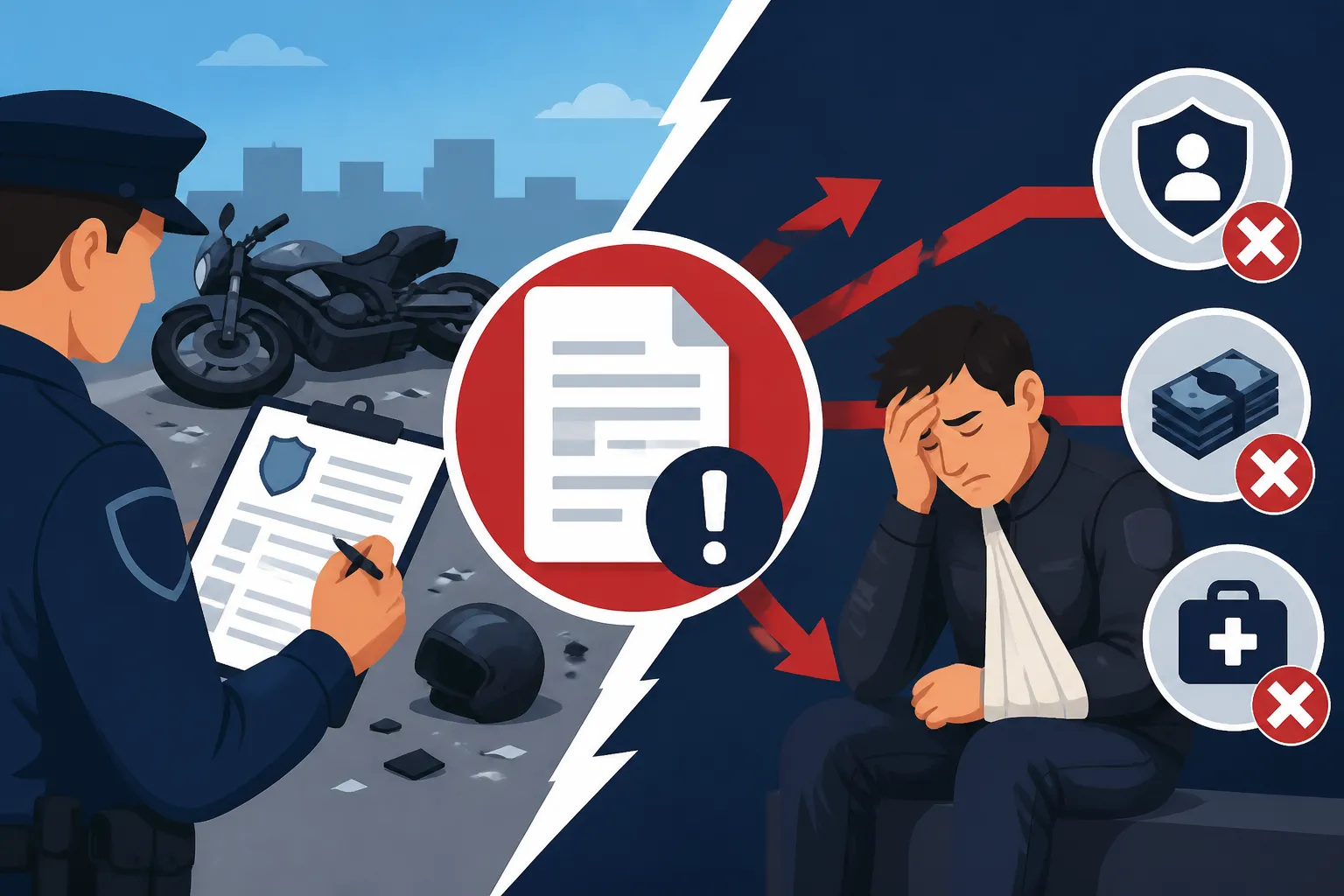
This is perhaps the most direct and damaging way a police report can hurt your claim. If the investigating officer incorrectly assigns you partial or full blame for the accident, it creates an immediate uphill battle. Insurance companies, notorious for seeking any reason to minimize payouts, will seize upon this finding. They'll use the report as their primary justification for offering a significantly reduced settlement or even denying your claim altogether.
For instance, if the report states you were speeding, even if you weren't, or that you failed to yield when the other driver clearly pulled out in front of you, the insurer will hold that against you. This is where concepts like comparative negligence come into play, where your potential recovery is reduced by your percentage of fault. An inaccurate report can easily push your perceived fault higher than it should be. The insurance adjuster might quote the report's conclusion, saying something like, "Well, the police report clearly states you were 20% at fault, so we're only offering 80% of your damages." This places the burden squarely on you to disprove an official document, which is far harder than simply presenting your side initially. This can be especially frustrating if you know the other driver was clearly at fault.
Omission of Crucial Details
Sometimes, it’s not what the report says, but what it doesn't say that causes problems. A police report might be factually correct in its documented observations, but critically incomplete. Missing details can render the report misleading and less supportive of your claim.
Consider these scenarios:
- Lack of driver error: The report might document your damage but fail to mention the other driver was making an illegal U-turn or ran a stop sign. If the officer didn't see the violation or couldn't prove it on the spot, it might be omitted.
- Ignored road hazards: A patch of loose gravel on a curve or a deep pothole could have contributed to your loss of control, but if the officer focuses solely on vehicle damage and doesn't explicitly note the road condition, the report will be silent on this important factor. This omission makes it harder to pursue a claim for motorcycle accidents caused by road hazards or against a municipality for poor road maintenance.
- Missing witness statements: Independent witnesses can be gold in an accident claim, especially to counteract the "I didn't see the motorcycle" defense. If the officer fails to identify or properly interview all witnesses, their crucial testimony won't be part of the official record. You can learn more about how witnesses affect motorcycle fault to understand their importance.
These omissions mean you'll have to work harder to gather and present this missing evidence, essentially correcting or supplementing the official record after the fact.
Inaccurate Descriptions of Injuries or Damage
While police officers are not medical professionals, their reports often include a section on injuries and vehicle damage. If these descriptions are inaccurate or minimize the severity of what you've experienced, it can subtly undermine your claim from the outset.
- Understated injuries: An officer might note "possible minor injuries" when you're actually suffering from significant internal trauma or a spinal injury that only becomes apparent hours or days later. This initial understatement can be used by insurers to argue your injuries weren't as severe as you claim, creating doubt about their connection to the crash. This is why seeking immediate medical treatment after an accident is paramount.
- Mischaracterizing property damage: If the report describes your motorcycle damage as cosmetic when, in fact, there's severe structural damage, it can affect the initial valuation of your property damage claim.
These inaccuracies, though not directly about fault, can affect the perceived legitimacy and extent of your overall damages, potentially leading to lower settlement offers for both your bike and your personal injuries.
Traffic Citations Issued to the Rider
Being issued a traffic citation at the scene of an accident is a nightmare for any rider. Even if it's a relatively minor infraction, that citation can be a powerful tool for the other driver's insurance company to argue your fault. For example, if you're cited for "unsafe speed for conditions" or an alleged lane splitting violation, even if it wasn't the proximate cause of the collision, the insurer will absolutely use it to shift blame.
It's important to understand that a traffic citation is not a definitive finding of fault in a civil claim, but it carries significant weight with adjusters. They'll use it to bolster their argument that you were partially or entirely responsible, thereby reducing the amount they're willing to pay. If you plead guilty or are convicted of the traffic violation, it becomes even harder to argue against your fault in the subsequent injury claim. This highlights why it's crucial to understand who is at fault in a motorcycle accident and how these factors are weighed.
What to Do When a Police Report Works Against You
Discovering that the official police report isn't on your side can feel like a punch to the gut. It's disheartening, frustrating, and can make you feel like the system is stacked against you. But don't despair. While challenging a police report isn't always easy, it's absolutely possible to mitigate its negative impact and work towards a fair resolution.
Reviewing the Report Carefully
Your first step is to get a copy of the police report as soon as it's available. You can usually obtain it from the local police department or highway patrol that responded to the accident. Once you have it, don't just skim it. Read every single word with a fine-tooth comb. Look for:
- Accuracy of basic facts: Is your name spelled correctly? Is the date, time, and location accurate? Are the other driver's details correct? Are the vehicle descriptions right?
- Narrative inconsistencies: Does the officer's description of the accident sequence match your memory or the physical evidence?
- Witness statements: Are all known witnesses listed? Are their statements accurately transcribed?
- Fault determination: Does the report explicitly assign fault? If so, does it align with what actually happened?
- Diagrams: Does the diagram accurately depict the final resting positions of the vehicles, points of impact, and road features?
- Citations: Were any citations issued to you or the other driver?
Highlight anything that is incorrect, missing, or misleading. This detailed review is your foundation for building a rebuttal.
Gathering Your Own Evidence
The police report is one piece of evidence, but it's rarely the only piece. To effectively counter an unfavorable report, you need to present a more comprehensive and accurate picture of the accident. This means being proactive about gathering your own evidence.
Think about what you collected at the scene, or what you can collect now:
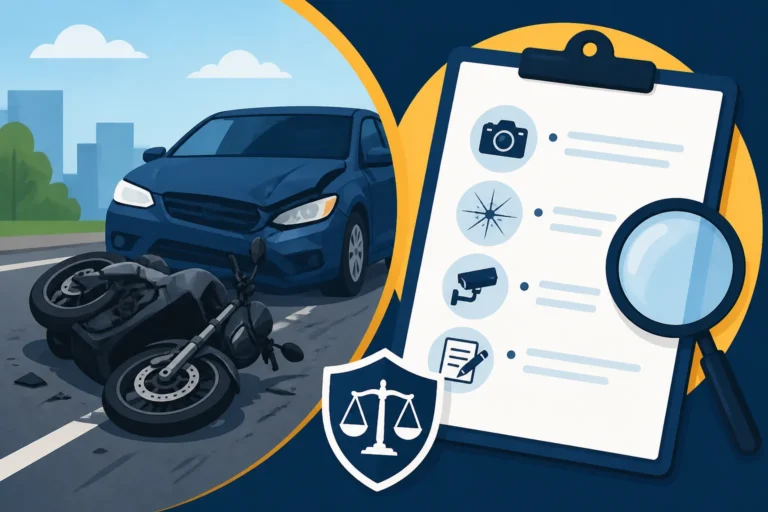
- Photographs and videos: Did you or anyone else take photos or videos of the accident scene, vehicle damage, your injuries, road conditions, or traffic signs? These visual records are incredibly powerful and often speak louder than any written narrative. Make sure to capture specific angles, debris, fluid spills, and anything that supports your version of events. These can be crucial for what evidence disproves rider fault.
- Witness contact information: If you collected contact details for any independent witnesses, reach out to them. Get their detailed statements. Their objective perspective can directly contradict a biased police report.
- Dashcam or helmet cam footage: Many riders use helmet cams, and more drivers are using dashcams. This footage is definitive and can often settle questions of fault beyond a doubt. If you have it, preserve it immediately.
- Medical records: Your medical records are vital. They document the extent of your injuries and the treatment you've received, proving the severity of the impact.
- Accident reconstruction: In complex cases, an accident reconstruction expert can analyze physical evidence, vehicle damage, and other data to create a scientific recreation of the crash, often providing a more accurate fault determination than a rushed police assessment.
The more objective evidence you have to support your version of events, the weaker the opposing arguments based on a flawed police report will become.
How to Correct a Wrong Police Report
Correcting a police report can be challenging, as police departments are often reluctant to alter official documents. However, it's not impossible to have inaccuracies addressed or to add supplementary information.
Here’s a general approach:
- Contact the reporting agency: Reach out to the specific police department or state highway patrol that filed the report.
- Speak with the investigating officer: Request to speak directly with the officer who wrote the report. Calmly and politely explain the specific inaccuracies or omissions you've identified, providing your supporting evidence.
- Submit a written request: Follow up your conversation with a formal, written request for correction or amendment. Clearly state what you believe is wrong, why it's wrong, and provide all your supporting documentation (photos, witness statements, etc.). Keep a copy of everything you submit.
- Request a supplemental report: Even if they won't change the original report, they might be willing to file a supplemental report that includes your new information or addresses your concerns. This won't erase the original, but it will add your perspective to the official record, which can be invaluable for your claim.
This process can be bureaucratic and frustrating, but having a supplemental report on file that challenges the original narrative can significantly bolster your position against the insurance company.
Working with an Experienced Attorney
This is, without a doubt, the most effective step you can take when a police report hurts your claim. An experienced motorcycle accident attorney understands the nuances of these reports and how insurance companies use them. They know how to challenge inaccuracies and present a compelling counter-narrative.
Here’s how a lawyer can help:
- Investigate thoroughly: They'll conduct their own investigation, gather all available evidence, and often have resources to secure expert testimony for accident reconstruction if needed.
- Communicate with the police department: Your attorney can professionally communicate with the investigating officer and their department on your behalf to attempt corrections or additions.
- Negotiate with insurance companies: They'll anticipate how the insurer will use the report and proactively present evidence that undermines the report's unfavorable findings, preventing lowball settlement offers based on faulty assumptions.
- Challenge traffic citations: If you received an unfair traffic citation, your attorney can advise you on fighting it in court, which can prevent it from being used against you in your injury claim. Remember, why you should never admit fault at the scene.
- Prepare for litigation: If negotiations fail, your attorney will be prepared to argue against the report's findings in court, presenting all your evidence to a judge or jury.
Having a legal advocate on your side can level the playing field, ensuring that one potentially flawed document doesn't unfairly derail your entire recovery. An attorney can also explain the intricacies of Shared Fault in Motorcycle Accidents and how it might impact your case.
The Ripple Effect: How Insurers Exploit Flawed Reports
The moment an insurance adjuster gets their hands on a police report that puts even a shred of blame on the motorcyclist, it's like a green light for them to reduce your potential payout. They're not just looking at the facts; they're looking for leverage. Understanding how they use this leverage is key to fighting back.
Lowball Settlement Offers
The most immediate and common consequence of a police report unfavorable to you is a lowball settlement offer. Insurance adjusters are trained negotiators, and their primary goal is to minimize the amount their company pays out. When a police report indicates some level of fault on your part, or even just presents an ambiguous narrative, the adjuster will pounce on it.
They will frame their initial offer around the report's conclusions, stating that because the police found you X% at fault, or because the report omits critical details you claim, your case isn't worth as much. They might say something like, "The officer's report indicates you were speeding, so our client is only partially liable." This tactic puts you on the defensive from the start, forcing you to not only prove your damages but also disprove an official document, all while you're trying to heal. Learning about the average motorcycle accident settlement amounts can help you recognize a low offer.
Shifting Blame and Reducing Payouts
Even if the police report doesn't explicitly assign all fault to you, it can be used to argue for shared fault or comparative negligence. Most states follow some form of comparative negligence, meaning if you are found partially at fault, your total compensation will be reduced by your percentage of blame. For example, if your damages are $100,000, but the police report (and subsequently the insurance company) successfully argues you were 25% at fault, your payout could be reduced to $75,000.
An unfavorable police report provides a strong basis for the insurance company to argue for a higher percentage of fault on your part. This effectively allows them to save money by shifting the financial burden onto you, even if the report’s conclusions are disputable. This makes understanding your state's specific comparative negligence laws, and how to challenge an unfair fault assignment, absolutely vital.
Using the Report to Deny Claims
In the most severe cases, if a police report explicitly or strongly assigns all fault to the motorcyclist, an insurance company might use it as justification to outright deny the claim. They'll argue that since their insured driver was not at fault (according to the police report), they owe you nothing.
While a police report is not the final word in a civil case, a claim denial based on it is a significant hurdle. It means you'll almost certainly have to pursue legal action to recover any compensation, moving beyond initial negotiations to the more complex and time-consuming process of a lawsuit. This underscores why protecting your claim by having accurate documentation and skilled legal representation is so important, especially when navigating something as critical as motorcycle accident liability: a complete guide to proving who is responsible.
Proactive Steps to Protect Your Claim at the Scene
When an accident happens, your mind goes a million miles an hour. It’s hard to think clearly, but what you do in those crucial moments immediately after the crash can profoundly impact your claim, especially concerning the police report. Being proactive can help ensure the report reflects the truth, or at least doesn't unfairly portray you.
Documenting Everything
This cannot be stressed enough: document, document, document! The more evidence you gather independently, the better equipped you'll be to challenge any inaccuracies in the official police report.
- Take copious photos and videos: If you're physically able, use your phone to capture the scene from every angle. Get photos of:
- All vehicles involved: Show damage, but also the overall position on the road.
- Your injuries: Even minor scrapes or road rash. These can be crucial for proving your pain and suffering.
- The surrounding area: Road conditions (gravel, potholes, oil slicks), traffic signs, traffic lights, skid marks, debris, and any obstructions to view.
- Weather conditions: Note if it was raining, foggy, sunny, etc.
- License plates: Of all vehicles involved.
- Identify and get contact info for witnesses: Don't rely solely on the police to do this. Approach anyone who saw the crash and ask for their name, phone number, and email. Their unbiased perspective can be invaluable if the police report is skewed.
- Note the time, date, and exact location: Specificity matters. Cross-reference with GPS if possible.
- Write down everything you remember: As soon as you're able, preferably within a few hours, jot down every detail you recall about the accident. Memory fades quickly, and these immediate notes can be incredibly helpful later on. This includes the sequence of events, what the other driver said, what you said, and anything the officers mentioned.
This personal documentation serves as a powerful counter-narrative to any potential flaws in the official report and is a critical part of what to do after a motorcycle accident.
Careful Communication with Officers
When the police arrive, they're gathering information, and anything you say can be included in their report. While you should cooperate, be mindful of what you communicate.
- Be factual, not speculative: Stick to the facts you know. Avoid guessing, speculating, or admitting fault. Do not say things like, "I think I might have been going a little fast," even if you’re just musing aloud. Such statements can be twisted and used against you.
- State what you saw, not what you inferred: Describe actions (e.g., "The car pulled out in front of me") rather than assumptions ("They were probably distracted").
- Report your injuries: Even if you feel okay, state any discomfort or pain you have. Saying "I'm fine" at the scene can be used by insurers to argue your later diagnosed injuries aren't accident-related.
- Do not argue with the officer: While you can politely correct factual errors if you notice them at the scene, engaging in an argument is rarely productive. It can make you seem uncooperative and potentially lead to a less favorable report. You can address inaccuracies later, as discussed in how to correct a wrong police report.
- Get the officer's name and badge number: This is important for obtaining the report later and for any follow-up discussions.
Remember, your words at the scene are immediately part of the evidence. Be precise and measured.
Seeking Medical Attention Immediately
This might not seem directly related to the police report, but it's crucial for your overall claim, and it indirectly counters potential misinterpretations in the report regarding your physical state.
- Prioritize your health: Your safety and well-being are paramount. Even if you feel fine, internal injuries or latent conditions might not be immediately apparent.
- Create an official record of injuries: By seeking medical attention promptly, you establish a clear link between the accident and any injuries you sustained. This makes it much harder for insurance companies to argue that your injuries were pre-existing or unrelated to the crash, especially if the police report understated their severity.
- Follow all medical advice: Adhere to your doctor's treatment plan. Gaps in treatment can be exploited by insurers to suggest your injuries weren't serious or that you're not trying to recover.
Early and consistent medical documentation is your strongest ally against any attempts to downplay your physical damages, regardless of what the police report says.
| Aspect of Police Report | Perceived Objectivity | Potential for Bias/Error | Impact on Claim |
|---|---|---|---|
| Fault Determination | Definitive finding of who caused the crash. | Based on limited info, officer's interpretation, or unconscious bias. | Direct reduction or denial of settlement. |
| Witness Statements | Includes all relevant third-party accounts. | Only includes witnesses present/identified, potential for misinterpretation. | Missing evidence to support rider's story. |
| Accident Diagram | Accurate representation of scene dynamics. | Quick sketch, potential for incorrect measurements or positions. | Misleading visual evidence of accident. |
| Injury Descriptions | Objective assessment of physical harm. | Non-medical professional's brief observation, potential for understatement. | Undermines severity of personal injury claim. |
| Traffic Citations | Proof of legal violation at the scene. | May be issued without full investigation, can be unfair. | Strong leverage for insurer to assign fault to rider. |
| Road Conditions | Notes all contributing environmental factors. | May overlook subtle but critical hazards (gravel, potholes). | Removes key element for proving external causes of crash. |
Disclaimer
Please remember that this article provides general information and does not constitute legal advice. Every motorcycle accident claim is unique, and the information presented here may not apply to your specific situation. We strongly recommend consulting with a qualified legal professional to discuss your individual case and rights. Laws regarding police reports, accident claims, and comparative negligence vary by state and jurisdiction.