How to Correct a Wrong Police Report
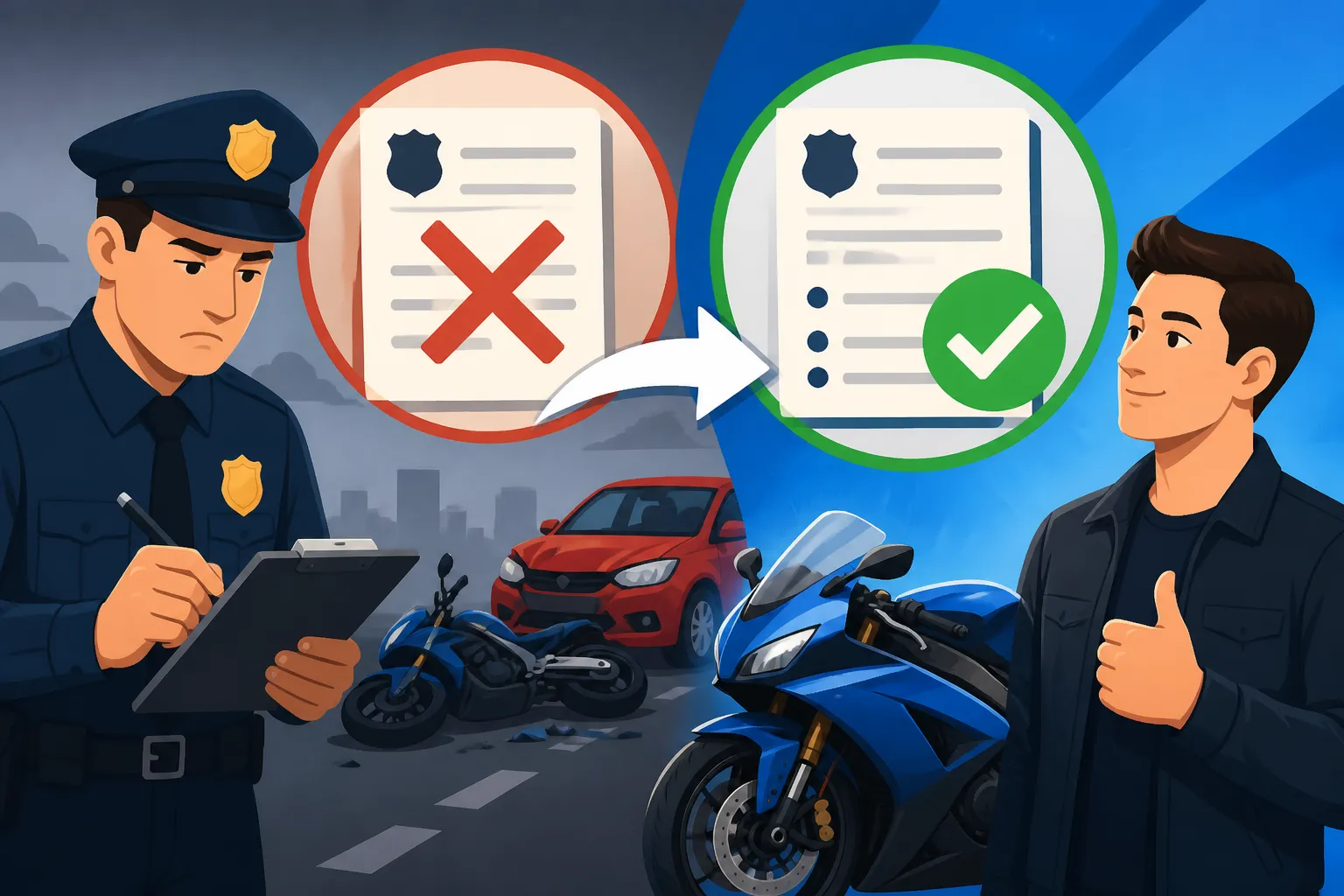
It’s a frustrating and often bewildering experience: you’ve just been involved in a motorcycle accident, you’re trying to recover, and then you get a copy of the police report only to find it contains significant errors. An inaccurate police report can feel like a punch to the gut, potentially skewing the narrative against you and jeopardizing your ability to get fair compensation. This guide will walk you through the essential steps to identify, challenge, and correct inaccuracies in a police report, ensuring your side of the story is properly documented.
Why an Inaccurate Police Report Harms Your Motorcycle Accident Claim
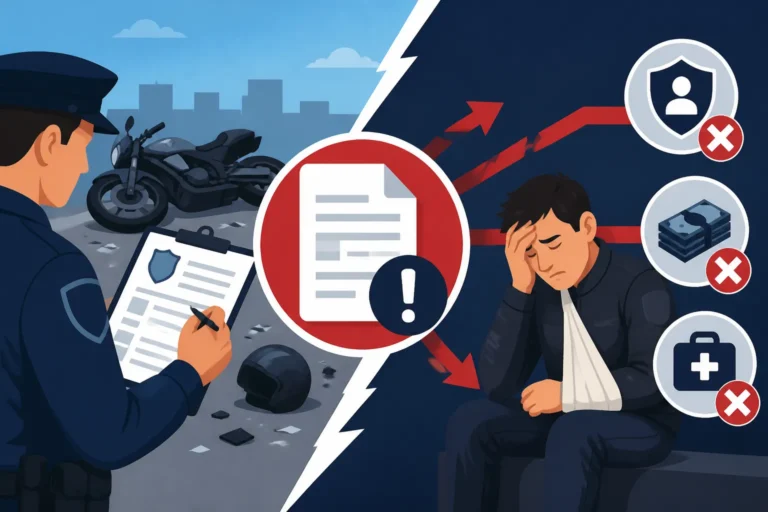
An official police report carries a lot of weight, perhaps more than it should sometimes. For many people, especially insurance adjusters and even juries, it’s often seen as the definitive, objective account of what happened at the scene of an accident. When that account is wrong, it can create a ripple effect of problems for your motorcycle accident claim.
Impact on Fault Determination
Police reports are usually the very first piece of official documentation an insurance company looks at. These reports often contain an officer's opinion on who was at fault, or at the very least, a description of events that strongly implies fault. If the report contains incorrect details about the sequence of events, your speed, the actions of the other driver, or even the location of impact, it can unfairly assign fault to you. Imagine a scenario where the report states you were speeding, even if you weren't, or that you failed to yield when the other driver clearly pulled out in front of you. This initial assessment can set a negative tone for your entire claim, making it an uphill battle from the start.
Insurance companies often use these reports as a primary tool to determine "How Insurance Companies Assign Blame to Riders". They are already prone to certain biases against motorcyclists, sometimes assuming the rider was acting recklessly. An incorrect report can fuel these stereotypes, making it harder to prove the other driver's negligence. This is why it's so critical to scrutinize every detail; a simple misstatement can have monumental consequences on who is deemed responsible.
Undermining Credibility and Evidence
When a police report has errors, it can unfortunately cast doubt on your entire version of events and, by extension, your credibility. If you tell your insurance company or a lawyer one thing, but the official report states another, it can make your statements appear inconsistent. This isn't just about minor typos; if the core facts about how the accident happened are wrong, it makes it harder to present a unified, coherent narrative.
For example, if the report misidentifies the point of impact or the direction of travel for either vehicle, any photos or witness statements you provide that contradict the report might be viewed with skepticism, even if they are perfectly accurate. The insurance company's defense might argue that you are trying to manipulate the facts to fit your narrative, rather than simply correcting an error. This can weaken your overall evidence, making it difficult to establish the full extent of the other party's liability for your injuries and damages.
Delaying or Denying Your Settlement
The goal of any insurance company is to minimize payouts. An inaccurate police report provides them with a ready-made justification to do just that. They can leverage the discrepancies to delay processing your claim, demand more evidence, or outright deny certain aspects of your compensation. If the report implies you were partly at fault due to an error, they will try to reduce your settlement amount significantly, citing comparative negligence laws. This can have a direct impact on "How Fault Affects Your Settlement".
These delays can be agonizing, especially when you're dealing with mounting medical bills, lost wages, and the stress of recovery. An uncorrected error in a police report means you might spend weeks or months arguing over foundational facts that should have been clear from the start. In the worst-case scenarios, a fundamentally flawed police report could lead to a complete denial of your claim, forcing you into prolonged legal battles that could have been avoided had the initial report been accurate. It’s not just about winning; it’s about getting the fair and timely resolution you deserve.
Steps to Take When You Discover Police Report Errors
Finding errors in a police report can feel overwhelming, but taking immediate, structured steps can make a significant difference. It's not always easy, but a systematic approach will give you the best chance of getting things right.
Obtaining the Official Report
The first step, and one you should take as soon as possible after an accident, is to get a copy of the official police report. Don't rely on verbal summaries; you need the actual document. In most jurisdictions, you can obtain a copy from the local law enforcement agency that responded to the accident – whether it's the city police department (like the Dallas Police Department or the Miami-Dade Police Department), the county sheriff's office, or the state highway patrol (such as the California Highway Patrol or Texas Department of Public Safety).
Typically, there's a waiting period of a few days to a week for the report to be filed and processed. You might need to visit the department in person, or you may be able to request it online or by mail. Be prepared to pay a small fee. You'll usually need to provide the date, time, and location of the accident, along with any report numbers or incident numbers you were given at the scene. Once you have it, print it out and keep both a digital and physical copy. This report will be a cornerstone of your efforts to prove "Proving Fault in a Motorcycle Accident".
Thoroughly Reviewing the Document
Once you have the report, don't just skim it. Sit down in a quiet place and go through every single line, comparing it meticulously against your memory, notes, and any evidence you gathered at the scene.
Here’s a checklist of what to scrutinize:
- Personal Information: Is your name, address, insurance information, and vehicle details (make, model, license plate) correct? Are the other driver's details accurate?
- Date, Time, and Location: Are these facts precise? Even a slight error in the street name or intersection can be significant.
- Witness Information: Are all witnesses you know of listed? Is their contact information accurate?
- Diagrams: Look closely at any sketches or diagrams. Do they accurately depict the road layout, vehicle positions, direction of travel, and point of impact? This is often where critical errors related to fault can be found.
- Narrative Description: This is the officer's written account of what happened. Read it with a fine-tooth comb. Does it accurately reflect your statement? Does it omit crucial details? Does it contain factual errors about the vehicles' movements, traffic signals, or road conditions? For example, if the report says the road was dry when it was clearly raining, that's a significant error.
- Citations or Violations: Were any traffic citations issued? If you believe a citation was issued incorrectly or a violation for the other driver was omitted, this is a major point of contention.
- Officer’s Opinion of Fault: Some reports include a section where the officer assigns fault. If this is present and you disagree, make a note of it.
Highlight every single discrepancy or inaccuracy, no matter how small it may seem. Sometimes, what appears minor can contribute to a larger narrative that's unfavorable to you.
Gathering Your Own Evidence
Your personal collection of evidence is paramount when challenging an official report. The police report is just one piece of evidence, and it’s not infallible. You need to be able to back up your claims with tangible proof. Think of yourself as building a counter-narrative, piece by piece.
- Photos and Videos: These are gold. If you took pictures or videos at the scene immediately after the accident, review them thoroughly. Do they contradict the officer's diagram or narrative? Do they show road conditions, vehicle damage, skid marks, or traffic signals that tell a different story? For example, if the report says you were in the left lane, but your photos clearly show your motorcycle in the right lane before impact, that's powerful evidence.
- Witness Statements: If there were witnesses, contact them again if possible. Ask them to write down what they saw or record a video statement. Their independent accounts can corroborate your version of events and challenge the report's inaccuracies. This is where "How Witnesses Affect Motorcycle Fault" comes into play, as their unbiased perspective can carry significant weight.
- Personal Notes and Journal: Did you write down what happened immediately after the crash? Your memory is sharpest right after the event. These notes can help refresh your recollection and provide a detailed timeline. Include details about weather, lighting, traffic, and your physical condition.
- Medical Records: While not directly related to the cause of the accident, medical records document your injuries and treatment. If the report downplays your injuries or omits them entirely, your medical documentation proves the severity and necessity of treatment, indirectly supporting the impact of the crash.
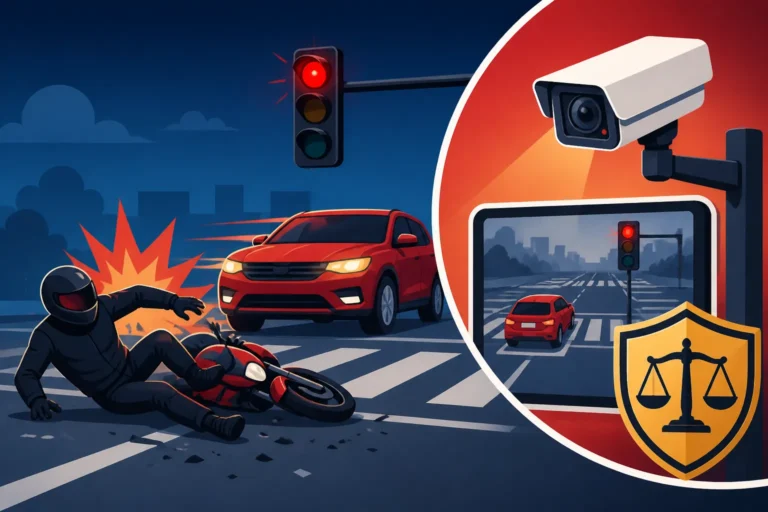
- Dashcam or Surveillance Footage: If you have a dashcam, or if the accident happened near businesses with surveillance cameras, retrieve that footage. This objective evidence can often be the most powerful tool for correcting an inaccurate police report, showing exactly what transpired without bias.
The more detailed and varied your evidence, the stronger your position will be in challenging the police report. This collection of "Motorcycle Accident Evidence for Proving Fault" is your best defense against errors.
The Formal Process of Requesting a Correction
Once you’ve identified the errors and gathered your supporting evidence, it’s time to formally request a correction. This isn’t usually a simple phone call; it often requires a structured approach.
Contacting the Investigating Officer Directly
Your first point of contact should generally be the officer who filed the report. They are the ones who wrote it, and they have the authority to amend it or create a supplemental report. Obtain their contact information from the police report itself, usually a phone number or email for their department.
When you contact them, maintain a calm, respectful, and factual demeanor. Avoid accusatory language. Start by politely stating your name, the date and location of the accident, and the report number. Explain that you've reviewed the report and have identified some discrepancies. Clearly and concisely list the specific errors you found, referencing the page and section number if possible. Then, present your supporting evidence. For instance, you might say, "Officer Smith, on page 2, line 15, the report states I was in the left lane, but my dashcam footage and these photos clearly show my motorcycle in the right lane before the collision. I'd like to provide you with this evidence."
The officer might be receptive, or they might be resistant, especially if they are busy or feel their work is being challenged. Be persistent but polite. The goal here is to inform them, provide the new facts, and request a review.
Submitting a Supplemental Report or Amendment
It’s important to understand that police departments rarely alter or delete an original accident report once it's officially filed. This is because it's considered an official document. However, what they can do, and often will do, is add a supplemental report or an amendment. This document doesn't erase the original but adds new information, corrections, or a different perspective (like your detailed statement) that becomes part of the official record.
If the officer agrees to consider your evidence, they might ask you to submit a written statement outlining the errors and providing your evidence. This statement should be as clear, concise, and factual as possible, directly addressing each inaccuracy. Attach all your supporting documentation (photos, witness statements, etc.). Make sure to keep copies of everything you submit.
In some cases, especially with minor errors, an officer might simply initial a small correction on their copy and note it in their internal system. For more significant factual disputes, a formal supplemental report is the more likely outcome. This supplemental report will then be attached to the original and accessible to anyone requesting the accident report, including insurance adjusters and attorneys.
Escalating the Request if Necessary
What if the investigating officer is unresponsive, dismissive, or outright refuses to consider your evidence? Don't give up. This is where you might need to escalate your request within the police department's chain of command.
You can typically contact the officer's immediate supervisor, such as a sergeant or lieutenant in the traffic division. Explain that you've attempted to resolve the issue with the original officer and have been unsuccessful. Present your case again, emphasizing the factual errors and the compelling evidence you have. Most police departments have procedures for handling citizen complaints or requests for review of accident reports, especially when significant errors are alleged.
If you continue to face resistance, you might consider reaching out to the department's internal affairs division or even the police chief's office. While this might seem extreme, inaccurate reports can have serious consequences for accident victims, and it's your right to pursue accuracy. Document every communication, including dates, times, names of individuals you spoke with, and a summary of the conversation. This detailed record will be invaluable as you navigate the process.
When Legal Intervention Becomes Necessary
Sometimes, despite your best efforts, correcting a police report proves to be an insurmountable challenge on your own. This is often when bringing in legal expertise becomes not just helpful, but absolutely critical.
When to Seek an Attorney's Help
The decision to hire a lawyer can feel like a big step, but certain situations make it almost mandatory. If you've tried to correct the report on your own and encountered stubborn resistance from the police department, or if the errors in the report are significant enough to drastically impact your claim, it's time to call in the professionals. For example, if the report unfairly assigns a high percentage of fault to you, or completely misrepresents the cause of the crash, your ability to recover damages will be severely compromised. In such cases, knowing "What to Do After a Motorcycle Accident" includes considering legal counsel.
An attorney specializes in navigating these complex legal waters. They understand the nuances of how police reports are used in personal injury claims and the specific strategies insurance companies employ to exploit any perceived weaknesses, including a flawed report. If your injuries are serious – think broken bones, traumatic brain injuries, or spinal cord damage – the stakes are simply too high to leave the accuracy of the police report to chance. A lawyer can also advise you on "When Fault Is Disputed in a Motorcycle Crash" and how best to proceed.
How a Lawyer Can Challenge the Report
A skilled motorcycle accident attorney brings a different level of leverage and expertise to the table. First, they can often communicate with law enforcement officers and departments more effectively than an individual, as they speak the legal language and understand the protocols. They can make formal requests for review, cite relevant legal precedents, and ensure your supplemental information is properly recorded.
Even if the police department won't formally amend the report, your attorney can effectively challenge its accuracy in other ways. They can:
- Gather Extensive Evidence: Beyond what you might have collected, an attorney can subpoena traffic camera footage, cell phone records, event data recorder (EDR) data from vehicles, and additional witness testimony that might not have been available to the initial investigating officer. This evidence can directly contradict the police report's findings.
- Depose the Officer: In some cases, if a lawsuit is filed, your attorney can depose the police officer who wrote the report. This involves asking them questions under oath about how they conducted their investigation, what information they relied upon, and why certain conclusions were drawn. This can expose weaknesses in the report's methodology or factual basis.
- Present a Compelling Case: Even with an uncorrected report, your attorney can present a comprehensive case to the insurance companies or a jury, highlighting the inaccuracies in the police report and demonstrating why your evidence is more credible. They understand how "How Police Reports Establish Fault" and how to present compelling counter-arguments. They are also adept at countering common tactics used by insurers, such as "How Insurers Use Rider Stereotypes Against You".
The Role of Accident Reconstructionists
For complex accidents where fault is heavily disputed and the police report is significantly flawed, your attorney might bring in an accident reconstruction expert. These professionals are highly specialized engineers or investigators who can recreate the accident scene using scientific principles, physics, and detailed analysis of physical evidence.
An accident reconstructionist will examine:
- Vehicle Damage: The type and extent of damage to both vehicles can reveal crucial details about impact angles and forces.
- Road Evidence: Skid marks, tire scuffs, debris fields, and gouges on the road can all indicate vehicle speeds, braking points, and paths of travel.
- Witness Statements: They can analyze witness statements for consistency and plausibility.
- Photographs and Video: They use these visual records to precisely map out the scene.
Their findings are presented in a detailed report, often with sophisticated diagrams and animations, that can objectively demonstrate what actually happened. This expert testimony carries significant weight because it's based on science, not subjective opinion. The report from an accident reconstructionist can serve as powerful counter-evidence to an inaccurate police report, effectively proving "How Accident Reconstruction Determines Fault" and providing a clearer, more accurate picture of the collision. This kind of expert analysis is often invaluable in challenging official narratives that are biased or incorrect.
Understanding Common Police Report Errors and Corrections
It's common for police reports to contain some errors, given the chaotic nature of accident scenes. Knowing what types of errors are common can help you identify them quickly.
| Type of Error | Description | Potential Impact | Corrective Action |
|---|---|---|---|
| Factual Inaccuracies | Wrong date/time, incorrect street names, wrong vehicle descriptions, misgendered parties. | Minor, but can undermine overall report credibility if numerous. | Contact officer, provide correct info. Usually an easy fix. |
| Diagram Errors | Incorrect vehicle positions, wrong direction of travel, mislabeled lanes, wrong point of impact. | Can critically affect fault determination. | Provide photos/videos, detailed personal diagram. Request supplemental report. |
| Narrative Discrepancies | Officer's written account misrepresents sequence of events, omits key details, or misquotes statements. | Directly impacts understanding of accident cause and fault. | Submit detailed written statement of events with evidence. Request supplemental. |
| Missing Information | Unlisted witnesses, overlooked injuries, incomplete property damage details, missing vehicle damage. | Reduces evidence for your claim, makes it harder to prove damages. | Provide witness contacts, medical records, additional photos. |
| Opinion-Based Errors | Officer's conclusions about speed, driver distraction, or right-of-way that contradict evidence. | Highly detrimental to fault assignment, can bias insurers. | Present strong objective evidence (dashcam, expert analysis) to challenge opinion. |
| Citation Errors | Incorrect citation issued to you, or clear violation by other driver is overlooked. | Can be used by insurers to assign fault. | Contest citation in court. Provide evidence for other driver's violation. |
An honest mistake happens, but when those mistakes put your claim at risk, you have to act. This table highlights that not all errors are created equal, but all warrant attention.
Disclaimer
Please remember, this guide provides general information and insights into correcting a police report after a motorcycle accident. Every accident and jurisdiction is unique, and specific legal advice should always come from a qualified attorney licensed in your state. This content is not a substitute for professional legal counsel.