How to Prove a Driver Ran a Red Light
There's nothing quite as infuriating as being involved in a motorcycle accident where you know, deep down, that the other driver blew right through a red light, only for them to turn around and deny it completely. It feels like your word against theirs, and in the chaos after a crash, it's easy to feel overwhelmed and unsure how to prove what really happened. This guide is here to walk you through exactly how to gather and present the evidence needed to prove a driver ran a red light, protecting your rights and helping you secure the justice you deserve.
The Immediate Aftermath: Why Proving a Red Light Violation is Crucial and Challenging
When a driver runs a red light and causes a collision, it's a clear cut case of negligence. In most traffic laws, a driver who enters an intersection against a red signal is almost certainly at fault for any resulting crash. However, simply knowing they ran it isn't enough; you have to prove it, and that can be a real battle, especially when you're dealing with injuries and the shock of the accident itself.
The "He Said, She Said" Dilemma
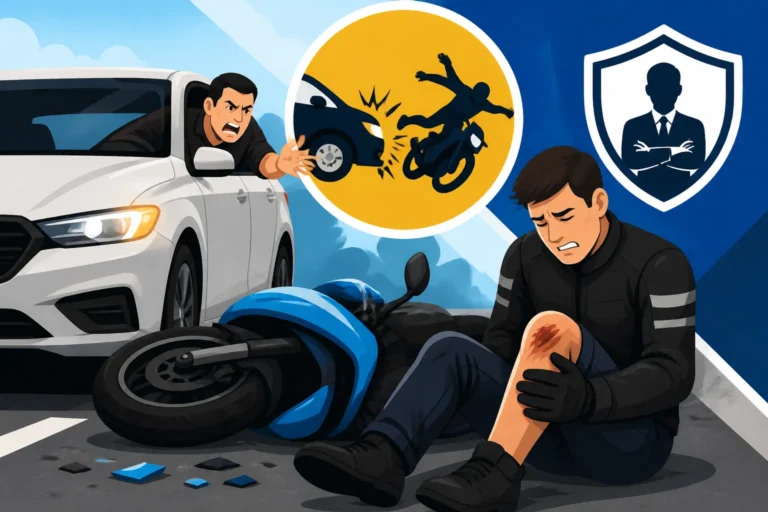
We all know the scenario: you're lying on the pavement, bike mangled, hurting all over, and the other driver is out of their car, perhaps even apologizing initially. But then, when the police arrive or, worse, when their insurance company gets involved, suddenly their story changes. "I had a yellow light," or "It was green when I entered the intersection," they'll claim. It's a classic "he said, she said" situation, and unfortunately, law enforcement officers and insurance adjusters often hear conflicting stories. Without concrete evidence, it becomes incredibly difficult to establish fault, and this can significantly impact your ability to recover damages for your injuries, medical bills, and bike repairs. This is precisely why documentation and swift action are absolutely essential. It's not about being aggressive; it's about protecting your future.
The Urgency of Evidence Collection
Time is absolutely of the essence after a motorcycle accident, especially one involving a disputed traffic light. Evidence can disappear incredibly quickly. Skid marks fade, witness memories become cloudy, surveillance footage gets overwritten, and even the positions of vehicles can change before authorities properly document them. Think of it like a ticking clock: every minute that passes makes it a little harder to build a solid case. This isn't just about proving the other driver's negligence; it's also about preventing their insurance company from trying to assign blame to you. If you were even partially at fault, your potential settlement could be significantly reduced, especially in states with comparative negligence laws. Understanding how fault is determined in motorcycle accidents is key to protecting yourself.
Essential Evidence Collection at the Accident Scene
The moments immediately following a crash are critical for securing evidence. Even if you're shaken up, try to focus on these steps. Your actions at the scene can make or break your claim. Remember, your priority is always safety and medical attention, but once that's addressed, shift your focus to documentation.
Capturing the Scene with Photos and Videos
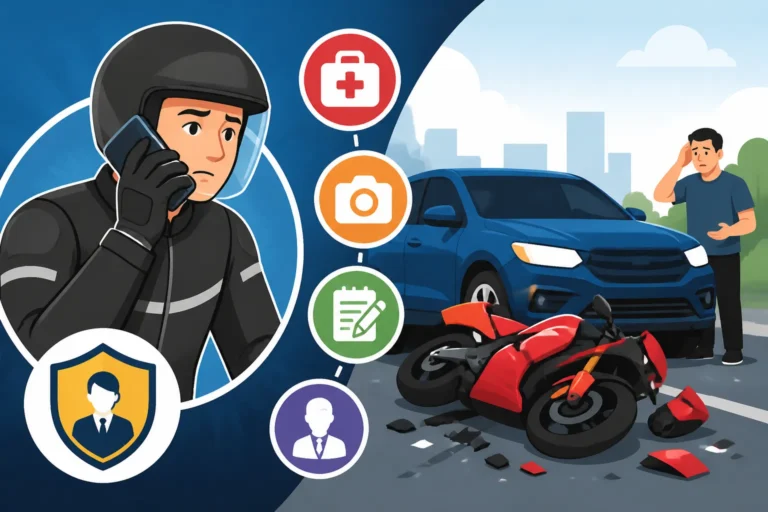
In today's world, almost everyone has a smartphone, and it's your most powerful tool right after an accident. If you're physically able, start taking pictures and videos immediately. Don't just snap a few quick shots; try to capture the entire story of the scene.
- Traffic Light Itself: Get clear photos of the traffic light in the direction the other driver was coming from, as well as the light for your direction of travel. Try to capture the color it's displaying immediately after the crash, if possible. This might require getting a bit further away to get the full signal in frame.
- Intersection Layout: Take wide shots that show the entire intersection, the positions of both vehicles, any traffic signs, and road markings. These wide-angle shots are vital for providing context to investigators.
- Vehicle Damage and Debris: Document the damage to your motorcycle and the other vehicle from multiple angles. Also, photograph any debris, broken glass, or fluid spills on the road, especially relative to the intersection and traffic lines.
- Skid Marks: Look for skid marks. If the other driver slammed on their brakes after entering the intersection, this could indicate they saw your green light too late. Get close-ups and wide shots that show the length and location of these marks.
- Surrounding Area: Photograph any businesses or homes near the intersection. Many businesses have security cameras that might have captured the accident.
- Timestamp and Location: Most modern smartphones automatically embed a timestamp and GPS location into photos. This metadata is incredibly useful for verifying when and where the photos were taken.
Even a quick video panning across the scene can capture dynamic elements that still photos might miss, like the working traffic signals if they cycle. These images serve as concrete Motorcycle Accident Evidence for Proving Fault.
The Power of Eyewitness Accounts
Unbiased witnesses are pure gold when it comes to proving a red light violation. Unlike the drivers involved, a third-party witness has no vested interest in the outcome and can provide objective testimony.
- Identify Witnesses: Look around for anyone who stopped or was present at the intersection. People in other cars, pedestrians, or even employees of nearby businesses might have seen the light cycle.
- Get Contact Information: Don't just thank them; politely ask for their full name, phone number, and email address. It's also helpful to ask for a brief, immediate statement of what they saw. You can even record their statement on your phone if they consent. Ask specific questions: "What color was the light for the car that hit me?" or "What color was the light for the motorcycle?"
- Credibility: The more details a witness can provide, and the calmer and more observant they appear, the stronger their testimony will be. Their perspective can often override a biased police report or the other driver's false claims. This is a huge factor in How Witnesses Affect Motorcycle Fault.
Remember, eyewitnesses might be hesitant to get involved, so approach them with empathy and explain that their honest account could prevent you from being unfairly blamed.
Documenting the Police Report
A police report isn't the final word on fault, but it's an incredibly important piece of evidence. It's often the first official documentation of the incident, and insurance companies rely heavily on it.
- Ensure Officers Respond: Always call 911 after a motorcycle accident, even if you think it's minor. Police presence creates an official record.
- Give a Detailed Account: When officers interview you, calmly and clearly explain what happened. State unequivocally that the other driver ran a red light. Point out any evidence you've already noticed, like skid marks or witness locations.
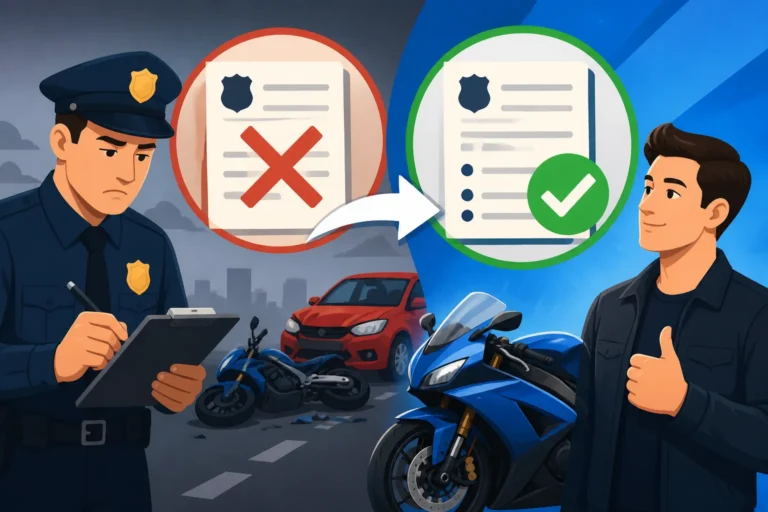
- Review the Report (Later): You won't get a copy at the scene, but make sure to obtain the police report number. Once it's available (usually a few days later), review it carefully. Officers make mistakes, or they might rely too heavily on the other driver's account. If the report unfairly assigns fault or omits crucial details, it could hurt your claim. Understanding How a Police Report Can Hurt Your Claim is important.
- Correcting Errors: If the police report contains factual errors or omits key information that helps prove the driver ran a red light, you might be able to request a correction. This usually involves contacting the reporting agency and providing additional evidence or clarification.
While police reports are influential, they are not always infallible, and sometimes the officer's initial assessment can be swayed by biases against motorcyclists, even if unintentional.
Unearthing Hidden Evidence: Advanced Investigative Avenues
Sometimes, the immediate scene evidence isn't enough, or it becomes disputed. That's when you need to dig deeper and explore more advanced investigative techniques. This is where an experienced legal professional can really shine, as they have the resources and legal knowledge to access these types of evidence.
Utilizing Traffic Cameras and Surveillance Systems
Many intersections, particularly in urban areas like downtown Los Angeles or bustling Miami, are equipped with traffic cameras designed to monitor flow or catch violations. Furthermore, nearby businesses often have surveillance systems that might have captured the entire incident.
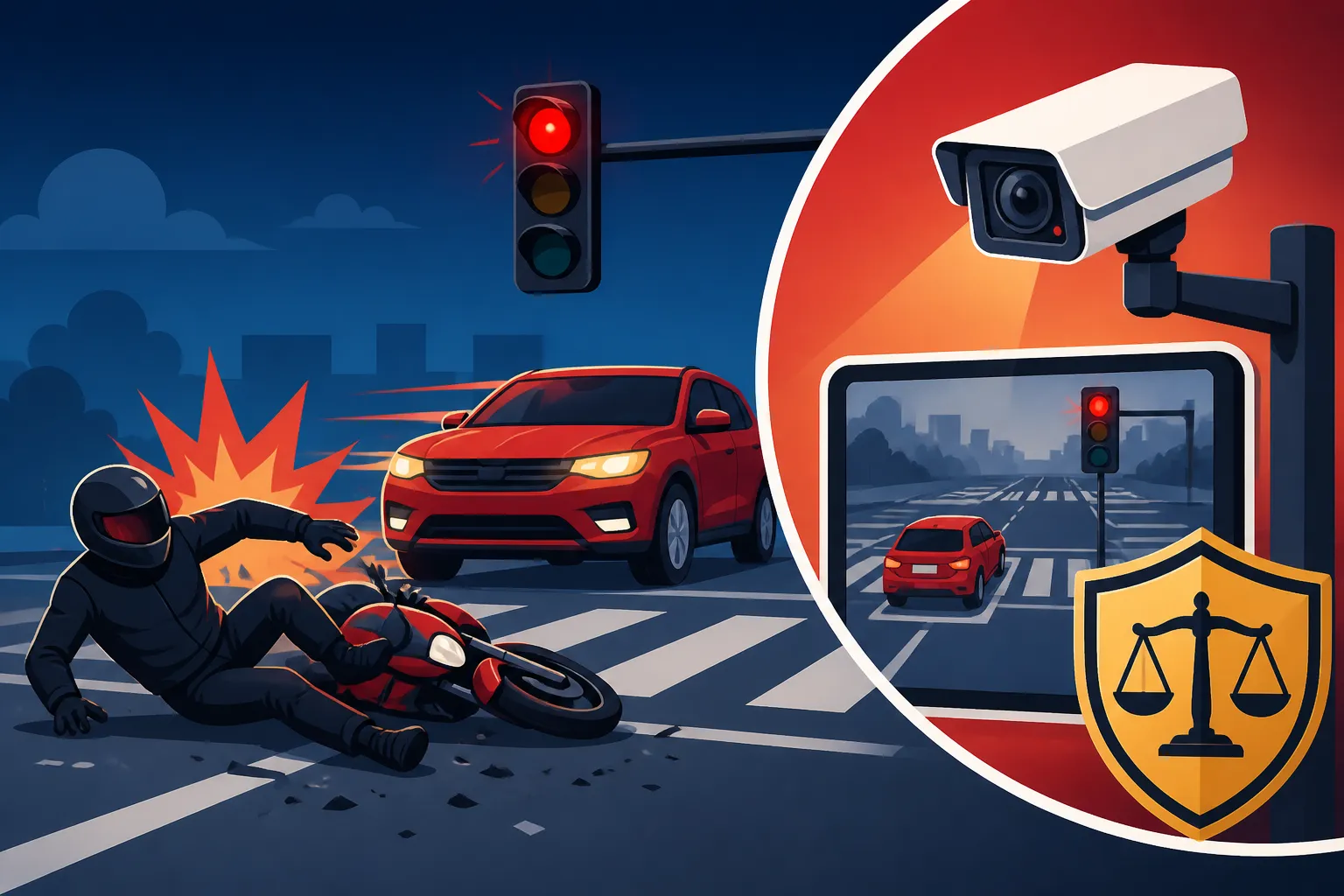
- Traffic Light Cameras: Some cities have red light cameras installed specifically to ticket drivers who run red lights. If such a camera exists at your intersection, the footage will be invaluable. Even if it's not a red-light camera, many intersections have cameras for traffic monitoring that might show the light sequence.
- Business Surveillance: As mentioned earlier, businesses lining the intersection, like a corner store or bank, may have security cameras pointed at the street. This footage can provide irrefutable proof.
- How to Obtain Footage: This isn't as simple as asking nicely. Often, businesses are reluctant to share footage without a subpoena. Traffic camera footage is usually controlled by municipal or state Department of Transportation entities and requires a formal request or subpoena. An attorney can navigate these legal channels efficiently, ensuring the footage is preserved before it's overwritten, which often happens quickly (sometimes within 24-72 hours).
Getting hold of this footage needs to be a priority. It's a goldmine of objective evidence that can put an end to any "he said, she said" arguments.
Leveraging Vehicle Data Recorders (Black Box)
Modern vehicles are technological marvels, and many are equipped with Event Data Recorders (EDRs), often referred to as "black boxes." These devices record a treasure trove of information in the moments leading up to and during a crash.
- What EDRs Record: An EDR can capture data points like vehicle speed, brake application, steering input, seatbelt usage, and even changes in acceleration. For a red-light violation, this data could show that the other driver failed to brake or accelerated into the intersection just before impact, directly contradicting their claim that they had a green light or were attempting to stop.
- Accessing EDR Data: Accessing EDR data usually requires specialized equipment and expertise. It often involves removing the device from the vehicle and using proprietary software to download and interpret the information. Again, this is typically handled by accident reconstructionists or forensic experts hired by legal counsel.
- Legal Considerations: There are legal precedents and privacy concerns surrounding EDR data. An attorney can ensure that the data is obtained legally and is admissible in court, often by sending a spoliation letter to the at-fault driver's insurance company, instructing them to preserve the vehicle and its data.
This technical data provides an objective, scientific look at the driver's actions, which can be far more persuasive than conflicting human testimony.
The Expertise of Accident Reconstructionists
When the evidence is complex or conflicting, or when you're facing a stubborn insurance company, an accident reconstruction specialist can be an invaluable asset. These experts are like forensic detectives for car crashes.
- What They Do: Accident reconstructionists use physics, engineering principles, and all available evidence (photos, video, police reports, vehicle damage, EDR data, road marks) to recreate the accident sequence. They can determine vehicle speeds, points of impact, braking distances, and critically, the traffic light phase at the moment of impact.
- Proving the Red Light: By analyzing skid marks, vehicle resting positions, and impact angles, they can often determine if a driver had enough time to stop or if they accelerated through a red light. They can also use timing analysis based on traffic light cycles. For example, if your dashcam shows your light turned green, an expert can calculate the precise moment the perpendicular light would have turned red.
- Expert Testimony: Their findings are often presented in detailed reports and can be used to provide expert testimony in court, carrying significant weight with judges and juries. Their ability to objectively analyze the scene and data is often the deciding factor in cases where fault is heavily disputed. This highlights when to hire an accident reconstruction expert.
An accident reconstructionist can provide the scientific backing needed to solidify your claim that the other driver ran the red light, transforming subjective observations into objective facts.
What to Do If Evidence is Scarce or Disputed
Even with the best intentions, gathering perfect evidence at the scene isn't always possible. You might be too injured, too disoriented, or the scene might be cleared quickly. Don't despair if your initial evidence seems lacking. There are still avenues to pursue, and this is where having experienced legal representation becomes absolutely critical.
The Role of Expert Testimony
When direct evidence like video footage or clear eyewitness accounts are hard to come by, or when the other side presents their own "experts" to dispute your claims, expert testimony becomes even more vital. Beyond accident reconstructionists, other experts can help bolster your case:
- Traffic Signal Experts: These specialists can analyze the timing sequences of traffic lights at the specific intersection. They can review historical data and signal timing charts to determine the likelihood of the light being red for the other driver at the precise moment of impact. They can also investigate if there were any malfunctions with the traffic light itself, although this is rare.
- Human Factors Experts: Sometimes, an expert in human perception and reaction times can be brought in. They might analyze factors like visibility, driver distractions, or environmental conditions to demonstrate why the other driver should have seen the red light and your approaching motorcycle. This can be particularly useful if the other driver claims "I didn't see the motorcycle."
- Medical Experts: While not directly proving the red light, medical experts are crucial for establishing the full extent of your injuries and damages. Their testimony links the accident directly to your suffering and financial losses, strengthening the overall claim for compensation. Understanding how to document injuries for a claim is paramount.
These experts provide professional, impartial opinions based on their specialized knowledge, which can swing the tide in your favor when direct evidence is thin.
Legal Strategies for Challenging Driver Claims
An attorney specializing in motorcycle accidents has a playbook of strategies for dealing with drivers who deny responsibility for running a red light. They know the tactics insurance companies use to minimize payouts and will work tirelessly to counter them.
- Aggressive Investigation: Your legal team will launch their own thorough investigation, often going beyond what law enforcement might do. This includes sending out investigators to canvass the accident area for additional witnesses, looking for other surveillance cameras, and collecting any additional physical evidence. This might include reviewing local news archives for reports of intersection camera changes or traffic flow issues.
- Discovery Process: If a lawsuit becomes necessary, your attorney can use the formal legal "discovery" process to compel the other driver to answer questions under oath (depositions) and produce documents. This can sometimes expose inconsistencies in their story or reveal hidden facts. They can also subpoena phone records to check for distracted driving at the time of the crash, which could explain why the driver ran the red light.
- Challenging Credibility: If the other driver's story changes or is demonstrably false, your attorney will work to undermine their credibility. This could involve highlighting inconsistencies in their statements to police versus insurance adjusters, or presenting evidence that directly contradicts their claims. When the driver is clearly at fault, this approach can be highly effective.
- Negotiation and Litigation: With a strong body of evidence, your attorney will negotiate with the insurance company for a fair settlement. If negotiations fail, they are prepared to take your case to trial, where they can present all the gathered evidence and expert testimony to a judge and jury. They understand that going to trial affects your payout potential, and will advise you on the best course of action.
Even if you were partially at fault in some way, such as for speeding slightly, an attorney can help you understand your rights under comparative negligence laws and fight to ensure you still recover compensation for the majority fault of the red-light runner.
| Type of Evidence | Description | How It Helps Prove Red Light | Source / How to Obtain |
|---|---|---|---|
| Photos/Videos (Scene) | Images/footage of traffic lights, vehicle positions, damage, skid marks. | Shows light color, vehicle trajectory, impact points. | Your smartphone at the scene. |
| Eyewitness Statements | Accounts from independent observers. | Direct testimony about the light color for each driver. | Gather contact info at the scene; follow up for detailed statements. |
| Police Report | Official record of the accident, initial findings, driver statements. | May note officer's assessment of fault or witness accounts. | Obtain report number from officers; request copy from police department. |
| Traffic Camera Footage | Surveillance video from city/state-owned cameras at intersections. | Direct visual proof of traffic light phase at impact. | Attorney typically subpoenas from city/DOT. Act fast, often overwritten. |
| Business Surveillance | Security camera footage from nearby businesses. | May capture the incident from a different angle, showing the light. | Attorney subpoenas from business owner. Act fast, often overwritten. |
| Dashcam/Bodycam Footage | Video from your vehicle's dashcam, or bodycams worn by first responders. | Provides objective, real-time visual proof of traffic light and incident. | Your own device; attorney requests from police/fire department. |
| Event Data Recorder (EDR) | "Black box" data from the other driver's vehicle (speed, braking, etc.). | Shows driver's actions (e.g., accelerating into intersection). | Requires specialized tools, often handled by accident reconstructionist/attorney. |
| Accident Reconstruction | Expert analysis of physical evidence to recreate the accident sequence. | Scientifically determines speeds, braking, and light cycles. | Retain an accident reconstruction expert, usually through legal counsel. |
Disclaimer
The information provided in this article is for general informational purposes only and does not constitute legal advice. Every motorcycle accident claim is unique, and the applicable laws and facts can vary significantly. It is highly recommended to consult with a qualified motorcycle accident attorney to discuss your specific situation and understand your legal rights and options.