Motorcycle Accident Fault Laws in Louisiana
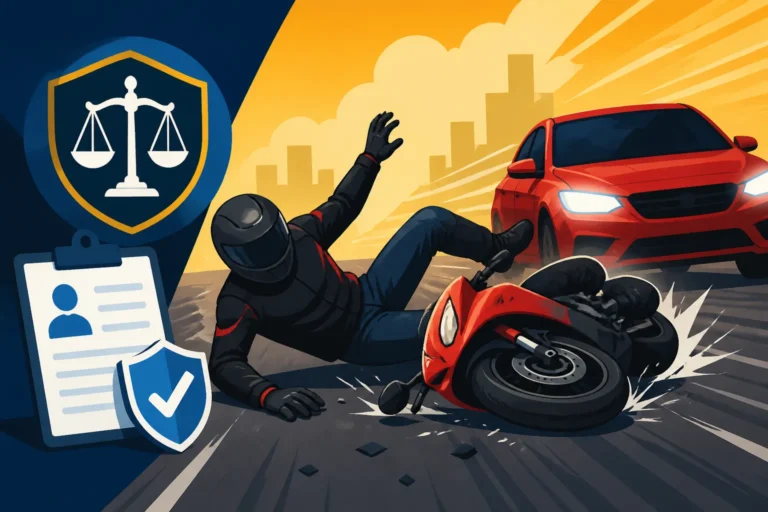
Getting into a motorcycle accident is a jarring, stressful experience, and when you’re trying to recover, the last thing you want to do is decipher complex legal jargon. Understanding who is at fault in a motorcycle accident, especially in a state like Louisiana with its unique legal system, can feel like trying to solve a puzzle while riding a unicycle. This guide is here to untangle the complexities of motorcycle accident fault laws in Louisiana, helping you understand your rights and the path forward.
Understanding Louisiana's Fault System for Motorcycle Accidents
When you're involved in a motorcycle accident in Louisiana, one of the most critical aspects you'll face is determining who is responsible for the crash. Unlike some states that might completely bar you from recovering damages if you're even slightly at fault, Louisiana operates under a specific legal doctrine that can significantly impact your claim. It's a system designed to assign percentages of blame, which directly correlates to the compensation you might receive.
Pure Comparative Negligence in the Pelican State
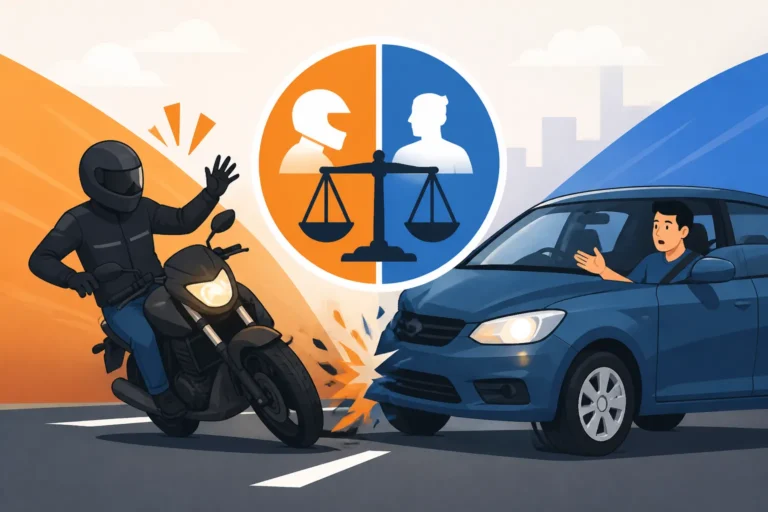
Louisiana follows a "pure comparative negligence" system. This might sound like a mouthful of legal terms, but it’s actually quite straightforward once you break it down. In essence, it means that if you are involved in a motorcycle accident and are found to be partially at fault, you can still recover damages from the other party. However, the amount of compensation you receive will be reduced by your percentage of fault. So, if you're deemed 20% responsible for the crash, you can only claim 80% of your total damages from the other driver.
This system is distinctly different from "modified comparative negligence" states, where if your fault exceeds a certain threshold (often 50% or 51%), you lose your right to recover any compensation at all. Louisiana's pure approach is a double-edged sword: it offers a chance for recovery even if you're mostly to blame, but it also means that insurance companies and opposing legal teams will work tirelessly to pin as much fault on you as possible to minimize their payout. Imagine you sustained $100,000 in damages, but a jury in Baton Rouge decided you were 60% at fault for the accident. Under Louisiana law, you would still be entitled to recover $40,000 from the other driver. This flexibility is important, but it also highlights why accurately determining fault is paramount. You can learn more about how Comparative Negligence in Motorcycle Accidents works generally.
How Fault is Determined After a Motorcycle Crash
Determining fault after a motorcycle crash in Louisiana is a meticulous process that involves gathering and analyzing various pieces of evidence. It's rarely a simple "he said, she said" situation, especially when serious injuries are involved. Police reports are often the first official document to weigh in on fault, but they are not the final word. Officers investigate the scene, interview witnesses, and note down initial observations about traffic violations or road conditions. However, their primary role is to enforce traffic laws, not to definitively assign civil liability.
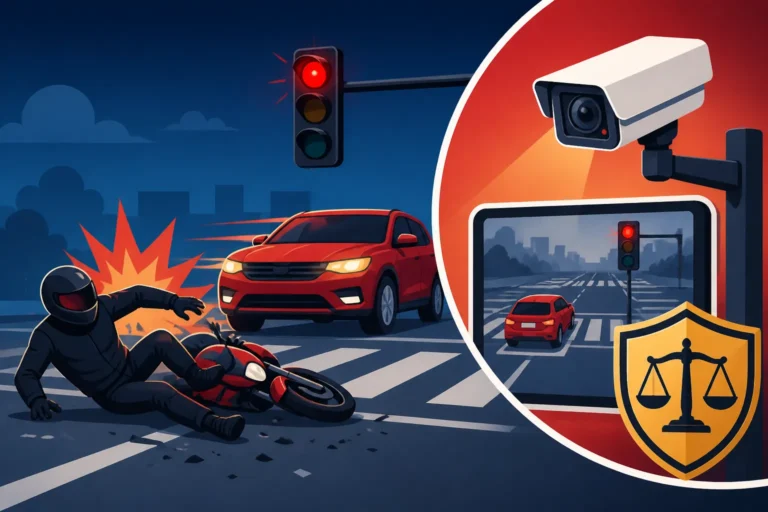
Insurance companies, naturally, will conduct their own investigations. They'll look at everything from photos of the scene, vehicle damage, skid marks, traffic camera footage, and witness statements. Sometimes, they'll even hire accident reconstruction experts to piece together what happened. If the case goes to court, attorneys will present all available evidence, and a judge or jury will ultimately assign percentages of fault to each party involved. This comprehensive approach is why it's so important for you, as the rider, to meticulously document everything you can immediately following an accident. Understanding How Fault Is Determined in Motorcycle Accidents can really help you prepare.
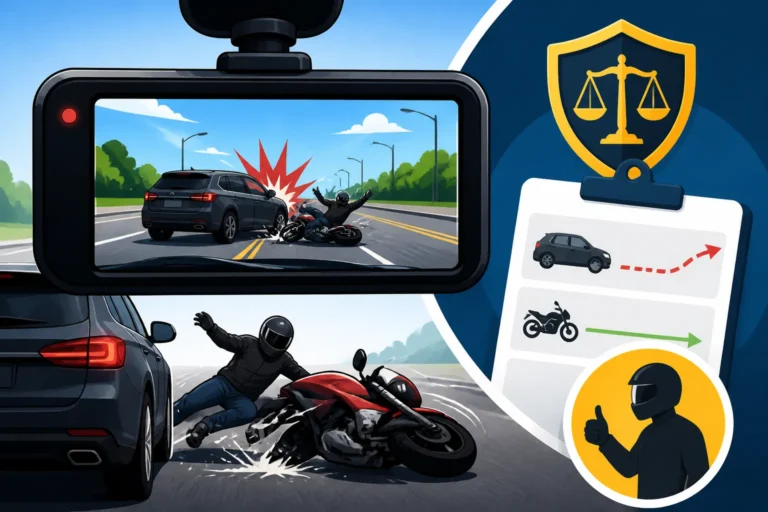
Consider a scenario on Interstate 10 near New Orleans: a car abruptly merges into your lane without signaling, causing you to lay down your bike to avoid a direct collision. While the car driver's action seems like the clear cause, the insurance adjuster might argue you were following too closely or reacting improperly. They might scrutinize your speed or your evasive maneuver to try and shift some blame, even if minimal. This is where solid evidence, like dashcam footage or objective witness accounts, becomes invaluable.
The Impact of Shared Fault on Your Claim in Louisiana
The pure comparative negligence system in Louisiana means that even if you bear some responsibility for a motorcycle accident, you’re not necessarily shut out from receiving compensation. However, the extent of your fault directly impacts the financial recovery you can achieve. This nuanced approach requires a deep understanding of how percentages are applied and how they reduce your potential payout.
How Your Percentage of Fault Affects Compensation
In Louisiana, the calculation is straightforward: your total damages are reduced by the percentage of fault assigned to you. For example, if your medical bills, lost wages, pain and suffering, and property damage add up to $50,000, and you are found to be 25% at fault for the crash, you would only be able to recover $37,500 (75% of $50,000) from the other party. The more fault you bear, the less money you will ultimately receive. This system is designed to ensure that each party is held accountable for their proportional share of the blame. This is a critical component of How Comparative Negligence Reduces Your Payout.
This proportional reduction is why insurance companies in Louisiana will go to great lengths to try and assign fault to the motorcyclist, even in cases where the other driver seems clearly negligent. They know that every percentage point of fault they can attribute to you directly reduces their financial liability. This tactic is particularly common given the persistent Rider Bias in Fault Determination that can exist. This is where experienced legal counsel can make a significant difference, as they can challenge these assertions and fight to minimize your assigned fault. Without diligent efforts to collect evidence and present a strong case, even a slight miscalculation of fault can cost you thousands of dollars in your settlement.
Common Scenarios Where Riders Might Share Fault
While many motorcycle accidents are undeniably the fault of another driver—often due to them failing to see the motorcycle or making unsafe maneuvers—there are scenarios where a rider might be found partially at fault in Louisiana. It’s important to be realistic about these possibilities so you can prepare your case effectively. One common situation is speeding. Even if a car driver makes an illegal left turn, if you were exceeding the posted speed limit, a portion of the blame might be assigned to you because your speed contributed to the severity of the crash or reduced your reaction time.
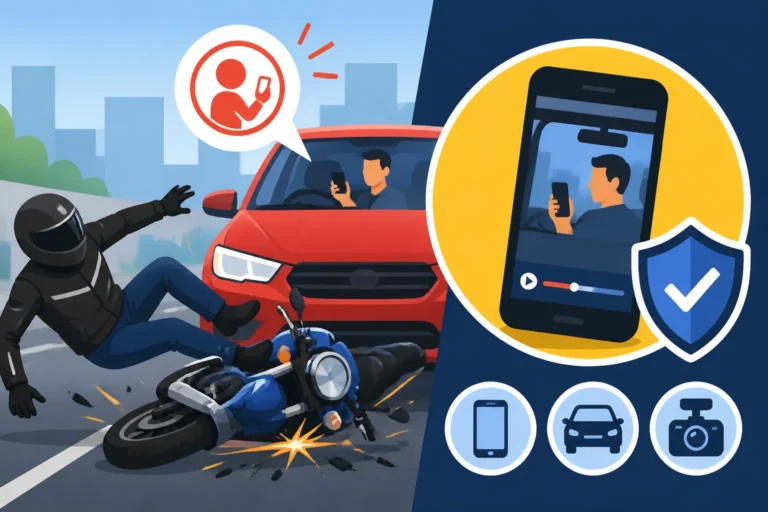
Another scenario involves improper lane usage or sudden maneuvers. While riders often navigate traffic deftly, if you changed lanes without signaling, swerved suddenly, or rode aggressively, you might be deemed partially responsible for a subsequent collision. Distracted riding, although less common than distracted driving, can also lead to shared fault. For instance, if you were adjusting your GPS or helmet camera at the moment a hazard appeared, it could be argued that your distraction contributed to the accident. Understanding these possibilities is crucial, as they are often leveraged by insurance adjusters trying to reduce their client's liability. Knowing When a Rider Is Partially at Fault can help you anticipate arguments against your claim.
For example, imagine you are riding through the French Quarter in New Orleans, and a tourist steps off the curb unexpectedly. You swerve to avoid them but clip a parked car. If it's found that you were going slightly over the speed limit for that busy area, even though the pedestrian was at fault, you might still face a small percentage of blame. This highlights the importance of always adhering to traffic laws and being acutely aware of your surroundings, as these factors can be scrutinized after a crash.
Navigating Specific Louisiana Traffic Laws and Fault
Beyond the general rules of comparative negligence, Louisiana has specific traffic regulations that can play a significant role in determining fault and impacting your motorcycle accident claim. These laws cover everything from how you ride your bike to what protective gear you are legally required to wear. Ignoring these specific regulations can weaken your position even if another driver was primarily negligent.
Lane Splitting and Fault in Louisiana
Lane splitting, the practice of a motorcyclist riding between lanes of slow or stopped traffic, is a hot topic among riders and a common point of confusion regarding fault. In Louisiana, the law is quite clear: lane splitting is generally illegal. Louisiana Revised Statute 32:191 (A) states that "All motorcycles are entitled to full use of a lane and no motor vehicle shall be driven in such a manner as to deprive any motorcycle of the full use of a lane." It also prohibits operating a motorcycle "between lanes of traffic or between adjacent lines or rows of vehicles." This means that if you are lane splitting and get into an accident, you will almost certainly be assigned some degree of fault, regardless of what the other driver did.
Even if a car driver suddenly veers into your path while you are illegally lane splitting, the fact that you were breaking the law could be used by the defense to argue that you contributed to the collision. This could significantly reduce your recoverable damages under Louisiana's pure comparative negligence system. For example, if a car driver was 80% at fault for an unsafe lane change, but you were illegally lane splitting, a jury might still assign you 20% or more fault due to your violation. This is a critical aspect to understand, as it can be a major hurdle in establishing a full claim. While some states like California permit it, Louisiana does not, making it a clear liability factor. Further details on this topic can be found in our article on Lane Splitting and Motorcycle Accident Liability.
Helmet Laws and the "Helmet Defense" in Louisiana
Louisiana has specific helmet laws that riders must adhere to. According to Louisiana Revised Statute 32:190, all motorcycle operators and passengers are required to wear a safety helmet approved by the Department of Public Safety and Corrections. This is a universal helmet law, meaning it applies to all riders, regardless of age. Failing to wear a DOT-compliant helmet is not just a traffic infraction; it can significantly impact your personal injury claim.
This is where the "helmet defense" comes into play. If you were not wearing a helmet, or were wearing a non-compliant helmet (like a novelty helmet), the defense may argue that your injuries, particularly head injuries, would have been less severe had you been wearing proper head protection. This argument can be used to reduce the amount of compensation you receive for your head injuries. Even if the other driver was entirely at fault for causing the accident, the insurance company might claim that your failure to follow the helmet law contributed to the extent of your injuries, thereby reducing their liability for those specific damages. For instance, if you suffered a traumatic brain injury without a helmet, but the defense can prove an approved helmet would have prevented or mitigated it, your compensation for that injury could be significantly reduced. This highlights the importance of not only wearing a helmet but ensuring it is a DOT-Compliant Helmet Requirements Explained. Our guide on How Helmet Laws Affect Your Accident Claim provides more in-depth information.
Other Louisiana Traffic Violations and Their Role in Fault
Beyond lane splitting and helmet use, other traffic violations can also contribute to fault in a Louisiana motorcycle accident. Things like speeding, distracted driving, running a red light or stop sign, or driving under the influence of alcohol or drugs are major factors that can lead to significant fault assignment. Even seemingly minor infractions, such as an unsafe lane change without proper signaling, can be scrutinized.
For example, if a driver turns left in front of you, a clear violation, but you were also speeding, your speed could be argued as a contributing factor to the collision's impact or your inability to avoid it. Similarly, if you were following too closely (tailgating) on a busy highway like US-90 in Lafayette, and the car in front suddenly braked, you might bear a portion of the blame for a rear-end collision, even if the car's braking was unexpected. Insurance companies will pore over police reports and accident reconstruction details to find any evidence of traffic violations on your part. Any violation can be used to argue When a Rider Is Partially at Fault and reduce your potential settlement. It's not just about who caused the initial impact, but also whose actions contributed to the overall accident or the severity of the injuries.
Essential Steps to Protect Your Claim Under Louisiana Fault Laws
After a motorcycle accident in Louisiana, the immediate aftermath can be chaotic and overwhelming. However, the steps you take (or don't take) in the moments, days, and weeks following the crash can profoundly impact your ability to prove fault and secure fair compensation under Louisiana's pure comparative negligence system. Protecting your claim starts at the scene and continues through the entire recovery process.
Gathering Evidence at the Scene
The accident scene is a treasure trove of evidence that can be crucial for proving who is at fault. In the immediate aftermath, if you are able and it is safe to do so, document everything. Take photos and videos from multiple angles. Capture the position of the vehicles, damage to your motorcycle and the other vehicle, road conditions (potholes, debris, skid marks), traffic signs, and any visible injuries. Exchange information with the other driver(s), including their name, contact details, insurance information, and vehicle license plate numbers. Don't forget to get contact information from any witnesses; their unbiased accounts can be invaluable, especially when trying to counteract Rider Bias in Fault Determination.
It’s also crucial to contact the police immediately. The police report, while not a final determination of civil fault, provides an official record of the incident and often includes crucial details like initial observations, witness statements, and any citations issued. Ensure you get the police report number. Most importantly, do not admit fault or apologize at the scene, even if you feel shaken or partly responsible. Anything you say can and will be used against you by insurance companies. Focus on gathering facts, seeking medical attention, and protecting your legal position. For a more detailed guide, consider reading What to Do Immediately After a Motorcycle Accident.
Why Legal Guidance is Key for Louisiana Motorcycle Accident Claims
Given Louisiana’s pure comparative negligence laws and the common biases against motorcyclists, navigating a claim can be incredibly complex. Insurance companies are for-profit businesses; their primary goal is to pay out as little as possible, and they have sophisticated legal teams and adjusters whose job it is to minimize your claim, often by shifting fault to you. They may even use tactics like delaying communication or making lowball settlement offers hoping you'll settle quickly.
An experienced motorcycle accident lawyer who understands Louisiana-specific laws can be your strongest advocate. They can conduct a thorough investigation, gather expert testimony, negotiate with insurance companies, and if necessary, represent you in court. They know how to counter common defense strategies, like the "helmet defense" or arguments about lane splitting, and can fight to ensure your percentage of fault is minimized. Furthermore, they can accurately assess all your damages—not just immediate medical bills, but also lost wages, future medical costs, pain and suffering, and property damage—to ensure you receive a fair settlement. Attempting to handle a serious injury claim on your own in Louisiana is akin to riding your bike blindfolded; it's risky and likely to end poorly. Consulting with an attorney is often the first and most critical step in protecting your rights and maximizing your recovery. Our article on Do You Need a Motorcycle Accident Lawyer delves deeper into this.
Key Aspects of Louisiana Motorcycle Accident Fault Laws
To help consolidate some of the critical information we've discussed, here's a table summarizing the key aspects of Louisiana's fault laws as they apply to motorcycle accidents. This can serve as a quick reference point as you navigate your claim.
| Aspect | Louisiana Law & Impact |
|---|---|
| Fault System | Pure Comparative Negligence. You can recover damages even if you are mostly at fault (e.g., 99%), but your compensation will be reduced by your percentage of blame. If you have $100,000 in damages and are 70% at fault, you can recover $30,000. |
| Lane Splitting | Illegal. If you are involved in an accident while lane splitting, you will almost certainly be assigned a percentage of fault, which will reduce your overall compensation. This is a significant factor in determining Who Is at Fault in a Lane Splitting Motorcycle Accident. |
| Helmet Law | Universal Helmet Law (La. R.S. 32:190). All riders and passengers must wear a DOT-compliant helmet. |
| "Helmet Defense" | Yes. If you were not wearing a helmet and suffered head injuries, the defense can argue your injuries would have been less severe with a helmet, potentially reducing your compensation for those specific injuries. |
| Proving Fault Burden | The plaintiff (injured rider) generally bears the burden of proving the other party's negligence and their resulting damages. The defense then tries to prove the rider's comparative fault. This process heavily relies on Motorcycle Accident Evidence for Proving Fault. |
| Common Rider Fault Areas | Speeding, unsafe lane changes, distracted riding, following too closely, and illegal maneuvers. These factors are often used by insurance companies to assign partial fault. |
| Statute of Limitations | One year from the date of the accident for most personal injury claims (La. Civ. Code Art. 3492). This is a strict deadline for filing a lawsuit. |
This table underscores that Louisiana's legal landscape requires motorcyclists to be extra vigilant, not only in their riding practices but also in understanding their legal rights and responsibilities after an accident.
Disclaimer
Please remember that this article provides general information and insights into motorcycle accident fault laws in Louisiana. It is not intended as legal advice. Every accident case is unique, and the outcome depends heavily on specific facts, evidence, and applicable laws. If you have been involved in a motorcycle accident, it is crucial to consult with a qualified personal injury attorney in Louisiana to discuss your specific situation and receive tailored legal guidance.