Third-Party Liability in Motorcycle Accidents
Riding your motorcycle is about freedom, exhilaration, and connecting with the open road. But when that freedom is shattered by an accident, the immediate aftermath can be overwhelming. Many riders instinctively focus on the driver of the other vehicle, but the reality is often far more complex. Sometimes, the direct cause of your crash, or the severity of your injuries, can be traced back to other entities entirely. This comprehensive guide will delve into the often-overlooked world of third-party liability in motorcycle accidents, helping you understand who else might be held responsible and how that could impact your recovery.
Understanding the Scope of Third-Party Liability in Motorcycle Accidents
When you're involved in a motorcycle accident, it's natural to assume the "other driver" is the only one you need to concern yourself with. But the legal landscape of accident claims is rarely that simple. Many factors contribute to a crash, and sometimes, the negligent actions or omissions of parties other than the direct colliding vehicle can play a significant role. Identifying these "third parties" is crucial for ensuring you receive the full and fair compensation you deserve.
Beyond the Immediate Collision: Defining "Third Party"
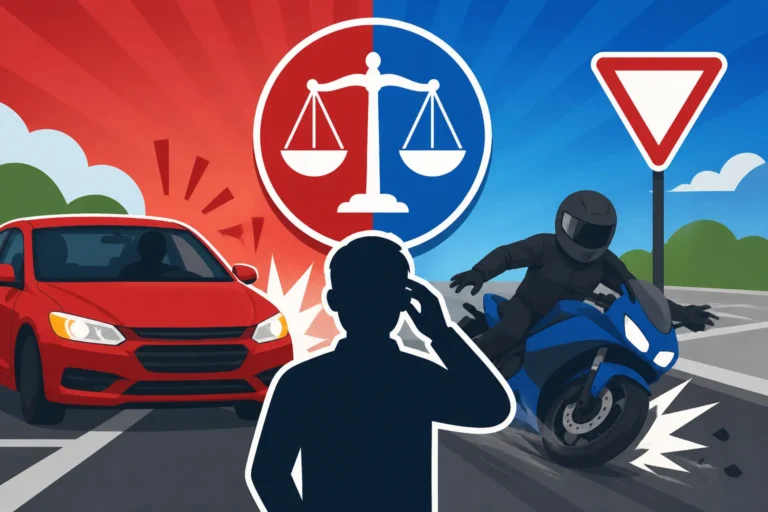
In the context of a personal injury claim like a motorcycle accident, a "third party" refers to any individual or entity, other than you (the injured party) and the primary at-fault driver, who might bear some responsibility for your damages. Think of it as broadening the scope beyond the most obvious culprit. While the driver who cut you off or failed to yield might be the direct cause of the collision itself, the actions of a city, a manufacturer, or even an employer could have contributed to the incident or exacerbated your injuries. For example, if a faulty brake system on your bike, unknown to you, contributed to the inability to avoid a collision, the manufacturer of those brakes could be a third party. Or, if a giant pothole led you to swerve into traffic, the government entity responsible for road maintenance might share the blame.
It's about looking at the entire chain of events and identifying every link where negligence might have occurred. This broader perspective is what distinguishes a robust claim from a simplistic one that might leave you short-changed. Understanding the nuances of how Who Is at Fault in a Motorcycle Accident is determined is key here, as it often goes beyond just two vehicles.
The Critical Importance of Identifying All Responsible Parties
Why does this matter so much? Simply put, identifying all responsible parties can dramatically affect your ability to recover compensation, especially in cases where injuries are severe or the primary at-fault driver has insufficient insurance coverage. Imagine suffering catastrophic injuries in a crash caused by a distracted driver, only to find their insurance policy limits are too low to cover your extensive medical bills and lost wages. If, however, it's discovered that the road condition was also terribly maintained, and that contributed to the accident's severity, you might have an additional avenue for compensation against the responsible government agency.
Furthermore, involving multiple negligent parties often means there are more insurance policies to draw from. Each party's insurance company will likely try to shift blame to others, which can be a frustrating and complex dance. However, a skilled legal team can leverage this dynamic to your advantage, ensuring all liable parties are held accountable. This approach is fundamental to a complete understanding of Motorcycle Accident Liability: A Complete Guide and ensuring all avenues for recovery are explored.
Unmasking Common Third Parties Beyond the Other Driver
While the driver of the car that hit you is often the most obvious party, it's critical to look deeper. Many times, the cause of the accident or the severity of your injuries can be attributed to other individuals or entities. These are the often-overlooked "third parties" whose negligence can open up additional avenues for compensation.
Government Entities: When Road Conditions Are to Blame
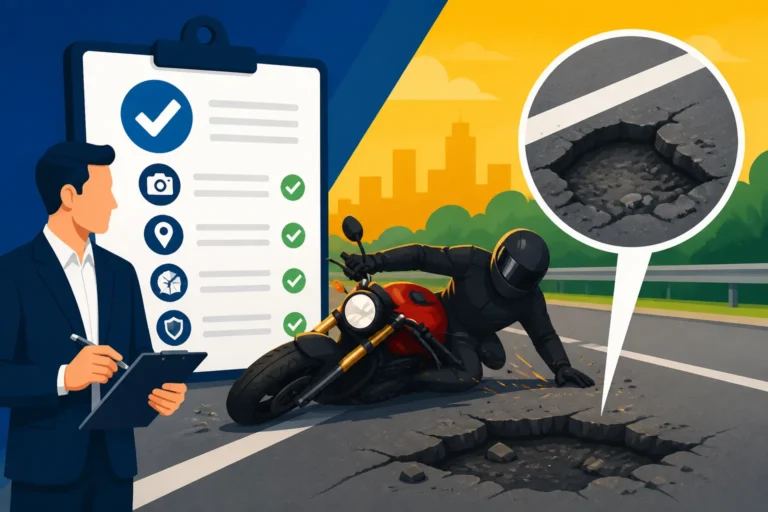
We've all encountered them: crumbling asphalt, giant potholes, obscured signage, or faulty traffic lights. These road hazards aren't just annoying; they can be incredibly dangerous for motorcyclists. Unlike a car, a motorcycle has two wheels and less stability, making it far more susceptible to losing control over even minor road defects. If your accident was caused or worsened by unsafe road conditions, the government entity responsible for maintaining that road could be held liable. This could be a city, county, state, or even a federal agency, depending on whose jurisdiction the road falls under.
For instance, if you hit a massive pothole on a state highway near Sacramento, California, and it caused you to lose control, leading to a collision, the California Department of Transportation (Caltrans) might be considered a negligent third party. To pursue a claim against a government entity, specific and often very strict notice requirements and deadlines typically apply, which are far different from those for a private individual. These claims can be challenging to prove, as governments often have "sovereign immunity" defenses, but with the right evidence, it is certainly possible to hold them accountable. More details can be found in our guide on Government Liability for Road Hazards and what to do if you're involved in a Who Is Liable for a Pothole Motorcycle Accident.
Vehicle Manufacturers: Holding Them Accountable for Defects
Imagine cruising down the interstate and suddenly your brakes fail, or your tire blows out, causing you to crash. In such terrifying scenarios, the fault might not lie with another driver or even you, but with a defective component in your motorcycle itself. Vehicle manufacturers, and even the manufacturers of individual parts, have a legal responsibility to ensure their products are safe and free from design or manufacturing defects. When a defect causes or contributes to an accident, the manufacturer can be held liable under product liability laws.
This could involve issues like faulty braking systems, defective tires, malfunctioning steering components, or even design flaws that make a motorcycle inherently unstable or unsafe. Proving a manufacturing defect requires extensive investigation, often involving expert analysis of the damaged parts and detailed documentation of the defect. It’s not enough to say "the brakes didn't work"; you need to demonstrate why they didn't work and that it was due to an inherent flaw rather than wear and tear or improper maintenance. Such cases often involve complex engineering and forensic evidence, making expert testimony indispensable. To learn more about this, explore our article on Manufacturer Liability for Defective Parts or specific issues like Manufacturer Fault for Brake Failure.
Businesses and Employers: Vicarious Liability in Action
Many accidents involve drivers who are on the clock, performing duties for their employer. This opens the door to "vicarious liability," where an employer can be held responsible for the negligent actions of their employee. This principle applies if the employee was acting within the scope of their employment at the time of the accident. Think about the delivery driver rushing to make a deadline, the commercial truck driver on a long haul, or even a sales representative driving to a client meeting. If their negligence causes your motorcycle accident, their employer might also be held liable.
For example, if an Amazon delivery van driver in Atlanta, Georgia, causes a crash because they were distracted by their navigation device while making deliveries, Amazon could potentially be named as a third-party defendant. This is particularly significant because businesses and corporations often carry much higher insurance policies than individual drivers, providing a greater pool of resources for compensating serious injuries. Beyond direct employee actions, businesses can also be liable for their own negligence, such as improper hiring practices (e.g., hiring a driver with a history of DUIs), insufficient training, or failing to maintain their fleet vehicles safely.
Other Drivers or Pedestrians: The Chain Reaction Effect
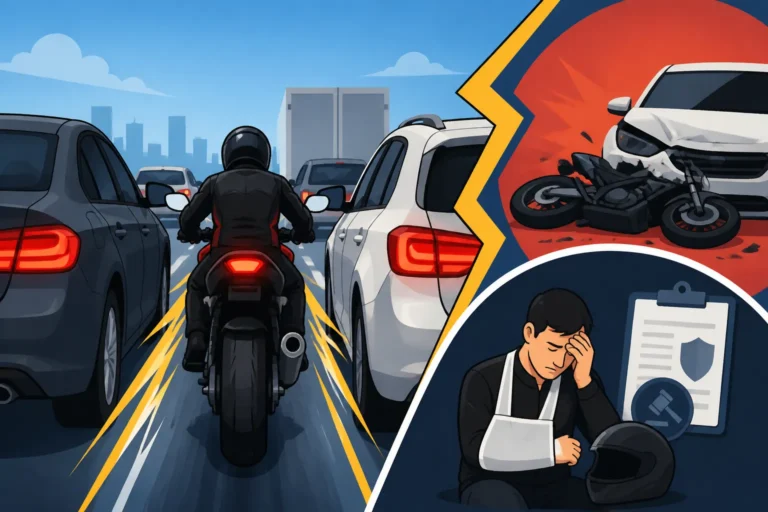
Sometimes, an accident isn't just between two parties. It can be a multi-vehicle pile-up, a chain reaction, or even an incident where an unexpected action from a third party – another driver, a pedestrian, or even a cyclist – initiates a series of events that leads to your crash. For example, if a car suddenly swerves to avoid a pedestrian who jaywalked, and that swerve causes the car to collide with your motorcycle, both the swerving driver and the jaywalking pedestrian could bear some degree of fault.
Another common scenario involves secondary collisions where one vehicle rear-ends another, pushing it into your path. In such cases, multiple drivers may be found partially at fault, and identifying each one is crucial for a complete claim. This is where understanding concepts like Shared Fault in Motorcycle Accidents becomes incredibly important, as different parties might contribute to the accident in varying degrees. The more individuals involved, the more complex the investigation and the negotiation process become, but also the more potential avenues for recovery.
Strategies for Investigating and Proving Third-Party Fault
When you've been in a motorcycle accident, the immediate focus is often on recovery and dealing with the most apparent at-fault party. However, overlooking potential third parties can significantly impact your ability to receive full compensation. Proving the fault of a third party, especially one less obvious than the other driver, requires a meticulous approach and often specialized resources.
Diligent Evidence Collection: The Foundation of Your Claim
The strength of any accident claim, particularly one involving third parties, hinges on the evidence you collect. This process begins immediately after the crash, assuming you are physically able to do so. Start by documenting the scene thoroughly. This means taking abundant photos and videos from multiple angles – not just of the vehicles involved, but also of road conditions, traffic signals, surrounding businesses, and any distinguishing features of the area. If a pothole was involved, photograph it with a ruler or common object for scale. If it was a product defect, preserve the damaged component, if possible.
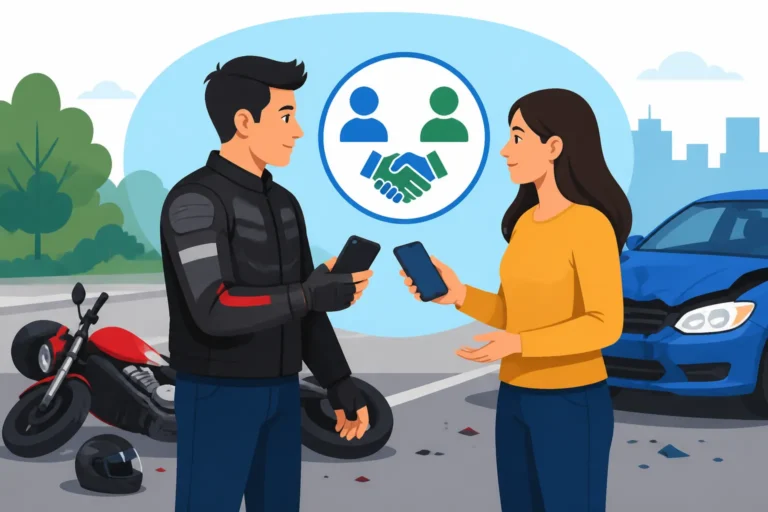
Beyond photos, gather contact information from all witnesses. Their unbiased accounts can be invaluable, especially when trying to establish a broader narrative that includes third-party negligence. Additionally, obtain the police report, which can contain initial assessments of fault and details about the accident scene. If a commercial vehicle was involved, note the company name, DOT number, and any identifying decals. Detailed medical records are also paramount, documenting not only your injuries but also the progression of your treatment and recovery, which directly impacts the valuation of your claim. Having strong Motorcycle Accident Evidence for Proving Fault is non-negotiable.
Leveraging Experts: Accident Reconstruction and Specialized Testimony
When third-party liability is suspected, the complexity of proving fault often escalates beyond what standard investigations can handle. This is where expert witnesses become indispensable. An accident reconstruction expert, for instance, can analyze physical evidence, vehicle damage, skid marks, and even weather conditions to piece together precisely how an accident occurred. They can often determine if factors like a road defect or a vehicle malfunction played a causal role, rather than just the actions of the primary driver. For more on this, see How Accident Reconstruction Determines Fault.
In cases of product liability, forensic engineers specializing in metallurgy, mechanics, or automotive design can examine a defective part to confirm its flaw and explain how that flaw led to the crash. Similarly, if government negligence is alleged, civil engineers can assess road design, signage, and maintenance records to pinpoint failures. These experts don't just offer opinions; they provide scientific, fact-based testimony that can sway insurance adjusters and juries alike, substantiating claims that might otherwise be dismissed as speculative.
The Role of Legal Counsel in Complex Investigations
Navigating third-party liability claims is notoriously complex and often impossible to manage effectively on your own. This is where experienced legal counsel, particularly those well-versed in motorcycle accidents, become your greatest asset. A seasoned attorney will know exactly what evidence to look for, how to preserve it, and which experts to engage. They can access resources you might not, such as detailed accident reports, maintenance logs from commercial vehicles, or engineering schematics for defective parts.
Moreover, they understand the specific laws and regulations that apply to various third parties. For example, claims against government entities often have unique legal requirements and tight deadlines, which if missed, can permanently bar your claim. An attorney can ensure these critical procedural steps are followed. They will also handle all communications with multiple insurance companies, preventing you from inadvertently saying or doing anything that could jeopardize your case. Their expertise in identifying and pursuing all potential avenues of liability is crucial for maximizing your motorcycle accident settlement.
Navigating the Intricacies of Multi-Party Claims
Dealing with the aftermath of a motorcycle accident is stressful enough. When multiple parties might be at fault, the complexity of your claim can skyrocket, turning an already daunting process into a bureaucratic nightmare. However, understanding how these multi-party dynamics work is essential for protecting your rights and ensuring you get the compensation you truly deserve.
Shared Fault Dynamics: Understanding Comparative Negligence
In many motorcycle accidents involving multiple vehicles or third parties, it's not always a clear-cut case of one party being 100% at fault. Often, several individuals or entities contribute to the accident to varying degrees. This is where the concept of comparative negligence comes into play. Most states follow either a "pure comparative negligence" or "modified comparative negligence" rule.
Under pure comparative negligence, even if you are found largely responsible for the accident (say, 90% at fault), you can still recover damages for the remaining 10% for which other parties are liable. States like California operate under this system. However, many states, such as Texas or Ohio, adhere to a modified comparative negligence rule, often with a 50% or 51% bar. This means if you are found to be 50% or more at fault (or 51% or more, depending on the state), you may be completely barred from recovering any damages. For example, if you were speeding slightly, but a defective brake part also contributed to your inability to stop, you might be assigned some percentage of fault. This is why a thorough investigation into all potential third parties is so vital; it can reduce your percentage of fault and increase your recoverable damages. Our guides on Comparative Negligence in Motorcycle Accidents and Shared Fault in Motorcycle Accidents delve deeper into these crucial distinctions.
Coordinating with Multiple Insurance Carriers
When a motorcycle accident involves multiple at-fault parties, you're not just dealing with one insurance company – you're dealing with several. Each insurance carrier represents its own client and its own financial interests, which means they will often attempt to shift blame to other parties, including you, to minimize their payout. This can create a chaotic and frustrating negotiation environment.
For instance, if you were hit by a commercial truck driver whose company failed to properly maintain their vehicle, you might be dealing with the truck driver's personal insurance, the trucking company's commercial liability insurance, and potentially the manufacturer's insurance if a defective part was involved. Each insurer will conduct its own investigation, often hiring its own experts, and presenting its version of events. Coordinating these discussions, exchanging evidence, and negotiating with each party simultaneously requires significant expertise. An experienced attorney acts as your central point of contact, managing these complex interactions and ensuring no insurer takes advantage of your situation.
Potential for Enhanced Compensation in Complex Cases
While multi-party claims are more challenging, they often carry the potential for significantly higher compensation. When multiple parties are found liable, there's a greater chance that their combined insurance coverage limits will be sufficient to cover all your economic and non-economic damages. For example, if a single driver's minimum policy limits are $25,000, but your injuries total $100,000, you would typically be out of luck unless you have significant underinsured motorist (UIM) coverage.
However, if a government entity and a vehicle manufacturer are also found partially liable, their respective, often much larger, insurance policies could provide the additional funds needed to fully compensate you. This is especially relevant in cases involving catastrophic injuries, such as Motorcycle Accident Traumatic Brain Injuriesor spinal cord injuries, where medical bills, lost income, and long-term care can quickly exceed hundreds of thousands or even millions of dollars. Pursuing all responsible third parties expands the pool of available insurance, increasing the likelihood that your full losses will be covered.
Here's a quick overview of common third parties and why they might be liable:
| Third Party Type | Examples of Negligence | Evidence Needed | Potential Benefits |
|---|---|---|---|
| Government Entity | Potholes, poor road design, faulty traffic lights, missing signage | Photos of hazard, maintenance records, expert testimony | Broader insurance coverage, public safety impact |
| Vehicle Manufacturer | Defective brakes, faulty tires, design flaws | Damaged part, expert analysis, recall notices | Strict liability (easier to prove), significant financial resources |
| Business/Employer | Negligent employee driver, inadequate training, poor vehicle maintenance | Employee records, company policies, vehicle maintenance logs | Deeper pockets via commercial insurance, vicarious liability |
| Other Drivers/Pedestrians | Jaywalking, swerving to avoid another object, secondary collision | Witness statements, traffic camera footage, accident reconstruction | Distributes fault, provides additional insurance policies |
Specific Scenarios Involving Third-Party Liability
Understanding the general concept of third-party liability is one thing, but seeing it applied to real-world scenarios makes it much clearer. Certain types of motorcycle accidents are particularly prone to involving additional parties beyond just the immediate driver you collided with.
Catastrophic Crashes Due to Defective Motorcycle Parts
Few things are more terrifying for a motorcyclist than experiencing a critical mechanical failure at speed. While we perform our routine checks, sometimes a flaw is hidden, ready to surface at the worst possible moment. When a motorcycle crash occurs because of a defective part, the manufacturer of that part, or even the motorcycle itself, can be held responsible. This isn't about normal wear and tear or poor maintenance on your part; it's about a fundamental flaw in the product's design, manufacturing, or warnings.
Consider a scenario where the steering mechanism on your relatively new Harley-Davidson suddenly locks up, causing you to veer off the road and hit a guardrail. Or perhaps the Pirelli tire on your sportbike, despite being new and properly inflated, suffers a catastrophic blowout at highway speeds. In these instances, you might have a claim against Harley-Davidson or Pirelli, respectively. These cases fall under product liability law, which often has different standards of proof than standard negligence claims. Sometimes, manufacturers are even held "strictly liable," meaning you don't necessarily have to prove they were negligent, only that the product was defective and caused your injury. This is an incredibly important distinction, as proving Manufacturer Fault for Brake Failure or tire defects can be technically challenging but is a powerful avenue for recovery.
Accidents Caused by Negligent Road Maintenance
Motorcyclists are acutely aware of the road surface. Even small imperfections can be a big deal for us. Potholes, uneven pavement, loose gravel, construction debris, inadequate signage, or malfunctioning traffic signals can all lead to severe accidents. When such hazards exist due to the negligence of a governmental entity, that entity can be held liable.
Imagine riding through a dimly lit street in Portland, Oregon, at night, and hitting a sinkhole that was poorly marked or completely unmarked, leading to a serious fall. Or perhaps a major highway had a known issue with standing water during rain, which the Department of Transportation failed to address, resulting in hydroplaning accidents, including yours. To pursue these cases, it's crucial to establish that the government entity had "actual" or "constructive" notice of the dangerous condition – meaning they either knew about it or should have known about it through reasonable inspection – and failed to rectify it within a reasonable timeframe. Documentation, such as maintenance requests, incident reports from other riders, and expert testimony about engineering standards, becomes vital. Our article on Road Hazards Motorcycle Accident highlights the specific challenges and requirements involved in these claims.
Commercial Drivers and Their Employers: A Different Standard of Care
Motorcycles are often significantly smaller and less visible than other vehicles, making us vulnerable, especially around large commercial trucks, vans, or buses. When a commercial driver causes an accident, the claim often becomes far more complex than a standard car-on-motorcycle collision because their employer usually enters the picture. Trucking companies, for example, have a heightened duty of care due to the sheer size and potential destructive power of their vehicles.
If you're involved in a collision with a FedEx delivery truck, a semi-truck from Swift Transportation, or a city bus, you're not just dealing with the driver; you're also dealing with the corporation that employs them. The company can be held responsible for its driver's negligence under the principle of vicarious liability. Furthermore, the company itself can be liable if it engaged in negligent hiring practices (e.g., hiring a driver with a poor safety record), failed to adequately train its drivers, or neglected to properly maintain its fleet. Commercial insurance policies tend to have much higher limits than personal policies, making these claims potentially more valuable, but also more aggressively defended. Proving negligence often involves subpoenaing driver logs, maintenance records, and company training manuals, which is a task best handled by legal professionals.
Anticipating and Overcoming Challenges in Third-Party Claims
While pursuing third-party liability can open up vital avenues for compensation, it's rarely a straightforward path. Insurance companies and the legal teams representing these additional parties are well-versed in defending against such claims. Anticipating their strategies and understanding the procedural hurdles is crucial for mounting a successful case.
Common Defenses Against Third-Party Allegations
Third-party defendants and their insurers will employ various tactics to deny or minimize their responsibility. For instance, in cases involving government entities and road hazards, they often invoke "sovereign immunity," claiming they are protected from lawsuits unless specific conditions are met, or argue they did not have adequate notice of the defect. They might also assert that the road condition was "open and obvious," suggesting a reasonable rider should have seen and avoided it, thus shifting blame back to you.
For product liability claims, manufacturers frequently argue that the defect didn't exist, was a result of wear and tear, or that the rider modified the product, used it improperly, or failed to maintain it. They may also claim that the defect wasn't the cause of the accident, but rather another driver's negligence was the sole cause. In commercial vehicle accidents, the company might try to claim their driver was on a personal errand and not within the scope of employment, or that your own speeding contributed to the crash. Each defense requires a specific, evidence-backed counter-argument, highlighting the need for thorough preparation and skilled legal representation.
Strict Deadlines and Notice Requirements to Be Aware Of
One of the most critical challenges, and often the downfall of many legitimate third-party claims, involves strict deadlines and specific notice requirements. These are particularly stringent when dealing with governmental entities. For example, if your accident was due to a road hazard maintained by the city of Phoenix, Arizona, you might have as little as 180 days (or six months) from the date of the accident to file a formal "Notice of Claim" with the appropriate municipal body. This is a far shorter deadline than the general personal injury statute of limitations, which might be two years in Arizona. Missing this crucial notice period can permanently bar your ability to sue the government, regardless of the merits of your case.
Product liability claims also have their own statutes of limitations, which can vary by state and by the type of defect. Understanding these nuanced timelines for each potential third party is paramount. An experienced motorcycle accident attorney will be intimately familiar with these deadlines and ensure all necessary paperwork is filed correctly and on time, protecting your right to pursue compensation from every responsible party. Don't wait; understand your state's Statute of Limitations Explained to avoid missing critical filing periods.
Disclaimer
The information provided in this guide is for general informational purposes only and does not constitute legal advice. Motorcycle accident claims are complex and highly dependent on the specific facts and applicable laws of your jurisdiction. It is crucial to consult with a qualified legal professional to discuss your individual situation and receive advice tailored to your needs.