Who Is at Fault in a Failure To Yield Motorcycle Accident
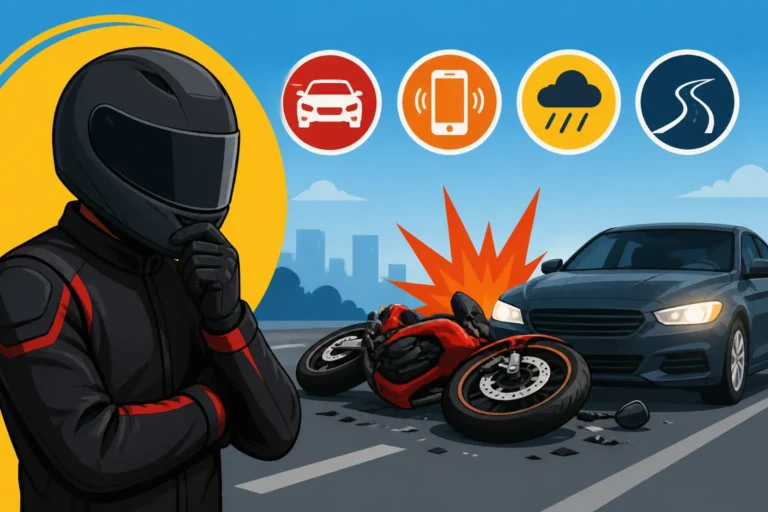
It's incredibly frustrating when you're out riding, doing everything right, and another driver simply fails to see you, leading to a dangerous accident because they didn't yield the right-of-way. These kinds of collisions often leave riders with significant injuries and a mountain of questions about who is truly at fault. This comprehensive guide will break down the complexities of fault determination in failure to yield motorcycle accidents, helping you understand your rights and the steps you need to take.
Understanding Failure to Yield in Motorcycle Accidents
"Failure to yield" is a common phrase in traffic law, but what does it really mean, especially when a motorcycle is involved? Simply put, it means a driver didn't give way to traffic or pedestrians who had the legal right to proceed. For motorcyclists, these situations are particularly perilous, as our smaller profile often contributes to us being overlooked, a phenomenon sometimes referred to as the "I Didn't See the Motorcycle" Defense Explained.
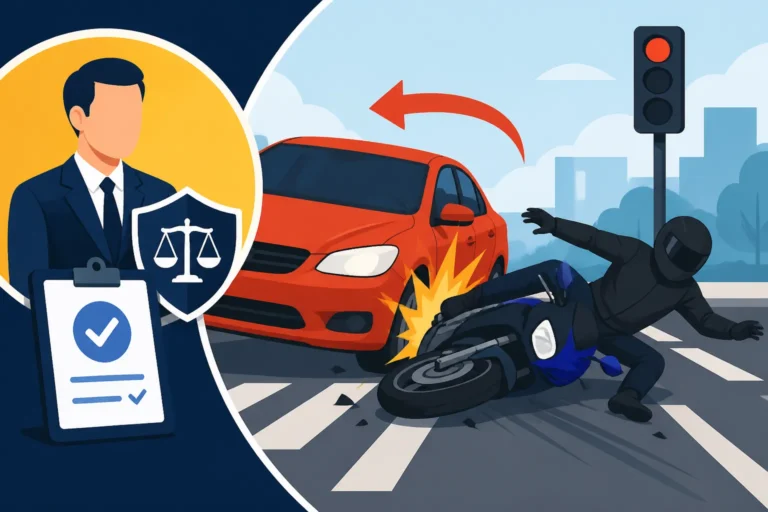
Imagine you're cruising down a main road, and a car suddenly pulls out from a side street directly into your path without stopping or checking for oncoming traffic. Or perhaps you're approaching an intersection, and another vehicle attempts a left turn right in front of you, assuming you have enough time to stop or that you're further away than you actually are. These aren't just minor inconveniences; they are critical judgment errors that can have devastating consequences for riders. The sheer lack of protection on a motorcycle compared to a car means that even a low-speed impact can result in serious injuries, making the question of fault not just a legal one, but one that impacts your entire recovery.
What Constitutes a Failure to Yield?
Legally, "failure to yield" encompasses a wide range of scenarios where a driver violates traffic laws by not giving the right-of-way. This can happen at various points on the road, each with its own specific rules and potential for danger. One of the most common causes of motorcycle accidents is when a driver fails to yield.
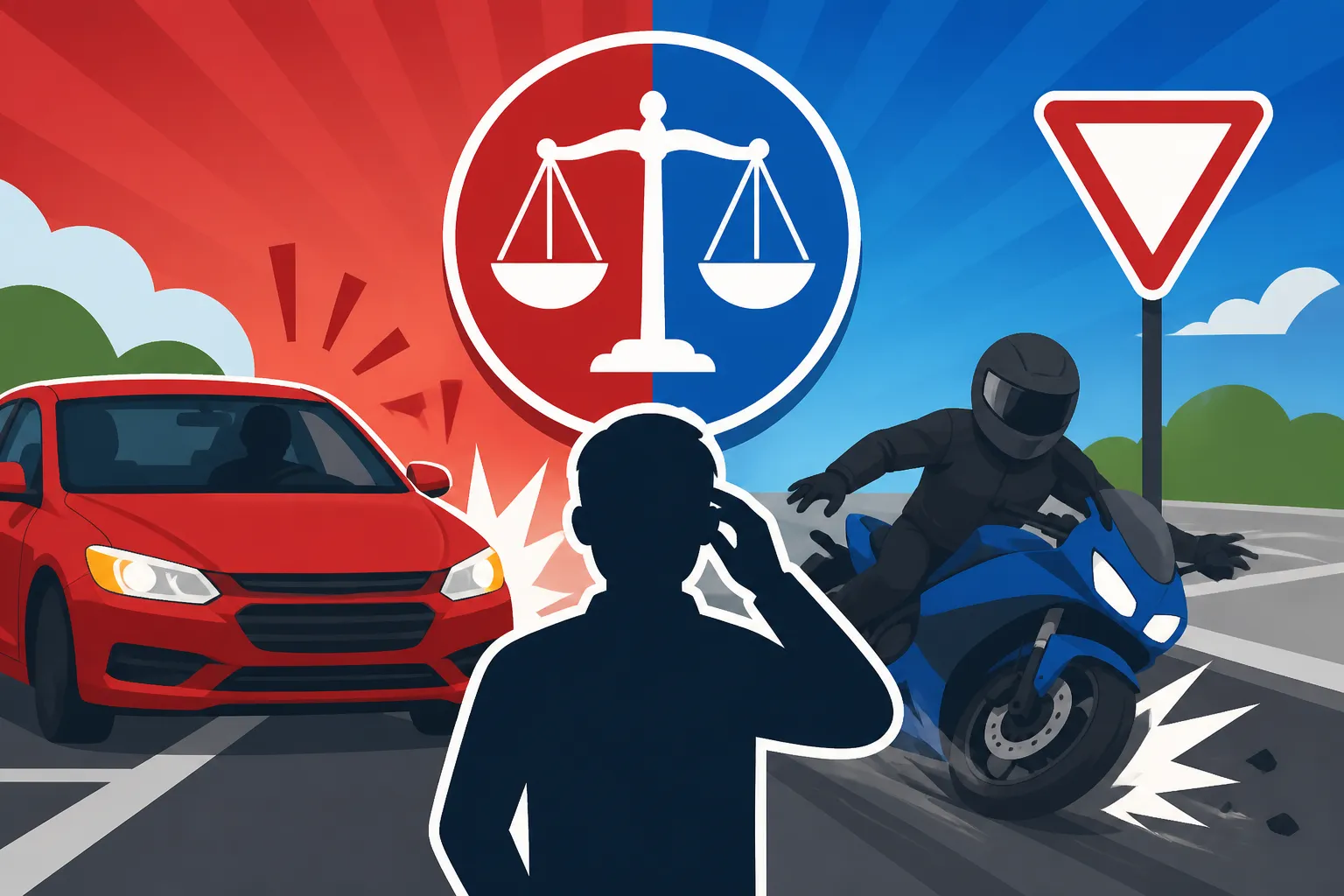
Consider the classic situations: a driver blows through a stop sign or a yield sign without pausing, or they barrel into an intersection where you have a green light. These are clear-cut cases. However, it gets trickier with left-hand turns. When a driver is making a left turn, they typically must yield to oncoming traffic, which includes motorcycles. Many drivers misjudge the speed and distance of an approaching motorcycle, leading to a sudden, unavoidable collision. Other examples include drivers entering a roadway from a private driveway, changing lanes without checking their blind spots, or even pedestrians failing to yield to traffic when crossing outside of a designated crosswalk. Each of these situations presents a unique challenge, but the underlying principle remains the same: one party failed to respect the established right-of-way rules.
Why Motorcyclists are Particularly Vulnerable
It's a stark reality that motorcyclists face unique dangers on the road. Our bikes are smaller, offering a far less visible profile than a car or truck. This size difference, combined with cognitive biases, often leads drivers to literally not see motorcycles, even when they're directly in their field of vision. This phenomenon is often rooted in what's known as "inattentional blindness," where drivers are looking for other cars, not motorcycles, and thus fail to register our presence.
Beyond just visibility, there's also an unfortunate rider bias that sometimes creeps into fault determination. Some people, including jurors and even insurance adjusters, may hold preconceived notions that motorcyclists are inherently reckless or prone to speeding. This bias can make it harder for a rider to prove their innocence, even when the other driver was clearly in the wrong. Think about it: if a driver claims, "I just didn't see him," an adjuster might subconsciously lean towards the idea that the motorcycle "came out of nowhere," rather than acknowledging the driver's negligence. This makes documenting every detail of the accident scene, and your own adherence to traffic laws, absolutely crucial for protecting your claim.
Determining Fault in Failure to Yield Collisions
Pinpointing fault in a motorcycle accident where a driver failed to yield is a complex process that relies heavily on evidence and a thorough understanding of traffic laws. It's not always as simple as one driver saying "I didn't see them" and the case being closed. Instead, investigators, insurance companies, and potentially courts will look at a mosaic of factors to establish who bears responsibility. This is where the importance of gathering solid evidence immediately after a crash cannot be overstated. Understanding How Fault Is Determined in Motorcycle Accidents is key to protecting your rights.
The process often begins with the immediate aftermath of the accident, with law enforcement documenting the scene. From there, insurance companies will launch their own investigations, often seeking to minimize their payout. This means they will scrutinize every piece of evidence, from statements to physical damage, to assign blame. Sometimes, the initial determination might seem unfair, which is why having a strong understanding of what evidence truly matters is paramount.
Key Evidence for Proving Driver Fault
When it comes to proving that another driver failed to yield and caused your motorcycle accident, evidence is your best friend. Without solid proof, it becomes a "he said, she said" scenario, which often doesn't end favorably for the motorcyclist due to inherent biases. The more objective and verifiable evidence you can present, the stronger your position will be.
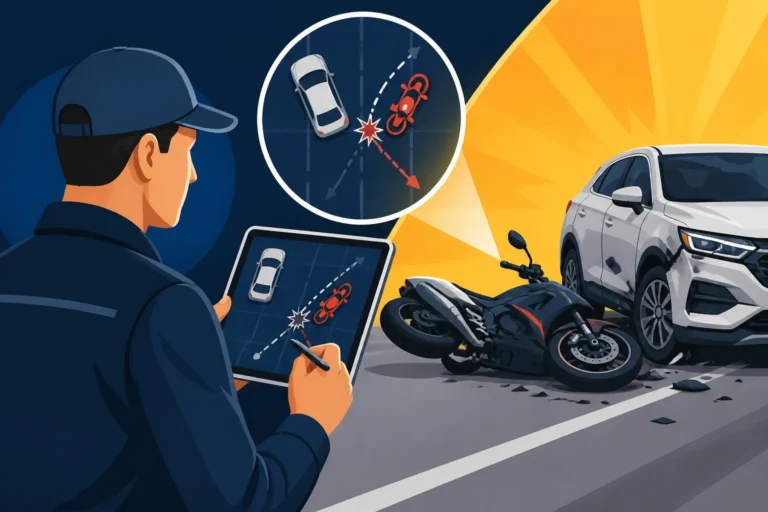
First and foremost, the official police report is critical. This document, compiled by law enforcement officers at the scene, will include their assessment of the accident, diagrams, witness statements, and any traffic citations issued. If the other driver received a ticket for failure to yield or running a stop sign, that's a powerful piece of evidence in your favor. Second, eyewitness accounts are invaluable. Independent witnesses who saw the accident unfold can corroborate your version of events and often provide unbiased testimony. Make sure to get their contact information at the scene. Third, technology plays an increasingly vital role. Dashcam footage from other vehicles, or even traffic camera recordings at intersections, can provide irrefutable visual proof of how the accident occurred. Finally, in more complex cases, accident reconstruction experts can recreate the scene, analyzing skid marks, vehicle damage, and impact points to scientifically determine speeds, trajectories, and who was at fault. This type of detailed analysis, often based on the kind of Motorcycle Accident Evidence for Proving Fault gathered at the scene, can be a game-changer.
Factors That Can Complicate Fault
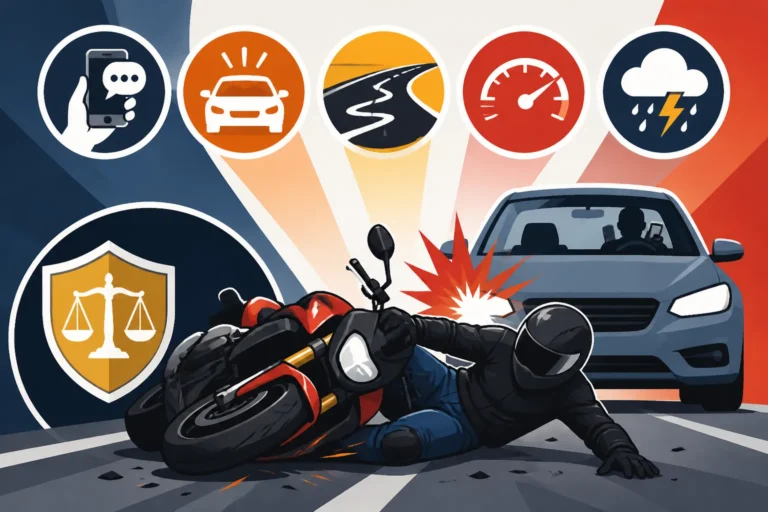
While many failure to yield cases might seem straightforward, there are often complicating factors that can muddy the waters. Insurance companies are skilled at finding ways to assign some degree of fault to the motorcyclist, even when the other driver was clearly negligent. One common complication arises if the motorcyclist themselves was committing a traffic violation at the time of the crash. For example, if you were speeding or illegally lane splitting (where it's not permitted), even if the other driver failed to yield, the insurance company might argue that your actions contributed to the accident or worsened your injuries. This is often where the concept of comparative negligence comes into play, which we'll discuss in more detail shortly.
Another challenge can be a lack of clear evidence. If there are no witnesses, no camera footage, and conflicting statements from both drivers, proving who failed to yield becomes significantly harder. In such scenarios, it often comes down to the police officer's interpretation and the tenacity of your legal representation. Furthermore, sometimes other factors like poor road conditions, a malfunctioning traffic light, or even a third party's actions can complicate the fault assessment, making it harder to assign 100% blame to a single driver. This is why meticulously documenting everything immediately after a crash is so vital, as discussed in How Traffic Violations Affect Fault and How Witnesses Affect Motorcycle Fault.
The Impact of Shared Fault and Comparative Negligence
It's a tough pill to swallow, but sometimes, even when another driver clearly messed up, you might still bear some percentage of fault for a motorcycle accident. This is where the legal concept of comparative negligence comes in, and it's absolutely crucial for motorcyclists to understand, as it can directly impact the amount of compensation you receive. Unlike "all or nothing" systems, comparative negligence acknowledges that multiple parties can share responsibility for a single incident.
This isn't just an abstract legal theory; it has real-world implications for your settlement. If you are found to be partially at fault, your total damages could be reduced by your percentage of blame. For example, if your damages are assessed at $100,000, but you're found 20% at fault, you would only be able to recover $80,000. This system is designed to fairly distribute responsibility, but it's also a tactic insurance companies frequently employ to reduce their payouts. Understanding When a Rider Is Partially at Fault is vital in these situations.
Pure vs. Modified Comparative Negligence States
The way comparative negligence is applied varies significantly depending on the state where your accident occurred. Most states follow either a "pure comparative negligence" rule or a "modified comparative negligence" rule.
In states with pure comparative negligence, like California, you can recover damages even if you are mostly at fault for the accident. For example, if you were found to be 90% at fault, you could still recover 10% of your total damages. While this sounds generous, in practice, being primarily at fault means your net recovery will be quite small after accounting for your own losses and legal fees.
Most states, however, follow modified comparative negligence. This rule generally means you can only recover damages if your percentage of fault is below a certain threshold—typically 50% or 51%.
- 50% Rule: In states like Ohio or North Carolina, if you are found to be 50% or more at fault, you cannot recover any damages from the other party. If you are 49% or less at fault, your damages are reduced by your percentage of fault.
- 51% Rule: In states like Texas or Georgia, if you are found to be 51% or more at fault, you cannot recover any damages. If you are 50% or less at fault, your damages are reduced by your percentage of fault.
It's a subtle but critical difference that can completely change the outcome of your claim, dictating whether you walk away with some compensation or nothing at all. This distinction highlights why legal counsel is so important to navigate the specifics of Comparative Negligence in Motorcycle Accidents in your state.
How Shared Fault Reduces Your Payout
The impact of shared fault on your settlement cannot be overstated. When an insurance company or a jury assigns you a percentage of blame, it directly translates into a reduction in the compensation you receive for your injuries, medical bills, lost wages, and pain and suffering. Let's say you're involved in a failure to yield accident, and your total damages (including medical expenses, lost income, motorcycle repairs, and pain and suffering) amount to $150,000.
Consider these scenarios:
- 25% at fault: If the evidence suggests you contributed 25% to the accident (perhaps you were slightly over the speed limit), your $150,000 in damages would be reduced by 25%. You would then only be able to collect $112,500.
- 50% at fault (in a 50% rule state): If your state follows the 50% rule and you are deemed 50% at fault, you would receive nothing. This is a complete bar to recovery, even if the other driver was also negligent.
- 50% at fault (in a 51% rule state): In a 51% rule state, if you're found 50% at fault, you would still be able to recover $75,000 ($150,000 – 50%).
As you can see, even a small percentage of fault can significantly diminish your eventual payout. Insurance adjusters are experts at exploiting any perceived misstep by a motorcyclist to increase their assigned fault percentage, directly impacting How Comparative Negligence Reduces Your Payout. This makes diligent evidence collection and a strategic approach to your claim absolutely essential.
| Percentage of Rider Fault | Example Damages ($150,000) | Recovery in Pure Negligence State | Recovery in 51% Modified Negligence State | Recovery in 50% Modified Negligence State |
|---|---|---|---|---|
| 0% | $150,000 | $150,000 | $150,000 | $150,000 |
| 10% | $150,000 | $135,000 | $135,000 | $135,000 |
| 25% | $150,000 | $112,500 | $112,500 | $112,500 |
| 49% | $150,000 | $76,500 | $76,500 | $76,500 |
| 50% | $150,000 | $75,000 | $75,000 | $0 (barred from recovery) |
| 51% | $150,000 | $73,500 | $0 (barred from recovery) | $0 (barred from recovery) |
What to Do After a Failure to Yield Motorcycle Accident
Being involved in any motorcycle accident is a terrifying and disorienting experience, but a failure to yield collision can be particularly shocking because it often happens suddenly and without warning. Your immediate actions after the crash are absolutely critical, not just for your health and safety, but also for preserving vital evidence that will be crucial in proving fault and securing fair compensation. Panicking is a natural response, but taking a few deep breaths and following a structured approach can make all the difference. This section outlines the essential steps you should take right away.
Remember, the moments immediately following an accident are chaos, but they are also a key window for evidence collection. Every detail, no matter how small it seems at the time, could become a pivotal piece of your claim. It's not just about what you do, but what you don't do—like admitting fault—that can protect your future. For a broader guide, check out What to Do Immediately After a Motorcycle Accident.
Critical Steps at the Accident Scene
Your first priority after a failure to yield motorcycle accident is always safety and getting medical help. Even if you feel okay, call 911 immediately. Adrenaline can mask pain, and some serious injuries, especially head trauma or internal bleeding, might not be immediately apparent. Once you've ensured your safety and alerted emergency services, you need to start gathering information.
If you are able, take photos and videos of everything: your motorcycle's damage, the other vehicle's damage, the position of both vehicles, skid marks, road conditions, traffic signs or signals, and any relevant landmarks. These visual records are incredibly powerful. Exchange contact and insurance information with the other driver, but keep conversations minimal and factual. Do not apologize or admit fault, even casually. Secure contact information from any witnesses; their independent accounts are invaluable. When the police arrive, cooperate fully, but again, stick to the facts and avoid speculation or admitting fault. Politely correct any inaccuracies you notice in their preliminary assessment, but don't argue. This meticulous documentation is crucial for proving Motorcycle Accident Evidence for Proving Fault.
Navigating Insurance Companies and Legal Rights
Once you've left the accident scene and sought medical attention, the next challenge is dealing with the insurance companies. This can feel like a daunting and often adversarial process. The other driver's insurance company will likely contact you quickly, trying to get a recorded statement or offer a fast settlement. It is absolutely vital to be cautious. Insurance adjusters are trained negotiators whose primary goal is to minimize their company's payout, and anything you say can and will be used against you.
You are not legally obligated to give a recorded statement to the other driver's insurance company. In fact, it's often best to politely decline until you've had a chance to consult with a legal professional. Your own insurance company might require you to report the accident, but even with them, be careful about speculating or admitting any fault. Remember, the bias against motorcyclists can be subtle, and even an innocent comment could be twisted. Never sign any documents, especially a general release or property damage release, without fully understanding its implications, as it could waive your right to pursue further compensation for injuries. Understanding Why You Should Never Admit Fault at the Scene is the first rule of thumb here. Your legal rights are paramount, and protecting them from the outset can make a significant difference in the long-term outcome of your claim.
Disclaimer
Please note that this guide provides general information and insights into motorcycle accident claims and is not intended as legal advice. Laws regarding fault, comparative negligence, and accident claims vary significantly by state and specific circumstances. It is crucial to consult with a qualified personal injury attorney specializing in motorcycle accidents in your jurisdiction to discuss your specific situation and receive personalized legal counsel.