Motorcycle Accidents Caused by Dooring Accidents
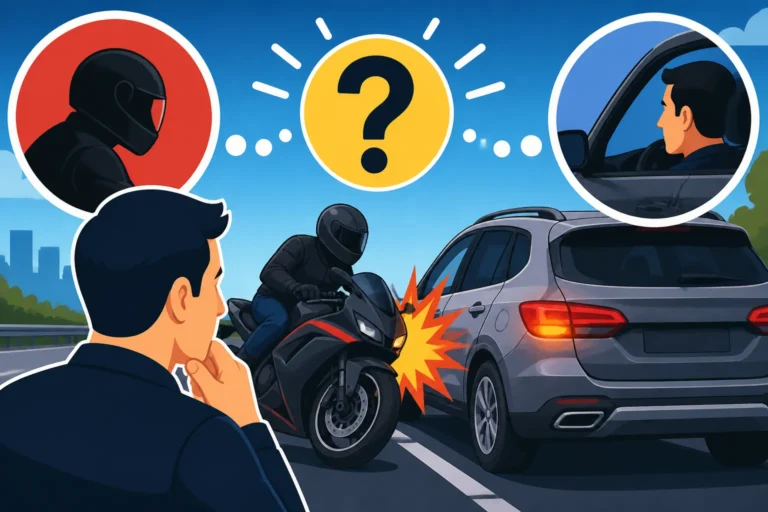
There are few things as startling and dangerous on a motorcycle as suddenly encountering an unexpected obstacle in your path, especially when that obstacle is a car door flung open without warning. These "dooring accidents" can be incredibly devastating, leaving riders with severe injuries and a mountain of questions about who is responsible. This guide will meticulously break down what constitutes a dooring accident, how fault is typically assigned, what critical evidence you need, and the steps to take to protect your rights and seek the compensation you deserve.
Understanding Dooring Accidents and Their Dangers
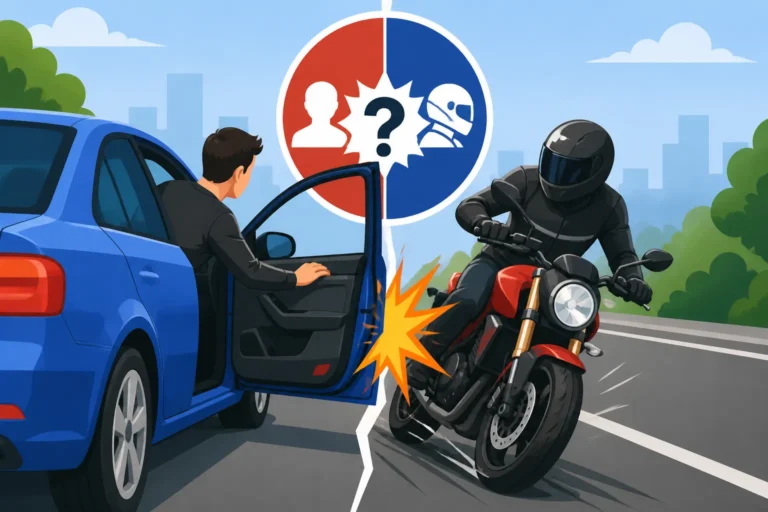
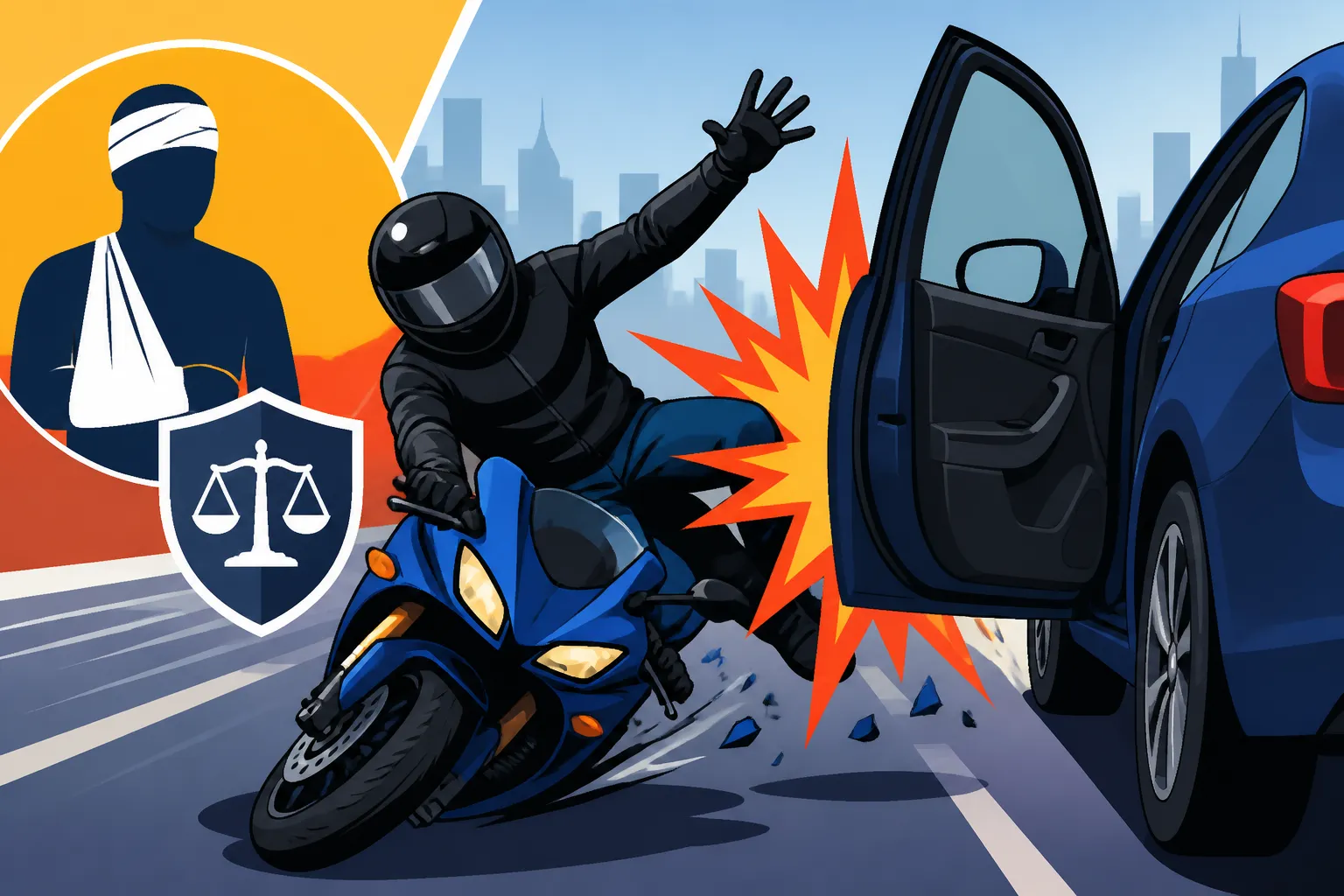
A dooring accident occurs when a vehicle occupant opens their door into the path of another vehicle, often a bicycle or motorcycle, causing a collision. For us riders, these aren't just minor fender-benders; they are sudden, high-impact events that can change your life in an instant. The inherent vulnerability of motorcyclists means that even a slow-speed dooring incident can result in catastrophic injuries.
The Mechanics of a Dooring Accident
Imagine you're cruising down a busy street, maybe in a city like Portland or Seattle, where parked cars line the curb. You're maintaining a safe distance, being vigilant, but then, without any signal or warning, a car door swings open directly into your lane of travel. The sheer suddenness of it is often the most terrifying aspect. Your reaction time, even if you're the most experienced rider with lightning-fast reflexes, is often insufficient.
The physics are brutal. You're essentially hitting a stationary, rigid object. The impact can instantly throw you from your bike, sending you airborne or skidding across the pavement. The motorcycle itself often sustains significant damage, but your body, exposed and unprotected except for your gear, takes the brunt of the force. This isn't like hitting a pothole you saw coming; it's an instantaneous, unavoidable collision that leaves no room for evasive action. It’s a classic example of how quickly Common Causes of Motorcycle Accidents can arise.
Why Motorcyclists Are Particularly Vulnerable
Unlike car drivers who are encapsulated within a metal frame, surrounded by airbags and crumple zones, motorcyclists have no such protection. Our "crumple zone" is often our own body. When a car door opens in front of a motorcycle, the rider is directly exposed to:
- Direct Impact: Your leg, arm, or even your torso can strike the door directly, leading to broken bones, severe bruising, or internal injuries.
- Ejection: The force of the collision can easily throw a rider from their seat, launching them onto the street, into oncoming traffic, or against other stationary objects. This can cause secondary impacts that are often more severe than the initial contact with the door.
- Road Rash and Abrasions: Skidding across asphalt at any speed, even after being dislodged by a relatively low-speed dooring, can cause extensive road rash, deep lacerations, and even exposed bone.
- Head and Spinal Injuries: Despite wearing a helmet, a violent ejection or impact with the door or pavement can result in traumatic brain injuries (TBIs) or severe spinal cord damage. These are among the most debilitating injuries a rider can suffer.
- Lack of Visibility for the Driver: Many drivers simply "don't see" motorcyclists, even when they're present. When opening a car door, drivers often perform a quick glance in their side mirror, which may not catch a motorcycle due to its smaller profile or the driver's own blind spots. This "I didn't see the motorcycle" phenomenon is particularly prevalent in dooring accidents.
The consequences for a rider are almost always more severe than for a car driver involved in a similar low-speed incident. This inherent vulnerability means that legal and insurance evaluations of these accidents often carry a heavier weight regarding the rider's injuries and damages.
Determining Fault in Dooring Accidents
One of the most immediate concerns after any accident is who is to blame. In dooring accidents, the answer is often quite clear, though insurance companies might try to complicate matters. Generally, the person who opens the car door without first ensuring it's safe to do so is considered at fault.
Driver Negligence and Responsibility
In almost every jurisdiction, drivers and passengers have a legal duty to exercise reasonable care to ensure that opening their vehicle door does not endanger traffic. This isn't just common courtesy; it's enshrined in traffic laws across the country. For example, many state vehicle codes, like California Vehicle Code 22517, explicitly prohibit opening any door on a vehicle "unless and until it is reasonably safe to do so, and can be done without interfering with the movement of other traffic, nor shall any door be left open upon a side of a vehicle nearest to moving traffic for a period longer than necessary to load or unload passengers."
This means a driver must:
- Check their rearview and side mirrors thoroughly.
- Look over their shoulder (often called the "Dutch Reach" method, though not always legally mandated) to check for approaching vehicles, especially bikes and motorcycles.
- Wait for a safe gap in traffic before unlatching and pushing open their door.
Failure to perform these basic safety checks constitutes negligence. If a driver opens their door directly into your path, causing an accident, their negligence is typically the direct cause of your injuries and the damage to your motorcycle. Understanding Who Is at Fault in a Dooring Accidents Motorcycle Accident is crucial for your claim.
When a Rider Might Share Some Fault
While the primary fault usually lies with the vehicle occupant who opened the door, there can be rare circumstances where a motorcyclist might be assigned a partial degree of fault. This often comes into play in states that follow comparative negligence laws, which reduce your compensation by your percentage of fault.
Common arguments an insurance company might try to make against a rider include:
- Excessive Speed: If the motorcyclist was traveling at an unsafe speed that significantly reduced their ability to react, even to a suddenly opening door.
- Unsafe Lane Usage: This can sometimes apply to situations involving Lane Splitting and Motorcycle Accident Liability, especially if the rider was lane splitting too close to parked vehicles in a manner that was unsafe or illegal in that specific jurisdiction. However, even in lane-splitting scenarios, the car occupant still has a duty to check before opening a door.
- Distracted Riding: While less common, if a rider was demonstrably distracted (e.g., looking at a phone, not paying attention to the road) and this contributed to their inability to avoid the door, it could be a factor.
It's important to remember that even if a rider is found to be partially at fault, it doesn't automatically bar them from recovery. States with pure comparative negligence (like California or Florida) allow recovery even if you're mostly at fault, while modified comparative negligence states (like Texas or Pennsylvania) typically cap recovery if you're 50% or 51% or more at fault. This concept is fully explored in Comparative Negligence in Motorcycle Accidents. Insurance adjusters will try to exploit any perceived fault on your part to reduce their payout, so it's vital to know your rights.
Legal Precedents and Roadway Expectations
The legal framework surrounding dooring accidents often emphasizes the driver's responsibility. Courts and juries understand the inherent dangers of opening a door into traffic. The expectation on our roadways is that lanes of travel, including those adjacent to parked cars, are clear of sudden, stationary obstructions.
This means that a motorcyclist generally has a reasonable expectation that a parked car's door will not suddenly swing open into their path. This expectation forms a crucial part of proving negligence. If a driver argues they "didn't see" the motorcycle, it simply highlights their failure to adequately check, not the rider's fault. This specific defense is often challenged by experienced motorcycle accident attorneys.
Key Evidence to Prove Fault in a Dooring Accident
After a dooring accident, you're likely shaken, injured, and perhaps in disbelief. But what you do in the immediate aftermath can profoundly impact your ability to prove fault and recover damages. Gathering strong, undeniable evidence is paramount. This ties directly into Motorcycle Accident Evidence for Proving Fault.
Documenting the Scene and Injuries
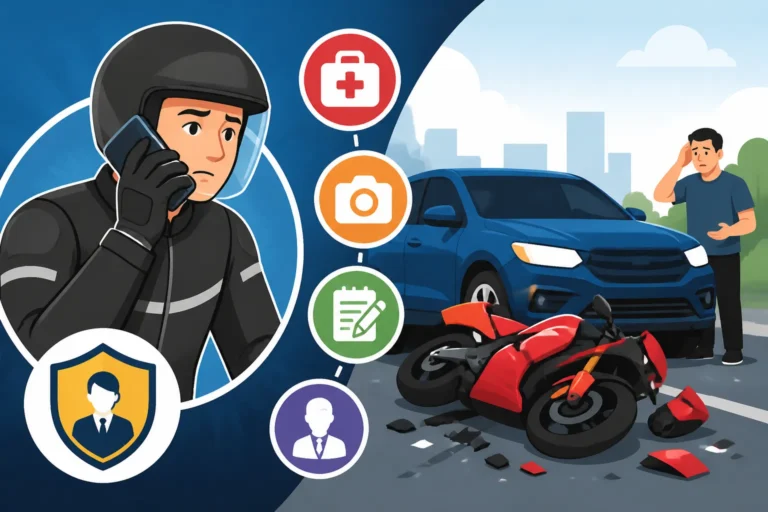
The accident scene is a treasure trove of evidence that can quickly disappear. If you are able, and it is safe to do so, document everything. This includes:
- Photographs and Videos: Use your smartphone to take extensive photos and videos. Capture the position of your motorcycle, the car with the open door, any damage to both vehicles (especially the door itself, showing where your bike hit it), skid marks, road conditions, traffic signs, and surrounding area. Don't forget to take close-up photos of your injuries as well as your damaged gear (helmet, jacket, pants). These images can visually tell the story of the crash and refute claims of minor impact. This detailed advice is covered in Photos to Take to Prove Motorcycle Fault.
- Driver Information: Get the driver's license, insurance, and contact information. Note the vehicle's make, model, and license plate number.
- Details of the Incident: Jot down everything you remember about the accident itself: the time, date, specific location, weather conditions, your direction of travel, and exactly how the door opened. The more details, the better.
Beyond the immediate scene, your medical records become crucial evidence of your injuries. Seek immediate medical attention, even if you feel "okay." Adrenaline can mask pain. Comprehensive medical documentation from doctors, specialists, and therapists will prove the extent and severity of your injuries, linking them directly to the accident. This is the foundation for your claim.
Witness Accounts and Dashcam Footage
Independent witnesses can be invaluable, especially in "he said, she said" scenarios. Drivers who cause dooring accidents may try to minimize their actions or even place blame on you.
- Witness Statements: If anyone saw the accident, get their contact information (name, phone number, email). Ask them what they saw and if they would be willing to provide a statement. Their unbiased account can corroborate your version of events and refute the at-fault driver's story.
- Dashcam/Helmet Cam Footage: In this day and age, dashcams are common, and many motorcyclists wear helmet cameras. If the at-fault vehicle or another nearby vehicle had a dashcam, its footage could be definitive proof of what happened. Likewise, your own helmet cam could capture the entire sequence, eliminating any doubt about fault. This type of evidence is highlighted in How Dashcam Footage Proves Fault. Always ask around at the scene or in nearby businesses if they have security footage.
Police Reports and Traffic Laws
The police report is an official document that summarizes the officer's findings at the scene. While not always conclusive on fault, it records vital information:
- Officer's Observations: The report will include details about the location, conditions, involved parties, vehicle damage, and any citations issued. If the driver who opened the door received a ticket for violating a "dooring" statute (like California's VC 22517), this is powerful evidence of their negligence.
- Statements: The report will often include initial statements from both parties and any witnesses.
- Diagrams: Officers often create diagrams of the accident scene, illustrating vehicle positions and points of impact.
While police reports are important, it's essential to remember that an officer's opinion on fault isn't legally binding. However, a well-documented report can strongly support your claim. If the report contains inaccuracies, or if the officer didn't issue a citation when one was warranted, an experienced attorney can help you understand its implications and potentially challenge it. This topic is explored further in How Police Reports Establish Fault.
Here's a quick reference table for key evidence:
| Evidence Type | Importance | How to Obtain/Collect |
|---|---|---|
| Photos/Videos | Visual proof of impact, damage, scene, injuries, road conditions. | Smartphone at the scene. |
| Witness Info | Unbiased accounts corroborating your story. | Ask bystanders at the scene for names/contact. |
| Dashcam/Helmet Cam | Definitive, objective recording of the entire incident. | Review your own footage; ask other drivers/nearby businesses. |
| Police Report | Official record of facts, citations, initial statements. | Request from police department; your attorney can assist. |
| Medical Records | Proof of injury, treatment, and ongoing care needs. | Keep all medical bills, reports, and appointment summaries. |
| Driver Info | Essential for insurance claims and legal action. | Exchange at the scene (license, insurance, contact). |
| Personal Journal | Documentation of pain, recovery, and daily limitations. | Start writing daily immediately after the accident. |
Navigating the Aftermath: Steps After a Dooring Accident
The moments, hours, and days following a dooring accident can be chaotic and overwhelming. Beyond the physical pain, there's the stress of dealing with property damage, medical bills, and insurance adjusters. Knowing what to do can help protect your health and your legal rights. For a broader overview, check out What to Do Immediately After a Motorcycle Accident.
Immediate Actions at the Scene
Your safety and health are the absolute top priorities.
- Check for Injuries: First, assess yourself and anyone else involved. If you or others are seriously injured, do not move. Call 911 immediately.
- Move to Safety (If Able): If you can safely move yourself and your motorcycle out of traffic without causing further injury or damage, do so.
- Call the Police: Always call law enforcement, even if the damage seems minor. A police report creates an official record of the incident. This is crucial for your insurance claim and potential legal action.
- Exchange Information: Get the other driver's contact information, driver's license number, insurance company name and policy number, and vehicle license plate. Provide yours, but refrain from discussing fault or apologizing. Remember, Why You Should Never Admit Fault at the Scene.
- Gather Evidence: As detailed above, take photos and videos of everything. Look for witnesses and get their contact information.
- Don't Admit Fault: Even a simple "I'm sorry" can be twisted by an insurance company later to imply you accepted blame. Stick to the facts.
Seeking Medical Attention and Documenting Injuries
This step cannot be stressed enough.
- See a Doctor Immediately: Even if you feel fine at the scene, the shock and adrenaline can mask significant injuries. Whiplash, concussions, internal injuries, and soft tissue damage might not manifest for hours or even days. A delay in seeking medical care can be used by insurance companies to argue your injuries weren't serious or weren't caused by the accident. Visit an urgent care clinic or your primary care physician right away.
- Follow All Medical Advice: Attend all follow-up appointments, physical therapy sessions, and specialist referrals. Gaps in treatment can also be used by insurers to diminish the severity of your claim.
- Keep Detailed Records: Maintain a file of all medical bills, prescription receipts, appointment schedules, and diagnostic test results (X-rays, MRIs, CT scans). Also, keep a pain journal, documenting your daily pain levels, limitations, and how your injuries affect your daily life and ability to work or enjoy hobbies. This journal is a powerful tool for demonstrating the extent of your pain and suffering.
Dealing with Insurance Companies
After a dooring accident, you'll inevitably hear from insurance adjusters – both yours and the at-fault driver's. Be extremely cautious.
- Notify Your Insurer: You should inform your own insurance company of the accident promptly, but you are not obligated to give a detailed, recorded statement to them, especially before speaking with an attorney.
- Be Wary of the Other Insurer: The at-fault driver's insurance company will likely contact you quickly. Their primary goal is to minimize their payout. They might offer a quick, lowball settlement before you even fully understand the extent of your injuries. They may also try to get you to give a recorded statement, which they can then use against you.
- Never Give a Recorded Statement Without Legal Counsel: A recorded statement can contain subtle traps or be misinterpreted later. Politely decline until you've consulted with a qualified motorcycle accident attorney. Let your lawyer handle communications with the insurance companies. Insurance companies often try to assign blame to riders, and an attorney can help fight against these tactics, as explained in How Insurance Companies Assign Blame to Riders.
Compensation and Damages in Dooring Accident Claims
Motorcycle accidents, especially dooring incidents, can lead to severe injuries and significant financial burdens. Understanding the types of compensation you can pursue is essential for rebuilding your life. Broadly, these are categorized as economic and non-economic damages. For a full breakdown, consider reading Types of Damages in a Motorcycle Accident Claim.
Economic Damages Explained
Economic damages are the tangible, verifiable financial losses you've incurred or will incur due to the accident. These are relatively straightforward to calculate, as they come with receipts, bills, and pay stubs.
- Medical Expenses: This is often the largest component. It includes all past and future medical costs, such as:
- Emergency room visits
- Ambulance fees
- Hospital stays
- Doctor visits and specialist consultations
- Surgeries and medications
- Physical therapy and rehabilitation
- Assistive devices (wheelchairs, crutches)
- Long-term care if necessary
- Lost Wages and Earning Capacity: If your injuries prevent you from working, you can claim lost income from the time of the accident until you return to work. If your injuries result in a permanent disability that affects your future ability to earn a living or necessitates a career change, you can also seek compensation for "loss of earning capacity." This involves complex calculations, often requiring expert vocational and economic analysis.
- Property Damage: This includes the cost to repair or replace your damaged motorcycle, helmet, riding gear (jacket, pants, boots), and any other personal items destroyed in the crash. If your bike is totaled, you are entitled to its fair market value.
- Out-of-Pocket Expenses: Don't forget smaller, but still significant, costs like transportation to medical appointments, childcare expenses if you're unable to care for your children, or even modifications to your home or vehicle if your injuries require them. Keep every receipt.
Non-Economic Damages and Pain and Suffering
Non-economic damages are less tangible but equally, if not more, impactful. They compensate you for the subjective, non-financial losses you suffer. These are often referred to as "pain and suffering." Detailed information on this can be found in Pain and Suffering Damages Explained.
- Physical Pain and Suffering: This accounts for the actual physical pain you endure from your injuries, surgeries, and recovery process. It’s about the discomfort, the sleepless nights, and the constant ache.
- Emotional Distress: Motorcycle accidents are traumatic. You may experience anxiety, fear (especially of riding again or even being in traffic), depression, PTSD, or severe emotional shock. These psychological impacts are very real and compensable.
- Loss of Enjoyment of Life: If your injuries prevent you from participating in hobbies, recreational activities, or daily activities you once loved (e.g., riding, playing with your kids, gardening, exercising), you can be compensated for this diminished quality of life.
- Disfigurement and Scarring: Road rash can lead to permanent scarring, and other injuries might cause disfigurement. This category covers the emotional and psychological impact of living with altered appearance, as well as any future cosmetic procedures.
- Loss of Consortium: In some cases, if your injuries severely impact your relationship with your spouse or partner (e.g., loss of companionship, intimacy, or household contributions), your spouse may be able to file a separate claim for loss of consortium.
Calculating non-economic damages is more complex than economic damages, as there are no direct bills. They are often determined by multiplying economic damages or using a per diem method, and greatly depend on the severity and permanence of your injuries, as well as the skill of your attorney in presenting your case.
How Shared Fault Can Affect Your Payout
As mentioned earlier, if you are found to be partially at fault for the dooring accident, your total compensation can be reduced according to your state's comparative negligence laws.
- Pure Comparative Negligence: In states like California, you can recover damages even if you are 99% at fault, but your compensation will be reduced by your percentage of fault. So, if you had $100,000 in damages but were found 20% at fault, you would receive $80,000.
- Modified Comparative Negligence (50% Bar Rule): In states like Texas or Pennsylvania, you can only recover damages if your fault is less than or equal to 50% (or 51% in some states). If you are found 50% or less at fault, your damages are reduced by your fault percentage. If you are 51% or more at fault, you get nothing.
Insurance companies will aggressively try to pin some percentage of fault on you, even if it's minimal, because it directly reduces their payout. For a more detailed look into how this works, see How Comparative Negligence Reduces Your Payout. This is one of the most compelling reasons to have an experienced motorcycle accident attorney on your side, as they can counter these arguments and protect your right to full compensation.
The Role of a Motorcycle Accident Attorney
After a dooring accident, you're likely facing significant physical recovery, emotional distress, and mounting bills. Trying to navigate the complex legal and insurance landscape on your own can be overwhelming and detrimental to your claim. This is where a specialized motorcycle accident attorney becomes an invaluable ally. If you're wondering, Do You Need a Motorcycle Accident Lawyer, the answer for a dooring accident is almost certainly yes.
Why Specialized Legal Counsel Matters
A motorcycle accident attorney isn't just any personal injury lawyer. They understand the unique challenges and biases that motorcyclists face in the legal system. Here’s why that specialization is critical:
- Understanding Rider Bias: Unfortunately, there's a pervasive bias against motorcyclists. Juries and even some insurance adjusters may subconsciously (or consciously) assume the rider was acting recklessly. A specialized attorney knows how to counter these stereotypes, presenting you as a responsible road user and highlighting the negligent actions of the at-fault driver.
- Expert Knowledge of Motorcycle Laws: They are intimately familiar with specific motorcycle laws, like helmet laws, lane-splitting regulations (where applicable), and dooring statutes, as well as how these laws impact liability and claims in your state.
- Comprehensive Accident Investigation: Attorneys have the resources to conduct thorough investigations, which might include hiring accident reconstructionists, reviewing traffic camera footage, interviewing witnesses, and obtaining expert medical opinions to establish the full extent of your injuries and their long-term impact.
- Accurate Valuation of Damages: While you can easily calculate medical bills, placing a fair value on non-economic damages like pain and suffering, emotional distress, and loss of enjoyment of life is highly complex. A seasoned attorney knows how to accurately calculate and present these damages to ensure you seek maximum compensation.
Navigating Complex Liability and Insurance Tactics
Insurance companies are formidable opponents. They have vast resources and trained adjusters whose job is to minimize payouts. Without legal representation, you're at a distinct disadvantage.
- Fighting Unfair Fault Assignments: As discussed, insurers will try to assign partial fault to you, even if it's unfounded, to reduce their liability. Your attorney will meticulously examine the evidence to challenge these unfair allegations and protect your right to full compensation.
- Handling All Communications: Your lawyer will take over all communications with the at-fault driver's insurance company. This protects you from saying anything that could jeopardize your claim and ensures that all information exchanged is professional and legally sound.
- Negotiating for Fair Settlements: Insurance companies often start with lowball offers. An experienced attorney knows how to negotiate effectively, backed by solid evidence and a deep understanding of your case's value. They won't let you be pressured into accepting less than you deserve.
- Preparing for Trial (If Necessary): While most personal injury cases settle out of court, if a fair settlement cannot be reached, your attorney will be prepared to take your case to trial. This willingness to litigate often strengthens their negotiating position and can lead to better settlement offers.
When considering if you need an attorney, especially after a dooring accident with significant injuries, remember that the stakes are incredibly high. The best legal counsel ensures you're not just getting some compensation, but fair compensation that truly covers all your losses, now and in the future. For complex cases involving serious injuries, you definitely need an attorney.
Disclaimer
Please remember that this article provides general information and insights into motorcycle accidents caused by dooring incidents. It is not intended as legal advice. Laws regarding fault, liability, and personal injury claims vary significantly by state and specific circumstances. For personalized legal guidance concerning your unique situation, you should always consult with a qualified motorcycle accident attorney in your jurisdiction.